
Stories in Stone: Geological Narratives Embedded in Volcanoes

Welcome to Volcano Explorers!
Ever wondered what stories volcanoes whisper, etched in layers of ash and solidified lava? Stories in Stone: Geological Narratives Embedded in Volcanoes unlocks the secrets hidden within these majestic giants. Prepare to journey beyond the science, delving into the cultural tapestry woven around volcanoes, and discover how their fiery past shapes our understanding of the world. Intrigued? Let's explore the geological stories of volcanoes together...
- Unveiling the Geological Stories of Volcanoes
- Reading the Earth's History: Deciphering Volcanic Rock Formations
- Volcanoes and Time: Geological Timelines Etched in Volcanic Landscapes
- Famous Volcanoes and Their Geological Narratives
- The Impact of Volcanic Eruptions on Shaping Geological Landscapes
- Preserving and Understanding Volcanic Geological Stories
-
Frequently Asked Questions
- What are some examples of "geological stories" that volcanoes tell?
- How do volcanologists uncover the geological stories embedded in volcanoes?
- What is the significance of understanding the geological history of a volcano?
- How does VolcanoExplorers.org help visitors learn about the geological stories of volcanoes?
- Besides scientific value, why are the geological stories of volcanoes important?
- Final Reflection: Echoes of Eruption, Whispers of Time
- Unearth Your Inner Geologist!
Unveiling the Geological Stories of Volcanoes
Volcanoes as Storytellers: A Geological Perspective
Volcanoes, far from being just destructive forces, are profound storytellers of our planet's history. They are geological archives, each eruption and solidified flow acting as a page in Earth's ongoing narrative. From the depths of the mantle to the surface explosions, volcanoes meticulously record the processes shaping our world.
Examining a volcano is akin to reading a complex geological autobiography, revealing insights into tectonic plate movements, the Earth's internal composition, and the very evolution of landscapes over millennia. The layers of ash, solidified lava flows, and varied rock formations are not random; they are sequential chapters, each telling a tale of pressure, heat, and time.
The geological stories embedded within volcanoes are not always immediately apparent. They require careful observation, scientific analysis, and an understanding of geological principles to decipher. Volcanologists and geologists act as interpreters, meticulously piecing together the clues left behind by volcanic activity. They analyze rock compositions, study the stratigraphy of volcanic edifices, and employ dating techniques to establish timelines of eruptions. This scientific detective work allows us to move beyond simply witnessing a volcano's power to understanding the deeper, more intricate geological narratives they hold, narratives that are crucial to comprehending the dynamic Earth we inhabit.
The Cultural Significance of Volcanoes and Their Geological Tales
The cultural significance of volcanoes is deeply intertwined with their geological tales. For cultures living in volcanic regions, these geological giants are not just natural phenomena; they are often imbued with spiritual meaning, myth, and legends passed down through generations. These stories, while often fantastical, are rooted in the real geological events witnessed and experienced by these communities. Eruptions, lava flows, and the creation of new land are dramatic events that shape both the physical landscape and the cultural landscape of these regions.
The geological stories told by volcanoes often become integrated into the cultural narratives of the people who live alongside them. For instance, myths about gods dwelling within volcanoes or volcanic deities controlling eruptions are common across various cultures, from the ancient Romans with Vulcan to Hawaiian legends of Pele.
These cultural interpretations are not separate from the geological reality but are rather a human response to and understanding of the powerful geological forces at play. The awe and fear inspired by volcanic events are translated into cultural expressions, reinforcing the profound connection between humanity and the geological narratives etched in volcanic landscapes.
Reading the Earth's History: Deciphering Volcanic Rock Formations
Volcanic Rock Types and Their Narrative: Basalt
Basalt, one of the most common volcanic rock types on Earth, is a fundamental chapter in the geological stories of volcanoes. Its dark, fine-grained texture is a result of rapid cooling of mafic lava, which is rich in magnesium and iron. Basalt's widespread presence, forming vast plains like the Columbia River Basalt Group in the United States or the Deccan Traps in India, speaks volumes about massive volcanic events in Earth's past. These formations are not just rock; they are petrified records of immense outpourings of lava that shaped continents and even influenced global climate.
The composition of basalt itself tells a geological tale. The presence of certain minerals within basalt, such as olivine and pyroxene, provides clues about the mantle source from which the magma originated. Variations in basalt composition across different volcanic regions can indicate different mantle sources or different processes of magma generation and ascent. Furthermore, the study of basalt's magnetic properties, particularly paleomagnetism, has been instrumental in understanding plate tectonics and the movement of continents across the globe. Basalt, in its seemingly simple form, holds complex geological narratives of Earth’s internal processes and history.
Decoding Lava Flows: Pahoehoe as a Historical Record
Pahoehoe lava flows, characterized by their smooth, ropy, or billowy surfaces, are not just visually distinctive but also act as detailed historical records of volcanic eruptions. The way pahoehoe flows spread and solidify provides insights into the viscosity, temperature, and effusion rate of the lava at the time of eruption. Observing the patterns and textures of pahoehoe can reveal the direction of flow, the speed at which it moved, and how it interacted with the surrounding terrain. For example, well-developed lava tubes within pahoehoe flows indicate sustained, high-volume eruptions.
The sequential layering of pahoehoe flows, often seen in shield volcanoes like those in Hawaii, creates a chronological record of volcanic activity. Each flow represents a distinct eruptive event, and by studying the stratigraphy of these flows, geologists can reconstruct the eruptive history of a volcano over time.
Analysis of the chemical composition and age of successive pahoehoe flows can further refine this historical narrative, allowing scientists to understand the evolution of magma sources and eruptive styles. Pahoehoe, therefore, is more than just solidified lava; it is a page in the volcanic geological history book, preserving details of past eruptions.
Ash Layers and Pyroclastic Deposits: Telling Tales of Explosive Events
Ash layers and pyroclastic deposits are dramatic chapters in the geological stories of volcanoes, specifically those associated with explosive eruptions. These deposits, formed from fragmented volcanic material ejected violently into the atmosphere, are stark reminders of the immense power of volcanic explosions. Thick layers of ash, pumice, and volcanic bombs can blanket landscapes, burying existing terrain and creating new geological features. The distribution and composition of these deposits provide crucial information about the magnitude, intensity, and style of past explosive eruptions.
Pyroclastic flows and surges, types of pyroclastic deposits, are particularly informative about the hazardous nature of explosive volcanism. These fast-moving, hot mixtures of gas and volcanic debris can leave behind distinctive geological signatures, such as welded tuff and ignimbrites.
The presence and characteristics of these deposits in the geological record are vital for assessing volcanic hazards and understanding the potential for future explosive eruptions in a given region. Furthermore, ash layers, due to their wide dispersal, can serve as important stratigraphic markers across large areas, helping to correlate geological events over vast distances and providing a timeline for regional and even global geological history.
Volcanoes and Time: Geological Timelines Etched in Volcanic Landscapes
Stratigraphy of Volcanoes: Layer by Layer Geological History
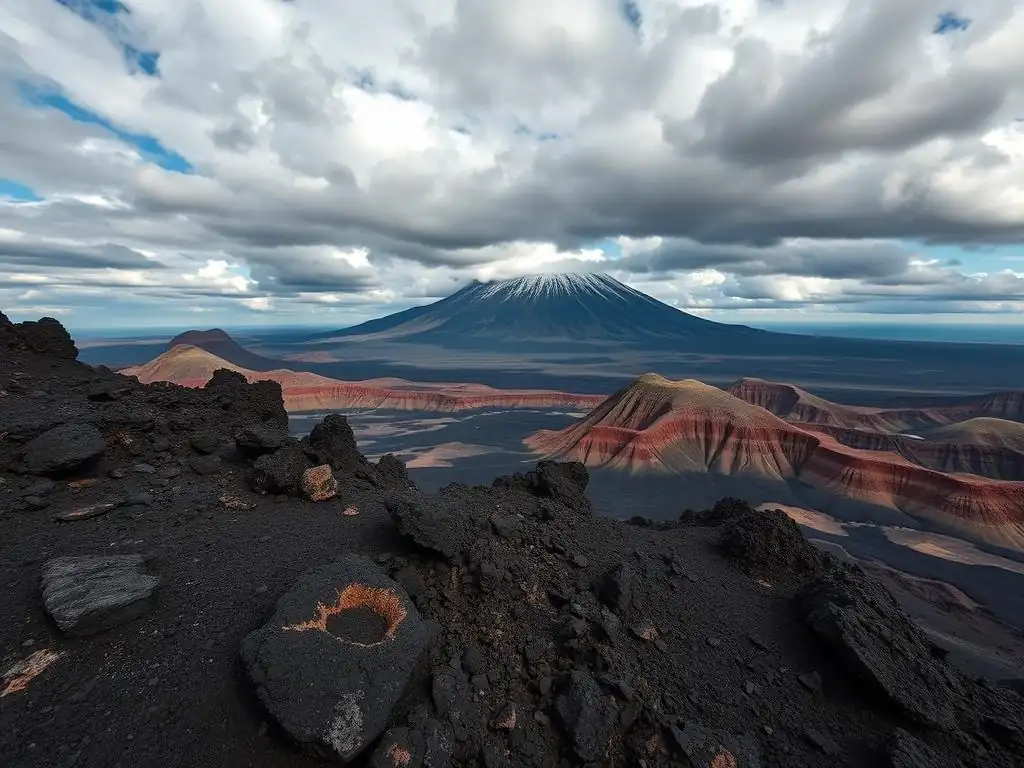
The stratigraphy of volcanoes, the study of their layered structure, is fundamental to understanding the geological timelines etched within them. Volcanoes are built layer by layer, with each eruption adding a new stratum of lava flows, ash deposits, or pyroclastic material. This layering creates a vertical archive of volcanic activity, where older events are found deeper down, and more recent events are closer to the surface. Analyzing the sequence and characteristics of these layers allows geologists to reconstruct the chronological history of a volcano’s growth and evolution.
Each layer in a volcanic stratigraphy is not just a deposit of rock; it represents a specific period of volcanic activity and environmental conditions. Changes in rock type, thickness, and composition from one layer to the next can indicate shifts in eruptive style, magma source, or even external factors like climate change influencing erosion rates. By carefully mapping and documenting the stratigraphy of a volcano, geologists can develop detailed timelines of its eruptive history, identify patterns in volcanic behavior, and gain insights into the long-term processes shaping volcanic landscapes over geological time scales.
Using Radiometric Dating to Unravel Volcanic Eruptions
Radiometric dating is a crucial tool for unraveling the precise geological timelines of volcanic eruptions. This technique leverages the predictable decay of radioactive isotopes within volcanic rocks to determine their age. By measuring the ratios of parent isotopes to daughter isotopes in minerals within volcanic rocks, scientists can calculate the time elapsed since the rock solidified from molten lava. Different radiometric dating methods, such as potassium-argon or argon-argon dating, are applicable to different volcanic materials and age ranges, providing a versatile toolkit for dating volcanic events across vast spans of geological time.
The application of radiometric dating to volcanic rocks has revolutionized our understanding of volcanic histories. It allows for the establishment of absolute ages for specific eruptions, transforming relative stratigraphic sequences into concrete timelines. This precise dating is essential for correlating volcanic events with other geological and environmental changes, such as climate shifts or tectonic events. Furthermore, radiometric dating provides the temporal framework for understanding the recurrence rates of volcanic eruptions, which is critical for volcanic hazard assessment and long-term risk management in volcanic regions.
The Role of Erosion in Revealing Geological Stories
Erosion, often perceived as a destructive force, plays a vital role in revealing the geological stories hidden within volcanoes. Over time, wind, water, and ice gradually wear away the outer layers of a volcano, exposing its internal structure and the layers of rock that tell its history. Canyons carved into volcanic edifices, like the Valles Caldera in New Mexico, or coastal cliffs eroded by ocean waves, provide natural cross-sections through volcanoes, making their stratigraphy accessible for study.
Erosion not only exposes volcanic layers but also sculpts the landscape in ways that reflect the underlying geological structure and history. The differential erosion of different rock types within a volcano, for example, can highlight variations in lava flow composition or the presence of weaker ash layers. Furthermore, the analysis of erosional features, such as the degree of weathering or the shape of valleys, can provide insights into the age and stability of volcanic landforms. Erosion, therefore, acts as a geological sculptor, revealing the intricate details of volcanic stories that would otherwise remain hidden beneath the surface.
Famous Volcanoes and Their Geological Narratives
Mount Vesuvius: A Case Study in Geological Storytelling
Mount Vesuvius, overlooking the Bay of Naples, is a compelling case study in geological storytelling, most famously known for its catastrophic eruption in 79 AD that buried Pompeii and Herculaneum. However, Vesuvius's geological narrative extends far beyond this single event. Its volcanic history, deciphered through geological studies, reveals a complex story of repeated cycles of explosive eruptions and periods of dormancy spanning thousands of years. Analysis of volcanic deposits around Vesuvius has shown evidence of numerous Plinian eruptions, similar to the 79 AD event, interspersed with less explosive Strombolian activity.
The geological story of Vesuvius also includes the formation of Monte Somma, an older volcanic edifice that partially collapsed to form the caldera in which Vesuvius is currently situated. This caldera-forming event is another significant chapter in Vesuvius's history, indicating a past period of even more intense volcanic activity. Furthermore, the ongoing monitoring of Vesuvius's geology, including ground deformation and gas emissions, provides a real-time narrative of the volcano's current state and potential future activity. Vesuvius serves as a living geological textbook, continuously adding chapters to its already rich and dramatic story.
Mount St. Helens: Unveiling its Geological Past Through Rock Analysis
Mount St. Helens, in Washington State, USA, provides a remarkable example of how rock analysis can unveil a volcano's geological past, particularly in the aftermath of its devastating 1980 eruption. Before 1980, geological studies had already established that Mount St. Helens was a relatively young and active volcano within the Cascade Volcanic Arc. However, the 1980 eruption, and the subsequent geological investigations, provided an unprecedented opportunity to study the volcano's inner workings and refine its geological narrative.
Rock analysis following the 1980 eruption, including the study of newly erupted lava and pyroclastic deposits, revealed details about the magma composition, eruptive mechanisms, and the pre-eruption history of Mount St. Helens. Analysis of older rock outcrops exposed by the eruption and subsequent erosion has further extended the geological timeline of the volcano back thousands of years. These studies have shown that Mount St. Helens has experienced a variety of eruptive styles over time, from effusive lava flows to explosive pyroclastic eruptions, painting a complex and dynamic picture of its geological evolution.
Kilauea: The Geological Lessons Learned from its Eruptions
Kilauea volcano in Hawaii, one of the world’s most active volcanoes, offers continuous geological lessons from its ongoing eruptions. Kilauea's persistent volcanic activity, characterized by effusive lava flows and occasional explosive events, provides geologists with a living laboratory to study volcanic processes in real-time. The long-term monitoring and analysis of Kilauea's eruptions have yielded invaluable insights into basaltic volcanism, lava flow dynamics, and the formation of volcanic landforms.
The geological record of Kilauea, preserved in its extensive lava fields and volcanic cones, tells a story of continuous volcanic growth over hundreds of thousands of years. Studies of Kilauea's eruptive history, including the analysis of lava flow ages and compositions, have revealed patterns in its volcanic behavior and helped to understand the processes driving its persistent activity. The 2018 eruption of Kilauea, which dramatically reshaped the landscape and produced voluminous lava flows, further underscored the dynamic geological narrative of this volcano and the ongoing lessons it provides about Earth's volcanic processes.
The Impact of Volcanic Eruptions on Shaping Geological Landscapes
How Eruptions Create New Landforms: Calderas
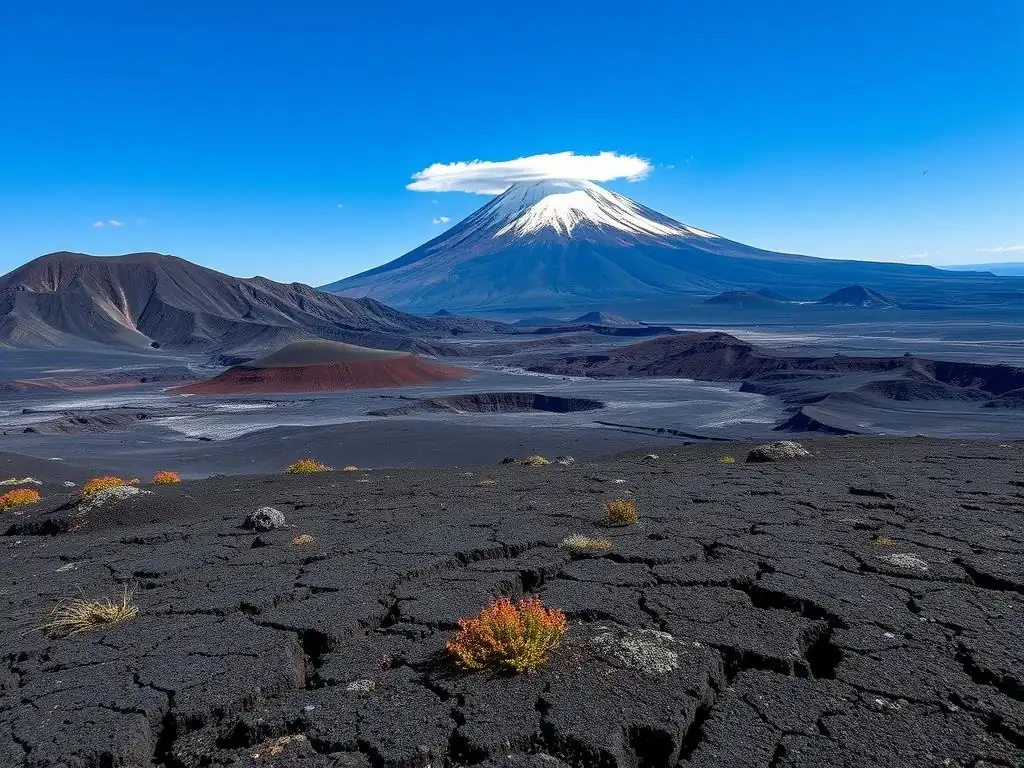
Volcanic eruptions are not only destructive forces but also powerful agents of creation, responsible for shaping diverse geological landscapes, including dramatic features like calderas. Calderas are large, basin-shaped depressions formed by the collapse of a volcano's magma chamber following a massive eruption. These impressive landforms are geological storytellers of exceptionally powerful explosive events, marking moments in Earth's history when vast quantities of magma were erupted, leading to significant structural changes in the Earth's crust.
The formation of a caldera is a geological narrative of immense scale. During a caldera-forming eruption, a volcano expels enormous volumes of magma, often exceeding cubic kilometers. As the magma chamber empties, the overlying volcanic edifice loses support and collapses inward, creating a vast depression. Crater Lake in Oregon, USA, occupies a caldera formed approximately 7,700 years ago following the eruption and collapse of Mount Mazama. Calderas are not just topographic depressions; they are geological monuments to colossal volcanic events and significant landscape transformations.
Volcanic Activity and Long-Term Geological Changes
Volcanic activity plays a crucial role in long-term geological changes, extending far beyond the immediate impacts of eruptions. Over geological timescales, volcanism contributes significantly to the formation of continents, the cycling of elements between the Earth's interior and surface, and even the regulation of Earth's climate. The continuous outpouring of lava over millions of years has built vast volcanic plateaus and oceanic islands, fundamentally altering the Earth's surface features.
Volcanic eruptions also release large quantities of gases into the atmosphere, including water vapor, carbon dioxide, and sulfur dioxide. These volcanic gases have played a significant role in shaping Earth's atmosphere and climate throughout geological history. For instance, massive volcanic eruptions in the past have been linked to periods of global cooling and even mass extinction events. Conversely, volcanic outgassing over geological time has contributed to the long-term carbon cycle and the maintenance of a habitable climate. Volcanic activity, therefore, is a profound geological force driving long-term planetary changes.
The Geological Legacy of Past Volcanic Events
The geological legacy of past volcanic events is deeply imprinted on landscapes around the world, providing tangible evidence of Earth's dynamic history. Ancient volcanic terrains, now eroded and weathered, still bear the marks of past eruptions in the form of solidified lava flows, volcanic necks, and caldera remnants. These geological features are not just scenic landscapes; they are historical archives, offering insights into volcanic processes that operated millions or even billions of years ago.
The study of ancient volcanic rocks, often found in older geological formations, reveals details about the Earth's early volcanic history and the evolution of volcanic processes over time. For example, the Archean greenstone belts, found in regions like Canada and Australia, are composed of ancient volcanic rocks that provide clues about the Earth's crustal formation in its early stages.
The geological legacy of past volcanic events is not confined to volcanic regions; volcanic ash layers, deposited by ancient eruptions, can be found far from their source volcanoes, serving as geological time markers and providing a record of past volcanic activity across vast areas.
Preserving and Understanding Volcanic Geological Stories
The Importance of Volcanic Research in Understanding Earth's History
Volcanic research is of paramount importance for understanding Earth's history and its dynamic processes. Volcanoes are windows into the Earth's interior, providing valuable information about the composition of the mantle, the processes of magma generation, and the forces driving plate tectonics. Studying volcanoes, both active and dormant, allows scientists to unravel the complex geological narratives embedded within them, contributing significantly to our understanding of how the Earth works as a system.
Volcanic research encompasses a wide range of disciplines, including geology, geophysics, geochemistry, and volcanology. Through field studies, laboratory analyses, and numerical modeling, scientists investigate various aspects of volcanic activity, from the physical properties of magma to the hazards posed by eruptions. The insights gained from volcanic research are not only crucial for understanding Earth's past but also for predicting future volcanic behavior and mitigating volcanic risks, safeguarding communities living in volcanic regions.
Geological Conservation Efforts in Volcanic Regions
Geological conservation efforts in volcanic regions are essential for preserving volcanic landscapes and the geological stories they hold for future generations. Volcanic areas often possess unique and fragile geological features, including volcanic cones, lava flows, and hydrothermal systems, which are vulnerable to human activities and natural erosion. Conservation efforts aim to protect these valuable geological resources, ensuring that they remain available for scientific study, education, and appreciation.
Geological conservation in volcanic regions can take various forms, including the establishment of national parks and protected areas, the implementation of sustainable tourism practices, and the restoration of degraded volcanic landscapes. Educating the public about the geological significance of volcanic areas and promoting responsible behavior in these environments are also crucial components of conservation efforts. By protecting volcanic landscapes, we safeguard not only their scenic beauty but also the invaluable geological narratives they contain.
The Future of Volcanic Storytelling: Advanced Geophysical Monitoring
The future of volcanic storytelling is increasingly reliant on advanced geophysical monitoring techniques, which provide unprecedented insights into the inner workings of volcanoes and their ongoing geological narratives. Modern geophysical instruments, such as seismometers, GPS stations, and gas sensors, continuously monitor volcanic activity, detecting subtle changes in ground deformation, seismic activity, and gas emissions that may precede eruptions. These data streams are transforming our ability to understand and interpret volcanic processes in real-time.
Advanced geophysical monitoring not only enhances our understanding of current volcanic activity but also contributes to reconstructing past volcanic events and predicting future eruptions. By integrating geophysical data with geological observations and numerical models, scientists are developing more sophisticated approaches to volcanic hazard assessment and eruption forecasting. The continuous technological advancements in geophysical monitoring promise to further unlock the geological stories of volcanoes, providing a more detailed and dynamic narrative of these powerful forces shaping our planet.
Frequently Asked Questions
What are some examples of "geological stories" that volcanoes tell?
Volcanoes record geological history through their lava flows, ash deposits, and the formation of calderas. These features provide clues about past eruptions, tectonic activity, and environmental changes.
How do volcanologists uncover the geological stories embedded in volcanoes?
Volcanologists use various techniques like analyzing rock samples, studying eruption patterns, and monitoring seismic activity to piece together the history of a volcano. This helps them understand its behavior and potential hazards.
What is the significance of understanding the geological history of a volcano?
Understanding a volcano's past activity allows scientists to predict future eruptions more accurately, assess potential risks to nearby populations, and develop effective mitigation strategies.
How does VolcanoExplorers.org help visitors learn about the geological stories of volcanoes?
VolcanoExplorers.org offers educational content on volcanic processes, historical eruptions, and the methods used by volcanologists to study these geological narratives. This allows visitors to delve into the science behind volcanic activity.
Besides scientific value, why are the geological stories of volcanoes important?
These stories connect us to the Earth's dynamic history, revealing the forces that have shaped our planet. They also hold cultural significance for communities living near volcanoes, often influencing their traditions and beliefs.
Final Reflection: Echoes of Eruption, Whispers of Time
The geological stories etched into volcanoes are far more than just scientific data points; they are living chronicles of our planet's volatile past and a potent reminder of its enduring power. Understanding these narratives, as we've explored, is not just an academic exercise, but a crucial step in comprehending the forces that shape our world and influence the lives of millions who live in their shadow. The relevance of deciphering these "geological stories of volcanoes" is amplified today, as climate change and increased human encroachment on volcanic regions demand a deeper understanding of these dynamic landscapes.
The impact of volcanic activity, both destructive and creative, resonates deeply within our cultural and social consciousness. The awe and fear inspired by these geological giants have fueled myths, shaped landscapes, and driven scientific inquiry for centuries. Our connection to these fiery mountains is primal, a recognition of the raw power that both threatens and sustains us. The mountains are fountains of men as well as of rivers, of glaciers, of fertile soil. The great poets, philosophers, prophets, able men whose thoughts and deeds have moved the world, have come down from the mountains - mountain dwellers who have grown strong there with the forest trees in Nature's workshops.
- John Muir. This quote encapsulates the profound influence these geological formations have had on human history and imagination.
Now, as you reflect on the "geological stories of volcanoes" we've uncovered, consider your own connection to the Earth's dynamic processes. How can you use this newfound understanding to appreciate the power and fragility of our planet? Let the echoes of eruption and the whispers of time inspire you to become a more informed and responsible steward of the Earth, advocating for sustainable practices and promoting a deeper respect for the forces that shape our world.
Unearth Your Inner Geologist!
Thank you for exploring the fascinating stories our volcanoes tell. We hope you enjoyed uncovering the rich history embedded within these magnificent geological formations. Now, let's take that newfound knowledge and put it to use!
Here are some exciting ways to further engage with the volcanic world around us:
- Embark on a personal exploration and document your local geological discoveries through photographs and descriptions. Share your findings and become an active contributor to our understanding of volcanic landscapes.
- Spread the word! Share this article with fellow geology enthusiasts or anyone curious about the Earth's powerful past.
- Dive deeper into the world of volcano exploration and discover other fascinating volcanic regions. Perhaps a virtual expedition awaits!
What geological wonder will you explore next? Share your thoughts and discoveries in the comments below!