
Roman Theories of the Earth's Interior: Did They Link Fire Mountains to Deeper Forces?

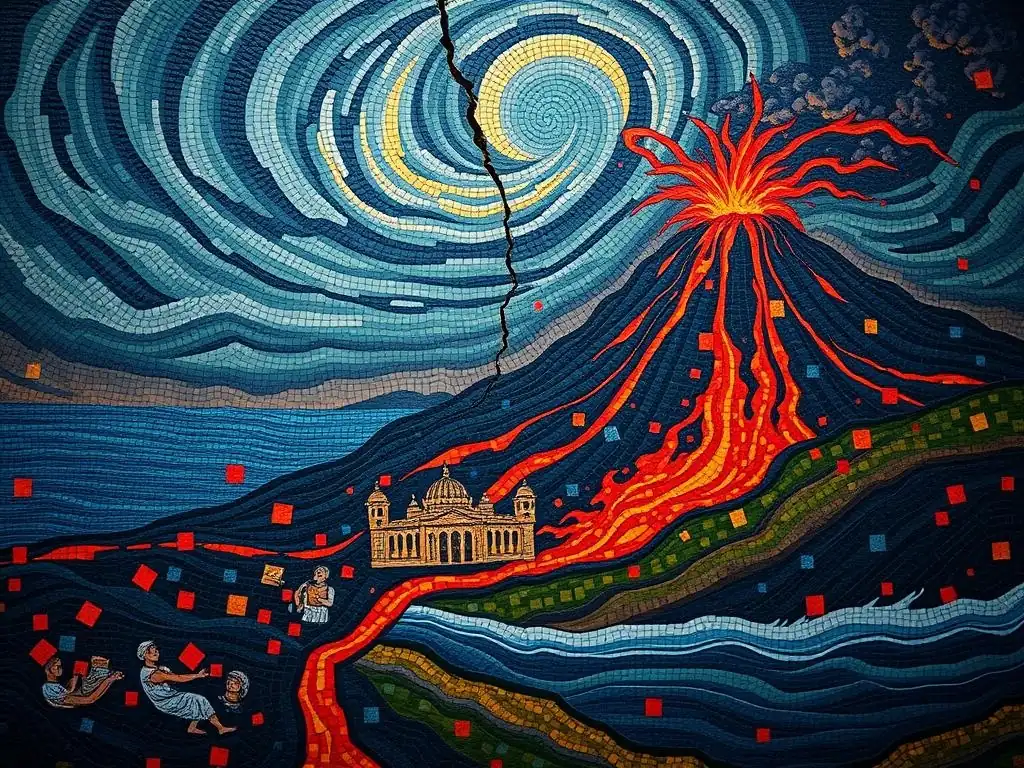
Welcome to Volcano Explorers!
Prepare to journey back in time and unearth the intriguing beliefs of the ancient Romans. Did they truly understand the fiery heart of volcanoes, or were their explanations shrouded in myth and speculation? Delve into our main article and discover the surprising Roman theories on volcanoes, exploring how they connected these fiery mountains to the deeper forces shaping our planet. What secrets did they uncover, and how do their ideas compare to modern volcanology? Let the exploration begin!
- Volcanoes in the Roman World: Power, Peril, and Perspective
- Early Roman Conceptions of Earth's Structure
- Connecting Volcanoes to Deeper Forces in Roman Theories
- Volcanoes in Roman Art and Literature: Symbolism and Spectacle
- Roman Empirical Observations of Volcanic Activity
- The Enduring Influence of Roman Volcanic Theories
-
Frequently Asked Questions
- What were some early Roman theories about the Earth's interior and volcanoes?
- Did the Romans connect volcanic eruptions to deeper forces within the Earth?
- How did Roman understanding of volcanoes differ from modern volcanology?
- Were there any practical applications of Roman knowledge about volcanoes?
- Did any Roman writers document volcanic eruptions or attempt to explain them?
- Final Reflection: Echoes of Vulcan's Forge
- Unearth Your Inner Volcanologist!
Volcanoes in the Roman World: Power, Peril, and Perspective
Roman Observations of Volcanic Phenomena
The Romans, living in a land punctuated by active and dormant volcanoes, were keen observers of volcanic phenomena. From the fiery spectacle of Mount Etna in Sicily to the simmering geothermal fields around Puteoli, volcanic activity was an undeniable aspect of their world. They witnessed firsthand the dramatic eruptions, characterized by towering plumes of ash and smoke that darkened the sky, the flow of molten lava reshaping the landscape, and the ground trembling with seismic activity.
The eruption of Mount Vesuvius in 79 AD, which buried Pompeii and Herculaneum, stands as a stark testament to the destructive power the Romans experienced and documented. Accounts from this period describe not only the immediate devastation but also the preceding signs – earthquakes, changes in well water, and increased fumarole activity – suggesting a degree of empirical awareness of pre-eruption indicators, even if not understood in a modern scientific context.
Beyond catastrophic events, Roman observations extended to more subtle volcanic manifestations. They recognized the fertile volcanic soils, beneficial for agriculture, particularly in regions like Campania, where the rich volcanic ash contributed to bountiful harvests of grapes and olives. The presence of hot springs and geothermal areas was also noted and utilized, as evidenced by the numerous Roman baths built near such locations, exploiting the naturally heated waters for therapeutic and recreational purposes.
Strabo, the Greek geographer writing during the Roman period, described the Phlegraean Fields near Naples as a region "full of craters and resembling a volcanic landscape," demonstrating an understanding of the volcanic origins of specific landforms. These varied observations – from the terrifying eruptions to the more benign geothermal features and fertile lands – shaped the Roman perspective on volcanoes, imbuing them with a sense of both awe and practical significance.
Roman Explanations for Volcanic Eruptions
Roman explanations for volcanic eruptions were a blend of mythological interpretations and nascent philosophical inquiry. In the popular imagination, volcanoes were often associated with divine agency, particularly Vulcan, the Roman god of fire, metalworking, and the forge. Mount Etna, for instance, was believed to be the location of Vulcan's forge, with eruptions seen as manifestations of his divine power and craftsmanship.
Stories circulated of Vulcan hammering out weapons for the gods within the fiery depths of the mountain, explaining the noises and flames emanating from its crater. This mythological framework provided a readily understandable, albeit supernatural, explanation for a phenomenon that was both terrifying and awe-inspiring.
However, alongside these mythological accounts, some Roman thinkers attempted to develop more naturalistic explanations for volcanic activity, drawing inspiration from Greek philosophical traditions. Ideas about subterranean fire and the composition of the Earth's interior began to emerge. While not yet forming a coherent scientific theory in the modern sense, these early attempts represent a shift towards seeking explanations rooted in natural processes rather than solely divine intervention.
Thinkers like Seneca, in his Natural Questions, grappled with the causes of earthquakes and volcanic eruptions, considering various theories about subterranean winds and fires trapped within the Earth. These early Roman theories on volcanoes, though limited by the scientific understanding of the time, mark a crucial step in the gradual transition from purely mythological interpretations towards more empirically grounded explanations of geological phenomena.
Early Roman Conceptions of Earth's Structure
Roman Cosmological Beliefs and the Earth
Roman cosmological beliefs, heavily influenced by Greek predecessors, placed the Earth at the center of the universe, a geocentric model that prevailed for centuries. While not directly focused on the Earth's interior structure in detail, this cosmological framework shaped the context within which Romans understood the world around them, including volcanic phenomena. The cosmos was envisioned as a series of concentric spheres, with Earth at the center, surrounded by spheres carrying the Moon, Sun, planets, and stars. This model, largely derived from the work of Ptolemy and earlier Greek astronomers, provided a structured and hierarchical view of the universe.
Within this geocentric cosmos, the Earth itself was conceived as a solid, relatively stable entity, albeit subject to occasional disruptions like earthquakes and volcanic eruptions. While detailed models of the Earth's interior were lacking, the prevailing view was of a terrestrial sphere composed of elements like earth, water, air, and fire, reflecting the classical Greek elemental theories. These elements were believed to be arranged in layers, with fire often associated with the depths of the Earth, potentially fueling volcanic activity.
Roman writers, drawing on both Greek philosophy and their own observations, integrated these cosmological and elemental ideas into their attempts to understand the forces shaping their world, including the dramatic displays of volcanic power. The understanding of the cosmos, even if geocentric and pre-scientific by modern standards, provided a framework for interpreting terrestrial phenomena within a larger, ordered universe.
Influence of Greek Philosophy on Roman Geologic Thought
The influence of Greek philosophy on Roman intellectual life was profound, extending into areas we would today consider geology and earth science. Greek thinkers, from the pre-Socratics to Aristotle and beyond, had already begun to ponder the nature of the Earth, its composition, and the causes of natural phenomena like earthquakes and volcanic eruptions. Roman scholars and writers, often educated in Greek philosophy and literature, adopted and adapted these ideas, applying them to their own observations and experiences in the volcanic regions of Italy and beyond.
Aristotle's ideas, in particular, had a lasting impact. His concept of the four elements – earth, water, air, and fire – as the fundamental constituents of the universe, was widely adopted and integrated into Roman understandings of the Earth's structure. Aristotle's theory of exhalations, both dry and moist, rising from the Earth's interior and causing meteorological and geological phenomena, also resonated with Roman thinkers attempting to explain earthquakes and volcanic eruptions.
Figures like Strabo and Seneca, while Roman, were deeply versed in Greek philosophical traditions and drew heavily on these concepts in their writings about geography and natural phenomena. Lucretius, in his epic poem De Rerum Natura, further developed atomic theories, offering a different perspective on the material composition of the Earth and the processes driving volcanic activity, demonstrating the ongoing engagement with and development of Greek philosophical ideas within the Roman intellectual context.
Connecting Volcanoes to Deeper Forces in Roman Theories
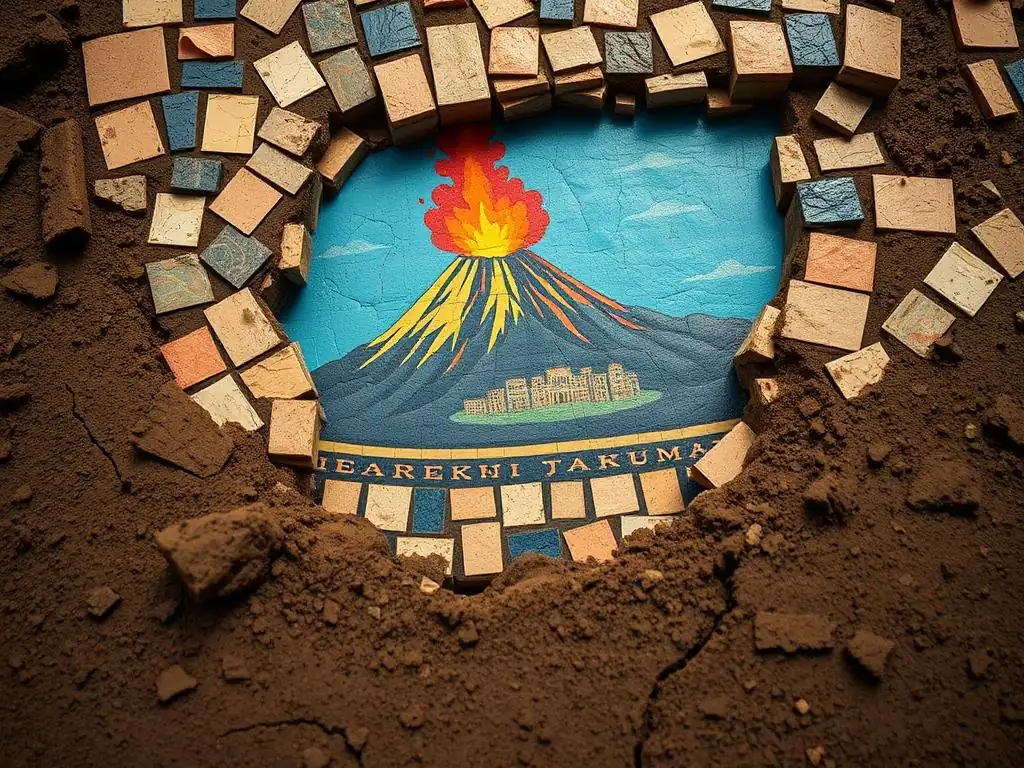
Volcanoes and the Underworld: Mythological Interpretations
A prominent aspect of Roman interpretations of volcanoes was their connection to the underworld and the realm of the gods. Volcanoes, with their fiery eruptions and subterranean rumblings, were readily associated with the chthonic deities and the mythical depths beneath the Earth's surface. The most significant figure in this association was Vulcan, the Roman god of fire and the forge, whose domain was often located within or beneath volcanoes, particularly Mount Etna in Sicily. The eruptions themselves were seen as manifestations of Vulcan's work, the fiery blasts and molten rock emanating from his divine workshop.
Furthermore, volcanic vents and caves were sometimes perceived as entrances to the underworld, the realm of Pluto (Hades in Greek mythology). The idea of a subterranean world, filled with fire and darkness, aligned with the visual spectacle of volcanic eruptions, reinforcing the mythological link between volcanoes and the nether regions.
Stories and myths circulated about heroes descending into volcanic craters to reach the underworld, further solidifying this symbolic connection in the Roman imagination. This mythological framing provided a powerful and readily understood interpretation of volcanoes, linking them to fundamental aspects of Roman religion and cosmology, even as more naturalistic explanations began to emerge.
Philosophical Explanations of Subterranean Fire and Activity
Beyond the mythological interpretations, Roman philosophical thought attempted to offer more naturalistic explanations for the subterranean fire and activity associated with volcanoes. Drawing on Greek elemental theories and ideas about the Earth's interior, Roman thinkers explored various mechanisms that could account for volcanic eruptions and related phenomena. Seneca, in his Natural Questions, discusses different theories, including the idea of subterranean winds trapped within the Earth, which, when violently expelled, could cause earthquakes and volcanic eruptions. He also considers the notion of subterranean fires, fueled by combustible materials within the Earth, which could ignite and erupt to the surface.
These philosophical explanations, while lacking the scientific rigor of modern geology, represent an important step towards understanding volcanic activity as a natural process rather than solely a divine act. Roman thinkers debated the composition of the Earth's interior, the sources of subterranean heat, and the mechanisms that could trigger eruptions. Although their understanding was limited by the available scientific tools and knowledge, their inquiries reflect a growing interest in seeking rational explanations for natural phenomena, moving beyond purely mythological or supernatural interpretations. These early philosophical explorations laid some groundwork for later scientific investigations into the Earth's internal processes.
Lucretius' Atomic Perspective on Volcanic Processes
Lucretius, the Roman poet and philosopher of the 1st century BC, offered a unique perspective on volcanic processes through his atomic theory, as expounded in his epic poem De Rerum Natura (On the Nature of Things). Drawing heavily on the Greek philosopher Epicurus, Lucretius posited that the universe, including the Earth, was composed of indivisible particles called atoms, constantly in motion and combining in various ways to form all matter. Within this framework, he attempted to explain volcanic eruptions as a natural consequence of the atomic composition and dynamics of the Earth.
Lucretius suggested that the Earth contained vast stores of fire atoms within its depths. These fire atoms, agitated by internal pressures and movements, could be violently expelled to the surface, manifesting as volcanic eruptions. He described the Earth as being riddled with subterranean channels and cavities, through which these fiery atoms could travel and erupt.
While not entirely accurate by modern scientific standards, Lucretius' atomic perspective offered a materialist and mechanistic explanation for volcanic activity, devoid of supernatural or divine intervention. His approach, rooted in atomic theory, represented a distinct and influential contribution to early Roman attempts to understand the natural world and its powerful phenomena like volcanoes, emphasizing natural processes over mythological explanations.
Volcanoes in Roman Art and Literature: Symbolism and Spectacle
Volcanoes as Symbols of Divine Power and Destruction
Volcanoes in Roman art and literature transcended mere geographical features; they became potent symbols of divine power and destruction, reflecting the awe and fear they inspired. The destructive potential of volcanic eruptions, as vividly demonstrated by events like the Vesuvius eruption, imprinted deeply on the Roman psyche. This power was often attributed to the gods, particularly Vulcan, reinforcing the association of volcanoes with divine agency. Literary descriptions of eruptions frequently emphasized the overwhelming force and chaos unleashed, portraying volcanoes as agents of divine wrath or instruments of cosmic upheaval.
In art, while direct depictions of volcanic eruptions were less common than literary descriptions, the symbolism of fire and smoke, often associated with volcanoes, was used to convey themes of power, destruction, and the sublime. The imagery of Vulcan's forge, sometimes depicted in mosaics and frescoes, served as a symbolic representation of volcanic forces at work.
Furthermore, the very landscape shaped by volcanic activity – rugged mountains, blackened lava fields – carried symbolic weight, representing both the destructive and creative power of nature. Volcanoes, therefore, functioned as multifaceted symbols in Roman culture, embodying divine might, natural devastation, and the awe-inspiring forces shaping their world.
Roman Depictions of Volcanic Landscapes
Roman art and literature also reveal a fascination with volcanic landscapes, capturing their dramatic beauty and inherent danger. The regions around active volcanoes, such as Campania and Sicily, offered unique and striking scenery, which found its way into various forms of Roman artistic expression. Paintings, mosaics, and sculptures sometimes depicted the distinctive features of volcanic terrain – the conical shapes of volcanoes, the dark, solidified lava flows, and the steaming fumaroles. While not always geographically accurate in a modern sense, these depictions conveyed the visual character of volcanic regions and their stark contrast with more typical Mediterranean landscapes.
Literary descriptions further elaborated on the experience of volcanic landscapes. Writers like Pliny the Younger, in his letters describing the Vesuvius eruption, provided vivid accounts of the changing landscape, from the initial cloud plume to the ashfall and the eventual devastation.
Poets and prose writers evoked the atmosphere of volcanic regions, highlighting both their beauty and their potential for destruction. The volcanic landscape, therefore, became a subject of artistic and literary interest, reflecting the Roman appreciation for both the aesthetic and the dramatic aspects of the natural world, particularly in regions where the forces of volcanism were so visibly present.
Roman Empirical Observations of Volcanic Activity
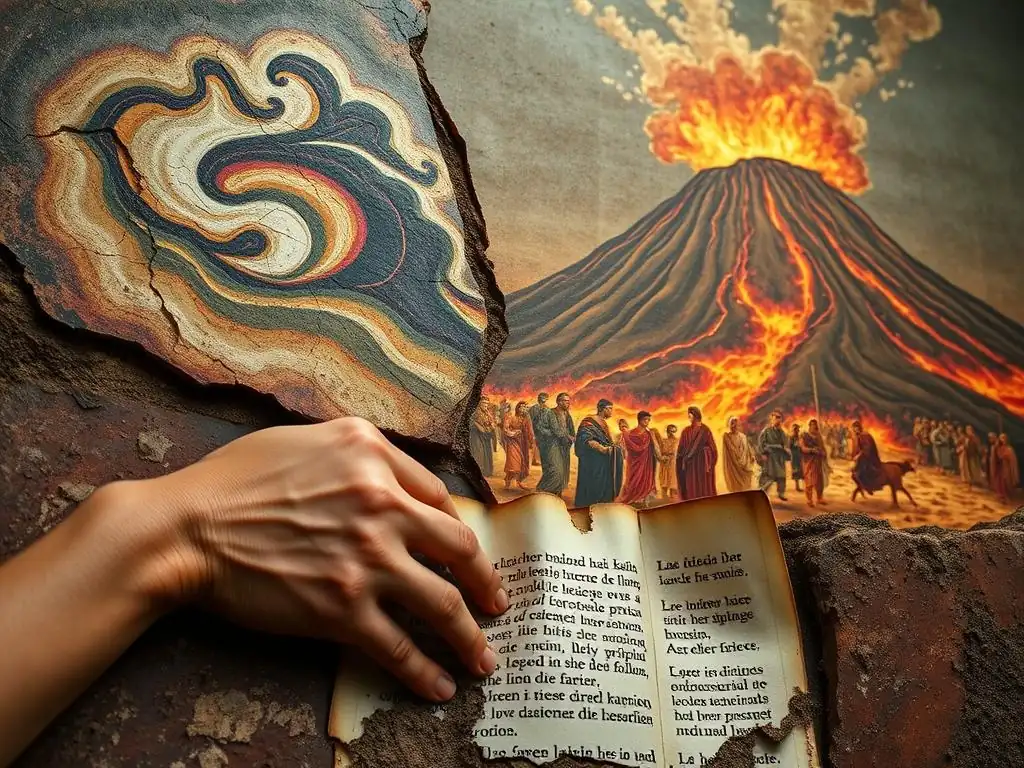
Pliny the Younger's Account of the Vesuvius Eruption: Eyewitness Testimony
Pliny the Younger's letters describing the eruption of Mount Vesuvius in 79 AD stand as a remarkable example of Roman empirical observation of volcanic activity. Written to the historian Tacitus, these letters provide a detailed eyewitness account of the eruption, from its initial stages to its devastating climax, offering invaluable insights into the phenomena associated with such events. Pliny's descriptions are notable for their attention to detail and their attempt to record accurately what he witnessed, even amidst the chaos and terror of the eruption.
He meticulously documented the various stages of the eruption, including the initial cloud plume rising from Vesuvius, its changing shape and composition, the fall of pumice and ash, the seismic activity, and the eventual pyroclastic flows that overwhelmed Herculaneum and Pompeii. His account includes observations of the wind direction, the density of the ashfall, and the reactions of people caught in the disaster.
While not a scientific analysis in the modern sense, Pliny's letters represent a significant example of empirical observation in the Roman world, driven by a desire to understand and record a dramatic natural event. His testimony has become a cornerstone for volcanologists and historians studying the Vesuvius eruption and provides crucial information about the characteristics of Plinian eruptions, named in honor of Pliny the Elder, who perished while investigating the eruption.
Roman Engineering Challenges in Volcanic Regions [e.g., Puteoli's Geothermal Activity]
Roman engineering prowess faced unique challenges in volcanic regions, particularly in areas with geothermal activity like Puteoli (modern Pozzuoli), located in the Phlegraean Fields near Naples. This region, characterized by volcanic craters, fumaroles, and hot springs, presented both opportunities and difficulties for Roman engineers. The geothermal heat was harnessed for baths and heating systems, demonstrating Roman ingenuity in utilizing natural resources. However, the same geothermal activity posed challenges to construction and infrastructure.
The ground in volcanic regions could be unstable and prone to seismic activity, requiring careful planning and robust construction techniques. The phenomenon of bradyseism in Puteoli, a slow vertical ground movement linked to volcanic activity, presented particular engineering problems. Roman engineers had to adapt their building methods to cope with these ground movements, potentially employing techniques like arch construction and the use of resilient materials to mitigate the effects of seismic activity and ground deformation.
The ruins of Roman structures in Puteoli and other volcanic regions offer evidence of their attempts to overcome these engineering challenges, showcasing their adaptability and resourcefulness in dealing with the complexities of building in volcanically active environments. The utilization of geothermal resources alongside the mitigation of volcanic hazards demonstrates a practical engagement with volcanic phenomena that went beyond mere observation and mythology.
The Enduring Influence of Roman Volcanic Theories
Impact on Medieval and Renaissance Scientific Thought
Roman ideas about volcanoes, though rooted in a pre-scientific era, exerted a surprisingly enduring influence on medieval and Renaissance scientific thought. Roman writers like Seneca and Pliny, whose works were preserved and studied throughout these periods, transmitted Roman observations and interpretations of volcanic phenomena to later generations of scholars. Medieval thinkers, often working within a framework that blended classical learning with Christian theology, continued to grapple with the questions raised by Roman authors regarding the causes of earthquakes and volcanic eruptions.
During the Renaissance, with the renewed interest in classical texts and a burgeoning spirit of scientific inquiry, Roman accounts of volcanoes, particularly Pliny the Younger's description of the Vesuvius eruption, gained renewed attention. Renaissance scholars and natural philosophers reread and reinterpreted these texts, using them as starting points for their own investigations into the Earth's processes.
The Roman emphasis on empirical observation, as exemplified by Pliny's account, resonated with the developing scientific method of the Renaissance. While medieval and Renaissance understandings of volcanoes still differed significantly from modern scientific theories, Roman writings provided a crucial link to classical knowledge and contributed to the ongoing development of ideas about the Earth and its dynamic forces.
From Myth to Science: Evolution of Volcanic Understanding
The Roman approach to understanding volcanoes represents a significant stage in the long evolution from purely mythological explanations to more scientifically grounded theories. Initially, Roman interpretations were heavily influenced by mythology, associating volcanoes with divine beings like Vulcan and viewing eruptions as acts of divine power. This mythological framework provided a readily understandable, albeit supernatural, explanation for a phenomenon that was both awe-inspiring and terrifying.
However, alongside these mythological interpretations, Roman philosophical thought began to explore more naturalistic explanations, drawing on Greek philosophical traditions and their own empirical observations. Thinkers like Seneca and Lucretius attempted to understand volcanic activity in terms of natural processes, considering subterranean fire, winds, and atomic interactions as potential causes.
Pliny the Younger's detailed eyewitness account of the Vesuvius eruption further emphasized the importance of empirical observation and documentation. While Roman theories remained limited by the scientific knowledge of their time, their blend of mythological interpretations and nascent philosophical inquiry marked a crucial step in the gradual transition towards a more scientific understanding of volcanoes, paving the way for later scientific investigations that would eventually unravel the complex geological processes driving volcanic activity.
Roman Contributions to Early Earth Science [Summary and Concluding Thoughts]
Roman theories on volcanoes, though not constituting a fully developed science of volcanology, represent a valuable contribution to early Earth science. Their observations, interpretations, and attempts to explain volcanic phenomena reflect a fascinating blend of mythological beliefs, philosophical inquiry, and empirical engagement with the natural world. From associating volcanoes with divine power and the underworld to exploring naturalistic explanations based on subterranean fire and atomic theories, Roman thinkers grappled with the mysteries of volcanic activity in diverse and insightful ways.
Pliny the Younger's account of the Vesuvius eruption stands as a testament to Roman empirical observation, while their engineering challenges in volcanic regions highlight their practical engagement with volcanic hazards and resources. The enduring influence of Roman writings on medieval and Renaissance thought underscores the lasting impact of their ideas.
While modern volcanology has moved far beyond Roman theories, acknowledging their contributions provides a valuable historical perspective on the long and complex journey of understanding one of Earth's most powerful and dramatic natural phenomena. The Roman perspective, situated at the intersection of myth and nascent science, offers a compelling glimpse into the early stages of human attempts to comprehend the forces shaping our planet.
Frequently Asked Questions
What were some early Roman theories about the Earth's interior and volcanoes?
Early Roman theories often linked volcanic activity to divine forces or mythological beings. They didn't have a scientific understanding of magma or plate tectonics.
Did the Romans connect volcanic eruptions to deeper forces within the Earth?
While not in a modern scientific sense, some Roman thinkers speculated that volcanoes were connected to underground fires or the underworld. This was more philosophical than geological.
How did Roman understanding of volcanoes differ from modern volcanology?
Roman understanding was largely based on observation and mythology, lacking the scientific tools and knowledge of today. Modern volcanology employs geophysics, geochemistry, and other sciences.
Were there any practical applications of Roman knowledge about volcanoes?
Romans utilized volcanic materials like pozzolana for construction, but their understanding didn't extend to predicting or preventing eruptions effectively. Their knowledge was mainly descriptive.
Did any Roman writers document volcanic eruptions or attempt to explain them?
Yes, writers like Pliny the Elder famously documented the eruption of Mount Vesuvius in 79 AD. However, his explanations were more descriptive and less based on scientific principles.
Final Reflection: Echoes of Vulcan's Forge
The exploration of Roman theories on volcanoes, as we've seen, isn't just an archaeological dig into ancient science; it's a reminder that humanity has always sought to understand the powerful forces shaping our world. The Roman attempts to link fire mountains to deeper forces, however rudimentary, represent a fundamental human drive to find order in chaos, a drive that continues to fuel scientific inquiry today. Their observations, though lacking the sophisticated tools of modern geology, laid a conceptual groundwork for understanding the Earth's dynamic nature.
The enduring fascination with volcanoes, both then and now, speaks to their profound impact on the human psyche. The raw power and destructive potential of these geological phenomena have shaped not only landscapes but also cultures and mythologies. The Roman belief in Vulcan, the god of fire and the forge, perfectly encapsulates this awe and fear. The earth is not a mere fragment of dead history, stratum upon stratum like the leaves of a book, to be studied by geologists and antiquaries chiefly, but living poetry like the leaves of a tree, which precede flowers and fruit - not without something of past seasons clinging to them.
– Henry David Thoreau. This quote reminds us that the earth, and its fiery expressions, are not just objects of study, but living narratives that continue to unfold.
As we conclude this journey into Roman theories on volcanoes, let us consider the enduring legacy of their curiosity. What mysteries of our planet still beckon our exploration? What seemingly disparate phenomena might be connected by unseen forces? Embrace the spirit of inquiry that drove the Romans, and dare to ask questions that challenge our current understanding of the world beneath our feet. Let their attempts to decipher the Earth's secrets inspire you to seek your own answers, to connect the dots, and to appreciate the profound interconnectedness of all things.
Unearth Your Inner Volcanologist!
Thanks for exploring the fascinating Roman perspectives on Earth's fiery secrets! We hope you enjoyed this journey back in time, uncovering early understandings of volcanoes and the powerful forces within our planet. Now, let's ignite your passion further!
Here's how you can delve deeper:
- Research a specific Roman author mentioned in the article and analyze their views on volcanoes. This will enrich your understanding of the historical perspective.
- Visit a volcano! Plan a trip to a volcanic region and experience the raw power of these natural wonders firsthand (safely, of course! ).
- Share this article with friends or colleagues interested in volcanology, ancient history, or both! Let's spark more conversations.
What aspect of Roman theories about volcanoes do you find most intriguing, and how does it compare to modern understanding? Share your thoughts in the comments below!