
Thera's Ash Cloud: Global Climate Impact of the Minoan Eruption?

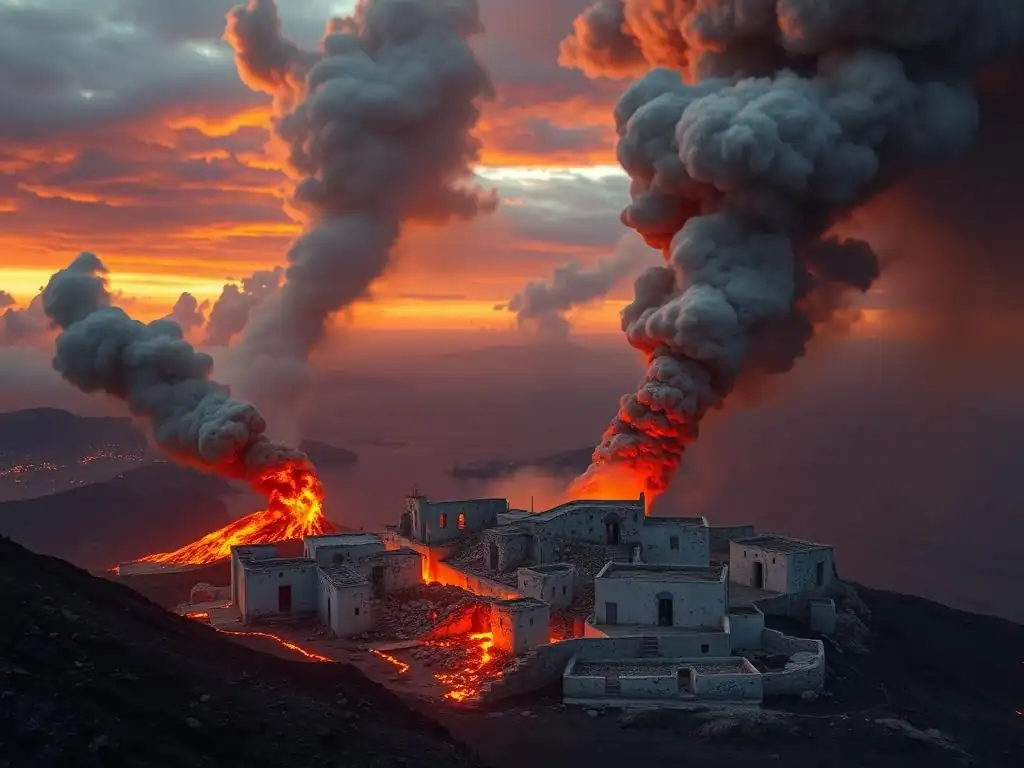
Welcome to Volcano Explorers, where the Earth breathes fire! Ever wondered how a single eruption could ripple across millennia, shaping not just landscapes, but climates? Unearth the truth behind the Minoan eruption and its far-reaching consequences. Was Thera's ash cloud a harbinger of global change? Dare to delve deeper and unravel the secrets of this ancient cataclysm...
- Introduction: Unveiling the Climate Consequences of the Minoan Eruption
- The Minoan Eruption's Volcanic Ash: Composition and Dispersion
- Initial Climate Effects: Temperature Drop and Solar Radiation Diminishment
- Long-Term Climate Impact: Changes in Precipitation Patterns and Atmospheric Circulation
- The Role of Sulfur Dioxide (SO2): A Key Driver of Climate Forcing
- Comparing Thera's Climate Impact to Other Major Volcanic Eruptions
- The Minoan Eruption and Climate Change Today: Lessons for the Future
- Conclusion: Thera's Legacy - A Reminder of Volcanic Climate Power
-
Frequently Asked Questions
- What was the Minoan eruption, and where did it occur?
- How did the Minoan eruption impact the global climate?
- What is the estimated timeframe for the Minoan eruption's climate impact?
- What evidence supports the claim that the Minoan eruption affected the climate?
- How do volcanologists study the climate impact of past eruptions like the Minoan one?
- Final Reflection: Echoes of Ancient Disruption
- Uncover the Secrets of Ancient Eruptions!
Introduction: Unveiling the Climate Consequences of the Minoan Eruption
The Minoan Eruption of Thera: A Historical Overview
The Minoan eruption, a cataclysmic volcanic event, occurred in the Aegean Sea around 1627–1600 BCE. Centered on the island of Thera, now known as Santorini, this eruption was one of the largest volcanic events of the Holocene epoch. Archeological and geological evidence suggests that the eruption was not a single event, but rather a sequence of phases culminating in a massive caldera collapse.
The Minoan civilization, flourishing on Crete and other Aegean islands, was profoundly impacted by this eruption. While the immediate devastation on Thera and nearby islands was immense, the eruption's reach extended far beyond the Aegean, potentially influencing climate patterns across the globe.
The eruption's magnitude is estimated to be a Volcanic Explosivity Index (VEI) of 6 or 7, placing it among the ranks of Krakatoa (1883) and Tambora (1815). Radiocarbon dating of olive tree branches buried under volcanic ash and ice core data pinpoint the eruption to the mid-17th century BCE.
The event unleashed colossal pyroclastic flows, tsunami waves, and a vast plume of volcanic ash and gases that ascended into the stratosphere. This eruption is not only significant for its local impact and its potential role in the decline of the Minoan civilization, but also for its possible wider environmental and climatic repercussions.
Understanding the Scope: Global Climate Implications of Thera's Volcanic Ash
While the immediate destruction caused by pyroclastic flows and tsunamis was confined to the Aegean region, the Minoan eruption's volcanic ash cloud had the potential to exert a far-reaching influence on the global climate. Volcanic ash, composed of fine particles of rock, mineral, and volcanic glass, can remain suspended in the atmosphere for weeks, months, or even years depending on the eruption's intensity and atmospheric conditions.
When ejected into the stratosphere, as was the case with the Minoan eruption, volcanic ash and associated aerosols can reflect incoming solar radiation back into space, leading to a temporary cooling of the Earth's surface.
The extent of the climate impact depends on several factors, including the volume of ash and gases injected, the height the eruption plume reached, the latitude of the eruption, and prevailing atmospheric circulation patterns. The Minoan eruption, being a high-latitude event with a substantial VEI, likely propelled a significant quantity of ash and sulfur dioxide into the stratosphere.
Understanding the dispersal pathways of this ash cloud, its composition, and the resulting atmospheric effects is crucial to unraveling the full scope of the Minoan eruption's climate implications. This article will delve into these aspects, exploring the potential for global climate perturbations arising from Thera's ash cloud and its contribution to the broader narrative of volcanic influence on Earth's climate system.
The Minoan Eruption's Volcanic Ash: Composition and Dispersion
Ash Cloud Formation: The Mechanics of the Thera Eruption
The Minoan eruption was characterized by a Plinian or potentially even Ultra-Plinian eruptive style, known for their highly explosive nature and the generation of towering eruption columns. These columns, driven by the rapid decompression of magma and the expansion of volcanic gases, can ascend tens of kilometers into the atmosphere, reaching well into the stratosphere.
The initial phase of the eruption likely involved phreatomagmatic explosions, caused by the interaction of magma with seawater, which are particularly effective at fragmenting magma and generating fine ash particles. As the eruption progressed, it transitioned to a more magmatic phase, characterized by the forceful ejection of pumice and ash.
The intense energy of the eruption propelled vast quantities of tephra, including ash, pumice, and volcanic gases, upwards into the atmosphere. The eruption column, reaching perhaps 30-40 kilometers in height, acted as a conduit, lofting fine ash particles into the upper atmosphere. Once in the stratosphere, these particles were subject to stratospheric winds, which could transport them over vast distances, encircling the globe. The sheer volume of material ejected during the Minoan eruption suggests a substantial and widespread ash cloud formation, capable of influencing atmospheric processes on a regional and potentially global scale.
Composition of Thera's Volcanic Ash: A Chemical Analysis
Volcanic ash is a complex mixture of fragmented rock, minerals, and volcanic glass shards. The specific composition of ash varies depending on the type of magma, the eruptive style, and the degree of interaction with water. Thera's volcanic ash is primarily composed of rhyodacitic material, a silica-rich volcanic rock. Chemical analyses of ash deposits from Thera reveal a significant proportion of silica (SiO2), along with aluminum oxide (Al2O3), potassium oxide (K2O), and sodium oxide (Na2O). These components are typical of explosive eruptions involving viscous, gas-rich magma.
Importantly for climate considerations, volcanic ash from Thera, like that from other explosive eruptions, also contains trace amounts of sulfur. While the sulfur content in ash itself is relatively low, the eruption also released vast quantities of sulfur dioxide (SO2) gas directly into the atmosphere. It is this SO2, rather than the ash particles themselves, that plays the dominant role in long-term climate cooling.
However, the ash particles contribute to immediate, short-term effects by directly reflecting sunlight and influencing cloud formation. The mineralogy and glass shard morphology of Thera's ash provide valuable insights into the eruptive processes and can be used to trace the ash cloud's dispersal pathways.
Global Dispersion Pathways: Tracking the Ash Cloud's Journey
Once volcanic ash is injected into the stratosphere, its dispersal is primarily governed by stratospheric wind patterns. In the mid-latitudes, where Thera is located, stratospheric winds generally blow from west to east, a phenomenon known as the polar vortex during winter and a more zonal flow during summer. Given the likely timing of the Minoan eruption in the late spring or summer based on archaeological evidence and seasonal deposition patterns, the ash cloud would have been initially transported eastward across Europe and Asia.
However, stratospheric circulation is complex and not strictly zonal. Meridional (north-south) transport also occurs, allowing ash to spread towards the poles and the equator over time. Evidence from Greenland ice cores, which show sulfate spikes around the estimated time of the Minoan eruption, indicates that at least part of the volcanic plume reached high northern latitudes.
Similarly, detection of tephra layers in lake sediments and peat bogs across Europe, the Mediterranean, and even further afield provides physical evidence of the widespread dispersal of Thera's ash. The precise extent and pathways of the ash cloud are still under investigation, but it is clear that the Minoan eruption had the potential to distribute volcanic aerosols across a significant portion of the Northern Hemisphere and potentially beyond, influencing global atmospheric conditions.
Initial Climate Effects: Temperature Drop and Solar Radiation Diminishment

Immediate Temperature Changes: The Short-Term Cooling Effect
The most immediate and noticeable climate effect of a large volcanic eruption like Thera is a decrease in global average temperature. This cooling effect is primarily attributed to the scattering and absorption of incoming solar radiation by volcanic aerosols, particularly sulfate aerosols formed from sulfur dioxide gas. While volcanic ash particles also contribute to this effect by directly reflecting sunlight back into space, their residence time in the stratosphere is generally shorter compared to sulfate aerosols. The Minoan eruption, with its significant injection of both ash and SO2, would have likely triggered a discernible short-term cooling event.
Estimates of the temperature drop following large volcanic eruptions vary, but eruptions of similar magnitude to Thera, such as Krakatoa in 1883, resulted in global average temperature decreases of around 0.4 to 0.7 degrees Celsius in the year or two following the eruption. While precise temperature records from the Minoan period are unavailable, climate reconstructions based on tree rings and other proxies suggest a period of cooler summers in the years following the estimated eruption date. This short-term cooling, although seemingly small, can have significant impacts on weather patterns, growing seasons, and ecosystems.
Solar Radiation Obscuration: Impact on Photosynthesis and Ecosystems
The volcanic ash and aerosols from the Minoan eruption would have significantly reduced the amount of solar radiation reaching the Earth's surface. This obscuration of sunlight, often referred to as a "volcanic winter" in extreme cases, has profound consequences for photosynthesis, the process by which plants convert sunlight into energy. Reduced sunlight directly limits photosynthetic activity, potentially leading to decreased plant growth, crop failures, and disruption of food chains.
In ecosystems, a sudden reduction in solar radiation can stress plant life, impacting forests, grasslands, and agricultural systems. For example, a decrease in sunlight can shorten growing seasons, delay crop maturation, and reduce yields. Historical accounts following the 1815 Tambora eruption, which caused the "Year Without a Summer," document widespread crop failures, famine, and livestock losses across the Northern Hemisphere. While the Minoan eruption's climate impact is debated, it is plausible that the reduced solar radiation caused by its ash cloud contributed to agricultural stress and ecological changes in the regions affected by the eruption's plume.
Evidence from Ice Cores: Reconstructing Past Climatic Shifts
Ice cores, drilled from glaciers and ice sheets in Greenland and Antarctica, provide invaluable archives of past atmospheric conditions and volcanic eruptions. These ice cores contain layers of ice that trap atmospheric gases, aerosols, and volcanic fallout from past centuries and millennia. Scientists analyze ice cores to measure sulfate concentrations, which are a proxy for volcanic sulfur dioxide injections, and to identify tephra shards, which can be geochemically fingerprint to specific eruptions.
Ice core records from Greenland show a significant sulfate spike around the estimated time of the Minoan eruption, indicating a major volcanic event in the mid-17th century BCE. The magnitude of this sulfate spike is comparable to or even larger than that associated with the 1815 Tambora eruption, suggesting a substantial release of sulfur dioxide. Furthermore, some ice cores contain volcanic glass shards with a geochemical composition consistent with Thera, providing direct evidence of the eruption's reach to Greenland.
Analysis of these ice cores allows scientists to reconstruct the timing and magnitude of the Minoan eruption's stratospheric aerosol loading and to infer its potential impact on past climate. These records serve as crucial evidence for understanding the eruption's global reach and its role in driving short-term climate shifts.
Long-Term Climate Impact: Changes in Precipitation Patterns and Atmospheric Circulation
Precipitation Anomalies: Shifts in Rainfall and Drought
Beyond the immediate cooling effect, large volcanic eruptions can also induce changes in precipitation patterns. Volcanic aerosols in the stratosphere can alter atmospheric circulation, which in turn influences the distribution of rainfall and snowfall across the globe. The mechanisms behind these changes are complex and involve interactions between solar radiation, atmospheric heating, and large-scale atmospheric waves. While the exact nature and magnitude of precipitation changes following the Minoan eruption are still debated, evidence suggests potential shifts in rainfall patterns in certain regions.
Some climate model simulations and paleoclimate reconstructions suggest that large volcanic eruptions can lead to a weakening of the Asian monsoon system, resulting in reduced rainfall in parts of Asia. Conversely, other regions may experience increased precipitation or altered storm tracks. The Mediterranean region, geographically close to Thera, could have experienced changes in rainfall patterns following the eruption. Paleoclimate records from the region, such as lake sediment cores and speleothems (cave formations), are being investigated to identify potential precipitation anomalies around the time of the Minoan eruption, which could provide further insights into its long-term climate consequences.
Atmospheric Circulation Disruption: Alterations to Wind Patterns
Volcanic aerosols in the stratosphere not only reduce incoming solar radiation but also alter the radiative balance of the atmosphere. These changes in radiative forcing can disrupt large-scale atmospheric circulation patterns, including jet streams and Hadley cells. Jet streams are fast-flowing air currents in the upper atmosphere that steer weather systems, while Hadley cells are large-scale atmospheric circulation loops in the tropics. Disruptions to these circulation patterns can lead to changes in wind patterns, temperature distribution, and precipitation patterns across different regions.
For example, some studies suggest that volcanic eruptions can influence the North Atlantic Oscillation (NAO), a major climate pattern that affects weather in Europe and North America. Changes in the NAO can lead to shifts in storm tracks, temperature anomalies, and precipitation patterns in these regions. While the specific impacts of the Minoan eruption on atmospheric circulation are not fully understood, it is plausible that the eruption's stratospheric aerosol cloud induced alterations to wind patterns and atmospheric dynamics, contributing to regional climate anomalies.
Impacts on Nile River Flooding and Egyptian Agriculture
The Nile River, crucial for Egyptian agriculture and civilization, is highly sensitive to changes in precipitation patterns in its source regions in East Africa. The annual Nile flood, driven by summer monsoon rains in the Ethiopian Highlands, is vital for replenishing soil moisture and irrigating agricultural lands in Egypt. Some theories propose that large volcanic eruptions can influence the strength of the African monsoon and consequently affect Nile River flooding.
It has been hypothesized that the Minoan eruption, through its impact on atmospheric circulation and precipitation patterns, may have contributed to reduced Nile River flooding in the years following the eruption. Reduced Nile floods could have had significant consequences for Egyptian agriculture, potentially leading to crop failures, famine, and social unrest.
While the link between the Minoan eruption and Nile flooding is still debated and requires further investigation, it highlights the potential for volcanic eruptions to impact distant regions through teleconnections in the climate system. Analyzing historical records of Nile flood levels and paleoclimate data from East Africa may provide further evidence to support or refute this hypothesis.
The Role of Sulfur Dioxide (SO2): A Key Driver of Climate Forcing
SO2 Injection into the Stratosphere: A Global Climate Driver
Among the various volcanic gases released during explosive eruptions, sulfur dioxide (SO2) stands out as a primary driver of climate forcing. While water vapor (H2O) and carbon dioxide (CO2) are also emitted, SO2 has a more immediate and significant impact on global climate, particularly in the short to medium term. The Minoan eruption, like other large explosive eruptions, injected massive quantities of SO2 into the stratosphere, the layer of the atmosphere above the troposphere, typically starting around 10-15 kilometers altitude.
The stratosphere is crucial in this context because it is relatively stable and lacks significant precipitation, allowing volcanic aerosols to persist for longer periods compared to the troposphere. Once SO2 reaches the stratosphere, it undergoes chemical reactions to form sulfate aerosols, tiny droplets of sulfuric acid and water. These sulfate aerosols are highly effective at scattering incoming solar radiation back into space, reducing the amount of sunlight reaching the Earth's surface and leading to global cooling. The amount of SO2 injected into the stratosphere is a key factor in determining the magnitude and duration of volcanic climate impact.
Sulfate Aerosols: Reflecting Sunlight and Cooling the Earth
Sulfate aerosols, formed from the oxidation of volcanic SO2 in the stratosphere, are the primary agents responsible for the volcanic cooling effect. These aerosols are typically sub-micrometer in size, making them highly efficient at scattering sunlight. They reflect a portion of incoming solar radiation back into space, increasing Earth's albedo (reflectivity) and reducing the amount of solar energy absorbed by the planet. This reduction in absorbed solar energy leads to a cooling of the troposphere and the Earth's surface.
The effectiveness of sulfate aerosols in reflecting sunlight depends on their size, concentration, and altitude in the stratosphere. Larger eruptions that inject more SO2 into higher altitudes tend to produce a greater and longer-lasting cooling effect.
The lifetime of sulfate aerosols in the stratosphere is typically about 1-2 years, meaning that the cooling effect of a volcanic eruption generally peaks within a year or two after the event and then gradually diminishes as the aerosols are removed from the stratosphere. The Minoan eruption's SO2 injection likely resulted in a significant stratospheric sulfate aerosol cloud, contributing to the observed short-term cooling and potentially longer-term climate perturbations.
Modeling the SO2 Impact: Simulations of the Thera Eruption's Influence
Climate models are powerful tools used by scientists to simulate the Earth's climate system and to investigate the impact of various climate forcing agents, including volcanic eruptions. These models can be used to simulate the climate response to the SO2 injection from the Minoan eruption and to estimate the magnitude and spatial patterns of temperature and precipitation changes. By inputting estimates of the eruption's SO2 release and atmospheric conditions, climate models can project the evolution of the volcanic aerosol cloud, its radiative effects, and the resulting climate anomalies.
Several climate modeling studies have investigated the potential climate impact of the Minoan eruption. These simulations generally suggest that the eruption likely caused a global average temperature decrease of several tenths of a degree Celsius in the years following the event.
The models also indicate regional variations in temperature and precipitation responses, with some regions experiencing more pronounced cooling or altered rainfall patterns than others. While climate models are simplifications of the complex Earth system and have uncertainties, they provide valuable insights into the potential scale and nature of the Minoan eruption's climate influence and help refine our understanding of volcanic forcing on climate.
Comparing Thera's Climate Impact to Other Major Volcanic Eruptions
Krakatoa vs. Thera: A Comparative Analysis of Eruption Intensity
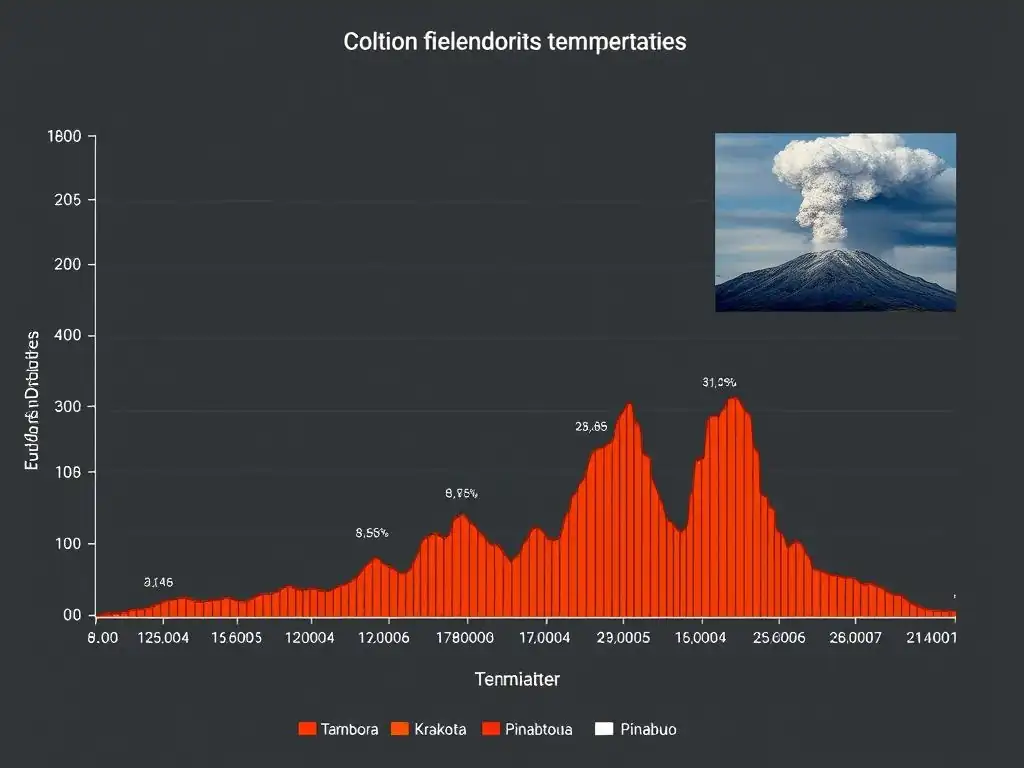
To better understand the potential climate impact of the Minoan eruption, it is helpful to compare it to other well-documented volcanic events in history. The 1883 eruption of Krakatoa in Indonesia is a frequently cited example, often considered to be of similar magnitude to the Minoan eruption. Both eruptions are estimated to have had a Volcanic Explosivity Index (VEI) of around 6, indicating a "Colossal" eruption with a plume height exceeding 20 kilometers and a volume of ejected tephra in the order of 10 cubic kilometers.
Krakatoa's eruption caused a measurable global cooling of about 0.4 to 0.7 degrees Celsius in the years following the event, accompanied by spectacular sunsets and atmospheric optical phenomena due to the stratospheric aerosol cloud. Given the similarities in estimated VEI and likely SO2 release, it is plausible that the Minoan eruption had a comparable, or potentially even larger, climate impact.
However, precise comparisons are challenging due to uncertainties in eruption parameters and the lack of direct instrumental climate records for the Minoan period. Nevertheless, comparing Thera to Krakatoa provides a useful benchmark for assessing the potential scale of its climate perturbation.
Tambora and Thera: Assessing the Scale of Climate Perturbation
The 1815 eruption of Mount Tambora in Indonesia is another crucial point of comparison when evaluating the Minoan eruption's climate impact. Tambora is considered one of the largest volcanic eruptions of the last millennium, with a VEI of 7, classifying it as a "Super-Colossal" eruption. Tambora's eruption is famously associated with the "Year Without a Summer" in 1816, characterized by widespread crop failures, famine, and unusual weather patterns across the Northern Hemisphere. The global average temperature drop following Tambora is estimated to have been around 0.5 to 1.0 degrees Celsius, significantly larger and longer-lasting than that of Krakatoa.
While the Minoan eruption is generally believed to be smaller than Tambora in terms of total tephra volume and SO2 release, it was still a very large eruption. Comparing Thera to Tambora helps to place its potential climate impact in context. If Thera's eruption was indeed closer to Krakatoa in magnitude, its climate perturbation would likely have been less severe and shorter-lived than that of Tambora, but still significant enough to cause observable climate anomalies and potentially impact human societies.
The Toba Super-eruption: A Long-Term Climate Perspective
For a longer-term climate perspective, it is instructive to consider the Toba super-eruption, which occurred in Sumatra, Indonesia, approximately 74,000 years ago. Toba is one of the largest volcanic eruptions in Earth's history, with a VEI of 8, a "Mega-Colossal" eruption, and an estimated tephra volume in the thousands of cubic kilometers. The Toba super-eruption is hypothesized to have caused a prolonged volcanic winter, potentially lasting for years, and to have triggered a significant cooling event that may have contributed to a bottleneck in human population.
While the Minoan eruption was orders of magnitude smaller than the Toba super-eruption, considering Toba provides a sense of the potential for truly massive volcanic eruptions to induce long-lasting and profound climate shifts. Super-eruptions like Toba can inject so much SO2 into the stratosphere that they can cause multi-year to decadal-scale cooling, altering global atmospheric circulation and potentially triggering long-term climate changes.
In contrast, eruptions like Thera, Krakatoa, and Tambora are considered to have caused shorter-term climate perturbations, lasting from months to a few years. Comparing the Minoan eruption to both smaller and larger volcanic events helps to contextualize its potential role in Earth's climate history and its implications for understanding volcanic forcing.
The Minoan Eruption and Climate Change Today: Lessons for the Future
Understanding Past Volcanic Events to Predict Future Climate Impacts
Studying past volcanic eruptions, such as the Minoan eruption, is crucial for improving our understanding of volcanic climate forcing and for predicting the potential climate impacts of future eruptions. Paleoclimate records, including ice cores, tree rings, and sediment archives, provide valuable data on past volcanic events and their associated climate responses. By analyzing these records, scientists can reconstruct the magnitude and timing of past eruptions, estimate their SO2 release and aerosol loading, and assess the resulting temperature and precipitation changes.
This paleoclimate information is essential for validating and improving climate models, which are used to project future climate change scenarios. By comparing model simulations of past volcanic eruptions with observed paleoclimate data, scientists can refine model parameters and improve their ability to simulate volcanic climate forcing accurately. A better understanding of how past volcanic eruptions have influenced climate helps to constrain the range of potential climate impacts from future eruptions and to assess the risks they pose to human societies and ecosystems.
The Role of Volcanic Eruptions in the Earth's Climate System
Volcanic eruptions are a natural and recurring feature of the Earth's climate system. Throughout geological history, volcanic eruptions have played a significant role in shaping Earth's climate, both in the short term and over longer timescales. While large explosive eruptions like the Minoan event primarily cause short-term cooling due to stratospheric aerosols, volcanic outgassing over millions of years has also contributed to long-term changes in atmospheric composition and greenhouse gas concentrations.
Volcanoes release gases, including CO2, H2O, and SO2, which have different effects on climate. While volcanic CO2 emissions contribute to the long-term greenhouse effect, the short-term cooling effect of SO2 aerosols from explosive eruptions is often more pronounced on human timescales. Understanding the complex interplay of volcanic gases and aerosols and their influence on radiative balance is essential for comprehending the natural variability of the Earth's climate system. Volcanic eruptions are a reminder that natural forces can significantly impact climate, sometimes abruptly and dramatically.
Implications for Modern Climate Modeling and Disaster Preparedness
The study of the Minoan eruption and other past volcanic events has significant implications for modern climate modeling and disaster preparedness. Improved climate models that accurately simulate volcanic forcing are essential for projecting future climate change and for assessing the potential risks associated with both anthropogenic climate change and natural climate variability. Understanding the potential for volcanic eruptions to cause rapid climate cooling and to disrupt weather patterns is crucial for developing effective disaster preparedness strategies.
In a world already facing the challenges of anthropogenic climate change, the added impact of a large volcanic eruption could exacerbate existing stresses on societies and ecosystems. Preparedness for volcanic eruptions includes monitoring volcanic activity, developing early warning systems, and planning for potential climate impacts, such as temperature changes, altered precipitation patterns, and disruptions to agriculture and infrastructure. Learning from past volcanic events like the Minoan eruption is essential for building resilience to future volcanic hazards and for mitigating their potential climate consequences in a changing world.
Conclusion: Thera's Legacy - A Reminder of Volcanic Climate Power
Summarizing the Global Climate Impact of the Minoan Eruption
The Minoan eruption of Thera, a cataclysmic event in the mid-17th century BCE, was not only a local catastrophe but also a potential driver of global climate perturbations. The eruption's massive ash cloud, rich in sulfur dioxide, likely injected a significant quantity of aerosols into the stratosphere. This stratospheric aerosol cloud would have reflected incoming solar radiation, leading to a short-term global cooling, potentially on the order of several tenths of a degree Celsius. The eruption may have also induced changes in precipitation patterns and atmospheric circulation, with regional variations in climate anomalies.
While the precise magnitude and duration of the Minoan eruption's climate impact are still debated and require further research, the available evidence from ice cores, paleoclimate proxies, and climate model simulations suggests a discernible climate signal. Comparing the Minoan eruption to other well-known volcanic events like Krakatoa and Tambora helps to contextualize its potential climate influence and highlights the capacity of even moderately large volcanic eruptions to perturb the global climate system.
The Importance of Studying Ancient Volcanic Events for Climate Science
The Minoan eruption serves as a compelling case study for understanding the role of volcanic eruptions in Earth's climate history. Studying ancient volcanic events like Thera provides invaluable insights into the mechanisms of volcanic climate forcing, the magnitude of potential climate impacts, and the responses of ecosystems and human societies to volcanic climate perturbations. Paleoclimate records associated with the Minoan eruption and other past volcanic events offer a unique perspective on the natural variability of the climate system and the sensitivity of climate to volcanic forcing.
By investigating these past events, climate scientists can refine climate models, improve our ability to predict the climate impacts of future volcanic eruptions, and enhance our understanding of the complex interactions between volcanic activity and the Earth's climate. The legacy of the Minoan eruption is a reminder of the powerful and sometimes unpredictable forces of nature that can shape our planet's climate and impact human history.
Future Research Directions on the Minoan Eruption and its Climate Effects
Future research on the Minoan eruption and its climate effects should focus on several key areas to further refine our understanding. High-resolution analyses of ice cores and other paleoclimate archives are needed to better constrain the timing, magnitude, and spatial extent of the eruption's climate signal. Improved dating techniques and geochemical fingerprinting of tephra layers can help to precisely correlate volcanic deposits with climate records and to reconstruct the dispersal pathways of the ash cloud.
Climate modeling studies should continue to explore the sensitivity of climate to different eruption scenarios and to investigate the regional and seasonal patterns of climate anomalies associated with the Minoan eruption. Interdisciplinary research, integrating volcanology, climatology, archaeology, and history, is essential to fully unravel the complex interactions between the Minoan eruption, its climate impacts, and its consequences for Minoan civilization and the wider Mediterranean world. Continued investigation into Thera's ash cloud and its global climate impact will undoubtedly yield further valuable insights into the powerful role of volcanoes in shaping Earth's climate and human history.
Frequently Asked Questions
What was the Minoan eruption, and where did it occur?
The Minoan eruption was a massive volcanic event that occurred on the island of Thera (modern-day Santorini) in the Aegean Sea. It was a catastrophic eruption that dramatically reshaped the island.
How did the Minoan eruption impact the global climate?
The eruption released a significant amount of ash and sulfur dioxide into the atmosphere. This led to a temporary cooling effect globally, potentially impacting weather patterns.
What is the estimated timeframe for the Minoan eruption's climate impact?
The climate impact of the eruption is believed to have been relatively short-lived, lasting for several years at most. The sulfur dioxide quickly converted into aerosols which blocked sunlight.
What evidence supports the claim that the Minoan eruption affected the climate?
Evidence includes ice core samples and tree ring data showing unusual climate patterns around the estimated time of the eruption. Also, there are historical accounts that mention unusual weather events.
How do volcanologists study the climate impact of past eruptions like the Minoan one?
Volcanologists use various methods, including analyzing ice cores, studying sediment layers, and modeling climate scenarios to understand the impact of eruptions. They also analyze historical records for corroborating data.
Final Reflection: Echoes of Ancient Disruption
The investigation into the Minoan eruption's climate impact reveals more than just a historical event; it underscores the profound and lasting influence of natural disasters on global systems. The ash cloud that darkened the skies millennia ago serves as a stark reminder of the Earth's volatile power and the interconnectedness of climate patterns, a reality that resonates deeply in our current era of heightened environmental awareness.
The enduring legacy of Thera's eruption continues to shape our understanding of volcanic activity and its potential to trigger widespread climate shifts. This exploration has reinforced the critical need for interdisciplinary research and sophisticated modeling to anticipate and mitigate the effects of future cataclysms. The past is never dead. It's not even past.
- William Faulkner. This quote encapsulates the enduring relevance of studying ancient events to inform our present and future responses to environmental challenges.
As we contemplate the Minoan eruption's climate impact, let us not only marvel at the scale of this ancient event but also internalize the lessons it offers. Consider how your own actions, both individually and collectively, contribute to or mitigate the environmental challenges we face today. Let the echoes of Thera's ash cloud inspire a renewed commitment to understanding and protecting our planet, ensuring a more sustainable future for generations to come.
Uncover the Secrets of Ancient Eruptions!
Thank you for exploring the fascinating story of Thera's eruption and its potential impact on the global climate. We hope you found this exploration insightful. Now, let's turn knowledge into action!
Here are a few ways to continue your volcanic adventure:
- Share your thoughts! What aspect of Thera's eruption surprised you most? What further research would you like to see conducted? Leave a comment below.
- Explore our interactive map of past eruptions to visualize the potential impact area using current climate models.
- Consider supporting Volcano Explorers with a donation. Your contribution helps us continue bringing you captivating stories and vital research on volcanic activity.
What other ancient volcanic mysteries intrigue you? Let us know!