
The Unseen Volcanoes: Identifying LesserKnown Eruptions of the Little Ice Age

Welcome to Volcano Explorers, where the Earth breathes fire and mystery reigns! Ever heard of the Little Ice Age? What if I told you volcanoes played a bigger role than you think? Prepare to uncover the hidden history beneath the snow and ash as we delve into the lesserknown volcanic eruptions of this chilling period. What secrets do these unseen volcanoes hold, and how did they shape our past? Join us as we ignite your curiosity and explore the explosive truth!
- Introduction: Unveiling the Hidden History of Little Ice Age Volcanism
- Identifying Lesser-Known Volcanic Eruptions: Challenges and Methodologies
- Case Studies: Examples of Newly Identified or Re-evaluated Little Ice Age Eruptions
- The Impact of Lesser-Known Volcanic Eruptions on the Little Ice Age Climate
- Implications for Climate Modeling and Future Volcanic Risk Assessment
- Conclusion: The Importance of Continued Research into Little Ice Age Volcanism
-
Frequently Asked Questions
- What is the "Little Ice Age" and why is it relevant to volcanic eruptions?
- Why are some volcanic eruptions considered "lesser-known," even if they were significant?
- What methods do volcanologists use to identify and study lesser-known volcanic eruptions from the Little Ice Age?
- How can understanding lesser-known volcanic eruptions help us today?
- What are some examples of lesser-known volcanic eruptions that occurred during the Little Ice Age?
- Final Reflection: Echoes of Fire and Ice
- Unearth Hidden Volcanic Secrets!
The Little Ice Age and its Connection to Volcanic Activity: A Brief Overview
The Little Ice Age (LIA), a period of regional cooling, particularly evident in the Northern Hemisphere, spanned roughly from the 14th to the mid-19th century. This era witnessed colder winters, shorter growing seasons, and glacial expansion across many parts of the globe.
While the exact causes of the Little Ice Age are complex and multifaceted, involving solar variability, changes in ocean circulation, and internal climate variability, volcanic eruptions are recognized as a significant contributing factor. Large volcanic eruptions inject sulfur dioxide into the stratosphere, which then forms sulfate aerosols.
These aerosols reflect incoming solar radiation back into space, leading to a temporary cooling of the Earth's surface. Major eruptions like Tambora in 1815 and Krakatoa in 1883 are well-documented for their global climatic impacts, but the cumulative effect of lesser-known volcanic eruptions during the Little Ice Age is increasingly recognized as crucial for a complete understanding of this period's climate dynamics.
Volcanic forcing is understood to have played a significant role in driving decadal-scale cooling during the LIA. The sulfate aerosols from volcanic eruptions can persist in the stratosphere for one to two years, causing a noticeable dip in global temperatures. The impact of these eruptions is not just limited to temperature; they can also influence atmospheric circulation patterns, affecting regional precipitation and wind patterns.
Scientists have long focused on major eruptions as the primary volcanic drivers of climate change. However, recent research suggests that a series of smaller to moderate eruptions, individually less impactful than a Tambora-scale event, could have collectively exerted a substantial and prolonged cooling influence during the Little Ice Age. This perspective shifts the focus from solely the 'loud' volcanic events to the potential 'whispers' of numerous smaller eruptions that may have been previously overlooked.
Why Study Lesser-Known Volcanic Eruptions of the Little Ice Age?
Understanding the full spectrum of volcanic eruptions, including the lesser-known ones, during the Little Ice Age is crucial for several reasons. Firstly, it provides a more complete and nuanced picture of the climate forcing mechanisms that shaped this period. By focusing only on major eruptions, we might be underestimating the overall volcanic contribution to LIA cooling and potentially misattributing the remaining cooling to other factors.
Secondly, studying these smaller eruptions helps us refine our understanding of the dose-response relationship between volcanic sulfate injections and climate cooling. Analyzing the climatic impact of a range of eruption magnitudes, from large to moderate and even smaller, allows for a more robust calibration of climate models. This is essential for improving the accuracy of future climate projections, particularly in scenarios involving volcanic activity.
Furthermore, investigating lesser-known volcanic eruptions can shed light on the frequency and distribution of volcanic activity across different regions and time periods. The Little Ice Age wasn't uniformly cold everywhere; there were regional variations in temperature and climate anomalies. Identifying the spatial and temporal patterns of these lesser-known eruptions can help explain some of these regional climate differences.
For instance, a cluster of moderate eruptions in the tropics might have different regional climate impacts compared to eruptions at higher latitudes. Finally, recognizing and characterizing these previously overlooked eruptions improves our historical volcanic record. This enhanced record is invaluable not only for climate science but also for volcanology, providing a better understanding of long-term volcanic behavior and recurrence intervals, which is essential for volcanic hazard assessment.
Identifying Lesser-Known Volcanic Eruptions: Challenges and Methodologies
The Challenges of Reconstructing Past Volcanic Events
Reconstructing past volcanic events, especially lesser-known eruptions from centuries ago, presents significant challenges. Unlike major eruptions that leave clear global signatures and are often documented in historical records across continents, smaller to moderate eruptions may leave more subtle and localized traces. One primary challenge is the preservation and accessibility of evidence.
Volcanic ash layers, a direct product of eruptions, can be eroded over time or buried under subsequent geological deposits, making them difficult to locate and study. Furthermore, the tephra (volcanic ash) dispersal from smaller eruptions is typically more limited geographically, meaning the evidence might only be found in specific, often remote, locations near the source volcano.
Another key challenge lies in dating these past eruptions accurately. Radiocarbon dating, a common method for dating organic materials associated with volcanic deposits, has limitations, especially for older events and when organic material is scarce or contaminated. Ice core dating, while providing precise chronologies, relies on identifying volcanic sulfate spikes, which might be less pronounced or even undetectable for smaller eruptions.
Distinguishing volcanic sulfate signals from other sources of sulfate in ice cores, such as biogenic sulfur emissions or biomass burning, can also be complex. Historical records, while valuable, are often incomplete, geographically biased (favoring Europe and East Asia), and sometimes lack the scientific rigor to definitively link observed climate anomalies to specific volcanic events. Therefore, reconstructing a comprehensive record of lesser-known volcanic eruptions requires a multi-proxy approach, integrating evidence from various archives and methodologies to overcome these inherent challenges.
Ice Core Analysis: A Key to Uncovering Volcanic Signals
Ice core analysis is a cornerstone method for detecting and characterizing past volcanic eruptions, particularly those that injected sulfur dioxide into the stratosphere. Ice cores, drilled from glaciers and ice sheets in Greenland and Antarctica, archive layers of snow that accumulate annually. These layers contain trapped atmospheric aerosols, including sulfate aerosols from volcanic eruptions.
When a significant volcanic eruption occurs, it deposits a distinct spike in sulfate concentration in the ice core layers corresponding to the year(s) following the eruption. Scientists analyze these ice cores by measuring the concentration of sulfate ions at high resolution along the core depth. A sharp increase in sulfate concentration above the background level is typically interpreted as a volcanic signal.
The strength of the sulfate signal in ice cores is related to the magnitude of the eruption and its sulfur dioxide release. Larger eruptions generally produce more prominent sulfate spikes, making them easier to detect. However, even for lesser-known, moderate eruptions, careful analysis of ice cores can reveal detectable sulfate anomalies.
Furthermore, by analyzing the isotopic composition of the sulfate in ice cores, scientists can sometimes differentiate between volcanic sulfate and sulfate from other sources. Ice cores also provide valuable information on the timing of eruptions.
By counting annual layers in the ice core and employing dating techniques like tephrochronology (dating based on volcanic ash layers within the ice), the timing of volcanic sulfate deposition, and thus the eruption, can be determined with relatively high precision, often to within a year or two for recent centuries. Ice core records from both Greenland and Antarctica are crucial, as they can capture global volcanic signals, even from eruptions located far from the polar regions.
Dendrochronology: Tree Rings as Proxies for Volcanic Eruptions
Dendrochronology, the science of dating tree rings, offers another independent and valuable proxy for reconstructing past volcanic eruptions and their climatic impacts. Trees in temperate and high-latitude regions form annual growth rings, whose width is sensitive to environmental conditions, particularly temperature and moisture availability. Large volcanic eruptions, by injecting sulfate aerosols into the stratosphere and causing a reduction in solar radiation, can lead to a temporary cooling of the Earth's surface. This cooling can, in turn, impact tree growth, often resulting in narrower tree rings in the years immediately following a significant eruption.
Scientists analyze tree ring chronologies, which are long-term records of tree ring widths from multiple trees in a region, to identify anomalously narrow rings that might be associated with volcanic events. A widespread and synchronous occurrence of narrow rings across a geographically coherent region can be a strong indicator of a climate-forcing event like a volcanic eruption. While tree rings are primarily sensitive to temperature, other factors can also influence tree growth.
Therefore, dendrochronological evidence is often used in conjunction with other proxies, such as ice cores and historical records, to confirm volcanic signals. Moreover, by precisely dating tree rings, dendrochronology can provide independent dating of volcanic events and refine the timing derived from other archives. The spatial distribution of tree-ring growth anomalies can also provide insights into the regional climate impacts of volcanic eruptions.
Historical Records: Sifting Through Texts for Evidence of Forgotten Eruptions
Historical records, including chronicles, diaries, weather journals, and administrative documents, represent a rich but often underutilized source of information for identifying and characterizing past volcanic eruptions, especially lesser-known events that may not have left prominent geophysical signatures. Before the era of instrumental measurements, people meticulously recorded unusual natural phenomena, including atmospheric effects that can be linked to volcanic eruptions.
These effects include unusually vivid sunsets and sunrises caused by stratospheric aerosols, "dry fogs" or hazes that persist for extended periods, and reports of reduced sunlight intensity. Furthermore, historical documents often contain accounts of unusually cold weather, crop failures, and famines, which, when occurring in the years following potential volcanic signals, can strengthen the evidence for a volcanic-climate link.
Sifting through historical records for evidence of volcanic eruptions requires careful interpretation and contextualization. Historical accounts are often subjective, geographically biased (with better records from some regions than others), and may not always provide precise details. Researchers need to critically evaluate the reliability of historical sources, cross-reference accounts from different locations and perspectives, and distinguish between volcanic signals and other natural climate variations or societal disruptions.
For example, unusually cold winters could be due to natural climate variability rather than volcanic forcing. However, when multiple independent historical accounts from different regions report similar unusual atmospheric phenomena and subsequent cold weather anomalies in a specific period, and these coincide with signals from ice cores or tree rings, the evidence for a volcanic eruption becomes much stronger. The meticulous examination of historical archives is therefore crucial for uncovering the hidden history of lesser-known volcanic eruptions and their impacts.
Case Studies: Examples of Newly Identified or Re-evaluated Little Ice Age Eruptions
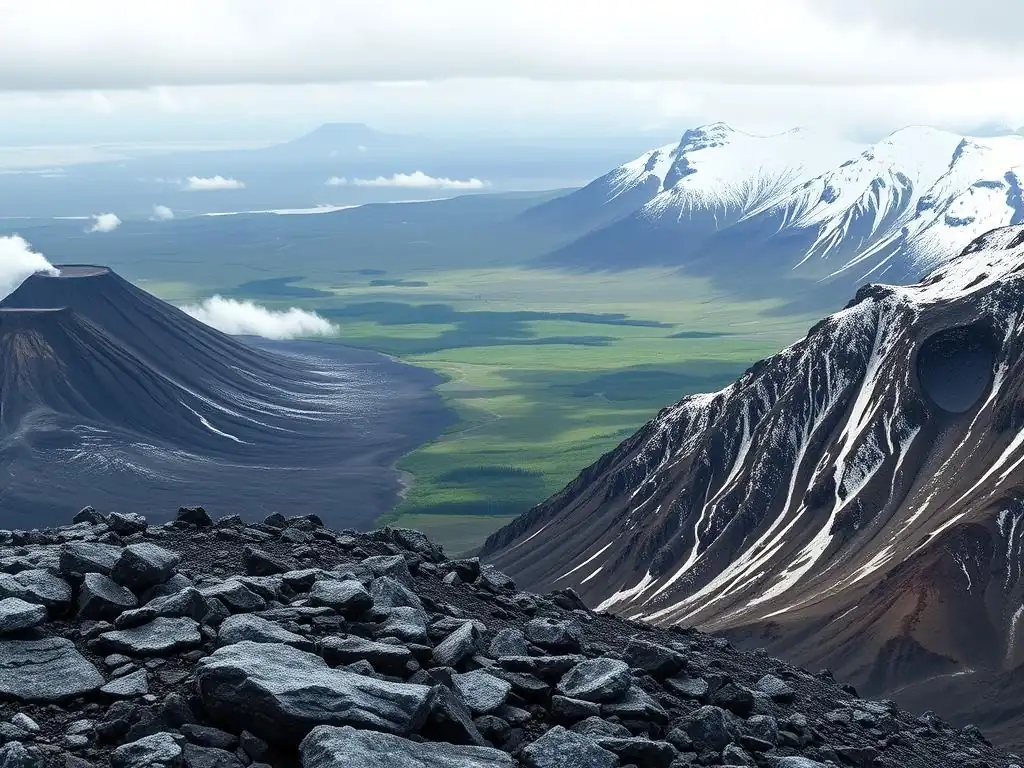
Case Study 1: Kuwae - Uncovering a Previously Overlooked Eruption
Evidence from Ice Cores Supporting the Eruption
The Kuwae caldera volcano in Vanuatu, located in the southwest Pacific, is now recognized as the source of one of the largest volcanic eruptions of the last millennium, occurring around 1452 or 1453 CE. Initially, the eruption was relatively overlooked in global climate reconstructions, but detailed analysis of ice cores provided crucial evidence for its significant magnitude and global impact.
Ice cores from both Greenland and Antarctica exhibit a prominent sulfate spike dating to around 1457 CE, with some dating uncertainties. The magnitude of this sulfate deposition is comparable to or even exceeds that of the well-known 1815 Tambora eruption in some ice core records, suggesting a very large sulfur dioxide release.
Specifically, studies analyzing sulfate concentrations in ice cores from Greenland, such as GISP2 and GRIP, revealed a large and distinct sulfate anomaly in layers corresponding to the mid-15th century. The isotopic signature of the sulfate in these ice cores further supports a volcanic origin, distinguishing it from other potential sulfate sources.
Corroborating Evidence from Historical Accounts and Tree Rings
While the ice core evidence strongly pointed to a major eruption around the mid-15th century, initially, the source volcano was unknown, and historical records directly linking the eruption to Kuwae were scarce. However, subsequent research combined various lines of evidence to pinpoint Kuwae as the source.
Analysis of volcanic glass shards (tephra) found in ice cores matched the geochemical fingerprint of tephra found in sediment cores and on islands near Vanuatu, confirming the source region. Furthermore, re-examination of historical chronicles, particularly from Europe, revealed accounts of unusual atmospheric phenomena and climate anomalies in the mid-1450s.
These included reports of dim sunlight, prolonged haze, and unusually cold summers, consistent with the expected atmospheric and climatic effects of a large volcanic eruption. Dendrochronological studies from around the globe also showed evidence of a significant growth downturn in tree rings around the mid-15th century, further corroborating the timing and global reach of the Kuwae eruption's climatic impact.
Case Study 2: Billy Mitchell - Re-evaluating the Magnitude of a Known Eruption
Analyzing Sulfate Deposits to Refine Eruption Size Estimates
The eruption of Billy Mitchell volcano on Bougainville Island, Papua New Guinea, around 1580 CE, was a known historical eruption, but its magnitude and global climatic impact were initially underestimated. Early assessments based on limited historical accounts and local geological evidence suggested a moderate eruption.
However, high-resolution ice core analysis has led to a re-evaluation of its size and significance. Detailed studies of sulfate deposits in Antarctic ice cores, particularly from the Law Dome ice core site, revealed a substantial sulfate spike corresponding to the late 16th century.
The magnitude of this sulfate signal was larger than initially anticipated, indicating a more significant sulfur dioxide release than previously thought. Quantitative analysis of the sulfate concentration and flux in the ice core allowed scientists to refine estimates of the eruption's Volcanic Explosivity Index (VEI) and its sulfur dioxide yield, suggesting a VEI of around 6, potentially placing it among the larger eruptions of the Little Ice Age.
The Impact on Regional and Global Climate
The revised magnitude estimate for the Billy Mitchell eruption has implications for understanding its regional and global climate impact. Climate model simulations, forced with the updated volcanic forcing from Billy Mitchell based on ice core sulfate data, suggest that the eruption likely caused a detectable global cooling, although less pronounced than that of larger eruptions like Tambora or Kuwae.
Regionally, the eruption likely had a more significant impact on the Pacific region and potentially influenced the El Niño-Southern Oscillation (ENSO) patterns. Tree ring records from the Southern Hemisphere, particularly from South America and New Zealand, show evidence of reduced tree growth in the years following the estimated eruption date, supporting the regional climate impact.
Further research is ongoing to fully disentangle the climatic effects of the Billy Mitchell eruption from other factors influencing climate variability during that period, but the re-evaluation of its magnitude through ice core analysis has highlighted its previously underestimated role in Little Ice Age climate forcing.
Case Study 3: Unknown 1452/53 Eruption - Linking Eruption Timing to Climate Anomalies
Precise Dating of the Eruption using Multiple Proxies
Prior to the identification of Kuwae as the source, the large volcanic sulfate spike in ice cores around 1452/53 CE was attributed to an "unknown" eruption. Even after Kuwae was identified, some studies suggest that the sulfate signal might represent a complex series of eruptions, possibly including another significant, but still unidentified, volcanic event around the same time.
Precise dating of this eruption or eruptions complex has been achieved through the combined use of multiple proxy records. High-resolution ice core dating, including annual layer counting and tephrochronology, provides a relatively precise timeframe for the sulfate deposition.
Furthermore, detailed analysis of tree ring records from various regions has identified a distinct and widespread growth anomaly around the mid-15th century. By aligning the ice core and tree ring chronologies, and considering dating uncertainties in both archives, researchers have refined the estimated timing of this eruption event to the years 1452 or 1453 CE, or potentially a series of eruptions spanning a few years around this period.
Exploring the Potential Climate Forcing of the Eruption
The "unknown 1452/53 eruption," whether a single event or a series, is recognized as a significant climate forcing event in the mid-15th century, contributing to the onset of a particularly cold phase within the Little Ice Age. Climate model simulations that incorporate volcanic forcing based on the ice core sulfate record of this eruption show a notable cooling response, particularly in the Northern Hemisphere.
This cooling is consistent with historical accounts of severe winters and cold summers in Europe and other regions during the 1450s and 1460s. Furthermore, paleoclimate records from various archives, such as lake sediments and marine cores, indicate widespread environmental changes around this time, including glacial advances and shifts in vegetation patterns, which are consistent with a volcanically induced cooling.
While the precise source and characteristics of this "unknown" eruption(s) remain subjects of ongoing research, its significant contribution to climate forcing during the Little Ice Age is increasingly recognized, highlighting the importance of identifying and characterizing even those volcanic events whose sources are currently uncertain.
The Impact of Lesser-Known Volcanic Eruptions on the Little Ice Age Climate
The Cumulative Effect of Small to Moderate Eruptions
While major volcanic eruptions like Tambora and Krakatoa are known for their dramatic and short-lived global cooling effects, the cumulative impact of numerous small to moderate eruptions during the Little Ice Age is increasingly recognized as a significant factor in shaping the long-term climate of this period. Individually, these smaller eruptions may produce less pronounced sulfate signals in ice cores and cause less immediate global cooling compared to massive eruptions.
However, when occurring frequently over decades or centuries, their cumulative effect can be substantial. The continuous injection of volcanic aerosols into the stratosphere, even at lower magnitudes, can maintain a sustained level of radiative forcing, contributing to a prolonged cooling trend.
Recent research suggests that the Little Ice Age was characterized by a higher frequency of moderate volcanic eruptions compared to periods before and after. This "volcanic background noise," composed of numerous smaller eruptions, may have provided a persistent cooling influence that contributed to the overall cold conditions of the LIA.
Climate models are increasingly incorporating this cumulative effect of smaller eruptions to better simulate the long-term temperature trends observed during the Little Ice Age. Studies have shown that models that only consider major eruptions tend to underestimate the overall volcanic forcing and the magnitude of cooling during the LIA, highlighting the importance of accounting for the collective impact of lesser-known, moderate volcanic events.
Regional Variations in Climate Response to Volcanic Forcing
The climatic response to volcanic forcing is not uniform across the globe; it exhibits significant regional variations. The location of a volcanic eruption, its latitude, and the prevailing atmospheric circulation patterns influence how volcanic aerosols are dispersed and how they impact regional climates. Eruptions in the tropics, for example, tend to have a more global and symmetric aerosol dispersal, affecting both hemispheres more evenly.
Eruptions at higher latitudes may have a more hemispheric or even regional impact, depending on the stratospheric wind patterns. Furthermore, the orography (mountain ranges) and land-sea distribution can modify the regional climate response to volcanic forcing.
During the Little Ice Age, regional climate anomalies were prominent. While many regions experienced cooling, some areas might have experienced warming or changes in precipitation patterns. Understanding the regional distribution of lesser-known volcanic eruptions and their specific characteristics is crucial for explaining these regional climate variations during the LIA.
For instance, a cluster of moderate eruptions in the North Pacific might have different regional climate impacts compared to eruptions in the tropics or the North Atlantic. Studies are increasingly focusing on reconstructing the spatial and temporal patterns of volcanic eruptions during the LIA and analyzing their regionally specific climate responses, using both paleoclimate data and climate model simulations, to disentangle the complex interplay between volcanic forcing and regional climate variability.
Comparing the Influence of Major and Minor Eruptions
While major volcanic eruptions are undeniably important drivers of short-term climate cooling, the long-term and cumulative influence of minor to moderate eruptions during the Little Ice Age should not be underestimated. Major eruptions, like Tambora, can cause dramatic global cooling for a year or two, but their impact typically wanes relatively quickly as the stratospheric aerosols are removed from the atmosphere.
In contrast, frequent moderate eruptions, while individually causing less pronounced cooling, can sustain a longer-term cooling influence if they occur repeatedly over decades or centuries. The Little Ice Age was a period of prolonged cooling, suggesting that sustained forcing mechanisms were at play.
Comparing the relative influence of major and minor eruptions requires careful consideration of their frequency, magnitude, and duration of impact. It is plausible that the persistent cooling trend of the Little Ice Age was a result of a combination of factors, with major eruptions contributing to sharp cooling spikes, while the more frequent minor to moderate eruptions provided a sustained background cooling.
Recent research suggests that the cumulative radiative forcing from the ensemble of moderate eruptions during the LIA might be comparable to, or even exceed, the forcing from a few major eruptions. Therefore, a comprehensive understanding of Little Ice Age climate dynamics requires acknowledging the intertwined roles of both major and lesser-known volcanic eruptions, recognizing that the 'whispers' of numerous smaller events might have been just as significant as the 'roars' of the few truly massive eruptions in shaping the climate of this era.
Implications for Climate Modeling and Future Volcanic Risk Assessment
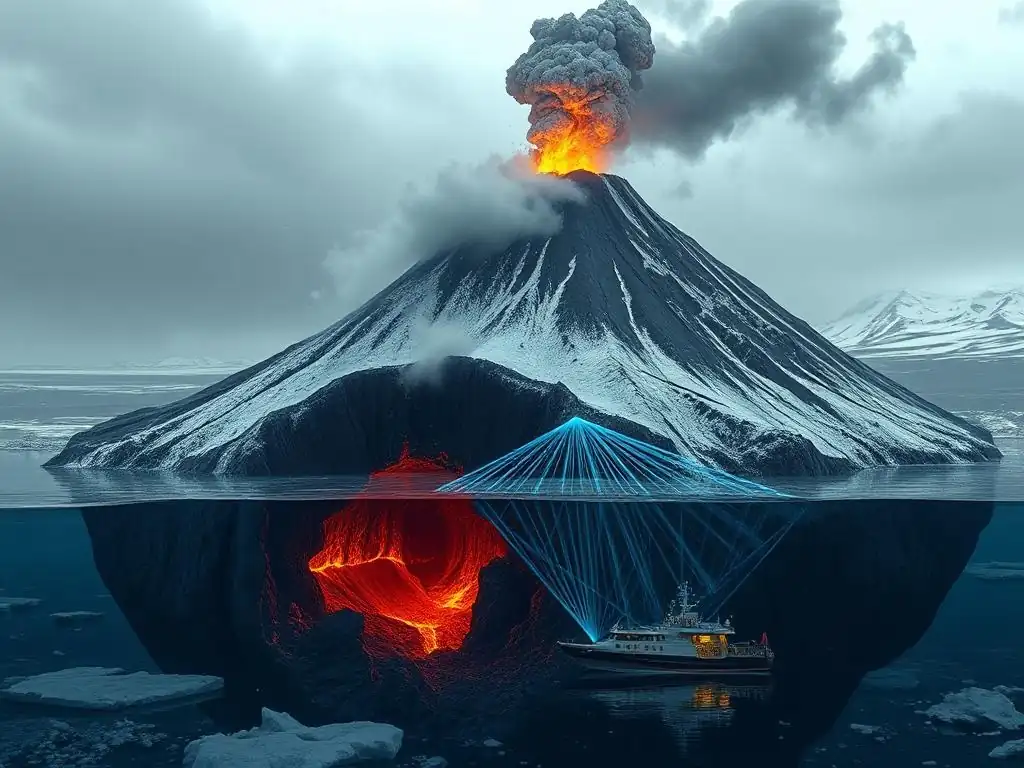
Improving Climate Models with a More Complete Volcanic Record
Incorporating a more complete volcanic record, including lesser-known eruptions, into climate models is crucial for improving their accuracy in simulating past climate and projecting future climate change. Climate models are essential tools for understanding the Earth's climate system and for predicting future climate scenarios. However, the accuracy of these models depends on the quality and completeness of the input data, including climate forcing factors like volcanic eruptions. Traditionally, climate models have often relied on simplified volcanic forcing datasets, primarily focusing on major eruptions and sometimes underrepresenting or omitting smaller to moderate events.
By integrating a more comprehensive record of volcanic eruptions, particularly those from the Little Ice Age, into climate models, we can improve their ability to simulate past climate variations and validate their performance against paleoclimate data. This enhanced validation increases confidence in the models' ability to project future climate changes, both under natural forcing scenarios (including future volcanic eruptions) and anthropogenic forcing scenarios (greenhouse gas emissions).
Furthermore, a more detailed volcanic record allows for a better representation of the temporal and spatial variability of volcanic forcing in climate models, leading to more realistic simulations of regional climate responses to volcanic eruptions and a more nuanced understanding of the complex interplay between volcanic forcing and other climate drivers.
Understanding the Potential for Future Climate Impacts from Moderate Eruptions
Research on lesser-known volcanic eruptions of the Little Ice Age has significant implications for understanding the potential climate impacts of future moderate eruptions. While major eruptions are often considered the primary volcanic threat to climate, the cumulative effect of smaller to moderate eruptions, as highlighted by LIA studies, underscores the importance of also considering these more frequent, less dramatic events in future climate risk assessments.
Moderate volcanic eruptions occur much more frequently than very large eruptions. Even though their individual climate impacts are less severe, their higher frequency means that they pose a more persistent and ongoing risk to climate.
Understanding the frequency-magnitude distribution of volcanic eruptions, and the potential climate forcing associated with eruptions across the entire spectrum of magnitudes, is crucial for developing robust climate risk management strategies. Future climate projections need to consider not only the possibility of infrequent mega-eruptions but also the more probable scenario of a series of moderate eruptions occurring over the coming decades or centuries.
The lessons learned from the Little Ice Age, particularly regarding the cumulative impact of lesser-known eruptions, highlight the need for a more holistic approach to volcanic risk assessment, encompassing the full range of potential volcanic events and their combined climate consequences.
Implications for Volcanic Hazard Assessment and Preparedness
The study of lesser-known volcanic eruptions also has implications for volcanic hazard assessment and preparedness, extending beyond just climate impacts. While volcanic hazard assessments often focus on the immediate and direct hazards posed by volcanoes, such as lava flows, pyroclastic flows, and ashfall, understanding the full spectrum of volcanic activity, including past eruptions of varying magnitudes, is essential for comprehensive hazard mitigation.
Reconstructing the history of volcanic eruptions, including the frequency and magnitude of both large and smaller events, provides valuable insights into the long-term behavior of individual volcanoes and volcanic regions. This knowledge is crucial for refining volcanic hazard maps, assessing the likelihood of future eruptions of different magnitudes, and developing effective volcano monitoring strategies.
Furthermore, understanding the spatial distribution of tephra deposits from past eruptions, even lesser-known ones, is important for assessing ashfall hazards in areas surrounding volcanoes and even at longer distances downwind. Tephra deposits can disrupt infrastructure, agriculture, and human health.
A more complete volcanic eruption record, including information on lesser-known events, allows for a more accurate assessment of tephra fall risk and for developing better preparedness plans for communities living in volcanically active regions. Therefore, investing in research to uncover the hidden history of volcanic eruptions, both large and small, not only enhances our understanding of climate but also contributes to improved volcanic hazard assessment and community resilience.
Conclusion: The Importance of Continued Research into Little Ice Age Volcanism
Summarizing the Key Findings and Their Significance
Research into lesser-known volcanic eruptions of the Little Ice Age has revealed the significant and previously underestimated role of these events in shaping the climate of this period. While major eruptions have long been recognized as important climate forcing agents, the cumulative effect of numerous small to moderate eruptions, occurring over decades and centuries, appears to have been a critical factor in driving the prolonged cooling of the LIA.
Ice core analysis, dendrochronology, and the re-evaluation of historical records have been instrumental in identifying and characterizing these previously overlooked eruptions, providing a more complete and nuanced picture of volcanic forcing during the Little Ice Age.
Case studies like Kuwae, Billy Mitchell, and the "unknown 1452/53 eruption" exemplify the power of multi-proxy approaches in uncovering hidden volcanic events and refining our understanding of their magnitude and climatic impacts. The findings highlight the need to move beyond a sole focus on major eruptions and to consider the broader spectrum of volcanic activity when assessing past and future climate change.
The insights gained from studying lesser-known volcanic eruptions of the Little Ice Age have significant implications for improving climate models, enhancing volcanic hazard assessments, and developing more robust strategies for climate risk management in a world facing both natural and anthropogenic climate challenges.
Future Directions for Research on Lesser-Known Volcanic Eruptions
Future research should continue to focus on refining the volcanic eruption record of the Little Ice Age, with a particular emphasis on identifying and characterizing lesser-known events. This includes further high-resolution analysis of ice cores from different locations, expanding dendrochronological networks to new regions, and systematically mining historical archives for overlooked accounts of volcanic phenomena and climate anomalies. Geochemical analysis of tephra deposits in ice cores and terrestrial archives is crucial for pinpointing the sources of unidentified eruptions and for reconstructing eruption characteristics.
Furthermore, more sophisticated climate modeling studies are needed to investigate the regional and global climate responses to different patterns of volcanic forcing, including the cumulative effects of multiple moderate eruptions. These models should incorporate improved representations of volcanic aerosol processes and their interactions with the climate system.
Finally, interdisciplinary research collaborations, bringing together volcanologists, paleoclimatologists, historians, and climate modelers, are essential to advance our understanding of the complex interplay between lesser-known volcanic eruptions, Little Ice Age climate, and the broader Earth system. Continued research in this area promises to further unveil the hidden history of volcanism and its profound influence on Earth's climate, both past and future.
Frequently Asked Questions
What is the "Little Ice Age" and why is it relevant to volcanic eruptions?
The Little Ice Age was a period of regional cooling, primarily in the North Atlantic region, that lasted from roughly the 14th to the mid-19th centuries. Volcanic eruptions are relevant because they can release sulfate aerosols into the stratosphere, which reflect sunlight and cause temporary cooling.
Why are some volcanic eruptions considered "lesser-known," even if they were significant?
Eruptions can be "lesser-known" due to a lack of historical records, remote location of the volcano, or because they were overshadowed by larger, more impactful events. In some cases, the scientific evidence of past eruptions is only recently being uncovered.
What methods do volcanologists use to identify and study lesser-known volcanic eruptions from the Little Ice Age?
Volcanologists use methods like ice core analysis (to detect sulfate spikes), dendrochronology (tree-ring dating), and tephrochronology (analyzing volcanic ash layers) to reconstruct past eruptions. These techniques help determine the timing and magnitude of events.
How can understanding lesser-known volcanic eruptions help us today?
Studying these eruptions allows us to better understand the climate impact of volcanic activity. This knowledge can improve climate models and help us predict the potential effects of future eruptions on global temperatures.
What are some examples of lesser-known volcanic eruptions that occurred during the Little Ice Age?
While the article goes into greater detail, some potential examples might include eruptions from remote volcanoes in the Andes or Kamchatka. Further research is constantly revealing new evidence of previously undocumented volcanic events from this period.
Final Reflection: Echoes of Fire and Ice
The exploration of lesser-known volcanic eruptions during the Little Ice Age reveals more than just historical data; it unveils a crucial understanding of Earth's dynamic systems and their profound impact on climate. By bringing these forgotten events to light, we gain a more complete picture of the past, allowing us to better anticipate and prepare for the future challenges posed by volcanic activity and climate change.
This journey into the past underscores the vital importance of interdisciplinary research and the power of piecing together fragmented evidence to uncover hidden truths. The Little Ice Age serves as a stark reminder of the delicate balance within our planet's systems and the potential for seemingly minor events to trigger significant global consequences. The past is never dead. It's not even past.
- William Faulkner. This quote resonates deeply when considering the long-lasting effects of these eruptions on climate, ecosystems, and human societies.
Now, consider the implications of this knowledge. How can we, as individuals and as a global community, learn from these lesser-known volcanic eruptions? Let this exploration inspire you to seek out the hidden stories around you, to question the accepted narratives, and to contribute to a more informed and resilient future. The Earth speaks to us through its history; are we listening closely enough to understand its warnings and appreciate its power?
Thank you for exploring the fascinating world of Little Ice Age eruptions! We hope you've gained a new appreciation for their subtle yet significant impact on our planet. Now, let's put that knowledge to use:
Here's how you can continue your exploration:
- Become a Citizen Scientist: Analyze historical weather records from your region during the Little Ice Age. Look for mentions of unusual atmospheric phenomena, such as persistent haze or vibrantly colored sunsets—these could indicate previously undocumented volcanic activity.
- Share this article with fellow history enthusiasts and volcanology enthusiasts. Let's spread the word and uncover more of these hidden eruptions!
- Join the Volcano Explorers forum and contribute to ongoing discussions about interpreting historical climate data for volcanic signatures.
What local historical record might hint at a previously unknown Little Ice Age eruption? Share your thoughts in the comments below!