
Case Study: Pompeii and Vesuvius – Ancient Lessons for Modern Volcanic Risk

Welcome to Volcano Explorers!
Can the past truly predict the future? Journey with us into the heart of volcanic science as we unravel the timeless lessons of Pompeii. Our main article, "Case Study: Pompeii and Vesuvius – Ancient Lessons for Modern Volcanic Risk," delves into the critical aspects of Pompeii volcanic risk management. But this is just the beginning. Prepare to explore the chilling echoes of Vesuvius and discover how its tragic past continues to shape our understanding of volcanic hazards today. Dare to learn more?
- Introduction: Pompeii's Tragic Lesson in Volcanic Risk Management
- Historical Context: Mount Vesuvius and Roman Society
- The Eruption of 79 AD: A Volcanic Catastrophe
- Modern Volcanic Risk Assessment: Learning from Pompeii
- Public Awareness and Education: Communicating Volcanic Risk
- Conclusion: Applying Ancient Lessons to Future Volcanic Risk Management
-
Frequently Asked Questions
- What were the primary causes of destruction in Pompeii during the eruption of Vesuvius in 79 AD?
- How does the Pompeii disaster inform modern volcanic risk management strategies?
- What specific monitoring techniques are used today to assess the volcanic risk of Mount Vesuvius?
- What are some of the challenges in implementing effective volcanic risk management strategies near Vesuvius today?
- How has understanding of volcanic processes evolved since the eruption that destroyed Pompeii?
- Final Reflection: Echoes of Pompeii, Lessons for Tomorrow
- Unearth Your Inner Volcanologist!
Introduction: Pompeii's Tragic Lesson in Volcanic Risk Management
The eruption of Mount Vesuvius in 79 AD, which buried the Roman city of Pompeii, stands as one of history's most devastating volcanic events. This ancient catastrophe is not merely a tale of destruction frozen in time, but a profound case study in volcanic risk management, or rather, the lack thereof.
The sudden and overwhelming force of the eruption caught the inhabitants of Pompeii and the surrounding region completely unprepared, highlighting the critical importance of understanding volcanic hazards and implementing effective mitigation strategies. Pompeii’s demise serves as a stark reminder that living in proximity to active volcanoes demands constant vigilance, informed preparedness, and robust strategies for volcanic risk management.
The ruins of Pompeii, remarkably preserved under layers of ash and pumice, offer a unique window into the past. They provide invaluable insights into the devastating consequences of volcanic eruptions and underscore the need for proactive measures in volcanic regions today.
By examining the events that unfolded nearly two millennia ago, modern societies living near volcanoes can glean essential lessons about volcanic risk assessment, emergency preparedness, and community resilience. Pompeii's tragedy is not just a historical event; it is a continuing lesson in the urgent need for effective volcanic risk management strategies to protect lives and infrastructure in volcanically active areas around the world.
Historical Context: Mount Vesuvius and Roman Society
The Geological Setting of Vesuvius: A History of Eruptions
Mount Vesuvius is not an isolated volcanic entity but rather part of the Campanian Volcanic Arc, a region characterized by intense geological activity due to the subduction of the African tectonic plate beneath the Eurasian plate. This complex tectonic setting has resulted in a long history of volcanic eruptions in the area, predating the Roman era by millennia.
Geological studies reveal that Vesuvius has undergone numerous eruptive cycles throughout its history, characterized by periods of explosive eruptions interspersed with longer periods of quiescence. Before the infamous 79 AD eruption, Vesuvius had been dormant for centuries, leading the Roman population to underestimate its inherent dangers.
Scientific analysis of volcanic deposits around Vesuvius has uncovered evidence of significant eruptions dating back thousands of years. These prehistoric eruptions shaped the landscape and deposited layers of volcanic material that would eventually become the fertile soils of the Campania region.
For instance, the Avellino eruption, which occurred around 1995 BC, was a Plinian eruption of considerable magnitude, significantly larger than the 79 AD event. These earlier eruptions, though not documented in written history as the 79 AD eruption was, serve as geological warnings about Vesuvius's capacity for violent activity and the long-term volcanic risk associated with the region, highlighting that the 79 AD eruption was not an anomaly, but part of a recurring pattern.
Roman Life in Pompeii: Prosperity and Complacency
Pompeii, prior to its destruction, was a thriving Roman city, strategically located in the fertile Campania region near the Bay of Naples. Its prosperity was built on agriculture, trade, and its advantageous coastal position. The city was a vibrant hub of commerce and culture, boasting sophisticated infrastructure including paved streets, public baths, theaters, and a complex aqueduct system. The region’s rich volcanic soil contributed significantly to its agricultural output, supporting a substantial population and facilitating economic growth. This very fertility, ironically, was a direct result of past volcanic activity, creating a paradoxical relationship between prosperity and volcanic risk.
Despite living in the shadow of Mount Vesuvius, there is little evidence to suggest that the Roman inhabitants of Pompeii perceived a significant volcanic threat in the immediate pre-eruption period. The long period of dormancy of Vesuvius likely fostered a sense of complacency.
While earthquakes, a common precursor to volcanic eruptions, were experienced in the years leading up to 79 AD, they may have been attributed to general seismic activity common in the region, rather than interpreted as a direct warning sign of an impending volcanic eruption. The Romans, while advanced in many aspects of engineering and administration, lacked a comprehensive understanding of volcanology and the specific signs of imminent volcanic eruptions, contributing to their vulnerability when Vesuvius finally awoke.
The Eruption of 79 AD: A Volcanic Catastrophe
The Stages of the Eruption: Pyroclastic Flows and Ashfall
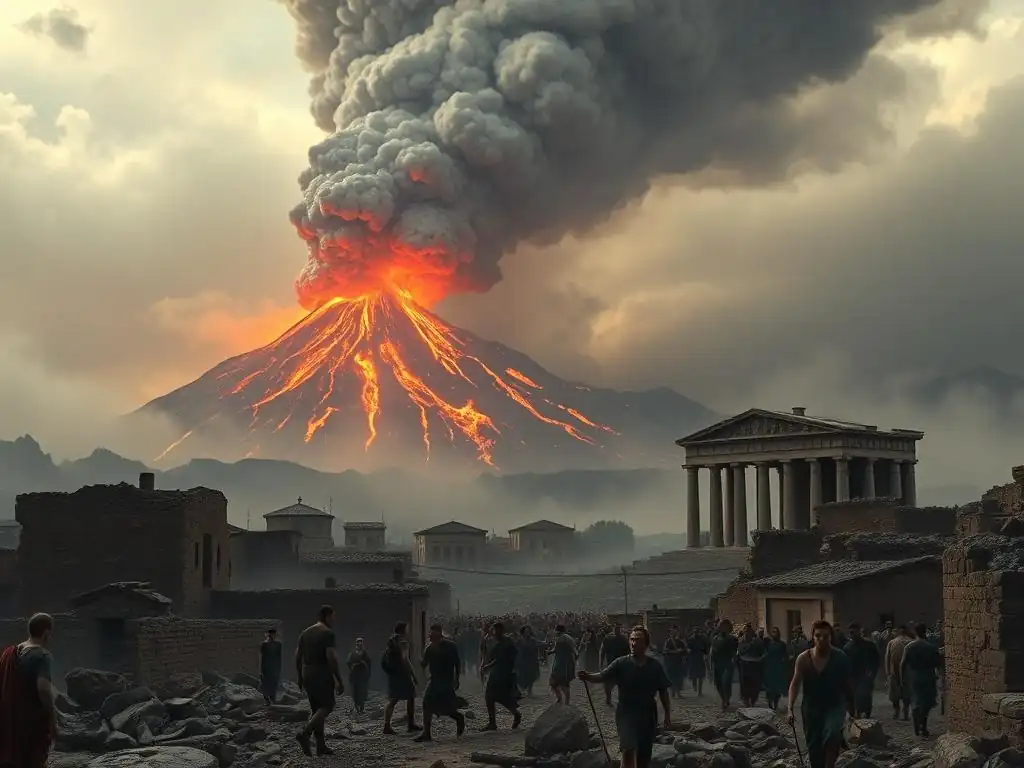
The eruption of Mount Vesuvius in 79 AD was a Plinian eruption, characterized by its highly explosive nature and the ejection of vast quantities of volcanic ash, pumice, and gas into the atmosphere. The eruption unfolded in distinct stages, each contributing to the devastating impact on Pompeii and the surrounding areas.
The initial phase began with a powerful explosive event that sent a towering column of ash and pumice high into the stratosphere, reaching an estimated height of 33 kilometers (approximately 20 miles). This phase primarily resulted in heavy ashfall and pumice rain over Pompeii and Herculaneum, burying buildings and causing roofs to collapse under the weight.
As the eruption progressed into its more lethal phase, pyroclastic flows and surges descended the flanks of Vesuvius. Pyroclastic flows are fast-moving currents of hot gas and volcanic debris that can reach temperatures of hundreds of degrees Celsius and speeds exceeding 100 kilometers per hour (62 mph). These flows are far more destructive than ashfall alone.
While Pompeii was initially spared the direct impact of the early pyroclastic flows, Herculaneum, located closer to Vesuvius and downwind, was engulfed and buried by these devastating surges in the later stages of the eruption. The combination of heavy ashfall followed by the arrival of pyroclastic flows ultimately sealed Pompeii's fate, leading to the complete burial and destruction of the city.
The Human Cost: Victims of Vesuvius
The eruption of Vesuvius in 79 AD resulted in a catastrophic loss of life. While the precise number of casualties remains debated, estimates based on archaeological evidence and skeletal remains range from hundreds to potentially thousands in Pompeii and Herculaneum alone, with likely more fatalities in the surrounding countryside. The victims perished from various causes directly related to the volcanic eruption.
Many were killed by falling debris during the initial ashfall phase, as roofs collapsed under the weight of accumulated pumice. Others succumbed to asphyxiation from the volcanic gases and fine ash particles that filled the air, making breathing impossible.
However, the most significant cause of death was attributed to the pyroclastic flows and surges. These superheated flows incinerated everything in their path, causing instant death to those caught in their destructive currents.
The famous plaster casts of Pompeii, created by pouring plaster into the voids left by decomposed bodies in the ash, poignantly illustrate the final moments of many victims, capturing their positions at the time of death and providing a haunting testament to the eruption's speed and violence. The human cost of the 79 AD eruption serves as a stark reminder of the lethal power of volcanic eruptions and the critical need for effective early warning systems and evacuation plans in volcanically active regions.
Modern Volcanic Risk Assessment: Learning from Pompeii
Identifying Volcanic Hazards: Mapping and Monitoring
Modern volcanology has made significant advancements in understanding volcanic processes and assessing volcanic hazards, directly informed by historical events like the Pompeii disaster. Identifying volcanic hazards begins with detailed geological mapping of volcanic areas. This involves studying past eruptions, analyzing volcanic deposits, and determining the potential areas that could be affected by future eruptions. Volcanic hazard maps delineate zones of varying risk based on the likely paths of lava flows, pyroclastic flows, ashfall distribution, and other volcanic phenomena. These maps are crucial tools for land-use planning and infrastructure development in volcanic regions, aiming to minimize exposure to volcanic hazards.
Furthermore, sophisticated monitoring networks are deployed around active volcanoes like Vesuvius. These networks utilize a range of instruments to detect subtle changes that may indicate impending volcanic activity. Seismometers monitor ground vibrations caused by magma movement beneath the surface. Gas sensors measure changes in volcanic gas emissions, which can signal changes in magma composition and activity.
Ground deformation instruments, such as GPS and tiltmeters, detect swelling or changes in the volcano's shape, which can indicate magma accumulation. Satellite-based monitoring techniques, including thermal imaging and radar interferometry, provide a broader perspective on volcanic activity and ground deformation. Data from these diverse monitoring systems are continuously analyzed to assess the volcano's state and provide early warnings of potential eruptions, directly addressing the lack of warning that contributed to the Pompeii tragedy.
Evacuation Planning: Preparing for Future Eruptions near Vesuvius
Learning from the catastrophic lack of preparedness in Pompeii, modern volcanic risk management places a strong emphasis on effective evacuation planning. For densely populated areas near active volcanoes like Vesuvius, robust evacuation plans are essential to minimize casualties in the event of an eruption. These plans are meticulously developed based on volcanic hazard assessments, population distribution, and available infrastructure. Evacuation zones are defined based on the potential reach of different volcanic hazards, ensuring that communities at highest risk can be moved to safer areas in a timely manner.
Evacuation plans are not static documents; they require regular review, updates, and drills to ensure their effectiveness. Emergency services, local authorities, and community members are involved in these exercises to familiarize themselves with evacuation procedures and identify potential bottlenecks or areas for improvement. Clear communication strategies are vital, utilizing multiple channels such as sirens, public broadcasts, mobile alerts, and social media to disseminate warnings and evacuation instructions to the population.
The goal is to achieve rapid and orderly evacuations, minimizing panic and confusion, and ensuring that vulnerable populations receive the necessary assistance. The lessons of Pompeii underscore that proactive and well-rehearsed evacuation plans are a cornerstone of modern volcanic risk management, transforming potential catastrophes into manageable emergencies.
Infrastructure and Building Codes: Mitigating Volcanic Hazards
In addition to monitoring and evacuation planning, modern volcanic risk management also incorporates strategies for mitigating volcanic hazards through infrastructure design and building codes. In volcanic regions, infrastructure can be designed and constructed to be more resilient to volcanic impacts. For example, critical facilities such as hospitals and emergency services can be located outside high-hazard zones or built to withstand ashfall and minor seismic activity. Lifeline infrastructure, including power lines, water pipelines, and transportation networks, can be designed with redundancy and alternative routes to ensure functionality during and after an eruption.
Building codes in volcanic areas are increasingly incorporating specific provisions to mitigate volcanic hazards. These codes may mandate stronger roof designs to withstand ash loads, specify materials resistant to volcanic ash corrosion, and regulate building locations to avoid high-risk zones. In areas prone to ashfall, building designs may incorporate steeply pitched roofs to reduce ash accumulation.
Public buildings, especially schools and community centers, can be designed as shelters capable of providing temporary refuge during ashfall events. By integrating volcanic hazard considerations into infrastructure planning and building codes, communities can significantly reduce their vulnerability and enhance their resilience to future volcanic eruptions, directly applying preventative measures that were absent in Pompeii.
Public Awareness and Education: Communicating Volcanic Risk
Raising Awareness of Volcanic Hazards: Lessons from History
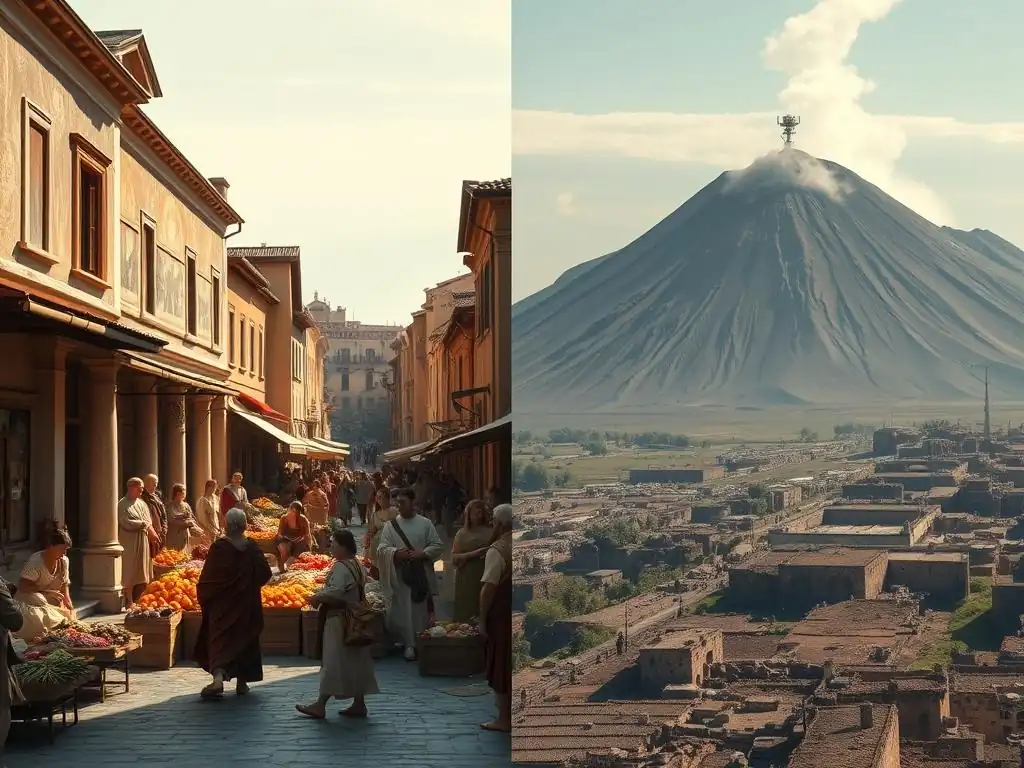
A critical component of modern volcanic risk management, starkly highlighted by the Pompeii tragedy, is public awareness and education. The lack of understanding of volcanic hazards among the Roman population contributed significantly to the disaster's scale. Today, educational initiatives play a vital role in informing communities living near volcanoes about the potential risks, the warning signs of volcanic activity, and appropriate safety measures. Public awareness campaigns utilize various media, including websites, brochures, public meetings, and school programs, to disseminate information about volcanic hazards and risk reduction strategies.
These educational efforts emphasize the importance of recognizing volcanic warning signs, such as increased seismic activity, changes in gas emissions, or ground deformation. They explain the different types of volcanic hazards, including ashfall, pyroclastic flows, lava flows, and lahars (volcanic mudflows), and the specific dangers associated with each. Historical case studies, like Pompeii, are powerful tools in raising awareness, demonstrating the real and devastating consequences of volcanic eruptions when preparedness is lacking. By fostering a culture of volcanic awareness, communities can be empowered to make informed decisions, take proactive steps to protect themselves, and cooperate effectively during volcanic emergencies.
Community Engagement: Building Resilience in Volcanic Regions
Effective volcanic risk management is not solely the responsibility of scientists and authorities; it requires active community engagement and participation. Building resilience in volcanic regions involves fostering a collaborative approach where local communities are integral partners in risk reduction efforts. Community engagement initiatives encourage local knowledge sharing, empower residents to participate in evacuation planning, and promote the development of community-based early warning systems. Local residents often possess valuable insights into past volcanic events and local terrain that can enhance hazard assessments and evacuation strategies.
Community-based disaster preparedness programs train local volunteers to act as first responders during volcanic emergencies, providing essential support in evacuation, communication, and assistance to vulnerable populations. Participatory risk assessments involve community members in identifying local vulnerabilities and developing tailored risk reduction measures. By fostering a sense of ownership and shared responsibility, community engagement strengthens social cohesion, enhances local capacity to respond to volcanic crises, and builds long-term resilience in volcanic regions. This proactive community involvement stands in stark contrast to the apparent lack of community preparedness in Pompeii, underscoring its importance for modern volcanic risk management.
Conclusion: Applying Ancient Lessons to Future Volcanic Risk Management
The tragedy of Pompeii serves as an enduring and potent lesson in volcanic risk management that resonates profoundly in the 21st century. The eruption of Vesuvius in 79 AD was not merely a natural catastrophe; it was a disaster exacerbated by a lack of understanding, preparedness, and effective risk mitigation strategies. By meticulously studying the events that unfolded in Pompeii, modern volcanology and emergency management have derived invaluable insights into the crucial elements of volcanic risk management: hazard assessment, monitoring, evacuation planning, infrastructure resilience, and public awareness.
The lessons from Pompeii are not confined to the Vesuvius region; they are universally applicable to all volcanic regions worldwide. The imperative for continuous volcanic monitoring, robust evacuation plans, resilient infrastructure, and informed and engaged communities remains paramount. As populations continue to grow near active volcanoes globally, the need to learn from the past and proactively manage volcanic risk becomes ever more critical.
Pompeii's silent ruins stand as a powerful reminder that effective volcanic risk management is not just a scientific and technical endeavor, but a societal responsibility to protect lives and build resilient communities in the face of nature's immense power. The ancient lessons of Pompeii are, therefore, profoundly relevant for ensuring a safer future for those living in the shadow of volcanoes today.
Frequently Asked Questions
What were the primary causes of destruction in Pompeii during the eruption of Vesuvius in 79 AD?
The primary causes were pyroclastic flows and ashfall, leading to suffocation, burial, and structural collapse. The city was not directly hit by lava.
How does the Pompeii disaster inform modern volcanic risk management strategies?
Pompeii highlights the importance of early warning systems and effective evacuation plans. It underscores the need to understand potential eruption styles and their impacts.
What specific monitoring techniques are used today to assess the volcanic risk of Mount Vesuvius?
Modern monitoring includes seismic activity tracking, gas emission analysis, and ground deformation measurements. These techniques aim to detect subtle changes indicating magma movement.
What are some of the challenges in implementing effective volcanic risk management strategies near Vesuvius today?
Challenges include high population density, complex infrastructure, and difficulty in achieving full evacuation. Public education and preparedness are also crucial but challenging.
How has understanding of volcanic processes evolved since the eruption that destroyed Pompeii?
Scientific advancements have provided a much deeper understanding of magma dynamics, eruption triggers, and hazard assessment. This allows for more accurate forecasting and mitigation strategies.
Final Reflection: Echoes of Pompeii, Lessons for Tomorrow
The eruption of Vesuvius in 79 AD, forever etching Pompeii into the annals of history, serves as a stark reminder of nature's raw power. Understanding Pompeii's fate is not just an exercise in historical curiosity; it's a crucial imperative for modern volcanic risk management. The lessons learned from this ancient tragedy, meticulously analyzed in this study, directly inform our strategies for mitigating volcanic hazards in vulnerable communities worldwide.
The enduring fascination with Pompeii lies not only in its preservation but also in its poignant reminder of human vulnerability. The story of Pompeii resonates deeply because it underscores the importance of preparedness and proactive measures in the face of natural disasters. It compels us to consider our own relationship with the environment and the responsibility we bear to protect ourselves and future generations. History is a guide to navigation in perilous times. History is who we are and why we are the way we are.
- David McCullough. This quote perfectly encapsulates why studying Pompeii's volcanic risk is so vital.
As we reflect on the lessons of Pompeii, let us not merely be passive observers of history. Instead, let us actively engage in promoting awareness, supporting scientific research, and advocating for effective volcanic risk management strategies in our own communities and beyond. The echoes of Vesuvius serve as a constant reminder: preparedness is not just a precaution; it is a moral imperative.
Unearth Your Inner Volcanologist!
Thank you for delving into the fascinating story of Pompeii and Vesuvius. By exploring the past, we've gained valuable insights into managing volcanic risk today. Now, let's translate that knowledge into action!
Here's how you can continue your volcano exploration:
- Become a Citizen Scientist: Explore Geological Survey websites for your region, and report any unusual activity you observe. Your observations could contribute to early warning systems and help protect your community.:
- Share this article with friends, family, and anyone interested in history, geology, or disaster preparedness. Let's spread awareness together!
- Brainstorm your own evacuation plan! Consider what you've learned from Pompeii and create a practical plan for yourself and your family in case of a natural disaster.
What specific actions can you take today to be more prepared for natural disasters in your own community?