
Volcanic Soils, Thirsty Lands: Sustainable Irrigation Strategies for Volcanic Farms

Welcome to Volcano Explorers!
Prepare to be amazed. Have you ever considered how the very force that sculpts mountains can also nourish life? Delve into the surprising world where fire meets fertile ground, and discover how sustainable irrigation volcanic farms are rewriting the rules of agriculture in the shadow of giants. Read on to uncover the innovative strategies transforming volcanic landscapes into thriving ecosystems.
- Understanding the Challenges of Farming on Volcanic Soils
- The Importance of Sustainable Irrigation for Volcanic Farms
-
Sustainable Irrigation Strategies for Volcanic Farms: A Detailed Guide
- Drip Irrigation Systems: Precision Watering for Optimal Growth
- Micro-Sprinkler Irrigation: Efficient Water Distribution for Larger Areas
- Water Harvesting Techniques: Capturing and Storing Rainwater
- Utilizing Greywater for Irrigation: A Sustainable Alternative
- Soil Moisture Monitoring: Optimizing Irrigation Schedules
- Case Studies: Successful Sustainable Irrigation Projects on Volcanic Farms
- Best Practices for Water Conservation on Volcanic Farms
- Government Incentives and Support for Sustainable Irrigation in Volcanic Regions
- Conclusion: Securing a Sustainable Future for Volcanic Agriculture Through Innovative Irrigation
-
Frequently Asked Questions
- How does volcanic soil benefit agriculture, especially in regions with limited water?
- What are some sustainable irrigation methods suitable for volcanic farms facing water scarcity?
- Why is sustainable irrigation particularly important for farms located on or near volcanoes?
- Can the unique properties of volcanic soil affect the choice of irrigation system?
- Where can I find more information on implementing sustainable irrigation practices on volcanic farms?
- Final Reflection: Cultivating Resilience in Volcanic Landscapes
- Transform Your Volcanic Farm: Embrace Sustainable Irrigation!
Understanding the Challenges of Farming on Volcanic Soils
Unique Properties of Andisols and Water Retention
Volcanic soils, scientifically known as Andisols, possess a unique combination of characteristics that both benefit and challenge agricultural practices, particularly in terms of water management. Formed from volcanic ash and other volcanic ejecta, these soils are typically rich in minerals and have excellent drainage due to their porous nature. A key component of Andisols is allophane and imogolite, clay minerals that are amorphous and have a high surface area.
This unique mineralogy contributes to a paradoxical situation: while Andisols drain freely, they also exhibit a remarkable capacity to retain water, making it available to plants. This water retention is not solely due to small pore spaces, but also to the chemical attraction of water molecules to the surfaces of allophane and imogolite.
However, this water retention is not without its nuances. Andisols can hold a significant amount of water, but much of it might be held at tensions that are less available to plants compared to other soil types. Furthermore, the very property that makes Andisols well-drained – their high porosity – can also lead to rapid water loss through evapotranspiration, especially in open, sunny, or windy environments.
The coarse texture and low bulk density of many Andisols also contribute to this rapid water movement and potential loss. Therefore, understanding the specific water retention characteristics of Andisols in a given location is crucial for effective irrigation management, moving beyond generalizations and considering local soil variations and climatic conditions.
Water Scarcity and Drought Risks in the Pacific Northwest
While often perceived as lush and wet, regions like the Pacific Northwest of the United States, which are characterized by volcanic landscapes and Andisol soils, are increasingly facing water scarcity and drought risks. This is particularly true during the summer months when precipitation is minimal and agricultural water demand peaks. The Cascade Range, a prominent volcanic mountain range in this region, is home to fertile Andisols that support a diverse range of agriculture, including potato farms, vineyards, and orchards. However, these areas are becoming increasingly vulnerable to water shortages due to a combination of factors.
Snowpack, which acts as a natural reservoir and a crucial source of water during the dry season, is declining across the Pacific Northwest due to rising temperatures linked to climate change. This reduced snowmelt translates directly into less water available for irrigation during the critical growing season.
Furthermore, increasing demand for water from urban centers, industry, and environmental flows for salmon and other aquatic ecosystems puts additional pressure on already strained water resources. For volcanic farms in the Pacific Northwest, this escalating competition for water necessitates a shift towards more sustainable and efficient irrigation practices to ensure long-term agricultural viability in the face of growing water scarcity and drought risks.
Climate Change Impact on Water Availability for Andisol Agriculture
Climate change is significantly altering precipitation patterns and temperature regimes, profoundly impacting water availability for agriculture worldwide, and volcanic regions with Andisol soils are no exception. Projected changes include more erratic rainfall, with longer periods of drought punctuated by intense precipitation events. This shift towards extremes poses significant challenges for managing water resources in volcanic agricultural systems. Andisols, while having good water retention properties, can be particularly vulnerable to these changing patterns.
Increased temperatures lead to higher evapotranspiration rates, meaning that crops require more water to maintain optimal growth and yields. Simultaneously, altered precipitation patterns can result in less predictable water availability from rainfall and snowmelt, the primary sources of water for many volcanic regions.
For example, in the Mediterranean volcanic zones, like parts of Italy and Greece where Andisols support olive groves and vineyards, summers are becoming hotter and drier, intensifying water stress during critical growing stages. These combined effects of climate change necessitate a proactive and adaptive approach to water management in volcanic agriculture, emphasizing sustainable irrigation strategies to mitigate the impacts of reduced and less predictable water availability.
The Importance of Sustainable Irrigation for Volcanic Farms
Limitations of Flood Irrigation in Volcanic Terrains
Flood irrigation, one of the oldest and most widespread irrigation methods, involves delivering large volumes of water across the land surface to saturate the soil. While seemingly simple, flood irrigation presents significant limitations in volcanic terrains characterized by Andisol soils. The inherent properties of Andisols, particularly their excellent drainage and high porosity, make them poorly suited for flood irrigation. Water tends to infiltrate rapidly into Andisol profiles, leading to uneven water distribution across the field. Areas closer to the water source may become waterlogged, while areas further away might receive insufficient moisture.
This rapid infiltration also results in substantial water losses through deep percolation, where water moves below the root zone, becoming unavailable to plants and potentially carrying away valuable nutrients. Nutrient leaching is a major concern in Andisols under flood irrigation, as the rapid downward movement of water can wash away essential plant nutrients like nitrogen and potassium, reducing soil fertility and requiring increased fertilizer application. Furthermore, flood irrigation is inherently inefficient in terms of water use, with a large percentage of applied water lost to evaporation and runoff. In water-scarce volcanic regions, this inefficiency is unsustainable and environmentally damaging.
Sustainable Irrigation Benefits for Crop Yield and Soil Health
Sustainable irrigation practices offer a transformative approach to water management on volcanic farms, providing significant benefits for both crop yield and long-term soil health. Unlike traditional flood irrigation, sustainable methods like drip irrigation and micro-sprinklers focus on delivering water precisely and efficiently to the plant root zone, minimizing water waste and maximizing water use efficiency. This precision watering directly translates to improved crop yields, as plants receive the optimal amount of water when and where they need it, reducing water stress and promoting healthy growth.
Beyond yield improvements, sustainable irrigation plays a crucial role in maintaining and enhancing soil health in Andisol environments. By avoiding over-saturation and waterlogging, these methods prevent anaerobic conditions that can harm beneficial soil microorganisms and root systems. Reduced water runoff and deep percolation minimize soil erosion and nutrient leaching, preserving soil fertility and reducing the need for excessive fertilizer inputs.
Furthermore, some sustainable irrigation techniques, such as subsurface drip irrigation, can help to improve soil structure over time by promoting healthy root development and reducing soil compaction. The long-term benefits of sustainable irrigation extend beyond immediate crop production, contributing to the overall resilience and productivity of volcanic agricultural lands.
Protecting Water Resources: A Key Goal of Sustainable Volcanic Farming
In an era of increasing water scarcity and growing environmental awareness, protecting water resources is paramount, and sustainable irrigation is a cornerstone of this effort, particularly for volcanic farming. Volcanic regions often rely on groundwater or surface water sources that are vulnerable to depletion and contamination. Traditional irrigation methods, with their inherent inefficiencies, contribute significantly to water wastage, exacerbating water scarcity issues and potentially impacting downstream ecosystems and communities. Sustainable irrigation, by its very nature, prioritizes water conservation.
By utilizing precision technologies and water-efficient techniques, sustainable irrigation significantly reduces water withdrawals from rivers, lakes, and aquifers. Drip irrigation, for example, can reduce water use by up to 50-70% compared to flood irrigation. This water conservation not only safeguards precious water resources for future generations but also reduces the energy required for water pumping and delivery, contributing to a lower carbon footprint for volcanic agriculture.
Moreover, by minimizing nutrient leaching and runoff, sustainable irrigation helps to protect water quality, preventing pollution of surface and groundwater sources with agricultural chemicals and excess nutrients. Adopting sustainable irrigation practices is therefore not just an agronomic improvement; it is a crucial step towards responsible water stewardship and environmental sustainability in volcanic landscapes.
Sustainable Irrigation Strategies for Volcanic Farms: A Detailed Guide
Drip Irrigation Systems: Precision Watering for Optimal Growth
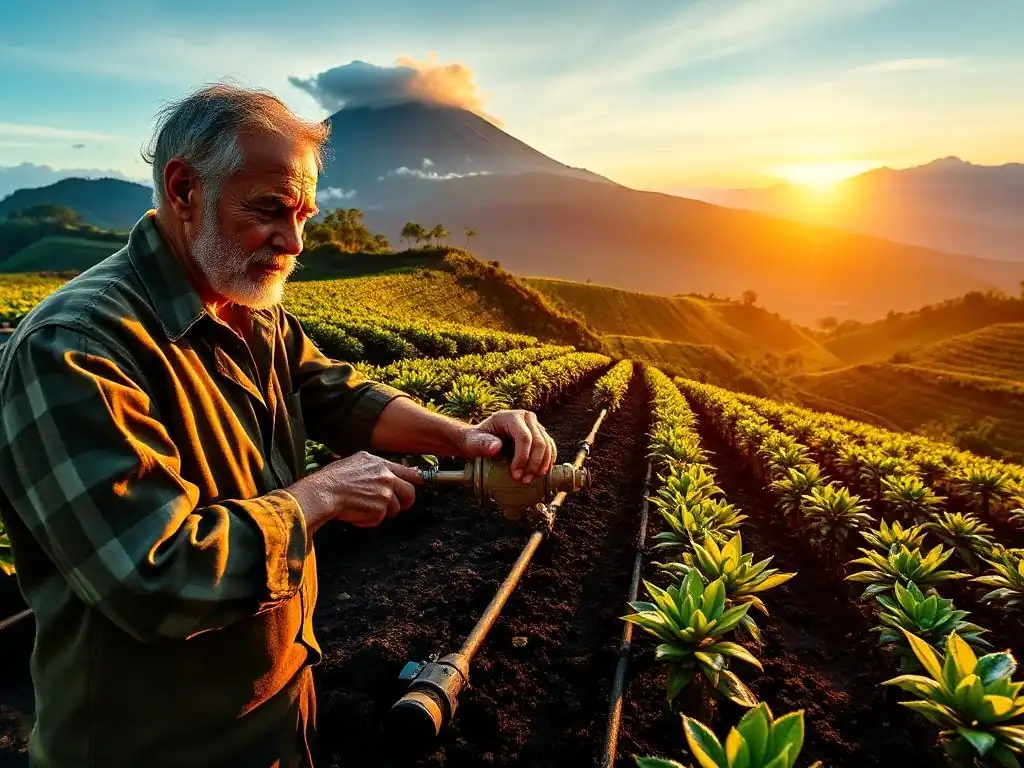
Drip irrigation stands out as a highly effective sustainable irrigation strategy for volcanic farms, particularly those with Andisol soils. This method delivers water directly to the root zone of plants through a network of tubes and emitters, applying water slowly and precisely. This targeted approach minimizes water loss through evaporation, runoff, and deep percolation, making it exceptionally water-efficient. For Andisols, with their good drainage and potential for rapid water movement, drip irrigation ensures that water is delivered exactly where it's needed, maximizing plant uptake and minimizing wastage.
Drip irrigation systems can be tailored to the specific needs of different crops and soil types, allowing for precise control over the amount and timing of water application. This level of control is crucial for optimizing plant growth and yield, especially in water-limited environments.
Beyond water conservation, drip irrigation offers other benefits including reduced weed growth, as the soil surface between plants remains drier, and decreased disease incidence, as foliage remains dry, minimizing conditions favorable for fungal diseases. The precise application of water also facilitates the efficient delivery of fertilizers directly to the root zone through fertigation, further enhancing nutrient uptake and minimizing nutrient losses.
Selecting Drip Irrigation Systems for Andisol Farms
Choosing the right drip irrigation system for Andisol farms requires careful consideration of the unique soil properties and crop requirements. Given the rapid infiltration rate of Andisols, emitter selection is paramount. Low-flow emitters are generally recommended to match the soil's infiltration capacity and prevent runoff.
Emitters with pressure compensation are also beneficial, especially in undulating volcanic terrain, as they ensure uniform water delivery across varying elevations and distances from the water source. Emitter spacing should be adjusted based on the crop type and rooting depth, as well as the lateral water movement in the Andisol. Closer spacing may be needed for crops with shallow root systems or in soils with limited lateral water distribution.
The overall system design should also take into account the potential for clogging. Andisols, while generally clean, can contain fine volcanic ash particles that could potentially clog emitters over time. Therefore, robust filtration systems are essential to remove sediment and prevent clogging issues.
Regular flushing of the drip lines is also recommended as a preventative maintenance measure. Furthermore, the durability of the drip tubing and emitters should be considered, especially in volcanic landscapes that may be exposed to harsh weather conditions and UV radiation. Selecting high-quality, UV-resistant materials will ensure the longevity and reliable performance of the drip irrigation system.
Installing and Maintaining Drip Irrigation on Andisol Soil
Installing drip irrigation on Andisol soil, while generally straightforward, requires attention to specific details to ensure optimal performance and longevity. Soil preparation is typically minimal for Andisols due to their loose structure, but ensuring a level surface can aid in uniform water distribution. When laying out drip lines, consider the crop row spacing and plant density to optimize emitter placement and water delivery.
For surface drip irrigation, securing the drip lines to prevent movement due to wind or farm operations is important. Subsurface drip irrigation, where drip lines are buried below the soil surface, offers further water savings and reduces surface evaporation, but requires more careful installation and planning.
Maintenance of drip irrigation systems on Andisol farms is crucial for sustained efficiency. Regular inspection of emitters for clogging and damage is essential. Flushing the drip lines periodically removes any accumulated sediment or algae. Monitoring system pressure and flow rates helps to identify leaks or blockages.
Soil moisture monitoring, using sensors placed strategically within the root zone, provides valuable data for adjusting irrigation schedules and ensuring optimal water application. Proper winterization of the system, including draining and flushing lines, is important in regions with freezing temperatures to prevent damage to components. Consistent maintenance and monitoring will maximize the benefits of drip irrigation and ensure its long-term effectiveness on volcanic farms.
Micro-Sprinkler Irrigation: Efficient Water Distribution for Larger Areas
Micro-sprinkler irrigation presents a viable sustainable irrigation alternative for volcanic farms, particularly well-suited for larger areas or crops where a slightly wider wetting pattern is beneficial. Unlike drip irrigation, which delivers water to individual plant locations, micro-sprinklers distribute water over a small area, creating a localized spray or stream. This method offers a balance between the precision of drip irrigation and the wider coverage of traditional sprinkler systems. For Andisol soils, micro-sprinklers can be effective in providing uniform moisture to a larger root zone, especially for crops with broader root systems or closely spaced plantings.
Micro-sprinklers are available in a variety of patterns and flow rates, allowing for customization to specific crop needs and field conditions. They can be used for overhead irrigation, where sprinklers are positioned above the crop canopy, or for under-tree or under-vine irrigation in orchards and vineyards. Compared to flood irrigation or traditional sprinklers, micro-sprinklers significantly reduce water waste through runoff and evaporation, improving water use efficiency. They also offer benefits such as frost protection in colder volcanic regions and can be used for applying fertilizers and pesticides through fertigation and chemigation.
Micro-Sprinklers on Andisol Farms: When to Use
Micro-sprinklers are particularly advantageous on Andisol farms in specific scenarios. For crops with dense canopies or closely spaced plantings, such as berries, vegetables, or cover crops, micro-sprinklers can provide more uniform water distribution across the entire planting area compared to drip irrigation, which might require a more extensive network of lines and emitters. In orchards and vineyards, under-tree or under-vine micro-sprinklers are effective for delivering water directly to the root zone while minimizing wetting of the foliage, reducing disease risks and water loss through canopy interception.
Micro-sprinklers are also a good option for irrigating larger fields or areas with irregular shapes where installing and managing extensive drip irrigation networks might be less practical or cost-effective. Furthermore, micro-sprinklers can be beneficial in situations where some degree of surface wetting is desired, such as for dust suppression or to promote seed germination in certain crops.
However, it's important to consider that micro-sprinklers are generally less water-efficient than drip irrigation, especially in windy conditions or hotter climates, due to greater evaporative losses. Therefore, careful system design and management are crucial to maximize water conservation benefits when using micro-sprinklers on Andisol farms.
Optimizing Micro-Sprinkler Placement for Water Conservation
To maximize water conservation and irrigation efficiency with micro-sprinklers on Andisol farms, careful placement and system design are essential. Sprinkler spacing and nozzle selection should be tailored to the specific crop water requirements, soil infiltration rate, and field topography. Overlapping spray patterns are typically recommended to ensure uniform water distribution across the irrigated area, but excessive overlap can lead to water wastage. Nozzle types should be chosen based on the desired wetting pattern and flow rate. Low-angle nozzles can reduce wind drift and evaporation losses, particularly in windy volcanic environments.
Sprinkler placement should also consider plant spacing and root zone depth. For row crops, sprinklers can be positioned along the rows to deliver water primarily to the crop root zone, minimizing wetting of inter-row areas where weeds might thrive. In orchards and vineyards, under-tree or under-vine sprinkler placement ensures that water is directed to the tree or vine root zone, maximizing water uptake by the crop and reducing water loss to the alleyways.
Regular monitoring of soil moisture and sprinkler performance is crucial for optimizing irrigation schedules and identifying any system malfunctions or inefficiencies. Adjusting sprinkler angles, nozzles, or spacing based on field observations and soil moisture data can further enhance water conservation and irrigation uniformity.
Water Harvesting Techniques: Capturing and Storing Rainwater
Water harvesting techniques offer a valuable supplementary water source for volcanic farms, especially in regions with seasonal rainfall patterns. These techniques involve capturing and storing rainwater runoff from rooftops, paved areas, or land surfaces for later use in irrigation. Rainwater harvesting can reduce reliance on groundwater or surface water sources, particularly during dry periods, and can be a cost-effective and environmentally friendly way to supplement irrigation water supply. For volcanic landscapes, with their often steep slopes and varied topography, carefully designed water harvesting systems can effectively capture and utilize rainwater runoff that would otherwise be lost.
Rainwater harvesting systems can range from simple and low-cost methods, such as collecting rainwater from roof gutters into storage tanks, to more elaborate systems involving land contouring and surface runoff collection into ponds or reservoirs. The suitability of different water harvesting techniques depends on factors such as rainfall patterns, land availability, crop water requirements, and available resources. Integrating water harvesting into the overall water management strategy of volcanic farms can enhance water security, reduce irrigation costs, and promote sustainable water use practices.
Rainwater Harvesting Systems for Volcanic Landscapes
Volcanic landscapes, with their diverse topography and often porous soils, present both opportunities and challenges for rainwater harvesting. Rooftop rainwater harvesting is a readily applicable technique for volcanic farms with buildings or structures. Rainwater collected from roofs can be diverted into storage tanks for irrigation use. The type and size of storage tanks should be determined based on rainfall patterns, roof area, and irrigation water demand. For larger-scale rainwater harvesting, surface runoff harvesting techniques can be employed. This involves modifying land surfaces to direct rainwater runoff into collection areas such as ponds or swales.
In volcanic terrains, contour bunds or terraces can be constructed to slow down runoff and increase infiltration, as well as to direct excess runoff into storage areas. Gully plugs or check dams can be used in gullies or drainage channels to capture and store runoff water. The design of surface runoff harvesting systems should consider the soil type, slope, and vegetation cover to maximize water capture and minimize soil erosion. Vegetated filter strips or sedimentation basins can be incorporated into the system to improve water quality by removing sediment and debris before storage.
Water Storage Solutions for Volcanic Farm Irrigation
Effective water storage is a critical component of rainwater harvesting systems for volcanic farm irrigation. The choice of storage solutions depends on factors such as water volume to be stored, available space, budget, and water quality requirements. Above-ground storage tanks are a common option for rooftop rainwater harvesting. These tanks can be made of various materials such as plastic, concrete, or metal, and are available in a wide range of sizes. For larger volumes of stored water, in-ground reservoirs or ponds can be constructed. Earthen ponds or lined reservoirs can provide substantial water storage capacity for surface runoff harvesting.
Lining reservoirs with impermeable materials such as plastic liners or clay can reduce water losses through seepage, particularly in porous Andisol soils. The location of storage facilities should be carefully considered to minimize water losses through evaporation and to facilitate efficient water distribution to the irrigation system. Shading storage tanks or reservoirs can reduce evaporative losses. Water quality in storage should be monitored and maintained to prevent algae growth and contamination. Regular cleaning and disinfection of storage tanks or reservoirs may be necessary to ensure the suitability of stored rainwater for irrigation.
Utilizing Greywater for Irrigation: A Sustainable Alternative
Greywater, which is wastewater generated from household activities such as laundry, showers, and sinks (excluding toilet wastewater), presents a sustainable alternative water source for irrigation on volcanic farms, particularly for non-edible crops or specific edible crops under controlled conditions. Reusing greywater for irrigation can significantly reduce freshwater demand and wastewater discharge, contributing to water conservation and resource efficiency. In water-scarce volcanic regions, greywater reuse can be a valuable strategy for supplementing irrigation water supply and reducing pressure on potable water resources.
However, greywater contains contaminants such as soaps, detergents, and organic matter, and therefore requires treatment before it can be safely used for irrigation. The level of treatment required depends on the intended use of the irrigated crops and the potential risks to human health and the environment. For irrigation of non-edible crops such as ornamentals or landscape plants, a simpler level of treatment may be sufficient. For irrigation of edible crops, more stringent treatment and careful management practices are necessary to minimize risks of pathogen contamination and chemical accumulation in the food chain.
Treating Greywater for Safe and Effective Irrigation
Treating greywater for safe and effective irrigation on volcanic farms is essential to mitigate potential health and environmental risks. A range of greywater treatment technologies are available, varying in complexity and treatment efficiency. Simple treatment systems suitable for on-farm application include filtration and settling tanks. Filtration removes particulate matter and suspended solids from greywater, while settling tanks allow heavier solids to settle out. These basic treatment steps can significantly improve greywater quality for irrigation of non-edible crops.
For higher levels of treatment, especially for irrigation of certain edible crops, more advanced systems may be required. These may include biological treatment processes such as constructed wetlands or bioreactors, which utilize microorganisms to break down organic pollutants and remove pathogens. Disinfection, using methods such as chlorination, UV irradiation, or ozonation, can further reduce pathogen levels in treated greywater. The selection of appropriate greywater treatment technologies should consider factors such as greywater volume, quality requirements, available space, budget, and maintenance needs. Regular monitoring of treated greywater quality is crucial to ensure that it meets safety standards for irrigation.
Integrating Greywater Systems into Volcanic Farm Infrastructure
Integrating greywater systems into volcanic farm infrastructure requires careful planning and design to ensure efficient collection, treatment, and distribution of greywater for irrigation. A separate plumbing system is needed to collect greywater from household sources and divert it to the treatment system. This separation prevents contamination of greywater with blackwater (toilet wastewater). The greywater treatment system should be located conveniently on the farm, considering factors such as gravity flow, accessibility for maintenance, and proximity to irrigation areas.
Treated greywater can be stored in storage tanks before distribution for irrigation. The irrigation system used for greywater should be designed to minimize human contact with the treated water. Drip irrigation or subsurface drip irrigation are preferred methods for greywater irrigation as they deliver water directly to the root zone and minimize surface runoff and aerosol generation.
Appropriate signage and labeling should be used to clearly identify greywater irrigation areas and prevent accidental use of greywater for potable purposes. Regular maintenance of the greywater system, including cleaning filters, settling tanks, and irrigation components, is essential for optimal performance and long-term sustainability.
Soil Moisture Monitoring: Optimizing Irrigation Schedules
Soil moisture monitoring is an indispensable tool for optimizing irrigation schedules on volcanic farms, ensuring efficient water use and preventing both under-irrigation and over-irrigation. By accurately measuring soil moisture levels, farmers can make informed decisions about when and how much to irrigate, tailoring irrigation to the actual water needs of crops and soil conditions. This data-driven approach to irrigation management contrasts with traditional methods based on fixed schedules or visual assessments, which can often lead to water wastage or crop stress.
Soil moisture monitoring is particularly valuable on Andisol soils, which, despite their good water retention, can exhibit rapid changes in moisture content due to their porous nature and susceptibility to evapotranspiration. By tracking soil moisture dynamics, farmers can fine-tune irrigation to maintain optimal soil moisture levels for plant growth, maximizing yields and minimizing water use. Soil moisture monitoring also helps to identify potential irrigation system inefficiencies or leaks, allowing for timely corrective actions and further enhancing water conservation.
Soil Moisture Sensors for Andisol Soil
Selecting appropriate soil moisture sensors for Andisol soil is crucial for accurate and reliable monitoring. Various types of soil moisture sensors are available, each with its own principles of operation, advantages, and limitations. Capacitance sensors measure soil moisture by detecting changes in the dielectric constant of the soil, which is influenced by water content.
These sensors are relatively inexpensive, easy to install, and provide continuous readings. Time-domain reflectometry (TDR) sensors measure soil moisture by analyzing the travel time of an electromagnetic pulse through the soil. TDR sensors are highly accurate and less sensitive to soil salinity, but can be more expensive.
Tensiometers measure soil water tension, which is the force that plant roots must exert to extract water from the soil. Tensiometers provide a direct measure of water availability to plants and are particularly useful for irrigation scheduling based on plant water stress. For Andisol soils, sensors that are less sensitive to soil texture and salinity variations are generally preferred. Sensor placement depth is also critical and should be determined based on the crop root zone depth. Multiple sensors placed at different depths can provide a more comprehensive understanding of soil moisture profiles.
Interpreting Soil Moisture Data for Efficient Water Use
Interpreting soil moisture data effectively is key to translating sensor readings into practical irrigation management decisions. Soil moisture sensors typically provide readings in units of volumetric water content (percentage of soil volume occupied by water) or soil water tension (measured in kilopascals or centibars). Understanding the relationship between these readings and plant available water is essential.
For each crop and soil type, there is an optimal range of soil moisture levels for healthy growth. This range is often defined by the field capacity (the maximum amount of water the soil can hold after drainage) and the wilting point (the soil moisture level at which plants can no longer extract water).
Irrigation scheduling should aim to maintain soil moisture levels within this optimal range, avoiding both excessive dryness and waterlogging. Soil moisture data can be used to trigger irrigation events when soil moisture levels fall below a predetermined threshold. Conversely, irrigation can be stopped or reduced if soil moisture levels are already adequate or approaching field capacity. Analyzing soil moisture data over time can also reveal trends in water use patterns, identify areas of uneven water distribution, and fine-tune irrigation strategies for improved water efficiency and crop performance.
Case Studies: Successful Sustainable Irrigation Projects on Volcanic Farms
Drip Irrigation Success on a Potato Farm in Idaho
In the volcanic landscapes of Idaho, potatoes are a major crop, grown extensively on Andisol soils. Traditionally, furrow irrigation was common, leading to significant water losses and nutrient leaching. However, several potato farms in the region have successfully transitioned to drip irrigation, demonstrating substantial improvements in water use efficiency and crop yields. One such farm, a 500-acre potato operation near Blackfoot, Idaho, implemented a subsurface drip irrigation system across its entire acreage.
Prior to adopting drip irrigation, the farm relied on furrow irrigation, applying approximately 30 inches of water per season. After switching to subsurface drip irrigation, the farm reduced its water application by 40%, applying only 18 inches of water per season while maintaining or even slightly increasing potato yields. The drip system also improved fertilizer use efficiency through fertigation, allowing for precise nutrient delivery and reducing fertilizer runoff.
Soil health also improved due to reduced soil erosion and waterlogging. The farm reported a significant return on investment within three years due to water savings, increased yields, and reduced input costs. This case exemplifies the economic and environmental benefits of drip irrigation for potato production on volcanic Andisols.
Rainwater Harvesting for Vineyard Irrigation in the Canary Islands
The Canary Islands, a Spanish archipelago of volcanic origin, face significant water scarcity challenges, particularly for agriculture. Vineyards, a prominent agricultural sector in the islands, often rely on limited groundwater resources for irrigation. However, several vineyards in Lanzarote and other islands have successfully implemented rainwater harvesting systems to supplement their irrigation water supply, demonstrating a sustainable approach to water management in this arid volcanic environment. One vineyard, Bodega El Grifo in Lanzarote, one of the oldest vineyards in Spain, has integrated rainwater harvesting into its irrigation strategy.
The vineyard captures rainwater runoff from its buildings and surrounding volcanic slopes using a network of channels and storage cisterns carved into the volcanic rock. This harvested rainwater is used to supplement drip irrigation for the vines, particularly during dry periods. The rainwater harvesting system reduces the vineyard's reliance on groundwater and lowers irrigation costs. Furthermore, it provides a buffer against drought conditions and contributes to the overall water sustainability of the vineyard operation. This case highlights the potential of rainwater harvesting as a viable and traditional water management practice for vineyards in volcanic regions with limited water resources.
Greywater Reuse for Olive Groves in Sicily
Sicily, a volcanic island in the Mediterranean, faces increasing water stress, particularly during the hot and dry summer months. Olive groves, a dominant agricultural land use in Sicily, require significant irrigation to maintain productivity. In response to water scarcity, some olive growers in the region have explored greywater reuse as a sustainable alternative water source for irrigation. One olive grove near Mount Etna, a large active volcano in Sicily, implemented a pilot greywater reuse system to irrigate a portion of its olive trees.
The grove installed a simple greywater treatment system consisting of a settling tank and a sand filter to treat household greywater from a nearby farmhouse. The treated greywater was then used to irrigate a section of young olive trees using drip irrigation. Soil and water quality monitoring were conducted to ensure safe and environmentally sound greywater reuse.
The pilot project demonstrated that treated greywater could effectively irrigate olive trees without negatively impacting tree growth or soil health. Water savings were significant, reducing the grove's demand for freshwater for irrigation. This case illustrates the potential of greywater reuse as a supplementary irrigation water source for olive groves in volcanic regions, promoting water conservation and sustainable agriculture.
Best Practices for Water Conservation on Volcanic Farms
Implementing Water-Wise Farming Techniques
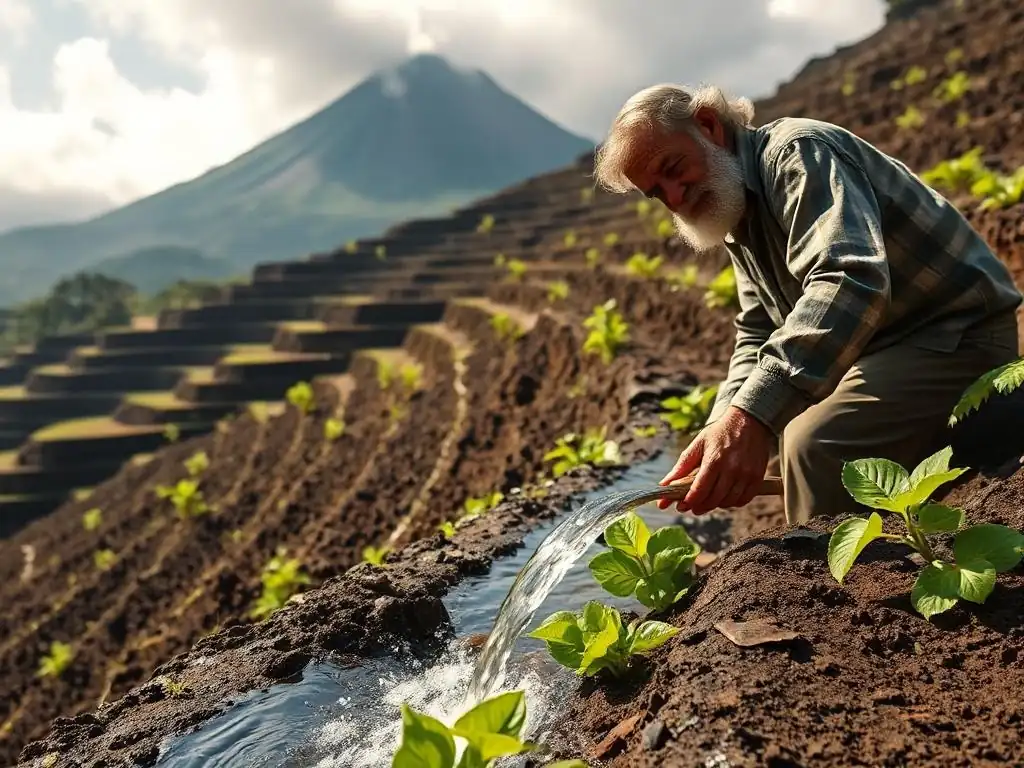
Beyond sustainable irrigation methods, implementing broader water-wise farming techniques is crucial for maximizing water conservation on volcanic farms. These techniques encompass a range of agronomic practices aimed at reducing water demand, improving water infiltration, and minimizing water losses. Mulching, for example, involves covering the soil surface with organic materials such as straw, wood chips, or compost. Mulch reduces soil evaporation, suppresses weed growth (which compete for water), and moderates soil temperature, all contributing to water conservation.
No-till farming, which minimizes soil disturbance, helps to improve soil structure, increase water infiltration, and reduce soil erosion, leading to better water retention. Cover cropping, planting non-cash crops between or after cash crops, improves soil health, increases organic matter, and enhances water infiltration and storage. Crop rotation, diversifying crop sequences, can improve soil structure and reduce water demand compared to monoculture systems. These water-wise farming techniques, when integrated with sustainable irrigation strategies, create a holistic approach to water management on volcanic farms, enhancing water use efficiency and promoting long-term agricultural sustainability.
Selecting Drought-Resistant Crop Varieties
Choosing drought-resistant crop varieties is a fundamental best practice for water conservation on volcanic farms, particularly in regions prone to water scarcity or drought. Drought-resistant varieties are adapted to thrive under limited water availability, requiring less irrigation water compared to conventional varieties. Selecting crops and varieties that are well-suited to the local climate and soil conditions is a key aspect of sustainable agriculture. For volcanic regions, which often have distinct microclimates and soil types, choosing locally adapted drought-resistant varieties is particularly important.
For example, in volcanic regions of the Mediterranean, drought-tolerant olive and grape varieties are traditionally cultivated and well-adapted to the dry summer conditions. In drier volcanic areas of the Pacific Northwest, drought-resistant wheat or barley varieties may be more suitable than water-demanding crops.
Researching and selecting crop varieties with lower water requirements, deeper root systems, or other drought-adaptive traits can significantly reduce irrigation water demand and enhance the resilience of volcanic farms to water scarcity and climate change. Consulting with agricultural extension services or local seed suppliers can provide valuable information on drought-resistant crop varieties suitable for specific volcanic regions.
Improving Soil Health to Enhance Water Retention
Improving soil health is a cornerstone of sustainable water management on volcanic farms, as healthy soils have a greater capacity to store and retain water, reducing irrigation needs and enhancing drought resilience. Andisol soils, while naturally fertile, can benefit from practices that further improve their soil health and water-holding capacity. Increasing soil organic matter content is a key strategy for improving soil health. Organic matter acts like a sponge, holding several times its weight in water and releasing it slowly to plants. Adding compost, manure, or other organic amendments to Andisols can significantly enhance their water retention capacity.
Cover cropping and no-till farming, as mentioned earlier, also contribute to building soil organic matter and improving soil structure. Healthy soil structure, with good aggregation and porosity, allows for better water infiltration and storage. Reducing soil compaction, which can restrict water infiltration and root growth, is also important. Practices such as reduced tillage and controlled traffic farming can minimize soil compaction. Improving soil health is a long-term investment that yields multiple benefits, including enhanced water retention, improved nutrient cycling, increased crop yields, and greater resilience to drought and other environmental stresses on volcanic farms.
Government Incentives and Support for Sustainable Irrigation in Volcanic Regions
USDA Programs for Sustainable Agriculture
In the United States, the United States Department of Agriculture (USDA) offers a range of programs and incentives to support sustainable agriculture practices, including sustainable irrigation, in volcanic regions and across the country. The Environmental Quality Incentives Program (EQIP) provides financial and technical assistance to farmers and ranchers to implement conservation practices on agricultural land, including irrigation water management improvements. EQIP can help volcanic farmers adopt sustainable irrigation systems such as drip irrigation or micro-sprinklers, as well as implement water harvesting techniques and soil moisture monitoring.
The Conservation Stewardship Program (CSP) rewards farmers who are already implementing conservation practices and encourages them to adopt additional stewardship activities. CSP provides payments for maintaining and enhancing existing conservation efforts, including advanced irrigation water management. The Natural Resources Conservation Service (NRCS), a USDA agency, provides technical assistance to farmers on conservation planning and implementation, including irrigation system design and water management strategies. These USDA programs and resources offer valuable support for volcanic farmers seeking to adopt sustainable irrigation practices and enhance water conservation on their farms.
Accessing Funding and Resources for Sustainable Irrigation Projects
Beyond government programs, volcanic farmers can access various other funding and resources to support sustainable irrigation projects. State and local governments often offer grants and incentive programs for water conservation and agricultural sustainability. These programs may be specific to volcanic regions or areas facing water scarcity. Non-governmental organizations (NGOs) and environmental groups may also provide funding or technical assistance for sustainable agriculture and water management projects. Some NGOs focus specifically on supporting sustainable agriculture in volcanic regions.
Agricultural lending institutions and private foundations may offer loans or grants for farmers investing in sustainable irrigation technologies and practices. Researching and exploring these diverse funding sources can help volcanic farmers overcome financial barriers to adopting sustainable irrigation and implementing water-wise farming techniques. Agricultural extension services, university research institutions, and irrigation equipment suppliers can also provide valuable technical expertise and resources for planning, designing, and implementing sustainable irrigation projects on volcanic farms. Building partnerships and seeking out available support is essential for successful adoption and long-term sustainability of innovative irrigation practices.
Conclusion: Securing a Sustainable Future for Volcanic Agriculture Through Innovative Irrigation
The Future of Farming in Volcanic Landscapes: Embracing Sustainability
The future of farming in volcanic landscapes hinges on embracing sustainability, particularly in water management. Volcanic soils, while fertile, present unique challenges and opportunities for agriculture in the face of increasing water scarcity and climate change. Traditional irrigation practices are often unsustainable in these environments, leading to water waste, nutrient leaching, and environmental degradation. Sustainable irrigation strategies, coupled with water-wise farming techniques and supportive policies, offer a pathway towards a more resilient and productive future for volcanic agriculture.
Embracing sustainability requires a shift from conventional water management approaches to innovative and adaptive strategies. This involves adopting precision irrigation technologies, implementing water harvesting and greywater reuse systems, improving soil health, and selecting drought-resistant crops. It also necessitates a collaborative approach, involving farmers, researchers, policymakers, and communities, to address the complex challenges of water management in volcanic regions. By prioritizing sustainability, volcanic agriculture can ensure long-term food security, environmental protection, and economic viability for future generations.
The Role of Technology in Advancing Sustainable Irrigation Practices
Technology plays a pivotal role in advancing sustainable irrigation practices on volcanic farms. Precision irrigation technologies, such as drip irrigation and micro-sprinklers, enable precise water delivery and minimize water waste. Soil moisture sensors and weather monitoring systems provide real-time data for optimizing irrigation schedules and adapting to changing environmental conditions. Automation and remote control systems allow for efficient irrigation management and reduce labor requirements.
Geographic information systems (GIS) and remote sensing technologies can be used for mapping soil variability, assessing crop water needs, and monitoring irrigation performance across large areas. Data analytics and artificial intelligence (AI) can further enhance irrigation efficiency by analyzing vast datasets and providing data-driven recommendations for irrigation management. The continued development and adoption of these technologies will be crucial for maximizing water use efficiency, improving crop yields, and promoting sustainable irrigation practices in volcanic agriculture. Investing in research, development, and technology transfer is essential to unlock the full potential of technology for sustainable water management in volcanic landscapes.
Protecting Our Water Resources for Future Generations of Volcanic Farmers
Protecting water resources is not just an environmental imperative; it is a fundamental responsibility to future generations of volcanic farmers. Sustainable irrigation practices are essential for conserving water resources and ensuring their availability for long-term agricultural productivity. By adopting water-efficient irrigation technologies, implementing water-wise farming techniques, and protecting water quality, volcanic farmers can contribute to the sustainable management of water resources and safeguard this precious resource for the future.
Government policies, incentives, and community support are crucial for fostering widespread adoption of sustainable irrigation practices and promoting responsible water stewardship in volcanic regions. Education and outreach programs can raise awareness among farmers and the public about the importance of water conservation and sustainable agriculture. Collaborative efforts, knowledge sharing, and collective action are needed to address the challenges of water scarcity and ensure a water-secure future for volcanic agriculture. By working together, we can secure a sustainable future for volcanic farming and protect our water resources for generations to come.
Frequently Asked Questions
How does volcanic soil benefit agriculture, especially in regions with limited water?
Volcanic soils are naturally fertile due to their rich mineral content and excellent drainage. This means they can support robust plant growth, even with strategic irrigation focused on water conservation.
What are some sustainable irrigation methods suitable for volcanic farms facing water scarcity?
Drip irrigation and micro-sprinklers are ideal because they deliver water directly to the plant roots, minimizing water loss through evaporation. Additionally, water harvesting techniques can supplement irrigation needs.
Why is sustainable irrigation particularly important for farms located on or near volcanoes?
Volcanic regions often experience unpredictable weather patterns, including droughts. Sustainable irrigation ensures crop resilience and long-term agricultural viability in these vulnerable areas.
Can the unique properties of volcanic soil affect the choice of irrigation system?
Yes, the porosity and drainage of volcanic soil require careful consideration. Systems must be designed to prevent over-watering and ensure efficient water uptake by plants.
Where can I find more information on implementing sustainable irrigation practices on volcanic farms?
VolcanoExplorers.org provides resources on volcanic soil management, water conservation techniques, and farm-specific irrigation strategies tailored for volcanic landscapes.
Final Reflection: Cultivating Resilience in Volcanic Landscapes
The exploration of sustainable irrigation strategies for volcanic farms is not merely an academic exercise; it is a vital response to the growing challenges faced by communities whose livelihoods are inextricably linked to these unique and often fragile ecosystems. Understanding and implementing these strategies is now more critical than ever, as climate change exacerbates water scarcity and threatens the delicate balance of volcanic soils.
The enduring legacy of volcanic agriculture lies in its ability to transform seemingly barren landscapes into fertile grounds, a testament to human ingenuity and resilience. This connection to the land, passed down through generations, underscores the profound importance of preserving these traditions while embracing innovative solutions. We do not inherit the earth from our ancestors; we borrow it from our children.
This ancient proverb reminds us that our actions today will determine the future of these volcanic farms and the communities that depend on them.
As you reflect on the strategies presented in this article, consider how you can contribute to the sustainable management of water resources in your own community. Whether it's advocating for responsible water policies, supporting local farmers who prioritize sustainable practices, or simply being more mindful of your own water consumption, every action counts. Let us all strive to cultivate resilience, not just in volcanic landscapes, but in our own lives, ensuring a future where both people and the planet can thrive.
Transform Your Volcanic Farm: Embrace Sustainable Irrigation!
Thank you for exploring the unique challenges and opportunities of irrigating volcanic soils. We hope you've gained practical strategies to nurture your farm while conserving precious water resources. Now, it's time to apply this knowledge and cultivate a thriving, sustainable future for your land.
Ready to make a difference? Here are a few steps you can take:
- Begin by implementing at least one of the low-impact irrigation techniques described in this article on a test plot. Compare the water savings and plant health to your current methods—this is crucial for seeing tangible results.
- Explore incorporating drought-tolerant plant species native to volcanic regions into your crop rotation or as perimeter plantings. Consult local nurseries or seed banks for suitable options.
- Share this article with other farmers in your volcanic region and initiate a discussion about best irrigation practices. Let's collaborate and learn from one another.
What small, practical irrigation improvement will you implement this week to benefit both your farm and the environment? Share your plans in the comments below!