
The Future of VolcanoResilient Transportation: Roads, Rails, and Runways

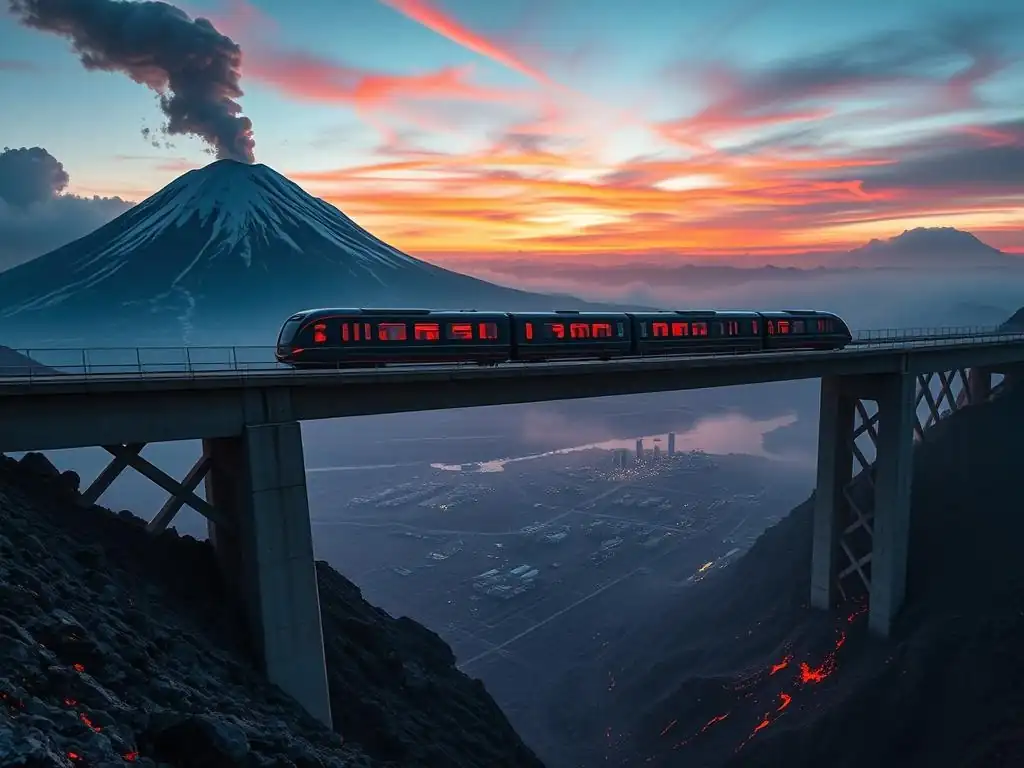
Welcome to Volcano Explorers, where the earth breathes fire and the landscape is ever-changing. Ever wondered how we can keep moving, even when a volcano threatens to shut everything down? Dive in to explore the future of volcano-resilient transportation, and discover the innovative strategies being developed to keep roads, rails, and runways open in the face of volcanic fury. What secrets do these Volcano Resilient Transportation Solutions hold? Read on to find out...
- Introduction: Navigating the Risks – The Need for Volcano-Resilient Transportation Solutions
-
Designing Volcano-Resilient Roads: Mitigating Ashfall and Lahar Damage
- Asphalt vs. Concrete: Which Road Surface Holds Up Best?
- Innovative Drainage Systems for Lahar Diversion and Mitigation
- Road Stabilization Techniques: Preventing Landslides and Ground Deformation
- Case Study: Successful Road Construction Near Active Volcanoes [e.g., Route 40, Chile near Puyehue-Cordón Caulle]
- Volcano-Proofing Railways: Ensuring Safe and Reliable Train Transportation
- Runways and Aviation Safety: Adapting Airports to Volcanic Ash Clouds
- Emerging Technologies for Volcano-Resilient Transport Infrastructure
- Planning and Policy: Integrating Volcano Risk into Transportation Development
- Conclusion: Building a Safer Future – Investing in Volcano-Resilient Transportation
-
Frequently Asked Questions
- How can roads be made more resilient to volcanic eruptions?
- What rail transportation adaptations are necessary in volcanic regions?
- Can airport runways be designed to better withstand volcanic ashfall?
- What role does technology play in developing volcano-resilient transportation solutions?
- How can communities prepare for transportation disruptions caused by volcanic eruptions?
- Final Reflection: Forging Paths Through Fire
- Chart a Course: Build a Volcano-Ready Future!
Understanding the Threat: Volcanic Hazards Impacting Transportation Networks
Volcanic eruptions present a complex array of hazards that can severely disrupt and damage transportation networks. Ashfall, perhaps the most widespread impact, blankets roads, railways, and runways, reducing visibility to near zero and making surfaces dangerously slippery. The fine particles of volcanic ash can infiltrate and damage vehicle engines and aircraft turbines, causing mechanical failures and grounding transportation systems. For example, during the 2010 eruption of Eyjafjallajökull in Iceland, the massive ash cloud led to the closure of European airspace for several days, impacting millions of travelers and costing the global economy billions of dollars.
Beyond ashfall, more localized but equally devastating hazards include pyroclastic flows and lahars. Pyroclastic flows, fast-moving currents of hot gas and volcanic debris, can obliterate anything in their path, including roads and railway lines. Lahars, volcanic mudflows, are similarly destructive, capable of burying infrastructure under meters of sediment and debris. The 1985 Armero tragedy in Colombia, triggered by the Nevado del Ruiz eruption, tragically demonstrated the devastating power of lahars, destroying the town and its transportation links, highlighting the urgent need for volcano-resilient transportation solutions in vulnerable regions.
Why Volcano-Resilient Infrastructure is Crucial for Communities Near Volcanoes
Volcano-resilient infrastructure is not merely a matter of convenience; it is a critical component of community safety and economic stability in volcanically active regions. Reliable transportation networks are essential for evacuation during volcanic crises, allowing residents to reach safety zones quickly and efficiently. Without robust roads, railways, and runways, evacuation efforts can be hampered, leading to increased casualties and suffering. Consider the communities surrounding Mount Rainier in Washington State, USA. A lahar event could isolate numerous towns and cities, making pre-emptive infrastructure upgrades and volcano resilient transportation planning paramount for effective emergency response.
Furthermore, economic activity in volcanic regions often depends heavily on transportation infrastructure. Volcanic eruptions can disrupt supply chains, hinder access to markets, and impede tourism, a significant industry in many volcanic areas. For instance, regions in Iceland and Hawaii rely on tourism, which is intrinsically linked to functional airports and road networks. Investing in volcano-resilient transportation solutions ensures business continuity, protects livelihoods, and fosters long-term sustainable development in these dynamic but potentially hazardous environments.
Designing Volcano-Resilient Roads: Mitigating Ashfall and Lahar Damage
Asphalt vs. Concrete: Which Road Surface Holds Up Best?
The choice of road surface material plays a significant role in its resilience to volcanic hazards. Asphalt and concrete, the two primary materials for road construction, exhibit different responses to ashfall and lahar impacts. Asphalt, while offering good flexibility and ease of repair, can be more susceptible to degradation from prolonged exposure to volcanic ash, especially in combination with moisture.
The abrasive nature of ash can accelerate wear and tear, leading to surface cracking and requiring more frequent maintenance. In contrast, concrete surfaces, generally more rigid and durable, demonstrate better resistance to abrasion from ashfall and can withstand the erosive forces of lahars to a greater extent.
However, concrete's rigidity can also be a disadvantage in areas prone to ground deformation associated with volcanic activity. Earthquakes and ground swelling linked to magma movement can cause concrete roads to crack and fracture more readily than asphalt, which can accommodate some degree of ground movement.
Therefore, the optimal choice between asphalt and concrete often depends on a detailed site-specific assessment of the predominant volcanic hazards and the geotechnical characteristics of the area. For example, in areas primarily affected by ashfall with stable ground conditions, concrete might be preferred for its durability, whereas asphalt might be more suitable in regions with potential ground deformation, prioritizing flexibility and ease of repair.
Innovative Drainage Systems for Lahar Diversion and Mitigation
Effective drainage systems are paramount for mitigating the destructive power of lahars on road infrastructure. Traditional drainage ditches are often inadequate to handle the massive volume and sediment load of volcanic mudflows. Innovative approaches focus on diverting lahars away from critical transportation corridors and minimizing their impact through engineered channels and sediment basins.
Lahar channels, constructed from reinforced concrete or earth embankments, can redirect flow paths, guiding lahars away from roads and populated areas. Sediment basins, strategically located upstream of road crossings, are designed to trap sediment and debris, reducing the erosive capacity of lahars and preventing bridge collapses and road blockages.
Furthermore, permeable pavements, designed to allow water to infiltrate the ground, can help reduce surface runoff and mitigate flash flooding associated with heavy rainfall during or after volcanic eruptions. Coupled with subsurface drainage systems, permeable pavements can enhance the overall resilience of road infrastructure to both lahar events and ashfall-induced flooding.
The design and implementation of these drainage solutions require detailed hydrological modeling, considering the specific characteristics of lahars in the region, including flow volume, velocity, and sediment concentration. For instance, in areas around Mount Pinatubo in the Philippines, extensive lahar mitigation infrastructure, including check dams and diversion channels, has been crucial in protecting communities and transportation routes from recurrent lahar events.
Road Stabilization Techniques: Preventing Landslides and Ground Deformation
Volcanic activity can trigger landslides and ground deformation, posing significant threats to road stability. Steep slopes weakened by volcanic eruptions are susceptible to landslides, which can bury roads, sever transportation links, and cause catastrophic damage. Ground deformation, including inflation and deflation of the volcanic edifice, can also induce stress on road infrastructure, leading to cracking, subsidence, and road closures. Road stabilization techniques are essential for mitigating these risks and ensuring the long-term integrity of transportation networks in volcanic areas.
Techniques such as retaining walls, soil nailing, and terracing can stabilize slopes and prevent landslides from encroaching on roads. Retaining walls, constructed from concrete or reinforced earth, provide lateral support to unstable slopes. Soil nailing involves inserting steel bars into the slope to reinforce the soil mass and increase its shear strength. Terracing, creating step-like platforms on slopes, reduces the overall slope angle and enhances stability.
For areas prone to ground deformation, flexible pavement designs and deep foundations can accommodate some degree of ground movement without catastrophic failure. Regular geotechnical monitoring and maintenance are crucial for identifying and addressing potential slope instabilities and ground deformation issues before they impact road infrastructure. The Italian highway system near Mount Vesuvius employs various slope stabilization techniques and monitoring systems to address the landslide and ground deformation risks associated with the volcano.
Case Study: Successful Road Construction Near Active Volcanoes [e.g., Route 40, Chile near Puyehue-Cordón Caulle]
Route 40 in Chile, particularly sections traversing areas near active volcanoes like Puyehue-Cordón Caulle, provides a compelling case study of successful road construction in volcanically active terrain. This highway faces multiple volcanic hazards, including ashfall, lahars, and seismic activity. Construction and maintenance strategies employed along Route 40 demonstrate best practices in volcano-resilient road engineering. The road surface utilizes a robust concrete mix designed to withstand abrasion from volcanic ash and the erosive forces of occasional lahar flows. Drainage systems are meticulously engineered to divert meltwater and potential lahar pathways away from the roadbed, incorporating sediment traps and reinforced channels.
Furthermore, slope stabilization measures are evident along vulnerable sections, including retaining walls and bioengineering techniques to reinforce hillsides and prevent landslides. Regular monitoring and maintenance are integral to the road management strategy, with periodic inspections to assess the condition of the road surface, drainage systems, and slope stability.
During periods of heightened volcanic activity, enhanced monitoring is implemented, and contingency plans are in place for rapid road closures and reopening procedures following ashfall or other volcanic events. Route 40 serves as a practical example of how careful planning, robust engineering, and proactive maintenance can enable the construction and operation of reliable transportation infrastructure even in challenging volcanic environments.
Volcano-Proofing Railways: Ensuring Safe and Reliable Train Transportation
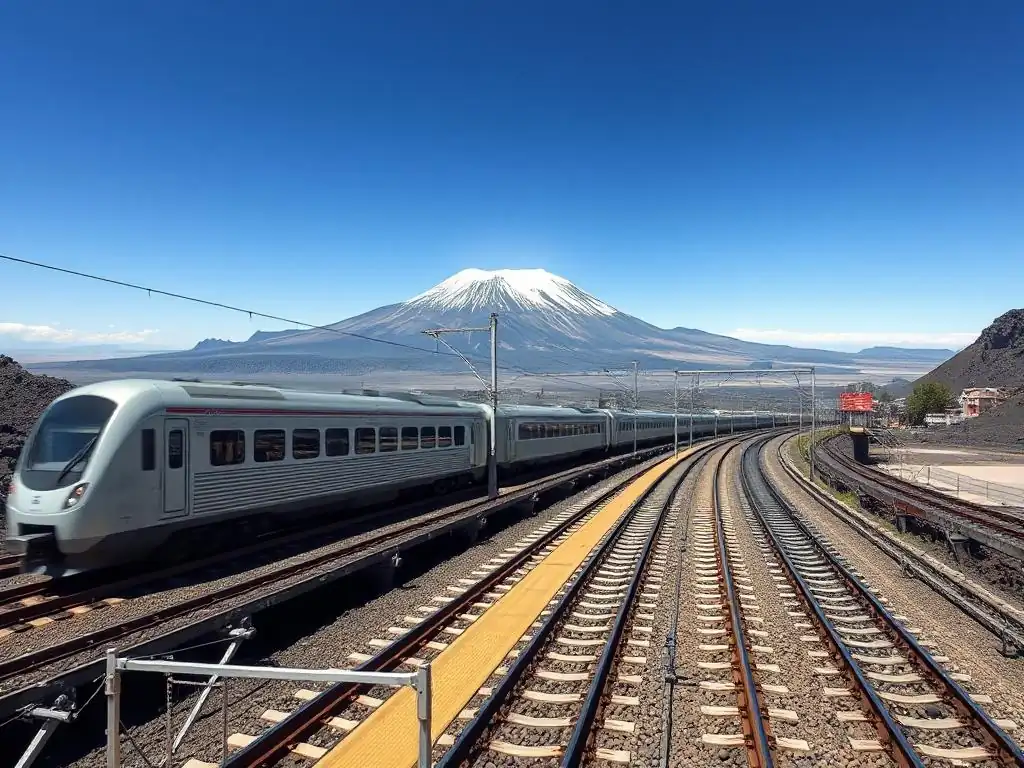
Track Design Considerations for Ashfall Accumulation
Railway tracks, essential for freight and passenger transport, face unique challenges from volcanic ashfall. Ash accumulation on tracks can disrupt train operations in several ways. Firstly, ash can reduce friction between the wheels and rails, leading to wheel slippage and reduced braking efficiency. Secondly, accumulated ash can clog points and crossings, hindering train switching and causing delays. Thirdly, the weight of accumulated ash, especially when wet, can overload track structures and potentially cause damage. Volcano-proof railway design must address these issues to ensure safe and reliable train transportation.
Track designs incorporating wider gauge and heavier rails can enhance stability and reduce the impact of ash accumulation. Ballast, the gravel bed supporting the tracks, should be designed with adequate drainage to prevent waterlogging and ash compaction. Regular track cleaning and maintenance protocols are crucial for removing accumulated ash, especially after significant ashfall events.
Automated track cleaning systems, such as specialized trains equipped with brushes and vacuum systems, can efficiently remove ash and minimize disruption to train schedules. For instance, railway operators in Japan, frequently affected by volcanic eruptions, have developed sophisticated track maintenance procedures and equipment to mitigate the impact of ashfall on their extensive rail network.
Protecting Rolling Stock: Sealing and Filtration Systems for Train Engines
Volcanic ash poses a significant threat to train engines and rolling stock. The abrasive nature of ash can cause wear and tear on engine components, particularly moving parts. Ash particles can also infiltrate ventilation and cooling systems, leading to overheating and engine failure. Protecting rolling stock from ash ingress is crucial for maintaining the operational readiness and longevity of train fleets operating in volcanic regions.
Sealing critical engine components and ventilation systems is a primary strategy for ash protection. Air intakes can be fitted with specialized filtration systems designed to remove fine volcanic ash particles. These filters must be robust and easily replaceable to maintain engine performance during and after ashfall events.
Regular cleaning and maintenance of rolling stock, including thorough cleaning of engines and ventilation systems, are essential for removing accumulated ash and preventing long-term damage. Some railway operators in areas prone to volcanic ash have invested in specialized rolling stock designed with enhanced sealing and filtration systems, demonstrating a proactive approach to mitigating ash-related risks.
Early Warning Systems and Automated Train Control for Volcanic Events
Early warning systems and automated train control technologies are vital for enhancing railway safety during volcanic events. Volcanic eruptions can occur rapidly, and timely warnings are essential for initiating emergency procedures, including train speed reduction, diversions, and station closures. Real-time monitoring of volcanic activity, including seismic sensors, gas detectors, and satellite observations, provides crucial data for early warning systems. Automated train control systems can be integrated with these warning systems to automatically adjust train speeds or halt trains in designated safe zones in response to volcanic alerts.
Geofencing technology can be used to define exclusion zones around active volcanoes, automatically triggering train speed restrictions or stops when trains approach these zones during periods of heightened volcanic activity. Communication systems are critical for disseminating warnings to train operators and passengers in a timely manner. Redundant communication channels, including satellite-based systems, are important to ensure communication reliability even during widespread ashfall or infrastructure damage. The integration of early warning systems and automated train control represents a significant advancement in enhancing railway safety and resilience in volcanic regions.
Tunnel Engineering for Railway Protection in Volcanic Areas
Tunnel engineering offers a robust solution for protecting railway infrastructure in areas highly vulnerable to volcanic hazards such as pyroclastic flows and lahars. Tunnels provide a physical barrier against these destructive phenomena, ensuring the continuity of railway operations even during significant volcanic eruptions. While tunnel construction is more expensive than surface railway lines, the long-term benefits of enhanced resilience and reduced disruption can justify the investment in high-risk volcanic zones.
Tunnel entrances and exits must be carefully designed to minimize the risk of blockage from ashfall or lahar deposits. Elevated tunnel portals and debris deflectors can prevent entry of volcanic materials. Tunnel ventilation systems must be designed to filter out volcanic ash and maintain air quality inside the tunnel.
Emergency egress systems and refuge areas within tunnels are crucial for passenger safety in the event of a volcanic crisis. Tunnel construction in volcanic areas requires specialized geotechnical investigations and engineering designs to address potential challenges such as unstable ground conditions, hydrothermal alteration of rocks, and seismic activity. The Seikan Tunnel in Japan, while not primarily built for volcano protection, demonstrates the feasibility of constructing long railway tunnels in seismically and volcanically active regions, offering valuable lessons for tunnel engineering in volcanic contexts.
Runways and Aviation Safety: Adapting Airports to Volcanic Ash Clouds
Advanced Ash Detection and Monitoring Systems for Airspace
Volcanic ash clouds pose a severe hazard to aviation, capable of causing engine failure, reduced visibility, and damage to aircraft surfaces. Advanced ash detection and monitoring systems are critical for ensuring aviation safety in volcanically active regions. Ground-based radar systems, capable of detecting ash plumes even in poor weather conditions, provide real-time information on ash cloud location and movement. Satellite-based sensors, including infrared and multispectral imagers, offer a broader perspective on ash cloud dispersal and can track ash clouds over vast areas.
Airborne ash detection systems, deployed on research aircraft or commercial planes, provide in-situ measurements of ash concentration and particle size, enhancing the accuracy of ash cloud characterization. Data from these diverse monitoring systems are integrated into sophisticated atmospheric models to forecast ash cloud trajectories and predict airspace contamination.
Volcanic Ash Advisory Centers (VAACs) worldwide utilize these data and models to issue advisories to airlines and air traffic control, guiding flight planning and airspace management to avoid ash encounters. Continued advancements in ash detection and monitoring technologies are crucial for minimizing aviation disruptions and maintaining safety in airspace affected by volcanic eruptions.
Runway Surface Treatments for Improved Traction in Ashfall Conditions
Runway surfaces contaminated with volcanic ash become slippery and reduce aircraft braking performance, posing significant landing and takeoff risks. Runway surface treatments are essential for improving traction and maintaining safe aircraft operations in ashfall conditions. Grooving runway surfaces, creating channels to drain water and ash, enhances friction and reduces hydroplaning risk. High-friction surface treatments (HFST), applying a durable, textured overlay to the runway surface, significantly improves skid resistance even when contaminated with ash.
Chemical treatments, such as applying de-icing agents or specialized polymers, can help bind ash particles and improve surface traction. Regular runway cleaning and maintenance are crucial for removing accumulated ash and maintaining the effectiveness of surface treatments. Specialized runway sweeping and washing equipment are essential for efficient ash removal. Airport operators in volcanically active regions, such as those in Iceland and Alaska, have implemented various runway surface treatments and maintenance protocols to mitigate the impact of ashfall on runway friction and ensure safe aircraft operations.
Aircraft Engine Design for Volcanic Ash Tolerance
Aircraft engines are highly susceptible to damage from volcanic ash ingestion. Ash particles melt and resolidify within the high-temperature engine environment, accumulating on turbine blades and causing engine stall or failure. Aircraft engine manufacturers are continuously developing engine designs with improved volcanic ash tolerance. Modifications to engine materials, coatings, and cooling systems enhance resistance to ash-induced damage.
Advanced filtration systems integrated into engine air intakes can remove a significant portion of ash particles before they enter the engine core. Engine control systems are being developed to automatically adjust engine parameters, such as thrust and fuel flow, in response to ash ingestion, mitigating the risk of engine stall.
Research into new engine designs, such as open rotor engines or engines with alternative combustion cycles, is exploring inherently ash-tolerant propulsion technologies. While complete immunity to volcanic ash is unlikely, ongoing advancements in engine design are steadily improving aircraft resilience to ash encounters, contributing to enhanced aviation safety in volcanic airspace.
Emergency Procedures and Air Traffic Management During Volcanic Eruptions
Effective emergency procedures and air traffic management are paramount for minimizing aviation risks during volcanic eruptions. Pre-defined airspace closures and flight rerouting procedures are essential for keeping aircraft away from ash-contaminated areas. Air Traffic Control (ATC) plays a crucial role in implementing these procedures, guiding aircraft around ash clouds and ensuring safe separation. Standardized communication protocols between VAACs, ATC, and airlines are vital for disseminating timely warnings and coordinating airspace management decisions.
Emergency landing procedures and alternate airport designations are necessary for aircraft encountering unexpected ash clouds in flight. Pilot training programs emphasize procedures for recognizing and responding to volcanic ash encounters, including engine monitoring, airspeed adjustments, and emergency landing techniques. International collaboration and coordination among aviation authorities, meteorological agencies, and volcanological observatories are essential for establishing robust global aviation safety protocols in volcanic airspace. Regular drills and exercises involving all stakeholders are crucial for testing and refining emergency response plans and ensuring effective coordination during volcanic crises.
Emerging Technologies for Volcano-Resilient Transport Infrastructure
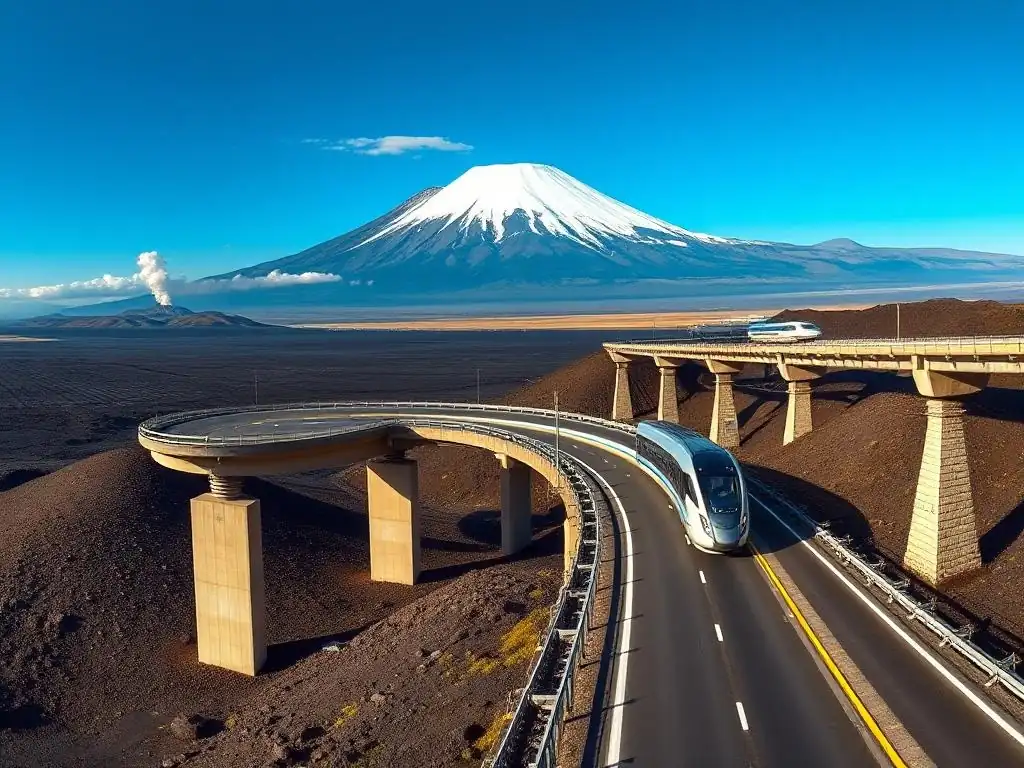
Using Drones for Infrastructure Inspection and Damage Assessment
Drones, or Unmanned Aerial Vehicles (UAVs), are emerging as powerful tools for infrastructure inspection and damage assessment in volcanic regions. Drones equipped with high-resolution cameras and sensors can rapidly survey road, railway, and runway infrastructure after volcanic events, providing detailed visual and thermal imagery of damage extent. This rapid assessment capability significantly reduces the time required for damage evaluation compared to traditional ground-based inspections, allowing for quicker response and repair efforts.
Drones can access hazardous or inaccessible areas, such as landslide zones or areas with ongoing volcanic activity, enhancing safety for inspection personnel. 3D modeling and mapping capabilities of drones enable the creation of detailed digital representations of infrastructure, facilitating precise damage assessment and repair planning. Drones can also be used for routine infrastructure monitoring, detecting early signs of deterioration or volcanic impact before they escalate into major problems. For example, drones can monitor slope stability along road corridors or track ash accumulation on railway lines, enabling proactive maintenance and risk mitigation.
Smart Sensors and Real-Time Monitoring of Volcanic Activity
Smart sensors and real-time monitoring networks are revolutionizing volcano monitoring and enhancing the resilience of transportation infrastructure. Networks of seismic sensors, GPS stations, gas sensors, and infrasound arrays provide continuous data on volcanic activity, detecting subtle changes that may precede eruptions or other volcanic hazards. Real-time data streams from these sensors are analyzed using sophisticated algorithms to detect anomalies and issue early warnings.
Smart sensors can also be integrated directly into transportation infrastructure, monitoring structural health and environmental conditions. Strain gauges embedded in bridges and roads can detect stress and deformation, providing early warning of structural damage. Weather stations along transportation corridors can monitor rainfall, temperature, and ashfall accumulation, providing data for real-time risk assessment and traffic management. The integration of smart sensors and real-time monitoring systems enables proactive infrastructure management, allowing for timely interventions to mitigate volcanic risks and maintain transportation network functionality.
Advanced Materials for Construction: High-Strength and Ash-Resistant
Advanced materials are playing an increasingly important role in enhancing the volcano-resilience of transportation infrastructure. High-strength concrete, incorporating specialized admixtures and fiber reinforcement, exhibits superior resistance to cracking, abrasion, and chemical attack from volcanic ash and acidic gases. Fiber-reinforced polymers (FRPs), lightweight and corrosion-resistant, are being used to strengthen and rehabilitate existing infrastructure, enhancing its resilience to seismic activity and ground deformation.
Self-healing materials, capable of automatically repairing minor cracks and damage, offer the potential to extend the lifespan and reduce maintenance requirements of infrastructure in volcanic environments. Ash-resistant coatings and sealants can protect road and railway surfaces from the corrosive effects of volcanic ash. Research and development of new materials with enhanced volcano-resilience are crucial for building more durable and sustainable transportation infrastructure in volcanically active regions.
Geothermal Energy for Road and Runway De-icing in Volcanic Regions
Geothermal energy, abundant in many volcanic regions, offers a sustainable solution for road and runway de-icing, mitigating the hazards of ice and snow accumulation, particularly in areas prone to ashfall-induced icing. Geothermal heating systems can be embedded beneath road and runway surfaces, melting snow and ice and preventing the formation of hazardous ice layers. This not only enhances safety and reduces winter maintenance costs but also utilizes a renewable energy source readily available in volcanic areas.
Geothermal de-icing systems are particularly effective in areas with frequent snowfall and ice formation, such as high-altitude volcanic regions. The heat provided by geothermal energy is consistent and reliable, ensuring effective de-icing even during prolonged cold spells. The environmental benefits of geothermal de-icing, compared to traditional chemical de-icing methods, are significant, reducing the use of environmentally harmful chemicals and minimizing runoff pollution. Iceland, a volcanic island nation with abundant geothermal resources, has successfully implemented geothermal de-icing systems for roads and runways, demonstrating the viability and effectiveness of this technology.
Planning and Policy: Integrating Volcano Risk into Transportation Development
Land Use Planning and Zoning Regulations for Vulnerable Areas
Effective land use planning and zoning regulations are essential for minimizing transportation infrastructure vulnerability in volcanic regions. Restricting development in high-hazard zones, such as pyroclastic flow paths and lahar inundation areas, reduces the exposure of transportation networks to volcanic risks. Zoning regulations can dictate permissible land uses in different volcanic hazard zones, prioritizing low-vulnerability uses in high-risk areas and directing critical infrastructure development to safer locations.
Transportation planning should be integrated with land use planning, ensuring that new transportation corridors are located outside of high-hazard zones whenever feasible. Evacuation routes should be carefully planned and designated, taking into account potential volcanic hazards and population distribution. Buffer zones around critical transportation infrastructure can provide additional protection from volcanic impacts. Participatory land use planning processes, involving local communities, government agencies, and volcanologists, are crucial for developing effective and equitable zoning regulations that account for volcanic risks and community needs.
Building Codes and Design Standards for Volcano-Resilient Infrastructure
Building codes and design standards specific to volcanic hazards are essential for ensuring the structural integrity and functionality of transportation infrastructure. These codes and standards should address the unique loads and stresses imposed by volcanic hazards, including ashfall loading, seismic shaking, lahar impact forces, and corrosive effects of volcanic gases. Ashfall load requirements in building codes should specify the design load for roofs and other structural elements to withstand the weight of accumulated volcanic ash, considering both dry and wet ash conditions.
Seismic design standards should account for the potential for strong ground shaking associated with volcanic eruptions and tectonic earthquakes in volcanic regions. Lahar design standards should specify the structural requirements for bridges and other infrastructure exposed to lahar flows, considering flow velocity, depth, and sediment concentration. Material specifications should prioritize durable and corrosion-resistant materials suitable for volcanic environments. Regular updates and revisions of building codes and design standards are necessary to incorporate new research findings and best practices in volcano-resilient infrastructure engineering.
Community Engagement and Education on Volcanic Hazards
Community engagement and education are vital components of volcano risk reduction and enhancing the resilience of transportation systems. Public awareness campaigns can educate communities about volcanic hazards, evacuation procedures, and self-protective measures during volcanic events. Community participation in emergency planning processes ensures that local knowledge and needs are incorporated into evacuation plans and infrastructure development strategies.
Schools and community centers can serve as important venues for disseminating volcano hazard information and conducting preparedness drills. Citizen science initiatives, involving community members in volcano monitoring and data collection, can enhance public awareness and contribute to volcano monitoring efforts. Culturally appropriate communication strategies are essential for reaching diverse communities and ensuring effective risk communication. Engaged and informed communities are better equipped to respond effectively to volcanic crises and support the development of volcano-resilient transportation infrastructure.
Government Initiatives and Funding for Volcano-Resilient Transportation Projects
Government initiatives and funding are crucial for promoting and implementing volcano-resilient transportation projects. National and regional governments play a key role in developing and enforcing building codes, land use regulations, and emergency management plans related to volcanic hazards. Dedicated funding programs are needed to support research and development of volcano-resilient infrastructure technologies, as well as to finance infrastructure upgrades and new construction projects in volcanic regions.
Public-private partnerships can leverage private sector expertise and investment in volcano-resilient infrastructure development. International collaborations and knowledge sharing among volcanically active countries can accelerate the adoption of best practices and innovative solutions. Long-term government commitment and sustained funding are essential for building and maintaining volcano-resilient transportation systems that protect communities and support sustainable development in volcanic regions.
Conclusion: Building a Safer Future – Investing in Volcano-Resilient Transportation
The Long-Term Benefits of Proactive Volcano Risk Mitigation
Proactive investment in volcano-resilient transportation offers substantial long-term benefits that far outweigh the initial costs. By mitigating the impacts of volcanic hazards on transportation networks, communities can significantly reduce economic losses from disruptions, protect lives during volcanic crises, and enhance overall resilience to natural disasters. Reduced downtime for transportation systems translates to minimized economic disruption, ensuring business continuity and maintaining supply chains.
Enhanced evacuation capabilities save lives and reduce injuries during volcanic eruptions, minimizing human suffering and societal costs. Volcano-resilient infrastructure requires less frequent repair and maintenance, lowering long-term operational costs and extending the lifespan of transportation assets. Investing in resilience also fosters community confidence and attracts investment to volcanic regions, promoting sustainable economic development and long-term prosperity. Proactive volcano risk mitigation is not merely an expense, but rather a strategic investment in a safer and more sustainable future for communities living with volcanoes.
Call to Action: Supporting Research and Innovation in Volcano-Resilient Transportation Solutions
Continued research and innovation are essential for advancing volcano-resilient transportation solutions and building safer communities in volcanic regions. Further research is needed to improve our understanding of volcanic hazards and their impacts on transportation infrastructure. Innovation in materials science, engineering design, monitoring technologies, and emergency management strategies is crucial for developing more effective and cost-efficient resilience solutions.
Increased funding for research and development in volcano-resilient transportation is essential to accelerate progress and translate research findings into practical applications. Collaboration among researchers, engineers, policymakers, and communities is vital for fostering innovation and ensuring that solutions are tailored to specific local needs and contexts. Supporting research and innovation in volcano-resilient transportation is a critical step towards building a future where communities can thrive alongside volcanoes, safely and sustainably connected by robust and resilient infrastructure.
Frequently Asked Questions
How can roads be made more resilient to volcanic eruptions?
Roads can be constructed with reinforced materials like volcanic ash concrete, designed with flexible pavements to withstand ground deformation, and strategically located to avoid high-risk zones.
What rail transportation adaptations are necessary in volcanic regions?
Railways need robust track monitoring systems to detect deformation, ash-resistant rail car designs, and alternative routing options for emergencies.
Can airport runways be designed to better withstand volcanic ashfall?
Yes, special runway surfaces can be developed for easier ash removal, along with advanced air filtration systems for aircraft and improved visibility measures for pilots.
What role does technology play in developing volcano-resilient transportation solutions?
Technology is crucial for real-time monitoring of volcanic activity, allowing for early warnings and proactive route diversions, plus the development of new construction materials and techniques.
How can communities prepare for transportation disruptions caused by volcanic eruptions?
Communities need well-defined evacuation plans, alternative transportation options, and public education programs on volcano hazards and safety protocols.
Final Reflection: Forging Paths Through Fire
The exploration of volcano-resilient transportation solutions, as detailed throughout this article, isn't just an academic exercise; it's a matter of safeguarding communities and economies in the face of inevitable geological events. The innovative strategies discussed, from enhanced road construction to adaptable rail systems and resilient runway designs, are crucial for ensuring connectivity and mitigating the devastating impact of volcanic eruptions in vulnerable regions.
This topic resonates deeply because it highlights humanity's persistent drive to overcome seemingly insurmountable challenges. The ability to adapt and innovate in the face of natural disasters is a testament to our resilience and ingenuity. It's a reminder that even in the shadow of unpredictable forces, we can strive to build a future where communities remain connected and economies can recover swiftly. The only constant is change,
as Heraclitus wisely stated, and in the context of volcanic activity, this truth demands proactive and adaptable solutions.
Now, consider the implications of these advancements in your own life. How can you, in your own sphere of influence, contribute to building a more resilient world? Whether it's supporting research, advocating for responsible infrastructure development, or simply raising awareness about the importance of disaster preparedness, your actions can make a difference. Let us all strive to build a future where communities thrive, even in the face of nature's most formidable challenges.
Okay, I understand. Here's a draft Call to Action (CTA) based on your specifications for the "The Future of Volcano-Resilient Transportation: Roads, Rails, and Runways" article on volcanoexplorers.org:
Chart a Course: Build a Volcano-Ready Future!
Thank you for exploring the innovative strategies shaping volcano-resilient transportation. You've gained valuable insights into how roads, rails, and runways can withstand volcanic eruptions. Now, it's time to put this knowledge into action and help build a safer future!
Here's how you can contribute:
- Become a Volcano Explorer advocate: Contact your local representatives to push for the implementation of advanced volcano-resilient infrastructure projects in at-risk areas. Let's ensure our communities are prepared!
- Explore real-world examples: Delve deeper into case studies of successful volcano-resilient transportation systems worldwide. What lessons can we learn from their experiences?
- Share your insights: Join our online forum to discuss your own ideas and concerns about volcano-related transportation challenges. Your perspective matters!
What innovative transportation solution do you think is most critical for communities living near volcanoes? Share your thoughts in the comments below!