
Thera's Volcanic Fury: The Science Behind the Minoan Eruption

Welcome to Volcano Explorers!
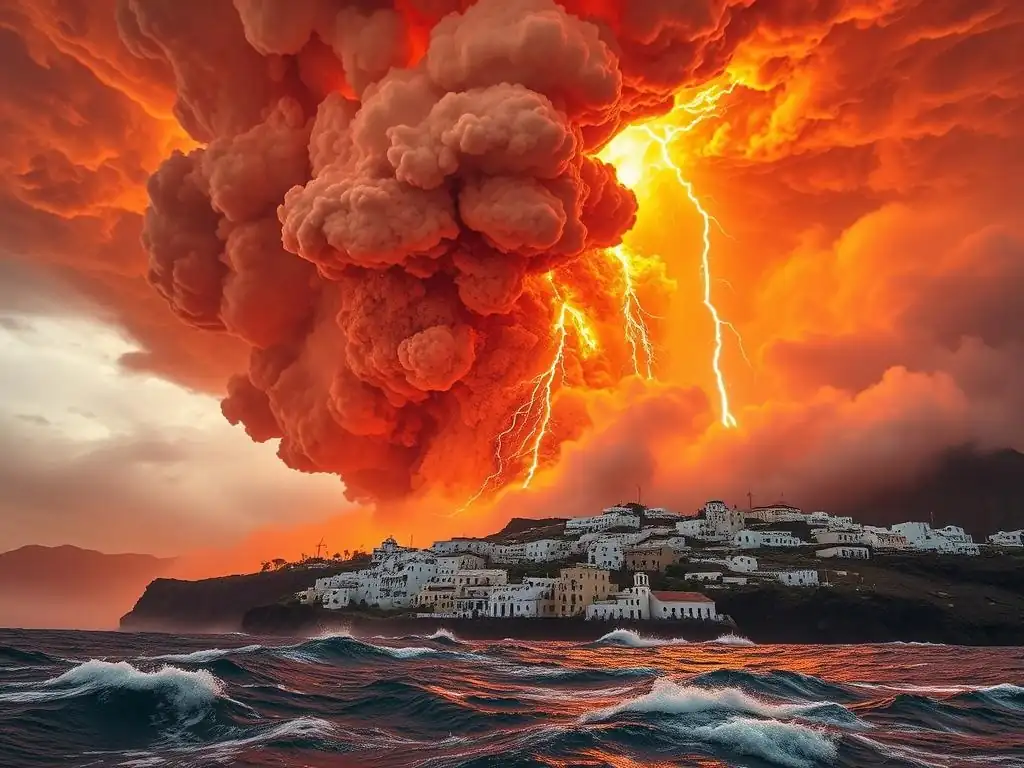
Prepare to journey into the fiery heart of the Earth. Ever wondered what unleashed the cataclysmic power of Thera? This isn't just history; it's a story etched in ash and fire. Dive into the science behind the Minoan eruption, and uncover the geological secrets that shaped an ancient world. What forces conspired to create such a devastating event? The answers await...
- Introduction: Unveiling the Minoan Eruption of Thera
- The Geological Setting of Santorini
- The Minoan Eruption: A Cataclysmic Event
- Volcanic Science: Understanding the Mechanisms of the Minoan Eruption
- The Impact of the Minoan Eruption on the Minoan Civilization
- Scientific Reconstructions of the Minoan Eruption
- Santorini Today: Studying the Active Santorini Volcano
- The Minoan Eruption: A Lesson in Volcanic Power
- Conclusion: The Enduring Legacy of Thera's Volcanic Fury
-
Frequently Asked Questions
- What was the Minoan eruption, and why is it significant?
- How does VolcanoExplorers.org explain the volcanic science behind the Minoan eruption?
- Where is Thera, and what type of volcano caused the Minoan eruption?
- What were the immediate and long-term effects of the Minoan eruption?
- Does VolcanoExplorers.org offer any safety information related to volcanic eruptions like the Minoan eruption?
- Final Reflection: Echoes of Thera's Fury
- Unearth the Secrets of Thera: Become a Volcano Explorer!
Introduction: Unveiling the Minoan Eruption of Thera
The island of Santorini, a jewel in the Aegean Sea, is renowned for its breathtaking caldera, a testament to one of the most significant volcanic events in human history: the Minoan eruption. This cataclysmic event, occurring in the Bronze Age, not only reshaped the landscape of the Mediterranean but also profoundly impacted the course of civilizations. While shrouded in the mists of time and legend, modern volcanic science is progressively unveiling the mechanisms and magnitude of this ancient eruption, offering invaluable insights into the power of nature and the delicate balance between geological forces and human societies.
This article delves into the volcanic science underpinning the Minoan eruption, exploring the geological context, the eruption's dynamics, and its far-reaching consequences. By examining the composition of the magma, the destructive forces unleashed, and the formation of the iconic caldera, we aim to understand the sheer scale of this event. Furthermore, we will investigate the eruption's impact on the Minoan civilization and the lessons it offers for understanding and mitigating volcanic risks in the present day. Join us as we journey back in time to unravel the science behind Thera's volcanic fury.
The Geological Setting of Santorini
Pre-Eruption Volcanic History of Santorini
Santorini's dramatic landscape is the product of a long and complex volcanic history stretching back hundreds of thousands of years. Before the Minoan eruption, the area that is now Santorini was not the tranquil archipelago we see today, but rather a larger, cone-shaped volcanic island known as Strongyli. This ancestral volcano was built through numerous phases of volcanic activity, characterized by effusive lava flows and explosive eruptions. Geological studies reveal evidence of multiple caldera-forming eruptions preceding the Minoan event, indicating a pattern of cyclical volcanic activity.
These earlier eruptions laid the foundation for the Minoan eruption, shaping the island's geology and predisposing it to further cataclysmic events. Analysis of volcanic rocks from Santorini reveals a history of magma evolution within the island's plumbing system. The composition of these rocks, varying from basalt to rhyodacite, reflects the complex processes of magma mixing and differentiation occurring beneath the surface. Understanding this pre-eruption volcanic history is crucial for contextualizing the scale and nature of the Minoan eruption and for assessing future volcanic hazards in the region.
Santorini's Location within the Hellenic Volcanic Arc
Santorini's location within the Hellenic Volcanic Arc is fundamental to understanding its volcanic nature. This arc is a product of the tectonic collision between the African and Eurasian plates. As the African plate subducts beneath the Aegean Sea plate, at a rate of approximately 40 mm per year, it descends into the Earth's mantle. This subduction process generates magma, which rises to the surface, fueling the volcanic activity along the arc, including Santorini. The Hellenic Volcanic Arc is characterized by a variety of volcanoes, both submarine and subaerial, exhibiting a range of eruptive styles.
The specific type of volcanism observed at Santorini is largely determined by the composition of the magma generated in this subduction zone setting. The interaction of seawater with the mantle wedge above the subducting slab contributes to the volatile content of the magma, influencing the explosivity of eruptions.
Furthermore, the crustal structure and pre-existing fault systems in the Aegean region play a role in channeling magma to the surface and shaping the architecture of volcanic centers like Santorini. This tectonic and geological context provides the underlying framework for understanding the volcanic processes that culminated in the Minoan eruption and continue to shape Santorini today.
The Minoan Eruption: A Cataclysmic Event
Dating the Minoan Eruption: Scientific Methods
Precisely dating the Minoan eruption has been a subject of intense scientific debate for decades. Initially, archaeological evidence suggested a date around 1500 BCE, based on correlations with Egyptian artifacts found in Minoan contexts. However, radiocarbon dating of organic material buried by the eruption's ash fall has consistently pointed to an earlier date, primarily in the late 17th century or early 16th century BCE. High-precision radiocarbon dating, coupled with Bayesian statistical modeling, has refined this timeframe, suggesting a likely eruption date between 1627 and 1600 BCE.
Beyond radiocarbon dating, other scientific methods have contributed to narrowing down the eruption's timing. Ice core analysis from Greenland and Antarctica has revealed sulfate spikes dating to around the same period, which are attributed to large volcanic eruptions. Tephrochronology, the dating of volcanic ash layers, further supports this timeframe.
Ash from the Minoan eruption has been identified in various locations across the Eastern Mediterranean and even further afield, providing a widespread marker horizon for correlating geological and archaeological records. While some debate persists, the scientific consensus strongly favors a date for the Minoan eruption in the late 17th or early 16th century BCE, significantly earlier than the initial archaeological estimates. This revised dating has profound implications for our understanding of Bronze Age chronologies and the eruption's impact on Mediterranean societies.
The Magnitude and Intensity of the Thera Eruption
The Minoan eruption of Thera was a truly colossal event, ranking among the largest volcanic eruptions of the Holocene epoch. Scientists estimate its Volcanic Explosivity Index (VEI) to be a 6 or possibly a 7 on a scale of 0 to 8, placing it in the same league as the 1815 Tambora eruption or the 1883 Krakatoa eruption.
To put this into perspective, a VEI 6 eruption can eject over 10 cubic kilometers of volcanic material, while a VEI 7 can eject over 100 cubic kilometers. Estimates for the Minoan eruption's Dense Rock Equivalent (DRE) volume of erupted material range from 30 to 60 cubic kilometers, showcasing its immense scale.
The intensity of the eruption was also extraordinary. The eruption likely unfolded in several phases, starting with a Plinian phase characterized by a towering eruption column that sent ash and pumice high into the stratosphere. This was followed by more violent phases, including phreatomagmatic explosions as magma interacted with seawater, and culminating in caldera collapse.
The eruption rate, or the volume of magma erupted per unit time, was exceptionally high, indicating a rapid and powerful release of energy. The sheer magnitude and intensity of the Thera eruption underscore its capacity to cause widespread devastation and long-lasting environmental changes across the region.
Volcanic Science: Understanding the Mechanisms of the Minoan Eruption
Magma Composition and Eruptive Style: The Role of Volcanic Gases
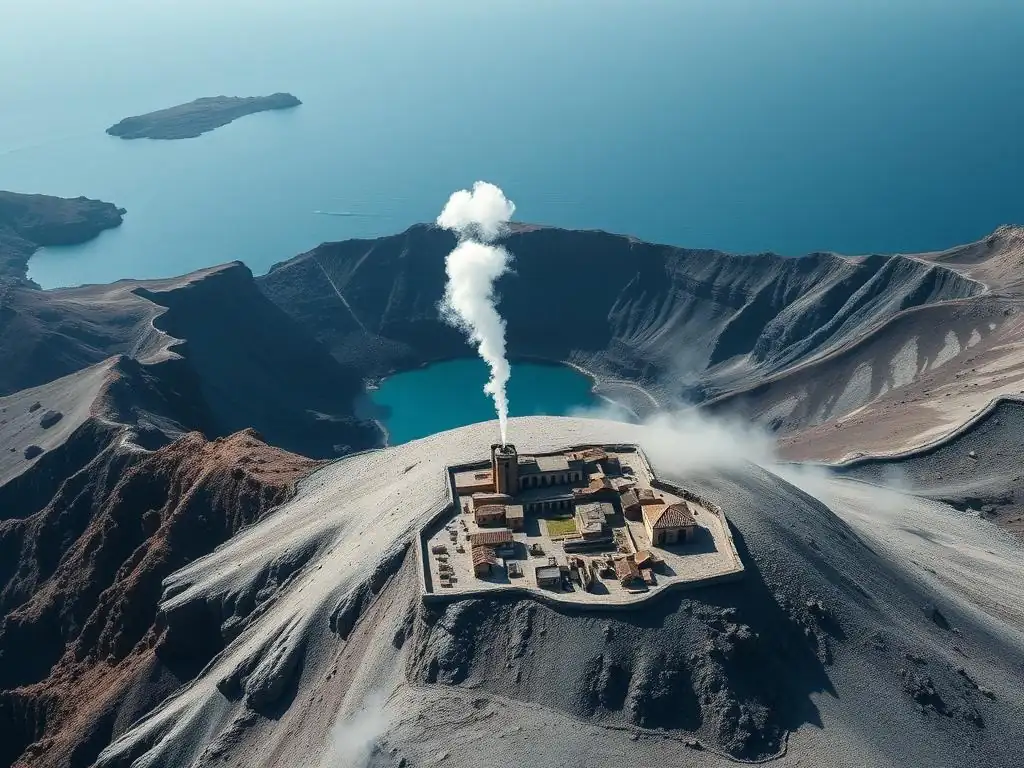
The eruptive style of the Minoan eruption was heavily influenced by the composition of the magma involved. Geochemical analyses of volcanic rocks from Santorini reveal that the magma was primarily rhyodacitic to dacitic in composition, meaning it was rich in silica. Silica-rich magmas are typically more viscous than basaltic magmas, hindering the escape of volcanic gases. This high viscosity, combined with a significant volatile content, particularly water vapor, contributed to the highly explosive nature of the Minoan eruption.
Volcanic gases play a crucial role in driving explosive eruptions. As magma rises to the surface, the pressure decreases, causing dissolved gases to exsolve and form bubbles. In viscous, silica-rich magmas, these bubbles struggle to escape and instead build up pressure within the magma.
When the pressure exceeds the strength of the surrounding rock, a violent explosion occurs, fragmenting the magma into ash, pumice, and gas. The Minoan eruption's Plinian and phreatomagmatic phases were driven by the rapid expansion of these volcanic gases, propelling ash clouds kilometers into the atmosphere and generating devastating pyroclastic flows. The composition and gas content of the Thera magma were therefore key factors in determining the eruption's explosive and catastrophic character.
Tephra Fallout and Pyroclastic Flows: The Destructive Forces
The Minoan eruption unleashed a barrage of destructive forces, primarily tephra fallout and pyroclastic flows. Tephra fallout refers to the volcanic ash, pumice, and rock fragments ejected into the atmosphere during an eruption. During the Minoan eruption, vast quantities of tephra were propelled high into the stratosphere, blanketing the surrounding region in thick layers of ash. These ashfalls would have had devastating effects, burying settlements, destroying crops, and contaminating water sources. The weight of the ash accumulation could also cause roofs to collapse and infrastructure to fail.
Pyroclastic flows, on the other hand, are hot, fast-moving currents of gas and volcanic debris that flow down the flanks of a volcano. These flows are incredibly destructive due to their high temperatures (hundreds of degrees Celsius), high speeds (up to hundreds of kilometers per hour), and dense composition. The Minoan eruption generated pyroclastic flows that swept across Santorini and likely extended into the surrounding sea. These flows would have incinerated everything in their path, causing immediate and widespread destruction. The combined impact of tephra fallout and pyroclastic flows rendered Santorini uninhabitable and significantly impacted the broader Aegean region.
The Santorini Caldera Formation: A Volcanic Collapse
The iconic caldera of Santorini is a direct consequence of the Minoan eruption. Caldera formation is a dramatic process of volcanic collapse that occurs after a large volume of magma is erupted from a shallow magma chamber. As magma is evacuated during an eruption, the support for the overlying volcanic edifice is removed. When the roof of the magma chamber can no longer sustain its own weight, it collapses downwards along ring faults, creating a large, basin-shaped depression – a caldera.
The Minoan eruption resulted in the formation of the Santorini caldera through a series of collapse events. The eruption emptied a significant portion of the magma chamber beneath Santorini, leading to the progressive subsidence of the volcanic island. Seawater rapidly flooded into the newly formed caldera, contributing to phreatomagmatic explosions and further modifying the landscape.
The present-day caldera of Santorini, with its steep cliffs and deep waters, is a striking geological feature and a lasting testament to the immense power of the Minoan eruption and the process of caldera formation. The caldera itself is not a single event, but a complex process that can occur over time and involve multiple stages of collapse.
The Impact of the Minoan Eruption on the Minoan Civilization
Archaeological Evidence of the Eruption's Effects on Crete
The Minoan civilization, flourishing on the island of Crete and centered at Knossos, was contemporary with the Minoan eruption of Thera. While Santorini itself was devastated, the impact on Minoan Crete, located approximately 120 kilometers to the south, has been a subject of intense archaeological investigation. Archaeological evidence from Crete reveals layers of volcanic ash from the Thera eruption, particularly in eastern Crete. These ash layers provide a direct physical link between the eruption and its reach.
At some Minoan sites in Crete, such as Amnisos, evidence suggests disruption and abandonment around the time of the eruption. Buildings show signs of damage potentially attributable to earthquakes associated with the eruption, and ash layers are found within and above Minoan structures. However, the archaeological record is complex, and the extent of the eruption's direct impact on Minoan Crete is still debated.
While some sites show clear evidence of disruption, others appear to have continued without significant interruption. The precise nature and scale of the eruption's effects on Minoan Crete remain an active area of research, requiring careful interpretation of archaeological data in conjunction with volcanological findings.
Tsunamis Generated by the Eruption: Reaching Distant Shores
A significant consequence of the Minoan eruption was the generation of massive tsunamis. Caldera-forming eruptions, particularly those involving submarine or coastal volcanoes like Santorini, are highly efficient at generating tsunamis. The sudden displacement of a large volume of water during caldera collapse, coupled with explosive submarine eruptions, creates powerful waves that radiate outwards from the source. Scientific modeling and geological evidence indicate that the Minoan eruption generated tsunamis that impacted coastlines across the Eastern Mediterranean.
Paleotsunami deposits, consisting of distinctive layers of sediment transported by tsunamis, have been identified in coastal locations in Crete, Greece, Turkey, and even Egypt and Israel. These deposits provide tangible evidence of the Minoan tsunami's reach and destructive power. While the precise height and run-up of the Minoan tsunami are still under investigation, estimates suggest that waves could have reached tens of meters in height in the vicinity of Santorini and several meters even at distant shores. These tsunamis would have inundated coastal settlements, causing widespread damage and contributing to the eruption's overall impact on the region.
The Eruption's Impact: Reassessing the Decline of the Minoan Civilization
The Minoan eruption has long been considered a potential factor in the decline, and even the collapse, of the Minoan civilization. The eruption's devastating effects on Santorini itself are undeniable, and its impact on Crete and the wider Eastern Mediterranean region was significant. However, the precise role of the eruption in the broader trajectory of Minoan civilization is a complex and debated topic. While the eruption undoubtedly caused disruption and damage, it is unlikely to have been the sole cause of the Minoan civilization's eventual decline.
Recent research suggests a more nuanced picture. While the Minoan eruption may have weakened Minoan society and economy, particularly in eastern Crete, it did not necessarily lead to an immediate collapse. The Minoan civilization persisted for some time after the eruption, albeit with changes and adaptations.
Other factors, such as internal social and political dynamics, environmental changes, and interactions with other cultures, likely played a role in the longer-term transformations of Minoan society. The Minoan eruption should therefore be viewed as one significant event within a complex tapestry of factors contributing to the evolution and eventual decline of this Bronze Age civilization.
Scientific Reconstructions of the Minoan Eruption
Volcanic Ash Layers as Evidence of the Eruption's Spread
Volcanic ash layers, or tephra layers, are invaluable tools for reconstructing the spatial extent and impact of volcanic eruptions, including the Minoan eruption. The widespread dispersal of ash from the Thera eruption has left a geological fingerprint across the Eastern Mediterranean and beyond. Scientists have identified ash layers from the Minoan eruption in locations ranging from Turkey and Greece to Egypt, Israel, and even further afield in the Black Sea and the Nile Delta. These ash layers serve as a chronological marker horizon, allowing researchers to correlate geological and archaeological records across vast distances.
The thickness and composition of the ash layers vary depending on the distance from Santorini and the prevailing wind patterns during the eruption. Closer to Santorini, ash layers can be meters thick, while further away, they may be only centimeters or even millimeters thick. Analyzing the chemical composition of the ash shards allows scientists to definitively link these layers to the Minoan eruption of Thera, distinguishing them from ash from other volcanic sources. The distribution and characteristics of these tephra layers provide crucial data for mapping the eruption's dispersal pattern and assessing its regional environmental impact.
Computer Simulations of the Eruption's Dynamics
In recent decades, computer simulations have become increasingly sophisticated tools for studying volcanic eruptions and reconstructing past events like the Minoan eruption. These simulations use numerical models to simulate the complex physical processes involved in volcanic eruptions, including magma ascent, gas exsolution, plume dynamics, tephra dispersal, and pyroclastic flow generation. By inputting parameters based on geological and volcanological data from Santorini, scientists can create virtual reconstructions of the Minoan eruption.
These simulations can help to visualize the eruption's progression, estimate eruption column heights, model tephra dispersal patterns, and assess the potential reach and impact of pyroclastic flows and tsunamis. They allow researchers to test different scenarios and refine our understanding of the eruption's dynamics. For example, simulations can be used to investigate the influence of different magma compositions, eruption rates, and atmospheric conditions on the eruption's behavior. While simulations are simplifications of reality, they provide valuable insights into the complex processes that shaped the Minoan eruption and contribute to a more comprehensive scientific reconstruction of this cataclysmic event.
Santorini Today: Studying the Active Santorini Volcano
Monitoring Current Volcanic Activity at Santorini
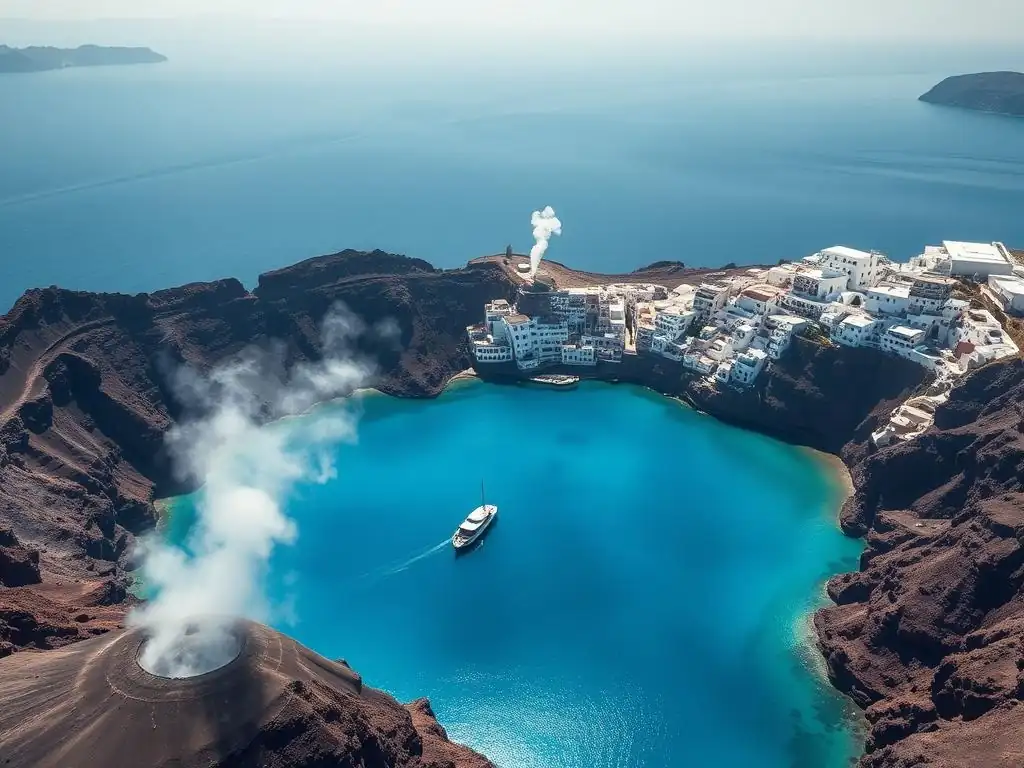
Despite its ancient eruption, Santorini is not a dormant volcano but remains volcanically active. Modern Santorini is part of the Kameni islands volcanic complex, which has experienced several smaller eruptions in historical times, most recently between 1939 and 1950. Today, Santorini is closely monitored by scientists using a range of sophisticated techniques to detect any signs of renewed volcanic unrest. The Santorini Volcano Observatory, part of the Institute for the Study and Monitoring of Volcanoes (ISMOM) in Greece, plays a crucial role in this monitoring effort.
Monitoring activities include continuous GPS measurements to detect ground deformation, which can indicate magma movement beneath the surface. Seismic networks record earthquakes, which are often associated with volcanic activity. Gas monitoring stations measure volcanic gas emissions, such as sulfur dioxide (SO2), which can increase prior to an eruption. Satellite data, including radar interferometry and thermal imagery, are also used to track ground deformation and thermal changes. This comprehensive monitoring network provides early warning of any potential volcanic reactivation at Santorini, ensuring the safety of the island's inhabitants and visitors.
The Future Volcanic Hazard Potential of Santorini
Santorini remains a potentially hazardous volcano, and future eruptions are inevitable. While the scale of the Minoan eruption is unlikely to be repeated in the near future, smaller to moderate-sized eruptions are possible. The main volcanic hazards at Santorini include explosive eruptions, tephra fallout, pyroclastic flows, and tsunamis. The active volcanic center is currently located beneath the Kameni islands, within the Santorini caldera. Future eruptions could originate from this area or potentially from new vents within the caldera or on the flanks of the surrounding islands.
Volcanic hazard assessments for Santorini are ongoing and are crucial for developing effective mitigation strategies. These assessments consider the frequency and magnitude of past eruptions, the current state of volcanic activity, and potential eruption scenarios. Preparedness plans are in place to respond to volcanic unrest, including evacuation procedures and public awareness campaigns. Understanding the future volcanic hazard potential of Santorini is essential for sustainable development and for ensuring the safety of the communities living in and around this active volcanic region. Continuous monitoring and research are vital for mitigating the risks posed by the active Santorini volcano.
The Minoan Eruption: A Lesson in Volcanic Power
Understanding the Risks of Island Volcanoes
The Minoan eruption serves as a stark reminder of the inherent risks associated with island volcanoes, particularly those located in densely populated regions. Island volcanoes often have unique characteristics that can amplify volcanic hazards. Their proximity to the sea increases the likelihood of phreatomagmatic eruptions, which are highly explosive due to the interaction of magma and water. Caldera formation, as seen at Santorini, is also more common in island settings, and caldera-forming eruptions are among the most powerful volcanic events on Earth.
Furthermore, island volcanoes often pose challenges for evacuation and emergency response. Limited land area, dependence on sea and air transport, and the potential for tsunamis can complicate evacuation efforts. The Minoan eruption highlights the importance of understanding and mitigating these specific risks associated with island volcanoes. Lessons learned from Santorini are applicable to other volcanic islands around the world, emphasizing the need for robust monitoring systems, effective early warning systems, and well-prepared communities.
Preparing for Future Volcanic Eruptions: Lessons from the Past
The Minoan eruption, though a prehistoric event, offers valuable lessons for preparing for future volcanic eruptions, both at Santorini and globally. The eruption underscores the importance of continuous volcanic monitoring and research to understand volcanic processes and assess hazards. Early warning systems, based on real-time monitoring data, are crucial for providing timely alerts and enabling effective evacuations. Public education and awareness campaigns are essential for building community resilience and ensuring that residents and visitors understand volcanic risks and emergency procedures.
Land-use planning and infrastructure development should also consider volcanic hazards. Building codes in volcanic areas should be designed to withstand ashfall and seismic activity. Evacuation routes and shelters should be identified and maintained. International collaboration and knowledge sharing are vital for improving volcanic hazard preparedness worldwide. By learning from the past, including the lessons of the Minoan eruption, we can better prepare for future volcanic events and mitigate their potentially devastating impacts on human societies and the environment.
Conclusion: The Enduring Legacy of Thera's Volcanic Fury
The Minoan eruption of Thera stands as a pivotal event in both geological and human history. Its cataclysmic power reshaped the Aegean landscape, creating the stunning caldera of Santorini, and profoundly impacted the Minoan civilization and the wider Eastern Mediterranean world. Through the lens of volcanic science, we have gained a deeper understanding of the mechanisms, magnitude, and far-reaching consequences of this ancient eruption. The eruption serves as a potent reminder of the Earth's dynamic forces and the ever-present volcanic hazards in certain regions.
The legacy of Thera's volcanic fury endures not only in the dramatic landscape of Santorini but also in the lessons it offers for understanding and mitigating volcanic risks. Continuous scientific research, monitoring efforts, and community preparedness are essential for living safely with volcanoes. The Minoan eruption, a cataclysmic event of the past, continues to inform and guide our approach to volcanic hazard management and preparedness in the present and for the future. The science behind the Minoan eruption is not just a historical inquiry, but a crucial endeavor for safeguarding communities living in volcanic regions around the globe.
Frequently Asked Questions
What was the Minoan eruption, and why is it significant?
The Minoan eruption was a massive volcanic event that occurred on the island of Thera (modern Santorini) in the Aegean Sea. It's significant because it profoundly impacted the Minoan civilization and is a key event in volcanic science history, influencing the archaeological record.
How does VolcanoExplorers.org explain the volcanic science behind the Minoan eruption?
VolcanoExplorers.org likely details the magma formation process, the explosive forces involved in the eruption, and the types of volcanic materials ejected. The site would explain how volcanologists study the geological evidence to understand the eruption's scale and impact.
Where is Thera, and what type of volcano caused the Minoan eruption?
Thera is an island in the Aegean Sea, now known as Santorini. The Minoan eruption was caused by a stratovolcano, known for its explosive eruptions due to its steep slopes and the composition of its magma.
What were the immediate and long-term effects of the Minoan eruption?
The immediate effects included tsunamis, ashfall, and pyroclastic flows, devastating nearby regions. Long-term effects included climate change, alterations to the island's landscape, and the potential decline of the Minoan civilization.
While the Minoan eruption occurred thousands of years ago, VolcanoExplorers.org likely provides general safety guides and evacuation tips for those living near active volcanoes. It also offers real-time updates on current volcanic activity worldwide to promote preparedness.
Final Reflection: Echoes of Thera's Fury
The scientific understanding of the Minoan eruption, as explored in this article, is not merely a historical exercise; it's a crucial lens through which we view the enduring power of geological forces and their potential impact on civilization. The eruption of Thera serves as a stark reminder that even seemingly stable environments can be dramatically reshaped by the planet's volatile nature, a lesson particularly relevant in our era of increasing climate change and natural disasters.
The Minoan eruption's legacy extends far beyond the archaeological record. It has profoundly shaped our understanding of volcanic processes and their ripple effects on societies. The sheer scale of the devastation, coupled with the mystery surrounding the Minoan civilization's decline, continues to fascinate and inspire research across disciplines. The past is never dead. It's not even past.
- William Faulkner. This quote resonates deeply when considering Thera; the echoes of its eruption continue to reverberate through our scientific understanding and cultural imagination.
As we conclude this exploration of Thera's volcanic fury, I invite you to consider the fragility of our own world and the importance of understanding the forces that shape it. Let the Minoan eruption serve as a call to action – a reminder to invest in scientific research, promote responsible environmental stewardship, and prepare for the challenges that lie ahead. Let us learn from the past to build a more resilient and sustainable future, honoring the lessons etched in the volcanic ash of Thera.
Unearth the Secrets of Thera: Become a Volcano Explorer!
Thanks for diving into the science of the Minoan eruption with us! We hope you've gained a newfound appreciation for the power and complexity hidden beneath our feet. Now it's time to take that knowledge and turn it into action!
Here's how you can continue your journey into the heart of volcanology:
- Embark on a virtual exploration: Use online geological maps to trace the caldera's rim and uncover hidden remnants of this ancient volcanic event. Can you identify the pyroclastic flow deposits?
- Share your newfound volcanic wisdom: Educate your friends and family about the Minoan eruption and the science behind it. Volcanoes are more fascinating than you might think!
- Contribute to Volcano Explorers: Share your own volcanic findings, photos, or artwork with our community at volcanoexplorers.org (in the comments below!) to help us build a better understanding of our planet.
What fascinating volcanic event are you going to delve into next? Share your plans below!