
Hunga Tonga: A Tsunami Born from Fire – Exploring the Underwater Explosion.

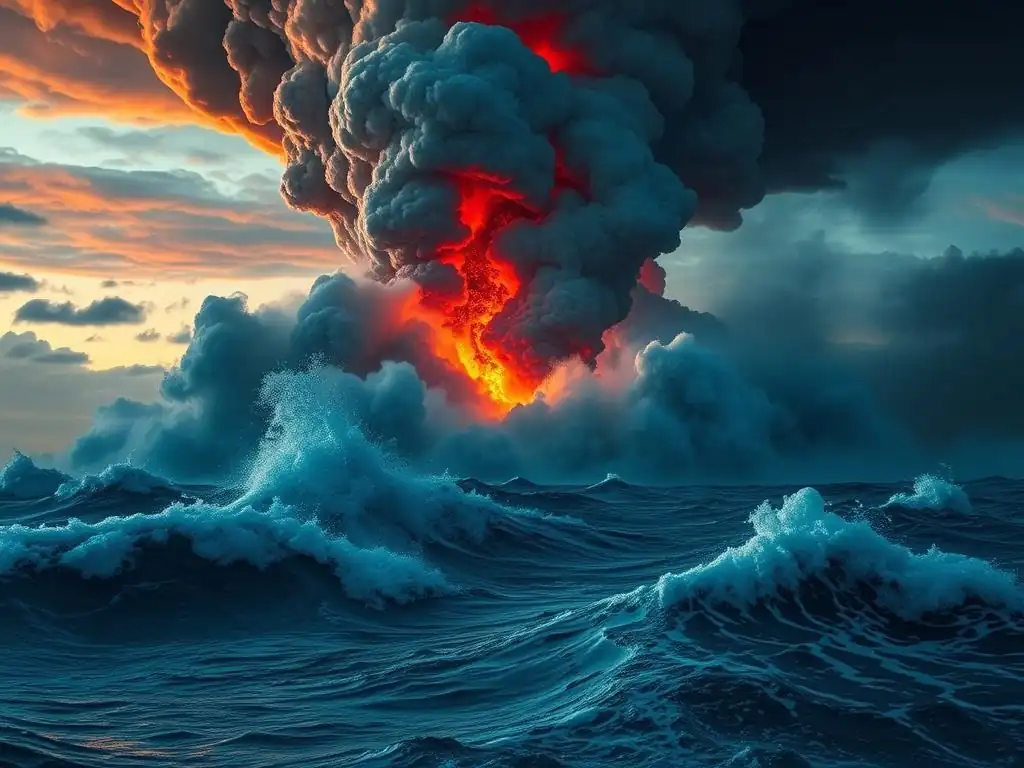
Welcome to Volcano Explorers, where the earth breathes fire! Ever wondered how a single volcanic eruption can trigger a global event? Dive deep with us as we unravel the mysteries behind the Hunga Tonga underwater volcanic explosion, a cataclysmic event that reshaped our understanding of volcanic power. Prepare to be amazed, and perhaps a little humbled, by the sheer force of nature. Your journey into the heart of this fiery phenomenon begins now...
- Hunga Tonga-Hunga Ha'apai Eruption: A Tsunami's Fiery Birth
- Introduction: The 2022 Eruption and Its Underwater Origins
- Geology of Hunga Tonga-Hunga Ha'apai: A Volcanic Island
- The Underwater Volcanic Explosion: A Detailed Analysis
- Tsunami Generation from the Eruption
- Atmospheric Impacts of the Eruption
- Monitoring and Studying the Volcano's Aftermath
- Lessons Learned and Future Preparedness
-
Frequently Asked Questions
- What caused the Hunga Tonga-Hunga Ha'apai eruption to be so explosive?
- How did the Hunga Tonga eruption generate a tsunami?
- What made the Hunga Tonga eruption's ash cloud so significant?
- How did scientists monitor the Hunga Tonga eruption and its aftermath?
- What lessons did the Hunga Tonga eruption teach us about underwater volcanoes?
- Final Reflection: Echoes of Hunga Tonga's Fury
Hunga Tonga-Hunga Ha'apai Eruption: A Tsunami's Fiery Birth
Introduction: The 2022 Eruption and Its Underwater Origins
Volcanic Island Formation and Activity
Volcanic islands often emerge from the ocean's depths through repeated eruptions of lava that solidify over time, gradually building landmasses above sea level. These islands are typically located along tectonic plate boundaries, where volcanic activity is concentrated due to the movement and interaction of Earth's crustal plates. The Pacific Ring of Fire, for instance, is a prime example, hosting a significant number of volcanic islands formed by subduction processes. These islands are not static; they are dynamic environments shaped by ongoing volcanic activity, erosion from wind and waves, and even subsidence back into the ocean.
The life cycle of a volcanic island often includes periods of both effusive and explosive eruptions. Effusive eruptions are characterized by the steady flow of lava, which expands the island's surface area. Explosive eruptions, on the other hand, are more violent, often involving the rapid release of gas and ash, which can dramatically reshape the island and its surroundings.
The interplay between these processes, combined with the constant interaction with the ocean, creates unique and sometimes precarious geological settings. Many of these volcanic islands host active volcanic systems that pose significant hazards to nearby populations and global systems, particularly when eruptions occur underwater.
The Catastrophic Underwater Event of January 15, 2022
On January 15, 2022, the Hunga Tonga-Hunga Ha'apai volcano, located in the Kingdom of Tonga, unleashed one of the most powerful volcanic eruptions of the 21st century. What set this eruption apart was its predominantly underwater nature, occurring beneath the surface of the Pacific Ocean. This underwater volcanic explosion was not just a geological event; it was a cataclysmic release of energy that triggered a series of global impacts, from a devastating tsunami to atmospheric waves that circled the Earth multiple times.
The Hunga Tonga underwater volcanic explosion was characterized by its immense force and the complex interaction between magma and seawater. The event sent shockwaves through the ocean and atmosphere, demonstrating the profound interconnectedness of Earth's systems. The eruption served as a stark reminder of the power of submarine volcanoes and the potential hazards they pose, particularly in densely populated coastal regions. The subsequent tsunami and atmospheric disturbances highlighted the need for improved monitoring and preparedness strategies for similar underwater volcanic events in the future.
Geology of Hunga Tonga-Hunga Ha'apai: A Volcanic Island
Formation and Evolution of the Volcano
Hunga Tonga-Hunga Ha'apai is a relatively young volcanic island, part of the larger Tonga-Kermadec volcanic arc. Its formation is a result of continuous volcanic activity over thousands of years, building up layers of volcanic rock and ash. Prior to the 2022 eruption, the volcano consisted of two small islands, Hunga Tonga and Hunga Ha'apai, connected by a submarine ridge. These islands represented the visible tips of a much larger underwater volcano, a caldera system that has undergone numerous eruptive cycles throughout its history.
The evolution of Hunga Tonga-Hunga Ha'apai has been marked by periods of growth and destruction. Previous eruptions have contributed to the island's construction, while others have caused significant collapses and reshaping. Geological studies have revealed evidence of past caldera collapses and resurgences, indicating a complex and dynamic volcanic history. The 2014-2015 eruption, for example, created a new land bridge connecting the two previously separate islands, demonstrating the ongoing and rapid geological changes in this volcanic region. This continuous evolution makes Hunga Tonga-Hunga Ha'apai a fascinating subject for volcanological research and a testament to the Earth's dynamic processes.
Tectonic Setting: The Tonga-Kermadec Subduction Zone
The Hunga Tonga-Hunga Ha'apai volcano owes its existence to the Tonga-Kermadec subduction zone, one of the most volcanically active regions on Earth. This subduction zone is where the Pacific Plate is forced beneath the Indo-Australian Plate, a process that generates magma deep within the Earth's mantle. As the Pacific Plate descends, it releases water and other volatile compounds into the overlying mantle wedge, lowering the melting point of the mantle rock and leading to the formation of magma.
This magma, being less dense than the surrounding solid rock, rises towards the surface. Over time, repeated eruptions along this zone have built up the Tonga-Kermadec Ridge, a chain of submarine volcanoes and volcanic islands stretching for thousands of kilometers. The Tonga-Kermadec subduction zone is characterized by its high rate of subduction and the presence of a deep oceanic trench, the Kermadec Trench. This tectonic setting not only explains the presence of Hunga Tonga-Hunga Ha'apai but also accounts for the region's frequent earthquakes and intense volcanic activity, making it a crucial area for studying plate tectonics and volcanic hazards.
The Underwater Volcanic Explosion: A Detailed Analysis
Pre-Eruption Activity: Increased Volcanic Activity
In the weeks and months leading up to the catastrophic January 15, 2022 eruption, Hunga Tonga-Hunga Ha'apai showed signs of increasing volcanic activity. Satellite data and local observations indicated a series of smaller eruptions starting in late December 2021. These initial eruptions were characterized by ash plumes and steam venting, suggesting a build-up of pressure within the volcano's magma system. Scientists monitoring the volcano noted an increase in seismic activity and changes in gas emissions, all pointing towards an impending larger event.
This pre-eruption phase served as a crucial warning sign, although the scale and intensity of the eventual underwater volcanic explosion were likely underestimated. The increased activity prompted local authorities to issue warnings and advisories, but the unprecedented nature of the subsequent eruption highlighted the challenges in predicting and preparing for such powerful submarine volcanic events. The precursory signs, however, underscore the importance of continuous monitoring of active volcanoes, especially those located in submarine environments, to better assess and mitigate potential hazards.
Phreatomagmatic Explosions: Magma and Seawater Interaction
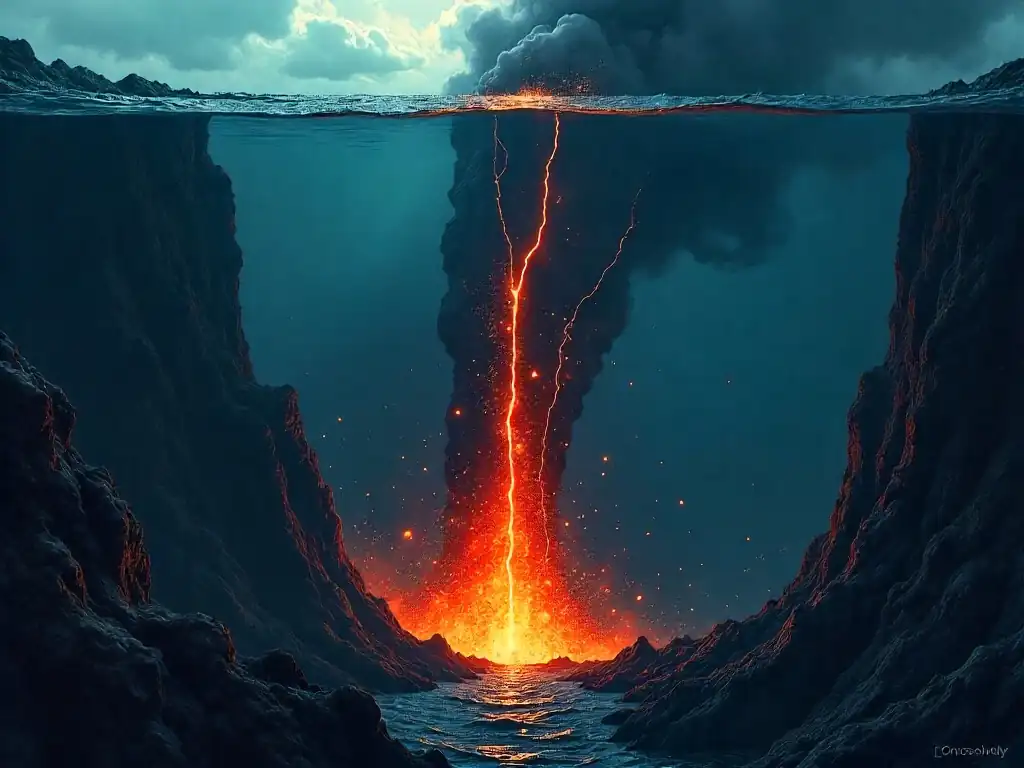
The Hunga Tonga underwater volcanic explosion was primarily a phreatomagmatic eruption. This type of eruption occurs when magma, molten rock from beneath the Earth's surface, interacts violently with water. In the case of Hunga Tonga, the volcano's vent was located below sea level, allowing for a massive influx of seawater into the erupting magma chamber. The extreme temperature difference between the hot magma, estimated to be over 1000 degrees Celsius, and the relatively cold seawater caused instantaneous vaporization of the water.
This rapid vaporization created a tremendous pressure build-up within the volcano. As the water flashed to steam, it expanded explosively, shattering the surrounding rock and propelling ash, gas, and volcanic debris high into the atmosphere and outwards into the ocean. Phreatomagmatic eruptions are known for their highly explosive nature due to the efficient heat transfer and rapid expansion of steam, making them significantly more violent than purely magmatic eruptions where water interaction is minimal. The Hunga Tonga underwater volcanic explosion exemplifies the extreme power and destructive potential of phreatomagmatic activity in submarine volcanic settings.
Energy Release: Estimating the Explosion's Magnitude
The energy released by the Hunga Tonga underwater volcanic explosion on January 15, 2022, was immense, rivaling some of the largest volcanic eruptions in recorded history. Scientists have used various methods to estimate the magnitude of the explosion, including analyzing atmospheric pressure waves, seismic signals, and the extent of the ash cloud.
Preliminary estimates suggest that the eruption released energy equivalent to several megatons of TNT, possibly in the range of 5 to 15 megatons. This places it on par with or even exceeding the energy release of the 1980 Mount St. Helens eruption and significantly larger than many nuclear explosions.
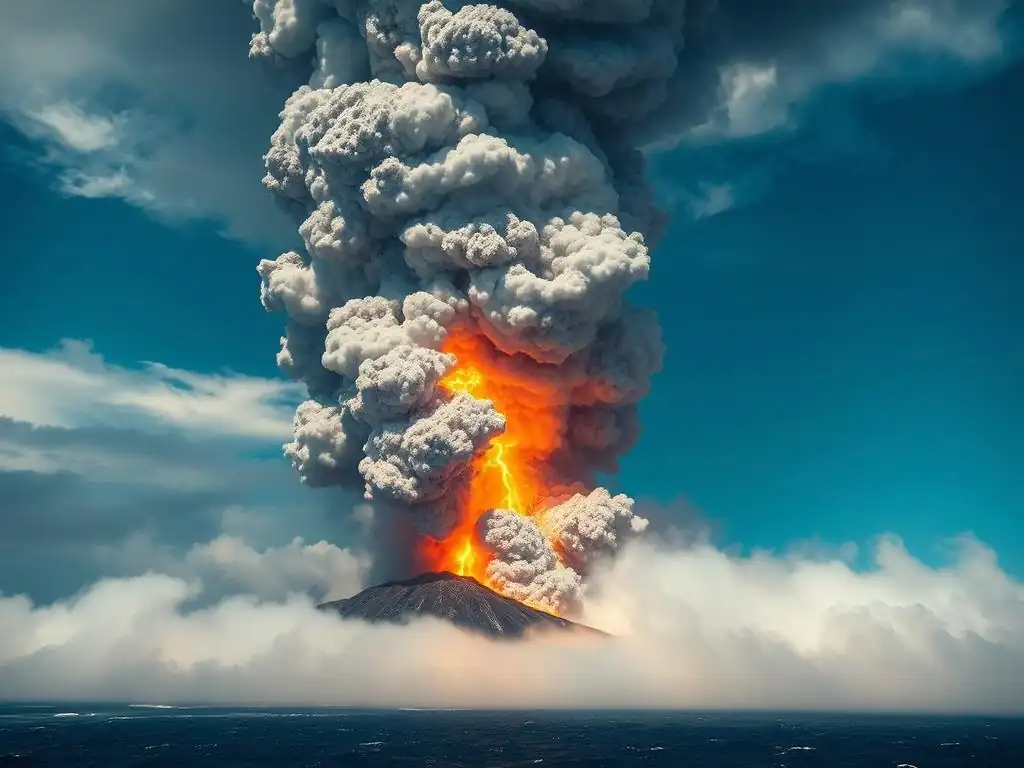
The sheer scale of the energy release is evident in the global reach of the eruption's impacts. Pressure waves were detected worldwide, traveling multiple times around the planet. The eruption column reached an unprecedented height of over 50 kilometers into the mesosphere, injecting vast quantities of ash and gases into the stratosphere.
The resulting tsunami propagated across the Pacific Ocean, reaching distant coastlines thousands of kilometers away. The Hunga Tonga underwater volcanic explosion serves as a powerful example of the immense energy that can be unleashed by submarine volcanic events and underscores the need for continued research and monitoring of these dynamic geological systems.
Tsunami Generation from the Eruption
Volcanic Explosions and Tsunami Formation
Volcanic eruptions, particularly those occurring underwater or near coastlines, are a significant source of tsunamis. Tsunamis generated by volcanic activity, often termed volcanogenic tsunamis, can be triggered by several mechanisms. Large underwater explosions, like the one at Hunga Tonga, can displace massive volumes of water, initiating a tsunami wave. Caldera collapses, where the roof of a magma chamber collapses into itself after an eruption, can also cause significant seafloor displacement and tsunami generation. Additionally, submarine landslides, triggered by volcanic activity or earthquakes, can displace water and create tsunamis.
The characteristics of volcanogenic tsunamis can differ from those generated by earthquakes. Volcanic tsunamis are often more localized and can have shorter wavelengths compared to earthquake-generated tsunamis. However, they can still be incredibly destructive, especially in the near-field region close to the source. Understanding the specific mechanisms of tsunami generation from volcanic eruptions is crucial for developing effective early warning systems and mitigating the hazards associated with these events, particularly in volcanically active regions like the Pacific Ring of Fire.
Tsunami Characteristics: Speed, Wave Height, and Propagation
The tsunami generated by the Hunga Tonga underwater volcanic explosion exhibited remarkable characteristics in terms of speed, wave height, and propagation. Tsunamis are long-wavelength waves that travel at high speeds across the ocean, their speed being dependent on the water depth. In the deep ocean, tsunamis can travel at speeds exceeding 700 kilometers per hour, comparable to jet airplanes. As the tsunami approaches shallower coastal waters, its speed decreases, and its wave height increases dramatically due to the conservation of energy.
The Hunga Tonga tsunami was detected by tide gauges and tsunami sensors across the Pacific Ocean and even in the Atlantic and Indian Oceans. While wave heights in the far-field were generally smaller, ranging from centimeters to tens of centimeters, near Tonga, the tsunami was devastating. Wave heights in Tonga reached up to 15 meters or more in some locations, causing widespread inundation and destruction along the coastlines. The rapid propagation of the tsunami across vast distances highlighted the global reach of such events and the need for international cooperation in tsunami warning and mitigation efforts.
Comparison to Other Volcanic Tsunamis: Krakatoa and Anak Krakatau
The Hunga Tonga tsunami invites comparison to other significant volcanogenic tsunamis, notably those generated by the 1883 Krakatoa eruption and the 2018 Anak Krakatau eruption. The 1883 Krakatoa eruption, also in Indonesia, produced a massive tsunami that was responsible for the majority of the estimated 36,000 fatalities. The Krakatoa tsunami was generated by a combination of caldera collapse, pyroclastic flows entering the sea, and a powerful underwater explosion. It propagated across the Indian and Pacific Oceans, reaching as far as South America.
In contrast, the 2018 Anak Krakatau eruption triggered a tsunami primarily due to a flank collapse of the volcano into the sea. This event, while smaller in scale than Krakatoa, still caused significant damage and casualties in coastal areas of Java and Sumatra. Comparing these events with the Hunga Tonga tsunami highlights the diverse mechanisms of volcanogenic tsunami generation and the varying scales of their impacts.
While the Hunga Tonga eruption was primarily driven by an underwater explosion, similar to Krakatoa's explosive component, the Anak Krakatau tsunami was more landslide-driven. Studying these different types of volcanic tsunamis is crucial for improving our understanding of these hazards and enhancing our ability to forecast and prepare for future events.
Atmospheric Impacts of the Eruption
Atmospheric Pressure Waves: Global Propagation
The Hunga Tonga underwater volcanic explosion generated remarkably strong atmospheric pressure waves that propagated globally. These pressure waves, also known as Lamb waves, are acoustic-gravity waves that travel through the atmosphere at the speed of sound. The sheer power of the Hunga Tonga eruption launched these waves outwards in all directions, and they were detected by barometers and weather stations around the world, some even recording multiple passes as the waves circumnavigated the globe.
The atmospheric pressure waves from the Hunga Tonga eruption were exceptionally clear and distinct in pressure recordings. Their global propagation demonstrated the immense energy imparted to the atmosphere by the underwater volcanic explosion. Scientists analyzed these pressure wave signatures to estimate the eruption's magnitude and to study the dynamics of atmospheric wave propagation. The global reach of these atmospheric waves underscored the interconnectedness of Earth's systems and how a single, powerful event can have planet-wide atmospheric consequences.
Water Vapor Injection: Stratospheric Impacts
One of the most significant atmospheric impacts of the Hunga Tonga eruption was the massive injection of water vapor into the stratosphere. Phreatomagmatic eruptions are particularly efficient at lofting water vapor high into the atmosphere due to the interaction of magma and seawater. Satellite observations revealed that the Hunga Tonga eruption injected an unprecedented amount of water vapor into the stratosphere, estimated to be around 50 megatons. This is significantly larger than any other volcanic eruption in the satellite era.
Water vapor is a potent greenhouse gas, and its injection into the stratosphere has the potential to influence global climate. Unlike volcanic sulfur dioxide, which leads to cooling by forming sulfate aerosols that reflect sunlight, water vapor in the stratosphere can lead to warming by trapping outgoing infrared radiation. The long-term climate effects of this massive water vapor injection are still being studied, but initial research suggests that it could lead to a temporary warming effect and potentially influence stratospheric ozone chemistry and atmospheric circulation patterns.
Ozone Layer Effects: Potential Chemical Reactions
The injection of large amounts of water vapor into the stratosphere from the Hunga Tonga underwater volcanic explosion also raises concerns about potential impacts on the ozone layer. Water vapor can enhance the destruction of ozone in the stratosphere through various chemical reactions. Increased water vapor can lead to the formation of polar stratospheric clouds, even at mid-latitudes, which can facilitate ozone-depleting reactions involving chlorine and bromine compounds.
While the eruption did not inject significant amounts of ozone-depleting substances directly into the stratosphere, the increased water vapor could enhance the effectiveness of existing anthropogenic ozone-depleting substances. Scientists are investigating the potential for these water vapor-induced chemical reactions to affect stratospheric ozone concentrations and the long-term implications for ozone layer recovery. Understanding these complex interactions is crucial for assessing the full environmental consequences of large volcanic eruptions and their potential impact on atmospheric chemistry and climate.
Monitoring and Studying the Volcano's Aftermath
Satellite Observations: Ash Cloud Dispersion and Landform Changes
Satellite observations have been invaluable in monitoring the aftermath of the Hunga Tonga eruption. Immediately following the eruption, satellite imagery tracked the dispersion of the massive ash cloud, which initially spread westward across the Pacific Ocean. These observations were crucial for aviation safety, as volcanic ash can be hazardous to aircraft engines. Satellite data also provided insights into the height and extent of the eruption plume, helping to estimate the eruption's magnitude and its atmospheric impacts.
Furthermore, satellite imagery has revealed significant landform changes at Hunga Tonga-Hunga Ha'apai. The eruption caused a substantial collapse of the volcanic edifice, with much of the pre-eruption island disappearing beneath the sea surface. Satellite measurements have documented the dramatic reshaping of the caldera and the surrounding islands, providing a visual record of the eruption's destructive power and the ongoing geological changes in the area. Continued satellite monitoring remains essential for tracking the volcano's recovery and assessing the potential for future activity.
Seafloor Surveys: Crater Morphology and Volcanic Deposits
To gain a more detailed understanding of the underwater volcanic explosion and its impact on the seafloor, scientists have conducted seafloor surveys around Hunga Tonga-Hunga Ha'apai. These surveys, using sonar and remotely operated vehicles (ROVs), have mapped the newly formed caldera and the distribution of volcanic deposits on the seabed. The surveys revealed a significantly enlarged caldera compared to pre-eruption bathymetry, indicating a substantial volume of material was ejected or collapsed during the eruption.
Analysis of volcanic deposits collected from the seafloor provides crucial information about the eruption's processes, including the composition of the erupted magma and the nature of the phreatomagmatic explosions. Seafloor surveys are also essential for assessing the stability of the volcanic edifice and identifying potential hazards, such as submarine landslides, that could be triggered by future volcanic activity or seismic events. These detailed investigations of the underwater environment are critical for a comprehensive understanding of the Hunga Tonga eruption and its long-term implications.
Long-Term Effects: Potential for Future Eruptions
The Hunga Tonga underwater volcanic explosion has raised important questions about the long-term effects and the potential for future eruptions at this volcano and similar submarine volcanoes. While the 2022 eruption was exceptionally powerful, it is part of the ongoing volcanic activity within the Tonga-Kermadec subduction zone. The eruption may have altered the magma system beneath Hunga Tonga-Hunga Ha'apai, potentially influencing the style and frequency of future eruptions.
Monitoring the volcano's post-eruption activity is crucial for assessing the likelihood of future events. This includes continued satellite observations, seismic monitoring, and seafloor surveys to detect any signs of unrest or magma accumulation. Understanding the long-term evolution of Hunga Tonga-Hunga Ha'apai and other submarine volcanoes is essential for improving volcanic hazard assessments and developing effective strategies for mitigating the risks posed by these powerful natural forces in the future.
Lessons Learned and Future Preparedness
Improving Tsunami Warning Systems: Detection and Modeling
The Hunga Tonga tsunami highlighted both the strengths and limitations of current tsunami warning systems. While the tsunami was detected relatively quickly and warnings were issued in many parts of the Pacific, the near-field tsunami in Tonga itself arrived with very little warning, causing significant damage. This underscores the need to improve tsunami detection and warning capabilities, particularly for volcanogenic tsunamis and near-field events.
One area for improvement is the development of more sophisticated tsunami models that can accurately simulate tsunamis generated by volcanic explosions and submarine landslides. Integrating real-time data from seismic networks, pressure sensors, and sea-level gauges into these models can enhance their accuracy and speed. Furthermore, improving communication and dissemination of tsunami warnings to coastal communities, especially in vulnerable island nations, is crucial for ensuring timely evacuations and minimizing casualties. The Hunga Tonga event serves as a valuable case study for refining tsunami warning systems and enhancing preparedness for future events.
Risk Assessment of Submarine Volcanoes: Hazard Mitigation
The Hunga Tonga underwater volcanic explosion has underscored the significant hazards posed by submarine volcanoes and the need for improved risk assessment and hazard mitigation strategies. Submarine volcanoes are often less well-monitored than their subaerial counterparts, and the potential for large explosive eruptions and tsunamis may be underestimated in many regions. Developing comprehensive risk assessments for submarine volcanoes requires a multidisciplinary approach, integrating geological studies, geophysical monitoring, and tsunami modeling.
Hazard mitigation strategies for submarine volcanic eruptions should include enhanced monitoring networks, improved tsunami early warning systems, and community education and preparedness programs. Identifying populations at risk from submarine volcanic hazards and developing evacuation plans and infrastructure improvements are crucial steps in reducing vulnerability. The Hunga Tonga eruption has highlighted the global reach of submarine volcanic hazards and the importance of international collaboration in research, monitoring, and mitigation efforts.
Importance of Underwater Volcanic Research: Monitoring and Understanding
The Hunga Tonga underwater volcanic explosion has emphasized the critical importance of continued research and monitoring of submarine volcanoes. Despite their prevalence in the global oceans, submarine volcanoes remain relatively understudied compared to volcanoes on land. Investing in underwater volcanic research is essential for improving our understanding of their eruptive behavior, assessing their hazards, and developing effective monitoring and early warning systems.
Advancements in marine technology, such as autonomous underwater vehicles (AUVs), remotely operated vehicles (ROVs), and seafloor observatories, are providing new tools for studying submarine volcanoes in detail. Long-term monitoring of submarine volcanic activity, including seismic activity, gas emissions, and seafloor deformation, is crucial for detecting precursory signs of eruptions and improving our ability to forecast these events. International collaboration and data sharing are essential for advancing underwater volcanic research and enhancing global preparedness for submarine volcanic hazards.
Frequently Asked Questions
What caused the Hunga Tonga-Hunga Ha'apai eruption to be so explosive?
The Hunga Tonga-Hunga Ha'apai eruption's explosivity was primarily due to the interaction of magma and seawater. This rapid heating caused instantaneous steam formation, leading to a massive explosion.
How did the Hunga Tonga eruption generate a tsunami?
The eruption created a tsunami through several mechanisms, including the force of the explosion itself, the collapse of the volcano's caldera, and undersea landslides triggered by the eruption.
What made the Hunga Tonga eruption's ash cloud so significant?
The ash cloud was significant due to its unprecedented height reaching into the mesosphere, and its global impact on atmospheric conditions. It also disrupted air travel and deposited ash over a wide area.
How did scientists monitor the Hunga Tonga eruption and its aftermath?
Scientists used a variety of tools including satellite imagery, seismic sensors, and pressure sensors to monitor the eruption. They also employed tsunami warning systems and atmospheric models to track the ash cloud's movement.
What lessons did the Hunga Tonga eruption teach us about underwater volcanoes?
The Hunga Tonga eruption highlighted the potential for underwater volcanoes to generate devastating tsunamis and the need for improved monitoring. It also demonstrated the complex interactions between volcanoes, oceans, and the atmosphere, emphasizing the importance of interdisciplinary research.
Final Reflection: Echoes of Hunga Tonga's Fury
The devastating Hunga Tonga-Hunga Ha'apai underwater volcanic explosion serves as a stark reminder of the raw power hidden beneath our oceans. This event, a cataclysmic convergence of fire and water, continues to resonate globally, not only as a scientific marvel but as a potent symbol of nature's unpredictable force. The lessons learned from studying this eruption are crucial for improving our understanding of tsunami generation and mitigating future risks in a world increasingly vulnerable to climate change and natural disasters.
The impact of Hunga Tonga extends far beyond the immediate devastation. It has profoundly influenced our perception of volcanic hazards and the interconnectedness of our planet. Witnessing the sheer scale of the eruption and its global reach has instilled a deeper respect for the forces shaping our world, prompting a reevaluation of our preparedness and response strategies. The ocean is a mighty harmonist.
- Herman Melville. This quote encapsulates the delicate balance that Hunga Tonga disrupted, reminding us that even seemingly remote events can have far-reaching consequences.
As we continue to analyze the data and learn from the Hunga Tonga underwater volcanic explosion, let us not forget the lessons it has taught us. Consider how this event has shifted your own understanding of natural disasters and the importance of scientific research. Let the echoes of Hunga Tonga's fury inspire you to become more informed, more prepared, and more engaged in building a safer and more resilient future for all.
I'm ready. Please provide the article content so I can write a compelling call to action.