
When the Sky Turned Black: Volcanic Darkness and the Famine That Followed

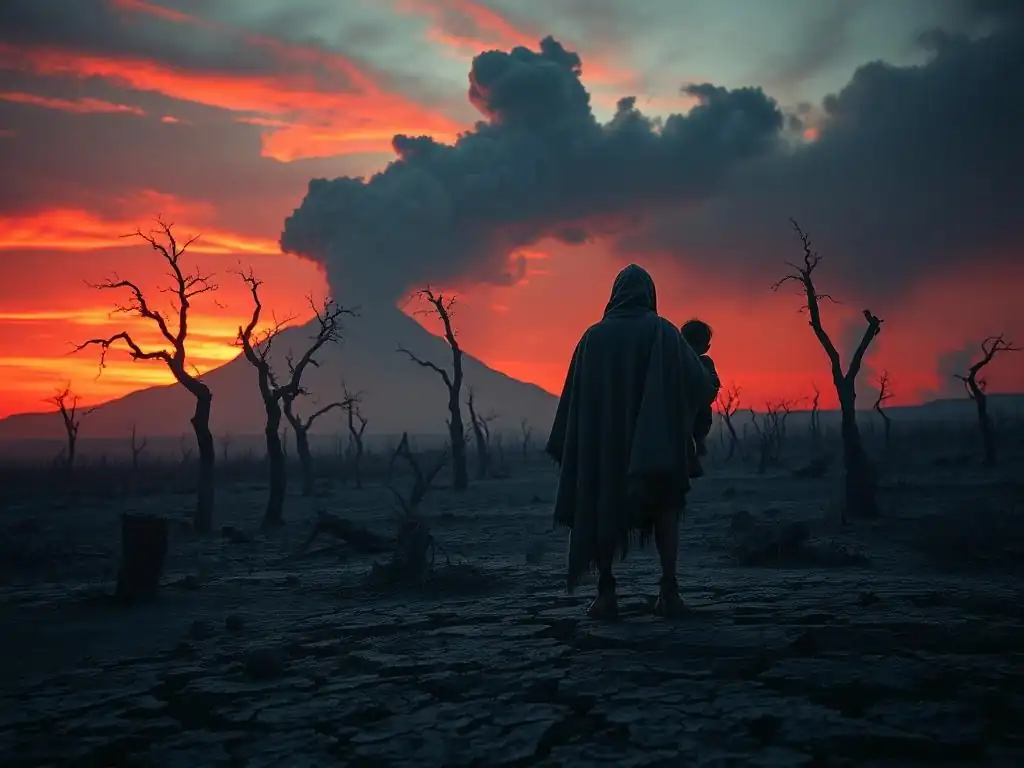
Welcome to Volcano Explorers!
Prepare to be captivated by the raw power and profound impact of Earth's fiery giants. Did you know that a single volcanic eruption can plunge the world into years of darkness, triggering devastating famines? This isn't just geological history; it's a chilling reminder of nature's untamed force. Uncover the secrets behind volcanic eruptions and climate impact in our latest article, "When the Sky Turned Black: Volcanic Darkness and the Famine That Followed." What lurks beneath the surface that can trigger such global catastrophe? Explore with us... if you dare.
- Introduction: The Devastating Link Between Volcanic Eruptions and Climate Impact
- Historical Context: Laki and the Eruption of 1783-1784
- The Climate Impact of Volcanic Aerosols: A "Volcanic Winter"
- The Famine: A Consequence of Volcanic Climate Change
- Lessons Learned: Understanding and Mitigating Future Volcanic Climate Risks
- Conclusion: A Stark Reminder of the Power of Volcanoes and their Global Reach
-
Frequently Asked Questions
- How do volcanic eruptions affect the climate?
- What is "volcanic darkness" and how does it relate to famine?
- What types of volcanic eruptions have the biggest impact on climate?
- Besides cooling, what other climate-related changes can volcanic eruptions cause?
- How do scientists study the climate impact of past volcanic eruptions?
- Final Reflection: Echoes of Volcanic Winter
- Unearth the Lessons of Volcanic History
Introduction: The Devastating Link Between Volcanic Eruptions and Climate Impact
Volcanic eruptions are among the most powerful and awe-inspiring natural phenomena on Earth. While their immediate impacts, such as lava flows and pyroclastic flows, are undeniably destructive in their vicinity, the reach of a major eruption extends far beyond the volcanic landscape. One of the most significant, yet often less immediately visible, consequences of large volcanic events is their profound impact on global climate.
Throughout history, massive volcanic eruptions have injected vast quantities of gases and particles into the stratosphere, triggering significant shifts in global weather patterns and temperatures. These changes, in turn, have had devastating effects on agriculture and human societies, often leading to widespread famine and societal upheaval. Understanding the intricate link between volcanic eruptions and climate impact is crucial for comprehending past crises and preparing for future environmental challenges.
Historical Context: Laki and the Eruption of 1783-1784
The Eruption: A Detailed Account of the Volcanic Event
The year 1783 witnessed one of the most impactful volcanic events in recent history: the eruption of the Laki fissure in Iceland. This was not a single explosive eruption from a cone-shaped volcano, but rather a series of eruptions from a 25-kilometer-long fissure in the Grímsvötn volcanic system.
Starting on June 8th, 1783, and continuing for eight months until February 1784, Laki unleashed an estimated 14 cubic kilometers of basalt lava and a staggering volume of volcanic gases into the atmosphere. Unlike eruptions dominated by ash, Laki was characterized by its effusive nature, producing vast lava flows that covered approximately 600 square kilometers of land.
However, it was the immense release of sulfur dioxide and other gases that would have the most far-reaching and devastating consequences. Contemporary accounts describe the eruption as a continuous haze and "dry fog" that spread across Europe, obscuring the sun and impacting daily life across the continent.
Ash Plume and Aerosol Injection: The Atmospheric Impact
While Laki produced relatively little ash compared to explosive eruptions like Krakatoa or Tambora, its impact on the atmosphere was immense due to the sheer volume of sulfur dioxide (SO₂) released. It is estimated that Laki injected approximately 8 million tons of hydrogen fluoride and a staggering 120 million tons of sulfur dioxide into the atmosphere.
Upon reaching the stratosphere, sulfur dioxide reacts with water vapor to form sulfate aerosols, tiny droplets of sulfuric acid. These aerosols are highly reflective and can persist in the stratosphere for months or even years, effectively creating a global veil that reflects incoming sunlight back into space.
The "dry fog" observed across Europe was not just a local phenomenon; it was a manifestation of these stratospheric aerosols spreading across the Northern Hemisphere, dimming the sun and altering the Earth's radiative balance. This injection of aerosols marked the beginning of a significant climate perturbation, setting the stage for widespread environmental and societal disruption.
The Climate Impact of Volcanic Aerosols: A "Volcanic Winter"
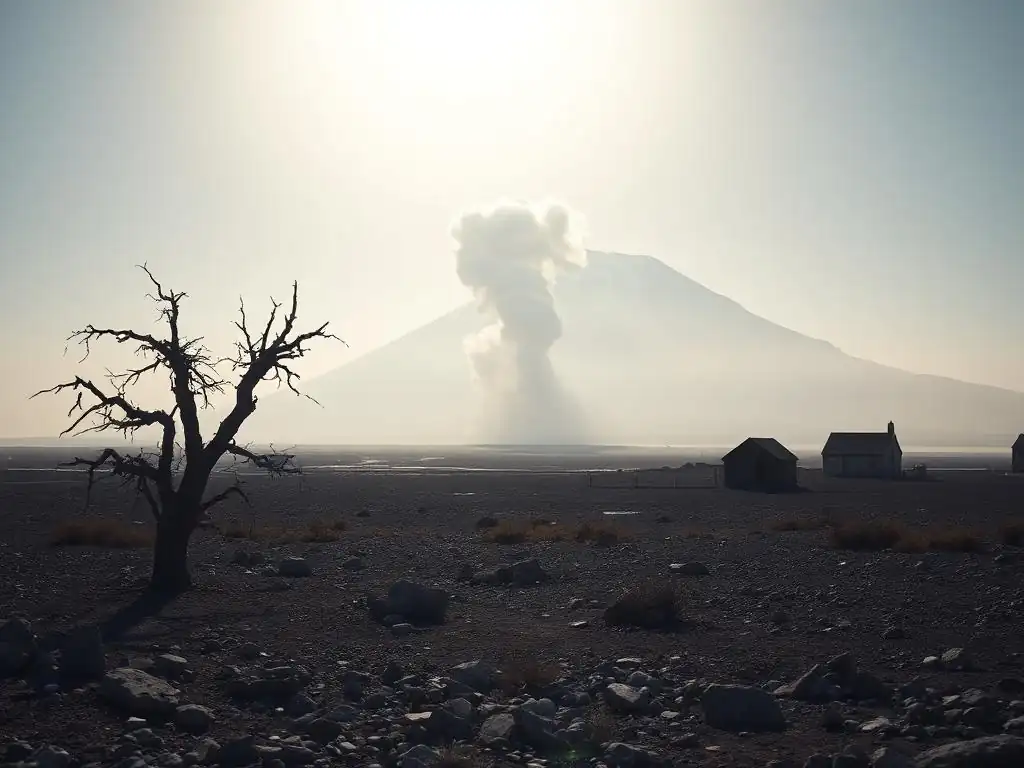
Global Cooling: How Volcanic Aerosols Block Sunlight
The sulfate aerosols produced by the Laki eruption had a direct and significant impact on global temperatures. By reflecting incoming solar radiation, these aerosols reduced the amount of sunlight reaching the Earth's surface. This phenomenon is often referred to as a "volcanic winter," although in the case of Laki, it was more accurately a period of volcanic cooling.
While the term "winter" might suggest extreme cold comparable to an ice age, the temperature decrease was more moderate but still impactful. Global average temperatures are estimated to have dropped by approximately 0.5 to 1 degree Celsius in the year following the eruption. While this may seem like a small change, it is crucial to remember that even small shifts in global average temperature can have substantial effects on regional climates and weather patterns, particularly in sensitive agricultural regions.
Disrupted Weather Patterns: Changes in Precipitation and Wind
Beyond global cooling, the volcanic aerosols from Laki also significantly disrupted weather patterns across the Northern Hemisphere. The altered radiative balance and temperature gradients in the atmosphere led to shifts in atmospheric circulation. One notable impact was the weakening of the Asian monsoon, a crucial weather system that brings vital rainfall to large parts of Asia.
Historical records indicate that the 1783 monsoon season was significantly weaker and shorter than usual, leading to drought conditions in parts of India and other monsoon-dependent regions. In Europe, the summer of 1783 was unusually hot and dry, followed by a harsh winter. These extreme weather events, characterized by droughts, heatwaves, and prolonged cold spells, were directly linked to the atmospheric perturbations caused by the Laki eruption and had devastating consequences for agriculture and society.
The Famine: A Consequence of Volcanic Climate Change
Crop Failures: The Impact on Agriculture
The climate disruptions caused by the Laki eruption had a catastrophic impact on agriculture across Europe and beyond. The unusually hot and dry summer of 1783, followed by a severe winter, decimated crops. In Iceland itself, where the eruption occurred, the immediate effects were compounded by fluoride poisoning from volcanic gases, which killed livestock. However, the broader impact was felt across Europe. The "dry fog" reduced sunlight, hindering photosynthesis and crop growth.
Acid rain, formed from the sulfur dioxide reacting with atmospheric moisture, further damaged vegetation and acidified soils. Grain harvests across Europe, including crucial staples like wheat and barley, failed dramatically. In France, for example, grain production plummeted, contributing to widespread food shortages in the years leading up to the French Revolution. The combination of reduced sunlight, extreme weather, and acid rain created a perfect storm for agricultural collapse.
Food Shortages and Price Increases: The Economic Impact
The widespread crop failures directly translated into severe food shortages and soaring food prices. As grain reserves dwindled and new harvests failed to materialize, the price of bread, the staple food for most of the population, skyrocketed. In France, the price of wheat doubled in the years following the Laki eruption, making food unaffordable for many ordinary people. This economic hardship was not limited to France; similar price increases and food shortages were experienced across Europe.
The economic impact extended beyond just food prices. Reduced agricultural output affected related industries, such as milling and baking, leading to unemployment and further economic strain. The Laki eruption, therefore, triggered a significant economic crisis across Europe, exacerbating existing social inequalities and contributing to widespread poverty and hardship.
The famine that followed the Laki eruption had profound social and political consequences. Widespread hunger and economic hardship fueled social unrest and political instability. In Iceland, approximately 20-25% of the population perished in the years following the eruption, primarily due to famine and fluoride poisoning.
Across Europe, food riots and protests erupted as people struggled to access affordable food. In France, the economic hardship caused by the famine, coupled with existing social and political grievances, is considered a significant contributing factor to the French Revolution of 1789. The Laki eruption, therefore, serves as a stark example of how volcanic eruptions and their climate impacts can have far-reaching social and political consequences, demonstrating the fragility of societies in the face of natural disasters and environmental change.
Lessons Learned: Understanding and Mitigating Future Volcanic Climate Risks
The Importance of Volcanic Monitoring and Early Warning Systems
The Laki eruption and its aftermath underscore the critical importance of volcanic monitoring and early warning systems. While predicting the exact timing of volcanic eruptions remains a challenge, advancements in volcanology and monitoring technology have significantly improved our ability to detect signs of impending eruptions. Continuous monitoring of volcanic activity, including ground deformation, gas emissions, and seismic activity, can provide valuable early warnings, allowing for timely evacuations and preparations for potential disruptions.
Investing in robust volcanic monitoring networks, particularly in regions with active volcanoes and large populations, is essential for mitigating the risks associated with volcanic eruptions. Furthermore, improving our understanding of how different types of eruptions impact the climate system is crucial for developing effective strategies to prepare for and respond to future volcanic climate forcing events.
Strategies for Mitigating the Impact of Volcanic Eruptions on Food Security
Mitigating the impact of volcanic eruptions on food security requires a multi-faceted approach. Diversifying agricultural practices and food sources can enhance resilience to climate shocks. Developing drought-resistant and cold-tolerant crop varieties can help reduce the vulnerability of agriculture to volcanic cooling and altered weather patterns. Investing in food storage and distribution systems can ensure that food reserves are available during periods of shortage.
International cooperation is also crucial. Sharing information and resources, and coordinating global food aid efforts, can help mitigate the impacts of large-scale volcanic eruptions on global food security. Learning from historical events like the Laki eruption and implementing proactive strategies are essential for building more resilient food systems and reducing the human toll of future volcanic climate crises.
Conclusion: A Stark Reminder of the Power of Volcanoes and their Global Reach
The story of the Laki eruption and the subsequent famine serves as a stark reminder of the immense power of volcanoes and their far-reaching global impact. A volcanic event in a remote corner of Iceland had profound consequences for climate, agriculture, and societies across Europe and potentially beyond.
While volcanoes are often perceived as localized hazards, their ability to influence global climate demonstrates their truly global reach. Understanding the intricate link between volcanic eruptions and climate impact is not just a matter of historical curiosity; it is crucial for preparing for future challenges.
As we face a changing climate and increasing global interconnectedness, recognizing the potential for volcanic eruptions to trigger widespread environmental and societal disruption is more important than ever. By learning from the past and investing in monitoring, mitigation, and resilience strategies, we can better protect ourselves from the powerful and often unpredictable forces of nature, ensuring that when the sky turns black again, we are better prepared to weather the storm.
Frequently Asked Questions
How do volcanic eruptions affect the climate?
Volcanic eruptions release large amounts of ash and sulfur dioxide into the atmosphere. These particles can reflect sunlight back into space, leading to a temporary cooling effect on the planet. The sulfur dioxide can also form sulfuric acid aerosols, which further contribute to this cooling.
What is "volcanic darkness" and how does it relate to famine?
"Volcanic darkness" refers to the reduced sunlight that occurs after a major volcanic eruption. This reduction in sunlight can significantly impact agriculture, leading to crop failures and ultimately, famine due to a lack of food production.
What types of volcanic eruptions have the biggest impact on climate?
The eruptions with the greatest climate impact are those that inject large quantities of sulfur dioxide into the stratosphere. Stratospheric aerosols have a longer lifespan than those in the troposphere, leading to a more prolonged cooling effect.
While cooling is the most well-known effect, volcanic eruptions can also disrupt precipitation patterns. This can lead to droughts in some areas and increased rainfall in others, further impacting agriculture and ecosystems.
How do scientists study the climate impact of past volcanic eruptions?
Scientists use a variety of methods, including analyzing ice cores to determine the amount of volcanic sulfate deposited over time. They also use climate models to simulate the effects of past eruptions and understand their long-term consequences.
Final Reflection: Echoes of Volcanic Winter
The chilling narrative of past volcanic eruptions and their devastating climate impact, as explored in this article, isn't merely historical record; it's a stark warning resonating with urgent relevance in our era of climate change. The lessons gleaned from events like the Laki eruption, and the subsequent famines, underscore the fragility of our interconnected systems and the profound consequences of disrupting the Earth's delicate balance.
The shadow of volcanic winter, once a distant memory, now feels closer than ever. Understanding the past is not just about preserving history; it's about equipping ourselves to navigate the future. The potential for similar events, coupled with the already escalating effects of human-induced climate change, demands a renewed commitment to environmental stewardship and global cooperation. Those who cannot remember the past are condemned to repeat it.
– George Santayana. This quote serves as a potent reminder of the importance of learning from history's harsh lessons.
As we reflect on the "Volcanic eruptions and climate impact" detailed in this article, consider the power each of us holds to shape a more resilient future. What steps can you take, however small, to contribute to a world better prepared for the inevitable challenges that lie ahead? Let the darkness of the past illuminate a path towards a brighter, more sustainable tomorrow, where knowledge and action converge to protect our planet and its inhabitants.
Unearth the Lessons of Volcanic History
Thank you for delving into the story of volcanic darkness and its devastating consequences. We hope you found valuable insights into the power of nature and the resilience of humanity. Now, let's turn that knowledge into action.
- Uncover the Secrets of Your Local Geology: Take the time to research the volcanic history of your region. You might be surprised by what you discover!
- Share this article with someone you know who would find it eye-opening and spark a discussion about historical natural disasters.
- Join the Volcano Explorers community forum to share your thoughts and insights on how we can better prepare for future volcanic events.
What steps will you take today to better understand the impact of volcanic activity on our world?