
Etna's Cyclops and Vulcan's Forge: Greek Mythology and the Sicilian Volcano

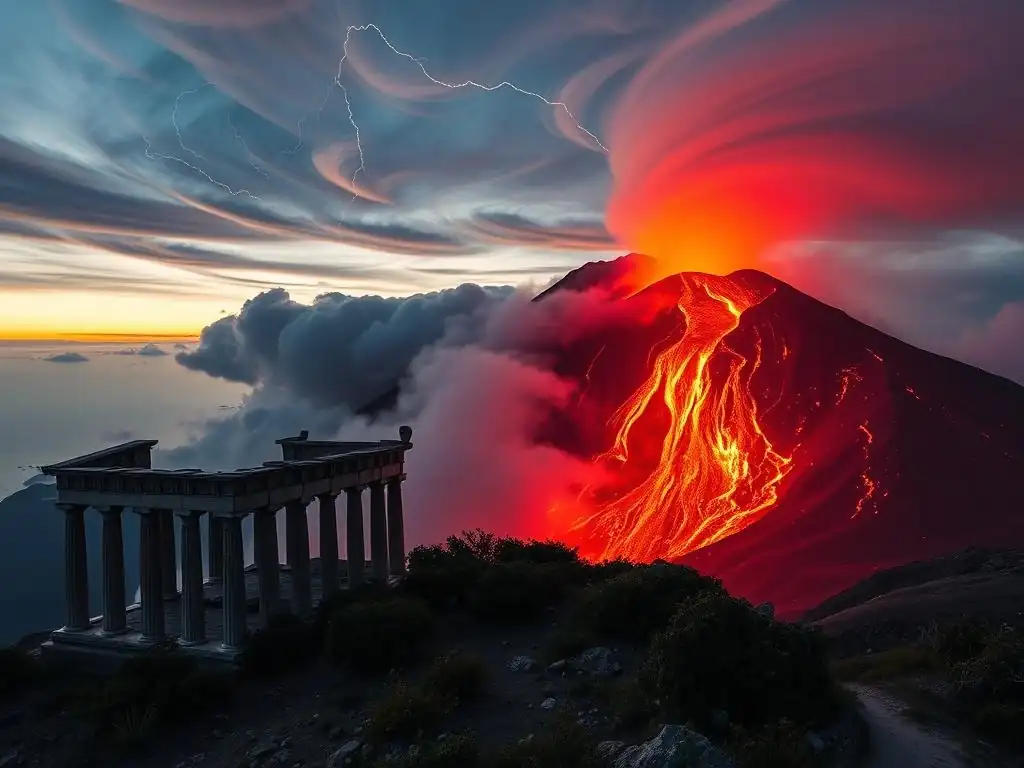
Welcome to Volcano Explorers!
Prepare to be captivated by the raw power and mystique of Earth's fiery giants. But beyond the science and the eruptions, lies a world of myth and legend. Ever wondered about the ancient stories whispered in the shadow of a volcano? Our latest exploration delves deep into the fascinating connection between Greek mythology and Mount Etna, unearthing tales of Cyclops and Vulcan's forge. What secrets does this iconic Sicilian volcano hold within its fiery heart? Dare to explore the legends... and discover the truth.
- Mount Etna and Greek Mythology: An Introduction
- The Mythical Inhabitants of Mount Etna
- The Role of Etna in Ancient Greek Legends
- Vulcan's Workshop: Volcanic Activity and Divine Craftsmanship
- Exploring the Connection Between Greek Mythology and Etna's Volcanic Landscape
- Mount Etna's Enduring Legacy in Mythology and Folklore
- Artistic and Literary Depictions of Mount Etna in Mythology
- Concluding Remarks on the Intertwined History of Etna, Mythology, and Human Imagination
-
Frequently Asked Questions
- How is Mount Etna linked to Greek mythology?
- What role did Vulcan (Hephaestus) play in the mythology surrounding Mount Etna?
- Did the ancient Greeks believe any other mythical creatures lived inside or around Mount Etna?
- How did the eruptions of Mount Etna influence the myths and legends surrounding it?
- Does modern volcanology support any connection between mythology and the actual geological activity of Mount Etna?
- Final Reflection: Echoes of Myth in Volcanic Fire
- Unearth Etna's Mythic Secrets!
Mount Etna and Greek Mythology: An Introduction
Mount Etna, dominating the Sicilian landscape with its majestic presence, is not merely a volcano; it is a mountain steeped in myth and legend. For millennia, this fiery peak has captured the imagination of people, none more so than the ancient Greeks who settled the fertile lands around its base.
To them, Etna was more than just a geological phenomenon; it was a living, breathing entity, a realm populated by gods and mythical creatures, and a stage for epic tales that have resonated through Western culture. The volcano's frequent eruptions and dramatic displays of power were interpreted through the lens of mythology, weaving a rich tapestry that intertwined the natural world with the supernatural.
The Greeks, and later the Romans, saw in Etna a tangible connection to their gods, particularly those associated with fire, metalworking, and the underworld. The rumbling of the earth, the plumes of smoke, and the rivers of lava were not just geological events but divine pronouncements, actions of powerful beings dwelling within the mountain's fiery heart.
This article delves into the fascinating intersection of Greek mythology and Mount Etna, exploring the mythical inhabitants, the legends associated with the volcano, and how this natural wonder shaped the beliefs and artistic expressions of ancient civilizations. We will journey through the stories of Cyclops and gods, uncovering the enduring legacy of Etna in the realm of myth and folklore.
The Mythical Inhabitants of Mount Etna
Mount Etna, in the vibrant imagination of the ancient Greeks, was not a desolate, uninhabited peak, but a bustling mythical metropolis. It was believed to be the dwelling place of powerful and fantastical beings, central figures in their rich mythological landscape. Among these mythical inhabitants, two groups stand out prominently: the Cyclops, the one-eyed giants renowned for their strength and craftsmanship, and the god Hephaestus (Vulcan in Roman mythology), the divine blacksmith of the gods, whose forge was said to be located deep within the volcano.
These mythical residents were not mere passive inhabitants; they were integral to the very nature and behavior of Mount Etna itself. The Cyclops, with their immense power, were envisioned as the tireless workers within the volcanic forges, hammering out the tools and weapons of the gods.
Hephaestus, the master craftsman, oversaw their work, orchestrating the fiery processes that shaped both divine artifacts and the very volcanic eruptions that defined Etna's character. The presence of these mythical beings transformed Etna from a simple geographical feature into a dynamic, sacred space, a place where the divine and the terrestrial realms intimately intertwined.
The Cyclops of Etna: One-Eyed Giants of the Forge
In Greek mythology, the Cyclops were a race of primordial giants, characterized by their singular, large eye in the middle of their forehead. Far from being barbaric monsters in all accounts, some Cyclops were revered for their immense strength and exceptional skill in craftsmanship, particularly in metalworking. According to various myths, Mount Etna was one of their primary workshops. Deep within the volcanic caverns, these one-eyed giants were believed to tirelessly labor at their forges, using the mountain's natural fires to power their work.
The most famous Cyclops associated with Mount Etna are often depicted as the assistants of Hephaestus, the god of fire and blacksmiths. These Cyclops, whose names vary in different accounts but often include figures like Brontes, Steropes, and Arges, were credited with forging Zeus's thunderbolts, Poseidon's trident, and Hades' helmet of invisibility. The booming sounds emanating from the volcano's depths were interpreted as the clamor of their hammers striking against metal, shaping these legendary weapons.
While the most well-known Cyclops encounter in Greek literature is Odysseus's clash with Polyphemus, who resided in a cave elsewhere, the association of Cyclops as a race with volcanic forges, particularly within Mount Etna, was a firmly established part of ancient Greek belief. Their presence in Etna gave a mythical explanation to the raw power and industrial sounds of the volcano, portraying it as a divine factory at the heart of the world.
Vulcan's Forge: The Roman God of Fire Beneath Etna
The Roman god Vulcan, equivalent to the Greek Hephaestus, held a prominent position in the mythology surrounding Mount Etna. Vulcan was the god of fire, volcanoes, metalworking, and the forge. The Romans, inheriting and adapting many Greek myths, readily identified Mount Etna as Vulcan's primary forge. They envisioned his workshop as being located deep beneath the volcano's summit, a fiery cavern where he, along with his Cyclops assistants, crafted magnificent and powerful objects for both gods and heroes.
Vulcan's association with Etna was so strong that the volcano itself was often referred to as "Vulcan's Forge." The constant volcanic activity, the smoke, flames, and molten lava, were seen as direct evidence of Vulcan at work. The eruptions were not merely natural phenomena but the dramatic displays of his divine craftsmanship, the sparks and slag flying from his celestial anvil.
This belief provided a powerful narrative for understanding and interpreting the volcano's behavior. For the Romans, and those who inherited their beliefs, the rumbling of Etna was the sound of a god at work, a constant reminder of the powerful, creative, and sometimes destructive forces that resided within the earth. This divine connection elevated Mount Etna to a place of immense mythical significance, a sacred site where the raw power of nature was directly linked to the actions of a powerful deity.
The Role of Etna in Ancient Greek Legends
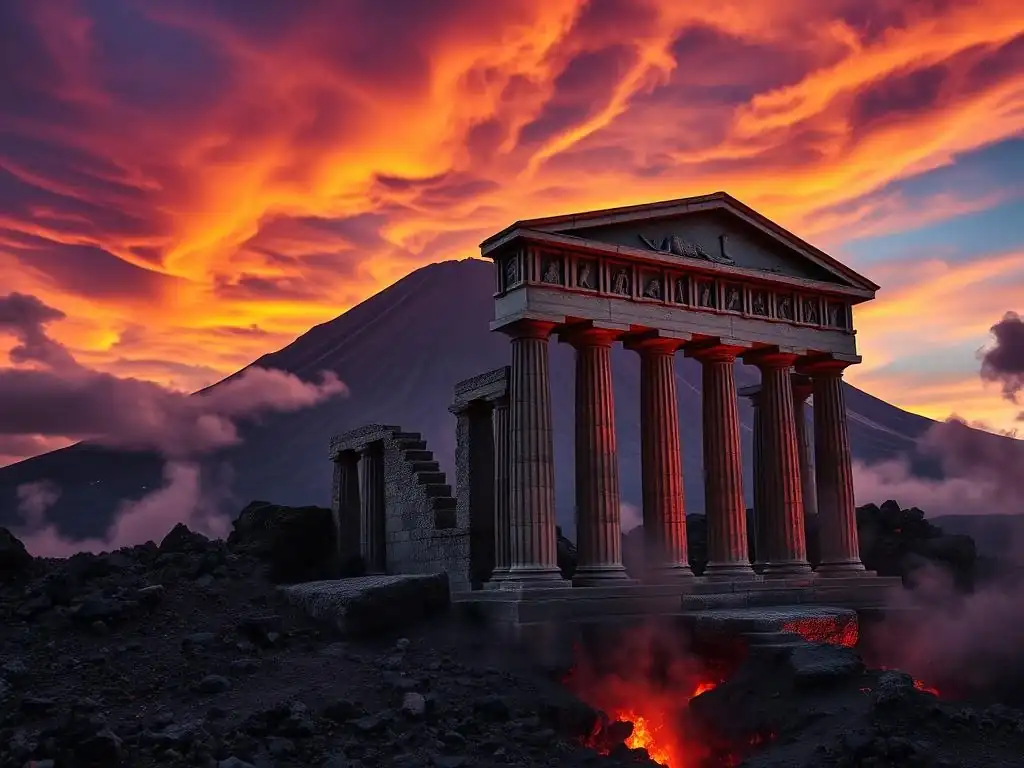
Beyond being the workshop of divine blacksmiths, Mount Etna played a significant role as a location and a character in various ancient Greek legends. Its imposing presence and volatile nature made it a fitting stage for dramatic mythical events, serving as both a prison for monstrous beings and a perilous landscape for heroes to traverse. Etna's role in these legends further cemented its importance in the Greek mythological landscape, making it more than just a volcano; it was an active participant in the unfolding dramas of gods and mortals.
The legends associated with Etna often highlighted its dual nature: its creative power as a forge and its destructive potential as a volcano. This duality mirrored the complex nature of the gods associated with it, like Hephaestus/Vulcan, who was both a creator and a figure of immense, sometimes uncontrollable power. The tales linked to Etna served not only to explain the volcano's phenomena but also to impart moral lessons and explore themes of divine power, punishment, and the challenges faced by heroes in a world shaped by both natural forces and divine will.
Etna as a Prison: The Tale of Typhon
One of the most dramatic myths associated with Mount Etna is its role as the prison of Typhon, a monstrous serpentine giant and one of the most fearsome creatures in Greek mythology. Typhon was a colossal being, born from Gaia (Earth) and Tartarus (the abyss), and was said to be so powerful that he challenged even Zeus for dominion over the cosmos. In a titanic battle, Zeus eventually defeated Typhon, but instead of destroying him entirely, he imprisoned him beneath Mount Etna.
According to the myth, the immense weight of Sicily was placed upon Typhon to keep him confined. The volcanic activity of Etna was then explained as the result of Typhon's restless struggles to escape his subterranean prison. His fiery breath became the eruptions, his movements the earthquakes, and his anger the destructive force of the volcano.
This myth provided a compelling explanation for Etna's eruptions and seismic activity, attributing them to the ongoing torment of a powerful, imprisoned monster. The tale of Typhon’s imprisonment under Etna highlights the volcano's symbolic role as a place of confinement and immense power, a natural fortress holding back a force of chaos and destruction.
Encounters with Etna: Odysseus and the Cyclops Polyphemus
While Homer's Odyssey doesn't explicitly place Odysseus's encounter with Polyphemus directly on Mount Etna, the broader context of Cyclops and their association with Sicily and volcanic activity firmly links the myth to the region surrounding Etna. The Odyssey recounts Odysseus's harrowing encounter with the Cyclops Polyphemus, son of Poseidon, in his cave. This Cyclops, though not residing within Etna itself in the narrative, embodies the characteristics and mythical associations of the Cyclops race, who, as we have seen, were strongly connected to Mount Etna in other traditions.
The encounter with Polyphemus, with its themes of cunning, brute force, and divine retribution, can be seen as reflecting the dangers and unpredictable nature of the volcanic landscape surrounding Etna. Polyphemus's cave, though described as filled with sheep and cheese in the Odyssey, could be symbolically interpreted as a volcanic cavern, and his blinding by Odysseus as a triumph of human ingenuity over the raw, untamed forces represented by the Cyclops.
The broader cultural understanding of Cyclops as inhabitants of volcanic regions like Etna enriches the Polyphemus episode, placing it within a larger mythical framework where the Cyclops are not just isolated monsters but representatives of the powerful, primal forces associated with volcanoes and the earth's depths. Thus, while not explicitly set on Etna, the myth of Odysseus and Polyphemus resonates with the volcano's mythology and contributes to its legendary status.
Vulcan's Workshop: Volcanic Activity and Divine Craftsmanship
The concept of Mount Etna as Vulcan's workshop is central to understanding the ancient interpretation of volcanic activity. For the Greeks and Romans, eruptions were not random geological events but purposeful actions, the dramatic manifestations of divine craftsmanship. The fiery displays, the molten rock, and the booming sounds were all seen as integral parts of Vulcan's (or Hephaestus's) work, forging weapons and wonders for the gods and, occasionally, for favored mortals. This perspective transformed the terrifying and destructive aspects of volcanic eruptions into awe-inspiring demonstrations of divine power and skill.
This mythological interpretation provided a framework for understanding and even venerating volcanic activity. Instead of simply fearing eruptions as chaotic disasters, people could see them as part of a grand, divine process, a continuous cycle of creation and transformation taking place within the heart of the mountain. The concept of Vulcan’s workshop imbued Etna's eruptions with meaning and purpose, connecting the natural world directly to the realm of the gods and making the volcano a sacred space of both creation and awesome power.
The Forge of Hephaestus (Vulcan): Crafting Weapons and Wonders
Hephaestus (Vulcan), as the divine blacksmith, was credited with crafting an array of extraordinary objects in his forge beneath Mount Etna. These were not mundane tools but items of immense power and beauty, often imbued with magical properties. His most famous creations were the weapons of the gods, essential for maintaining cosmic order and wielding divine power. Zeus's thunderbolts, the ultimate weapon of the king of the gods, were forged by Hephaestus, as was Poseidon's trident, which commanded the seas, and Hades' helmet of invisibility, which granted its wearer unseen passage through the underworld.
Beyond weapons, Hephaestus was also a creator of wondrous objects and automatons. He crafted Achilles' shield, described in Homer's Iliad as a masterpiece of artistry and symbolism, depicting the cosmos and scenes of human life.
He was also said to have created mechanical servants, including golden handmaidens who could move and speak, and even the bronze giant Talos, who guarded Crete. The sheer variety and magnificence of Hephaestus's creations, forged within the fiery depths of Etna, emphasized the volcano's role as not just a source of destruction, but also a wellspring of incredible creative power, a place where raw natural forces were harnessed to produce objects of divine artistry and function.
Etna's Eruptions: Divine Wrath or Natural Phenomena?
While the ancient Greeks and Romans attributed volcanic eruptions to the actions of Vulcan and his Cyclops assistants, it's important to consider the nuance in their understanding. Were eruptions solely seen as expressions of divine will, perhaps even divine wrath, or was there also a nascent recognition of natural processes at play? The answer likely lies in a combination of both. Mythology provided the dominant framework for understanding these dramatic events, but keen observers of nature might have also begun to discern patterns and natural causes alongside the mythological explanations.
Eruptions were undoubtedly interpreted as signs of divine power and activity. A particularly violent eruption might have been seen as a display of Vulcan's anger or intensified labor, perhaps even a response to human transgressions or divine disputes. However, the regularity of Etna's activity and the observable processes of lava flow and smoke emission might have also hinted at more predictable, natural cycles.
It's likely that ancient understanding existed on a spectrum, with mythological interpretations providing the overarching narrative while empirical observation gradually contributed to a more nuanced, proto-scientific understanding of volcanic phenomena. The divine and the natural were not necessarily mutually exclusive but rather intertwined in the ancient perception of Etna's dramatic displays.
Exploring the Connection Between Greek Mythology and Etna's Volcanic Landscape
The myths surrounding Mount Etna are not just abstract stories; they are deeply rooted in the volcano's physical landscape. The unique and dramatic features of Etna, from its lava caves and summit craters to its ever-changing slopes, likely served as inspiration and tangible evidence for the myths themselves. The landscape was not just a backdrop but an active participant in the creation and perpetuation of these legends, shaping the way ancient people understood and interacted with the volcano.
By examining the specific features of Etna's volcanic landscape, we can gain a deeper appreciation for how these natural elements contributed to the development of its mythology. Caves could be seen as entrances to the underworld or the forges of the Cyclops, craters as the mouths of fiery giants, and lava flows as rivers of molten metal from Vulcan's workshop. The physical reality of Etna provided a concrete foundation for the myths, making them more believable and immediate for those who lived in its shadow.
The Landscape of Legend: Caves, Craters, and Mythical Realms
Mount Etna is characterized by a diverse and dramatic volcanic landscape, featuring a variety of geological formations that could easily inspire mythical interpretations. Lava caves, formed by flowing lava cooling on the surface while molten rock continues to flow beneath, could be seen as the very workshops of the Cyclops, natural caverns leading into the fiery heart of the mountain. The summit craters, with their plumes of smoke and occasional eruptions of lava, could be imagined as the chimneys of Vulcan's forge or even the mouths of imprisoned monsters like Typhon.
The rugged, uneven terrain, marked by ancient lava flows and volcanic debris, could be interpreted as the aftermath of divine battles or the chaotic landscape of a mythical realm. Even the fertile slopes of Etna, contrasted with the barren summit, could symbolize the duality of volcanic power – both destructive and life-giving.
These tangible landscape features provided a visual and experiential basis for the myths, allowing ancient people to literally see and touch the settings of their legends. Walking through the volcanic terrain of Etna would have been like walking through the pages of mythology, with every cave, crater, and lava flow serving as a reminder of the powerful stories associated with the mountain.
The Influence of Etna on Ancient Greek Beliefs and Rituals
Living in the shadow of an active volcano like Etna undoubtedly had a profound influence on the beliefs and rituals of the ancient Greeks who settled in Sicily. The constant presence of volcanic activity, with its mix of danger and fertility, would have shaped their worldview and fostered a deep sense of awe and respect for the power of nature, particularly volcanic forces. This influence likely manifested in various religious practices and cultural expressions aimed at appeasing the gods associated with the volcano and ensuring their continued favor.
While direct archaeological evidence of specific rituals dedicated solely to Mount Etna is limited, the broader context of Greek religion suggests that offerings and prayers to Hephaestus/Vulcan and other related deities would have been common in the region. Temples and shrines dedicated to these gods might have been located near the volcano, and festivals or ceremonies could have been held to honor them and seek protection from eruptions.
Furthermore, the myths themselves, passed down through generations, served as a form of cultural ritual, reinforcing the sacredness of Etna and the importance of understanding and respecting its powerful forces. Living with a volcano was not just a geographical reality; it was a deeply cultural and spiritual experience that shaped the beliefs and practices of ancient Sicilian Greeks.
Mount Etna's Enduring Legacy in Mythology and Folklore
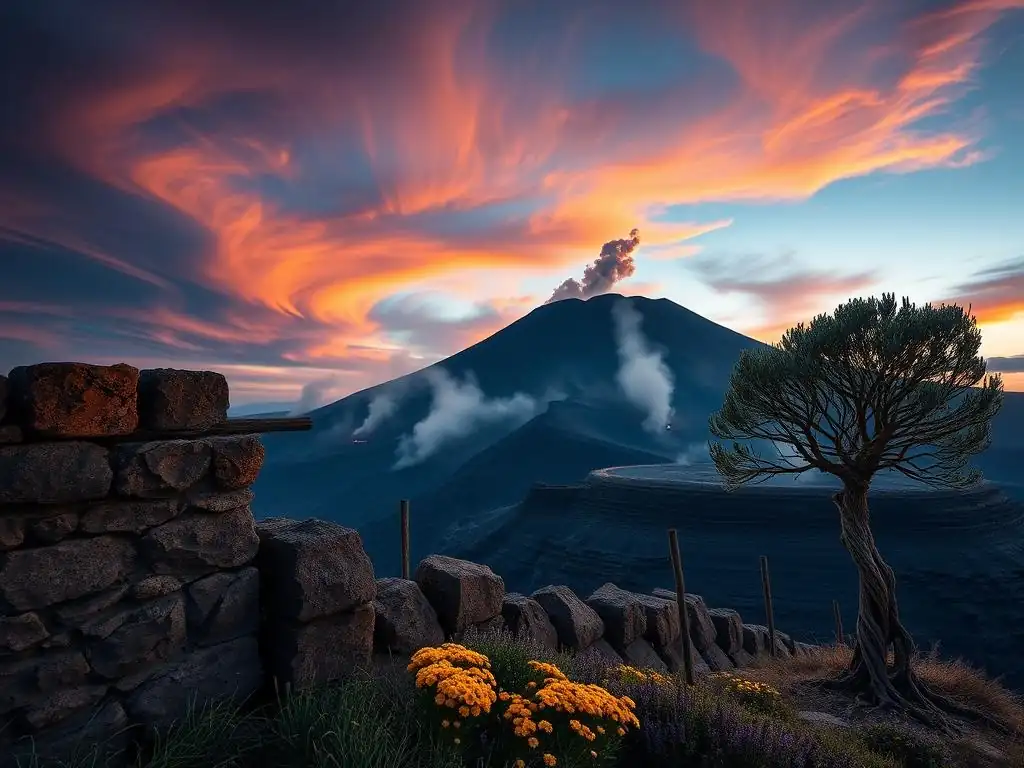
The myths of Mount Etna, forged in the fires of ancient imagination, have not faded with time but have continued to resonate through centuries of folklore and cultural interpretation. From ancient Greece and Rome to the modern era, the stories of Cyclops, Vulcan's forge, and the imprisoned Typhon have been retold, reinterpreted, and adapted, demonstrating the enduring power of these myths and the lasting fascination with the volcano itself. Etna's mythological legacy is a testament to the enduring human need to understand and explain the powerful forces of nature through narrative and symbolic language.
This enduring legacy is reflected in literature, art, and popular culture, where Mount Etna and its associated myths continue to inspire creative works and shape our understanding of volcanoes and their cultural significance. The myths have evolved and adapted over time, reflecting changing cultural values and perspectives, but the core themes of divine power, volcanic force, and the interplay between myth and landscape remain central to Etna's enduring appeal.
From Ancient Greece to Modern Interpretations of Etna's Myths
The myths of Mount Etna have journeyed far beyond ancient Greece, finding new life and interpretations across different historical periods and cultures. In Roman times, the myths were readily adopted and adapted, with Vulcan replacing Hephaestus as the divine blacksmith and Etna remaining his fiery forge. Throughout the Middle Ages and Renaissance, Etna continued to be associated with volcanic fire and the underworld, often appearing in allegorical and symbolic contexts in literature and art.
In more recent centuries, with the rise of scientific understanding of volcanoes, the myths have not disappeared but have often been reinterpreted in light of scientific knowledge. Etna is still seen as a symbol of volcanic power, but the myths are now often understood as allegorical representations of natural forces and human attempts to grapple with the awesome and sometimes destructive power of nature.
Modern literature and film continue to draw inspiration from Etna's mythology, using the volcano and its legends as metaphors for creative energy, destructive potential, and the enduring mysteries of the earth's inner workings. The myths have proven remarkably adaptable, evolving alongside human understanding while retaining their core symbolic power.
Etna as a Symbol: Power, Destruction, and the Divine
Mount Etna, through its mythology, has become a potent symbol, embodying a complex interplay of power, destruction, and the divine. The volcano's eruptions, both terrifying and awe-inspiring, have made it a natural symbol of raw, untamed power, capable of reshaping landscapes and challenging human control. This destructive aspect is balanced by the volcano's fertile slopes and the creative force associated with Vulcan's forge, representing the dual nature of volcanic power – both destructive and generative.
The association with divine beings, particularly Hephaestus/Vulcan, elevates Etna to a symbol of the divine realm itself, a place where the gods interact with the mortal world and where supernatural forces are visibly at work. The myths imbue the volcano with a sacred quality, making it more than just a geological feature; it becomes a place of profound spiritual and symbolic significance. Etna, therefore, stands as a powerful and enduring symbol, representing the awe-inspiring forces of nature, the complex relationship between creation and destruction, and the enduring human fascination with the divine and the earth's hidden powers.
Artistic and Literary Depictions of Mount Etna in Mythology
Mount Etna's rich mythology has inspired countless artistic and literary depictions throughout history. From ancient Greek pottery and Roman frescoes to Renaissance paintings and modern literature, the volcano and its associated myths have provided a compelling subject for artistic expression. These depictions range from literal representations of volcanic eruptions and mythical figures to more symbolic interpretations of Etna's power and significance.
Ancient art often depicted scenes from the myths, such as Cyclops working at their forges or Typhon struggling beneath the mountain. Roman writers like Virgil and Ovid incorporated Etna and Vulcan into their epic poems, further solidifying the volcano's literary presence. Renaissance artists, fascinated by classical mythology, rediscovered and reinterpreted these themes, often portraying Vulcan's forge as a dramatic and fiery spectacle.
In more modern times, Etna continues to appear in literature and film, often serving as a dramatic setting or a powerful metaphor for inner turmoil, creative energy, or the forces of nature. These artistic and literary depictions demonstrate the enduring influence of Etna's mythology and its continued relevance as a source of creative inspiration.
Concluding Remarks on the Intertwined History of Etna, Mythology, and Human Imagination
The story of Mount Etna is a powerful testament to the intertwined history of nature, mythology, and human imagination. For millennia, this Sicilian volcano has been more than just a geographical feature; it has been a canvas upon which human cultures have projected their fears, hopes, and creative visions. The myths of Cyclops, Vulcan's forge, and imprisoned giants are not just quaint stories from the past but enduring expressions of humanity's attempt to understand and make sense of the powerful and often unpredictable forces of the natural world.
The enduring appeal of Etna's mythology lies in its ability to connect the tangible reality of a volcano with the timeless themes of divine power, creation, destruction, and the human relationship with nature. These myths have shaped not only how people understood Etna itself but also how they perceived volcanoes in general, contributing to a rich and complex cultural understanding of these dramatic geological phenomena. Mount Etna, therefore, stands as a powerful symbol of the enduring power of mythology to shape human perception and the ongoing dialogue between human imagination and the awe-inspiring forces of the natural world.
Frequently Asked Questions
How is Mount Etna linked to Greek mythology?
Mount Etna is deeply intertwined with Greek mythology, particularly associated with the Cyclops and the forge of Vulcan (Hephaestus). Legends claim the Cyclops lived within Etna's caves and Vulcan used its fiery depths as his workshop.
What role did Vulcan (Hephaestus) play in the mythology surrounding Mount Etna?
Vulcan, the Roman god of fire and blacksmithing (Hephaestus in Greek mythology), was believed to have his forge located beneath Mount Etna. The volcano's eruptions were attributed to his hammering and crafting of weapons for the gods.
Did the ancient Greeks believe any other mythical creatures lived inside or around Mount Etna?
Yes, besides the Cyclops and Vulcan, other creatures were associated with Etna. The giant Typhon was said to be imprisoned beneath the volcano, his struggles causing earthquakes and eruptions.
How did the eruptions of Mount Etna influence the myths and legends surrounding it?
The violent and unpredictable eruptions of Mount Etna undoubtedly shaped the myths. The fiery displays were interpreted as signs of the gods' power, particularly Vulcan's, reinforcing the volcano's mythical significance.
Does modern volcanology support any connection between mythology and the actual geological activity of Mount Etna?
Modern volcanology provides scientific explanations for Etna's activity, such as tectonic plate movements and magma formation. While there's no scientific basis for the mythical elements, the stories reflect ancient attempts to understand and explain a powerful natural phenomenon.
Final Reflection: Echoes of Myth in Volcanic Fire
The enduring power of myth lies in its ability to explain the inexplicable, and nowhere is this more evident than in the fiery heart of Mount Etna. The stories of Cyclopes hammering in Vulcan's forge, once whispered in awe and fear, continue to resonate today, reminding us that even in an age of scientific understanding, the primal forces of nature still inspire a sense of wonder and connection to the ancient world.
The intertwining of Greek mythology and Mount Etna has profoundly shaped the cultural landscape of Sicily, imbuing the volcano with a mystical aura that persists to this day. This connection, passed down through generations, serves as a constant reminder of our ancestors' attempts to understand the world around them, and the enduring power of storytelling. Myth is never an explanation in the sense of a detailed account of how things came to pass... It is a story about the way things are, and how they got that way, and what they mean.
- Mircea Eliade
As you stand in the shadow of Etna, or simply contemplate its image, consider the stories that have been woven into its very fabric. Let the echoes of Cyclopes and the clang of Vulcan's hammer inspire you to seek out the myths that shape your own understanding of the world. Embrace the power of storytelling, and find meaning in the mysteries that surround you, for within those mysteries lies the enduring magic of the human spirit.
Unearth Etna's Mythic Secrets!
Thank you for delving into the fascinating world where Greek mythology dances with the fiery heart of Mount Etna! We hope you've enjoyed uncovering the legends woven into the Sicilian landscape. Now, let's bring those stories to life.
Here's how you can further explore the mythic power of Etna:
- Visit a local museum or archaeological site dedicated to Greek mythology in Sicily to experience the stories firsthand.
- Share your favorite Etna myth or legend with friends and family to keep these timeless tales alive.
- Research lesser-known local folklore surrounding Mount Etna. You might discover some surprising and exciting new stories!
Which legendary creature of Etna would you most like to encounter, and why? Share your thoughts in the comments below!