
Vent Exploration: Discovering the Source of Volcanic Power

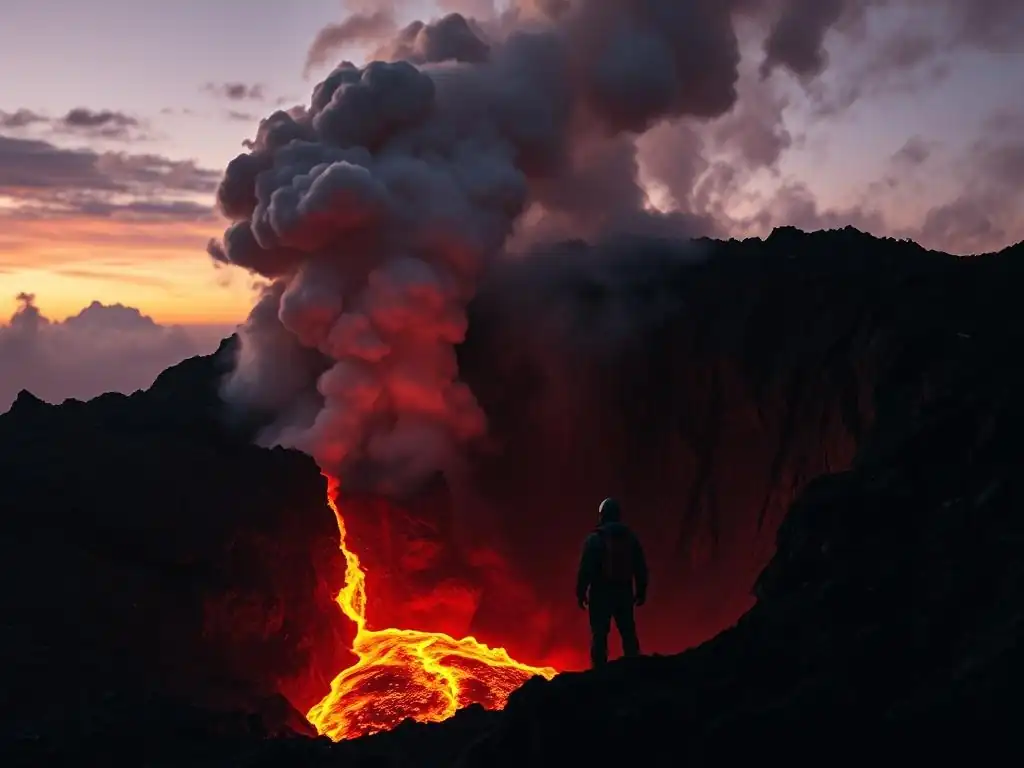
Welcome to Volcano Explorers, where the Earth's fiery heart beats loud! Ever wondered what secrets lie hidden within a volcanic vent? Understanding volcanic vent activity is key to unlocking the mysteries of these geological titans. Join us as we journey to the source of volcanic power, revealing the forces that shape our planet and igniting your curiosity along the way. What will you discover?
- Vent Exploration: Unveiling Magmatic Processes
- Introduction to Volcanic Vents: Earth's Surface Escape Valves
- Types of Volcanic Vents and Their Formation
- The Role of Volcanic Vents in Eruptive Styles
- Factors Influencing Volcanic Vent Activity
- Monitoring and Studying Volcanic Vent Activity
- Case Studies: Examining Specific Volcanic Vent Systems
- The Dangers and Hazards Associated with Volcanic Vents
- Future Research Directions in Volcanic Vent Studies
- Conclusion: The Significance of Volcanic Vent Exploration
-
Frequently Asked Questions
- What is a volcanic vent and why is it important to study?
- How does the type of volcanic vent influence the type of eruption?
- What tools do volcanologists use to monitor and understand volcanic vent activity?
- What are some of the dangers associated with being near an active volcanic vent?
- How can understanding volcanic vent activity help communities living near volcanoes?
- Final Reflection: Unveiling Earth's Fiery Heart
- Ignite Your Inner Explorer: Unveil the Secrets Below!
Vent Exploration: Unveiling Magmatic Processes
Introduction to Volcanic Vents: Earth's Surface Escape Valves
What is a Volcanic Vent? Defining Magma's Exit Point
A volcanic vent is essentially an opening in the Earth's crust through which molten rock, volcanic gases, and pyroclastic debris erupt onto the surface. Think of it as a pressure relief valve for the immense geological forces building up beneath our feet.
These vents are the surface expression of underlying magma reservoirs, acting as conduits that connect the deep interior of the Earth to the atmosphere. They are not simply holes in the ground; rather, they are complex geological features shaped by the intense heat and pressure of erupting magma, and their characteristics can vary dramatically depending on the type of volcano and the style of eruption.
The morphology of a volcanic vent can range from small, inconspicuous fissures to large, gaping craters hundreds of meters in diameter. The shape and size are influenced by factors such as the explosivity of eruptions, the viscosity of the magma, and the structural weaknesses in the surrounding rock. For example, vents associated with effusive eruptions, where lava flows gently, often appear as relatively stable openings.
In contrast, vents linked to explosive eruptions can be dramatically altered by each event, sometimes resulting in the formation of large calderas or the destruction of pre-existing vent structures. Understanding volcanic vent activity begins with recognizing these diverse forms and the processes that create them.
The Importance of Understanding Volcanic Vent Activity for Hazard Assessment
Understanding volcanic vent activity is paramount for effective volcanic hazard assessment and mitigation. The location, type, and behavior of vents directly dictate the style and intensity of volcanic eruptions, influencing the areas at risk from lava flows, pyroclastic flows, ashfall, and volcanic gases. By closely monitoring and studying volcanic vents, scientists can gain crucial insights into the state of a volcano, detect changes that may precede an eruption, and ultimately provide more accurate warnings to communities living in volcanic regions.
Analyzing volcanic vent activity allows volcanologists to infer subsurface processes, such as magma ascent rates, gas release patterns, and potential shifts in eruptive behavior. Changes in vent characteristics, such as widening or the appearance of new vents, can signal increased volcanic unrest or a shift in the location of magma pathways.
For instance, the opening of new vents on the flanks of a volcano might indicate a lateral migration of magma, potentially leading to eruptions in previously unexpected areas. Therefore, continuous observation and analysis of volcanic vents are indispensable components of any comprehensive volcanic monitoring program, contributing significantly to our ability to forecast eruptions and protect lives and infrastructure.
Types of Volcanic Vents and Their Formation
Primary Vents: Conduit for Main Eruptive Focus
Primary vents are the principal conduits through which magma reaches the surface during an eruption. They represent the main pathway from the magma chamber to the Earth's surface, and are typically located at the summit or central part of a volcano. These vents are often associated with the most intense eruptive activity and are responsible for the construction of the main volcanic edifice. The formation of primary vents is a direct consequence of the upward pressure exerted by magma, which exploits weaknesses in the crust to create a channel for ascent.
Over time, repeated eruptions from a primary vent can lead to the development of prominent volcanic features such as summit craters, calderas in the case of very large eruptions, and well-defined central cones. The shape and size of a primary vent can evolve significantly over a volcano's lifespan, influenced by factors like erosion, collapse, and subsequent eruptive events.
For example, a relatively small vent might enlarge into a vast caldera after a massive explosive eruption empties the underlying magma chamber. The study of primary vents is crucial for understanding the overall architecture and eruptive history of a volcano, as they represent the focal point of its magmatic activity.
Secondary Vents: Off-Axis Eruptions and Parasitic Cones
Secondary vents, also known as flank vents or parasitic vents, are openings that occur on the sides or flanks of a main volcano, away from the primary summit vent. These vents develop when magma finds alternative pathways to the surface, often exploiting fractures or weaknesses in the volcanic edifice. Secondary vents can erupt simultaneously with the primary vent or independently, and they often contribute to the growth and complexity of the volcanic landscape. They are a common feature on many volcanoes, particularly shield volcanoes and stratovolcanoes, and can significantly extend the area affected by volcanic activity.
The formation of secondary vents can be triggered by various factors, including pressure build-up within the volcano, changes in stress fields, or the presence of pre-existing geological structures. Eruptions from secondary vents can range from small lava flows to significant explosive events, depending on the magma supply and local geological conditions. Over time, repeated eruptions from secondary vents can build up smaller volcanic cones known as parasitic cones, which dot the flanks of larger volcanoes. These parasitic cones can sometimes become significant eruptive centers themselves, demonstrating the dynamic and distributed nature of volcanic activity.
Fissure Vents: Extensive Linear Eruptions and Flood Basalts
Fissure vents are linear cracks or fractures in the Earth's crust that serve as volcanic vents. Unlike the more localized primary and secondary vents, fissure vents can extend for kilometers, allowing for large volumes of magma to erupt along a linear zone. These types of vents are particularly associated with basaltic volcanism and the formation of extensive lava flows, including flood basalts which are some of the largest volcanic events on Earth. Fissure vents represent a different style of magma ascent and eruption, often linked to extensional tectonic settings where the crust is being pulled apart.
The eruptions from fissure vents are typically effusive, characterized by the outpouring of large volumes of fluid basaltic lava. These eruptions can create vast lava plains, covering immense areas and significantly reshaping landscapes. Iceland, for instance, is heavily influenced by fissure vent volcanism, with numerous volcanic fissures crisscrossing the island.
The Laki fissure eruption in Iceland in 1783-1784 is a prime example of a large-scale fissure vent eruption, releasing a massive volume of lava and volcanic gases that had global climatic and social consequences. Understanding fissure vents is crucial for comprehending large igneous provinces and the role of volcanism in shaping continental and oceanic crust.
The Role of Volcanic Vents in Eruptive Styles
Effusive Eruptions: Gentle Lava Outpouring from Stable Vents
Effusive eruptions are characterized by the relatively gentle outpouring of lava from volcanic vents. These eruptions are typically associated with basaltic magmas, which have low viscosity and gas content, allowing lava to flow easily and steadily. Vents involved in effusive eruptions are often stable and long-lived, acting as conduits for continuous lava effusion over extended periods. The resulting lava flows can travel considerable distances, creating shield volcanoes with broad, gently sloping profiles or forming lava plains.
The nature of effusive eruptions from vents is largely determined by the magma's physical properties. Low viscosity basaltic magma allows for efficient degassing, meaning gas can escape relatively easily without building up excessive pressure. This lack of pressure buildup prevents violent explosions and allows for a steady, continuous flow of lava. Kilauea volcano in Hawaii is a classic example of effusive volcanism, with its persistent lava lake and frequent lava flows emanating from its summit and rift zone vents, demonstrating the typical behavior of effusive eruptions from stable vent systems.
Explosive Eruptions: Violent Pyroclastic Ejection from Clogged Vents
Explosive eruptions, in stark contrast to effusive eruptions, are characterized by the violent ejection of pyroclastic materials – fragments of rock, ash, and volcanic gases – from volcanic vents. These eruptions are typically associated with more viscous magmas, such as andesite and rhyolite, which have higher silica content and trap gases more effectively. Vents involved in explosive eruptions often become clogged or constricted, leading to pressure buildup within the magma system until it overcomes the confining pressure and erupts explosively.
The high viscosity and gas content of these magmas are key factors in driving explosive eruptions. The trapped gases, under immense pressure, rapidly expand when the magma nears the surface, fragmenting the magma into pyroclastic debris that is ejected at high speeds. Mount St. Helens' 1980 eruption is a dramatic example of an explosive eruption, where a buildup of pressure beneath a volcanic dome culminated in a massive lateral blast and vertical eruption column, showcasing the destructive potential of explosive eruptions originating from vents that become pressurized and unstable.
Phreatomagmatic Eruptions: Water-Magma Interaction at Vents and Resulting Explosions
Phreatomagmatic eruptions occur when magma interacts with external water sources, such as groundwater, surface water, or seawater, at or near volcanic vents. This interaction leads to extremely violent explosions due to the rapid vaporization of water into steam upon contact with hot magma. The resulting eruptions are often characterized by the ejection of fine ash, steam, and fragmented rock, creating distinctive volcanic features like maars and tuff rings. Vents involved in phreatomagmatic eruptions are often located in areas where magma pathways intersect with water-saturated ground or bodies of water.
The efficiency of heat transfer from magma to water is the primary driver of phreatomagmatic explosions. When magma comes into contact with water, the water rapidly flashes to steam, undergoing a significant volume expansion in a very short time. This rapid expansion generates powerful explosions that fragment both the magma and surrounding rocks, producing fine-grained ash and often creating wide, shallow craters known as maars. The Taal Volcano in the Philippines, with its crater lake, is a location prone to phreatomagmatic eruptions, demonstrating the hazards associated with water-magma interaction at volcanic vents and the potential for sudden, violent explosions.
Factors Influencing Volcanic Vent Activity
Magma Composition and Viscosity: Controlling Eruption Style at the Vent
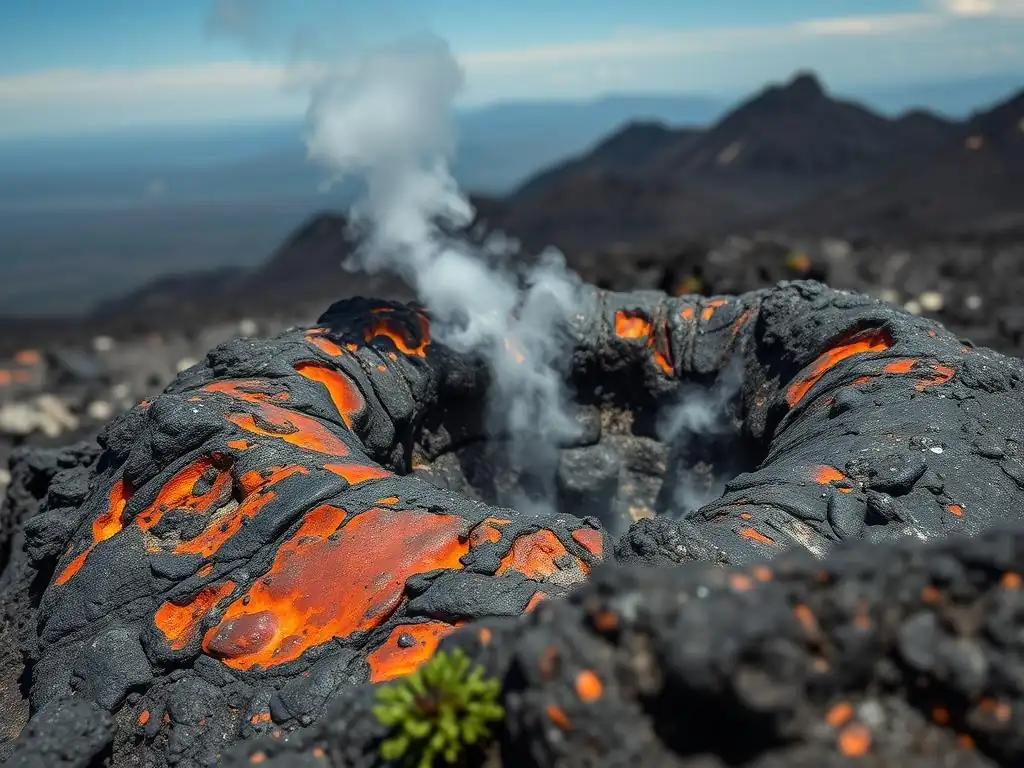
Magma composition and viscosity are fundamental factors controlling volcanic vent activity and the style of eruptions. Magmas with high silica content, such as rhyolite, are highly viscous, resisting flow and trapping gases effectively. This high viscosity leads to pressure buildup within the magma system and promotes explosive eruptions when the pressure is released at the vent. Conversely, magmas with low silica content, like basalt, are less viscous, allowing gases to escape more easily and resulting in effusive eruptions with lava flows.
The viscosity of magma directly influences how easily gases can escape. In highly viscous magma, gas bubbles struggle to rise and coalesce, leading to overpressure and eventual fragmentation of the magma during explosive eruptions.
The type of volcanic vent that forms, its stability, and the nature of eruptive products are all directly linked to the magma's composition and its resulting viscosity. For example, steep-sided stratovolcanoes, known for their explosive eruptions, typically erupt viscous andesitic or rhyolitic magmas, while gently sloping shield volcanoes, characterized by effusive eruptions, erupt fluid basaltic magmas, highlighting the strong link between magma properties and vent activity.
Gas Content and Pressure: Driving Explosivity and Vent Morphology
The gas content and pressure within magma are crucial drivers of volcanic explosivity and significantly influence volcanic vent morphology. Volcanic gases, primarily water vapor, carbon dioxide, and sulfur dioxide, are dissolved in magma at depth. As magma rises towards the surface and pressure decreases, these gases exsolve and form bubbles. The volume and rate of gas exsolution, along with the confining pressure, determine whether an eruption will be effusive or explosive. High gas content and high pressure contribute to explosive eruptions, while low gas content and low pressure favor effusive eruptions.
The morphology of volcanic vents is also shaped by gas release and pressure dynamics. Explosive eruptions can dramatically alter vent structures, creating large craters or calderas through repeated explosions and collapses. The force of escaping gases can also carve out vents and influence the distribution of erupted materials around the vent.
Monitoring gas emissions from volcanic vents is a critical aspect of volcano monitoring, as changes in gas flux and composition can indicate changes in magma pressure and degassing processes, potentially signaling an impending eruption. For example, an increase in sulfur dioxide emission rates from a vent might suggest an increase in magma supply or pressure beneath the volcano.
Tectonic Setting and Regional Stress: Dictating Vent Alignment and Distribution
The tectonic setting and regional stress regime play a significant role in dictating volcanic vent alignment and distribution. Volcanoes often form along plate boundaries or within intraplate settings influenced by tectonic stresses. In extensional tectonic settings, where the crust is being pulled apart, magma can readily ascend along fractures and faults, leading to the formation of fissure vents and volcanic rift zones. In compressional settings, where plates collide, magma ascent may be more focused, leading to the development of central vent volcanoes arranged in volcanic arcs.
Regional stress fields can influence the orientation and distribution of volcanic vents. Pre-existing faults and fractures, created by tectonic forces, often act as pathways of least resistance for magma ascent. Vent alignments may therefore reflect underlying tectonic structures, with vents often forming along linear trends corresponding to major fault systems. The East African Rift Valley, a classic example of an extensional tectonic setting, is characterized by numerous aligned volcanic centers and fissure vents that are directly related to the rifting and stretching of the Earth's crust, illustrating the strong control of tectonic setting on volcanic vent patterns.
Monitoring and Studying Volcanic Vent Activity
Remote Sensing Techniques for Vent Temperature and Gas Plume Analysis
Remote sensing techniques are invaluable tools for monitoring volcanic vent activity, particularly for assessing vent temperature and analyzing gas plumes. Satellites and aircraft equipped with thermal infrared sensors can measure the radiant heat emitted from volcanic vents, providing information on vent temperatures and changes in thermal activity. This is particularly useful for detecting increases in heat output, which can be an indicator of magma ascent or increased eruption potential. Furthermore, spectrometers on satellites and aircraft can analyze the composition of volcanic gas plumes, identifying and quantifying gases like sulfur dioxide (SO2), carbon dioxide (CO2), and water vapor (H2O).
Analyzing gas plumes remotely allows scientists to track changes in gas emission rates and ratios, which can provide insights into magma degassing processes and the state of volcanic unrest. For instance, an increase in SO2 emissions is often associated with magma rising closer to the surface. Techniques like differential optical absorption spectroscopy (DOAS) are used to measure gas concentrations in volcanic plumes, providing valuable data for hazard assessment and eruption forecasting. Remote sensing provides a synoptic and continuous view of volcanic vent activity, especially in remote or inaccessible locations, complementing ground-based monitoring efforts.
Ground-Based Monitoring of Gas Flux and Composition at Vents
Ground-based monitoring of gas flux and composition directly at volcanic vents provides high-resolution, real-time data crucial for understanding volcanic activity. Volcanologists deploy various instruments around vents to measure the rate at which gases are being released (gas flux) and to analyze their chemical composition. Gas flux measurements are typically made using instruments like flux meters, which quantify the amount of gas passing through a specific area per unit time. Gas composition analysis is performed using portable spectrometers and gas chromatographs, which identify and measure the concentrations of different volcanic gases.
Continuous ground-based gas monitoring can detect subtle changes in gas emissions that may precede eruptions. For example, changes in the ratios of different gases, such as an increase in the CO2/SO2 ratio, might indicate changes in magma source or degassing depth. Direct measurements at vents are essential for calibrating remote sensing data and for providing detailed information on the immediate degassing processes occurring at the surface. These data are vital for developing accurate volcanic hazard assessments and for informing timely warnings to at-risk populations.
Seismic Activity as an Indicator of Magma Movement Beneath Vents
Seismic activity is a fundamental indicator of magma movement and processes occurring beneath volcanic vents. As magma ascends and interacts with the surrounding crust, it generates various types of seismic signals that can be detected by seismometers deployed around volcanoes. Volcano-seismic monitoring networks record the frequency, intensity, and location of earthquakes, tremor, and other seismic events, providing valuable insights into magma dynamics and potential eruption triggers. Changes in seismic patterns, such as increased earthquake frequency, changes in earthquake depth, or the onset of volcanic tremor, can indicate magma movement towards the surface and an increased likelihood of eruption.
Analyzing seismic data in relation to volcanic vent activity helps volcanologists to understand the subsurface plumbing system and track magma pathways. For example, swarms of shallow earthquakes beneath a vent might indicate magma intrusion and potential vent opening. Volcanic tremor, a continuous seismic signal, is often associated with fluid movement within the volcanic conduit and can provide information about magma flow rates and degassing processes. Integrating seismic monitoring with other datasets, such as gas emissions and ground deformation measurements, provides a comprehensive picture of volcanic vent activity and the underlying magmatic system, enhancing eruption forecasting capabilities.
Case Studies: Examining Specific Volcanic Vent Systems
Mount St. Helens: Vent Evolution Following the 1980 Eruption
Mount St. Helens provides a compelling case study of volcanic vent evolution following a major explosive eruption. The catastrophic 1980 eruption dramatically altered the summit of the volcano, creating a large horseshoe-shaped crater and a new vent within it. In the years following the eruption, the vent area witnessed significant changes, including the growth of a series of lava domes within the crater. These dome-building eruptions, starting in late 1980, involved the slow extrusion of viscous dacitic lava from the vent, gradually filling the crater floor and constructing a series of overlapping domes.
The vent system at Mount St. Helens has demonstrated a dynamic evolution, shifting in location and eruptive style over time. Initially, the post-eruption activity was focused on dome growth, but subsequent phases have included periods of explosive activity and ash eruptions.
Monitoring the vent area at Mount St. Helens has been crucial for understanding the volcano's ongoing recovery and for assessing future hazards. The evolution of the vent and crater morphology has been closely tracked using remote sensing, GPS measurements, and geological mapping, providing valuable insights into the long-term processes of volcanic vent recovery and magma resurgence after a major eruption.
Kilauea Volcano: Persistent Vent Activity and Lava Lake Dynamics
Kilauea Volcano in Hawaii offers a contrasting case study of persistent vent activity and lava lake dynamics. For decades, Kilauea's summit vent, Halemaʻumaʻu Crater, hosted a long-lived lava lake, a rare phenomenon where molten lava is continuously exposed at the surface within a vent. This lava lake provided a unique window into the magmatic system, allowing scientists to directly observe magma degassing, convection, and eruptive processes. The vent and lava lake system were highly dynamic, with fluctuations in lava level, gas emissions, and occasional overflows and small explosive events.
The persistent activity at Kilauea's summit vent, alongside eruptions from rift zone vents like Puʻuʻōʻō, showcased the diverse forms of vent activity on a single volcano. The 2018 Kilauea eruption, however, dramatically changed the summit vent system. Following a series of earthquakes and caldera collapses, the Halemaʻumaʻu lava lake drained, and the vent morphology was significantly altered.
Subsequently, a new water lake formed in the deepened crater, and later, in 2020, a new lava lake began to refill the crater. The ongoing evolution of Kilauea's summit vent continues to be a subject of intense study, highlighting the long-term dynamic nature of volcanic vent systems and their response to major eruptive events.
The Dangers and Hazards Associated with Volcanic Vents
Gas Emissions: Sulfur Dioxide and Carbon Dioxide Poisoning Near Vents
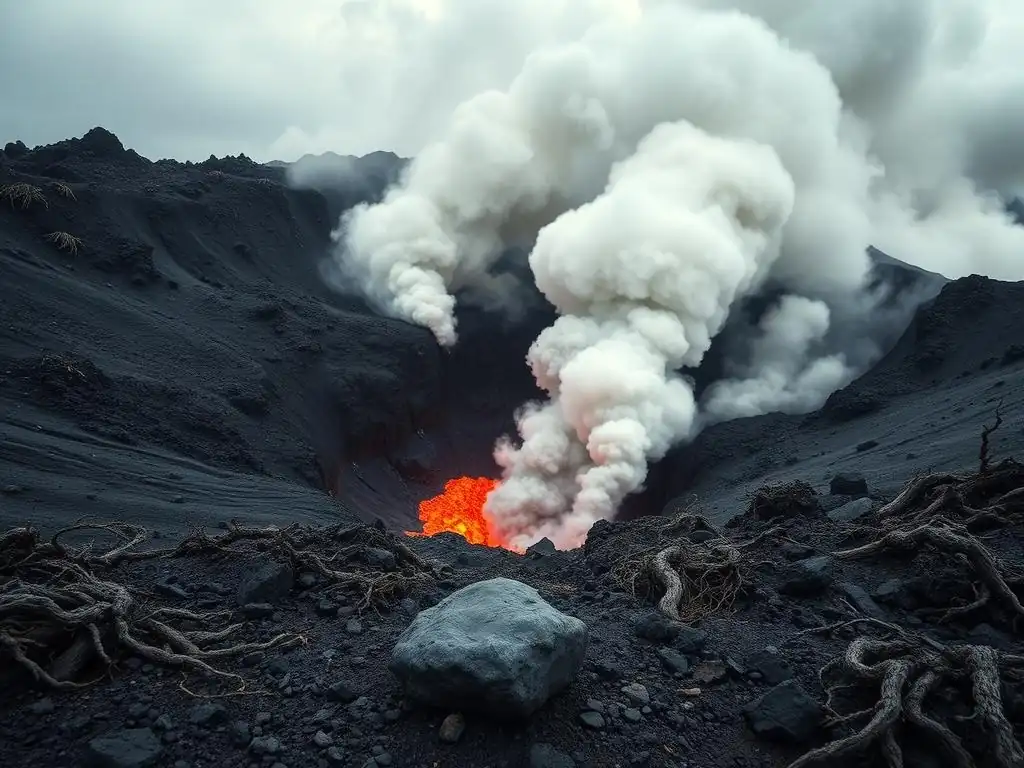
Volcanic vents are significant sources of gas emissions, posing various hazards, particularly in areas close to active vents. Sulfur dioxide (SO2) and carbon dioxide (CO2) are two of the most concerning volcanic gases. SO2 is a respiratory irritant and can cause acid rain and vog (volcanic smog), impacting air quality and human health. High concentrations of SO2 can be toxic and pose a direct threat to people and animals near vents. CO2, while odorless and colorless, is heavier than air and can accumulate in low-lying areas, displacing oxygen and creating potentially lethal conditions of asphyxiation.
Areas around volcanic vents, especially within craters or depressions, can experience hazardous concentrations of volcanic gases. Incidents of CO2 poisoning have occurred at various volcanoes worldwide, sometimes with fatal consequences for both humans and animals. Monitoring gas emissions from vents and understanding the local topography and wind patterns are crucial for assessing and mitigating gas-related hazards. Public awareness campaigns are also essential to educate people about the dangers of volcanic gases and to advise on safe behavior in volcanic areas, such as avoiding low-lying areas and being aware of warning signs like strong sulfur smells or vegetation die-off.
Explosions and Ballistic Ejecta: Risks from Sudden Vent Opening
Explosions at volcanic vents and the ejection of ballistic projectiles pose significant hazards, particularly in close proximity to active vents. Sudden vent openings, often triggered by pressure buildup or magma-water interaction, can result in violent explosions that eject hot rocks and volcanic debris (ballistic ejecta) at high speeds. These projectiles can range in size from small fragments to large blocks weighing several tons and can travel considerable distances from the vent, posing a direct impact hazard to people and infrastructure nearby.
The risk from ballistic ejecta is highest within a few kilometers of an active vent, but larger projectiles can be thrown further. The intensity and frequency of explosions and ballistic ejection vary depending on the volcano's eruptive style and the nature of vent activity. Areas around frequently active vents are often designated as exclusion zones due to these hazards. Real-time monitoring of vent activity and the detection of precursory signals to explosions are crucial for providing timely warnings and ensuring public safety in areas vulnerable to ballistic ejecta hazards.
Ground Deformation and Landslides Around Active Vent Areas
Ground deformation and landslides are additional hazards associated with active volcanic vent areas. Magma movement beneath the surface and pressure changes within the volcanic edifice can cause ground deformation, including inflation (swelling) and deflation (subsidence) of the surrounding terrain. This deformation can destabilize slopes around vents, increasing the risk of landslides and rockfalls. Furthermore, explosive eruptions and seismic activity associated with vent activity can also trigger landslides, posing a significant hazard to areas downslope from active vents.
The areas around volcanic vents are often characterized by steep slopes and unstable volcanic materials, making them particularly susceptible to landslides. Large landslides can be triggered by eruptions, heavy rainfall, or even gradual weakening of volcanic slopes due to hydrothermal alteration. Landslides can generate lahars (volcanic mudflows) if they incorporate water or ice, further extending the hazard zone. Monitoring ground deformation and slope stability around volcanic vents is important for assessing landslide risks and for implementing appropriate mitigation measures, such as land-use planning and evacuation strategies in vulnerable areas.
Future Research Directions in Volcanic Vent Studies
Integrating Geophysical and Geochemical Data for Improved Vent Monitoring
Future research in volcanic vent studies is increasingly focusing on the integration of geophysical and geochemical data for improved vent monitoring and eruption forecasting. Combining seismic, deformation, and gas emission data provides a more holistic understanding of the processes occurring beneath and around volcanic vents. Geophysical data, such as seismic velocity changes and gravity variations, can reveal magma accumulation and movement in the subsurface. Geochemical data, including gas composition and isotopic ratios, provide insights into magma source, degassing processes, and magma differentiation.
Integrating these datasets through advanced modeling and data analysis techniques can lead to more robust and accurate assessments of volcanic vent activity. For example, joint inversion of seismic and deformation data can constrain magma chamber geometry and pressure changes, while combining gas emission data with geophysical observations can help to understand the link between degassing and magma ascent. Future research will likely emphasize the development of integrated monitoring systems that seamlessly combine diverse datasets to provide a more comprehensive and real-time picture of volcanic vent processes, enhancing our ability to predict and mitigate volcanic hazards.
Developing High-Resolution Models of Magma Flow Within Vent Systems
Developing high-resolution models of magma flow within vent systems is a crucial direction for future research. Understanding how magma ascends through volcanic conduits, how it interacts with surrounding rocks, and how it degasses during ascent are fundamental questions in volcanology. High-resolution numerical models, incorporating the complex physical and chemical processes occurring within vent systems, are needed to simulate magma flow, heat transfer, and gas transport. These models can be constrained and validated using observational data from vent monitoring, including seismic, deformation, and gas emission measurements.
Advanced modeling techniques, such as multiphase flow simulations and computational fluid dynamics, are being applied to study magma dynamics within vents. These models can help to investigate the factors controlling eruption style, such as magma viscosity, gas content, and conduit geometry. Future research will likely focus on developing more sophisticated models that can account for the complex and heterogeneous nature of volcanic vent systems, including the role of fractures, permeability variations, and magma-water interaction. Improved models of magma flow within vents will contribute to a better understanding of eruption triggers and the evolution of eruptive activity.
Investigating the Link Between Vent Activity and Deep Magmatic Processes
Investigating the link between vent activity and deep magmatic processes is a critical area for future volcanic research. Volcanic vents are the surface expression of much deeper magmatic systems, extending down into the Earth's mantle. Understanding how deep magmatic processes influence vent activity and eruption characteristics is essential for a comprehensive understanding of volcanism. Research in this area involves studying the relationship between magma generation in the mantle, magma ascent through the crust, and eruptive behavior at the surface vent.
Advanced geophysical techniques, such as seismic tomography and magnetotellurics, are used to image the deep structure of magmatic systems and to track magma pathways from the mantle to the crust. Geochemical studies of erupted volcanic rocks and gases provide information on magma source regions, magma differentiation processes, and the history of magma ascent.
Future research will likely focus on developing integrated models that link deep mantle processes to shallow crustal magmatic systems and ultimately to volcanic vent activity. Understanding these deep-to-surface connections is crucial for long-term volcanic hazard assessment and for gaining a more complete picture of the Earth's dynamic magmatic processes.
Conclusion: The Significance of Volcanic Vent Exploration
Understanding Volcanic Vent Activity: Crucial for Volcanic Hazard Mitigation
Understanding volcanic vent activity is of paramount significance for volcanic hazard mitigation. Volcanic vents are the critical interface between the Earth's interior and its surface, acting as the conduits for magma and volcanic gases during eruptions. By studying the characteristics, behavior, and evolution of volcanic vents, scientists gain crucial insights into the dynamics of volcanic systems and the potential for future eruptions. The type, location, and activity of volcanic vents directly influence the style and intensity of eruptions, dictating the areas at risk from various volcanic hazards.
Continuous monitoring and research focused on volcanic vents are essential for improving our ability to forecast eruptions and to provide timely warnings to communities living in volcanic regions. Understanding volcanic vent activity allows for better assessment of hazards like lava flows, pyroclastic flows, ashfall, gas emissions, and ballistic projectiles.
By integrating diverse monitoring techniques, developing sophisticated models, and pursuing interdisciplinary research, volcanology continues to advance our knowledge of volcanic vents, ultimately enhancing our capacity to mitigate volcanic risks and protect lives and livelihoods in volcanic areas around the world. Understanding volcanic vent activity is not just an academic pursuit; it is a vital endeavor for building resilient communities in the face of volcanic power.
Frequently Asked Questions
What is a volcanic vent and why is it important to study?
A volcanic vent is an opening in the Earth's surface through which magma and volcanic gases erupt. Studying them helps us understand a volcano's inner workings and predict future activity.
How does the type of volcanic vent influence the type of eruption?
Different vent structures, such as central vents or fissure vents, lead to different eruption styles. Central vents often result in explosive eruptions, while fissure vents can produce lava flows.
What tools do volcanologists use to monitor and understand volcanic vent activity?
Volcanologists use a variety of tools including gas sensors, thermal cameras, and seismic monitors to track changes in vent activity. This data helps assess the potential for eruptions.
What are some of the dangers associated with being near an active volcanic vent?
Dangers include exposure to toxic gases, risk of explosions, and lava flows. It's crucial to follow safety guidelines and evacuation orders from local authorities.
How can understanding volcanic vent activity help communities living near volcanoes?
By understanding vent activity, we can better predict eruptions and develop effective evacuation plans. This helps mitigate risks and protect lives and property.
Final Reflection: Unveiling Earth's Fiery Heart
The exploration of volcanic vents, as we've seen, is not merely a scientific endeavor; it's a crucial window into understanding the dynamic forces that shape our planet. The insights gained from studying these fiery portals are directly relevant to predicting eruptions, mitigating risks, and ultimately, coexisting more safely with these powerful geological features.
The ongoing influence of volcanic activity on both the environment and human societies is undeniable. From shaping landscapes to influencing climate patterns, volcanoes are a constant reminder of Earth's raw power. My own fascination with these geological wonders stems from a deep respect for the forces that both create and destroy, a duality that underscores the fragility and resilience of life itself. The volcano is a vital organ of the Earth; it breathes, it bleeds, it lives.
- Katia Krafft. This quote perfectly encapsulates the profound connection between volcanoes and the planet's lifeblood.
Now, as you reflect on the power and complexity of volcanic vents, consider how this understanding can inform your own perspective on the world around you. What seemingly chaotic forces in your own life might, upon closer examination, reveal a source of energy and potential? Embrace the opportunity to learn from the Earth's fiery heart, and let its lessons guide you toward a deeper appreciation for the delicate balance of our planet and the power within us all.
Ignite Your Inner Explorer: Unveil the Secrets Below!
Thanks for joining us on this fiery journey into the heart of volcanic vents! We hope you've gained a deeper appreciation for the raw power and fascinating science that shapes our planet. Now, it's time to take action and fuel your passion for volcano exploration:
- Join a local geology club or attend a volcanology lecture to further your knowledge of these powerful forces. This is your first step toward becoming a volcano expert!
- Share this article with fellow science enthusiasts to spark their curiosity about the hidden world beneath our feet.
- Give a gift of a volcanology book or even a lava lamp to share your passion for these molten wonders!
Ready to begin your journey as a volcano enthusiast? What volcano documentary are you most excited to watch?