
Hybrid Earthquakes: Decoding the Complex Seismic Signatures of Volcanoes


Welcome!
Dare to venture into the heart of Earth's fiery giants? Volcano Explorers invites you on a journey where molten rock meets seismic secrets. Here, we unravel the mysteries of these powerful landscapes, starting with a deep dive into understanding hybrid earthquakes volcanoes. What whispers do these complex seismic signatures reveal about impending eruptions? Prepare to have your perception of volcanoes forever changed as we decode the language of the Earth.
- Introduction: Unveiling Hybrid Earthquakes at Volcanoes
- What are Hybrid Earthquakes? Distinguishing Features
- The Science Behind Hybrid Earthquakes: Magma Dynamics and Fluid Interaction
- Monitoring Hybrid Earthquakes: A Key Tool in Volcano Monitoring Techniques
- Case Studies: Examining Hybrid Earthquakes at Specific Volcanoes
- Hybrid Earthquakes and Eruption Forecasting: Predicting Volcanic Activity
- Advanced Research and Future Directions in Hybrid Earthquake Studies
- Conclusion: The Significance of Understanding Hybrid Earthquakes in Volcano Science
-
Frequently Asked Questions
- What are hybrid earthquakes and how are they related to volcanoes?
- Why are hybrid earthquakes important for volcanologists to study?
- What are the key characteristics that distinguish hybrid earthquakes from other types of earthquakes?
- What kind of information do volcanologists use to analyze and understand hybrid earthquakes?
- Can understanding hybrid earthquakes help in predicting volcanic eruptions?
- Final Reflection: Unveiling Earth's Volcanic Whispers
- Ignite Your Inner Volcanologist!
Introduction: Unveiling Hybrid Earthquakes at Volcanoes
Volcanoes, Earth's dramatic vents to its fiery interior, are dynamic systems constantly shifting and adjusting beneath the surface. One of the most crucial tools for understanding these subterranean processes is seismology, the study of earthquakes. Volcanic earthquakes, unlike their tectonic cousins, are directly linked to the movement of magma and volcanic fluids.
Among the diverse signals seismologists detect at volcanoes, hybrid earthquakes stand out as particularly intriguing and informative. These seismic events, often described as complex or mixed-frequency earthquakes, offer a unique window into the intricate dynamics occurring within volcanic plumbing systems. Decoding the complexities of hybrid earthquakes is paramount to enhancing volcano monitoring capabilities and ultimately improving eruption forecasting, contributing significantly to the safety of communities living near these powerful geological features.
What are Hybrid Earthquakes? Distinguishing Features
Defining Hybrid Earthquakes: A Volcanic Seismicity Anomaly
Hybrid earthquakes represent a fascinating anomaly within the spectrum of volcanic seismicity. Unlike typical tectonic earthquakes, which are generated by the brittle fracturing of rock along faults, or other types of volcanic earthquakes more clearly associated with single processes, hybrid earthquakes exhibit characteristics suggesting a blend of different source mechanisms. Initially identified and categorized as "hybrid" due to their mixed signal properties, they are not easily classified into purely high-frequency (fracturing) or low-frequency (fluid movement) categories.
This ambiguity initially posed a challenge to seismologists, leading to intensive research to understand their origins and the unique information they carry about volcanic systems. They are now recognized as a crucial indicator of specific magmatic and hydrothermal processes occurring within active volcanoes.
Characteristics of Hybrid Seismic Signals: P-waves, S-waves, and Low-Frequency Components
The distinguishing feature of hybrid earthquakes lies in their complex seismic waveforms. A typical hybrid earthquake begins with a clear, impulsive onset of P-waves (primary waves) and S-waves (secondary waves). These initial high-frequency components are similar to those observed in volcano-tectonic earthquakes, suggesting brittle fracturing. However, what sets hybrid earthquakes apart is the subsequent development of a lower-frequency "tail" following the initial high-frequency bursts.
This low-frequency component, often described as a ringing or emergent signal, is more characteristic of fluid-driven events like long-period earthquakes or volcanic tremor. The combination of these high and low-frequency elements in a single event gives hybrid earthquakes their unique "hybrid" signature. Analyzing the relative amplitudes and durations of these components provides valuable insights into the source processes, suggesting a complex interaction between brittle failure and fluid dynamics.
Hybrid Earthquakes vs. Other Types of Volcanic Earthquakes: A Comparative Analysis
To fully appreciate the significance of hybrid earthquakes, it's crucial to differentiate them from other types of volcanic earthquakes. Volcano-tectonic (VT) earthquakes, often called A-type, are high-frequency events caused by brittle fracturing of rock due to stress changes around magma reservoirs. Long-period (LP) earthquakes, or B-type, are dominated by low frequencies and are attributed to pressure changes and resonance within fluid-filled cavities or conduits. Volcanic tremor is a continuous, sustained seismic signal also associated with fluid movement and degassing.
Hybrid earthquakes, in contrast, bridge the gap between VT and LP events. While they possess the initial high-frequency onset of VT earthquakes, indicative of fracturing, their prolonged low-frequency coda resembles LP events, pointing towards a significant fluid involvement following the initial fracture. This mixed nature makes them distinct and particularly informative, suggesting a more complex and dynamic process than the mechanisms typically associated with purely VT or LP earthquakes.
The Science Behind Hybrid Earthquakes: Magma Dynamics and Fluid Interaction
The Role of Magma Movement in Generating Hybrid Seismic Events
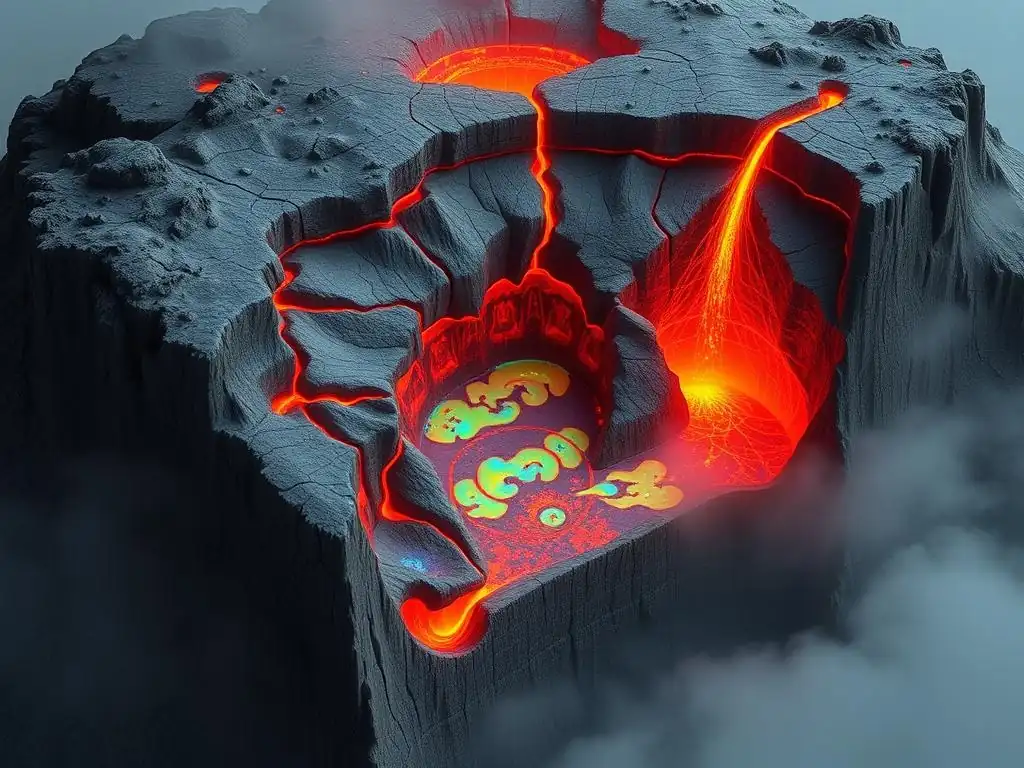
Magma movement, the driving force behind volcanic activity, plays a central role in the generation of hybrid earthquakes. As magma ascends from depth or migrates within the volcanic plumbing system, it exerts stress on the surrounding rocks. This stress can lead to brittle fracturing, especially in cooler, more solidified parts of the volcanic edifice. The initial high-frequency part of a hybrid earthquake is often attributed to this fracturing process, triggered by the pressure exerted by the moving magma.
Imagine magma pushing against a solidified plug of rock; the sudden breakage of this plug would generate high-frequency seismic waves. Furthermore, magma movement is rarely a smooth, continuous process. It often involves pulses, stops, and starts, leading to repeated fracturing events that can manifest as swarms of hybrid earthquakes.
Fluid Pressure and Fracturing: Linking Magmatic Processes to Hybrid Earthquakes
Beyond the bulk movement of magma, fluid pressure within the volcanic system is a critical factor in understanding hybrid earthquakes. Magma is not simply molten rock; it is a complex mixture containing dissolved gases and volatile components. As magma rises and pressure decreases, these volatiles exsolve, forming gas bubbles and increasing the overall fluid pressure within the system. This elevated fluid pressure can weaken the surrounding rocks, making them more susceptible to fracturing.
The low-frequency tail observed in hybrid earthquakes is often attributed to the movement and resonance of these fluids within the newly formed fractures or pre-existing conduits. Think of it like shaking a bottle partially filled with liquid; the initial shake (fracturing) creates a sharp sound, followed by the sloshing of the liquid (fluid movement), generating lower-frequency sounds. The interplay between fracturing and subsequent fluid movement is key to the hybrid earthquake phenomenon.
Understanding the Source Mechanisms: How Hybrid Earthquakes Reveal Volcanic Activity
The complex waveform of hybrid earthquakes suggests a source mechanism that involves both brittle failure and fluid dynamics. One prevailing model proposes that hybrid earthquakes are generated by a two-stage process. First, a rapid fracturing event, potentially triggered by magma pressure or tectonic stress, initiates the earthquake, producing the high-frequency P and S waves.
This initial fracture creates pathways for fluids (magma, gas, hydrothermal fluids) to move. The subsequent flow of these fluids into the newly opened fractures, or their resonance within the volcanic conduit system, then generates the lower-frequency component.
By carefully analyzing the characteristics of both the high and low-frequency parts of hybrid earthquakes, seismologists can infer information about the depth, size, and orientation of the fracturing event, as well as the properties and movement of fluids within the volcano. This detailed analysis makes hybrid earthquakes powerful tools for understanding the internal dynamics of active volcanoes and their potential for eruption.
Monitoring Hybrid Earthquakes: A Key Tool in Volcano Monitoring Techniques
Seismology and Volcano Monitoring: Detecting and Analyzing Hybrid Events
Seismology forms the backbone of modern volcano monitoring techniques. Volcanic seismometers, deployed in networks around active volcanoes, continuously record ground vibrations. These networks are designed to detect a wide range of seismic signals, including the subtle signatures of hybrid earthquakes. Advanced signal processing techniques are employed to filter out noise and identify earthquake waveforms.
Specifically, algorithms are designed to recognize the characteristic combination of high and low frequencies that define hybrid earthquakes. The detection of an increase in hybrid earthquake frequency or magnitude can be a crucial early warning sign of changes in volcanic activity. For instance, during periods of volcanic unrest, an uptick in hybrid earthquakes might indicate increased magma movement or fluid pressure buildup, prompting further investigation and potentially escalating alert levels.
Using Seismic Networks to Locate Hybrid Earthquake Origins
Beyond simply detecting hybrid earthquakes, seismic networks are crucial for pinpointing their origins within the volcanic edifice. By analyzing the arrival times of seismic waves at different stations in the network, seismologists can calculate the hypocenter – the location beneath the surface where the earthquake originated. Accurate location of hybrid earthquakes is vital because it provides information about the pathways of magma and fluids within the volcano.
Clustering of hybrid earthquakes at shallow depths might indicate magma accumulation near the surface, while deeper events could suggest magma movement from deeper reservoirs. For example, at some volcanoes, hybrid earthquakes have been observed to migrate upwards in the days or weeks leading up to an eruption, tracing the ascent of magma towards the surface. Sophisticated location techniques, including waveform inversion and relative relocation methods, are constantly being refined to improve the accuracy and precision of hybrid earthquake locations.
Interpreting Hybrid Earthquake Data: Insights into Volcano Behavior
The interpretation of hybrid earthquake data goes beyond simple detection and location. Analyzing the temporal patterns, magnitudes, and frequency content of hybrid earthquakes provides valuable insights into the dynamic behavior of a volcano. An increasing rate of hybrid earthquakes, especially if accompanied by an increase in magnitude, can signal escalating volcanic unrest. Changes in the dominant frequencies of hybrid earthquakes might indicate changes in the fluid properties or the geometry of the fluid pathways.
For example, a shift towards lower frequencies might suggest an increase in fluid pressure or the opening of larger fluid-filled cracks. Furthermore, the spatial distribution of hybrid earthquakes, when combined with other monitoring data like ground deformation and gas emissions, paints a more comprehensive picture of the ongoing volcanic processes. By carefully interpreting these complex seismic signals, volcanologists can gain a better understanding of a volcano's current state and its potential for future activity.
Case Studies: Examining Hybrid Earthquakes at Specific Volcanoes
Hybrid Earthquakes at Mount St. Helens: A Detailed Case Study
Mount St. Helens, infamous for its catastrophic 1980 eruption, has been a focal point for studying hybrid earthquakes. Following the eruption and during subsequent dome-building phases, Mount St. Helens exhibited significant hybrid earthquake activity. For example, during periods of rapid lava dome growth in the 2004-2008 eruption, seismographs detected a notable increase in the frequency of hybrid earthquakes.
These events were often clustered beneath and around the growing lava dome, indicating magma ascent and pressurization of the conduit system. Researchers observed that the rate of hybrid earthquakes correlated with the rate of dome extrusion, suggesting a direct link between magma supply and hybrid seismic activity.
Analysis of the waveforms revealed that the initial high-frequency component was likely related to brittle fracturing of the cooling dome material, while the low-frequency tail was associated with the movement of viscous lava within the conduit. The detailed study of hybrid earthquakes at Mount St. Helens provided crucial insights into the processes driving dome growth and the overall dynamics of this reawakened volcano.
Analyzing Hybrid Seismic Activity at Soufrière Hills Volcano: Implications for Eruption Forecasting
Soufrière Hills Volcano on Montserrat, a highly active volcano in the Caribbean, has also provided invaluable data on hybrid earthquakes and their role in eruption forecasting. Throughout its long-lived eruption that began in 1995, Soufrière Hills has experienced numerous episodes of lava dome growth, collapse, and explosive eruptions. Hybrid earthquakes have been consistently observed during periods of volcanic unrest and eruption.
Studies at Soufrière Hills have shown a clear correlation between the rate of hybrid earthquakes and the likelihood of dome collapse events and explosive eruptions. For instance, an increase in hybrid earthquake frequency, often accompanied by changes in their spectral characteristics, has been observed to precede significant eruptive events by hours to days.
This observation has been incorporated into eruption forecasting models for Soufrière Hills, where real-time monitoring of hybrid earthquake activity is a crucial component of the volcano's alert system. The detailed analysis of hybrid earthquakes at Soufrière Hills has demonstrated their practical utility in short-term eruption forecasting.
Comparative Analysis of Hybrid Earthquakes Across Different Volcanic Systems
While Mount St. Helens and Soufrière Hills provide detailed case studies, hybrid earthquakes are observed at a wide range of volcanic systems globally, although their characteristics and significance can vary. For example, at volcanoes like Stromboli in Italy, known for its persistent mild explosions, hybrid earthquakes are less prominent compared to long-period events and tremor, reflecting a more fluid-dominated system with continuous degassing.
In contrast, at volcanoes like Popocatépetl in Mexico, which exhibits periods of both dome growth and explosive eruptions, hybrid earthquakes are a more significant component of the seismic activity, indicating a more complex interplay between magma ascent, fracturing, and fluid dynamics. Comparative studies across different volcanic systems are crucial for understanding the factors that control the generation and characteristics of hybrid earthquakes.
Factors such as magma viscosity, gas content, conduit geometry, and tectonic setting likely influence the relative importance and waveform characteristics of hybrid earthquakes at different volcanoes. This comparative approach helps refine our understanding of the diverse processes that generate hybrid earthquakes and their general applicability in volcano monitoring.
Hybrid Earthquakes and Eruption Forecasting: Predicting Volcanic Activity
The Correlation Between Hybrid Earthquake Frequency and Eruption Probability
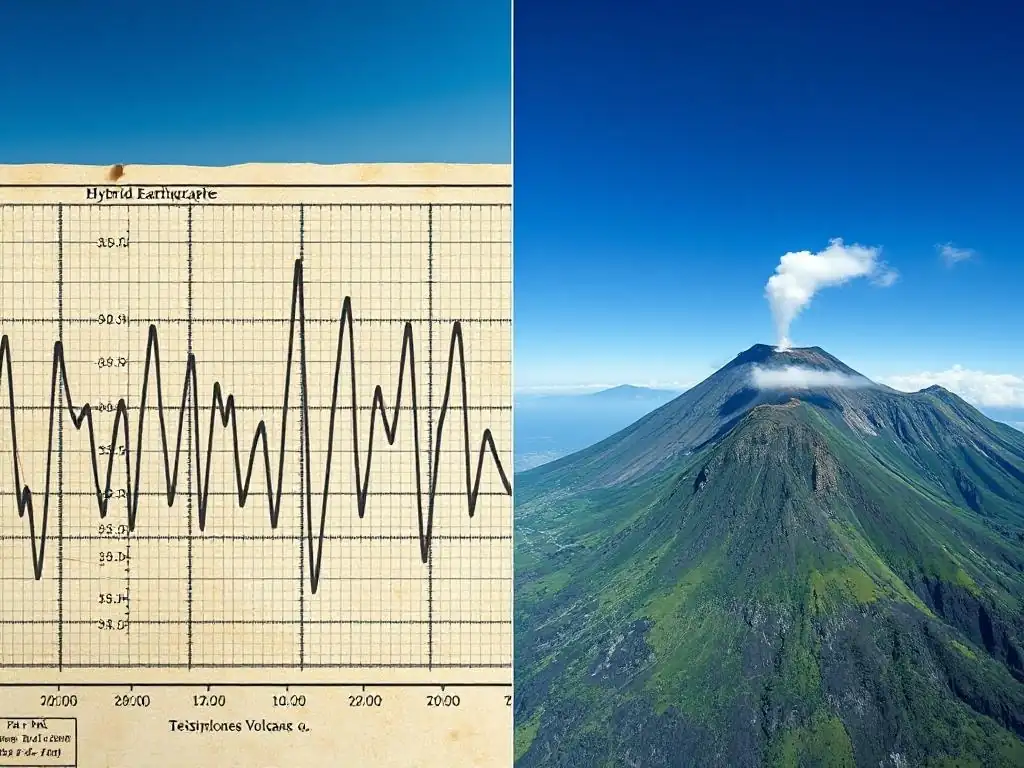
One of the most significant aspects of hybrid earthquake research is their potential application in eruption forecasting. Numerous studies at various volcanoes have demonstrated a positive correlation between the frequency of hybrid earthquakes and the probability of an impending eruption.
Generally, an increase in the rate of hybrid earthquakes, particularly when sustained over time, indicates an escalation of volcanic unrest and an increased likelihood of eruption. This correlation arises because increased hybrid earthquake activity often reflects heightened magma movement, increased fluid pressure, and enhanced fracturing within the volcanic system – all processes that are precursors to volcanic eruptions.
For example, at some volcanoes, a doubling or tripling of hybrid earthquake rates over a period of days or weeks has been observed to precede eruptive events. While the exact relationship between hybrid earthquake frequency and eruption probability can vary from volcano to volcano, the general trend of increasing eruption likelihood with increasing hybrid earthquake activity is a valuable tool for probabilistic eruption forecasting.
Combining Hybrid Earthquake Data with Other Monitoring Techniques for Improved Forecasts
While hybrid earthquake data is a valuable indicator, it is most effective when integrated with other volcano monitoring techniques for improved eruption forecasts. Volcano deformation measurements, using instruments like GPS and tiltmeters, provide information about ground swelling or contraction related to magma accumulation or withdrawal. Gas emission monitoring, measuring the flux and composition of volcanic gases, can reveal changes in magma degassing and depth.
Thermal monitoring, using infrared cameras or satellite data, can detect changes in surface temperatures associated with magma ascent. Integrating hybrid earthquake data with these other datasets allows for a more comprehensive assessment of a volcano's state.
For instance, an increase in hybrid earthquake frequency coupled with ground deformation and increased gas emissions provides a much stronger indication of impending eruption than any single parameter alone. Multi-parameter monitoring, incorporating hybrid earthquake analysis, significantly enhances the accuracy and reliability of eruption forecasts, leading to more informed and effective hazard mitigation strategies.
Limitations and Challenges in Using Hybrid Earthquakes for Eruption Prediction
Despite their utility, there are limitations and challenges in using hybrid earthquakes for eruption prediction. One challenge lies in the accurate and consistent identification of hybrid earthquakes, especially in noisy seismic environments. Distinguishing hybrid earthquakes from other types of volcanic earthquakes or even non-volcanic seismic signals requires sophisticated analysis and expert interpretation.
Furthermore, the relationship between hybrid earthquake activity and eruption probability is not always straightforward and can vary significantly between volcanoes. Some volcanoes may exhibit a strong correlation, while others may show a weaker or more complex relationship. Additionally, not all increases in hybrid earthquake activity necessarily lead to eruptions.
Volcanic unrest can sometimes subside without culminating in an eruption, leading to "false alarms." Therefore, while hybrid earthquakes are a valuable tool, they must be used in conjunction with other monitoring data and within a probabilistic forecasting framework, acknowledging the inherent uncertainties in predicting complex natural phenomena like volcanic eruptions.
Advanced Research and Future Directions in Hybrid Earthquake Studies
Emerging Technologies for Detecting and Analyzing Hybrid Seismic Signals
The field of hybrid earthquake research is continuously evolving with the development of new technologies for detection and analysis. Denser seismic networks, with more closely spaced sensors, provide higher resolution data and improved location accuracy for hybrid earthquakes. Advanced signal processing algorithms, including machine learning techniques, are being developed to automate the detection and classification of hybrid earthquakes, even in complex and noisy datasets.
Distributed Acoustic Sensing (DAS) technology, using fiber optic cables as seismic sensors, offers the potential for ultra-dense seismic arrays, providing unprecedented spatial coverage for monitoring volcanic areas. Furthermore, improved broadband seismometers with wider frequency ranges allow for more detailed analysis of the full waveform characteristics of hybrid earthquakes, including both the high and low-frequency components. These emerging technologies are pushing the boundaries of our ability to detect and characterize hybrid earthquakes, opening new avenues for understanding volcanic processes.
Modeling Hybrid Earthquake Generation: Improving Our Understanding of Volcanic Processes
Numerical modeling plays an increasingly important role in understanding the physical processes behind hybrid earthquake generation. Sophisticated models are being developed to simulate magma flow, fluid dynamics, and rock mechanics within volcanic systems. These models can be used to investigate the conditions under which hybrid earthquakes are generated, such as the interplay between magma pressure, fluid migration, and rock fracturing.
For example, models can simulate the stress changes induced by magma ascent and assess the likelihood of brittle failure, while also incorporating the effects of fluid pressure and pore fluid flow on fault rupture. By comparing model predictions with observed hybrid earthquake characteristics, researchers can refine our understanding of the source mechanisms and the key parameters that control hybrid earthquake generation. These modeling efforts are crucial for moving beyond empirical observations and developing a more fundamental, physics-based understanding of hybrid earthquakes and their relationship to volcanic activity.
The Future of Hybrid Earthquake Research: Enhancing Volcano Monitoring and Eruption Forecasting
The future of hybrid earthquake research is bright, with significant potential to further enhance volcano monitoring and eruption forecasting capabilities. Continued advancements in seismic instrumentation, data analysis techniques, and numerical modeling will lead to a deeper understanding of hybrid earthquake generation and their relationship to volcanic processes. Future research will likely focus on refining our ability to discriminate hybrid earthquakes from other seismic signals, improving the accuracy of hybrid earthquake locations, and developing more robust statistical relationships between hybrid earthquake activity and eruption probability.
Integrating hybrid earthquake data with other geophysical and geochemical monitoring datasets will be crucial for developing comprehensive volcano monitoring systems. Ultimately, a more thorough understanding of hybrid earthquakes will contribute to more accurate and timely eruption forecasts, reducing the risks associated with volcanic hazards and enhancing the safety of communities living near active volcanoes.
Conclusion: The Significance of Understanding Hybrid Earthquakes in Volcano Science
Understanding hybrid earthquakes is of paramount significance in volcano science. These complex seismic signals are not merely background noise; they are valuable messengers from the depths of active volcanoes, providing unique insights into the dynamic interplay of magma movement, fluid pressure, and rock fracturing. By carefully decoding the characteristics of hybrid earthquakes – their mixed-frequency waveforms, their spatial and temporal patterns, and their relationship to other volcanic phenomena – seismologists gain a deeper understanding of the processes leading to volcanic unrest and eruption.
Hybrid earthquakes serve as a crucial tool in volcano monitoring, contributing to improved eruption forecasting and hazard assessment. As research continues and technology advances, our ability to interpret and utilize hybrid earthquake data will only grow, further enhancing our capacity to understand, monitor, and ultimately, live safely with volcanoes.
Frequently Asked Questions
Hybrid earthquakes are a specific type of seismic event often observed at volcanoes. They exhibit characteristics of both high-frequency and low-frequency earthquakes, making their source mechanisms complex and indicative of volcanic processes.
Why are hybrid earthquakes important for volcanologists to study?
Studying hybrid earthquakes provides valuable insights into the internal dynamics of a volcano. These earthquakes can signal changes in magma movement, fluid pressure, and structural instability within the volcanic system, potentially indicating an increased risk of eruption.
What are the key characteristics that distinguish hybrid earthquakes from other types of earthquakes?
Hybrid earthquakes are distinguished by their unique waveform signature, which combines the sharp, distinct arrival times of high-frequency earthquakes with the prolonged, emergent waveforms of low-frequency earthquakes. This suggests a complex source involving both brittle fracture and fluid movement.
What kind of information do volcanologists use to analyze and understand hybrid earthquakes?
Volcanologists use seismometers to record the ground motion caused by hybrid earthquakes. They then analyze the frequency content, amplitude, and location of these events to infer the source mechanism and its relationship to volcanic activity.
Can understanding hybrid earthquakes help in predicting volcanic eruptions?
While not a guaranteed predictor, monitoring and analyzing hybrid earthquakes can improve eruption forecasting. Changes in the rate, location, and characteristics of these earthquakes can provide valuable warning signs of an impending eruption, allowing for timely evacuations and mitigation efforts.
Okay, here's a final reflection designed to close your article "Hybrid Earthquakes: Decoding the Complex Seismic Signatures of Volcanoes," optimized for the keyword "Understanding hybrid earthquakes volcanoes" and following the structure you provided:
Final Reflection: Unveiling Earth's Volcanic Whispers
The intricate dance between volcanic activity and seismic events, as explored in this article, underscores a critical truth: understanding hybrid earthquakes is paramount to mitigating volcanic risk. The complex signals these earthquakes emit are not merely geological curiosities, but vital clues that can help us anticipate eruptions and protect vulnerable communities. The ability to decipher these seismic signatures is becoming increasingly crucial in a world facing the growing impacts of climate change and its potential influence on volcanic activity.
The ongoing quest to understand hybrid earthquakes has profoundly influenced our approach to volcano monitoring and hazard assessment. This research reminds us that the Earth is a dynamic, interconnected system, and that our understanding of it is constantly evolving. The Earth speaks to those who know how to listen.
This quote, often attributed to various naturalists, perfectly encapsulates the essence of seismology and the patient, persistent effort required to unravel the secrets hidden within the Earth's tremors. The ability to listen to, and interpret, these seismic whispers is essential for safeguarding lives and property in volcanic regions.
As we conclude this exploration of hybrid earthquakes, I invite you to reflect on the power of scientific inquiry and the importance of interdisciplinary collaboration. Consider how advancements in seismology, coupled with a deeper understanding of volcanic processes, can empower us to become better stewards of our planet. Let us all strive to listen more attentively to the Earth's subtle signals, and to use that knowledge to build a safer and more resilient future for all.
Ignite Your Inner Volcanologist!
Thanks for diving deep into the fascinating world of hybrid earthquakes! We hope this article has sparked your curiosity and given you a new appreciation for the complex signals hidden within volcanoes. Now, let's put that knowledge into action!
Here's how you can further explore the hidden language of volcanoes:
- Report your observations: If you live near a volcano, contribute to citizen science by reporting any unusual seismic activity or observations to your local geological survey. Help build a comprehensive understanding of volcanic behavior!
- Delve Deeper:Explore the online seismic databases of observatories like the USGS and the Alaska Volcano Observatory to examine actual hybrid earthquake waveforms and compare them to the patterns discussed in this article. Can you identify any features?
- Share the Wonder: Spread the word about the hidden stories volcanoes tell! Share this article with friends, family, or anyone who's captivated by the power of nature.
Ready to put your new knowledge to the test and become a volcanic whisperer? What's the first observation you're going to make?