
Mount Fuji's Majesty: Volcano Worship in Japanese Culture

Welcome to Volcano Explorers!
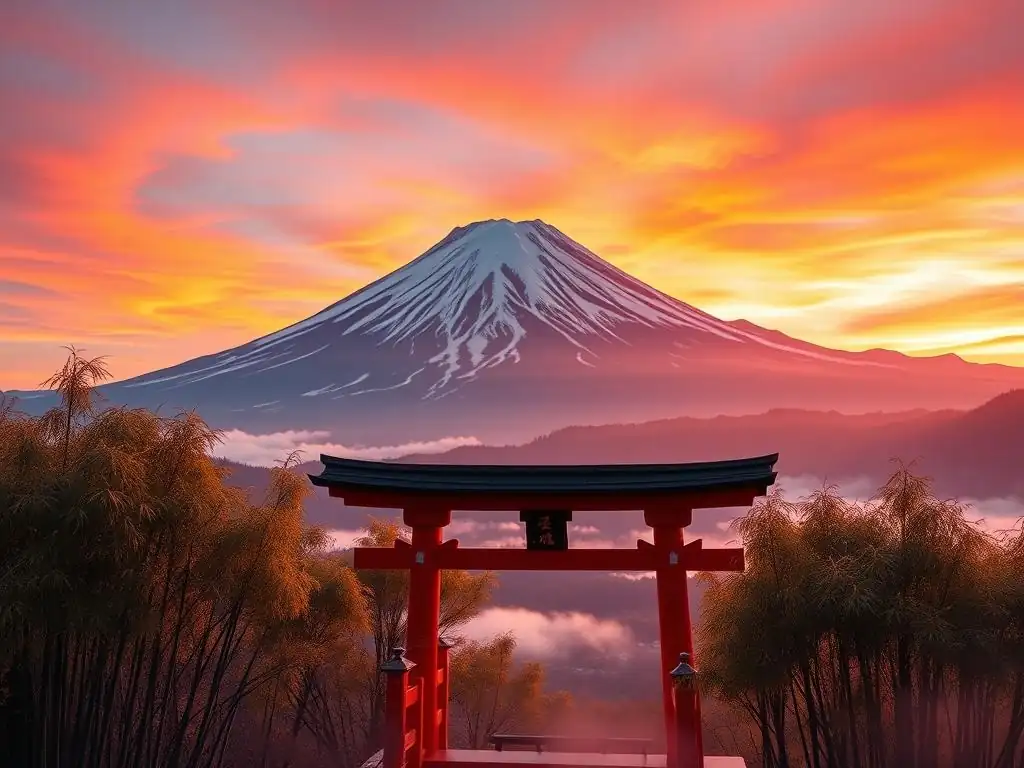
Prepare to be captivated by the raw power and breathtaking beauty of Earth's fiery giants. But beyond the science and spectacle, lies a deeper connection. Ever wondered about the profound cultural significance of volcanoes? Our journey begins with Mount Fuji's Majesty, exploring how this iconic peak became a sacred symbol interwoven with the very fabric of Japanese identity. Discover the ancient beliefs and enduring traditions that surround this majestic volcano, and unlock the secrets of its revered place in Japanese culture. What stories does its silhouette hold? Read on to uncover the answers...
- Introduction: Mount Fuji - A Symbol of Japan and Volcanic Power
- Mount Fuji: Geological Formation and Volcanic Activity
- Shinto and the Sacred Mountain: Mount Fuji as a Kami
- Buddhism's Influence on Mount Fuji's Cultural Significance
- Mount Fuji in Japanese Art and Literature: Reflections of Awe and Reverence
- Mount Fuji Worship in Modern Japan: Traditions and Contemporary Practices
- The Impact of Eruptions on Mount Fuji's Cultural Perception
- Mount Fuji's Legacy: A Symbol of National Identity and Spiritual Significance
- Conclusion: Honoring Mount Fuji's Enduring Majesty
-
Frequently Asked Questions
- What is the main focus of the VolcanoExplorers.org website?
- Why is Mount Fuji considered culturally significant in Japan?
- How does VolcanoExplorers.org educate visitors about different types of volcanoes?
- What kind of safety information does VolcanoExplorers.org offer for people living near active volcanoes?
- Does VolcanoExplorers.org explore the artistic representation of volcanoes?
- Final Reflection: Echoes of Fuji's Spirit
- Embrace Fuji's Spirit: Plan Your Sacred Ascent!
Introduction: Mount Fuji - A Symbol of Japan and Volcanic Power
The Enduring Allure of Mount Fuji: More Than Just a Mountain
Mount Fuji, or Fuji-san as it is respectfully known in Japan, transcends its geological definition as a stratovolcano to become a potent symbol of national identity, spiritual significance, and artistic inspiration. Its perfectly symmetrical cone, often capped with snow, has captivated hearts and minds for centuries. More than just a mountain, Fuji-san embodies the powerful forces of nature, both destructive and generative, which have profoundly shaped Japanese culture and spirituality.
Its volcanic nature, a source of both awe and potential devastation, has been interwoven with religious beliefs, artistic expressions, and daily life in Japan for millennia. The mountain's presence is not merely scenic; it is a palpable force, a silent giant that has witnessed the ebb and flow of Japanese history.
The enduring allure of Mount Fuji stems from this multifaceted identity. It is a physical landmark, easily recognizable and deeply ingrained in the Japanese landscape. It is also a spiritual anchor, revered as a sacred site by both Shinto and Buddhist traditions.
Furthermore, Fuji-san is a muse for countless artists and poets, inspiring masterpieces that have travelled the globe and solidified its iconic status. This combination of natural beauty, spiritual depth, and artistic representation has ensured that Mount Fuji remains at the heart of Japanese culture, drawing millions of visitors annually and continuing to inspire reverence and wonder. Its cultural significance extends far beyond its physical stature, making it a cornerstone of Japanese identity.
Volcanoes and Culture: A Global Perspective
The veneration of volcanoes is not unique to Japan; across the globe, volcanic landscapes have held profound cultural and spiritual meaning for diverse societies. From Mount Etna in Sicily, associated with the Roman god Vulcan, to Popocatépetl in Mexico, linked to Aztec legends and rituals, volcanoes have consistently been perceived as powerful entities, capable of both creation and destruction. Indigenous cultures around the Pacific Ring of Fire, in particular, have developed rich mythologies and practices centered around these geological giants, recognizing their influence on the environment and their connection to the earth's primal forces.
In many cultures, volcanoes are seen as gateways to the underworld or the dwelling places of deities. Their eruptions, while terrifying, are also interpreted as acts of divine communication or purification. For example, in Hawaiian culture, Pele, the goddess of volcanoes, is both revered and feared for her power to create new land and unleash fiery destruction.
Similarly, in parts of Indonesia, offerings and ceremonies are performed to appease volcanic spirits and ensure the continued fertility of the land. This global perspective highlights a common thread: volcanoes, as dramatic manifestations of Earth's inner power, naturally inspire awe, respect, and often, religious devotion, reflecting a universal human response to the raw forces of nature.
Mount Fuji: Geological Formation and Volcanic Activity
A Stratovolcano's Story: Understanding Mount Fuji's Formation
Mount Fuji is classified as a stratovolcano, a type of volcano built up of many layers (strata) of hardened lava, tephra, pumice, and volcanic ash. Its formation is a story spanning hundreds of thousands of years and multiple phases of volcanic activity. The current Mount Fuji is actually the youngest of a group of three overlapping volcanoes, which built upon each other over time.
The Komitake volcano, the oldest, started erupting hundreds of thousands of years ago. Later, the Ko-Fuji volcano formed on top of Komitake around 100,000 years ago. Finally, the current Shin-Fuji, or "New Fuji," began to emerge around 10,000 years ago, growing to its present majestic height of 3,776 meters (12,389 feet).
The symmetrical cone shape, so iconic of Mount Fuji, is a result of its relatively consistent eruptions of viscous lava and pyroclastic material. These materials solidify and accumulate layer upon layer, creating the steep slopes and conical form characteristic of stratovolcanoes. The composition of Mount Fuji's lava is primarily basaltic and andesitic, contributing to its volcanic activity patterns.
Understanding this geological history is crucial to appreciating the mountain not just as a static landscape feature but as a dynamic entity shaped by millennia of volcanic processes. The very ground upon which Mount Fuji stands is a testament to the Earth's powerful and continuous geological activity.
Current State of Mount Fuji: Monitoring Volcanic Activity and Seismic Data
While Mount Fuji has been dormant since its last confirmed eruption in 1707, it is still classified as an active volcano. Volcanologists continuously monitor Mount Fuji for signs of renewed activity, utilizing a network of sophisticated instruments to track seismic activity, ground deformation, and gas emissions. The Japan Meteorological Agency (JMA) plays a central role in this monitoring effort, providing regular updates and assessments of volcanic alert levels. Seismic data, in particular, is crucial for detecting changes in magma movement beneath the surface, which can be precursors to volcanic eruptions.
Recent studies and data analyses indicate that Mount Fuji is still considered to be in a potentially active state. While there are no immediate signs of imminent eruption, seismic activity and minor ground deformation are routinely detected. For example, in 2021, a swarm of earthquakes occurred beneath Mount Fuji, raising public awareness and prompting further scrutiny from volcanologists.
Although these events did not lead to an eruption, they underscore the importance of ongoing monitoring and preparedness. The scientific community remains vigilant, recognizing that Mount Fuji's dormancy is not necessarily permanent and that understanding its current state is vital for mitigating potential volcanic hazards in the densely populated surrounding areas.
Shinto and the Sacred Mountain: Mount Fuji as a Kami
The Kami of Mount Fuji: Konohanasakuya-hime, the Blossom Princess
In Shinto, the indigenous religion of Japan, Mount Fuji is revered as a sacred mountain, a dwelling place of kami, or spirits. The principal kami associated with Mount Fuji is Konohanasakuya-hime, often translated as the "Blossom-Princess" or "Princess Who Makes the Blossoms Bloom." She is a prominent figure in Japanese mythology, known for her beauty, grace, and association with cherry blossoms, which are symbolic of ephemeral beauty and the cycle of life. Konohanasakuya-hime is considered the protector of Mount Fuji and is often invoked for safe childbirth and marital harmony.
The association of a female deity with a volcano might seem paradoxical, but it reflects the Shinto understanding of nature as both nurturing and powerful. Konohanasakuya-hime embodies the life-giving aspects of nature, like blooming flowers and fertility, but also the inherent power and potential for transformation, much like a volcano can both destroy and create new land. Shrines dedicated to Konohanasakuya-hime are found on and around Mount Fuji, particularly at the summit, underscoring her central role in the mountain's sacred identity within Shinto beliefs. Her presence imbues Mount Fuji with a divine feminine energy, complementing its imposing physical presence.
Sacred Sites on Mount Fuji: Pilgrimage Routes and Shrines
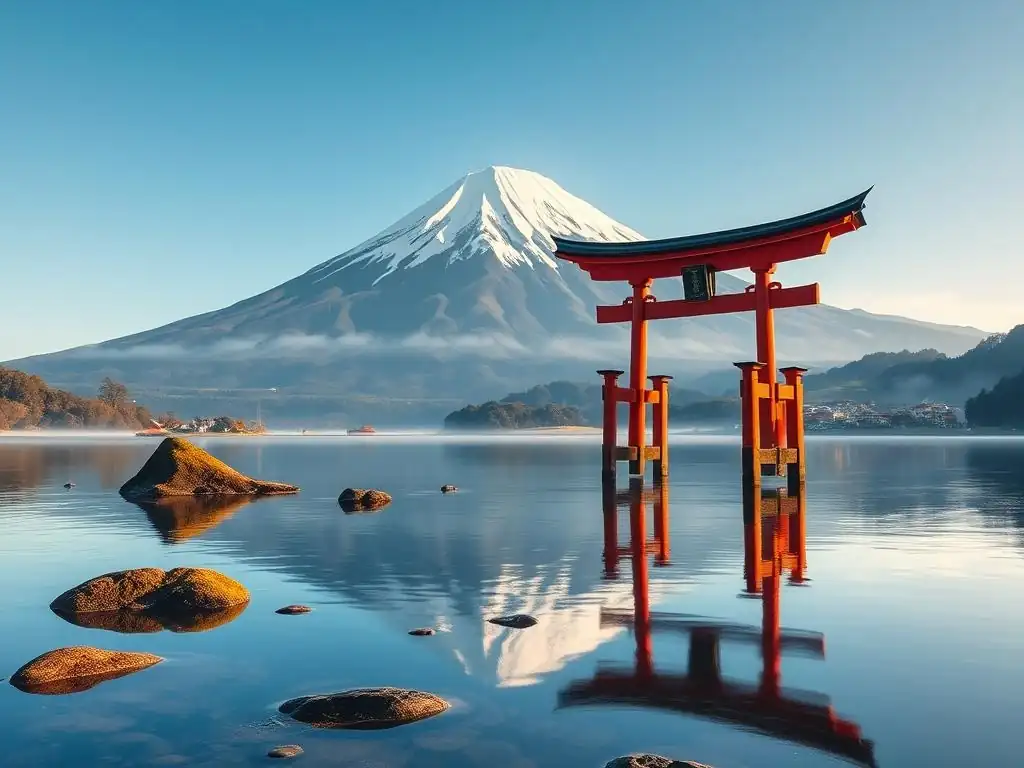
Mount Fuji is dotted with sacred sites that reflect its long history of religious veneration. For centuries, pilgrims have embarked on arduous journeys to climb Mount Fuji, following traditional routes that are themselves considered sacred paths. These pilgrimage routes, historically used by Shinto practitioners and later by Buddhist ascetics, lead to the summit, passing by various shrines and spiritual landmarks along the way. The Yoshida trail, for example, is one of the most popular traditional routes, lined with mountain huts and torii gates marking sacred spaces.
At the summit of Mount Fuji, several shrines are dedicated to Konohanasakuya-hime and other kami. The most prominent is Fujisan Hongū Sengen Taisha, the head shrine of over 1,300 Sengen shrines throughout Japan, which are dedicated to the deity of Mount Fuji.
Originally located at the foot of the mountain, a branch shrine was established at the summit, solidifying the mountain's status as a major Shinto pilgrimage destination. These sacred sites, both on the ascent and at the peak, are tangible expressions of the deep spiritual connection between Mount Fuji and Shinto beliefs, attracting pilgrims and visitors seeking spiritual purification and connection to the divine.
Buddhism's Influence on Mount Fuji's Cultural Significance
En no Gyoja and the Ascetics of Mount Fuji: Early Buddhist Practices
Buddhism, arriving in Japan in the 6th century, gradually integrated with existing Shinto beliefs and practices, profoundly influencing the cultural significance of Mount Fuji. One key figure in this synthesis was En no Gyoja, a legendary 7th-century ascetic and mystic considered the founder of Shugendo, a syncretic religion combining elements of Shinto, Buddhism, Taoism, and folk beliefs. En no Gyoja is credited with being the first to climb Mount Fuji and establish it as a site for Buddhist ascetic practices.
Following En no Gyoja, Mount Fuji became a training ground for Shugendo practitioners, known as yamabushi or mountain ascetics. These ascetics sought spiritual enlightenment through rigorous physical and mental discipline in the harsh mountain environment. They practiced meditation, chanted sutras, and undertook demanding pilgrimages to purify themselves and attain spiritual power.
Mount Fuji’s challenging terrain and remote location made it an ideal setting for these ascetic practices, further enhancing its reputation as a sacred and transformative place. The presence of Buddhist ascetics on Mount Fuji solidified its spiritual importance beyond Shinto traditions, weaving Buddhist philosophies into the mountain's cultural fabric.
Mount Fuji as a Mandala: Visualizing the Buddhist Universe
Over centuries, Buddhist interpretations of Mount Fuji evolved, with some schools viewing the mountain as a mandala, a symbolic representation of the Buddhist universe. Mandala are complex geometric diagrams used in Buddhist meditation to visualize the cosmos and achieve enlightenment. In this context, Mount Fuji's symmetrical cone and its surrounding landscape were seen as mirroring the structure of a mandala, with the summit representing the center of the universe and the slopes and foothills embodying different realms and deities.
This mandala interpretation of Mount Fuji is reflected in some Buddhist temples and artistic representations. For example, some temple gardens are designed to evoke the landscape of Mount Fuji as a mandala, with carefully placed stones and water features symbolizing cosmic elements.
Furthermore, certain Buddhist sects, like Shingon Buddhism, incorporated Mount Fuji into their esoteric practices, viewing it as a sacred space conducive to spiritual realization. This Buddhist lens added another layer of depth to Mount Fuji’s cultural significance, transforming it not just into a mountain but into a living embodiment of the Buddhist cosmos, accessible through pilgrimage and contemplation.
Mount Fuji in Japanese Art and Literature: Reflections of Awe and Reverence
Ukiyo-e and Mount Fuji: Hokusai's "Thirty-Six Views of Mount Fuji"
Mount Fuji has been an inexhaustible source of inspiration for Japanese artists and writers for centuries. In the Edo period (1603-1868), the ukiyo-e art movement, known for its woodblock prints, prominently featured Mount Fuji. Katsushika Hokusai's "Thirty-Six Views of Mount Fuji" is perhaps the most iconic and globally recognized example. This series of prints, created between 1830 and 1832, depicts Mount Fuji from various perspectives and in different seasons, capturing its majestic presence in diverse landscapes and weather conditions.
Hokusai's series not only showcased the beauty of Mount Fuji but also solidified its image as a quintessential symbol of Japan. Prints like "The Great Wave off Kanagawa" and "Red Fuji" became instantly recognizable and contributed significantly to the mountain's international fame. Ukiyo-e artists like Hiroshige also produced numerous prints featuring Mount Fuji, further embedding its image in popular culture and art. These artistic representations played a crucial role in disseminating the image of Mount Fuji and reinforcing its cultural significance, both within Japan and abroad.
Mount Fuji in Poetry: Tanka and Haiku Expressions of Nature's Power
Japanese poetry, particularly tanka and haiku, has long celebrated Mount Fuji, using concise and evocative language to capture its essence. Tanka, a longer form of Japanese poetry with a syllable structure of five, seven, five, seven, seven, and haiku, a shorter form of three lines with a syllable structure of five, seven, five, have both been used to express awe, reverence, and personal connection to Mount Fuji. These poetic forms often focus on nature, seasonal changes, and fleeting moments, making Mount Fuji a perfect subject for capturing the grandeur and ephemeral beauty of the natural world.
Countless poems throughout Japanese literary history reference Mount Fuji, reflecting its enduring presence in the cultural consciousness. For example, in the Man'yōshū, the oldest existing collection of Japanese poetry, there are poems praising Mount Fuji's majesty and linking it to divine power. Later poets in the Heian and Kamakura periods continued to write about Fuji, often associating it with spiritual awakening and the impermanence of life.
Haiku masters like Bashō also incorporated Mount Fuji into their works, using minimalist verses to evoke its vastness and serene presence. Through poetry, Mount Fuji is not just described but felt, its power and beauty rendered in delicate yet potent language.
Mount Fuji Worship in Modern Japan: Traditions and Contemporary Practices
Climbing Mount Fuji: A Modern-Day Pilgrimage
Even in modern Japan, climbing Mount Fuji retains elements of pilgrimage, although it is now also a popular recreational activity. During the official climbing season, from July to September, hundreds of thousands of people ascend Mount Fuji, many seeking a spiritual experience alongside the physical challenge. While not everyone who climbs Fuji does so for explicitly religious reasons, the act of climbing itself, with its physical exertion and journey to the summit, often takes on a symbolic meaning, echoing the traditional pilgrimages of the past.
Modern climbers often time their ascent to witness the sunrise from the summit, known as Goraiko, which is considered particularly auspicious and spiritually significant. Mountain huts along the climbing trails provide rest stops and sell religious paraphernalia, such as walking sticks stamped at each station and amulets for good luck. While the experience is more accessible and commercialized than traditional ascetic pilgrimages, the underlying sense of reverence for Mount Fuji and the desire for personal transformation remain present for many climbers, making it a unique blend of modern recreation and ancient spiritual practice.
Mount Fuji in Contemporary Art and Pop Culture: Anime, Manga, and Modern Interpretations
Mount Fuji's cultural significance extends far beyond traditional art forms and continues to permeate contemporary Japanese art and pop culture. It frequently appears in anime, manga, video games, and advertising, serving as a visual shorthand for Japan itself and evoking feelings of national pride and cultural identity. In anime and manga, Mount Fuji is often depicted as a backdrop in scenes set in Japan, or as a symbolic location for important events and character development.
Modern artists continue to reinterpret Mount Fuji in various media, from photography and painting to digital art and installations. These contemporary representations often explore themes of environmentalism, urbanization, and the changing relationship between humans and nature in modern Japan, using Mount Fuji as a constant point of reference. Its enduring presence in contemporary art and pop culture demonstrates that Mount Fuji's cultural significance is not static but constantly evolving and adapting to modern sensibilities, while still retaining its core symbolic power and iconic status.
The Impact of Eruptions on Mount Fuji's Cultural Perception
Historical Eruptions and Their Influence on Religious Beliefs
Mount Fuji's volcanic nature has profoundly shaped its cultural perception, with historical eruptions leaving lasting impacts on religious beliefs and societal attitudes. While Mount Fuji has been relatively quiet in recent centuries, it has experienced significant eruptions throughout its history, most notably the Jōgan eruption in 864 and the Hoei eruption in 1707. These eruptions were not just geological events; they were interpreted through a religious lens, often seen as acts of divine wrath or warnings from the kami.
The Jōgan eruption, which dramatically altered the landscape around Mount Fuji by creating Sai-ko (West Lake) and Shoji-ko (Shoji Lake), likely reinforced the mountain's image as a powerful and potentially destructive force, further solidifying the need for reverence and appeasement of the mountain kami. The Hoei eruption, which blanketed Edo (present-day Tokyo) in ash, occurring shortly after a major earthquake, was seen by some as divine punishment or a sign of societal imbalance.
These historical eruptions contributed to a complex cultural perception of Mount Fuji, blending awe and reverence with a healthy respect for its potential for destruction, influencing religious practices and disaster preparedness strategies.
Disaster Prevention and Respect for Mount Fuji's Power
The awareness of Mount Fuji's volcanic nature is deeply embedded in Japanese culture, influencing disaster prevention efforts and fostering a collective respect for nature's power. Despite its long period of dormancy, the potential for future eruptions is always acknowledged, and Japan has implemented comprehensive volcanic monitoring and disaster preparedness systems around Mount Fuji. These systems include real-time monitoring networks, evacuation plans, and public education campaigns aimed at mitigating the risks associated with volcanic activity.
Beyond practical disaster prevention measures, there is also a cultural dimension to respecting Mount Fuji's power. This respect is rooted in the traditional understanding of volcanoes as manifestations of powerful natural forces and the dwelling places of kami.
It is reflected in the continued reverence for Mount Fuji as a sacred mountain, the maintenance of shrines and pilgrimage routes, and the general attitude of humility towards nature's unpredictable forces. This blend of scientific preparedness and cultural respect underscores the enduring influence of Mount Fuji's volcanic nature on Japanese society and its approach to living in proximity to active geological phenomena.
Mount Fuji's Legacy: A Symbol of National Identity and Spiritual Significance
Mount Fuji as a UNESCO World Heritage Site: Recognizing its Cultural Value
In 2013, Mount Fuji was inscribed as a UNESCO World Heritage Site, recognizing its outstanding cultural value. The inscription highlights Mount Fuji not only for its scenic beauty but specifically for its profound influence on art and culture, particularly its role as an inspiration for artists and poets and its development as a sacred site. The UNESCO designation acknowledges Mount Fuji as "Fujisan, sacred place and source of artistic inspiration," emphasizing its cultural significance over its purely natural attributes.
The UNESCO recognition further solidified Mount Fuji's status as a global cultural icon and a symbol of Japan. It underscored the importance of preserving Mount Fuji's cultural landscape, including its pilgrimage routes, shrines, and the surrounding natural environment. The World Heritage status serves as a testament to the enduring legacy of Mount Fuji and its unparalleled contribution to Japanese and world culture, encouraging continued conservation efforts and responsible tourism to ensure its cultural values are maintained for future generations.
The Future of Mount Fuji and its Cultural Importance: Conservation and Tourism
The future of Mount Fuji’s cultural importance is intertwined with the challenges of conservation and sustainable tourism. As a major tourist destination, Mount Fuji faces pressures from increasing visitor numbers, environmental impact, and the need to balance tourism with the preservation of its sacred and natural landscape. Conservation efforts are crucial to protect the fragile ecosystem of Mount Fuji and maintain the integrity of its pilgrimage routes and sacred sites.
Sustainable tourism practices are essential to ensure that Mount Fuji remains accessible and enjoyable for future generations without compromising its cultural and environmental values. This includes responsible waste management, trail maintenance, and promoting respectful behavior among visitors. Balancing tourism with conservation and cultural preservation is a continuous challenge, but it is vital for safeguarding the enduring legacy of Mount Fuji and ensuring that it continues to inspire awe and reverence for centuries to come, maintaining its position as a cornerstone of Japanese cultural and spiritual identity.
Conclusion: Honoring Mount Fuji's Enduring Majesty
Mount Fuji stands as more than just a mountain; it is a testament to the enduring power of nature and its profound influence on human culture. From its geological origins as an active volcano to its spiritual significance in Shinto and Buddhism, and its iconic representation in art and literature, Mount Fuji embodies a rich tapestry of Japanese history, beliefs, and artistic expression.
Its majesty continues to captivate and inspire, reminding us of the awe-inspiring forces that shape our world and the deep cultural connections we forge with the natural landscape. Honoring Mount Fuji means not only appreciating its breathtaking beauty but also understanding and respecting its volcanic power and profound cultural significance, ensuring its legacy endures for generations to come.
Frequently Asked Questions
What is the main focus of the VolcanoExplorers.org website?
The website focuses on exploring the science of volcanoes, providing educational content, and offering safety information related to volcanic activity. It also highlights the cultural significance and beauty of volcanoes.
Why is Mount Fuji considered culturally significant in Japan?
Mount Fuji holds immense cultural significance in Japan due to its sacred status in Shintoism and Buddhism. It's been a source of inspiration for art and literature for centuries, representing national identity.
How does VolcanoExplorers.org educate visitors about different types of volcanoes?
The site provides educational content explaining various volcano types, such as stratovolcanoes, shield volcanoes, and cinder cones. It details their formation, eruption styles, and geological characteristics.
What kind of safety information does VolcanoExplorers.org offer for people living near active volcanoes?
The website provides safety guides and evacuation tips for those residing near active volcanoes. It also offers real-time updates on volcanic activity worldwide to help people stay informed and prepare for potential eruptions.
Does VolcanoExplorers.org explore the artistic representation of volcanoes?
Yes, the website features sections dedicated to photography and travel related to volcanoes. It also delves into the cultural significance of volcanoes across the globe, including their depiction in art and folklore.
Final Reflection: Echoes of Fuji's Spirit
The exploration of Mount Fuji's cultural significance reveals that the mountain's volcanic power continues to resonate deeply within Japanese identity. More than just a geographical landmark, Fuji remains a potent symbol of spirituality, artistic inspiration, and national pride, shaping cultural practices and beliefs even in our modern era.
The enduring reverence for Fuji underscores the profound connection between humanity and nature. This connection, often overlooked in our increasingly digitized world, reminds us of the importance of respecting and understanding the forces that shape our environment. In the mountains, there are no rules, only the will of the mountain.
– Japanese Proverb. This proverb encapsulates the humbling experience of encountering Fuji's grandeur and the wisdom it imparts.
Let us carry the spirit of Fuji within us, embracing its lessons of resilience, beauty, and the interconnectedness of all things. Consider how you can cultivate a deeper appreciation for the natural world and find your own personal "Fuji" – a source of inspiration and strength that guides you on your journey.
Embrace Fuji's Spirit: Plan Your Sacred Ascent!
Thank you for exploring the spiritual significance of Mount Fuji with us. We hope you've gained a deeper appreciation for the interwoven relationship between nature, culture, and worship in Japanese tradition. Now, let's translate that inspiration into action!
- Embark on a virtual pilgrimage! Explore our interactive 3D model of Mount Fuji and discover hidden shrines and sacred sites. Use it to plan a future visit, connecting with the mountain's powerful spirit.
- Share your thoughts and insights on your most meaningful connection with nature on our community forum.
- Delve deeper! Research a volcanic deity from another culture and share your findings in the comments below.
What practice, inspired by Fuji's legacy, will you integrate into your life to honor the power of nature? Share your ideas!