
The Price of Neglect: Communication Breakdown and the Armero Tragedy

Welcome to Volcano Explorers, where the Earth breathes fire and fury! Ever wondered what happens when the whispers of a volcano go unheard? Dive into our latest exploration of the Armero tragedy communication failures, a haunting reminder of the devastating power of nature and the critical importance of clear warnings. Uncover the chilling details and learn how a breakdown in communication turned a potential disaster into a catastrophic loss. Are you ready to face the consequences?
- Introduction: The Armero Tragedy and the Role of Failed Communication
- The Nevado del Ruiz Eruption: A Timeline of Events Leading to the Armero Tragedy
- Communication Failures: A Chain of Errors in the Armero Disaster
- The Human Cost: The Impact of Communication Breakdown on Armero Residents
- Analysis: Identifying the Root Causes of Communication Failures
-
Lessons Learned: Improving Volcanic Disaster Communication and Prevention
- Strengthening Volcano Monitoring and Early Warning Systems: Investing in Technology and Expertise
- Enhancing Communication Between Scientists, Government, and the Public: Building Trust and Transparency
- Implementing Effective Evacuation Plans: Drills, Routes, and Public Awareness Campaigns
- The Importance of Community-Based Disaster Preparedness: Empowering Local Communities
- The Legacy of Armero: Remembering the Victims and Preventing Future Tragedies
- Conclusion: The Imperative of Clear Communication in Volcanic Disaster Management
-
Frequently Asked Questions
- What was the Armero tragedy, and why is it considered a significant event in volcanology?
- What role did communication failures play in the Armero tragedy?
- What specific communication issues contributed to the high death toll in Armero?
- How has the Armero tragedy influenced volcanic disaster preparedness and communication strategies since 1985?
- What can be done to prevent similar communication breakdowns in future volcanic eruptions?
- Final Reflection: Echoes of Armero, Lessons for Tomorrow
- Understand the Past, Safeguard the Future!
Introduction: The Armero Tragedy and the Role of Failed Communication
Remembering Armero: A City Buried by Nevado del Ruiz Lahars
Armero, once a vibrant town nestled in the Colombian Andes, ceased to exist on November 13, 1985. In a matter of hours, a devastating lahar, a volcanic mudflow, unleashed by the Nevado del Ruiz volcano, buried the town and claimed the lives of over 25,000 people. The Armero tragedy is not solely a story of volcanic fury; it is a chilling account of preventable disaster amplified by critical communication failures.
Armero was a thriving agricultural center in the department of Tolima, known for its cotton and rice production. Its population of approximately 29,000 was largely unaware of the imminent danger lurking above them in the form of Nevado del Ruiz. This lack of awareness, coupled with a series of missteps in disseminating warnings, transformed a natural hazard into an unparalleled human catastrophe.
The sheer scale of the Armero tragedy shocked the world, becoming a stark reminder of the destructive power of volcanoes and the critical importance of effective disaster preparedness. The images of the devastation, particularly the iconic photograph of Omayra Sánchez, a young girl trapped in the mud and debris for three days before succumbing to her injuries, became symbols of the disaster and the communication breakdown that exacerbated it.
The tragedy highlighted not only the immediate physical destruction but also the long-lasting psychological and social scars left on the survivors and the nation. The name Armero became synonymous with volcanic disaster and the devastating consequences of neglecting scientific warnings and failing to communicate risks effectively to vulnerable populations.
The Critical Importance of Communication in Volcanic Disaster Preparedness
Volcanic eruptions are inherently unpredictable and dangerous natural phenomena. However, the extent of their impact on human populations is not solely determined by the eruption's magnitude. Effective communication plays a pivotal role in mitigating volcanic risk and saving lives. Timely and accurate warnings, disseminated clearly and reaching the communities at risk, are essential components of any volcanic disaster preparedness strategy. These warnings are the bridge between scientific understanding of volcanic hazards and the actions necessary to protect human lives and property.
In the context of volcanic eruptions, communication encompasses a complex network of interactions, from scientists monitoring volcanic activity to government officials responsible for public safety, and ultimately, to the communities living in the shadow of volcanoes. This communication must be multi-directional, ensuring that scientific data is translated into understandable warnings, that these warnings are effectively conveyed through appropriate channels, and that feedback from communities and local authorities is incorporated into preparedness and response plans.
Failures at any point in this communication chain can have catastrophic consequences, as tragically demonstrated by the Armero tragedy. The ability to effectively communicate the threat, the potential impact, and the necessary actions is not just a matter of procedure; it is a matter of life and death in volcanic regions.
The Nevado del Ruiz Eruption: A Timeline of Events Leading to the Armero Tragedy
Geological Context: Nevado del Ruiz and its History of Eruptions
Nevado del Ruiz, a stratovolcano part of the Andes Mountains' northern volcanic zone, has a long history of explosive eruptions and associated lahars. Its volcanic activity is driven by the subduction of the Nazca Plate beneath the South American Plate, a process that generates magma deep within the Earth's crust.
The volcano is capped by glaciers, which play a crucial role in the formation of lahars during eruptions. Hot volcanic materials, such as pyroclastic flows and ash, can rapidly melt these glaciers, creating massive flows of water, mud, rocks, and debris that can travel at high speeds down river valleys.
Prior to the 1985 eruption, Nevado del Ruiz had experienced significant eruptions in 1595 and 1845, both of which generated destructive lahars. The 1845 eruption, in particular, produced lahars that caused considerable damage and fatalities, serving as a historical precedent for the potential devastation.
Geological studies of Nevado del Ruiz's past activity revealed a pattern of cyclical eruptions and lahar generation, indicating that it was a volcano with a high potential for future, similar events. This historical and geological context was crucial for understanding the volcanic hazard posed by Nevado del Ruiz and for informing risk assessments and preparedness strategies in the region.
Pre-Eruption Warnings: Signs Ignored and Opportunities Missed
Increased volcanic activity at Nevado del Ruiz was detected almost a year before the catastrophic 1985 eruption. In December 1984, scientists from INGEOMINAS (Colombian Institute of Geology and Mining) observed increased fumarolic activity, sulfurous odors, and seismic tremors. These were clear indicators of magma movement within the volcano and a potential escalation towards an eruption. INGEOMINAS issued a volcanic alert and produced hazard maps indicating areas at risk from lahars, including Armero. These maps were based on the volcano's history of lahar generation and the topography of the surrounding river valleys.
Despite these warnings and the scientific evidence, the response from authorities and the public was tragically inadequate. The hazard maps and warnings were not effectively communicated to the population of Armero and surrounding areas. Local officials downplayed the risk, perhaps due to a lack of understanding of volcanic hazards, pressure from economic interests, or simply a disbelief in the possibility of a major eruption.
Media coverage was also insufficient, failing to convey the urgency and severity of the potential threat. Crucially, no comprehensive evacuation plan was developed or communicated to the residents of Armero, representing a critical failure in disaster preparedness despite the clear pre-eruption warnings.
The November 13th Eruption: A Catastrophic Lahar Unleashed
On November 13, 1985, Nevado del Ruiz erupted violently. The eruption, although not exceptionally large in terms of Volcanic Explosivity Index (VEI) – estimated at VEI 3 – was highly destructive due to its generation of massive lahars. The eruption began in the afternoon with a phreatic explosion, followed by a more powerful vulcanian eruption around 9:09 PM local time. This second phase produced pyroclastic flows and surges that melted the summit glaciers, triggering the formation of four major lahars.
These lahars, composed of water, ice, pumice, and rock debris, cascaded down the volcano's flanks and into the river valleys draining Nevado del Ruiz. The most devastating lahar flowed down the Lagunilla River valley, directly towards Armero. Traveling at speeds estimated up to 50 kilometers per hour, the lahar reached Armero approximately two hours after the main eruption, around 11:30 PM.
By this time, many residents were either asleep or unaware of the imminent danger. The lahar engulfed Armero with little to no warning, burying the town under meters of mud and debris and causing widespread devastation and loss of life. The eruption itself was relatively short-lived, but the lahars it unleashed were the primary agents of destruction, highlighting the particular hazard posed by ice-capped volcanoes.
Communication Failures: A Chain of Errors in the Armero Disaster
Lack of Effective Warning Systems: The Absence of Real-Time Monitoring
In 1985, volcano monitoring technology was significantly less advanced than it is today. Nevado del Ruiz was not equipped with real-time monitoring systems capable of detecting and transmitting immediate warnings of escalating volcanic activity. While INGEOMINAS scientists were monitoring the volcano, their observations and analyses were not translated into a rapid and effective warning dissemination system. The lack of seismic networks, gas sensors, and other modern monitoring tools meant that the escalation of the eruption on November 13th was not detected and communicated in real-time to Armero.
The warning system relied on radio communication, primarily between INGEOMINAS in Bogotá and local authorities. This system was slow and prone to delays and misinterpretations. There was no automated system to directly alert the population at risk.
The absence of a robust, real-time monitoring and warning system was a critical failure that hindered the ability to provide timely alerts to the residents of Armero. Modern volcano monitoring relies heavily on continuous data streams from various instruments, analyzed in real-time to detect subtle changes in volcanic behavior and provide early warnings of impending eruptions. This technology was simply not available or implemented at Nevado del Ruiz in 1985.
Misinterpretation of Scientific Data: The Underestimation of the Lahar Threat
While scientists at INGEOMINAS did identify an increased risk of eruption and lahars, there was an underestimation of the potential size and destructive power of these lahars. Initial hazard maps, while indicating the potential for lahars to reach Armero, might not have fully conveyed the scale of devastation that could result. Some reports suggest that the initial hazard assessments focused more on the potential for pyroclastic flows and ashfall, perhaps underestimating the lahar threat. This misinterpretation or underestimation, even if unintentional, contributed to a lack of urgency in the warnings and preparedness efforts.
Furthermore, there may have been a lack of clarity in communicating the scientific uncertainty associated with volcanic hazard assessments. Volcanic eruptions are complex events, and predicting their exact magnitude and impact is inherently challenging. However, it is crucial to communicate this uncertainty effectively, emphasizing the potential for worst-case scenarios and encouraging precautionary measures. In the case of Armero, it appears that the warnings, even when issued, may have lacked the necessary emphasis on the potential for catastrophic lahars, leading to a degree of complacency and inaction among authorities and the public.
Breakdown in Communication Between Scientists and Government Officials
A significant factor in the Armero tragedy was the breakdown in communication and trust between scientists and government officials. INGEOMINAS scientists issued warnings and hazard assessments, but these were not effectively translated into concrete actions by political authorities at the national and local levels. There appears to have been a disconnect between the scientific understanding of the volcanic risk and the political and administrative response. Some government officials reportedly downplayed the warnings, perhaps due to a lack of understanding of volcanic hazards or concerns about the economic and social disruption that evacuation orders might cause.
This breakdown in communication was exacerbated by a lack of established protocols and clear lines of responsibility for disaster management. There was no well-defined chain of command to ensure that scientific warnings were promptly acted upon by relevant authorities. Political considerations and bureaucratic inertia may have also played a role, hindering a swift and decisive response to the volcanic threat. The Armero tragedy highlights the critical need for strong institutional frameworks and clear communication channels between scientists, government agencies, and emergency response organizations to ensure that scientific warnings are translated into effective disaster mitigation measures.
The Role of Media in Disseminating (or Failing to Disseminate) Urgent Warnings
The media's role in the Armero disaster was also marked by failures in effectively disseminating urgent warnings to the public. While some media outlets reported on the increased volcanic activity at Nevado del Ruiz, the coverage was often inconsistent, lacking in scientific accuracy, and did not convey the imminent danger in a way that would prompt widespread public action. Some media reports even contributed to downplaying the risk, either through sensationalism or by presenting conflicting information that created confusion and reduced public trust in the warnings.
Television and radio, the primary mass media in Colombia at the time, did not consistently broadcast clear and urgent warnings about the lahar threat to Armero. The lack of visual aids, maps, and clear explanations of lahar hazards further hampered public understanding of the danger.
In the hours leading up to the eruption, there was no widespread media campaign to inform residents of Armero about the immediate risk and the need to evacuate. The media, which could have served as a crucial channel for disseminating life-saving information, failed to effectively communicate the urgency of the situation, contributing to the communication breakdown that amplified the Armero tragedy.
The Human Cost: The Impact of Communication Breakdown on Armero Residents
The Inability to Evacuate: A Direct Result of Delayed and Unclear Warnings
The most devastating consequence of the communication breakdown in the Armero tragedy was the inability of the vast majority of residents to evacuate before the lahars struck. Delayed, unclear, and often contradictory warnings, coupled with a lack of public education and preparedness, resulted in a population largely unaware of the imminent danger and unprepared to take effective action. By the time some warnings were issued on the evening of November 13th, it was too late for many to escape the fast-moving lahars.
The lack of a pre-existing evacuation plan and clearly marked evacuation routes further compounded the problem. Even those who might have understood the danger and attempted to evacuate were hampered by the absence of organized procedures and safe escape routes. Many residents, receiving conflicting information or downplaying the warnings, chose to remain in their homes, believing they were safe or that the threat was exaggerated. The Armero tragedy tragically illustrates how communication failures directly translate into a failure to evacuate, resulting in massive loss of life that could have been significantly reduced with effective warnings and preparedness measures.
Stories of Loss and Survival:
The Armero tragedy is etched in collective memory through countless stories of loss and survival, each highlighting the human cost of communication breakdown. Families were separated, homes were destroyed, and entire generations were decimated. One poignant example is the story of Omayra Sánchez, whose prolonged and agonizing death trapped in the mud became a symbol of the tragedy. Her image, broadcast globally, underscored the suffering and the lack of timely rescue efforts, which were in part hampered by the chaotic aftermath of the disaster and the initial lack of coordinated response.
Many survivors recount receiving vague or conflicting information about the volcanic activity, leading to confusion and inaction. Some recall hearing warnings but not understanding their severity or the need to evacuate immediately. Others describe a sense of disbelief that such a disaster could occur, fueled by the downplaying of risks by local authorities and a lack of prior experience with volcanic hazards.
These personal accounts vividly demonstrate how the communication failures translated into a tragic lack of preparedness and a devastating human toll. While some individuals did manage to escape, often through their own intuition or last-minute warnings from neighbors, the overwhelming majority of Armero residents were tragically caught unprepared by the lahars.
The Psychological Trauma of the Armero Tragedy
Beyond the immediate loss of life and physical destruction, the Armero tragedy inflicted deep and lasting psychological trauma on survivors and the wider Colombian population. Witnessing the devastation, losing loved ones, and experiencing the chaos and fear of the disaster left indelible scars on the mental health of those affected. Many survivors suffered from post-traumatic stress disorder (PTSD), anxiety, depression, and grief for years, even decades, after the event. The sudden and violent nature of the disaster, coupled with the feeling of helplessness and the realization that the tragedy could have been prevented, exacerbated the psychological impact.
The lack of adequate psychological support in the aftermath of the disaster further compounded the trauma. While immediate relief efforts focused on physical needs, the long-term mental health needs of survivors were often overlooked. The Armero tragedy serves as a stark reminder that the human cost of disasters extends far beyond immediate casualties and material damage.
Effective disaster response must include comprehensive psychological support for survivors and communities to address the long-term mental health consequences and facilitate recovery. The psychological trauma of Armero is a silent but enduring legacy of the communication failures and the preventable nature of the disaster.
Analysis: Identifying the Root Causes of Communication Failures
Bureaucratic Inefficiency: Red Tape and Lack of Coordination
Bureaucratic inefficiency and a lack of inter-agency coordination significantly hampered the effective response to the volcanic threat at Nevado del Ruiz. The warnings issued by INGEOMINAS scientists had to navigate a complex and often slow bureaucratic process to reach relevant decision-makers and ultimately the public. Red tape and unclear lines of authority contributed to delays in translating scientific warnings into concrete actions, such as issuing evacuation orders and mobilizing emergency resources.
Coordination between different government agencies, at both the national and local levels, was also lacking. Responsibilities for disaster preparedness and response were not clearly defined, leading to confusion and gaps in the overall system. This lack of coordination hindered the efficient flow of information, resources, and personnel, further delaying and weakening the response to the escalating volcanic crisis. The Armero tragedy highlighted the critical need for streamlined bureaucratic processes, clear lines of authority, and effective inter-agency coordination in disaster management to ensure timely and efficient responses to natural hazards.
Political Interference: Prioritizing Economic Concerns Over Public Safety
There are indications that political interference and the prioritization of economic concerns over public safety contributed to the communication failures and inadequate response in the Armero tragedy. Local officials, under pressure to maintain economic activity and avoid social disruption, may have downplayed the volcanic risk and resisted implementing costly evacuation measures. Armero was an economically important agricultural region, and there may have been reluctance to disrupt harvests and trade due to volcano-related concerns.
Some reports suggest that political considerations influenced the dissemination of warnings and the allocation of resources for disaster preparedness. The focus on economic development may have overshadowed the need for investment in volcano monitoring, public education, and evacuation planning. This prioritization of economic concerns over public safety, whether intentional or unintentional, created a climate of complacency and inaction that ultimately contributed to the scale of the Armero tragedy. The disaster underscores the ethical imperative for governments to prioritize public safety above all else, especially when facing natural hazards like volcanic eruptions.
Lack of Public Education and Awareness: The Importance of Volcanic Hazard Education
A fundamental root cause of the communication failures in Armero was the lack of public education and awareness about volcanic hazards in the region. Many residents of Armero were unfamiliar with the risks posed by Nevado del Ruiz and lacked basic knowledge about lahars and appropriate safety measures. This lack of awareness made them more vulnerable to the volcanic threat and less likely to heed warnings, even when they were issued.
Public education campaigns on volcanic hazards were either absent or insufficient in the years leading up to the 1985 eruption. There was no systematic effort to inform communities living near Nevado del Ruiz about the volcano's past eruptions, the potential for future events, and the warning signs of volcanic activity. This lack of public education created a knowledge gap that hindered effective risk communication and disaster preparedness. The Armero tragedy emphasizes the critical importance of ongoing public education and awareness programs in volcanic regions to empower communities to understand, prepare for, and respond effectively to volcanic hazards.
Institutional Weaknesses: Deficiencies in Disaster Management Planning
Institutional weaknesses in disaster management planning and infrastructure were also significant contributing factors to the Armero tragedy. Colombia lacked a comprehensive national disaster management system in 1985, with limited resources and capacity for volcano monitoring, warning dissemination, and emergency response. Disaster preparedness plans, if they existed at all for the Armero region, were inadequate and not effectively implemented.
The absence of well-defined evacuation routes, designated safe zones, and emergency shelters further hampered the ability to respond effectively to the volcanic crisis. Communication infrastructure, including radio networks and alarm systems, was insufficient to reach all communities at risk with timely warnings.
These institutional weaknesses reflected a broader lack of investment in disaster risk reduction and a reactive, rather than proactive, approach to natural hazards. The Armero tragedy served as a catalyst for significant improvements in disaster management planning and infrastructure in Colombia and globally, highlighting the critical need for robust institutional frameworks to mitigate the impact of natural disasters.
Lessons Learned: Improving Volcanic Disaster Communication and Prevention
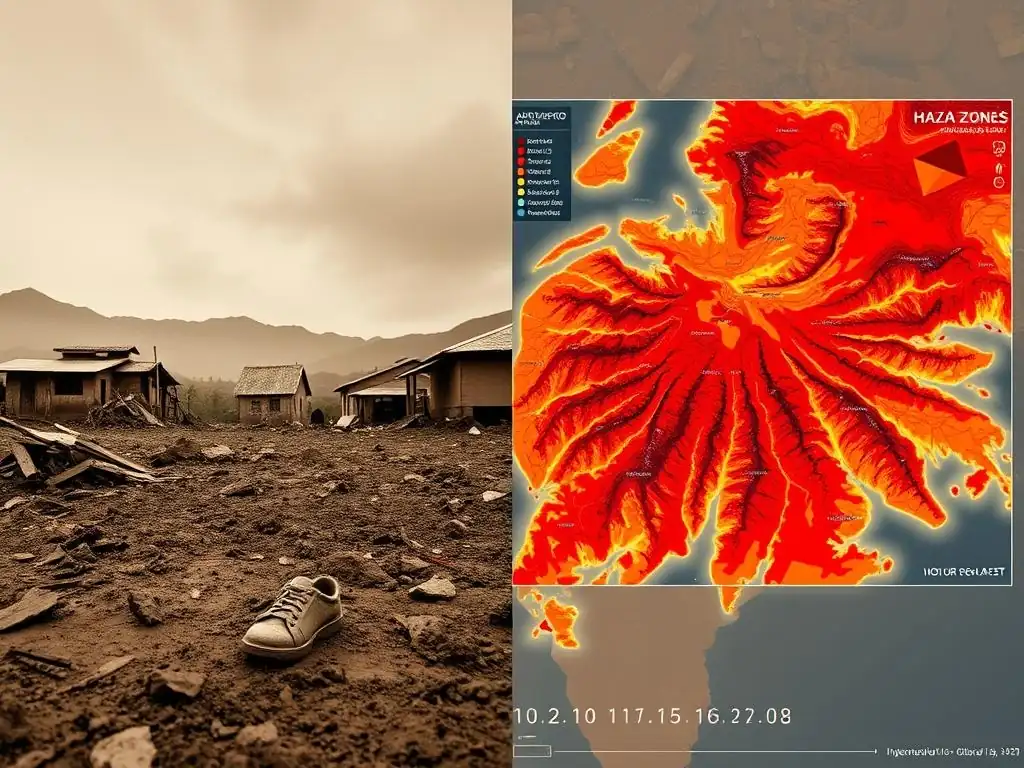
Strengthening Volcano Monitoring and Early Warning Systems: Investing in Technology and Expertise
The Armero tragedy underscored the urgent need for strengthening volcano monitoring and early warning systems worldwide. Investing in advanced monitoring technology, such as seismic networks, GPS deformation monitoring, gas sensors, and remote sensing capabilities, is crucial for detecting subtle changes in volcanic activity and providing early warnings of impending eruptions. These systems require ongoing maintenance, upgrades, and skilled personnel to operate and interpret the data effectively.
Furthermore, robust communication infrastructure is essential for transmitting real-time monitoring data and disseminating warnings rapidly to relevant authorities and communities at risk. This includes redundant communication channels, such as satellite communication and radio networks, to ensure reliable communication even during emergencies. Investing in scientific expertise, including volcanologists, geophysicists, and hazard communication specialists, is equally critical for developing accurate hazard assessments, interpreting monitoring data, and communicating risks effectively. Modern volcano monitoring and early warning systems are essential tools for reducing volcanic risk and preventing future tragedies like Armero.
Enhancing Communication Between Scientists, Government, and the Public: Building Trust and Transparency
Effective communication between scientists, government officials, and the public is paramount for successful volcanic disaster preparedness and response. Building trust and transparency among these stakeholders is crucial for ensuring that scientific warnings are heeded and that communities are empowered to take appropriate actions. Scientists must communicate their findings clearly, concisely, and in a manner understandable to non-experts, avoiding technical jargon and emphasizing the potential impacts of volcanic hazards.
Government officials must be receptive to scientific warnings, prioritize public safety, and develop clear and consistent communication strategies for disseminating warnings to the public. Open and transparent communication channels are essential for fostering trust and ensuring that communities have access to accurate and timely information. Community engagement and participation in disaster preparedness planning are also crucial for building trust and ensuring that warning messages are culturally appropriate and effectively reach all segments of the population. Establishing strong communication links and fostering trust among stakeholders are essential components of a resilient volcanic risk management system.
Implementing Effective Evacuation Plans: Drills, Routes, and Public Awareness Campaigns
Effective evacuation plans are a cornerstone of volcanic disaster preparedness. These plans must be developed in advance, based on detailed hazard assessments and in close collaboration with local communities. Evacuation routes should be clearly marked, regularly maintained, and designed to accommodate the specific needs of the population, including vulnerable groups. Designated safe zones and emergency shelters should be identified and prepared to receive evacuees.
Regular evacuation drills and simulations are essential for testing the effectiveness of evacuation plans, identifying weaknesses, and familiarizing communities with evacuation procedures. Public awareness campaigns should be conducted to educate residents about evacuation routes, safe zones, and emergency procedures. These campaigns should utilize various communication channels, including community meetings, radio broadcasts, and educational materials, to reach all segments of the population. Effective evacuation plans, regularly practiced and well-understood by the community, are vital for saving lives during volcanic crises.
The Importance of Community-Based Disaster Preparedness: Empowering Local Communities
Community-based disaster preparedness is increasingly recognized as a critical element of effective volcanic risk management. Empowering local communities to participate actively in disaster preparedness planning, risk assessment, and early warning systems enhances their resilience and reduces their vulnerability to volcanic hazards. This approach involves engaging community leaders, local organizations, and residents in developing and implementing disaster preparedness strategies tailored to their specific needs and context.
Community-based early warning systems, utilizing local knowledge and communication networks, can complement national-level monitoring systems and provide more localized and timely warnings. Training local volunteers as first responders and equipping them with basic emergency response skills can significantly enhance community resilience. Promoting community ownership of disaster preparedness efforts fosters a culture of safety and empowers communities to take proactive measures to protect themselves and their livelihoods from volcanic hazards. Community-based disaster preparedness is a sustainable and effective approach to building resilience in volcanic regions.
The Legacy of Armero: Remembering the Victims and Preventing Future Tragedies
Memorials and Commemorations: Honoring the Lives Lost in Armero
The Armero tragedy remains a deeply painful memory for Colombia and the global volcanology community. Memorials and commemorations serve as important reminders of the lives lost and the lessons learned from the disaster. In Armero, the ruins of the town are preserved as a solemn memorial site, a place of remembrance and reflection. Annual commemorations are held to honor the victims and to reaffirm the commitment to preventing similar tragedies in the future.
These memorials and commemorations play a vital role in keeping the memory of Armero alive and ensuring that the lessons learned are not forgotten. They serve as a powerful symbol of the human cost of communication failures and the importance of prioritizing public safety in the face of natural hazards. Honoring the victims of Armero through memorials and commemorations is an essential step in the healing process and in fostering a culture of disaster preparedness and resilience.
Ongoing Research and Risk Assessment: Learning from the Past to Protect the Future
The Armero tragedy spurred significant advancements in volcanology and disaster risk reduction. Ongoing research continues to focus on improving volcano monitoring techniques, developing more accurate hazard assessments, and enhancing communication strategies. Studies of Nevado del Ruiz and other volcanoes in Colombia and around the world contribute to a better understanding of volcanic processes and the development of more effective mitigation measures.
Risk assessment methodologies have evolved to incorporate lessons learned from Armero, emphasizing the importance of considering not only the physical hazards but also the social, economic, and political factors that influence vulnerability and resilience. Research into lahar dynamics and warning systems has led to improved lahar detection and warning capabilities in many volcanic regions. Learning from the past, through ongoing research and risk assessment, is crucial for protecting communities from future volcanic disasters and ensuring that the lessons of Armero are not in vain.
The Global Impact: Sharing Lessons Learned from Armero with Other Volcanic Regions
The lessons learned from the Armero tragedy have had a profound global impact, influencing volcanic disaster preparedness and risk reduction efforts in volcanic regions worldwide. The Armero case study is widely used in training programs for volcanologists, emergency managers, and government officials, highlighting the critical importance of communication, early warning systems, and community preparedness.
International collaborations and knowledge sharing initiatives have been strengthened to disseminate best practices in volcanic risk management, drawing on the experiences of Armero and other volcanic disasters. Volcanologists and disaster management experts from around the world have worked together to improve volcano monitoring networks, develop standardized warning protocols, and enhance community resilience in volcanic regions. The global impact of Armero underscores the interconnectedness of volcanic risk and the shared responsibility of the international community to learn from past tragedies and work together to prevent future disasters.
Conclusion: The Imperative of Clear Communication in Volcanic Disaster Management
Preventing Future Armero-like Tragedies: A Call to Action
The Armero tragedy stands as a stark reminder of the devastating consequences of communication breakdown in volcanic disasters. Preventing future Armero-like tragedies requires a concerted and sustained effort to strengthen volcano monitoring and early warning systems, enhance communication between scientists, government, and the public, and empower communities to prepare for and respond effectively to volcanic hazards. This is a global call to action, requiring collaboration among scientists, governments, international organizations, and communities at risk.
Investing in disaster risk reduction is not merely a matter of financial resources; it is a moral imperative to protect human lives and livelihoods. Prioritizing public safety above all else, ensuring clear and effective communication, and fostering a culture of preparedness are essential steps towards building resilience and preventing future volcanic disasters. The memory of Armero must serve as a constant motivation to learn from the past and to work tirelessly to create a safer future for communities living in the shadow of volcanoes.
The Responsibility of Governments and Scientists: Prioritizing Public Safety Above All Else
Ultimately, the responsibility for preventing future Armero-like tragedies rests with governments and scientists. Governments must prioritize public safety, allocate sufficient resources for volcano monitoring and disaster preparedness, and establish robust institutional frameworks for risk management. Scientists have a crucial role in providing accurate and timely scientific information, communicating risks effectively, and working collaboratively with governments and communities to develop and implement effective mitigation measures.
Both governments and scientists must embrace a culture of transparency, accountability, and continuous improvement in volcanic risk management. Learning from past mistakes, adapting to new challenges, and remaining vigilant in the face of volcanic threats are essential for ensuring that the lessons of Armero are truly learned and that similar tragedies are prevented in the future. Prioritizing public safety above all else is not just a policy choice; it is a fundamental ethical obligation to protect vulnerable populations from the devastating impacts of volcanic eruptions.
Frequently Asked Questions
What was the Armero tragedy, and why is it considered a significant event in volcanology?
The Armero tragedy was a devastating lahar flow caused by the 1985 eruption of Nevado del Ruiz in Colombia. It's significant due to the massive loss of life and the lessons learned about volcanic hazard assessment and communication.
What role did communication failures play in the Armero tragedy?
Communication failures were critical factors contributing to the disaster. Warnings about the impending eruption and lahar were not effectively communicated to the local population or acted upon by authorities.
What specific communication issues contributed to the high death toll in Armero?
Issues included lack of a clear warning system, misinterpretation of scientific data, and a failure to evacuate the town in a timely manner. There was also a reliance on radio communication, which was unreliable.
How has the Armero tragedy influenced volcanic disaster preparedness and communication strategies since 1985?
The tragedy led to significant improvements in volcanic monitoring techniques and risk communication protocols. There is now a greater emphasis on community education and proactive evacuation planning.
What can be done to prevent similar communication breakdowns in future volcanic eruptions?
Improved communication networks, clear and accessible warning systems, and ongoing community education programs are essential. Building trust between scientists, authorities, and the public is also crucial.
Final Reflection: Echoes of Armero, Lessons for Tomorrow
The devastating Armero tragedy serves as a stark reminder of the catastrophic consequences of communication breakdown, a lesson that remains profoundly relevant today. Effective communication in disaster preparedness and response is not merely a procedural formality, but a critical lifeline that can mean the difference between life and death. The failures identified in the Armero disaster, from the misinterpretation of scientific data to the lack of clear warnings reaching the vulnerable population, continue to resonate in contemporary discussions about risk management and emergency protocols.
The impact of Armero extends far beyond the immediate loss of life; it has indelibly shaped our understanding of how societies prepare for and respond to natural disasters. The tragedy serves as a constant, painful reminder that technological advancements and scientific knowledge are rendered useless without clear, accessible, and timely communication. It compels us to question the structures and systems in place to protect vulnerable communities. The only thing necessary for the triumph of evil is that good men do nothing.
- Edmund Burke. This quote underscores the responsibility we all share in ensuring that the lessons of Armero are not forgotten, and that proactive measures are taken to prevent similar tragedies from occurring.
Let us not allow the memory of Armero to fade into the annals of history as just another statistic. Instead, let it serve as a catalyst for change, inspiring us to critically examine our own communication systems, to advocate for improved disaster preparedness in our communities, and to ensure that the voices of the most vulnerable are heard and heeded. Reflect on the lessons of Armero, and ask yourself: What can I do, in my own sphere of influence, to ensure that such a tragedy never happens again?
Here's a Call to Action (CTA) draft for the article "The Price of Neglect: Communication Breakdown and the Armero Tragedy," tailored for Volcano Explorers (volcanoexplorers.org):
Understand the Past, Safeguard the Future!
Thank you for taking the time to learn about the Armero tragedy and the critical role communication plays in disaster preparedness. Now that you've gained valuable insights into the devastating consequences of communication breakdowns, it's time to turn knowledge into action. Let's work together to ensure such tragedies are never repeated.
Here's how you can make a difference:
- Share this article with your friends, family, and colleagues. Increased awareness is the first step toward creating safer communities.
- Explore your local emergency preparedness plans. Find out how your community communicates risks and warnings related to natural disasters. Are there gaps you can help address?
- Did you know Volcano Explorers offers workshops on hazard communication? Consider sponsoring a workshop in your community to equip others with life-saving knowledge.
What specific steps will you take to ensure communities are better informed and prepared for potential volcanic hazards? Share your thoughts in the comments below!