
Spirit Lake's Secrets: Uncovering the Mysteries Beneath the Surface PostEruption


Welcome to Volcano Explorers!
Prepare to be captivated by the raw power and enduring mysteries of volcanoes. Have you ever wondered what secrets lie hidden beneath the scarred landscape of Spirit Lake after the cataclysmic eruption? This isn't just about surviving; it's about unraveling a story etched in ash and fire. Dive into our Spirit Lake volcano post-eruption analysis and begin a journey to uncover the unexpected transformations and ecological rebirth in the shadow of a legend. What did we find? The answers may surprise you...
- Spirit Lake Volcano Post-Eruption Analysis: A Deep Dive
- The Transformation of Spirit Lake: Post-Eruption Ecosystem Dynamics
- Resurgence of Life: Biological Recovery in Spirit Lake
- Long-Term Monitoring and Research at Spirit Lake
- Spirit Lake's Unique Features: A Volcanic Lake Like No Other
- Lessons Learned from Spirit Lake: Implications for Volcanic Lake Management
- Spirit Lake Today: A Symbol of Resilience and Scientific Discovery
-
Frequently Asked Questions
- How did the eruption of Mount St. Helens affect Spirit Lake?
- What were the immediate post-eruption conditions in Spirit Lake?
- What kind of scientific analysis has been conducted on Spirit Lake since the eruption?
- What role does Spirit Lake play in understanding volcano recovery?
- What are some ongoing mysteries or areas of research related to Spirit Lake post-eruption?
- Final Reflection: Echoes of Resilience
- Unearth Your Own Spirit Lake Adventure!
Spirit Lake Volcano Post-Eruption Analysis: A Deep Dive
Before the Blast: Spirit Lake's Pristine Beauty
Prior to May 18, 1980, Spirit Lake was a jewel nestled at the foot of Mount St. Helens, renowned for its crystal-clear waters and breathtaking surroundings. Surrounded by dense old-growth forests of Douglas fir, hemlock, and cedar, the lake was a popular destination for fishing, boating, and camping. The pristine ecosystem teemed with life, supporting populations of trout and other native fish species. Its tranquil beauty was a testament to the undisturbed wilderness of the Pacific Northwest, a stark contrast to the volcanic forces lurking beneath.
The lake's allure extended beyond its natural beauty; it was a place steeped in local history and lore. Native American tribes, including the Cowlitz and Yakama, held Spirit Lake in reverence, considering it a sacred site. Early settlers and loggers were drawn to the area's abundant resources, but even with some human activity, the lake retained its unspoiled character. Photographs and accounts from before 1980 depict a serene landscape, a vibrant ecosystem, and a cherished recreational area, all unknowingly poised on the brink of a catastrophic transformation.
The Cataclysmic Event: How the Eruption Reshaped the Lake
The eruption of Mount St. Helens on May 18, 1980, was a geological event of unimaginable magnitude, and Spirit Lake was directly in its path. The lateral blast, a superheated wave of gas and ash traveling at supersonic speeds, ripped through the landscape, devastating everything in its wake. This blast, coupled with the massive landslide triggered by the earthquake preceding the eruption, fundamentally altered the topography surrounding Spirit Lake and the lake itself.
The landslide, the largest debris avalanche in recorded history, plunged into Spirit Lake, raising the lakebed by approximately 200 feet in some areas. Simultaneously, the lateral blast scoured the surrounding forests, depositing vast quantities of trees and ash into the lake. The once pristine waters were instantly transformed into a churning cauldron of debris, volcanic ash, and shattered timber. The eruption didn't just change the landscape around Spirit Lake; it violently and irrevocably reshaped the lake itself in a matter of minutes.
Immediate Aftermath: Assessing the Initial Damage to Spirit Lake
In the immediate aftermath of the eruption, Spirit Lake was unrecognizable. The once clear waters were now a murky, debris-filled expanse, choked with an estimated one million logs per square mile. The surface was a floating mat of timber, volcanic ash, and pumice, effectively blocking sunlight and oxygen exchange with the atmosphere. The vibrant ecosystem that had thrived in the lake was seemingly obliterated, replaced by a scene of utter devastation.
Initial assessments conducted by scientists revealed the extent of the environmental catastrophe. Water samples showed extremely low levels of dissolved oxygen and a dramatic increase in chemical pollutants leached from the volcanic ash and decaying organic matter. The pH of the lake water also shifted significantly, becoming more acidic. Superficially, life appeared to be extinguished, but beneath the surface, in the oxygen-depleted depths, a different kind of life was beginning to stir, hinting at the remarkable resilience of nature even in the face of such profound destruction.
The Transformation of Spirit Lake: Post-Eruption Ecosystem Dynamics
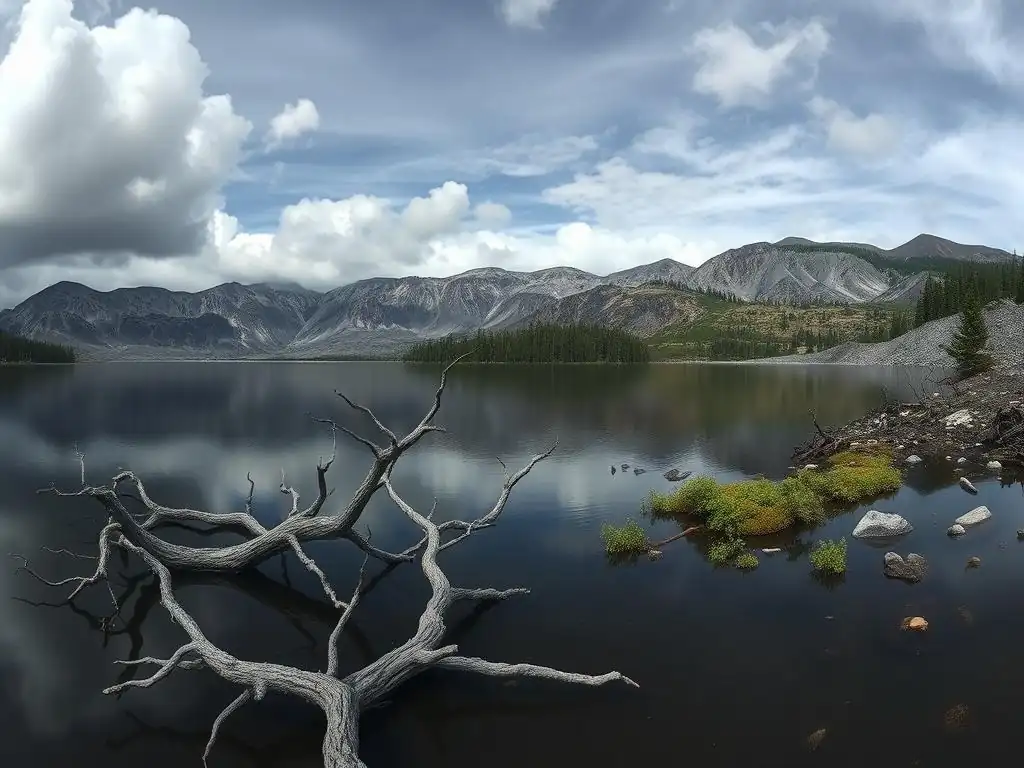
The Formation of a New Lake Environment: A Unique Case Study
Spirit Lake post-eruption became a natural laboratory, offering scientists an unprecedented opportunity to study ecosystem recovery from ground zero. The complete devastation provided a blank slate, allowing researchers to observe the processes of ecological succession in a virtually sterile environment. This unique setting made Spirit Lake a crucial case study for understanding how ecosystems respond to extreme disturbances and the factors that influence their recovery trajectory.
The transformation of Spirit Lake wasn't simply a return to its pre-eruption state; it was the creation of a novel ecosystem. The massive influx of organic matter from the debris avalanche and the altered water chemistry created conditions unlike anything previously observed in a temperate lake. Scientists meticulously documented the physical, chemical, and biological changes, recognizing that Spirit Lake was not just recovering, but evolving into a fundamentally new aquatic environment.
The Role of Debris Avalanche in Altering Spirit Lake's Morphology
The massive debris avalanche that plunged into Spirit Lake was the primary agent of morphological change. This landslide not only raised the lakebed but also significantly altered the lake's shape and depth profile. The avalanche deposit constricted the lake, reducing its surface area, and created new bays and shallows. The original Spirit Lake was effectively buried under tons of rock and debris, giving rise to a new lake with a dramatically different bathymetry.
This altered morphology had profound implications for lake processes. The shallower areas warmed more quickly in the summer, influencing temperature stratification and nutrient cycling. The debris dam at the outlet also affected water outflow and lake levels. The physical reshaping of Spirit Lake by the debris avalanche was not merely a cosmetic change; it fundamentally redefined the lake's physical characteristics and set the stage for subsequent ecological developments.
Changes in Water Chemistry and Lake Stratification After the Eruption
The eruption drastically altered Spirit Lake's water chemistry. The influx of volcanic ash and organic debris led to a surge in nutrient levels, particularly nitrogen and phosphorus. However, the decomposition of this massive organic load also consumed vast amounts of oxygen, leading to a prolonged period of anoxia in the deeper waters. The lake became highly stratified, with distinct layers characterized by different chemical and physical properties.
This stratification was exacerbated by the debris mat on the surface, which further limited oxygen diffusion into the water column. The upper layer, exposed to sunlight, became productive with algal blooms, while the deeper layers remained oxygen-depleted and rich in decomposition products. This meromictic-like condition, although not strictly meromictic in the classic sense due to volcanic disturbance rather than stable density gradients, created a unique chemical environment that profoundly influenced the biological communities that could establish themselves in Spirit Lake.
Resurgence of Life: Biological Recovery in Spirit Lake
The Unexpected Survival of Aquatic Life: Anaerobic Bacteria, Amphibians
Despite the seemingly catastrophic conditions, life was not entirely extinguished in Spirit Lake. Remarkably, anaerobic bacteria, organisms that thrive in oxygen-depleted environments, flourished in the depths of the lake. These bacteria played a crucial role in the initial stages of decomposition and nutrient cycling, forming the base of a nascent food web in the oxygen-poor zone. Their presence highlighted the adaptability of life even in extreme conditions.
Furthermore, some amphibians, particularly rough-skinned newts, surprisingly survived the eruption within the lake or in sheltered areas nearby. These hardy creatures, adapted to a range of aquatic conditions, represented the first visible signs of animal life recolonizing Spirit Lake. Their survival, though limited, demonstrated that the devastation was not absolute and that pockets of resilience existed even within the zone of maximum impact.
The Return of Vegetation: Colonization Along the Shoreline
As time passed, signs of recovery began to appear along the shoreline of Spirit Lake. Pioneer plant species, adapted to disturbed environments, started to colonize the newly formed land around the lake. These included fast-growing grasses, fireweed, and alder trees, which gradually stabilized the soil and provided habitat for other organisms. The return of vegetation was a slow but steady process, marking the beginning of terrestrial ecosystem recovery around the lake margin.
This revegetation was crucial for the overall recovery of Spirit Lake. Plants helped to prevent erosion, filter runoff, and provide shade and organic matter to the lake ecosystem. The early colonizers paved the way for more complex plant communities to establish themselves over time, gradually restoring the forested landscape that had been obliterated by the eruption. The shoreline became a living laboratory for studying primary succession in a volcanic environment.
Studying Microbial Communities: Unlocking Secrets of Ecosystem Recovery
Microbial communities, often unseen but critically important, played a pivotal role in the recovery of Spirit Lake. Scientists focused on studying bacteria, fungi, and other microorganisms to understand their contribution to nutrient cycling, decomposition, and overall ecosystem function. These studies revealed the remarkable diversity and adaptability of microbial life in the post-eruption environment.
Research showed that microbial communities were essential for breaking down the massive influx of organic matter, releasing nutrients that could then be utilized by other organisms. They also played a role in detoxifying pollutants and mediating chemical transformations in the lake water. By studying the dynamics of these microbial communities, scientists gained valuable insights into the fundamental processes driving ecosystem recovery and resilience in volcanic lakes, information crucial for understanding similar environments globally.
Long-Term Monitoring and Research at Spirit Lake
Scientific Investigations: USGS Cascade Volcano Observatory, University of Washington
Spirit Lake became a focal point for long-term scientific investigation, with key institutions like the USGS Cascade Volcano Observatory and the University of Washington playing leading roles. The USGS, with its mandate to monitor volcanic activity and assess hazards, recognized Spirit Lake as a critical site for studying the ecological and geological consequences of eruptions. The University of Washington, with its strong research programs in ecology and limnology, contributed expertise in aquatic ecosystem dynamics.
These institutions established ongoing research programs at Spirit Lake, involving interdisciplinary teams of scientists. Researchers from various fields, including volcanology, hydrology, ecology, and microbiology, collaborated to comprehensively study the lake's recovery. This collaborative, long-term approach was essential for understanding the complex and evolving nature of the post-eruption ecosystem and for drawing broader conclusions about volcanic lake systems.
Data Collection and Analysis: Tracking Changes Over Time
Long-term monitoring at Spirit Lake involved systematic data collection across multiple parameters. Scientists regularly sampled water chemistry, measured lake levels, monitored sediment accumulation, and tracked biological communities. This continuous data stream provided a detailed record of the lake's physical, chemical, and biological changes over decades, allowing for the identification of trends, patterns, and key drivers of ecosystem recovery.
The data collected at Spirit Lake have been meticulously analyzed to understand the rates and trajectories of ecosystem recovery. Statistical analyses and ecological modeling techniques have been used to interpret the complex interactions between different ecosystem components. This rigorous data analysis has not only advanced scientific understanding of Spirit Lake but has also contributed to broader ecological theory and the development of tools for assessing ecosystem resilience in other disturbed environments.
The Importance of Spirit Lake for Understanding Ecosystem Resilience
Spirit Lake serves as a crucial natural laboratory for understanding ecosystem resilience – the capacity of an ecosystem to absorb disturbance and reorganize while undergoing change so as to still retain essentially the same function, structure, and feedbacks. The dramatic eruption and subsequent recovery process at Spirit Lake provide invaluable insights into the mechanisms of resilience in the face of catastrophic events. By studying how Spirit Lake recovered, scientists have gained a deeper appreciation for the inherent capacity of nature to heal and adapt.
The lessons learned from Spirit Lake have broad implications for conservation and management in other ecosystems facing disturbances, whether natural or human-induced. The long-term data set from Spirit Lake informs our understanding of ecological thresholds, recovery timelines, and the importance of biodiversity for ecosystem stability. It underscores the need for long-term ecological monitoring and research to effectively manage and protect ecosystems in a world increasingly impacted by environmental change.
Spirit Lake's Unique Features: A Volcanic Lake Like No Other
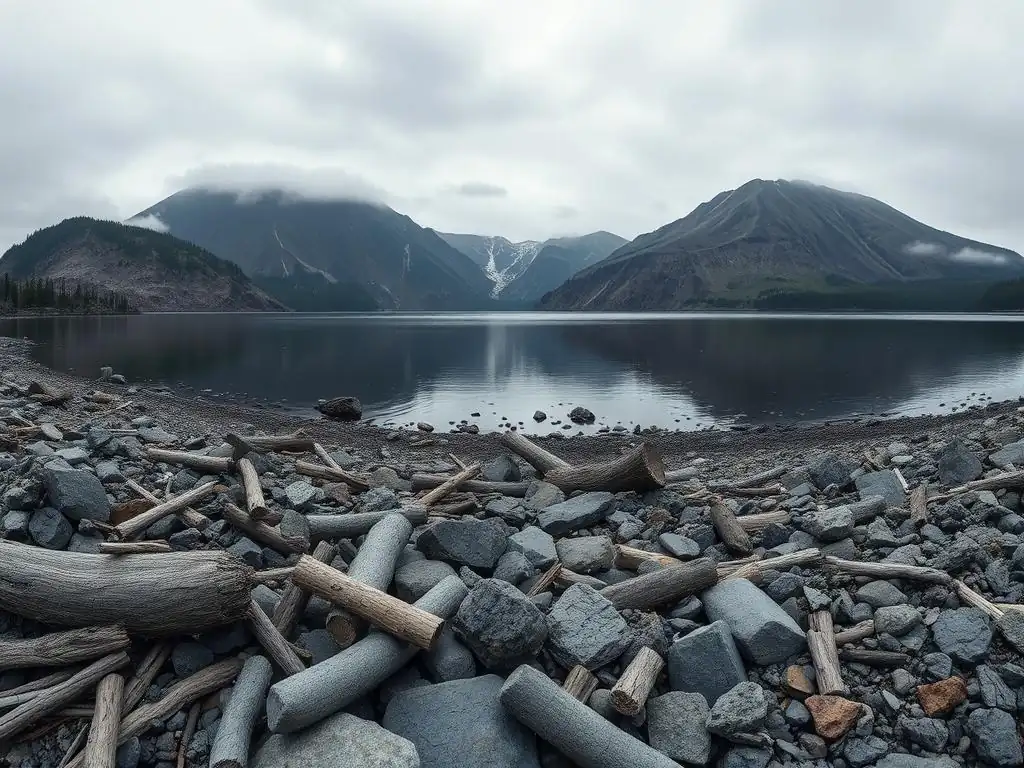
High Levels of Organic Matter: The "Kneedeep Soup" Phenomenon
One of Spirit Lake's most distinctive features is its extraordinarily high concentration of organic matter, a legacy of the massive debris avalanche. Decaying trees and forest debris, deposited in vast quantities, created what was initially described as a "kneedeep soup" of organic material at the lake's surface. This organic matter continues to influence the lake's chemistry and biology decades after the eruption.
The decomposition of this organic matter has led to persistent oxygen depletion in the deeper waters and the release of nutrients that fuel algal blooms in the surface layers. While this high organic content initially created challenging conditions, it also became a unique energy source for the developing ecosystem. The "kneedeep soup" phenomenon, though diminished over time, remains a defining characteristic of Spirit Lake and a subject of ongoing scientific study.
Meromictic Conditions: The Lack of Complete Mixing
Spirit Lake exhibits meromictic-like conditions, meaning its water column does not completely mix from top to bottom on an annual basis. This lack of complete mixing is partly due to the density stratification created by the decomposition of organic matter and the accumulation of dissolved substances in the deeper layers. The debris mat on the surface also contributed to thermal stratification by limiting wind-induced mixing.
This meromictic tendency has significant consequences for nutrient cycling and oxygen distribution within the lake. The deeper, unmixed layer, known as the monimolimnion, remains perpetually oxygen-depleted and accumulates decomposition products. The upper, mixed layer, or mixolimnion, is where most biological productivity occurs. This stratified structure creates distinct chemical and biological zones within Spirit Lake, making it a fascinating example of a naturally stratified volcanic lake.
The Threat of Future Volcanic Activity: Ongoing Risk Assessment
Despite the ecological recovery, Spirit Lake remains situated in an active volcanic region, and the threat of future volcanic activity is ever-present. Mount St. Helens is still considered an active volcano, and future eruptions, landslides, or lahars could again impact Spirit Lake and the surrounding area. Ongoing risk assessment and monitoring are therefore crucial for understanding and mitigating potential hazards.
The USGS Cascade Volcano Observatory continuously monitors Mount St. Helens for signs of unrest, using a network of sensors to detect changes in ground deformation, gas emissions, and seismic activity. These monitoring efforts are essential for providing early warnings of potential volcanic events and for informing land management decisions in the vicinity of Spirit Lake. The long-term management of Spirit Lake must take into account the inherent volcanic risk and the potential for future disturbances.
Lessons Learned from Spirit Lake: Implications for Volcanic Lake Management
Understanding Volcanic Hazards: Lahar and Pyroclastic Flow Modeling
Spirit Lake has provided invaluable lessons for understanding volcanic hazards, particularly lahars (volcanic mudflows) and pyroclastic flows (hot gas and rock avalanches). The 1980 eruption demonstrated the devastating potential of these hazards and highlighted the need for accurate hazard assessment and modeling. Studies at Mount St. Helens and Spirit Lake have significantly advanced our ability to predict and map areas at risk from these volcanic phenomena.
Researchers have developed sophisticated computer models to simulate lahar and pyroclastic flow pathways, taking into account topography, eruption scenarios, and material properties. These models are crucial tools for land-use planning and emergency preparedness in volcanic regions. The lessons learned from Spirit Lake have informed hazard assessments not only at Mount St. Helens but also at other volcanoes worldwide, contributing to improved public safety in volcanic areas.
Developing Mitigation Strategies: Protecting Downstream Communities
The experience at Spirit Lake has underscored the importance of developing effective mitigation strategies to protect downstream communities from volcanic hazards. While completely preventing volcanic eruptions is impossible, mitigation measures can significantly reduce the impact of hazards such as lahars and debris flows. These strategies include engineered structures, early warning systems, and land-use regulations.
For example, debris dams and sediment retention structures can be constructed to intercept and control lahars, reducing their flow velocity and volume downstream. Early warning systems, based on real-time monitoring of volcanic activity and lahar sensors, can provide crucial time for evacuation. Land-use zoning regulations can restrict development in high-hazard zones, minimizing exposure to risk. The lessons from Spirit Lake emphasize a multi-faceted approach to volcanic hazard mitigation, combining engineering solutions, monitoring technologies, and community preparedness.
The Value of Long-Term Ecological Monitoring: Ecosystem Recovery Timelines
Spirit Lake vividly demonstrates the profound value of long-term ecological monitoring. The decades-long research effort at Spirit Lake has provided a unique and detailed record of ecosystem recovery following a catastrophic disturbance. This long-term perspective is essential for understanding the complex and often slow processes of ecological succession and for assessing the effectiveness of conservation and management strategies.
Ecosystem recovery is not a linear process; it involves periods of rapid change, slow progress, and even setbacks. Long-term monitoring allows scientists to track these fluctuations, identify underlying drivers, and distinguish between short-term variability and long-term trends. The Spirit Lake data set provides a rare example of a well-documented ecosystem recovery timeline, offering valuable insights for predicting recovery trajectories in other disturbed ecosystems and for informing adaptive management approaches.
Spirit Lake Today: A Symbol of Resilience and Scientific Discovery
Visiting Spirit Lake: Permits and Access Restrictions
Today, Spirit Lake is a popular destination for those wishing to witness the power of nature and the remarkable story of ecological recovery. However, due to its location within the Mount St. Helens National Volcanic Monument and the ongoing fragility of the recovering ecosystem, access to Spirit Lake is regulated. Permits are required for hiking and accessing certain areas, and restrictions are in place to protect the environment and ensure visitor safety.
Visitors can experience stunning views of Spirit Lake and Mount St. Helens from designated viewpoints and trails. Interpretive displays provide information about the 1980 eruption, the lake's transformation, and the ongoing scientific research. Responsible visitation, respecting permit requirements and minimizing environmental impact, is crucial for preserving Spirit Lake for future generations and allowing continued scientific study.
Continued Research and Conservation Efforts
Research and conservation efforts at Spirit Lake continue to this day. Scientists are still actively studying the lake's ecosystem, investigating long-term ecological trends, and exploring new research questions. Conservation efforts focus on protecting the recovering ecosystem, managing visitor impacts, and ensuring the long-term preservation of this unique natural laboratory.
Ongoing research includes studies of microbial communities, nutrient cycling, and the effects of climate change on the lake ecosystem. Conservation initiatives involve habitat restoration, invasive species control, and public education. Spirit Lake remains a vital site for scientific discovery and a testament to the ongoing commitment to understanding and protecting volcanic landscapes.
The Future of Spirit Lake: Projections and Predictions
The future of Spirit Lake is intertwined with the ongoing processes of ecological succession and the potential for future volcanic activity. Projections suggest that the lake ecosystem will continue to evolve, with further changes in water chemistry, biological communities, and the surrounding landscape. The long-term trajectory of recovery will depend on a complex interplay of ecological processes, climate variability, and volcanic events.
While the threat of future eruptions remains, the resilience demonstrated by Spirit Lake over the past decades offers a hopeful perspective. The ecosystem has shown a remarkable capacity to recover and adapt, and continued scientific monitoring will be essential for understanding and managing its future. Spirit Lake stands as a powerful symbol of nature's resilience and the enduring value of scientific inquiry in the face of dramatic environmental change, offering valuable lessons for a world increasingly shaped by both natural and human-induced disturbances.
Frequently Asked Questions
How did the eruption of Mount St. Helens affect Spirit Lake?
The Mount St. Helens eruption in 1980 caused a massive landslide into Spirit Lake, triggering a huge wave and significantly altering its ecosystem. This event introduced a vast amount of organic debris into the lake.
What were the immediate post-eruption conditions in Spirit Lake?
Immediately after the eruption, Spirit Lake was a virtually sterile environment. It was devoid of oxygen and contained a soup of organic material and volcanic ash. The lake's ecosystem experienced a near-total collapse.
What kind of scientific analysis has been conducted on Spirit Lake since the eruption?
Scientists have conducted extensive chemical and biological studies of Spirit Lake to understand the recovery process. Analysis has focused on water quality, the development of microbial life, and the return of plant and animal species.
What role does Spirit Lake play in understanding volcano recovery?
Spirit Lake serves as a natural laboratory for studying ecosystem recovery after a major volcanic disturbance. Its unique conditions offer insights into how life can adapt and thrive in extreme environments.
Researchers are still investigating the long-term effects of the eruption on nutrient cycling and the stability of the new ecosystem. They are also studying how climate change might impact the lake's recovery trajectory.
Final Reflection: Echoes of Resilience
The story of Spirit Lake, forever altered by the eruption of Mount St. Helens, serves as a potent reminder of nature's raw power and the enduring spirit of life that persists even in the face of devastation. The post-eruption analysis of Spirit Lake is not merely a scientific endeavor, but a testament to the resilience of ecosystems and the ongoing process of rebirth. Understanding the lake's transformation provides invaluable insights into ecological succession and the complex interplay between geological forces and biological adaptation, lessons that are increasingly relevant in our rapidly changing world.
The profound impact of the eruption on Spirit Lake continues to ripple through the scientific community and the collective consciousness. Witnessing the lake's slow but steady recovery underscores the importance of long-term ecological monitoring and the potential for nature to heal itself, even after catastrophic events. This understanding fosters a deeper appreciation for the delicate balance of our planet and the need for responsible stewardship. The lessons learned from Spirit Lake are not just about volcanoes; they are about the resilience of life, the power of adaptation, and the interconnectedness of all things.
As we conclude this exploration of Spirit Lake's secrets, let us carry forward the lessons learned from its remarkable journey. Consider how the principles of resilience, adaptation, and interconnectedness apply to your own life and the challenges you face. Embrace the spirit of renewal, seek opportunities for growth amidst adversity, and remember that even in the wake of destruction, the potential for rebirth and transformation always exists. Let the story of Spirit Lake inspire you to cultivate your own inner resilience and contribute to a more sustainable and harmonious future.
Unearth Your Own Spirit Lake Adventure!
Thank you for exploring the mysteries of Spirit Lake! We hope you've been inspired by nature's resilience and the fascinating secrets hidden within its landscape. Now, it's time to experience this incredible place for yourself.
What's next?
- Plan your visit! Witnessing the serene beauty of Spirit Lake firsthand is the best way to appreciate its remarkable recovery and unique environment. Remember to check local regulations and trail conditions before you go.
- Share your discovery! Help others understand the wonder of Spirit Lake by sharing this article with friends and family who appreciate the power of nature.
- Join our community! Upload your Spirit Lake photos and observations to the Volcano Explorers forum and become part of the ongoing discussion.
Which aspect of Spirit Lake's transformation are you most excited to explore in person?