
Etna's Medieval Wrath: Centuries of Eruptions and Sicilian Life

Welcome to Volcano Explorers!
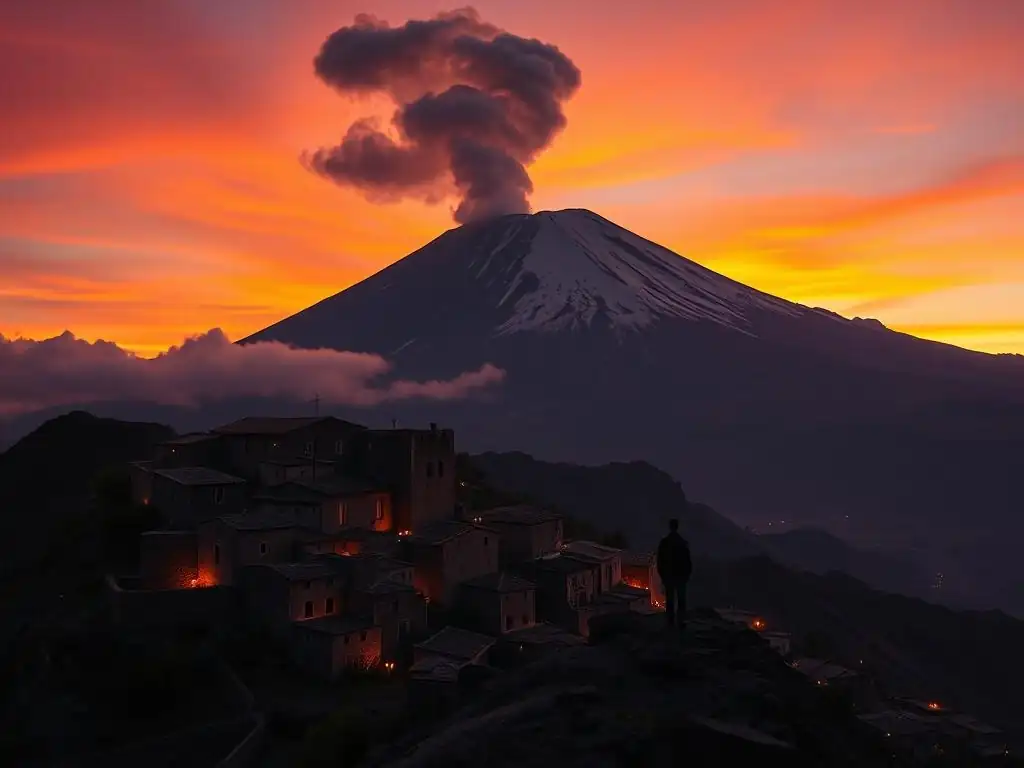
Ever wondered how a mountain can simultaneously destroy and define a culture? Mount Etna, Europe's largest active volcano, has been shaping Sicilian life for millennia. But before we dive into modern monitoring and scientific understanding, let's journey back in time... Uncover the history of Mount Etna eruptions and discover how medieval Sicilians lived alongside this fiery giant. What secrets do centuries of lava flows and explosive events reveal about the resilience of a people and the unpredictable power of nature? Read on to find out!
- Introduction: Mount Etna's Volcanic History and Medieval Sicily
- The History of Mount Etna Eruptions During the Middle Ages (5th - 15th Centuries)
- Societal Impacts of Etna's Eruptions on Medieval Sicilian Life
- Volcanic Hazards and Medieval Sicilian Adaptation Strategies
- Comparing Etna's Medieval Eruptions with Other Volcanic Events of the Time
- Lessons from the Past: Understanding Etna's Activity for Future Preparedness
- Conclusion: Etna's Enduring Legacy and the History of Mount Etna Eruptions
-
Frequently Asked Questions
- What makes Mount Etna so historically significant in terms of volcanic eruptions?
- How did medieval eruptions of Mount Etna affect the people of Sicily?
- What kind of information can VolcanoExplorers.org provide about Etna's eruptions?
- Does VolcanoExplorers.org offer advice for people living near active volcanoes like Etna?
- Beyond the science, does VolcanoExplorers.org explore the cultural significance of volcanoes like Mount Etna?
- Final Reflection: Echoes of Fire and Resilience
- Ignite Your Inner Volcanologist!
Introduction: Mount Etna's Volcanic History and Medieval Sicily
Setting the Stage: The Intertwined Destinies of Etna and Sicily
Mount Etna, towering over the eastern coast of Sicily, is more than just a volcano; it is a defining feature of the island's landscape and a constant presence in the lives of its inhabitants. For millennia, the fertile volcanic slopes have supported agriculture and settlements, while the unpredictable eruptions have simultaneously posed threats and shaped the course of Sicilian history.
The relationship between Etna and Sicily is a dynamic interplay of destruction and creation, fear and fascination. Understanding the history of Mount Etna eruptions is crucial to grasping the island's cultural, economic, and social development, especially during periods when human societies were more vulnerable to natural forces.
The medieval period, spanning roughly from the 5th to the 15th centuries, represents a particularly compelling era to study this relationship. During this time, Sicily underwent significant transformations, from the decline of the Roman Empire and Byzantine rule to Arab and Norman conquests, culminating in the establishment of the Kingdom of Sicily. These societal shifts occurred against the backdrop of Etna's persistent volcanic activity.
The medieval chronicles, though sometimes fragmented and colored by religious interpretations, offer valuable, albeit challenging, insights into the history of Mount Etna eruptions and their profound impact on medieval Sicilian society. The narratives from this era reveal not only the destructive power of Etna but also the resilience and adaptability of the Sicilian people in the face of recurring volcanic crises.
Why Focus on the Medieval Period? Documented Eruptions and Societal Development
Focusing on the medieval period for understanding the history of Mount Etna eruptions is particularly pertinent for several reasons. Firstly, while records of earlier eruptions exist, the medieval era provides a more continuous, if still incomplete, historical record. Monasteries, church archives, and chronicles started documenting natural events, including volcanic eruptions, with increasing frequency. These texts, though often lacking the scientific rigor of modern volcanology, offer crucial eyewitness accounts and societal responses to Etna’s activity that are absent for earlier periods.
Secondly, the medieval period in Sicily was a time of significant societal development and vulnerability. The island's economy was heavily agrarian, making it acutely susceptible to the impacts of volcanic eruptions on agriculture. Settlements were often located closer to fertile volcanic soils, increasing their exposure to lava flows, ashfall, and earthquakes associated with Etna.
Furthermore, medieval societies possessed limited technological and scientific understanding to mitigate volcanic hazards. Examining this era allows us to understand how pre-modern societies coped with and adapted to long-term volcanic threats, offering valuable lessons even in our modern context. The history of Mount Etna eruptions during the Middle Ages is therefore not just a geological chronicle, but a window into the complex interplay between natural disasters and human civilization.
The History of Mount Etna Eruptions During the Middle Ages (5th - 15th Centuries)
Early Medieval Eruptions (5th - 10th Centuries): Sparse Records and Limited Impact
The early medieval period, from the 5th to the 10th centuries, is characterized by relatively sparse and often fragmented records regarding volcanic activity on Mount Etna. Historical accounts from this period are less detailed compared to later centuries, making it challenging to reconstruct a comprehensive history of Mount Etna eruptions.
However, geological evidence and some scattered chronicles suggest that Etna remained active, albeit with perhaps less documented major eruptions compared to later periods. It is likely that smaller eruptions occurred, releasing ash and lava flows that would have locally impacted the surrounding areas, but these events may not have been considered significant enough to be widely recorded in the historical annals of the time, which were often focused on political and religious matters.
Despite the limited written records, we can infer that the impact of these early medieval eruptions, while perhaps not as dramatically documented as later events, would still have been felt by the local populations. Agriculture, the backbone of the Sicilian economy, would have been vulnerable to ashfall, potentially disrupting harvests and impacting food supplies.
Small settlements closer to the volcano's flanks would have faced the ongoing threat of lava flows and pyroclastic flows. The lack of detailed records does not imply an absence of volcanic activity; rather, it reflects the limitations of historical documentation from this era and possibly suggests that the scale and impact of eruptions in this period were not perceived as catastrophic enough to warrant extensive recording across broader historical narratives.
The history of Mount Etna eruptions in this early medieval phase remains somewhat obscured, relying on a combination of geological studies and interpretations of fragmented historical references.
High Medieval Eruptions (11th - 13th Centuries): Increased Activity and Impact
The High Middle Ages (11th-13th centuries) witnessed a notable increase in both the frequency and documented impact of Mount Etna eruptions. This period coincides with significant political and social changes in Sicily, including the Norman conquest and the establishment of a centralized kingdom, which also led to improved record-keeping. Chronicles from this era provide more detailed accounts of volcanic events, allowing for a more robust reconstruction of the history of Mount Etna eruptions. Geological studies also support the idea of heightened volcanic activity during this time, with evidence of substantial lava flows and explosive eruptions dated to these centuries.
The increased volcanic activity during the High Middle Ages had significant consequences for Sicilian society. The more frequent and intense eruptions directly impacted agriculture, infrastructure, and settlements. The growing population and expanding agricultural lands meant that more people and resources were potentially vulnerable to volcanic hazards. Furthermore, the developing Norman kingdom, with its centralized administration, became more directly involved in responding to and documenting these natural disasters. The history of Mount Etna eruptions in the High Middle Ages is thus marked by a clearer picture of volcanic events and their increasingly significant interplay with Sicilian society.
The 1169 Catania Earthquake and Eruption: A Catastrophic Event
The year 1169 marks one of the most devastating events in the history of Mount Etna eruptions and Sicilian history: the catastrophic Catania earthquake and eruption. On February 4th, 1169, a powerful earthquake struck eastern Sicily, centered near Catania, causing widespread destruction and claiming thousands of lives. Historical accounts vary, but estimates suggest that between 15,000 and 20,000 people perished in Catania alone, with significant casualties reported in surrounding towns and villages. The earthquake, likely triggered by tectonic stresses associated with the volcanic system of Etna, was followed by a volcanic eruption, further exacerbating the disaster.
While the exact details of the volcanic eruption are less precisely documented than the earthquake, historical sources indicate that it was a significant event, likely involving lava flows and ashfall. The combined impact of the earthquake and eruption was devastating for Catania, one of Sicily's major cities. The city was largely destroyed, requiring extensive rebuilding efforts.
The event had profound social and economic consequences, disrupting trade, agriculture, and daily life across eastern Sicily. The 1169 catastrophe serves as a stark reminder of the intertwined seismic and volcanic hazards associated with Mount Etna and their potential to inflict massive devastation, profoundly shaping the history of Mount Etna eruptions and Sicilian society.
The 1284 Eruption: Extensive Lava Flows Threaten Coastal Areas
The eruption of 1284 stands out in the history of Mount Etna eruptions for its extensive lava flows that posed a direct threat to coastal areas and settlements. While less catastrophic in terms of immediate human casualties compared to the 1169 earthquake and eruption, the 1284 event demonstrated the destructive potential of lava flows to reshape landscapes and endanger communities. Historical chronicles describe a prolonged eruption with significant lava effusion that descended the volcano's flanks, reaching towards the Ionian coast.
These lava flows reportedly advanced towards populated areas, causing fear and displacement among the local population. While accounts differ on the extent of damage, it is clear that the lava flows disrupted agricultural lands, destroyed infrastructure, and potentially encroached upon settlements near the coast. The 1284 eruption highlights a different type of volcanic hazard – the slow but relentless advance of lava – and its capacity to dramatically alter the environment and disrupt human activities. This event further underscores the multifaceted nature of the history of Mount Etna eruptions and the diverse challenges they presented to medieval Sicilians.
Late Medieval Eruptions (14th - 15th Centuries): Continued Volcanic Threat
The late medieval period (14th-15th centuries) witnessed the continuation of Mount Etna's volcanic activity, albeit with varying degrees of intensity and documented impact. While perhaps lacking singular events as dramatically recorded as the 1169 earthquake and eruption, this era saw a series of eruptions that continued to shape the landscape and influence Sicilian life. Historical records suggest several eruptions during this period, although details can be less comprehensive compared to some earlier or later events in the history of Mount Etna eruptions.
These late medieval eruptions would have maintained the constant volcanic threat to the surrounding populations and agricultural lands. The cumulative effect of repeated eruptions, even if individually less catastrophic, would have contributed to ongoing challenges for communities living near Etna. Ashfall, lava flows, and associated seismic activity would have remained persistent factors in the lives of medieval Sicilians, requiring continuous adaptation and resilience. The history of Mount Etna eruptions in the late Middle Ages illustrates the long-term, chronic nature of volcanic risk in the region.
The Eruption of 1329: Impact on Local Agriculture and Settlements
The eruption of 1329 provides a specific example of a late medieval Etna eruption and its documented impact on local agriculture and settlements. Historical chronicles from this period describe an eruption that produced significant ashfall, blanketing the eastern slopes of Etna and surrounding areas. This ashfall would have had a direct and detrimental effect on agriculture, the mainstay of the medieval Sicilian economy. Crops would have been smothered, vineyards damaged, and grazing lands covered in volcanic debris.
The 1329 eruption likely led to reduced harvests, food shortages, and economic hardship for communities dependent on agriculture in the affected areas. Furthermore, settlements closer to the volcano would have experienced the direct impact of ash accumulation on buildings and infrastructure.
While detailed accounts of settlement destruction may be limited for this specific eruption, it is reasonable to assume that the heavy ashfall would have caused structural damage to roofs and posed challenges for daily life. The eruption of 1329 serves as a case study in the history of Mount Etna eruptions illustrating the direct link between volcanic activity and agricultural vulnerability in medieval Sicily.
The 1444-1447 Eruption: Significant Ashfall Across Eastern Sicily
The eruption spanning from 1444 to 1447 is notable in the history of Mount Etna eruptions for its prolonged duration and widespread ashfall across eastern Sicily. Lasting for several years, this eruptive episode released vast quantities of volcanic ash that blanketed a large area, extending beyond the immediate vicinity of Etna. Historical accounts describe ashfall reaching distant locations in eastern Sicily, impacting cities and agricultural regions far from the volcano's summit.
The extended period of ashfall from the 1444-1447 eruption would have had a cumulative and severe impact on agriculture over multiple growing seasons. Prolonged ash cover can damage crops, reduce soil fertility in the long term, and disrupt agricultural cycles.
Furthermore, the persistent ashfall would have posed ongoing challenges for settlements, affecting air quality, water supplies, and daily life. The 1444-1447 eruption exemplifies the long-lasting and far-reaching consequences of sustained volcanic activity, demonstrating how the history of Mount Etna eruptions includes not just dramatic, short-lived events, but also prolonged periods of volcanic impact that shaped the environment and challenged medieval Sicilian society over years.
Societal Impacts of Etna's Eruptions on Medieval Sicilian Life
Impact on Agriculture: Vineyards, Crops, and Food Security
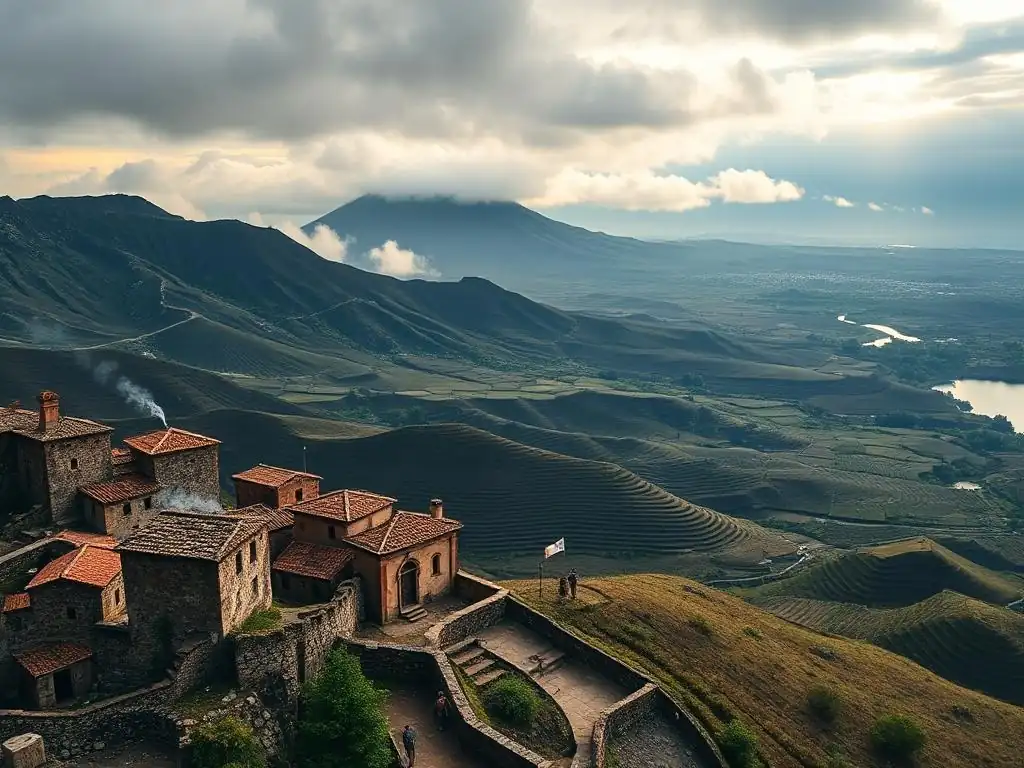
The history of Mount Etna eruptions is inextricably linked to the agricultural fortunes of medieval Sicily. Agriculture formed the backbone of the island's economy, and the fertile volcanic soils of Etna’s flanks were highly valued for cultivation. However, this agricultural prosperity was constantly threatened by volcanic eruptions.
Ashfall, a frequent consequence of Etna’s activity, posed a significant hazard to crops and vineyards. Even relatively thin layers of ash could smother plants, reduce sunlight penetration, and contaminate water sources, leading to crop failures and reduced yields. Thicker ash deposits could cause widespread devastation, burying fields and damaging vineyards for years to come.
Lava flows, while less frequent than ashfall, represented a more complete and long-lasting form of agricultural destruction. When lava flows encroached upon agricultural land, they rendered it unusable for generations, covering fertile soil with barren rock. The destruction of vineyards, olive groves, and grain fields by lava flows could have long-term economic consequences for individual farmers and entire communities.
The recurring impact of Etna's eruptions on agriculture directly threatened food security in medieval Sicily. Crop failures and reduced harvests could lead to food shortages, price increases, and even famine, particularly in vulnerable communities already struggling with poverty or political instability. The history of Mount Etna eruptions is thus deeply intertwined with the cycles of agricultural abundance and scarcity that defined medieval Sicilian life.
Impact on Settlements: Destruction, Relocation, and Adaptation
Medieval settlements on the slopes of Mount Etna and in the surrounding plains faced a constant threat from volcanic eruptions. Lava flows, pyroclastic flows, earthquakes, and heavy ashfall could directly destroy homes, public buildings, and infrastructure. The 1169 Catania earthquake and eruption stands as a stark example of the catastrophic destruction a volcanic event could inflict on a major urban center. Smaller settlements, particularly those located closer to the volcano’s eruptive vents or along drainage paths vulnerable to lava flows, faced even greater risks of complete destruction or abandonment.
In response to volcanic threats, medieval Sicilian communities developed various adaptation strategies. Relocation was sometimes necessary, with settlements being moved to safer locations further away from the volcano or to higher ground less vulnerable to lava flows. However, relocation could be disruptive and costly, requiring the rebuilding of homes, infrastructure, and agricultural systems.
Adaptation also involved building techniques designed to mitigate volcanic hazards (discussed further below) and developing social and economic resilience to cope with the aftermath of eruptions. The history of Mount Etna eruptions is punctuated by episodes of settlement destruction, relocation, and the gradual development of adaptation strategies that allowed communities to persist in a volcanically active environment.
Religious and Cultural Responses to Volcanic Activity
Saints and Patronage: Appealing to Divine Intervention
In medieval Sicily, as in many pre-modern societies, natural disasters like volcanic eruptions were often interpreted through a religious lens. Volcanic activity was seen as a manifestation of divine power, either as punishment for sins or as a test of faith. In the face of the unpredictable and destructive force of Etna, medieval Sicilians turned to religious practices and beliefs for solace, protection, and explanations. Appealing to divine intervention through prayer, processions, and the veneration of saints became a common response to volcanic crises.
Specific saints were invoked as protectors against volcanic hazards, reflecting a localized form of patronage. Saint Agatha, the patron saint of Catania, became particularly associated with protection from Etna. Legend held that her veil miraculously stopped a lava flow from reaching Catania in 252 AD.
This legend solidified her role as a protector against volcanic eruptions, and her intercession was frequently sought during times of volcanic crisis. Other saints, such as Saint Lucy and Saint Euplius, also held local significance as protectors and were invoked in prayers and rituals aimed at mitigating the effects of Etna's wrath. The history of Mount Etna eruptions is thus interwoven with the religious beliefs and practices of medieval Sicilians, who sought divine protection in the face of natural forces they could not fully understand or control.
Folklore and Legends: Etna in Medieval Sicilian Mythology
Beyond formal religious practices, volcanic activity also shaped folklore and legends in medieval Sicily. Mount Etna itself became a central figure in local mythology, imbued with supernatural qualities and associated with powerful mythical beings. Legends arose to explain the volcano's origins, its eruptions, and the forces believed to be at play within its depths. These stories often blended Christian beliefs with older pagan traditions, reflecting the syncretic nature of medieval Sicilian culture.
One prominent legend associated Etna with the workshop of Vulcan, the Roman god of fire and blacksmithing. The volcano's fiery eruptions were interpreted as the workings of Vulcan and his cyclopes forging weapons within the mountain. Other legends attributed Etna's activity to giants or demons imprisoned beneath the volcano, whose struggles caused earthquakes and eruptions.
These folklore narratives served to make sense of the seemingly chaotic and unpredictable nature of volcanic activity, providing cultural frameworks for understanding and coping with the volcanic environment. The history of Mount Etna eruptions is not only a geological and historical record but also a source of rich folklore and mythology that reflects the enduring human fascination and fear of this powerful natural phenomenon.
Volcanic Hazards and Medieval Sicilian Adaptation Strategies
Building Techniques: Mitigating the Effects of Earthquakes and Ashfall
Medieval Sicilians living in the shadow of Mount Etna developed building techniques aimed at mitigating the effects of earthquakes and ashfall, two of the most common volcanic hazards. Earthquakes, often associated with volcanic activity, posed a significant threat to structures. Medieval builders in seismic zones employed techniques to enhance structural stability, such as using flexible building materials like wood in combination with stone or brick.
Buildings were often constructed with thicker walls at the base, tapering towards the top, and with smaller openings to improve resistance to seismic forces. The use of arches and vaults, common in medieval architecture, also contributed to structural integrity.
To cope with ashfall, which could accumulate to significant depths and cause roofs to collapse, medieval buildings often featured steeply pitched roofs designed to shed ash more readily. Roofs were constructed with robust timber frames and covered with durable materials like tiles or stone slabs. Regular maintenance to remove accumulated ash from roofs was also likely a common practice.
While medieval building techniques were not as sophisticated as modern earthquake-resistant engineering, they represent practical adaptations developed through generations of experience living with volcanic hazards. The history of Mount Etna eruptions prompted the evolution of construction practices designed to enhance safety and resilience in a seismically and volcanically active region.
Resource Management: Utilizing Volcanic Materials
Despite the destructive potential of volcanic eruptions, medieval Sicilians also learned to utilize volcanic materials as valuable resources. Volcanic rocks, such as basalt and lava stone, were abundant and readily available building materials. These materials were durable, resistant to weathering, and provided excellent insulation, making them ideal for constructing houses, walls, roads, and fortifications. The black volcanic stone became a characteristic feature of local architecture in the Etna region.
Volcanic ash, while initially destructive, was recognized for its long-term benefits to soil fertility. Over time, weathered volcanic ash enriches the soil with minerals, contributing to the renowned fertility of the Etna region's agricultural lands. Medieval farmers understood this, even if not scientifically, and likely incorporated ash into their agricultural practices.
Furthermore, volcanic materials like pumice and scoria could be used for insulation, abrasives, and other practical purposes. The history of Mount Etna eruptions is not just a story of destruction and hazard, but also one of resourcefulness and adaptation, with medieval Sicilians learning to harness the very products of volcanic activity to their benefit.
Community Resilience: Strategies for Coping with Disaster
Beyond physical adaptations, medieval Sicilian communities developed social and economic strategies to enhance their resilience to volcanic disasters. Strong community bonds and social networks played a crucial role in disaster preparedness and response. During times of crisis, communities relied on mutual support, sharing resources, providing shelter, and assisting in recovery efforts. Religious institutions, such as monasteries and churches, often served as centers of refuge and aid distribution.
Economic diversification may have also been a strategy for reducing vulnerability. While agriculture was dominant, medieval Sicilian economies often included crafts, trade, and other activities that could provide alternative sources of income in times of agricultural disruption. Furthermore, the collective memory of past volcanic events, passed down through oral traditions and written chronicles, served as a form of knowledge and preparedness.
Stories of past eruptions, their impacts, and the lessons learned helped shape community awareness of volcanic hazards and informed adaptation strategies. The history of Mount Etna eruptions demonstrates the importance of community resilience, social cohesion, and collective memory in enabling societies to cope with long-term natural hazards.
Comparing Etna's Medieval Eruptions with Other Volcanic Events of the Time
Etna vs. Other European Volcanoes: Comparison with Vesuvius and Stromboli
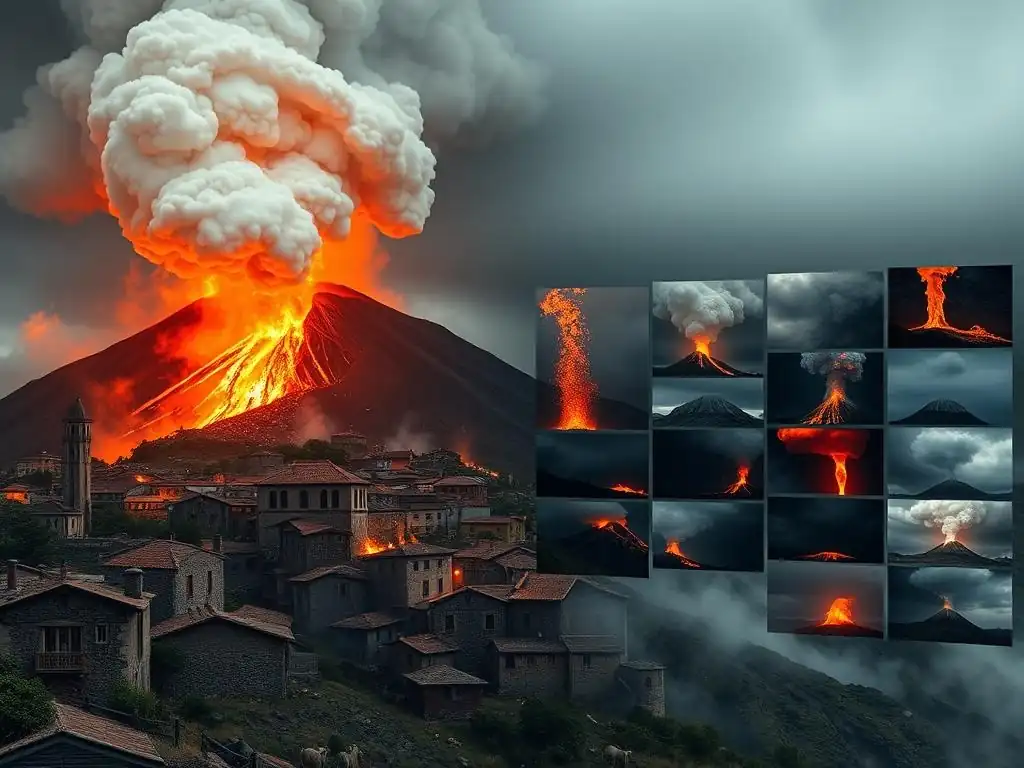
To better understand the history of Mount Etna eruptions within a broader European context, it is helpful to compare its activity with that of other notable volcanoes active during the medieval period, such as Vesuvius in Italy and Stromboli, also in Italy. Vesuvius, famous for its catastrophic eruption in 79 AD that buried Pompeii and Herculaneum, was relatively less active during the medieval period compared to Etna.
While Vesuvius experienced some eruptions, they were generally smaller and less frequent than Etna's. The medieval history of Vesuvius is less punctuated by large-scale destructive events, although it remained a volcano of concern for nearby populations.
Stromboli, another Italian volcano, is characterized by persistent, Strombolian-type eruptions, involving frequent small explosions and lava flows. Stromboli has been almost continuously active for centuries, including the medieval period. However, Stromboli's eruptions are typically smaller in scale and less destructive than the larger, more explosive eruptions of Etna.
Stromboli's activity is more of a constant background hazard, while Etna presents a more variable pattern, with periods of relatively quiet activity interspersed with larger, more impactful eruptions. Compared to both Vesuvius and Stromboli, Etna stands out for its combination of frequent activity, large explosive eruptions, and significant lava flows during the medieval period, making it a particularly dynamic and impactful volcano in the European context. The history of Mount Etna eruptions is thus distinctive in its scale and frequency compared to its European volcanic counterparts in the Middle Ages.
Global Context: Iceland's Hekla and Other Notable Eruptions
Expanding the comparison beyond Europe, considering volcanic activity in a global context during the medieval period further illuminates the history of Mount Etna eruptions. Iceland's volcano Hekla, for example, was highly active during the Middle Ages, experiencing several large and impactful eruptions. The 1104 eruption of Hekla is particularly notable, being one of Iceland's largest and most destructive historical eruptions. This eruption, and others from Hekla during the medieval period, released vast quantities of tephra and had significant environmental and societal consequences in Iceland.
Other notable volcanic eruptions globally during the medieval period include events in Japan, Indonesia, and the Americas. The precise dating and documentation of some of these eruptions can be challenging, but geological and historical evidence points to significant volcanic activity in various parts of the world. Comparing Etna's medieval eruptions to these global events reveals that while Etna was a significant and active volcano in Europe, it was part of a broader pattern of heightened volcanic activity worldwide during certain periods of the Middle Ages.
Factors such as climate change and tectonic plate movements may have contributed to periods of increased global volcanism. The history of Mount Etna eruptions, when viewed in a global context, is part of a larger story of medieval volcanic activity and its impact on societies and environments across the planet.
Lessons from the Past: Understanding Etna's Activity for Future Preparedness
Analyzing Medieval Records: Insights for Modern Volcanology
Analyzing medieval records of Mount Etna eruptions, despite their limitations in scientific detail, offers valuable insights for modern volcanology and hazard assessment. These historical accounts provide a long-term perspective on Etna's eruptive behavior, extending the record of volcanic activity far beyond the period covered by modern instrumental monitoring. Medieval chronicles can help identify patterns in eruption frequency, intensity, and style over centuries, informing our understanding of Etna's long-term eruptive cycles and potential future behavior.
Historical descriptions of eruption impacts, such as the extent of ashfall, lava flow paths, and earthquake damage, provide crucial data for hazard mapping and risk assessment. By studying past eruptions, volcanologists can better delineate areas at risk from different volcanic hazards and improve predictions of potential future impacts. Furthermore, medieval records offer insights into societal responses to volcanic crises, including adaptation strategies, community resilience, and the long-term social and economic consequences of eruptions.
This historical perspective complements modern scientific data, enriching our understanding of the complex interplay between Mount Etna and human society. The history of Mount Etna eruptions, as documented in medieval records, is thus a valuable resource for enhancing modern volcanological knowledge and improving volcanic hazard preparedness.
Modern Monitoring Techniques: Combining History with Science
Modern volcanology employs a sophisticated array of monitoring techniques to track volcanic activity in real-time, providing crucial data for eruption forecasting and hazard mitigation. Seismic monitoring networks detect earthquakes and volcanic tremor, indicating magma movement and potential eruptive activity. Ground deformation measurements, using GPS and satellite-based methods, track changes in the volcano's shape, signaling magma inflation or deflation. Gas monitoring instruments measure volcanic gas emissions, providing insights into magma degassing and potential eruptive style. Thermal monitoring, using infrared cameras and satellite data, detects temperature changes on the volcano, indicating lava effusion or increased heat flow.
Combining these modern monitoring techniques with the historical record of Mount Etna eruptions provides a powerful approach to volcanic hazard assessment. Historical data helps contextualize current monitoring signals, allowing volcanologists to interpret real-time data within a longer-term perspective of Etna's eruptive history. For example, understanding the frequency and intensity of past eruptions helps assess the significance of current seismic activity or ground deformation.
Integrating historical records with modern monitoring enhances our ability to forecast eruptions, assess volcanic hazards, and develop effective strategies for mitigating volcanic risk. The history of Mount Etna eruptions, combined with cutting-edge science, forms the basis for informed volcanic hazard management in the region.
The Importance of Community Preparedness: Learning from Medieval Strategies
Studying the history of Mount Etna eruptions and medieval Sicilian responses to volcanic crises underscores the enduring importance of community preparedness in mitigating volcanic risk. Medieval communities, despite lacking modern scientific understanding and technology, developed effective adaptation strategies based on experience, local knowledge, and social cohesion. Building techniques, resource management practices, and strong community networks all contributed to their resilience in the face of volcanic hazards.
Modern volcanic risk management can learn valuable lessons from these medieval strategies. Community-based preparedness programs, involving local populations in hazard awareness, evacuation planning, and emergency response, are crucial for effective risk reduction. Integrating local knowledge and traditional adaptation strategies with modern scientific information can enhance the effectiveness of preparedness efforts.
Furthermore, fostering community resilience through social networks, economic diversification, and robust infrastructure is essential for long-term recovery and adaptation to volcanic hazards. The history of Mount Etna eruptions highlights that while scientific monitoring and technological advancements are vital, community preparedness and resilience remain fundamental pillars of volcanic risk management, echoing lessons learned from medieval Sicilian experiences.
Conclusion: Etna's Enduring Legacy and the History of Mount Etna Eruptions
Reflecting on the Relationship Between Etna and Sicilian Society
The history of Mount Etna eruptions is a narrative deeply intertwined with the history of Sicilian society. For centuries, Etna has been both a source of life and a force of destruction, shaping the island's landscape, economy, culture, and the very lives of its inhabitants. The fertile volcanic soils have sustained agriculture and enabled settlement, while eruptions have repeatedly challenged communities with destruction and disruption. Medieval Sicilian society developed a complex relationship with Etna, marked by both adaptation and resilience, fear and fascination, religious interpretation and practical resourcefulness.
The history of Mount Etna eruptions during the Middle Ages reveals a society constantly negotiating its existence in a volcanically active environment. Medieval Sicilians developed strategies to mitigate volcanic hazards, utilize volcanic resources, and cope with the social and economic consequences of eruptions. Their religious beliefs and folklore reflected their understanding and interpretation of volcanic power.
This enduring relationship between Etna and Sicilian society continues to this day, with modern communities still living in the shadow of the volcano, benefiting from its fertile lands while remaining vigilant to its potential hazards. The history of Mount Etna eruptions is therefore not just a geological record, but a vital chapter in the ongoing story of human interaction with a powerful and dynamic natural force.
The Continuing Importance of Volcanic Research and Preparedness
Understanding the history of Mount Etna eruptions is not merely an academic exercise; it is of critical importance for contemporary volcanic research and preparedness efforts. The lessons learned from past eruptions, both in terms of volcanic behavior and societal responses, are essential for informing modern hazard assessments, eruption forecasting, and risk mitigation strategies. Continued research into Etna's eruptive history, combining historical records with geological data and modern monitoring techniques, is crucial for improving our understanding of this complex and dynamic volcano.
Furthermore, ongoing community preparedness efforts are paramount for reducing volcanic risk in the Etna region. Drawing upon the historical lessons of medieval Sicilian resilience, modern preparedness programs must emphasize community engagement, local knowledge, and robust social and economic strategies for coping with volcanic crises.
Investing in volcanic monitoring, hazard mapping, and public education remains essential for protecting communities living in the shadow of Etna. The history of Mount Etna eruptions serves as a constant reminder of the volcano's enduring power and the continuing need for vigilance, research, and preparedness to ensure the safety and well-being of future generations in Sicily.
Frequently Asked Questions
What makes Mount Etna so historically significant in terms of volcanic eruptions?
Mount Etna's significance lies in its long and documented history of eruptions, stretching back millennia. These eruptions have profoundly impacted Sicilian life and culture, making it a key site for volcanological study.
How did medieval eruptions of Mount Etna affect the people of Sicily?
Medieval eruptions brought widespread destruction, often burying villages and farmland under lava flows and ash. These events caused significant economic hardship and loss of life for the inhabitants of Sicily.
What kind of information can VolcanoExplorers.org provide about Etna's eruptions?
VolcanoExplorers.org offers educational content about the science behind Etna's volcanic activity, including the types of eruptions and their impacts. You can also find historical accounts of major eruptions and their effects on the surrounding areas.
Does VolcanoExplorers.org offer advice for people living near active volcanoes like Etna?
Yes, the site provides safety guides and evacuation tips specifically designed for those living near active volcanoes. This includes information on monitoring volcanic activity and preparing for potential eruptions.
Beyond the science, does VolcanoExplorers.org explore the cultural significance of volcanoes like Mount Etna?
Absolutely! The site celebrates the beauty and cultural significance of volcanoes, featuring photography, travel information, and exploring their role in local traditions and beliefs. Mount Etna holds a special place in Sicilian folklore and history.
Final Reflection: Echoes of Fire and Resilience
The narrative of Mount Etna's eruptions, as we've explored through centuries of Sicilian life, isn't just a historical account; it's a living testament to the enduring power of nature and the unyielding spirit of humanity. The echoes of medieval eruptions still resonate today, shaping the landscape, influencing cultural traditions, and reminding us of the constant interplay between creation and destruction.
The history of Etna is more than just dates and lava flows; it's a story etched onto the very soul of Sicily. It's a story of adaptation, resilience, and a deep, almost spiritual connection to a landscape both beautiful and terrifying. The mountain has shaped their identity, their livelihoods, and their very understanding of the world. The mountain gives, and the mountain takes away,
a Sicilian proverb whispers, encapsulating the complex relationship between the people and their fiery neighbor.
Now, as we close this chapter on Etna's medieval wrath, let us carry forward the lessons learned. Let us remember the resilience of those who rebuilt their lives amidst the ashes, the ingenuity of those who harnessed the mountain's power, and the unwavering spirit that refused to be extinguished. Consider how you, too, can find strength in the face of adversity, learn from the past, and build a future that honors both the power of nature and the indomitable spirit of humanity.
Ignite Your Inner Volcanologist!
Thank you for delving into the fascinating history of Mount Etna and its impact on Sicilian life. We hope you've gained a deeper appreciation for the power and influence of this incredible volcano. Now, let's put that knowledge into action!
Here are a few ways to connect with Etna's legacy and contribute to our understanding of volcanoes:
- Plan a future visit to witness Etna's majesty firsthand and support local Sicilian communities impacted by its activity.
- Explore our website, VolcanoExplorers.org, to discover hidden historical eruption reports and contribute your own insights.
- Share this article with your fellow history buffs and volcano enthusiasts – spread the word about Etna's captivating story!
Which of Etna's eruption stories captivated you the most, and what questions do you still have about its fiery past? We would love to hear your thoughts in the comments!