
Art in the Ash: Creative Responses to Volcanic Devastation

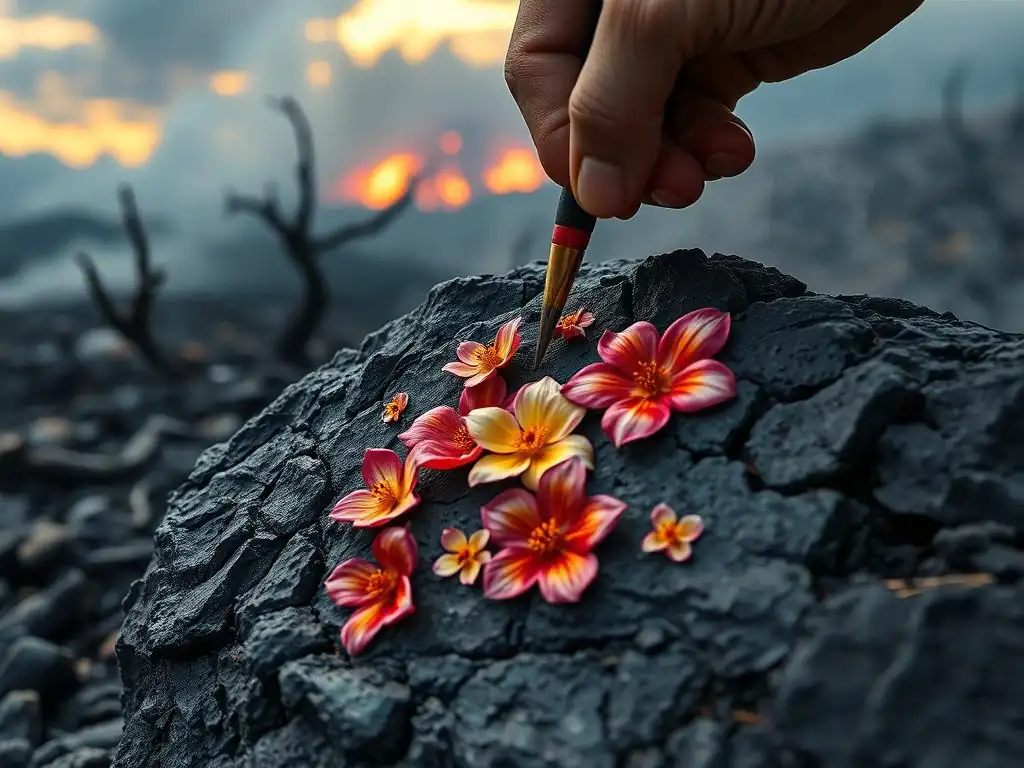
Welcome to Volcano Explorers, where the Earth breathes fire and the landscape tells tales of immense power. But what happens when that power inspires creation? Prepare to be amazed as we delve into " Art in the Ash: Creative Responses to Volcanic Devastation," a testament to the human spirit's resilience in the face of nature's fury. How have artists found beauty and meaning amidst the chaos of eruptions? Explore the surprising ways volcanoes have ignited the imagination and left an indelible mark on culture.
- Introduction: Volcanic Eruptions as Muse for Artistic Expression
- Famous Eruptions and Their Artistic Echoes
- Volcanic Ash as a Medium: Art from Destruction
- Painting the Apocalypse: Depictions of Volcanic Eruptions
- Photography and Film: Documenting and Interpreting Volcanic Disasters
- Literature and Poetry: Giving Voice to Volcanic Experiences
- Creative Responses in Music and Performance Art
- The Role of Art in Understanding Volcanic Events
- Contemporary Volcanic Art: Innovation and Interpretation
- Conclusion: The Enduring Power of Volcanoes to Inspire Art
- Frequently Asked Questions
- Final Reflection: The Enduring Flame of Creativity
- Ignite Your Inspiration: Transform Disaster into Discovery!
Introduction: Volcanic Eruptions as Muse for Artistic Expression
The Intersection of Volcanic Fury and Artistic Inspiration
Volcanoes, in their raw and untamed power, represent a duality that has captivated humanity for millennia: destruction and creation. This inherent paradox forms the crux of why volcanic eruptions serve as such potent muses for artistic expression. The sheer force of nature on display during an eruption – the earth trembling, molten rock spewing skyward, and landscapes being reshaped in dramatic fashion – evokes a sense of awe and terror.
This profound emotional impact naturally spills over into artistic endeavors, prompting creators to grapple with these experiences and translate them into tangible forms. From ancient myths attributing volcanic activity to divine wrath to modern art installations exploring the science behind eruptions, the intersection of volcanic fury and artistic inspiration is a rich and enduring one.
The artistic response to volcanoes is not merely about documenting destruction; it's about exploring the complex relationship between humanity and the overwhelming power of nature. Artists, in various mediums, attempt to make sense of the chaos, find beauty in the devastation, and even draw lessons from these earth-shattering events. Volcanic eruptions can be seen as a violent act of creation, birthing new landforms and altering ecosystems.
This transformative power resonates deeply with artists, who themselves are engaged in processes of creation and transformation. The resulting art becomes a bridge between the terrifying reality of volcanic events and the human need to understand, interpret, and ultimately, find meaning within them.
Exploring the Power of Volcanic Events on Human Creativity
The power of volcanic events to ignite human creativity stems from several key factors. Firstly, the visual spectacle of an eruption is undeniably dramatic and awe-inspiring. The vibrant colors of lava flows, the towering plumes of ash and gas, and the dramatic reshaping of the landscape provide a wealth of visual stimuli. Consider the fiery glow against the night sky, the contrasting textures of smooth lava and jagged volcanic rock, and the sheer scale of the geological forces at play. These elements offer artists a powerful palette and subject matter unlike any other natural phenomenon.
Beyond the visual, volcanic eruptions evoke a profound emotional response, ranging from fear and vulnerability to awe and wonder. This intense emotional landscape is fertile ground for artistic exploration. Artists often use volcanic events as metaphors for human experiences, such as inner turmoil, societal upheaval, or the cyclical nature of life and death.
The destruction wrought by volcanoes can be seen as a blank canvas for renewal and rebirth, a concept that resonates deeply with human experiences of loss and recovery. Moreover, the scientific mysteries surrounding volcanoes – the unseen forces churning deep within the Earth – also spark curiosity and inspire artistic interpretations that blend scientific understanding with imaginative expression.
Famous Eruptions and Their Artistic Echoes
Pompeii and Herculaneum: Preserved in Ash, Immortalized in Art
The eruption of Mount Vesuvius in 79 AD, which buried the Roman cities of Pompeii and Herculaneum, is perhaps the most iconic example of a volcanic event leaving an indelible mark on art and culture. The sudden and catastrophic nature of the eruption, which effectively froze these cities in time under layers of ash and pumice, paradoxically preserved an extraordinary snapshot of Roman daily life.
This preservation, tragically born from devastation, has become a profound source of artistic and historical inspiration for centuries. The rediscovery of Pompeii in the 18th century ignited a wave of Neoclassical art and sparked renewed interest in Roman antiquity across Europe.
The artifacts unearthed from Pompeii and Herculaneum, from frescoes and mosaics to sculptures and everyday objects, have profoundly influenced artistic styles and techniques. The vibrant colors and detailed depictions of Roman life found in Pompeian frescoes, for instance, offered artists a direct window into the aesthetics and culture of the Roman Empire.
Furthermore, the very concept of Pompeii as a city frozen in time, a moment captured forever by volcanic ash, became a powerful symbol in art and literature. It represents both the fragility of human existence and the enduring power of nature, themes that continue to resonate in artistic expressions inspired by volcanic events.
Mount Vesuvius' Impact on Roman Art and Literature
Even before the catastrophic eruption of 79 AD, Mount Vesuvius and its volcanic nature influenced Roman art and literature. While dormant for centuries prior to the eruption, the mountain’s imposing presence and the fertile volcanic soil surrounding it were recognized and depicted in Roman art. Frescoes and mosaics from the region sometimes feature representations of Vesuvius, often as a backdrop to idyllic landscapes, unaware of the dormant danger it concealed. This pre-eruption artistic depiction highlights the Roman appreciation for the landscape, even in the shadow of a volcano, and underscores the dramatic shift in perspective after the eruption.
In Roman literature, particularly after 79 AD, Vesuvius became a symbol of both destruction and the power of nature. Pliny the Younger's detailed letters describing the eruption, written to the historian Tacitus, are not only invaluable historical documents but also works of literature in themselves.
His vivid descriptions of the eruption's phases, the panic of the people, and the tragic deaths, have served as inspiration for writers and artists for centuries. The eruption of Vesuvius entered the Roman collective consciousness and became a potent narrative, shaping artistic and literary responses to natural disasters and the unpredictable forces of the world.
The Artistic Legacy of the 1980 Mount St. Helens Eruption
The 1980 eruption of Mount St. Helens in Washington State, USA, though occurring in modern times, also left a significant artistic legacy. Unlike Pompeii, which was preserved under ash, the Mount St. Helens eruption was characterized by a massive lateral blast that devastated a vast area, leaving behind a starkly altered landscape. This dramatic transformation, witnessed and documented in real-time by a global audience through media, sparked a different kind of artistic response, one focused on ecological devastation, resilience, and the long process of natural recovery.
Artists responded to the Mount St. Helens eruption in diverse ways, from documentary photography capturing the immediate aftermath to land art projects exploring the process of ecological regeneration. Photographers like Robert Landsburg, who tragically perished while documenting the eruption, captured stunning and scientifically valuable images of the unfolding event.
In the years following, artists have explored the theme of ecological succession, using the recovering landscape of Mount St. Helens as a living laboratory and a symbol of nature's capacity for renewal even after catastrophic events. The eruption also inspired writers, musicians, and filmmakers to create works reflecting on the power of nature, the fragility of ecosystems, and the complex relationship between human activity and the environment.
Volcanic Ash as a Medium: Art from Destruction
Creating Art Directly from Volcanic Materials
Volcanic ash, the seemingly destructive byproduct of eruptions, can be transformed into a unique and compelling artistic medium. Artists around the world, particularly in volcanic regions, have embraced volcanic ash as a readily available and symbolically charged material. The very act of creating art from volcanic ash is a powerful statement, transforming the remnants of destruction into objects of beauty and expression. This practice also connects artists directly to the geological processes shaping their environment, grounding their work in the tangible reality of volcanic activity.
The properties of volcanic ash – its fine texture, mineral composition, and often varied colors – lend themselves to diverse artistic techniques. Ash can be mixed with binders to create paints, glazes, and clays. Its abrasive quality can be utilized in etching and textural effects.
The natural pigments present in volcanic ash, derived from different minerals, offer a unique palette of earthy tones and subtle hues, distinct from commercially produced pigments. This use of local materials not only reduces reliance on external resources but also imbues the artwork with a strong sense of place and identity, directly linked to the volcanic landscape.
Sculptures and Ceramics Using Volcanic Ash
Sculptures and ceramics are particularly well-suited to the use of volcanic ash as a medium. The ash can be incorporated into clay bodies to alter their working properties, firing characteristics, and final aesthetics. Adding volcanic ash to clay can affect its plasticity, making it more or less workable, and can also influence its shrinkage and warping during firing. The mineral content of the ash can also react with glazes, creating unique surface effects and color variations.
Volcanic ash ceramics often exhibit a distinctive earthy texture and color palette, reflecting the natural tones of the volcanic landscape. Artists may choose to emphasize the textural qualities of the ash, leaving it unglazed or partially glazed to showcase its raw beauty.
Sculptures made with volcanic ash can range from representational forms inspired by volcanic landscapes to abstract works exploring the themes of creation and destruction. The use of this material imbues these artworks with a tangible connection to the volcanic environment, making them more than just aesthetic objects; they become embodiments of the geological forces that shaped their very substance.
The Unique Texture and Aesthetics of Volcanic Art
Volcanic art, created using ash and other volcanic materials, possesses a unique texture and aesthetic that distinguishes it from art made with conventional materials. The texture of volcanic ash itself, ranging from fine powder to coarser particles, can be manipulated to create diverse surface effects in paintings, ceramics, and sculptures. This inherent texture adds a tactile dimension to the artwork, inviting viewers to not only see but also imagine the feel of the volcanic material.
Aesthetically, volcanic art often evokes a sense of rawness, earthiness, and connection to primordial forces. The colors derived from volcanic ash tend to be muted and natural, reflecting the tones of volcanic landscapes – grays, browns, blacks, and ochres. This palette contrasts with the vibrant and often artificial colors of synthetic pigments, grounding volcanic art in a more natural and geological context. The use of volcanic materials also imbues the artwork with a symbolic weight, representing the power of nature, the cyclical processes of creation and destruction, and the enduring presence of geological forces in shaping our world.
Painting the Apocalypse: Depictions of Volcanic Eruptions
Landscape Painting and the Sublime Power of Volcanoes
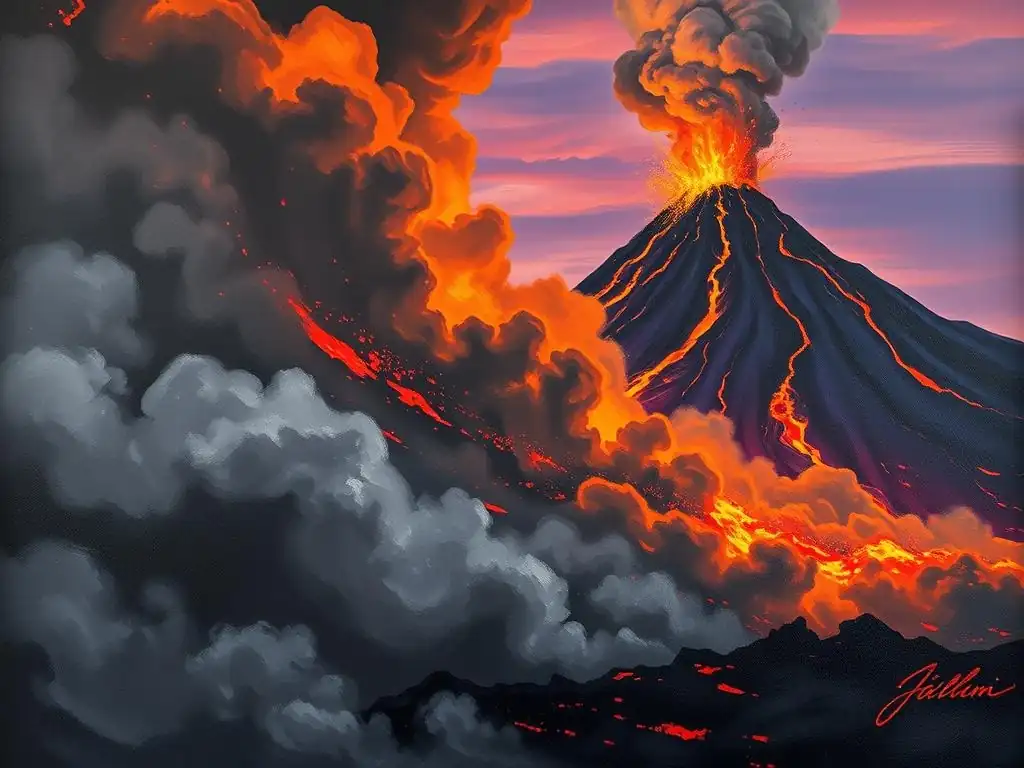
Landscape painting, particularly in the 18th and 19th centuries, became a powerful medium for depicting the sublime power of volcanoes. The concept of the sublime, emphasizing awe-inspiring and overwhelming natural phenomena, resonated strongly with the dramatic and terrifying spectacle of volcanic eruptions. Painters sought to capture not only the visual aspects of eruptions – the lava flows, ash plumes, and smoke – but also the emotional impact, the sense of terror and wonder that volcanoes evoked.
Volcanoes, in their immense scale and destructive potential, perfectly embodied the sublime. Landscape painters used techniques like dramatic lighting, contrasting colors, and exaggerated perspectives to convey the overwhelming power of volcanic forces.
The fiery glow of lava against a dark sky, the towering plumes of ash dwarfing human figures, and the chaotic, dynamic compositions all contributed to creating a sense of awe and fear in the viewer. These paintings were not merely topographical records; they were artistic interpretations of the sublime, aiming to evoke a powerful emotional response and to contemplate humanity's place in the face of such immense natural forces.
18th and 19th Century Paintings of Erupting Volcanoes
The 18th and 19th centuries witnessed a surge in paintings depicting erupting volcanoes, coinciding with the Romantic movement and its fascination with nature's dramatic and untamed aspects. Artists like Joseph Wright of Derby, with his dramatic depictions of Vesuvius erupting at night, and J.M.W. Turner, who captured the fiery spectacle of volcanic eruptions in his dynamic and atmospheric style, are prominent examples of this trend. These paintings were often based on firsthand accounts, sketches, and even engravings of volcanic eruptions, circulated widely through printed media.
These volcanic paintings served multiple purposes. They catered to the public's fascination with the exotic and dangerous, offering vicarious experiences of natural disasters. They also reflected the scientific interest in volcanology that was growing during this period. Furthermore, these paintings explored philosophical themes related to the sublime, the power of nature, and the relationship between humanity and the environment. They became powerful visual statements, capturing the awe and terror of volcanic eruptions and contributing to the cultural understanding and perception of these natural phenomena.
Capturing the Drama and Fear of Volcanic Events on Canvas
Painters depicting volcanic eruptions faced the challenge of translating a dynamic, multi-sensory event onto a static, two-dimensional canvas. To capture the drama and fear of volcanic events, artists employed various techniques. Dramatic lighting, often contrasting the fiery glow of lava with the darkness of night or the somber tones of ash clouds, was crucial in creating a sense of visual drama. Dynamic compositions, with swirling brushstrokes and diagonal lines, conveyed the movement and energy of the eruption.
Color palettes were carefully chosen to evoke the emotional atmosphere of volcanic events. Fiery reds, oranges, and yellows represented the heat and intensity of lava and flames, while dark blues, grays, and blacks conveyed the smoke, ash, and sense of foreboding. The inclusion of human figures, often depicted as small and vulnerable in the face of the immense volcanic forces, emphasized the human experience of fear and helplessness. Through these artistic techniques, painters successfully captured not just the visual spectacle of volcanic eruptions but also the profound emotional impact and the sense of awe and terror they inspired.
Photography and Film: Documenting and Interpreting Volcanic Disasters
Volcanic Photography: From Scientific Record to Artistic Expression
Photography, since its invention, has played a crucial role in documenting volcanic eruptions, evolving from primarily a scientific tool to also become a powerful medium for artistic expression. Early volcanic photography, often undertaken by scientists and explorers, focused on capturing topographical details, geological formations, and the stages of eruptions for scientific study. These photographs served as invaluable records, providing visual data for analysis and understanding volcanic processes.
As photographic technology advanced and artistic sensibilities evolved, volcanic photography transcended its purely documentary function. Photographers began to explore the aesthetic and emotional dimensions of volcanic landscapes and eruptions. They captured the dramatic beauty of lava flows, the ethereal quality of ash plumes, and the stark contrast between destruction and resilience in volcanic environments. Volcanic photography became a powerful form of visual storytelling, conveying not just scientific information but also the awe, terror, and wonder associated with these natural phenomena.
Volcanic Photographers and Their Work
Numerous photographers have dedicated their careers to documenting and artistically interpreting volcanoes. From early pioneers capturing black and white images on glass plates to contemporary photographers using digital technology and aerial perspectives, volcanic photographers have contributed significantly to our understanding and perception of volcanoes. Names like Katia and Maurice Krafft, the French volcanologists and filmmakers whose dramatic footage and photographs captured the public imagination, are synonymous with volcanic imagery.
Contemporary volcanic photographers continue to push the boundaries of the medium, utilizing drone technology to capture unprecedented perspectives, employing time-lapse techniques to reveal the slow yet powerful forces of geological change, and experimenting with infrared and other specialized photographic methods to reveal hidden aspects of volcanic activity. Their work not only provides scientific data and documentation but also shapes public perception, raises awareness about volcanic hazards, and inspires awe and appreciation for the power and beauty of volcanoes.
Film and Documentaries: Narratives of Survival and Resilience in Volcanic Zones
Film and documentaries have proven to be particularly effective in conveying the dynamic nature of volcanic eruptions and exploring the human experience in volcanic zones. Moving images can capture the full sensory impact of an eruption – the flow of lava, the plumes of ash, the sounds of explosions, and the reactions of people living in volcanic areas. Documentaries, in particular, offer in-depth explorations of volcanic science, hazard mitigation, and the cultural and social impacts of volcanic activity.
Films about volcanoes often focus on narratives of survival and resilience, highlighting the human capacity to adapt and rebuild in the face of volcanic disasters. Documentaries might feature personal stories of individuals and communities affected by eruptions, showcasing their courage, resourcefulness, and connection to their volcanic landscapes. Films can also play a crucial role in educating the public about volcanic hazards, promoting preparedness, and fostering a deeper understanding of these powerful natural phenomena. The combination of visual spectacle, scientific information, and human stories makes film a compelling medium for exploring the multifaceted relationship between humanity and volcanoes.
Literature and Poetry: Giving Voice to Volcanic Experiences
Volcanic Eruptions as Metaphors for Human Emotion and Societal Upheaval
Volcanic eruptions, with their dramatic displays of power and transformation, have long served as potent metaphors in literature and poetry. The violent release of pent-up energy, the destruction of existing structures, and the subsequent creation of new landscapes resonate with human experiences of intense emotion, societal upheaval, and personal transformation. Writers and poets have drawn upon volcanic imagery to explore themes ranging from inner turmoil and emotional outbursts to social revolutions and periods of intense societal change.
The metaphor of the volcano can represent suppressed emotions finally erupting to the surface, mirroring the build-up of pressure within a volcano before an eruption. The destructive power of lava and ash can symbolize the consequences of unchecked anger or societal conflict. Conversely, the fertile volcanic soil and the renewal of ecosystems after an eruption can be seen as metaphors for healing, rebirth, and the potential for positive change after periods of destruction. This metaphorical richness makes volcanoes a versatile and enduring symbol in literary expression.
Poems, Novels, and Plays Inspired by Volcanoes
Volcanoes have inspired a diverse range of literary works, from epic poems and dramatic plays to novels and short stories. Classical literature, for example, includes accounts of volcanic eruptions and mythical interpretations of volcanic activity. Romantic poets, like Percy Bysshe Shelley, incorporated volcanic imagery into their works, using volcanoes to symbolize both the sublime power of nature and the passionate intensity of human emotions.
In modern literature, volcanoes continue to appear as both literal settings and symbolic backdrops. Novels and short stories may explore the lives of people living in volcanic regions, the scientific study of volcanoes, or fictional scenarios involving volcanic eruptions. Plays might use volcanic eruptions as dramatic catalysts, exploring themes of conflict, disaster, and human resilience. The enduring presence of volcanoes in literature demonstrates their continued power to fascinate, inspire, and provide a rich source of metaphorical and narrative possibilities.
Exploring Themes of Loss, Renewal, and the Power of Nature
Literature inspired by volcanoes often grapples with profound themes of loss, renewal, and the overwhelming power of nature. Volcanic eruptions inevitably bring destruction and loss – loss of life, property, and familiar landscapes. Literary works may explore the emotional impact of these losses, the grieving process, and the challenges of rebuilding after devastation.
However, volcanic landscapes are also sites of renewal. Volcanic soil is fertile, and ecosystems eventually regenerate, often in surprising and vibrant ways. Literature can explore this aspect of renewal, highlighting the resilience of nature and the potential for life to emerge even from the ashes of destruction. Ultimately, literary works inspired by volcanoes often serve as reminders of the immense power of nature, a force that is both destructive and creative, awe-inspiring and terrifying, and always capable of reshaping the world and human lives in profound ways.
Creative Responses in Music and Performance Art
Soundscapes of Volcanoes: Music Inspired by Volcanic Activity
The sounds associated with volcanoes – the rumbling, explosions, hissing steam vents, and the crackling of lava – offer a rich palette of sonic textures that have inspired musicians and sound artists. Volcanic soundscapes can range from the deep, earth-shaking rumbles of subterranean activity to the high-pitched hisses of escaping gases. These sounds, both terrifying and fascinating, have been incorporated into musical compositions and sound installations, aiming to evoke the atmosphere and power of volcanic environments.
Musicians might use recordings of actual volcanic sounds, either directly or manipulated and processed, to create immersive soundscapes. They might also use traditional musical instruments to imitate or interpret volcanic sounds, employing techniques to create rumbling bass notes, percussive explosions, and melodic lines that suggest the flow of lava or the movement of ash clouds. The goal is often to create an auditory experience that is both aesthetically compelling and evocative of the raw power and dynamic nature of volcanoes.
Various musical compositions and performances have been directly inspired by volcanoes. Classical composers, for instance, have incorporated volcanic themes into orchestral works, using instrumentation and musical motifs to represent the drama and grandeur of eruptions. Contemporary musicians across genres, from ambient and electronic music to rock and metal, have also explored volcanic themes in their work.
Musical performances related to volcanoes might involve live improvisations using volcanic sounds, multimedia performances combining music with volcanic imagery and video footage, or site-specific performances staged in volcanic landscapes. These performances aim to create a multi-sensory experience, immersing the audience in the sights and sounds of volcanic environments and exploring the emotional and intellectual connections between music and volcanic phenomena. The use of music as a medium allows for a more abstract and emotionally resonant exploration of volcanic themes, moving beyond literal representation to capture the underlying essence and power of volcanoes.
Performance Art and the Embodiment of Volcanic Forces
Performance art offers another avenue for creative responses to volcanoes, allowing artists to physically embody and interpret volcanic forces. Performance artists might use their bodies, movement, and costumes to represent volcanic processes, such as the build-up of pressure, the explosive release of energy, or the flow of lava. These performances can be staged in traditional art spaces or in outdoor environments, sometimes even in volcanic landscapes themselves.
Performance art related to volcanoes can be deeply visceral and symbolic. Artists might use costumes and props made from volcanic materials, incorporate fire and smoke effects, or engage in physically demanding movements to convey the intensity and power of volcanic eruptions. The ephemeral nature of performance art, existing only in the moment of its enactment, can also resonate with the transient and unpredictable nature of volcanic events. Performance art offers a direct and embodied way to engage with volcanic themes, moving beyond visual and auditory representations to explore the physical and emotional experience of volcanic forces.
The Role of Art in Understanding Volcanic Events
Art as a Tool for Communicating the Science and Impact of Volcanoes
Art plays a significant role in communicating the science and impact of volcanoes to a wider audience, bridging the gap between scientific data and public understanding. While scientific reports and data visualizations are essential for scientific research, art can convey the human dimension of volcanic events, making the science more relatable and emotionally engaging. Art can translate complex scientific concepts, such as plate tectonics, magma formation, and eruption dynamics, into more accessible and understandable forms.
Visual art, such as paintings, photographs, and illustrations, can depict volcanic processes in ways that scientific diagrams alone cannot. Film and documentaries can bring volcanic eruptions to life, showing the dynamic nature of these events and their impact on the landscape and human communities. Music and performance art can evoke the atmosphere and emotional impact of volcanoes, creating a deeper sensory understanding. By making volcanic science more accessible and engaging, art can contribute to increased public awareness and understanding of these natural phenomena.
Art Projects that Educate About Volcanic Hazards
Specific art projects have been designed to educate the public about volcanic hazards and promote preparedness in volcanic regions. These projects often combine artistic expression with scientific information, aiming to raise awareness and encourage proactive measures to mitigate risks. Art installations, for example, might use visual metaphors to represent volcanic hazards, such as lava flow paths or ashfall zones. Community-based art projects can involve local populations in creating artwork that reflects their experiences with volcanoes and their knowledge of local hazards.
Educational art projects can take various forms, from public murals depicting evacuation routes to interactive installations simulating the effects of volcanic eruptions. These projects can be particularly effective in engaging younger audiences and communities that may be less familiar with scientific data or traditional forms of hazard communication. By integrating art into hazard education, these projects can make learning more engaging, memorable, and culturally relevant, ultimately contributing to increased community resilience in volcanic areas.
Fostering Empathy and Awareness Through Volcanic Art
Beyond communicating scientific information and hazard awareness, volcanic art can also foster empathy and awareness for the human and environmental impacts of volcanic events. Art can humanize the experience of living with volcanoes, highlighting the challenges, resilience, and cultural adaptations of communities in volcanic regions. By showcasing personal stories, emotional responses, and cultural perspectives, art can create a deeper sense of empathy and understanding for those affected by volcanic activity.
Volcanic art can also raise awareness about the broader environmental impacts of eruptions, from the immediate destruction of ecosystems to the long-term ecological changes that follow. Art can depict the beauty and fragility of volcanic landscapes, emphasizing the importance of environmental stewardship and conservation in these dynamic and often vulnerable regions. By fostering empathy and awareness, volcanic art can contribute to a more nuanced and compassionate understanding of the complex relationship between humanity and volcanoes, promoting both scientific understanding and human connection.
Contemporary Volcanic Art: Innovation and Interpretation
Modern Artists Exploring Volcanic Themes in New Ways
Contemporary artists are continually finding innovative ways to explore volcanic themes, pushing the boundaries of artistic expression and incorporating new technologies and perspectives. Modern artists are not only using traditional mediums like painting and sculpture but also embracing digital art, installation art, land art, and performance art to engage with volcanoes in novel and thought-provoking ways. They are also drawing upon interdisciplinary approaches, combining art with scientific research, environmental activism, and social commentary.
Contemporary volcanic art often reflects current concerns and perspectives, such as climate change, environmental degradation, and the Anthropocene. Artists may explore the role of volcanoes in shaping the Earth's climate and geological history, the impact of human activity on volcanic environments, or the ethical considerations of living in volcanic zones. They may also use volcanic imagery to comment on contemporary social and political issues, using volcanoes as metaphors for societal tensions, environmental crises, or transformative change.
Contemporary Art Installations or Projects
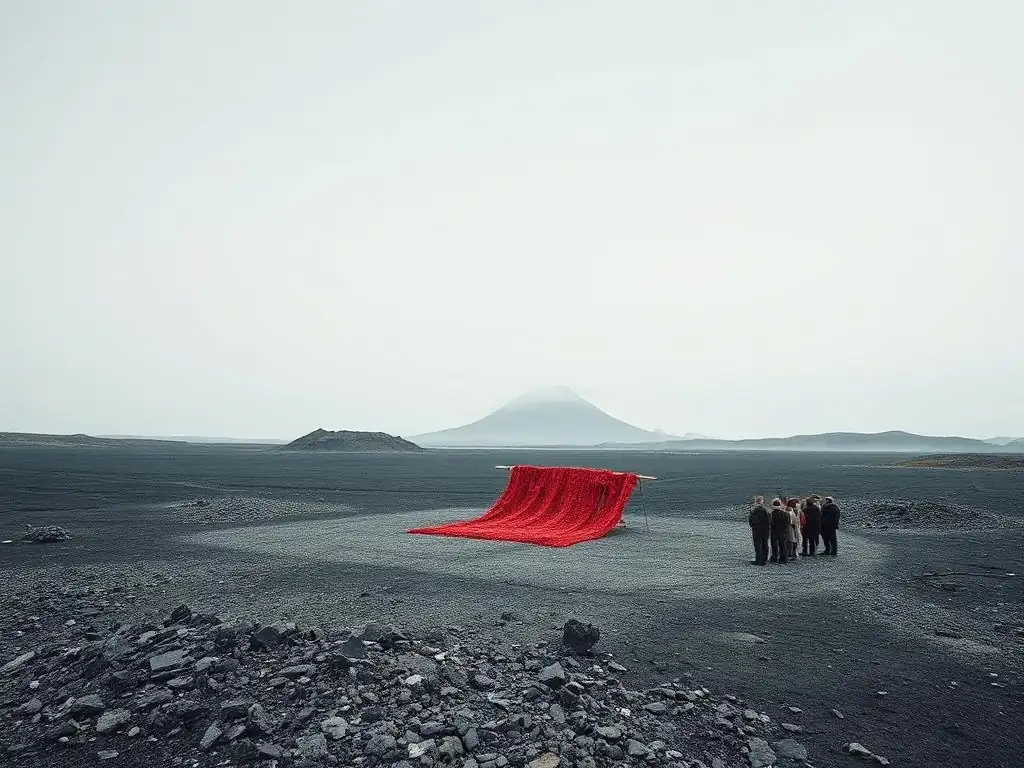
Contemporary art installations and projects offer immersive and often large-scale experiences that explore volcanic themes. Artists are creating installations that simulate volcanic environments, using sound, light, video projections, and even volcanic materials to create sensory-rich environments. These installations can be exhibited in museums, galleries, or even outdoor spaces, offering viewers a direct and visceral encounter with volcanic phenomena.
Land art projects, often created in volcanic landscapes themselves, engage with the geological scale and transformative power of volcanoes. Artists might use natural materials found in volcanic environments to create large-scale sculptures or earthworks that respond to the surrounding landscape. These projects can be ephemeral, changing over time with natural processes, or more permanent, becoming integrated into the volcanic landscape itself. Contemporary art installations and projects expand the possibilities of volcanic art, creating immersive and experiential encounters that deepen our understanding and appreciation of volcanoes.
The Future of Volcanic Art and Creativity
The future of volcanic art and creativity is likely to be characterized by continued innovation, interdisciplinary collaboration, and engagement with emerging technologies. Artists will likely continue to explore new mediums and techniques, incorporating digital technologies, virtual reality, and augmented reality to create even more immersive and interactive volcanic art experiences. Collaboration between artists and scientists is also likely to become increasingly important, leading to art projects that are both aesthetically compelling and scientifically informed.
Volcanic art may also play an increasingly important role in addressing contemporary challenges, such as climate change, environmental sustainability, and disaster preparedness. Artists may use their work to raise awareness about these issues, promote dialogue, and inspire action. The enduring power of volcanoes to inspire awe, fear, and wonder, combined with the ever-evolving landscape of artistic expression, suggests a vibrant and dynamic future for volcanic art and creativity, continuing to shape our understanding and perception of these powerful natural phenomena.
Conclusion: The Enduring Power of Volcanoes to Inspire Art
Volcanic Art and Creativity: A Legacy of Resilience and Innovation
The history of volcanic art and creativity is a testament to the enduring power of volcanoes to inspire human expression across cultures and throughout time. From ancient Roman frescoes preserved by volcanic ash to contemporary art installations exploring the science of eruptions, volcanic events have consistently sparked artistic responses, demonstrating both human resilience in the face of natural disasters and the boundless capacity for creative innovation. Volcanic art is not merely a record of destruction; it is a vibrant expression of human engagement with the powerful forces of nature, transforming fear and awe into beauty and understanding.
The diverse forms of volcanic art – painting, sculpture, photography, film, literature, music, and performance art – reflect the multifaceted nature of human experience with volcanoes. Each medium offers unique ways to interpret and respond to volcanic phenomena, capturing different aspects of their visual spectacle, emotional impact, and scientific significance. This diversity underscores the richness and complexity of the artistic legacy inspired by volcanoes, a legacy that continues to evolve and expand in contemporary art.
The Importance of Art in Understanding and Coping with Volcanic Events
Art plays a crucial role in helping us understand and cope with volcanic events, moving beyond scientific data to engage with the emotional, cultural, and human dimensions of living with volcanoes. Art can communicate the science of volcanology in accessible and engaging ways, raise awareness about volcanic hazards, and promote preparedness in volcanic regions. More importantly, art can foster empathy for those affected by volcanic eruptions, celebrate human resilience, and inspire a deeper appreciation for the power and beauty of the natural world, even in its most destructive forms.
By offering diverse perspectives, evoking emotional responses, and prompting critical reflection, volcanic art enriches our understanding of these complex natural phenomena. It reminds us of our place within a dynamic and powerful Earth system, highlighting both our vulnerability and our capacity for creative adaptation. The ongoing dialogue between art and volcanoes ensures that these awe-inspiring and sometimes terrifying forces of nature will continue to inspire human creativity and shape our understanding of the world around us for generations to come.
Frequently Asked Questions
What types of art have been inspired by volcanic eruptions?
Volcanic eruptions have inspired a wide range of artistic expression, including painting, sculpture using volcanic materials, photography, and even performance art that attempts to capture the raw energy of a volcano.
How can volcanic ash be used in art?
Volcanic ash possesses unique textural and coloring properties. Artists use it to create pigments for painting, glazes for pottery, and even as a direct sculptural medium when mixed with binding agents.
Does living near a volcano influence artists?
Absolutely! Living near a volcano often fosters a deep connection to the landscape and its power. This proximity can result in art that reflects both the destructive potential and the sublime beauty of volcanic activity.
What cultural significance do volcanoes hold for artists worldwide?
For many cultures, volcanoes are considered sacred sites, linked to creation myths or deities. This reverence translates into art that explores themes of renewal, destruction, and the interconnectedness of nature.
Can art help people cope with volcanic disasters?
Yes, art can serve as a powerful tool for processing trauma and fostering resilience in communities affected by volcanic disasters. It allows individuals to express their experiences and reclaim their narrative in the face of devastation and loss.
Final Reflection: The Enduring Flame of Creativity
The preceding exploration of art born from volcanic devastation underscores a profound truth: human creativity is an indomitable force, capable of transforming even the most destructive events into sources of beauty and meaning. The examples we've examined, from ash-infused paintings to sculptures forged from lava rock, are not merely artistic expressions; they are testaments to our resilience and our innate drive to find hope amidst despair. This is especially relevant today, as we face increasing environmental challenges and natural disasters, reminding us of the power of art to heal and inspire.
The impact of volcanic art and creativity extends far beyond the aesthetic. It serves as a powerful reminder of the earth's raw power, our vulnerability within it, and the interconnectedness of humanity and nature. This connection, this understanding, is crucial for fostering empathy and driving sustainable practices. The best and most beautiful things in the world cannot be seen or even touched - they must be felt with the heart.
- Helen Keller. This quote resonates deeply when considering the emotional weight carried by art created in the wake of such profound loss. It's a feeling, a shared experience, that transcends language and culture.
Now, consider the lessons learned from these artists who found inspiration in the face of destruction. How can you, in your own life, transform challenges into opportunities for growth and creation? Let the enduring flame of creativity, ignited by the ashes of devastation, inspire you to find beauty in unexpected places, to embrace resilience, and to contribute to a world where art serves as a beacon of hope and healing. Let the spirit of "volcanic art and creativity" empower you to create, to connect, and to contribute to a more beautiful and resilient future.
Okay, here's a Call to Action (CTA) tailored for the end of a web article titled "Art in the Ash: Creative Responses to Volcanic Devastation" on the website Volcano Explorers (volcanoexplorers.org):
Ignite Your Inspiration: Transform Disaster into Discovery!
Thank you for delving into the powerful intersection of art and resilience in the face of volcanic devastation. We hope you’ve found inspiration in the stories of creativity rising from the ashes. Now, it's your turn to channel that inspiration into action.
Here are a few ways to keep the creative spark alive:
- Share this article with fellow art enthusiasts or anyone seeking stories of hope and human triumph! Let's spread the message of resilience far and wide.
- Explore your own community for overlooked landscapes or forgotten spaces ripe for creative transformation. Maybe there's a neglected park, a drab alleyway, or even just your own backyard waiting to be reimagined through art.
- Challenge yourself to create art using unconventional materials—think found objects, recycled materials, or even natural elements like ash or volcanic rock (ethically sourced, of course!). Could you design a mural made from repurposed waste, or craft a sculpture from volcanic glass?
What small creative step will you take today to turn potential devastation into a source of inspiration?