
Echoes of Eyjafjallajökull: Lessons Learned from the 2010 Air Travel Crisis


Welcome to Volcano Explorers, where the Earth breathes fire! Ever wondered how a single volcano could bring global air travel to its knees? Our latest deep dive into the Eyjafjallajökull travel disruption lessons unearths critical insights from the 2010 eruption, revealing what we've learned and how we can better prepare for the next volcanic tremor. Prepare to be captivated by the power of nature, and join us as we explore the fiery heart of our planet.
- Introduction: Remembering the Eyjafjallajökull Eruption and its Global Impact
- The 2010 Eyjafjallajökull Eruption: A Volcanic Event Overview
- The Unprecedented Air Travel Disruption of 2010
- Key Lessons Learned from the Eyjafjallajökull Travel Disruption
- The Long-Term Impact of Eyjafjallajökull on Aviation
- Eyjafjallajökull Travel Disruption Lessons: A Summary and Future Preparedness
- Conclusion: Eyjafjallajökull's Legacy and a Safer Future for Air Travel
-
Frequently Asked Questions
- What was the primary cause of the Eyjafjallajökull air travel disruption in 2010?
- What were the main "lessons learned" from the Eyjafjallajökull eruption regarding air travel?
- How did the Eyjafjallajökull eruption impact the field of volcanology?
- What types of travel insurance considerations should be made based on the Eyjafjallajökull event?
- How has the aviation industry changed since the Eyjafjallajökull eruption in terms of volcano monitoring and preparedness?
- Final Reflection: Navigating Uncertainty
- Unearth Your Inner Volcanologist: Take Action Now!
Introduction: Remembering the Eyjafjallajökull Eruption and its Global Impact
The eruption of Eyjafjallajökull in Iceland in April 2010 serves as a stark reminder of nature's power to disrupt even the most interconnected aspects of modern life. While not the largest volcanic eruption in history, its unique characteristics and location triggered an unprecedented shutdown of European airspace, impacting global travel and trade. The event forced a global reassessment of how we monitor, predict, and respond to volcanic ash clouds, highlighting significant vulnerabilities in aviation infrastructure and international coordination.
The repercussions of the Eyjafjallajökull eruption extended far beyond flight cancellations. Millions of passengers were stranded, businesses suffered substantial losses, and the intricate network of global supply chains experienced significant delays. This crisis exposed the interconnectedness of our world and underscored the need for robust systems to mitigate the risks posed by natural hazards, particularly in an era of increasing global mobility and reliance on air travel. The lessons learned from this event continue to shape aviation safety protocols and volcanic monitoring efforts to this day.
The 2010 Eyjafjallajökull Eruption: A Volcanic Event Overview
Understanding the Eyjafjallajökull Volcano
Eyjafjallajökull, often simplified to Eyjafjalla for easier pronunciation, is a stratovolcano located in southern Iceland. This type of volcano is known for its steep profile and periodic explosive eruptions. Crucially, Eyjafjallajökull is also an ice-covered volcano, meaning that its eruptions interact with glacial ice. This interaction is significant because it can lead to phreatomagmatic eruptions, which are highly explosive and produce fine ash particles that can be particularly hazardous to aircraft engines.
The volcano sits beneath the Eyjafjallajökull glacier, a relatively small ice cap compared to Iceland's larger glaciers, but substantial enough to influence eruptive behavior. The magma beneath Eyjafjallajökull is basaltic and andesitic in composition, contributing to its explosive potential. Prior to 2010, Eyjafjallajökull had been relatively quiet, with its last confirmed eruption occurring between 1821 and 1823. This long period of dormancy meant that the 2010 eruption was somewhat unexpected in its scale and impact, although geological records indicated previous periods of activity.
The Eruption's Timeline: From Initial Activity to Peak Disruption
The eruption of Eyjafjallajökull in 2010 was not a singular event but rather a series of phases that unfolded over several weeks. Initial signs of unrest began in late 2009 with increased seismic activity and ground deformation around the volcano. These preliminary indicators suggested magma was accumulating beneath the surface, building pressure for a potential eruption. On March 20, 2010, the first phase began with a relatively small, effusive eruption from a fissure on the eastern flank of the volcano. This initial eruption was largely lava-based and caused localized disruptions but did not significantly impact air travel.
The situation dramatically changed on April 14, 2010, when a second, more explosive phase commenced from the summit crater beneath the ice cap. This eruption was significantly more powerful and produced vast quantities of volcanic ash due to the interaction of magma and glacial meltwater. The explosive nature of this phase propelled ash high into the atmosphere, reaching altitudes of 9 kilometers (30,000 feet) and drifting eastward towards densely populated and heavily trafficked airspace over Europe.
It was this second, explosive phase that triggered the widespread air travel disruption that became synonymous with the Eyjafjallajökull eruption. The peak disruption occurred between April 15th and 20th, with intermittent closures continuing for several weeks afterward as the eruption intensity fluctuated and wind patterns shifted the ash cloud.
Ash Cloud Formation and Atmospheric Conditions
The unique hazard posed by the Eyjafjallajökull eruption stemmed from the nature of its ash and the atmospheric conditions that prevailed during the eruption. The interaction of hot magma with glacial ice during the explosive phase resulted in the fragmentation of molten rock into exceptionally fine particles of volcanic ash. These particles, composed of silica and other minerals, are abrasive and, critically, can melt and resolidify within the hot sections of jet engines, leading to engine failure. The fine nature of the ash meant it could remain suspended in the atmosphere for extended periods and travel long distances.
Compounding the hazard, prevailing atmospheric conditions in April 2010 played a crucial role in the extent of the disruption. A persistent high-pressure weather system over Europe steered the ash cloud directly over major air traffic routes. This unusual weather pattern prevented the rapid dispersal of the ash and kept it concentrated over key airspace for days.
Furthermore, the altitude of the ash cloud, reaching flight levels used by commercial aircraft, directly intersected with busy flight paths across the North Atlantic and within Europe. The combination of fine, engine-damaging ash and unfavorable atmospheric conditions created a perfect storm for unprecedented air travel disruption.
The Unprecedented Air Travel Disruption of 2010
Scale of the Airspace Closure: How Many Flights Were Affected?
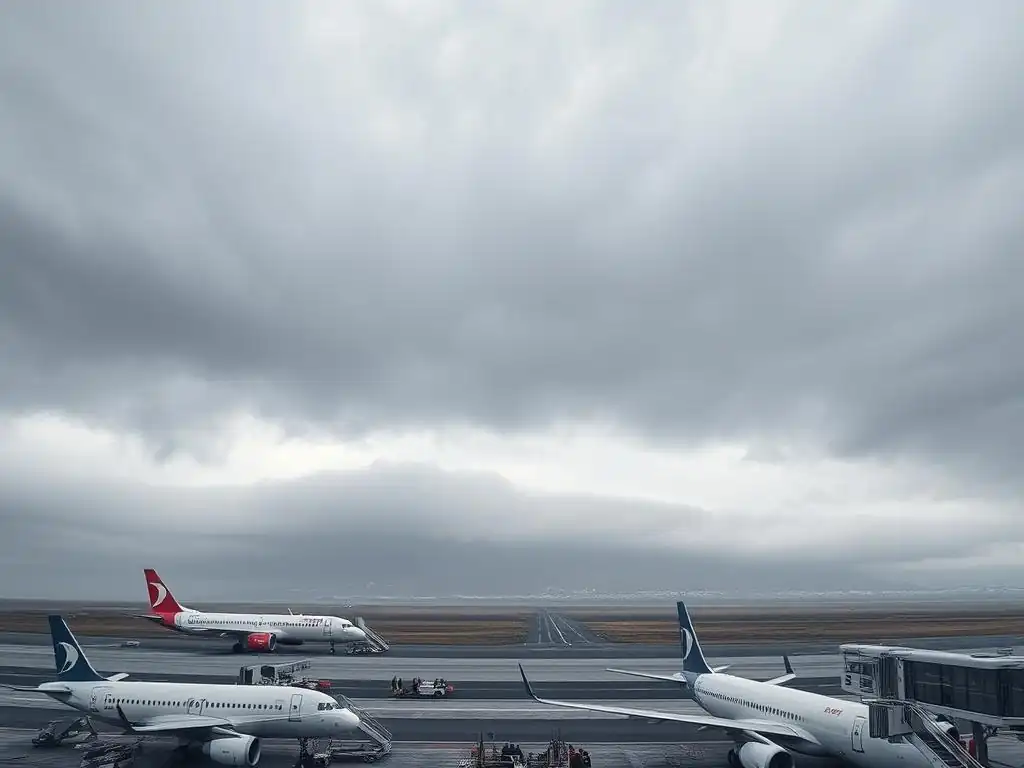
The airspace closure following the Eyjafjallajökull eruption was unprecedented in its scale and duration in modern aviation history. At its peak, the volcanic ash cloud led to the closure of airspace over much of Northern and Western Europe. Estimates suggest that over 100,000 flights were cancelled in the period between April 14th and April 20th, 2010 alone.
This number represents a significant proportion of global air traffic, as Europe is one of the busiest aviation regions worldwide. The disruption extended beyond these initial days, with intermittent closures and delays continuing for several weeks as the ash cloud persisted and shifted.
The impact was felt across approximately 20 countries, including major aviation hubs like London, Paris, Amsterdam, and Frankfurt. Millions of passengers were directly affected, with travel plans completely disrupted. The scale of the cancellations dwarfed previous disruptions caused by natural events, and the geographical extent of the airspace closure was unlike anything seen before. The sheer number of affected flights and passengers highlighted the vulnerability of the highly interconnected global air travel system to unforeseen natural hazards.
Economic Consequences of the Eyjafjallajökull Travel Ban
The economic fallout from the Eyjafjallajökull air travel ban was substantial and multifaceted, impacting various sectors beyond just the aviation industry itself. Airlines faced immediate losses due to flight cancellations, refunds, and passenger care costs. The International Air Transport Association (IATA) estimated that airlines worldwide lost approximately \$1.7 billion in revenue during the main period of disruption. However, the economic consequences extended far beyond the airline industry.
Businesses experienced significant disruptions to supply chains, impacting manufacturing, retail, and various service sectors. Delays in cargo shipments and the inability of personnel to travel led to production slowdowns and lost business opportunities. The tourism industry was particularly hard hit, with hotels, restaurants, and tourist attractions experiencing sharp declines in revenue. Furthermore, the wider European economy suffered from reduced business activity and consumer spending. While quantifying the total economic impact is complex, estimates suggest that the Eyjafjallajökull eruption cost the European economy billions of euros, underscoring the significant economic vulnerability to disruptions in air travel.
Impact on Passengers: Stranded Travelers and Travel Chaos
For millions of passengers, the Eyjafjallajökull eruption translated into immediate and significant travel chaos. Thousands of flights were cancelled with little notice, leaving passengers stranded at airports both domestically and internationally. Airports became overcrowded with frustrated travelers unsure of when they could rebook flights or make alternative arrangements. Communication from airlines was often inconsistent and overwhelmed by the sheer volume of inquiries.
Many passengers faced lengthy delays in returning home or reaching their destinations. Accommodation became scarce and expensive in some locations, and the uncertainty surrounding the duration of the disruption added to passenger anxiety and stress. Beyond the immediate logistical challenges, the event highlighted the lack of adequate passenger support systems during large-scale travel disruptions. The experience of stranded passengers became a defining aspect of the Eyjafjallajökull crisis, emphasizing the human cost of such widespread air travel interruptions.
Key Lessons Learned from the Eyjafjallajökull Travel Disruption
Improved Volcanic Ash Detection and Monitoring Systems
The Eyjafjallajökull crisis exposed critical gaps in volcanic ash detection and monitoring capabilities. Prior to 2010, reliance was heavily placed on pilot reports and ground-based observations to track ash clouds, which proved to be insufficient for the scale and rapid spread of the Eyjafjallajökull ash. The eruption spurred significant investment and advancements in remote sensing technologies and forecasting models to improve ash cloud detection, tracking, and prediction.
Advancements in Remote Sensing Technology for Ash Cloud Tracking
One of the most significant advancements has been the enhanced utilization of satellite technology for volcanic ash detection. Geostationary and polar-orbiting satellites equipped with infrared and multispectral sensors provide continuous monitoring of volcanic plumes. These sensors can detect the spectral signature of volcanic ash, even in daylight and darkness, and track its movement and dispersion in near real-time.
The increased spatial and temporal resolution of satellite data has dramatically improved the ability to map ash clouds and assess their altitude and concentration, providing crucial information for aviation authorities. Furthermore, ground-based radar systems have been enhanced and expanded to provide complementary data, particularly in regions with dense cloud cover where satellite observations may be limited.
Development of Enhanced Volcanic Ash Forecasting Models
Alongside improved detection, significant progress has been made in developing more sophisticated volcanic ash forecasting models. These models integrate meteorological data, eruption source parameters (such as eruption height and ash emission rate), and atmospheric dispersion algorithms to predict the trajectory and concentration of ash clouds. Post-Eyjafjallajökull, there has been a focus on refining these models to better account for the complex atmospheric processes that influence ash dispersal, including wind shear, turbulence, and ash particle settling.
Probabilistic forecasting approaches have also been adopted to provide more nuanced predictions that incorporate uncertainties in eruption parameters and atmospheric conditions, allowing for more informed risk assessments and decision-making in airspace management. These improved forecasting capabilities are crucial for providing timely and accurate warnings to aviation authorities and airlines.
Enhanced International Coordination and Communication Protocols
The Eyjafjallajökull eruption highlighted the need for stronger international coordination and communication protocols between volcanic observatories, meteorological agencies, and aviation authorities. The initial response was hampered by a lack of clear procedures for information sharing and decision-making across national borders. Lessons learned have led to significant improvements in establishing standardized communication channels and protocols to ensure timely and effective dissemination of information during volcanic events.
Streamlining Information Sharing Between Volcanic Observatories and Aviation Authorities
Following the 2010 crisis, there has been a concerted effort to streamline the flow of information from volcanic observatories to aviation authorities. Volcanic observatories, such as the Icelandic Meteorological Office in the case of Eyjafjallajökull, are the primary source of information on eruption characteristics and ash cloud properties. Standardized reporting formats and communication protocols have been established to ensure that critical data, including eruption intensity, ash cloud height, and ash concentration estimates, are rapidly and efficiently transmitted to Volcanic Ash Advisory Centres (VAACs).
VAACs, designated by the International Civil Aviation Organization (ICAO), are responsible for monitoring and forecasting volcanic ash clouds and issuing advisories to air traffic control and airlines. Enhanced communication links and data sharing agreements between observatories and VAACs have significantly improved the speed and reliability of information dissemination.
Establishing Clear Decision-Making Processes for Airspace Management During Volcanic Events
Beyond information sharing, the Eyjafjallajökull event underscored the need for clearer and more coordinated decision-making processes for airspace management during volcanic crises. Prior to 2010, airspace closure decisions were largely based on a binary approach – either airspace was open or closed based on the presence of any detectable volcanic ash. The crisis prompted a shift towards a more risk-based approach, requiring closer collaboration between aviation regulators, air traffic control, airlines, and scientific experts.
International frameworks and guidelines have been developed to facilitate joint risk assessments and decision-making, taking into account factors such as ash concentration, aircraft vulnerability, and operational considerations. This collaborative approach aims to ensure that airspace closures are proportionate to the actual risk and minimize unnecessary disruptions while maintaining safety as the paramount concern.
Rethinking Airspace Closure Policies: A Risk-Based Approach
The blanket airspace closures implemented during the Eyjafjallajökull eruption were highly disruptive and, in retrospect, potentially overly cautious in certain areas and at certain times. The crisis catalyzed a fundamental rethinking of airspace closure policies, moving away from a zero-tolerance approach towards a more nuanced, risk-based framework. This new approach emphasizes assessing the actual risk posed by volcanic ash based on ash concentration and aircraft vulnerability, rather than simply the presence of any ash.
Moving Beyond Blanket Bans: Assessing Ash Concentration and Aircraft Vulnerability
A key shift in airspace management has been the move away from blanket bans to policies that consider the concentration of volcanic ash and the vulnerability of different aircraft types. Research conducted after Eyjafjallajökull has provided a better understanding of the ash concentration thresholds at which aircraft engines are at risk. This has led to the development of airspace management strategies that allow for continued flight operations in areas with low ash concentrations, while restricting or diverting flights from areas with higher concentrations.
Furthermore, recognition that different aircraft types have varying levels of vulnerability to volcanic ash has informed more targeted airspace restrictions. Aircraft manufacturers and research institutions have conducted studies to assess engine tolerance to ash ingestion, leading to a more differentiated risk assessment framework.
Developing More Flexible Airspace Management Strategies
To implement this risk-based approach, more flexible airspace management strategies have been developed. These strategies include the concept of "time-limited operations" in areas with low to moderate ash concentrations, allowing flights to operate for limited durations with enhanced monitoring and precautionary measures. "Contingency routes" are also planned in advance to allow aircraft to bypass areas of high ash concentration while maintaining efficient air traffic flow.
Furthermore, the implementation of "flexible use of airspace" principles allows for rapid adjustments to airspace boundaries based on real-time ash cloud information and evolving risk assessments. These more flexible and adaptive airspace management strategies aim to minimize disruption while ensuring that safety remains the top priority during volcanic ash events.
The Importance of Airline Preparedness for Volcanic Ash Events
The Eyjafjallajökull eruption highlighted that airlines, as key stakeholders in air travel, also have a crucial role to play in preparedness for volcanic ash events. Beyond relying solely on airspace management decisions, airlines need to invest in their own operational procedures, crew training, and technical understanding of volcanic ash hazards to mitigate risks and minimize disruptions.
Investing in Aircraft Engine Vulnerability Research
Following the 2010 crisis, there has been increased collaboration between aircraft manufacturers, engine manufacturers, and research institutions to conduct further research into aircraft engine vulnerability to volcanic ash. This research focuses on understanding the mechanisms of ash ingestion and deposition within engines, the impact of different ash compositions and concentrations on engine performance and durability, and the development of engine designs and operational procedures to enhance ash tolerance.
Airlines benefit from this research by gaining a better understanding of the specific risks to their fleets and informing decisions about aircraft maintenance, operational procedures, and crew training. Sharing data from real-world encounters with volcanic ash, even minor events, is crucial for furthering this research and improving overall aviation safety.
Training Pilots to Recognize and Respond to Volcanic Ash Encounters
Pilot training is a critical component of airline preparedness for volcanic ash events. Pilots need to be trained to recognize the visual cues and potential instrument indications of encountering volcanic ash in flight. This includes understanding the limitations of visual detection, particularly at night or in cloud cover, and recognizing potential engine performance anomalies that could indicate ash ingestion.
Furthermore, pilots require specific training in procedures for responding to volcanic ash encounters, including recommended flight paths to avoid ash clouds, engine monitoring procedures, and communication protocols with air traffic control. Regular simulator training scenarios that simulate volcanic ash encounters are essential to ensure that pilots are well-prepared to react effectively and safely in the event of encountering volcanic ash during flight.
The Long-Term Impact of Eyjafjallajökull on Aviation
Changes in Aircraft Design and Engine Standards
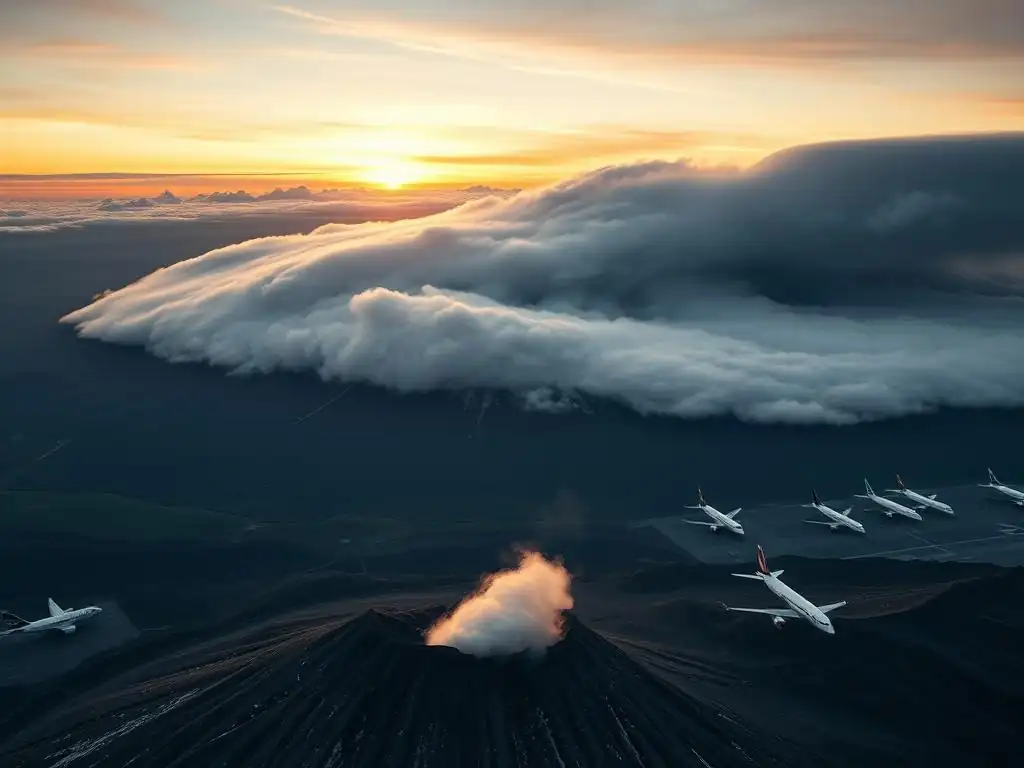
The Eyjafjallajökull eruption, while disruptive, has also served as a catalyst for positive changes in aircraft design and engine standards aimed at enhancing resilience to volcanic ash. While not resulting in radical redesigns, the event has reinforced the importance of considering volcanic ash hazards in the design and certification of aircraft and engines.
Manufacturers have focused on improving engine filtration systems to reduce ash ingestion and deposition within critical engine components. Research continues into materials science to develop engine components that are more resistant to the abrasive and melting effects of volcanic ash. Engine certification standards are also being reviewed and potentially updated to incorporate more stringent testing protocols related to volcanic ash ingestion, ensuring that new engine designs meet enhanced performance and safety criteria in ash-contaminated environments. These incremental improvements contribute to a gradual but significant increase in the overall resilience of aircraft to volcanic ash hazards.
Development of New Volcanic Ash Avoidance Technologies
Beyond aircraft design, the Eyjafjallajökull crisis spurred the development and adoption of new technologies to aid in volcanic ash avoidance. One notable advancement is the enhanced use of airborne volcanic ash detection systems. These systems, typically mounted on aircraft, utilize sensors such as lidar (Light Detection and Ranging) to detect and measure volcanic ash clouds in real-time, even in conditions where visual detection is limited. Airborne detection systems provide pilots with a direct and immediate assessment of ash cloud presence and extent, enabling them to make informed decisions about flight path adjustments and avoidance maneuvers.
Another area of development is in enhanced weather radar capabilities to better detect and track volcanic ash clouds. While traditional weather radar is not optimized for ash detection, advancements in radar technology and signal processing are improving the ability to distinguish volcanic ash from meteorological clouds. These technological advancements contribute to a multi-layered approach to volcanic ash avoidance, combining ground-based monitoring, satellite observations, and airborne detection systems to enhance aviation safety.
Increased Public Awareness of Volcanic Hazards to Air Travel
Perhaps one of the most enduring impacts of the Eyjafjallajökull eruption is the increased public awareness of volcanic hazards to air travel. Prior to 2010, volcanic ash was a relatively obscure risk for most air travelers. The widespread disruption caused by Eyjafjallajökull brought this hazard into sharp focus, educating the public about the potential for volcanic eruptions to significantly impact global air travel.
This heightened awareness has led to greater public understanding of the complexities of volcanic ash monitoring and airspace management. It has also fostered a more informed public discourse about the balance between safety and minimizing travel disruption during volcanic events. Airlines and aviation authorities have become more proactive in communicating with passengers about volcanic ash risks and the measures being taken to mitigate them. This increased public awareness is a valuable outcome of the Eyjafjallajökull crisis, contributing to a more informed and resilient air travel system.
Eyjafjallajökull Travel Disruption Lessons: A Summary and Future Preparedness
Continuing Research and Development in Volcanic Ash Monitoring
The lessons learned from the Eyjafjallajökull travel disruption underscore the critical need for continued research and development in volcanic ash monitoring technologies and forecasting models. While significant progress has been made since 2010, ongoing efforts are essential to further refine detection capabilities, improve forecast accuracy, and reduce uncertainties in ash cloud predictions.
Future research should focus on enhancing the spatial and temporal resolution of satellite and ground-based ash detection systems. Improving the accuracy of eruption source parameters, such as ash emission rates and particle size distributions, is crucial for more reliable forecasting. Further development of probabilistic forecasting methods and ensemble modeling approaches will help to better quantify and communicate uncertainties in ash cloud predictions. Continued investment in research and development is vital to ensure that volcanic ash monitoring and forecasting capabilities keep pace with evolving aviation needs and technological advancements.
Strengthening International Collaboration for Air Travel Safety
The Eyjafjallajökull crisis highlighted the inherently international nature of air travel and the importance of strong global collaboration for managing volcanic ash risks. Strengthening international cooperation between volcanic observatories, meteorological agencies, VAACs, aviation regulators, and airlines is paramount for enhancing air travel safety in volcanic regions.
This collaboration should encompass data sharing protocols, standardized communication procedures, joint research initiatives, and harmonized airspace management policies. International forums and working groups, such as those facilitated by ICAO and the World Meteorological Organization (WMO), play a crucial role in fostering this collaboration and ensuring a globally coordinated approach to volcanic ash risk management. Continued commitment to international cooperation is essential for building a more resilient and safer global air travel system in the face of volcanic hazards.
Minimizing Future Disruptions from Volcanic Eruptions: A Proactive Approach
The ultimate goal of learning from the Eyjafjallajökull travel disruption lessons is to minimize future disruptions from volcanic eruptions. This requires a proactive and multi-faceted approach that encompasses improved monitoring and forecasting, enhanced international coordination, risk-based airspace management, and airline preparedness.
Moving beyond reactive responses to volcanic events, a proactive strategy involves continuous investment in monitoring infrastructure, regular exercises and simulations to test preparedness plans, and ongoing research to improve our understanding of volcanic ash hazards. Building resilience into the air travel system requires a long-term commitment to preparedness and a collaborative approach involving all stakeholders. By proactively addressing the lessons learned from Eyjafjallajökull, the aviation community can significantly reduce the impact of future volcanic eruptions on air travel and ensure a safer and more reliable global transportation network.
Conclusion: Eyjafjallajökull's Legacy and a Safer Future for Air Travel
The echoes of Eyjafjallajökull continue to resonate within the aviation industry and the scientific community. While the 2010 eruption caused unprecedented disruption, it also served as a powerful catalyst for positive change. The lessons learned from the Eyjafjallajökull travel disruption have driven significant advancements in volcanic ash monitoring, forecasting, airspace management, and international coordination. These improvements have collectively contributed to a safer and more resilient air travel system.
Eyjafjallajökull's legacy is not just one of disruption, but also one of progress and enhanced preparedness. The crisis underscored the importance of continuous vigilance, scientific innovation, and international collaboration in mitigating the risks posed by natural hazards to global infrastructure. As we move forward, the lessons learned from Eyjafjallajökull serve as a reminder of the dynamic interplay between natural forces and human systems, and the ongoing need to adapt and innovate to ensure a safer and more sustainable future for air travel in a world where volcanic activity remains a constant force of nature.
Frequently Asked Questions
What was the primary cause of the Eyjafjallajökull air travel disruption in 2010?
The primary cause was the extensive ash cloud produced by the Eyjafjallajökull eruption, which drifted across European airspace. This posed a significant threat to aircraft engine safety.
What were the main "lessons learned" from the Eyjafjallajökull eruption regarding air travel?
The lessons learned included the need for better ash cloud detection and prediction technologies, improved international coordination during crises, and a more nuanced approach to airspace closures.
How did the Eyjafjallajökull eruption impact the field of volcanology?
The eruption highlighted the need for more research into ash cloud behavior and its effects on aviation. It also spurred the development of better monitoring systems for Icelandic volcanoes.
What types of travel insurance considerations should be made based on the Eyjafjallajökull event?
Travelers should consider insurance policies that specifically cover cancellations and delays due to volcanic eruptions or other natural disasters. It's important to understand the policy's exclusion clauses.
How has the aviation industry changed since the Eyjafjallajökull eruption in terms of volcano monitoring and preparedness?
The aviation industry has invested in improved volcanic ash detection and tracking capabilities. They've also developed more flexible airspace management strategies to minimize disruptions during future eruptions.
The eruption of Eyjafjallajökull in 2010, and the subsequent air travel chaos, serves as a stark reminder of the fragility of interconnected systems in our modern world. What began as a geological event in Iceland rippled across the globe, grounding flights, disrupting supply chains, and leaving millions stranded. This event, though seemingly distant now, continues to resonate, highlighting the need for robust contingency planning and a deeper understanding of the complex interplay between natural events and human infrastructure.
The lessons learned from Eyjafjallajökull extend far beyond the aviation industry. It underscores the importance of adaptability and resilience in the face of unforeseen circumstances, a quality increasingly vital in our rapidly changing world. The experience forced us to confront our vulnerability and to re-evaluate our reliance on seamless global connectivity. As the saying goes: The only constant is change.
This eruption was a powerful, albeit disruptive, lesson in embracing that reality.
Let us not forget the lessons etched in volcanic ash. Consider how you might apply the principles of preparedness and adaptability learned from Eyjafjallajökull to your own life. Are you ready for the unexpected disruptions that life inevitably throws your way? By reflecting on the past, we can better navigate the uncertainties of the future and build a more resilient world, one prepared for whatever challenges may lie ahead.
Unearth Your Inner Volcanologist: Take Action Now!
Thank you for exploring the story of Eyjafjallajökull and its impact on global air travel. We hope you've gained a new appreciation for the power of nature and the importance of preparedness. Now, let's put that knowledge to work!
Here's how you can further your understanding of volcanology:
- Support vital research: Donate to organizations dedicated to volcano monitoring and early warning systems. Your contribution, however large or small, helps scientists better understand and predict future eruptions.
- Explore interactive maps of active volcanoes worldwide and research those in your region. Learn about their eruption history and potential impact on your community.
- Share this article with friends and family interested in science, travel, or emergency preparedness. Let's start a conversation about improving our readiness for unexpected events.
What steps will you take today to become more informed and engaged with the wonders and challenges of our planet? Share your thoughts in the comments below!