
Tephra and Tsunamis: The Deadly Duo of the Minoan Eruption

Welcome to Volcano Explorers!
Prepare to journey into the heart of fiery history. The earth trembles, the sky darkens... what happens when a volcano's fury is unleashed? Delve into the past and uncover the devastating impact of the Minoan eruption, a cataclysmic event that shaped civilizations. Could its secrets hold warnings for our future? Read on to explore the science, the destruction, and the enduring legacy of this ancient disaster.
- The Minoan Eruption: A Dual Threat of Tephra and Tsunamis
- Introduction: Reconstructing the Cataclysmic Minoan Eruption
- Tephra Fall: Burial and Environmental Degradation
- Tsunamis: Waves of Destruction Across the Aegean Sea
- Synergistic Impacts: Amplified Destruction from Combined Hazards
- Long-Term Consequences: Climate, Society, and Culture
- Modern Volcanology: Insights from the Minoan Eruption
- Conclusion: The Minoan Eruption and its Enduring Significance
-
Frequently Asked Questions
- What was the Minoan Eruption, and why is it significant?
- What were the primary dangers associated with the Minoan Eruption?
- How did tephra fall impact the surrounding regions?
- Did the Minoan Eruption cause tsunamis, and how far did they travel?
- What is the long-term impact of the Minoan Eruption on the region?
- Final Reflection: Echoes of Cataclysm
- Dive Deeper: Unlock the Secrets of Volcanic Power!
The Minoan Eruption: A Dual Threat of Tephra and Tsunamis
Introduction: Reconstructing the Cataclysmic Minoan Eruption
The Minoan Civilization: A Bronze Age Society on Crete
The Minoan civilization, flourishing on the island of Crete during the Bronze Age (c. 2700 to 1450 BCE), stands as a testament to early European sophistication. Renowned for their advanced maritime trade, intricate palace complexes like Knossos, and vibrant art, the Minoans developed a complex society that exerted considerable influence across the Aegean.
Their culture, characterized by a sophisticated writing system (Linear A), impressive engineering feats, and a rich mythology, left an indelible mark on the ancient world. Archaeological discoveries at sites like Akrotiri on Santorini, a Minoan outpost, reveal a society deeply intertwined with the sea and possessing a high level of artistic and technological achievement just prior to its abrupt and dramatic decline.
The Minoan civilization's prosperity was intrinsically linked to its geographical location and maritime prowess. Crete's central position in the Mediterranean facilitated trade routes connecting Europe, Asia, and Africa, allowing for the exchange of goods, ideas, and cultural influences.
This maritime dominance extended to the nearby Cycladic islands, including Thera (modern Santorini), where Minoan settlements thrived. The sophisticated infrastructure of Minoan palaces, coupled with evidence of centralized administration and widespread trade networks, suggests a well-organized and interconnected society at the apex of its power in the mid-second millennium BCE, just before the cataclysm that would dramatically reshape the Aegean landscape and potentially contribute to their decline.
The Thera Eruption: A VEI-7 Event on Santorini
Around 1627-1600 BCE, the volcanic island of Thera (Santorini) experienced one of the largest volcanic eruptions in human history. This colossal event, known as the Minoan eruption or the Thera eruption, is estimated to have reached a Volcanic Explosivity Index (VEI) of 7, placing it in the same category as other super-eruptions like Krakatoa (1883) and Tambora (1815). The eruption ejected an estimated 30 to 60 cubic kilometers of dense rock equivalent (DRE) of volcanic material into the atmosphere and Aegean Sea, dramatically altering the landscape of Santorini and leaving a profound impact on the surrounding region.
The Thera eruption unfolded in distinct phases, beginning with Plinian and phreatomagmatic explosions that sent towering columns of ash and pumice high into the stratosphere. This phase was followed by pyroclastic flows and surges, devastating currents of hot gas and volcanic debris that swept across the island and into the sea.
The final and most catastrophic phase involved the collapse of the volcano's summit into the magma chamber, creating a large caldera and generating powerful tsunamis. The sheer magnitude of the eruption released energy equivalent to hundreds of atomic bombs, reshaping the Aegean world and posing a dual threat from both tephra fall and tsunamis, which are the focus of understanding the full impact of the Minoan eruption.
Tephra Fall: Burial and Environmental Degradation
Petrography and Geochemistry of the Minoan Tephra Deposits
Minoan tephra, the volcanic ash and pumice ejected during the Thera eruption, is characterized by its distinctive composition and widespread distribution. Petrographic analysis reveals a predominantly rhyodacitic composition, indicating a silica-rich magma source. The tephra contains characteristic mineral assemblages, including plagioclase feldspar, pyroxene, and amphibole, which aid in its identification and correlation across different locations. Geochemical fingerprinting, particularly through trace element analysis and isotopic ratios, further confirms the Thera origin of tephra layers found in locations as far afield as Greenland ice cores and lake sediments in Turkey.
The Minoan tephra is not uniform; it exhibits variations in grain size, thickness, and componentry depending on distance from the source and depositional environment. Proximal deposits on Santorini and nearby islands are characterized by thick accumulations of coarse pumice and ash, while distal deposits, found hundreds of kilometers away, are finer grained and often interbedded with marine sediments.
The study of these tephra deposits, known as tephrochronology, has become a crucial tool for synchronizing archaeological and geological records across the Aegean and Mediterranean regions, allowing for a more precise understanding of the impact of the Minoan eruption and its temporal context.
Immediate Impact of Tephra Fall: Crop Failure and Structural Damage
The immediate aftermath of the Minoan eruption saw widespread tephra fall across the Aegean, with the heaviest accumulations concentrated on the islands surrounding Santorini and extending towards Crete and Anatolia. Estimates suggest that areas within a 100-kilometer radius of Santorini likely received tephra blankets several centimeters to tens of centimeters thick. This heavy tephra fall had devastating consequences for agriculture, burying crops, orchards, and vineyards under a thick layer of ash, leading to widespread crop failure and potential famine in the short term.
Beyond agriculture, the weight of accumulated tephra also caused significant structural damage. Roofs of buildings, particularly those constructed with flat roofs common in Minoan architecture, were vulnerable to collapse under the weight of wet ash. Fine ash particles infiltrated homes and settlements, contaminating water supplies and rendering living spaces uninhabitable. The abrasive nature of volcanic ash also caused damage to infrastructure, including roads and harbors, further disrupting daily life and exacerbating the immediate impact of the Minoan eruption on settlements and communities.
Long-Term Environmental Consequences: Soil Degradation and Ecosystem Changes
The long-term environmental consequences of Minoan tephra fall extended far beyond the immediate destruction. While volcanic ash can, over time, enrich soils with nutrients, the initial impact was largely detrimental. The thick layer of ash altered soil properties, affecting drainage, aeration, and water retention. This led to soil degradation, hindering agricultural productivity for years, if not decades, following the eruption. Recovery would have been slow and uneven, depending on rainfall patterns and soil type.
Ecosystems across the Aegean also suffered significant disruption. Vegetation was smothered by ash, leading to widespread die-offs of plants and impacting animal populations that relied on these ecosystems. Marine environments were also affected by ashfall, although the precise long-term effects are less well understood. The alteration of landscapes and ecosystems contributed to a prolonged period of environmental stress following the eruption, compounding the societal challenges and further emphasizing the lasting impact of the Minoan eruption on the region's ecology.
Tsunamis: Waves of Destruction Across the Aegean Sea
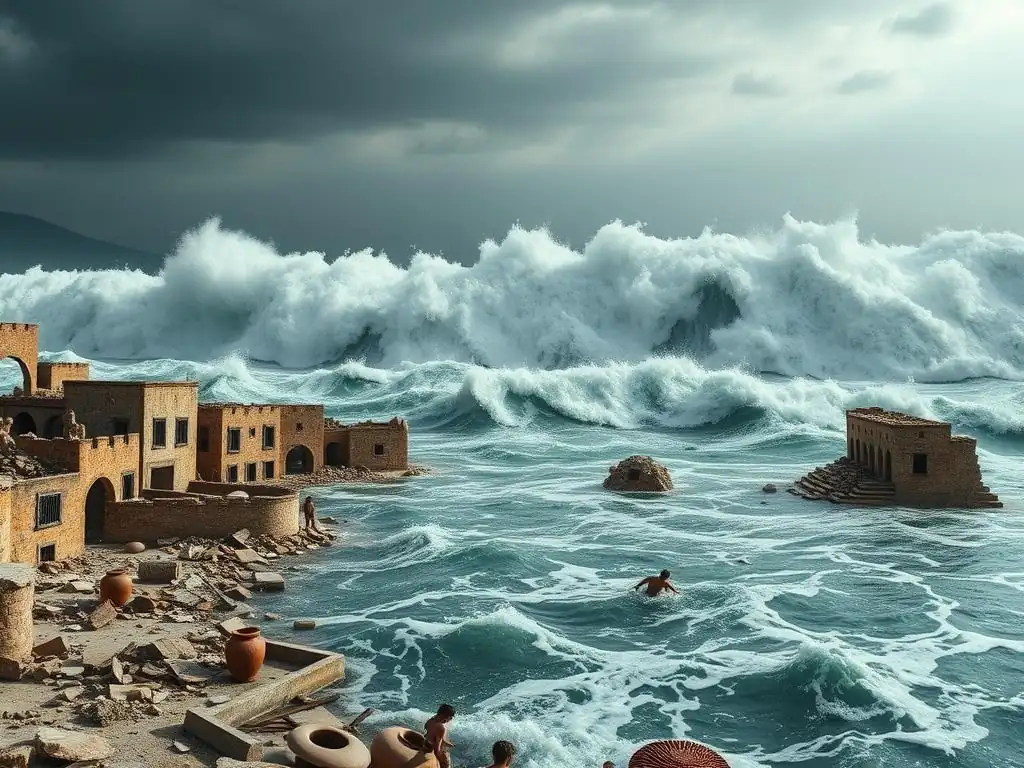
Submarine Landslides and Caldera Collapse: Tsunami Generation Mechanisms
The Thera eruption is widely recognized as a significant tsunami-generating event. Several mechanisms likely contributed to the generation of these devastating waves. One primary mechanism was the caldera collapse itself. As the magma chamber beneath Thera emptied during the eruption, the overlying volcanic edifice became unstable and collapsed into the void, displacing a massive volume of seawater and triggering a tsunami. Numerical modeling suggests that this caldera collapse mechanism alone could have generated a significant regional tsunami.
In addition to caldera collapse, submarine landslides, triggered by the eruption and associated seismic activity, likely played a crucial role in tsunami generation. The steep slopes surrounding Santorini are prone to instability, and the eruption's powerful explosions and ground shaking could have initiated large-scale submarine landslides. These landslides, rapidly displacing vast quantities of water, would have generated tsunamis that propagated outwards across the Aegean Sea. The combined effects of caldera collapse and submarine landslides likely resulted in a complex tsunami event with multiple waves and varying wave heights across different locations, amplifying the impact of the Minoan eruption.
Paleotsunami Deposits and Numerical Modeling: Evidence for Thera Tsunamis
Evidence for the Minoan tsunami comes from the identification of paleotsunami deposits along coastlines across the Aegean Sea, including Crete, Turkey, and the Levant. These deposits consist of characteristic sedimentary layers, often containing marine shells, pumice fragments, and reworked archaeological materials, found inland and above normal high tide levels. The stratigraphic position and composition of these deposits provide strong evidence for past tsunami inundation events. On Crete, for example, paleotsunami deposits have been identified at several coastal sites, including Palaikastro and Amnisos, providing direct evidence of tsunami impact on Minoan settlements.
Numerical modeling of tsunami generation and propagation from the Thera eruption further supports the paleotsunami evidence. These models, using various eruption scenarios and source mechanisms, simulate tsunami wave heights and arrival times across the Aegean. The results consistently indicate that the Thera eruption could have generated tsunamis with significant wave heights reaching coastlines across the Aegean within hours of the eruption. These models help to constrain the magnitude and spatial extent of the Minoan tsunami and corroborate the geological and archaeological evidence for its devastating reach, highlighting the far-reaching impact of the Minoan eruption.
Impact of Tsunamis: Coastal Destruction on Crete, Anatolia, and the Levant
The Minoan tsunami had a devastating impact on coastal settlements throughout the Aegean. On Crete, which was closest to Santorini and home to the Minoan civilization's heartland, coastal cities and towns were likely inundated by tsunami waves. Archaeological evidence at sites like Palaikastro and Amnisos suggests widespread destruction and abandonment at the time of the eruption, potentially attributable to tsunami inundation. The low-lying coastal plains of Crete, where many Minoan settlements were located, would have been particularly vulnerable to tsunami waves.
Beyond Crete, the tsunami's impact extended to the coasts of Anatolia (modern Turkey) and the Levant (eastern Mediterranean). While evidence is less abundant compared to Crete, paleotsunami deposits and archaeological findings suggest that coastal areas in these regions were also affected. The tsunami waves could have caused significant damage to coastal infrastructure, ports, and settlements, disrupting trade routes and impacting coastal economies. The geographical extent of the tsunami's reach underscores the regional scale of the disaster and the widespread impact of the Minoan eruption on coastal populations and societies across the eastern Mediterranean.
Synergistic Impacts: Amplified Destruction from Combined Hazards
Tephra Loading and Tsunami Inundation: Increased Structural Vulnerability
The combination of tephra fall and tsunami inundation created a synergistic disaster, amplifying the overall destructive impact of the Minoan eruption. Buildings already weakened by tephra loading on roofs and structural components became even more vulnerable when subjected to tsunami wave forces. The added weight of ash made structures less resilient to the hydrodynamic forces of the tsunami, increasing the likelihood of collapse and complete destruction. This combined effect meant that even relatively smaller tsunami waves could cause disproportionately greater damage to structures pre-stressed by tephra fall.
Furthermore, tephra fall would have clogged drainage systems and altered ground conditions, potentially exacerbating the effects of tsunami inundation. Ash-laden landscapes would have become waterlogged and unstable, making them more susceptible to erosion and landslides during tsunami wave run-up and drawdown. This interplay between tephra and tsunami hazards created a complex and highly destructive scenario, where the individual impacts were compounded by their simultaneous occurrence, leading to a more devastating overall outcome and highlighting the complex impact of the Minoan eruption.
Estimating the Disaster's Magnitude: Regional Impacts and Population Displacement
Estimating the precise magnitude of the Minoan eruption's disaster is challenging, but archaeological and geological evidence points to a regional catastrophe with significant population displacement. While direct mortality figures are difficult to ascertain from the archaeological record, the widespread destruction and abandonment of settlements, particularly on Santorini and Crete, suggest a substantial loss of life. The disruption of agriculture, infrastructure, and trade networks would have led to widespread food shortages and economic hardship, further contributing to societal stress and potential population decline.
The impact of the Minoan eruption likely resulted in large-scale population displacement, both within Crete and potentially beyond. Survivors may have been forced to abandon their homes and seek refuge elsewhere, either inland or on other islands. The eruption could have triggered migrations and shifts in population distribution across the Aegean, contributing to broader societal changes in the Bronze Age Mediterranean. The scale of population displacement and societal disruption underscores the profound and long-lasting consequences of this volcanic disaster.
Archaeological Evidence: Amnisos, Palaikastro, and Other Affected Sites
Archaeological sites across Crete and the Aegean provide tangible evidence of the Minoan eruption's devastating impact. On Crete, coastal Minoan settlements like Amnisos and Palaikastro exhibit clear signs of destruction and abandonment around the time of the eruption. At Amnisos, the harbor town of Knossos, tsunami deposits are found interbedded with volcanic ash, indicating a combined impact of tephra and tsunami. Buildings at Palaikastro show evidence of violent destruction, potentially from tsunami waves, and are overlain by tephra deposits.
Akrotiri on Santorini itself offers a unique snapshot of a Minoan town preserved by volcanic ash. While the inhabitants appear to have evacuated before the final catastrophic phases, the site provides invaluable insights into Minoan architecture, society, and material culture just before the eruption. However, the site also serves as a stark reminder of the destructive power of the volcano and the complete burial of a thriving Minoan settlement. The archaeological record across the Aegean, therefore, provides compelling evidence of the widespread and multifaceted impact of the Minoan eruption on Minoan civilization and the broader Aegean world.
Long-Term Consequences: Climate, Society, and Culture
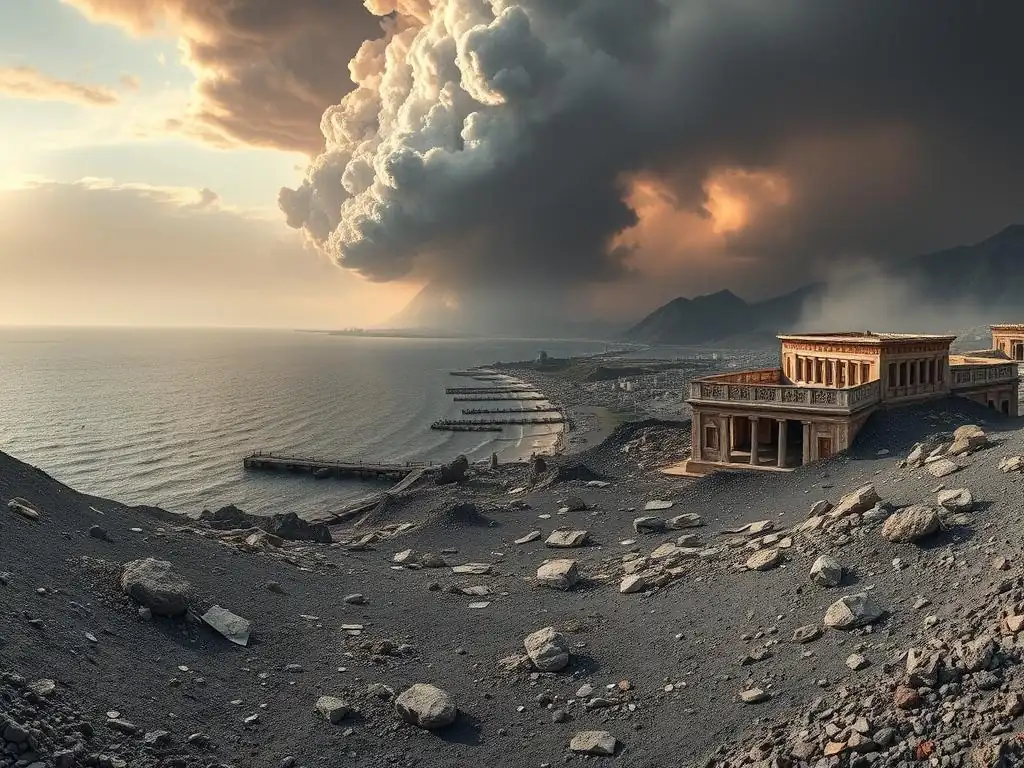
Potential Volcanic Winter: Evidence from Ice Core Records
The sheer magnitude of the Minoan eruption suggests the possibility of a volcanic winter, a period of short-term global cooling caused by the injection of volcanic aerosols into the stratosphere. Sulfur dioxide gas, released during large volcanic eruptions, reacts in the atmosphere to form sulfate aerosols, which reflect sunlight back into space, leading to a decrease in global temperatures. Ice core records from Greenland and Antarctica contain sulfate spikes dating to around the time of the Minoan eruption, providing potential evidence for a period of increased atmospheric sulfate loading consistent with a major volcanic event.
While the ice core evidence is suggestive, the extent and duration of any potential volcanic winter associated with the Minoan eruption remain debated. Climate models suggest that a VEI-7 eruption could have caused a temporary cooling of hemispheric or even global temperatures, potentially lasting for a year or two. Such a cooling event could have had implications for global climate patterns, agricultural productivity, and potentially contributed to societal stresses beyond the immediate Aegean region. Further research is needed to fully understand the climatic impact of the Minoan eruption and its global reach.
The Minoan eruption likely had profound societal and cultural impacts, contributing to the decline of Minoan civilization and potentially influencing broader Bronze Age dynamics in the Mediterranean. The disruption of Minoan trade networks, which were crucial to their economic and political power, would have been a significant consequence of the eruption. Tsunami destruction of coastal ports and settlements, coupled with the disruption of agricultural production, would have severely hampered Minoan maritime trade and economic stability.
The eruption could have also contributed to social upheaval and political instability within Minoan society. The scale of the disaster may have undermined the authority of Minoan palace centers and weakened the centralized administration that characterized Minoan civilization. The subsequent rise of Mycenaean civilization on mainland Greece, which occurred in the centuries following the Minoan eruption, may be linked to the power vacuum created by the Minoan decline, suggesting a broader regional impact of the Minoan eruption on the balance of power in the Aegean.
Analogous Eruptions: Comparison to the 1883 Krakatoa Eruption
The 1883 eruption of Krakatoa in Indonesia provides a useful analog for understanding the potential impacts of the Minoan eruption. Krakatoa, a VEI-6 eruption, generated powerful tsunamis that devastated coastal areas in the Sunda Strait, causing widespread destruction and significant loss of life (estimated at over 36,000 fatalities). The Krakatoa eruption also injected large quantities of volcanic aerosols into the stratosphere, leading to measurable global cooling and spectacular atmospheric phenomena, such as vivid sunsets, for several years.
Comparing the Minoan eruption to Krakatoa highlights the potential for VEI-7 eruptions to generate even more devastating tsunamis and have more significant climatic and societal consequences. While Krakatoa's impact was regionally devastating and globally noticeable, the Minoan eruption, being potentially larger and impacting a more densely populated region, likely had even more far-reaching and profound consequences for the Bronze Age world. Krakatoa serves as a modern example of the power of volcanic eruptions to reshape landscapes, cause widespread destruction, and influence global climate, offering a glimpse into the potential scale of the Minoan disaster.
Modern Volcanology: Insights from the Minoan Eruption
Volcanic Hazard Assessment: Santorini's Present-Day Risk
The Minoan eruption provides crucial insights for modern volcanology and volcanic hazard assessment, particularly for island volcanoes like Santorini. Santorini remains an active volcanic system, and future eruptions are inevitable. Understanding the scale and characteristics of the Minoan eruption is essential for assessing the present-day volcanic risk at Santorini and developing effective hazard mitigation strategies. Volcanologists study the Minoan eruption's deposits to reconstruct past eruptive behavior, estimate eruption recurrence intervals, and model potential future eruption scenarios.
Santorini is closely monitored by scientists using a range of techniques, including seismometers, GPS stations, and gas monitoring equipment, to detect any signs of volcanic unrest. Hazard maps are developed based on past eruption history and potential future scenarios, delineating areas at risk from pyroclastic flows, tephra fall, and tsunamis. The lessons learned from the Minoan eruption are crucial for informing volcanic hazard preparedness and risk management efforts at Santorini, emphasizing the enduring relevance of understanding the impact of the Minoan eruption for contemporary volcanic risk assessment.
Island Volcanoes and Coastal Communities: Vulnerability and Mitigation Strategies
The Minoan eruption serves as a stark reminder of the vulnerability of island volcanoes and coastal communities to volcanic hazards. Island volcanoes, often located in densely populated regions, pose a significant threat from a range of volcanic phenomena, including explosive eruptions, lava flows, landslides, and tsunamis. Coastal communities are particularly vulnerable to tsunamis generated by volcanic eruptions, submarine landslides, or earthquakes. Developing effective mitigation strategies for these hazards is crucial for protecting lives and livelihoods in volcanically active coastal regions.
Mitigation strategies include early warning systems for volcanic eruptions and tsunamis, land-use planning to restrict development in high-hazard zones, and infrastructure improvements to enhance resilience to volcanic hazards. Community education and preparedness programs are also essential for raising awareness and empowering communities to respond effectively to volcanic crises. The Minoan eruption underscores the importance of a multi-faceted approach to volcanic hazard mitigation, integrating scientific monitoring, risk assessment, engineering solutions, and community engagement to reduce the impact of volcanic eruptions on vulnerable populations.
Future Research: Tephrochronology and High-Resolution Tsunami Modeling
Future research on the Minoan eruption continues to refine our understanding of this cataclysmic event and its broader implications. Tephrochronology, the dating and correlation of tephra layers, remains a crucial tool for synchronizing archaeological and geological records across the Aegean and Mediterranean. Further tephrochronological studies can help to refine the precise date of the Minoan eruption and improve our understanding of its spatial and temporal extent.
High-resolution tsunami modeling is also a key area of ongoing research. Advanced numerical models, incorporating more detailed bathymetry and eruption scenarios, are being developed to better simulate the generation and propagation of Minoan tsunamis. These models aim to provide more accurate estimates of tsunami wave heights and inundation areas, which are crucial for refining hazard assessments and informing coastal protection strategies. Continued research into tephrochronology and tsunami modeling will further enhance our knowledge of the impact of the Minoan eruption and its lessons for volcanic hazard science.
Conclusion: The Minoan Eruption and its Enduring Significance
Lessons for Volcanic Preparedness: Early Warning Systems and Coastal Protection
The Minoan eruption offers invaluable lessons for volcanic preparedness in the 21st century. The dual threat of tephra fall and tsunamis highlights the complex and cascading hazards associated with large volcanic eruptions, particularly from island volcanoes. The eruption underscores the critical importance of early warning systems for both volcanic eruptions and tsunamis. Real-time monitoring of volcanic activity, coupled with effective communication and evacuation plans, can significantly reduce the loss of life during volcanic crises.
Coastal protection measures, such as seawalls and coastal reforestation, can also help to mitigate the impact of tsunamis. Land-use planning that restricts development in high-hazard coastal zones is essential for reducing vulnerability to tsunami inundation. The Minoan eruption serves as a powerful reminder that proactive volcanic preparedness, integrating scientific monitoring, hazard assessment, and community engagement, is crucial for building resilient communities in volcanically active regions and minimizing the impact of future eruptions.
The Minoan Eruption: A Case Study in Volcanic Disaster and Resilience
The Minoan eruption stands as a compelling case study in volcanic disaster and resilience. The eruption's devastating impact on Minoan civilization and the broader Aegean world underscores the destructive power of nature and the vulnerability of human societies to large-scale natural disasters. However, the archaeological record also suggests a degree of resilience and adaptation in the face of this cataclysm. The survival of Minoan culture, albeit in a transformed state, following the eruption, demonstrates the capacity of societies to recover and rebuild even after experiencing catastrophic events.
The Minoan eruption continues to fascinate and inform us centuries later. It serves as a reminder of the dynamic and powerful forces shaping our planet and the enduring challenges of living in volcanically active regions. By studying the Minoan eruption, we gain valuable insights into volcanic hazards, societal vulnerability, and the importance of preparedness and resilience in the face of natural disasters, ensuring that the lessons of this ancient cataclysm remain relevant for generations to come.
Frequently Asked Questions
What was the Minoan Eruption, and why is it significant?
The Minoan Eruption was a massive volcanic eruption that occurred on the island of Thera (modern Santorini) in the Aegean Sea. It's significant due to its potential impact on Minoan civilization and possible connections to the legend of Atlantis.
What were the primary dangers associated with the Minoan Eruption?
The two primary dangers were tephra fall (ash and rock ejected into the air) and tsunamis generated by the eruption's caldera collapse. These caused widespread destruction and environmental changes.
How did tephra fall impact the surrounding regions?
Tephra fall blanketed nearby islands and coastlines, destroying crops, contaminating water supplies, and causing structural damage to buildings. It also likely impacted the climate.
Did the Minoan Eruption cause tsunamis, and how far did they travel?
Yes, the eruption triggered massive tsunamis that radiated outwards across the Aegean Sea and potentially beyond. Evidence suggests they impacted coastal communities as far as Crete and the Eastern Mediterranean.
What is the long-term impact of the Minoan Eruption on the region?
The long-term impact includes the altered landscape of Santorini, the potential disruption of Minoan trade routes, and the possible decline of Minoan civilization due to the cumulative effects of the eruption.
Final Reflection: Echoes of Cataclysm
The Minoan eruption, though millennia past, serves as a stark reminder of nature's immense power and the enduring impact of volcanic events on civilization. The lessons gleaned from analyzing the tephra deposits and tsunami evidence are not merely historical curiosities; they are vital for understanding and mitigating the risks posed by similar events in our increasingly interconnected world.
The eruption's influence extends beyond the immediate devastation, shaping the cultural and social landscape of the Aegean and potentially influencing the trajectory of Western civilization. The sheer scale of the disaster, and the subsequent societal upheaval, underscores the fragility of even the most advanced societies in the face of natural disasters. The past is never dead. It's not even past.
- William Faulkner. This quote resonates deeply when considering the Minoan eruption, as its echoes continue to inform our understanding of risk management and disaster preparedness.
Let us not forget the lessons etched in the layers of tephra and the reconstructed shorelines. Consider the vulnerability of coastal communities worldwide and the importance of investing in robust early warning systems and comprehensive disaster mitigation strategies. Reflect on the legacy of the Minoans and the enduring power of nature. How can we, as individuals and as a global community, learn from the past to build a more resilient future, prepared for the inevitable challenges that lie ahead?
Dive Deeper: Unlock the Secrets of Volcanic Power!
Thank you for exploring the devastating story of the Minoan eruption with us! Now that you understand the terrifying power of tephra and tsunamis, it's time to take your knowledge further and become a true Volcano Explorer.
Here are a few ways to continue your journey:
- Analyze Real-Time Volcanic Data: Dedicate 30 minutes this week to researching live data feeds from volcano observatories around the world (USGS, Smithsonian). Identify one active volcano and track its activity, noting any patterns or concerning trends. Consider it a 'volcano watching' hobby!
- Share Your Insights: Educate others! Discuss the Minoan eruption and its lessons with friends and family, or even create a short presentation to share with your local community. Raise awareness about volcanic hazards and preparedness.
- Research and Prepare: Learn about the volcanic hazards in your region. Understand the evacuation routes, emergency protocols, and resources available to your community.
What specific actions will you take to become a more informed and prepared Volcano Explorer?