
The Lost Volcanoes of Gondwana: Prehistoric Eruptions in a Supercontinent

Welcome to Volcano Explorers!
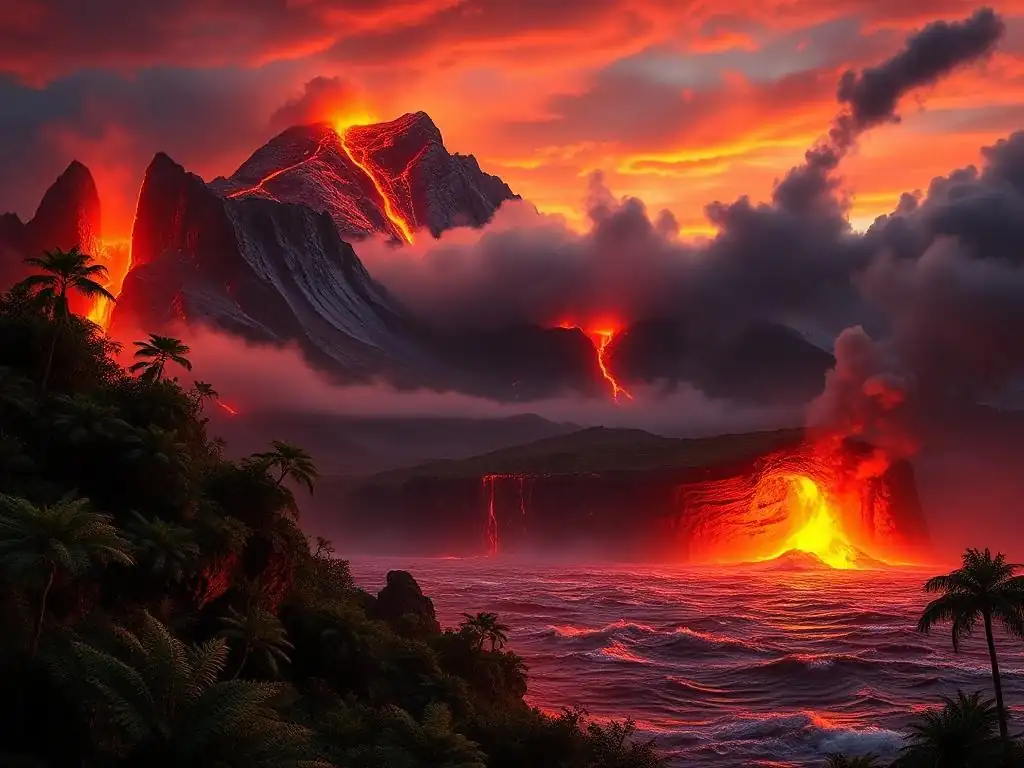
Imagine a world sculpted by fire, where colossal volcanoes roared across a landscape unlike anything we know today. Prepare to embark on an extraordinary journey back in time as we unearth the secrets of the prehistoric volcanoes of Gondwana. What fiery tales do these ancient giants hold, and how did their eruptions shape the very continents we inhabit? Delve deeper and ignite your curiosity!
- Unearthing the Prehistoric Volcanoes of Gondwana
- Gondwana's Geological Context: Setting the Stage for Volcanic Activity
- Evidence of Prehistoric Volcanic Eruptions in Gondwana's Remnants
-
Major Volcanic Provinces of Gondwana: A Regional Overview
- Volcanism in South America: The Serra Geral Formation
- Volcanic Activity in Africa: The Karoo-Ferrar Large Igneous Province
- Prehistoric Volcanoes in Antarctica: Jurassic Volcanics of the Transantarctic Mountains
- Gondwana's Volcanic Legacy in Australia: Volcanic Rocks of Eastern Australia
- Volcanism in India Before Continental Drift: Deccan Traps Precursors
- The Impact of Gondwana's Volcanic Eruptions on Ancient Ecosystems
- Techniques for Studying Prehistoric Volcanic Activity
- Future Research Directions: Further Exploring Gondwana's Volcanic Heritage
-
Frequently Asked Questions
- What was Gondwana, and why is it important when discussing prehistoric volcanoes?
- Where can I find evidence of prehistoric volcanoes from the Gondwana supercontinent today?
- What types of volcanic eruptions were common during the time of Gondwana?
- How do scientists study prehistoric volcanoes from Gondwana?
- What can the study of Gondwana's prehistoric volcanoes tell us about the Earth's history?
- Final Reflection: Echoes of Gondwana's Fire
- Unleash Your Inner Volcanologist!
Unearthing the Prehistoric Volcanoes of Gondwana
Exploring Gondwana's Volcanic Past: An Introduction
Gondwana, the ancient supercontinent, existed for a significant portion of Earth's history, assembling in the late Neoproterozoic (around 550 million years ago) and beginning to break apart in the Jurassic period (around 180 million years ago). During its lifespan, Gondwana was not a static landmass; it was a dynamic geological arena marked by intense tectonic activity, including widespread and significant volcanism.
Unearthing the secrets of Gondwana’s volcanic past is akin to reading a dramatic chapter in Earth's geological history. These prehistoric volcanic events, often colossal in scale, played a crucial role in shaping the landscapes, influencing global climate, and even impacting the course of life's evolution across what are now continents scattered across the Southern Hemisphere and beyond.
The study of these ancient volcanic events, the prehistoric volcanoes of Gondwana, takes us on a journey through time, requiring us to piece together fragmented geological evidence from South America, Africa, Antarctica, Australia, and India. Unlike modern volcanoes, which we can observe in action, Gondwana's volcanic centers are long extinct, their structures eroded and buried under layers of younger sediments.
Our exploration relies on deciphering the geological record – the rocks themselves – to understand the magnitude, style, and consequences of these eruptions. This involves meticulous fieldwork, advanced laboratory analyses, and innovative techniques to reconstruct a volcanic world that vanished millions of years ago.
Why Study Ancient Volcanic Activity in Gondwana?
Investigating the ancient volcanic activity within Gondwana holds immense scientific value for several reasons. Firstly, these prehistoric volcanic episodes were often associated with large igneous provinces (LIPs), some of the most voluminous volcanic events in Earth's history. Studying these LIPs, such as the Karoo-Ferrar in Africa and Antarctica, or the Serra Geral in South America, provides insights into the processes that drive massive magma generation and eruption. Understanding these processes is crucial for comprehending the Earth's internal dynamics and the mechanisms that lead to such cataclysmic geological phenomena.
Secondly, Gondwana's volcanic history is intimately linked to major geological transitions, including continental breakup and mass extinction events. For example, the eruption of the Karoo-Ferrar LIP is temporally correlated with the Triassic-Jurassic extinction event, a period of significant biodiversity loss. By studying the geochemical signatures and timing of these prehistoric volcanoes, we can better assess the potential causal links between large-scale volcanism, climate change, and biotic crises.
Furthermore, understanding how ecosystems responded to these ancient volcanic upheavals provides valuable context for assessing the potential impacts of modern volcanism and other environmental changes on present-day life. In essence, the prehistoric volcanoes of Gondwana offer a natural laboratory to explore the profound and long-lasting interplay between geological forces and life on Earth.
Gondwana's Geological Context: Setting the Stage for Volcanic Activity
Gondwana's Formation and Tectonic Plate Movements
Gondwana's assembly was a protracted process spanning hundreds of millions of years, involving the amalgamation of various continental blocks through a series of orogenic events. This supercontinent, at its peak, encompassed most of the landmasses that now constitute the Southern Hemisphere, including South America, Africa, Antarctica, Australia, and India, as well as parts of the Middle East and southern Europe.
The formation of Gondwana was driven by plate tectonics, the fundamental process that shapes Earth's surface. Convection currents in the Earth's mantle caused these continental blocks to drift and collide, eventually suturing together along vast mountain ranges, remnants of which can still be observed today across the Gondwanan continents.
Once assembled, Gondwana was not static. Internal tectonic stresses and mantle dynamics continued to exert influence, leading to periods of rifting, crustal extension, and ultimately, the supercontinent's fragmentation. These tectonic movements were intrinsically linked to volcanic activity. Rifting zones, where the crust thinned and stretched, provided pathways for magma to ascend from the mantle. Furthermore, the subduction of oceanic plates beneath continental margins, a common feature around Gondwana's periphery, generated magmatism through the melting of mantle wedge material. The dynamic tectonic regime of Gondwana, therefore, created a fertile ground for widespread and diverse volcanic activity throughout its existence.
The Supercontinent Cycle and Volcanism
The Earth operates on a supercontinent cycle, a geological rhythm spanning hundreds of millions of years, involving the assembly and dispersal of supercontinents. This cycle is intimately connected to global patterns of volcanism. Periods of supercontinent assembly, like the formation of Gondwana, are often associated with increased mantle convection and heat buildup beneath the insulating continental landmass. This thermal build-up can lead to enhanced mantle plume activity, upwellings of hot mantle material that can trigger massive volcanism when they impinge upon the base of the lithosphere.
Conversely, the breakup of supercontinents is also volcanically active. As continents rift apart, the thinning and stretching of the crust facilitates decompression melting in the underlying mantle, generating large volumes of magma. This rifting-related volcanism is responsible for the formation of many Large Igneous Provinces (LIPs).
The Karoo-Ferrar LIP, for instance, erupted as Gondwana began to fragment in the Jurassic period. The supercontinent cycle, therefore, acts as a modulator of global volcanic activity, with both assembly and breakup phases characterized by significant volcanic events. The prehistoric volcanoes of Gondwana are a testament to this cyclical interplay between tectonic forces and Earth's internal heat engine.
Evidence of Prehistoric Volcanic Eruptions in Gondwana's Remnants
Volcanic Rock Formations: Key Indicators of Past Eruptions
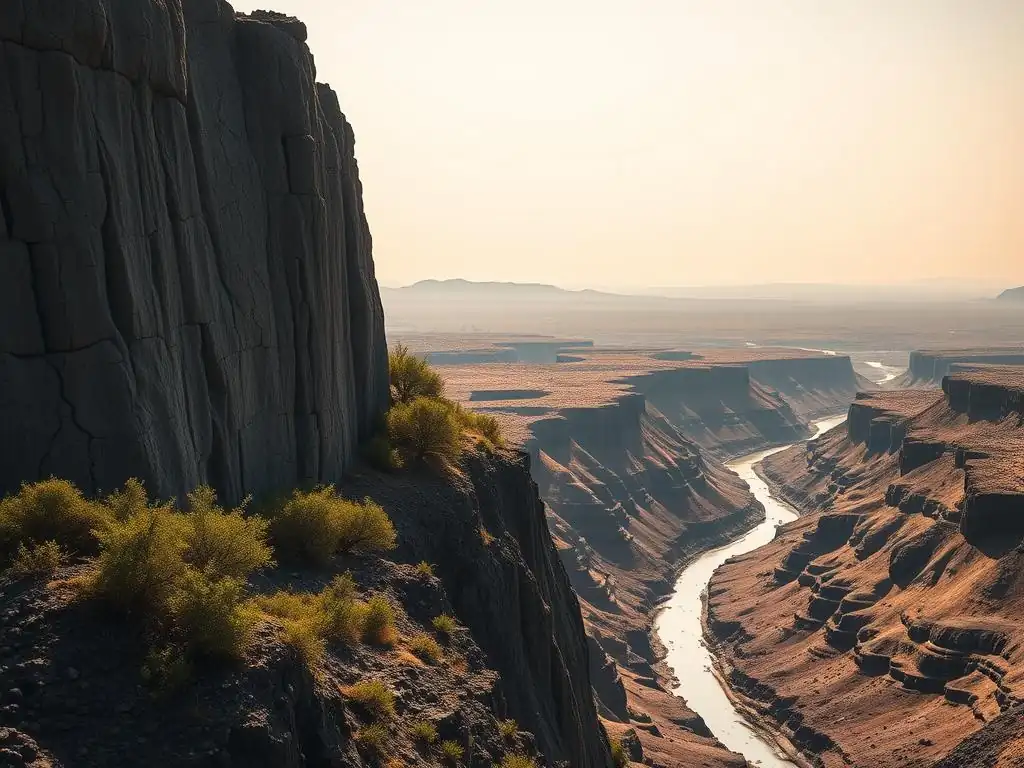
Volcanic rock formations are the most direct and compelling evidence of prehistoric volcanic eruptions in Gondwana. These formations, preserved across the continents that once comprised the supercontinent, provide a tangible record of past volcanic activity. The type, distribution, and characteristics of these rocks allow geologists to reconstruct the nature and scale of ancient eruptions. Two primary categories of volcanic rocks are particularly informative: lava flows and pyroclastic deposits.
Identifying Ancient Lava Flows and Pyroclastic Deposits
Ancient lava flows are solidified streams of molten rock that erupted onto the Earth's surface. They are typically recognized by their characteristic textures and structures, such as columnar jointing (polygonal fractures formed during cooling) and vesicularity (small gas bubbles trapped within the rock). Basalt, a dark-colored volcanic rock, is the most common type found in many Gondwanan LIPs, like the Deccan Traps precursors in India and the Karoo basalts in Africa.
The thickness and lateral extent of lava flow sequences can indicate the volume and style of eruption. For instance, thick, extensive basalt flows suggest large-scale effusive eruptions, where magma poured out steadily over vast areas.
Pyroclastic deposits, on the other hand, are formed from explosive volcanic eruptions. These eruptions eject fragments of rock, ash, and volcanic gases into the atmosphere, which then settle back to Earth as pyroclastic flows or air-fall tephra. Pyroclastic rocks, such as volcanic breccias and tuffs, are characterized by their fragmented nature and often contain a mixture of rock types.
The presence of thick pyroclastic deposits suggests highly explosive volcanic events, potentially associated with caldera-forming eruptions or violent Strombolian or Plinian styles of activity. Distinguishing between lava flows and pyroclastic deposits is crucial for reconstructing the eruptive history of prehistoric volcanoes.
Analyzing Volcanic Ash Layers (Tephra) in Gondwana's Geological Record
Volcanic ash layers, or tephra layers, are particularly valuable markers in the geological record. These layers are formed from fine volcanic ash particles ejected high into the atmosphere during explosive eruptions. Wind can carry this ash over vast distances, depositing it as distinct layers in sedimentary basins far from the eruptive source. Tephra layers serve as time-stratigraphic markers, allowing geologists to correlate rock sequences across different regions and establish the synchronicity of geological events.
In Gondwana's geological record, tephra layers have been identified in sedimentary basins both within and surrounding the major volcanic provinces. For example, ash layers from the Karoo-Ferrar eruptions have been found in sedimentary sequences in South Africa, Antarctica, and even Australia. Analyzing the geochemical composition of tephra, specifically the trace element and isotopic signatures of volcanic glass shards within the ash, allows scientists to fingerprint the source volcano and correlate tephra layers across continents.
This provides crucial information for reconstructing the spatial extent and temporal sequence of prehistoric volcanic eruptions across Gondwana. Furthermore, the thickness and grain size of tephra layers can provide insights into the magnitude and intensity of the explosive eruptions that produced them.
Fossilized Volcanic Landscapes: Preserved Records of Eruptions
Beyond volcanic rocks themselves, fossilized volcanic landscapes offer another fascinating window into Gondwana's prehistoric volcanic activity. In certain exceptional cases, volcanic eruptions have rapidly buried and preserved entire landscapes, including forests and even volcanic vents themselves, providing snapshots of the environment immediately before, during, and after volcanic events. These fossilized landscapes are rare but incredibly informative records of the impact of volcanism on ancient ecosystems.
Petrified Forests and Volcanic Activity
Petrified forests are a remarkable type of fossilized landscape directly linked to volcanic activity. They are formed when trees are rapidly buried by volcanic ash or pyroclastic flows. The volcanic ash, rich in silica, permeates the wood, and over long periods, the organic material of the trees is replaced by minerals, primarily silica, preserving the tree trunks and sometimes even branches and roots in exquisite detail. The process of petrification often occurs relatively quickly after burial, preventing the wood from decaying.
Several examples of petrified forests are associated with Gondwanan volcanic provinces. For instance, in Patagonia, Argentina, within the Chon Aike volcanic province, extensive petrified forests have been found, dating back to the Jurassic period. These forests were buried by volcanic ash from large explosive eruptions, preserving a diverse assemblage of fossil trees, including conifers and cycads.
Studying these petrified forests provides insights into the type of vegetation that existed in Gondwana during periods of volcanism and how these ecosystems were affected by volcanic eruptions. The rapid burial and preservation also offer clues about the speed and intensity of the volcanic events.
Fossilized Volcanoes of the Paraná Basin
While less common than petrified forests, the Paraná Basin in South America offers intriguing evidence of fossilized volcanic structures. The Paraná Traps, a massive LIP, erupted in the Cretaceous period as South America and Africa began to separate. Within the eroded landscape of the Paraná Basin, remnants of ancient volcanic vents and even fossilized lava lakes have been identified. These features, though often deeply weathered, can still reveal information about the architecture of the volcanic plumbing system and the surface expression of the eruptions.
For example, some geological formations within the Paraná Basin exhibit features interpreted as fossilized lava tubes – underground tunnels through which lava flowed. Others show evidence of former volcanic cones and craters, now largely eroded but still discernible in the geological record. Studying these fossilized volcanic landscapes requires careful geological mapping and analysis to distinguish volcanic features from surrounding sedimentary rocks. However, when successful, it provides a unique perspective on the morphology and surface processes of prehistoric volcanoes, complementing the information gleaned from volcanic rock formations and tephra layers.
Geochemical Signatures: Tracing the Origin of Gondwana's Magmas
Geochemistry plays a crucial role in understanding the origin and evolution of magmas that fueled Gondwana's prehistoric volcanoes. Volcanic rocks are not simply homogenous masses; they carry chemical fingerprints that reveal their source in the Earth's mantle and the processes they underwent during ascent and eruption. Analyzing the geochemical composition of volcanic rocks, particularly their isotopic ratios and trace element abundances, provides valuable insights into the deep Earth processes driving Gondwanan volcanism.
Isotopic Analysis of Volcanic Rocks
Isotopes are atoms of the same element with different numbers of neutrons. Radioactive isotopes decay at known rates, and the ratios of parent to daughter isotopes in rocks can be used for radiometric dating (discussed later). However, stable isotope ratios, such as strontium (Sr), neodymium (Nd), and lead (Pb) isotopes, are also powerful tracers of magma sources. Different regions of the Earth's mantle have distinct isotopic compositions, reflecting variations in their long-term geological history.
Analyzing the isotopic ratios of volcanic rocks from Gondwanan LIPs and other volcanic provinces reveals information about the mantle reservoirs that contributed to magma generation. For example, basalts from the Karoo-Ferrar and Serra Geral LIPs often exhibit isotopic signatures characteristic of enriched mantle sources, indicating the involvement of recycled crustal material in their origin. In contrast, some volcanic rocks may show isotopic signatures more typical of depleted mantle, reflecting derivation from less processed mantle regions. Isotopic analysis, therefore, helps to pinpoint the geographic and compositional origin of magmas that erupted in Gondwana.
Identifying Mantle Plumes and Their Role in Gondwana's Volcanism
Mantle plumes are upwellings of hot, buoyant material from deep within the Earth's mantle, potentially originating from the core-mantle boundary. They are considered a major driver of intraplate volcanism, volcanism that occurs away from plate boundaries. Mantle plumes are often invoked as the driving force behind the formation of Large Igneous Provinces. Geochemical signatures of volcanic rocks can help to identify the involvement of mantle plumes in Gondwanan volcanism.
Volcanic rocks associated with mantle plumes often exhibit specific geochemical characteristics, including elevated ratios of helium-3 to helium-4 isotopes and distinctive trace element patterns. These signatures reflect the deep mantle origin of plume material, which is thought to be relatively undegassed and chemically primitive compared to the upper mantle. Studies of isotopic and trace element geochemistry of Gondwanan LIP basalts have provided evidence for the involvement of mantle plumes in their genesis.
For example, the Karoo-Ferrar LIP is often linked to the Bouvet plume, and the Paraná-Etendeka LIP to the Tristan da Cunha plume. Identifying mantle plume signatures in Gondwanan volcanic rocks strengthens the case for plume-related volcanism and provides insights into the role of deep mantle processes in shaping the Earth's surface and influencing its geological history during the time of Gondwana.
Major Volcanic Provinces of Gondwana: A Regional Overview
Volcanism in South America: The Serra Geral Formation
The Serra Geral Formation, located primarily in Brazil, Uruguay, Paraguay, and Argentina, represents a significant volcanic province associated with the breakup of Gondwana and the opening of the South Atlantic Ocean. This massive basaltic flood basalt province erupted during the Early Cretaceous period, approximately 138 to 128 million years ago. The Serra Geral Formation covers an estimated area of over 1.2 million square kilometers and has a volume exceeding 900,000 cubic kilometers, making it one of the largest volcanic provinces on Earth.
The Serra Geral volcanism was predominantly effusive, characterized by the eruption of vast quantities of basaltic lava flows. These flows are typically tholeiitic in composition and form thick sequences of stacked lava layers. Individual lava flows can be tens of meters thick and extend for hundreds of kilometers.
The eruption rate was likely immense, with estimates suggesting lava emplacement rates of up to 1 cubic kilometer per year. Geochemical studies indicate that the Serra Geral basalts originated from a mantle plume, likely the Tristan da Cunha plume, which is still active today in the South Atlantic. The Serra Geral Formation is contemporaneous and geochemically similar to the Etendeka Formation in Namibia and Angola, located on the conjugate margin of the South Atlantic, suggesting they were once part of a single, even larger volcanic province before continental drift separated South America and Africa.
Volcanic Activity in Africa: The Karoo-Ferrar Large Igneous Province
The Karoo-Ferrar Large Igneous Province (LIP) is another colossal volcanic event associated with Gondwana’s breakup, impacting both Africa and Antarctica. This LIP erupted primarily during the Jurassic period, around 183 million years ago, and is linked to the early stages of Gondwana fragmentation.
The Karoo-Ferrar LIP is geographically extensive, with volcanic rocks found across southern Africa (Karoo region), Antarctica (Ferrar and Kirkpatrick basalts), and even Tasmania and Australia. The total estimated area covered by Karoo-Ferrar volcanics is over 2.5 million square kilometers, and the total volume is estimated to be around 2.5 million cubic kilometers, making it one of the largest LIPs known.
The Karoo-Ferrar LIP comprises both basaltic lava flows and associated intrusive rocks, such as sills and dykes. The Karoo basalts in southern Africa are predominantly tholeiitic flood basalts, similar in style to the Serra Geral Formation. The Ferrar basalts in Antarctica are also predominantly tholeiitic but exhibit some compositional variations. The Kirkpatrick basalts in Antarctica are known for their spectacular columnar jointing.
Geochemical and geochronological studies indicate that the Karoo-Ferrar LIP eruptions were relatively rapid, occurring over a period of a few million years. The likely driving force behind this massive volcanism is attributed to the Bouvet mantle plume, which is believed to have existed beneath Gondwana during the Jurassic period. The Karoo-Ferrar LIP is temporally associated with the Triassic-Jurassic extinction event, suggesting a potential causal link between massive volcanism and global environmental change.
Prehistoric Volcanoes in Antarctica: Jurassic Volcanics of the Transantarctic Mountains
Antarctica, often perceived as a land of ice, holds significant evidence of prehistoric volcanic activity, particularly in the Transantarctic Mountains. The Jurassic volcanics of the Transantarctic Mountains are part of the Ferrar Large Igneous Province, discussed previously, but deserve specific attention due to their geological significance and challenging research environment. These volcanic rocks are exposed along the Transantarctic Mountains, a vast mountain range that bisects the continent.
The Jurassic volcanics in Antarctica consist primarily of the Ferrar Dolerite and the Kirkpatrick Basalt. The Ferrar Dolerite is a widespread series of sills and dykes that intruded into sedimentary rocks. The Kirkpatrick Basalt is a thick sequence of subaerial basalt lava flows that overlies the Ferrar Dolerite. These volcanic rocks are remarkably well-preserved in the cold, dry Antarctic environment, providing excellent exposures for geological study.
The Kirkpatrick Basalt is renowned for its prominent columnar jointing, forming striking geological features. Studying the Antarctic portion of the Karoo-Ferrar LIP is crucial for understanding the full extent and impact of this massive volcanic event. However, research in Antarctica is logistically challenging and expensive, requiring specialized equipment and international collaborations. Despite these difficulties, ongoing research continues to reveal new insights into the prehistoric volcanoes hidden beneath the ice of Antarctica.
Gondwana's Volcanic Legacy in Australia: Volcanic Rocks of Eastern Australia
Eastern Australia also preserves a volcanic legacy from Gondwana times, although less voluminous than the massive LIPs of South America and Africa. During the breakup of Gondwana, eastern Australia experienced significant rifting and associated volcanism. This volcanic activity spanned a considerable period, from the Jurassic to the Cretaceous, and is represented by several volcanic provinces and scattered volcanic occurrences along the eastern margin of the continent.
Notable volcanic formations in eastern Australia include the Tasmanian Dolerites, which are Jurassic-aged intrusive rocks similar to the Ferrar Dolerite in Antarctica, and volcanic rocks in Queensland and New South Wales. The Tasmanian Dolerites are widespread sills and dykes that intruded into sedimentary basins in Tasmania. Volcanic rocks in Queensland and New South Wales include both basaltic lava flows and some explosive volcanic deposits.
These volcanic rocks are associated with the rifting and separation of Australia from Antarctica and the opening of the Tasman Sea. While the volume of volcanic rocks in eastern Australia is smaller compared to the Karoo-Ferrar or Serra Geral LIPs, they provide important evidence of the widespread tectonic and volcanic activity that accompanied Gondwana breakup. These prehistoric volcanoes in Australia are often less well-preserved than those in Antarctica or Africa due to more extensive weathering and erosion in the Australian environment.
Volcanism in India Before Continental Drift: Deccan Traps Precursors
India, before its northward drift and collision with Asia, was part of Gondwana. While the Deccan Traps, a massive flood basalt province in western India, erupted later, during the Cretaceous-Paleogene period after India had separated from Gondwana, there is evidence of earlier volcanic activity in India that predates its northward journey and is directly related to Gondwana's breakup. These earlier volcanic events can be considered precursors to the Deccan Traps and represent Gondwanan volcanic legacy in the Indian subcontinent.
Geological studies in India have identified volcanic rocks of Jurassic and Early Cretaceous age that are distinct from the main Deccan Traps. These older volcanic rocks are found in various regions of India, including the Rajmahal Traps in eastern India and other smaller volcanic occurrences. These volcanic rocks are typically basaltic in composition and are associated with rifting and extensional tectonics related to Gondwana breakup.
While less voluminous and less well-studied than the Deccan Traps, these prehistoric volcanoes in India provide crucial insights into the earlier stages of volcanic activity in the region and their connection to the broader Gondwanan volcanic context. Understanding these Deccan Traps precursors is essential for a complete picture of India's volcanic history and its relationship to the breakup of Gondwana.
The Impact of Gondwana's Volcanic Eruptions on Ancient Ecosystems
Volcanic Gases and Climatic Effects in the Gondwana Era
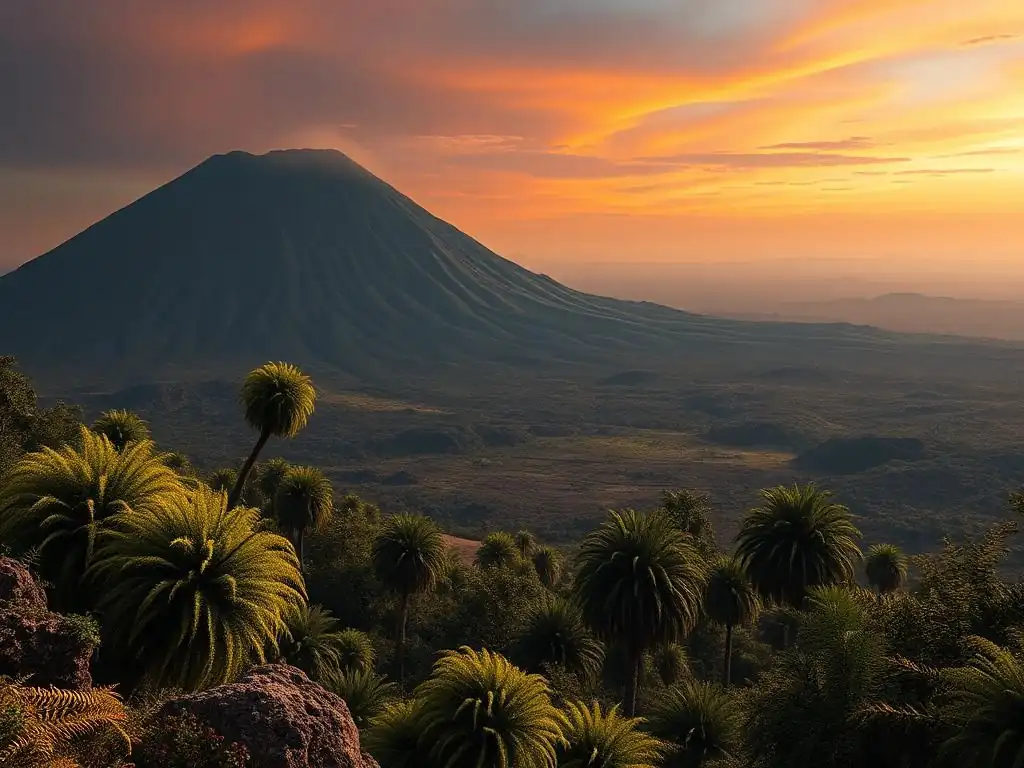
The massive volcanic eruptions associated with Gondwana, particularly the Large Igneous Provinces, released colossal quantities of volcanic gases into the atmosphere. These gases, primarily sulfur dioxide (SO2) and carbon dioxide (CO2), had significant impacts on the global climate and environment during the Gondwana era. Sulfur dioxide, upon reacting with water vapor in the atmosphere, forms sulfate aerosols, which reflect sunlight back into space, causing short-term global cooling.
Carbon dioxide, a greenhouse gas, traps heat in the atmosphere, leading to long-term global warming. The interplay between these opposing climatic effects from volcanic gases can create complex and sometimes abrupt climate fluctuations.
During the eruption of LIPs like the Karoo-Ferrar and Serra Geral, the release of vast amounts of SO2 likely caused periods of volcanic winter, characterized by decreased sunlight, lower temperatures, and acid rain. These short-term cooling events could have stressed ecosystems and potentially contributed to biodiversity loss. However, the cumulative long-term effect of LIP volcanism is often associated with increased atmospheric CO2 and global warming.
The massive release of CO2 from these prehistoric volcanoes over millions of years could have driven significant changes in global temperatures, ocean acidification, and sea levels. Understanding the precise balance between cooling and warming effects and the long-term climatic consequences of Gondwanan volcanism is a subject of ongoing research, utilizing climate models and geochemical proxies to reconstruct past atmospheric conditions.
Mass Extinctions and Volcanic Activity: Correlation in the Fossil Record
The fossil record reveals several major mass extinction events in Earth's history, periods of rapid and widespread biodiversity loss. Intriguingly, some of these mass extinction events are temporally correlated with the eruption of Large Igneous Provinces, including those associated with Gondwana. This temporal correlation has led to hypotheses suggesting a causal link between massive volcanism and mass extinctions. The environmental stresses caused by volcanic gases and climate change, as discussed previously, are considered potential drivers of these extinction events.
The End-Permian Extinction and the Siberian Traps Analogy
The End-Permian extinction, also known as the "Great Dying," was the most severe mass extinction event in Earth's history, occurring approximately 252 million years ago. This event wiped out an estimated 96% of marine species and 70% of terrestrial vertebrate species. The timing of the End-Permian extinction coincides closely with the eruption of the Siberian Traps, a massive LIP in present-day Siberia. The Siberian Traps erupted through coal-rich sedimentary basins, releasing not only volcanic gases like SO2 and CO2 but also significant amounts of methane (CH4), a potent greenhouse gas, and other volatile compounds.
The End-Permian extinction is often cited as an analogy for understanding the potential impacts of Gondwanan LIPs on ancient ecosystems. While no Gondwanan LIP is directly linked to the End-Permian extinction, the Karoo-Ferrar LIP eruption is temporally associated with the Triassic-Jurassic extinction event, a smaller but still significant mass extinction approximately 201 million years ago. The Triassic-Jurassic extinction saw the demise of many large reptile groups and paved the way for the rise of dinosaurs.
The similarities between the Siberian Traps and Karoo-Ferrar LIPs, in terms of eruption style and potential environmental impacts, suggest that massive volcanism could indeed be a significant driver of mass extinction events. However, the precise mechanisms and the relative contributions of volcanic gases, climate change, and other factors in causing these extinctions are still debated and actively researched.
Evolution and Adaptation in the Face of Volcanic Events
While volcanic eruptions can cause widespread environmental disruption and potentially contribute to mass extinctions, they also act as agents of evolutionary change. Ecosystems and species that survive volcanic events often exhibit adaptations to the altered environmental conditions, and volcanic landscapes themselves can create new habitats and opportunities for biological diversification. Life's resilience and adaptability in the face of volcanic disturbances are evident throughout geological history.
Following volcanic eruptions, ecosystems often undergo periods of ecological succession, with pioneer species colonizing volcanic landscapes and gradually giving way to more complex communities. Volcanic soils, initially barren, can become fertile over time as weathering processes release nutrients. Volcanic activity can also create new landmasses, islands, and hydrothermal vents, providing novel environments for species to evolve and adapt.
For example, hydrothermal vent ecosystems, often associated with volcanically active regions, are biodiversity hotspots with unique communities of organisms adapted to extreme chemical and thermal conditions. The long-term evolutionary consequences of Gondwanan volcanism are still being explored, but it is clear that these prehistoric volcanic events, while potentially destructive in the short term, also played a role in shaping the course of life's evolution over geological timescales.
Techniques for Studying Prehistoric Volcanic Activity
Radiometric Dating: Unlocking the Age of Gondwana's Volcanoes
Radiometric dating is a fundamental technique for determining the age of volcanic rocks and establishing the chronology of prehistoric volcanic events in Gondwana. This method relies on the principle of radioactive decay, where unstable isotopes of certain elements (parent isotopes) spontaneously transform into stable isotopes (daughter isotopes) at a known and constant rate. By measuring the ratio of parent to daughter isotopes in a rock sample, scientists can calculate the time elapsed since the rock solidified, effectively dating the volcanic eruption.
Several radiometric dating methods are commonly used in volcanology, including potassium-argon (K-Ar), argon-argon (Ar-Ar), uranium-lead (U-Pb), and rubidium-strontium (Rb-Sr) dating. The choice of method depends on the age of the rocks and the minerals present. For dating Gondwanan volcanic rocks, which range in age from Jurassic to Cretaceous and older, Ar-Ar dating is particularly useful due to its precision and applicability to a wide range of volcanic materials.
U-Pb dating, primarily used for dating zircon crystals, can also be applied to volcanic rocks to obtain highly accurate ages. Radiometric dating provides the essential temporal framework for understanding the sequence of volcanic events, correlating volcanic provinces across Gondwana, and assessing the relationship between volcanism and other geological and biological events.
Paleomagnetism: Reconstructing Gondwana's Volcanic History
Paleomagnetism is another powerful technique used to study prehistoric volcanic activity and reconstruct Gondwana's geological history. When volcanic rocks cool and solidify, iron-bearing minerals within them, such as magnetite, align themselves with the Earth's magnetic field at that time. This alignment is permanently recorded in the rock, providing a fossilized record of the ancient magnetic field. By measuring the remanent magnetization of volcanic rocks, paleomagnetists can determine the direction and intensity of the Earth's magnetic field at the time of eruption and the paleolatitude (latitude at the time of formation) of the volcanic rocks.
Paleomagnetic studies of Gondwanan volcanic rocks have contributed significantly to understanding continental drift and the reconstruction of Gondwana. By comparing the paleomagnetic directions from volcanic rocks on different continents, scientists can track the relative movements of these continents over time. Paleomagnetism has been crucial in confirming the existence of Gondwana and reconstructing its configuration.
Furthermore, paleomagnetic data can be used to study the temporal variations of the Earth's magnetic field, including magnetic reversals, which are recorded in volcanic rock sequences. Paleomagnetism, therefore, provides both a tool for dating volcanic rocks (magnetostratigraphy) and a means of reconstructing the tectonic and geographic context of Gondwana's prehistoric volcanoes.
Comparative Volcanology: Drawing Parallels with Modern Eruptions
Comparative volcanology involves studying modern volcanic eruptions and volcanic systems to gain insights into the processes and characteristics of prehistoric volcanoes. While we cannot directly observe Gondwana's volcanoes in action, studying active volcanoes provides valuable analogues for understanding the dynamics of ancient eruptions. By comparing the geological features, rock types, and eruption styles of modern volcanoes with the preserved record of Gondwanan volcanism, we can make informed interpretations about the nature of these prehistoric events.
For example, studying modern flood basalt eruptions in Iceland or Hawaii can help us understand the processes involved in the massive effusive eruptions that formed LIPs like the Serra Geral and Karoo-Ferrar. Observing explosive eruptions at volcanoes like Mount St. Helens or Pinatubo provides insights into the formation of pyroclastic deposits and the dispersal of volcanic ash, which are relevant to interpreting tephra layers in the Gondwanan geological record.
Comparative volcanology also involves using numerical models to simulate volcanic processes, such as magma ascent, eruption dynamics, and lava flow emplacement. By drawing parallels between modern and ancient volcanism, and by applying our understanding of volcanic processes to the Gondwanan geological record, we can develop more comprehensive and realistic reconstructions of the prehistoric volcanoes of Gondwana.
Future Research Directions: Further Exploring Gondwana's Volcanic Heritage
Unanswered Questions About Gondwana's Prehistoric Volcanoes
Despite significant progress in understanding Gondwana's volcanic past, many unanswered questions remain, offering exciting avenues for future research. One key area is to refine the geochronology of Gondwanan LIPs. While radiometric dating has provided a general timeline, more precise and high-resolution dating is needed to understand the eruption rates, durations, and synchroneity of volcanic events across different regions of Gondwana. Better dating will help to establish more robust correlations between volcanism, climate change, and biotic events.
Another important area is to further investigate the mantle sources and magma generation processes of Gondwanan volcanism. Detailed geochemical and isotopic studies of volcanic rocks from different LIPs and volcanic provinces are needed to better characterize the mantle plumes and other mantle reservoirs involved in magma genesis. Understanding the composition and evolution of Gondwanan magmas will provide insights into the Earth's mantle dynamics and the thermal and chemical evolution of the planet.
Furthermore, more research is needed to fully assess the environmental and ecological impacts of Gondwanan volcanism. This includes studying the sedimentary record associated with volcanic eruptions to reconstruct past climate conditions, ocean chemistry, and ecosystem responses. Paleontological studies of fossil assemblages from Gondwanan strata can provide further evidence of the biotic effects of volcanic events and the patterns of extinction and recovery.
The Importance of Continued Research for Understanding Earth's Volcanic Processes
Continued research into Gondwana's prehistoric volcanoes is not just about unraveling the geological history of a vanished supercontinent. It has broader implications for understanding fundamental Earth processes and addressing contemporary challenges. Studying Gondwanan LIPs provides valuable insights into the mechanisms of massive magma generation and eruption, which are relevant to understanding volcanic hazards and mitigating volcanic risks in modern volcanic regions.
Understanding the climatic and environmental impacts of Gondwanan volcanism is also crucial in the context of current global climate change. The massive release of volcanic gases from prehistoric volcanoes serves as a natural analogue for studying the effects of greenhouse gas emissions and the Earth's climate system's response to large-scale perturbations.
Moreover, the study of Gondwana's volcanic heritage contributes to our understanding of the long-term evolution of the Earth's mantle, crust, and atmosphere. By deciphering the geological record of prehistoric volcanism, we gain a deeper appreciation for the dynamic nature of our planet and the interconnectedness of geological, climatic, and biological systems over geological time. Future research, incorporating new technologies and interdisciplinary approaches, will undoubtedly continue to reveal new and exciting discoveries about the lost volcanoes of Gondwana and their profound significance in Earth's history.
Frequently Asked Questions
What was Gondwana, and why is it important when discussing prehistoric volcanoes?
Gondwana was a supercontinent that existed millions of years ago. Understanding its geography is crucial because it helps us trace the locations and relationships of prehistoric volcanoes that are now scattered across multiple continents.
Where can I find evidence of prehistoric volcanoes from the Gondwana supercontinent today?
Evidence can be found in various locations, including South America, Africa, Antarctica, Australia, and India. Look for remnants of volcanic rock formations and ancient lava flows in these regions.
What types of volcanic eruptions were common during the time of Gondwana?
The eruptions ranged from effusive lava flows to more explosive events, depending on the magma composition and geological context. The geological record reveals evidence of both types of activity.
How do scientists study prehistoric volcanoes from Gondwana?
Scientists use various techniques such as radiometric dating to determine the age of volcanic rocks. They also analyze the chemical composition of the rocks to understand the magma source and eruption style.
What can the study of Gondwana's prehistoric volcanoes tell us about the Earth's history?
Studying these volcanoes provides insights into plate tectonics, climate change, and the evolution of life during that period. It helps us understand the dynamic processes that shaped the Earth's surface in the distant past.
Final Reflection: Echoes of Gondwana's Fire
The story of Gondwana's lost volcanoes, once relegated to the dusty pages of paleogeography, now resonates with a renewed urgency. Understanding these prehistoric eruptions is not just about reconstructing the past; it's about deciphering the Earth's volatile nature and its potential impact on our future. The geological fingerprints left by these ancient events offer invaluable insights into the processes that shape our planet, informing our understanding of modern volcanic activity and its associated risks.
The sheer scale of Gondwana and the intensity of its volcanic activity underscore the profound influence of geological forces on the evolution of life and the distribution of resources. This exploration into the deep past reminds us that the continents we inhabit are not static entities, but rather dynamic landscapes shaped by forces far greater than ourselves. The past is never dead. It's not even past.
- William Faulkner. This quote encapsulates the enduring relevance of Gondwana's volcanic legacy, a legacy that continues to shape our world in subtle, yet significant ways.
Let the echoes of Gondwana's fire ignite a spark of curiosity within you. As you consider the immense timescales and powerful forces that sculpted our planet, ask yourself: what lessons can we learn from the Earth's fiery past to better navigate the challenges of our present and future? Embrace the knowledge gleaned from these prehistoric volcanoes, and let it fuel a deeper appreciation for the dynamic world we inhabit and the importance of responsible stewardship of our planet.
Unleash Your Inner Volcanologist!
Thank you for journeying with us into the heart of Gondwana's fiery past. We hope you've enjoyed uncovering these hidden volcanic wonders and their impact on our planet's ancient landscape. Now, it's time to put that knowledge to good use!
Here's how you can continue your exploration:
- Chart a Course to Rediscovery: Dive deeper into regional geological surveys available online. You might just uncover evidence of other forgotten volcanic formations in your own area!
- Share the Adventure:Enrich the minds of your peers and students by sharing this article with them!
- Join the Volcano Explorers Community: What features of ancient volcanoes pique your interest the most? Start a discussion below!