
Hunga Tonga's Eruption: A Turning Point in Volcanic Tsunami Research?


Welcome to Volcano Explorers, where the Earth's fiery secrets are revealed! Prepare to journey into the heart of volcanic power and discover the science, history, and impact of these awe-inspiring forces. But what if everything we thought we knew about volcanic tsunamis was about to change? Dive in and uncover the latest groundbreaking Hunga Tonga volcanic tsunami research that's reshaping our understanding of these devastating events, and leaving us with more questions than answers. The drama is only just beginning...
- Introduction: The Unprecedented Hunga Tonga-Hunga Ha'apai Eruption
- The Unique Challenges of Volcanic Tsunami Research Before Hunga Tonga
- Hunga Tonga: A Catalyst for New Volcanic Tsunami Research Approaches
- Key Findings from Hunga Tonga Tsunami Studies
- Advancements in Volcanic Tsunami Modeling and Prediction
- The Impact on Coastal Communities and Future Preparedness
- Hunga Tonga's Legacy: Reshaping the Future of Volcanic Tsunami Research
- Conclusion: A New Era in Understanding Volcanic Tsunamis
-
Frequently Asked Questions
- What made the Hunga Tonga eruption so significant for volcanic tsunami research?
- What are some of the key areas of research being focused on after the Hunga Tonga eruption?
- How has our understanding of volcanic tsunamis changed as a result of studying the Hunga Tonga eruption?
- What kind of data is being used to study the Hunga Tonga tsunami?
- How might this research improve future tsunami warning systems?
- Final Reflection: Echoes of Hunga Tonga, Waves of Progress
- Unearth New Insights: Join the Volcano Explorers Community!
Introduction: The Unprecedented Hunga Tonga-Hunga Ha'apai Eruption
Setting the Stage: The January 15, 2022 Eruption
On January 15, 2022, the Hunga Tonga-Hunga Ha'apai volcano in the Kingdom of Tonga unleashed an eruption of extraordinary magnitude. This event was not only remarkable for its explosive power, estimated to be hundreds of times more potent than the Hiroshima atomic bomb, but also for the array of geophysical phenomena it triggered.
The eruption sent ash plumes soaring to record heights, generated atmospheric pressure waves that circled the globe multiple times, and most significantly for coastal regions, spawned a tsunami that propagated across the Pacific and beyond. The sheer scale and complexity of the Hunga Tonga eruption immediately captured the attention of scientists worldwide, presenting an unprecedented opportunity to study volcanic processes and their far-reaching impacts.
The eruption sequence itself was relatively short-lived in geological terms, with the most intense phase lasting only a few hours. However, the impact was profound and widespread. Satellite imagery captured the dramatic disintegration of the volcanic island, while ground-based instruments and global networks of sensors recorded the eruption’s atmospheric and oceanic signatures.
The event occurred in a relatively remote location, minimizing direct casualties in Tonga compared to the potential scale of the disaster. Despite this relative remoteness, the tsunami it generated caused significant damage in Tonga and registered on tide gauges thousands of kilometers away, highlighting the global reach of volcanic tsunamis and the critical need for improved understanding and prediction capabilities in volcanic tsunami research.
Why Hunga Tonga Matters: Impact on Volcanic Tsunami Studies
The Hunga Tonga-Hunga Ha'apai eruption of 2022 has rapidly become a watershed moment in the field of volcanic tsunami research. Prior to this event, volcanic tsunamis were often considered secondary to earthquake-generated tsunamis in terms of global hazard and research focus. While scientists recognized their potential danger, the relative infrequency of large volcanic tsunami events and the limited data available from past eruptions hampered in-depth study and the development of robust predictive models. Hunga Tonga changed this landscape dramatically by providing an exceptionally well-documented case of a large volcanic tsunami, offering a wealth of new data and insights.
This eruption has compelled a re-evaluation of existing paradigms in volcanic tsunami research. The event underscored the significant role of atmospheric pressure waves in tsunami generation, a factor that was previously underestimated in many models.
The global reach of the Hunga Tonga tsunami, observed across entire ocean basins, demonstrated that volcanic tsunamis are not just localized hazards but can pose a threat to distant coastlines. The diverse datasets collected – from satellite observations to pressure sensor readings, and from tide gauge records to eyewitness accounts – provide an unprecedented opportunity to refine our understanding of the complex mechanisms driving volcanic tsunamis and to improve our ability to forecast these potentially devastating events, marking a turning point in Hunga Tonga volcanic tsunami research.
The Unique Challenges of Volcanic Tsunami Research Before Hunga Tonga
Distinguishing Volcanic Tsunamis from Seismic Tsunamis: A Historical Perspective
Historically, tsunamis have been primarily associated with earthquakes, particularly those occurring at subduction zones where tectonic plates collide and one slides beneath another. These seismic tsunamis, generated by the vertical displacement of the seafloor during an earthquake, have been the focus of most tsunami research and warning systems.
Volcanic tsunamis, while recognized as a potential hazard, were often viewed as a less frequent and less understood phenomenon. Distinguishing between the two types has been a key challenge in historical records, as early accounts often lacked the scientific rigor to definitively attribute a tsunami to either a seismic or volcanic source.
The 1883 Krakatoa eruption, one of the most devastating volcanic events in recorded history, serves as a stark reminder of the power of volcanic tsunamis. While the Krakatoa tsunami caused immense loss of life, claiming an estimated 36,000 lives primarily in Java and Sumatra, the mechanisms of its generation were not fully understood at the time. Early interpretations often attributed the Krakatoa tsunami solely to caldera collapse, a process where the emptying magma chamber beneath a volcano leads to the roof of the chamber collapsing.
However, more recent research suggests that other factors, including pyroclastic flows entering the sea and submarine explosions, likely contributed to the tsunami generation. This historical ambiguity underscores the difficulties in disentangling the complex processes that can generate volcanic tsunamis and highlights the need for improved methods to differentiate them from seismic tsunamis in both historical records and real-time monitoring.
Limited Data and Modeling Difficulties: Pre-2022 Challenges
Before the Hunga Tonga eruption, volcanic tsunami research faced significant limitations due to the scarcity of high-quality data from past events. Large volcanic eruptions that generate significant tsunamis are relatively infrequent compared to earthquakes that trigger tsunamis. Furthermore, many historical volcanic eruptions occurred in remote locations or lacked the sophisticated instrumentation available today to capture the full spectrum of tsunami-generating processes. This data scarcity hindered the development and validation of accurate numerical models for volcanic tsunamis.
Modeling volcanic tsunamis is inherently more complex than modeling seismic tsunamis. Seismic tsunami models primarily focus on the seafloor deformation caused by earthquakes as the tsunami source. In contrast, volcanic tsunamis can be generated by a variety of mechanisms, including submarine explosions, pyroclastic flows entering the water, landslides triggered by volcanic activity, and caldera collapse.
Each of these mechanisms has distinct characteristics and spatial scales, requiring different modeling approaches. Pre-2022 models often simplified these complex processes or focused on only one or two potential generation mechanisms, limiting their ability to accurately represent the full range of volcanic tsunami scenarios. The lack of comprehensive datasets from well-observed volcanic tsunami events made it difficult to validate these models and assess their predictive capabilities, posing a significant challenge to advancing volcanic tsunami research.
The Role of Atmospheric Waves: A Previously Underestimated Factor
Prior to the Hunga Tonga eruption, the role of atmospheric waves in generating tsunamis was largely underestimated in volcanic tsunami research. While it was known that atmospheric pressure disturbances could, in theory, excite ocean waves, the magnitude of this effect in the context of volcanic eruptions was not well understood or incorporated into most tsunami models. Traditional volcanic tsunami research primarily focused on the direct transfer of energy from the volcanic source to the ocean through mechanisms like submarine explosions and landslides.
The Hunga Tonga eruption dramatically changed this perspective. The eruption generated exceptionally strong atmospheric pressure waves, known as Lamb waves, which propagated globally. These pressure waves, traveling at the speed of sound, were observed to couple with the ocean surface, transferring energy and effectively pushing the ocean downwards and then upwards, creating a tsunami.
The speed of the Hunga Tonga tsunami, significantly faster than typical earthquake-generated tsunamis, was a key indicator of the atmospheric contribution. Seismic tsunamis travel at speeds determined by water depth, whereas atmospheric-driven tsunamis can propagate at speeds closer to the atmospheric wave speed. The Hunga Tonga event highlighted that atmospheric coupling could be a dominant mechanism in volcanic tsunami generation, particularly for highly explosive eruptions, necessitating a significant shift in volcanic tsunami research to incorporate these atmospheric effects.
Hunga Tonga: A Catalyst for New Volcanic Tsunami Research Approaches
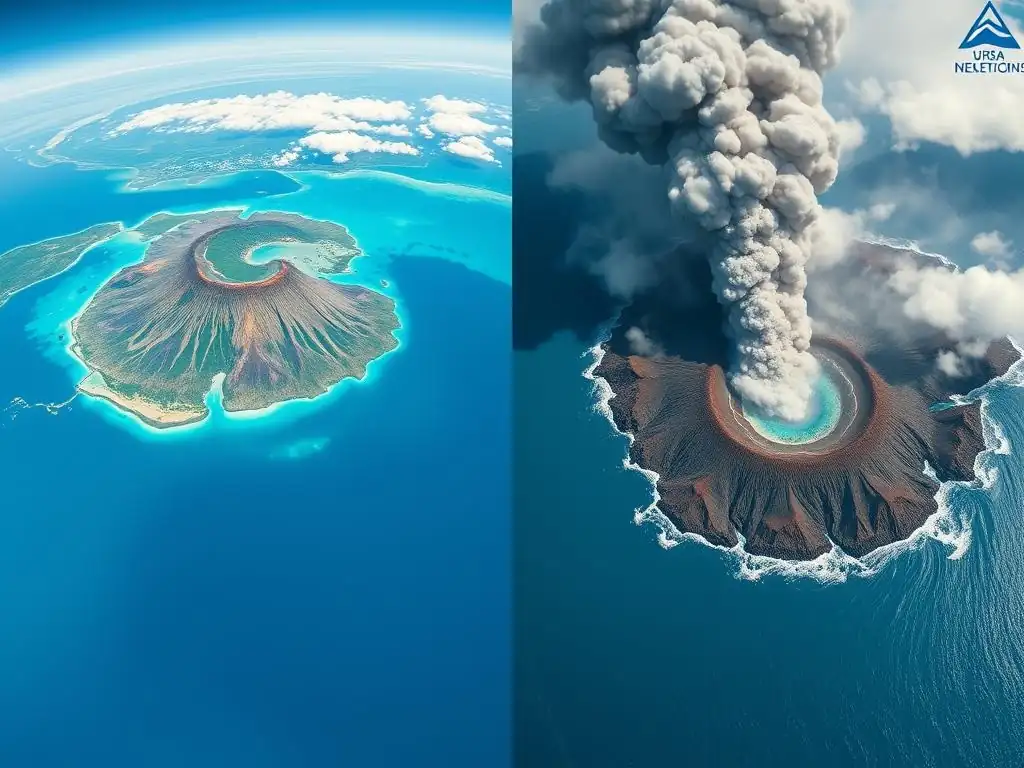
The Wealth of Data Generated by the Hunga Tonga Eruption
The Hunga Tonga-Hunga Ha'apai eruption in 2022 stands out for the sheer volume and diversity of data it generated, providing an unparalleled opportunity for volcanic tsunami research. Unlike many historical volcanic eruptions, Hunga Tonga occurred in an era of advanced global monitoring networks, including extensive satellite coverage, dense networks of ground-based geophysical instruments, and sophisticated oceanographic sensors. This allowed scientists to capture the eruption and its subsequent tsunami in unprecedented detail, from the initial volcanic explosion to the global propagation of the tsunami waves.
Satellite observations provided spectacular views of the eruption plume, the collapsing volcanic island, and the atmospheric waves spreading outwards. Global networks of seismic stations and infrasound sensors recorded the eruption’s ground vibrations and atmospheric pressure pulses. Tide gauges and Deep-ocean Assessment and Reporting of Tsunamis (DART) buoys across the Pacific and even in the Atlantic and Indian Oceans registered the tsunami waves, providing crucial data on wave arrival times, heights, and propagation characteristics.
Eyewitness accounts and social media posts, while less precise, also contributed valuable information about the tsunami’s impact in coastal communities, especially in Tonga. This wealth of multi-faceted data from Hunga Tonga has become a treasure trove for the volcanic tsunami research community, enabling detailed analysis and model validation that was simply not possible for previous volcanic tsunami events.
Advanced Monitoring Technologies Deployed During and After the Eruption
The response to the Hunga Tonga eruption involved the rapid deployment and utilization of advanced monitoring technologies, further enhancing the data available for volcanic tsunami research. Existing global networks of seismic, infrasound, and hydroacoustic sensors provided near real-time data on the eruption and tsunami. In addition, researchers mobilized quickly to deploy specialized instruments to study the event in more detail.
For example, pressure sensors were deployed in the vicinity of Tonga to measure the atmospheric pressure waves and their interaction with the ocean. Oceanographic research cruises were conducted to map the bathymetry around the Hunga Tonga-Hunga Ha'apai volcano, providing crucial information about the submarine topography and potential landslide sources. High-resolution satellite imagery and drone surveys were used to assess the changes to the volcanic island and the surrounding coastal areas.
Furthermore, sophisticated numerical models were rapidly adapted and refined to simulate the eruption and tsunami, using the newly acquired data to improve their accuracy. The combination of pre-existing global monitoring infrastructure and the rapid deployment of targeted research instruments has created an exceptionally rich dataset that is driving significant advancements in Hunga Tonga volcanic tsunami research.
A Focus on Atmospheric Coupling: Understanding the Role of Air-Sea Interactions
The Hunga Tonga eruption has fundamentally shifted the focus of volcanic tsunami research towards understanding the crucial role of atmospheric coupling and air-sea interactions in tsunami generation. The evidence strongly suggests that the atmospheric pressure waves generated by the eruption were a primary driver of the observed tsunami, rather than solely mechanisms like submarine explosions or caldera collapse. This realization has spurred a wave of new research aimed at unraveling the complex processes involved in transferring energy from the atmosphere to the ocean during explosive volcanic eruptions.
Scientists are now investigating the precise mechanisms by which atmospheric Lamb waves couple with the ocean surface to generate tsunamis. This includes studying the efficiency of energy transfer, the influence of ocean stratification and bathymetry on wave propagation, and the potential for resonance effects between atmospheric and oceanic waves. Numerical models are being developed to explicitly incorporate atmospheric forcing into tsunami simulations, requiring a coupled atmosphere-ocean modeling approach.
Analyses of the Hunga Tonga data are focused on quantifying the relative contributions of atmospheric pressure waves versus other potential tsunami generation mechanisms. This intensified focus on atmospheric coupling is not only improving our understanding of volcanic tsunamis but also has broader implications for research into other types of atmospherically-generated ocean waves and air-sea interaction processes in general, fundamentally reshaping the direction of Hunga Tonga volcanic tsunami research.
Key Findings from Hunga Tonga Tsunami Studies
Evidence of Atmospheric-Driven Tsunami Generation
One of the most significant findings from Hunga Tonga tsunami studies is the compelling evidence for atmospheric-driven tsunami generation. Analysis of tide gauge records and DART buoy data revealed that the tsunami arrival times and propagation speeds were consistent with atmospheric Lamb wave propagation rather than typical gravity wave speeds associated with seismic tsunamis.
The tsunami was observed to travel at speeds of approximately 300 m/s, significantly faster than the speed of a typical tsunami in the deep ocean, which is around 200 m/s for an average depth of 4000 meters. This faster propagation speed strongly suggests that the atmospheric pressure waves played a dominant role in driving the tsunami.
Furthermore, numerical modeling studies that incorporated atmospheric pressure forcing were able to reproduce the observed tsunami characteristics with much greater accuracy than models that only considered submarine sources. These models showed that the atmospheric pressure pulse from the eruption effectively pushed down on the ocean surface, creating a depression that then radiated outwards as a tsunami wave.
The spatial coherence of the tsunami wave front over vast distances also supports the atmospheric forcing mechanism, as atmospheric waves tend to maintain their shape over long distances. The combined evidence from observational data and numerical modeling has solidified the understanding that the Hunga Tonga tsunami was primarily generated by atmospheric pressure waves, marking a paradigm shift in Hunga Tonga volcanic tsunami research and the broader field.
The Speed and Reach of the Hunga Tonga Tsunami: Global Propagation and Observed Wave Heights
The Hunga Tonga tsunami was remarkable not only for its generation mechanism but also for its exceptional speed and global reach. As mentioned earlier, the tsunami propagated at speeds consistent with atmospheric Lamb waves, allowing it to traverse vast ocean basins much faster than typical tsunamis. This rapid propagation meant that the Hunga Tonga tsunami reached distant coastlines much sooner than would be expected for a tsunami of comparable size generated by a seismic source.
The tsunami was observed in all ocean basins, including the Pacific, Atlantic, and Indian Oceans. Tide gauges thousands of kilometers away from Tonga, such as those along the coasts of North and South America, Japan, and even Europe, recorded measurable tsunami signals. While the wave heights at distant locations were generally smaller than those closer to the source, they were still significant enough to cause coastal flooding and damage in some areas.
For example, wave heights of over 1 meter were recorded in parts of Peru and Chile, leading to coastal inundation and disruption. The global propagation and measurable wave heights at such distant locations underscore the far-reaching impact of volcanic tsunamis and highlight the need for global tsunami warning systems to consider volcanic sources in addition to earthquakes, a key lesson learned from Hunga Tonga volcanic tsunami research.
Refining Tsunami Warning Systems: Lessons Learned from Hunga Tonga
The Hunga Tonga eruption and its associated tsunami have provided invaluable lessons for refining tsunami warning systems, particularly in relation to volcanic sources. Current tsunami warning systems are primarily designed to detect and respond to earthquake-generated tsunamis. The Hunga Tonga event highlighted the need to enhance these systems to better account for volcanic tsunamis and the unique characteristics associated with atmospheric forcing.
One key lesson is the importance of incorporating atmospheric pressure data into tsunami early warning protocols. The rapid propagation of the Hunga Tonga tsunami, driven by atmospheric waves, meant that traditional seismic-based tsunami warning approaches, which rely on detecting earthquakes and estimating tsunami travel times based on water depth, were less effective in providing timely warnings for distant coastlines.
Integrating real-time atmospheric pressure measurements and incorporating atmospheric forcing into tsunami prediction models can significantly improve warning lead times for volcanic tsunamis. Furthermore, the Hunga Tonga event emphasized the need for more comprehensive monitoring of volcanic activity, including not only seismic signals but also infrasound and atmospheric pressure changes, to better assess the potential for tsunami generation from volcanic eruptions.
These lessons are crucial for strengthening global tsunami warning systems and enhancing coastal community preparedness for both seismic and volcanic tsunamis, driven by the insights gained from Hunga Tonga volcanic tsunami research.
Advancements in Volcanic Tsunami Modeling and Prediction
Incorporating Atmospheric Effects into Tsunami Models
The Hunga Tonga eruption has spurred significant advancements in volcanic tsunami modeling, particularly in the crucial area of incorporating atmospheric effects. Pre-2022 tsunami models largely neglected the role of atmospheric pressure waves, focusing primarily on submarine sources like seafloor deformation or landslides. The overwhelming evidence for atmospheric-driven tsunami generation in the Hunga Tonga event has necessitated a fundamental shift in modeling approaches.
Researchers are now actively developing and refining numerical models that explicitly account for atmospheric forcing. This involves coupling atmospheric models with ocean models to simulate the complex interactions between atmospheric pressure waves and the ocean surface. These coupled models can simulate the generation of tsunamis by atmospheric Lamb waves, their propagation characteristics, and their impact on coastal regions.
Incorporating atmospheric effects into tsunami models requires a deeper understanding of air-sea interaction processes and the transfer of energy from the atmosphere to the ocean. Validation of these new models is heavily reliant on the wealth of data from the Hunga Tonga eruption, allowing for rigorous testing and refinement of model parameters and algorithms. This advancement in modeling atmospheric effects represents a significant step forward in improving the accuracy and realism of volcanic tsunami simulations, a direct outcome of Hunga Tonga volcanic tsunami research.
Improving Real-Time Tsunami Forecasting Capabilities
The lessons learned from Hunga Tonga are directly contributing to improvements in real-time tsunami forecasting capabilities, especially for volcanic sources. Traditional tsunami forecasting systems, primarily designed for seismic tsunamis, rely on earthquake parameters and pre-calculated tsunami travel times. The Hunga Tonga event highlighted the limitations of this approach for volcanic tsunamis, particularly those driven by atmospheric waves.
Current research efforts are focused on developing real-time forecasting systems that can incorporate data from multiple sources, including seismic networks, infrasound sensors, atmospheric pressure sensors, and satellite observations. These systems aim to rapidly assess the potential for tsunami generation from volcanic eruptions, considering both submarine and atmospheric mechanisms. Advanced numerical models that incorporate atmospheric forcing are being integrated into these forecasting systems to provide more accurate and timely tsunami predictions.
Machine learning techniques are also being explored to improve the speed and accuracy of real-time tsunami forecasting, by learning from past events like Hunga Tonga and identifying patterns in multi-sensor data. These advancements in real-time forecasting are crucial for enhancing tsunami warning systems and providing coastal communities with more effective alerts for volcanic tsunami hazards, directly stemming from the insights gained from Hunga Tonga volcanic tsunami research.
The Development of More Accurate Volcanic Tsunami Hazard Assessments
The Hunga Tonga eruption is also driving the development of more accurate volcanic tsunami hazard assessments. Traditional tsunami hazard assessments often prioritize seismic sources, with volcanic sources either being overlooked or treated with simplified approaches due to limited data and understanding. The detailed data and new insights from Hunga Tonga are enabling a more comprehensive and realistic evaluation of volcanic tsunami hazards.
Researchers are using the Hunga Tonga data to refine probabilistic tsunami hazard assessments (PTHA) for volcanically active regions. This involves improving the characterization of volcanic tsunami sources, including the probabilities of different eruption scenarios, the potential for atmospheric-driven tsunamis, and the range of possible tsunami magnitudes. New modeling techniques that incorporate atmospheric effects are being used to simulate a wider range of volcanic tsunami scenarios and to better quantify tsunami inundation risks along coastlines.
These improved hazard assessments will provide more accurate information for coastal planning, infrastructure development, and risk mitigation strategies in volcanically active regions. By providing a more robust understanding of volcanic tsunami hazards, Hunga Tonga volcanic tsunami research is contributing to enhanced coastal resilience and community safety.
The Impact on Coastal Communities and Future Preparedness
Understanding the Vulnerability of Coastal Regions to Volcanic Tsunamis
The Hunga Tonga tsunami served as a stark reminder of the vulnerability of coastal regions to volcanic tsunamis, even at considerable distances from the source. While Tonga itself experienced significant damage, the tsunami also impacted coastlines across the Pacific and beyond, demonstrating the widespread reach of these events. The eruption highlighted that coastal communities, even those far from active volcanoes, need to be aware of and prepared for the potential threat of volcanic tsunamis.
Understanding the specific vulnerabilities of different coastal regions is crucial for effective preparedness. Factors such as coastal topography, bathymetry, population density, infrastructure development, and existing early warning systems all influence the level of risk. Low-lying coastal areas and island nations are particularly vulnerable to tsunami inundation.
Communities with limited infrastructure or communication networks may face greater challenges in responding to tsunami warnings and evacuating effectively. The Hunga Tonga experience underscores the need for tailored vulnerability assessments for coastal regions, considering both local factors and the potential for distant volcanic tsunami sources, informing targeted preparedness strategies based on Hunga Tonga volcanic tsunami research findings.
Strengthening Early Warning Systems for Volcanic Eruptions
The Hunga Tonga eruption has underscored the critical need for strengthening early warning systems specifically for volcanic eruptions that can generate tsunamis. While existing tsunami warning systems are effective for earthquake-generated tsunamis, they need to be enhanced to better address the unique characteristics of volcanic tsunamis, especially those driven by atmospheric pressure waves.
Strengthening early warning systems for volcanic tsunamis involves several key components. This includes enhancing monitoring networks to detect volcanic activity and atmospheric pressure changes in real-time. Integrating atmospheric forcing into tsunami prediction models is crucial for providing more accurate and timely warnings.
Improving communication and dissemination of warnings to coastal communities, ensuring that warnings are clear, understandable, and reach all at-risk populations, is also essential. Furthermore, community-level preparedness activities, such as evacuation drills and tsunami education programs, are vital to ensure that warnings translate into effective responses and minimize potential casualties. By focusing on these areas, driven by the lessons of Hunga Tonga volcanic tsunami research, we can significantly improve the effectiveness of early warning systems for volcanic tsunamis and protect coastal communities.
Educating Communities about Volcanic Tsunami Risks
A crucial aspect of future preparedness for volcanic tsunamis is educating communities about the risks they pose and how to respond effectively. Many coastal communities may be more familiar with earthquake-generated tsunamis but less aware of the potential for tsunamis from volcanic eruptions, especially distant sources. Public education campaigns are essential to raise awareness and promote preparedness.
Educational programs should explain the different types of tsunamis, including volcanic tsunamis and their potential generation mechanisms. They should emphasize that volcanic tsunamis can travel long distances and impact even coastlines far from active volcanoes, as demonstrated by Hunga Tonga. Clear guidelines on tsunami warning signs, evacuation routes, and safety procedures should be disseminated to communities.
Engaging local communities in participatory preparedness activities, such as developing community-based evacuation plans and conducting tsunami drills, can enhance local ownership and improve response effectiveness. By increasing public awareness and promoting community-level preparedness, informed by Hunga Tonga volcanic tsunami research, we can build more resilient coastal regions and reduce the potential impact of future volcanic tsunami events.
Hunga Tonga's Legacy: Reshaping the Future of Volcanic Tsunami Research
Future Research Directions: Improved Modeling, Data Assimilation, and Source Characterization
The Hunga Tonga eruption has not only provided answers but has also opened up new avenues for future volcanic tsunami research. Several key research directions are emerging as a result of this pivotal event, aiming to further refine our understanding and predictive capabilities.
Improved modeling remains a critical focus. This includes developing more sophisticated coupled atmosphere-ocean models that can accurately simulate the complex interactions during volcanic eruptions and tsunami generation. Further research is needed to better characterize the various volcanic tsunami source mechanisms, including submarine explosions, pyroclastic flows, landslides, and caldera collapse, and their relative contributions.
Data assimilation techniques, which integrate observational data into numerical models in real-time, are crucial for improving the accuracy of tsunami forecasts. Furthermore, research into the long-term evolution of volcanic islands and submarine volcanoes, like Hunga Tonga-Hunga Ha'apai, is essential for assessing future eruption potential and associated tsunami hazards. These future research directions, inspired by Hunga Tonga volcanic tsunami research, promise to further advance our knowledge and predictive capabilities.
The Importance of International Collaboration in Volcanic Tsunami Studies
The global reach of the Hunga Tonga tsunami and the complexity of volcanic tsunami research underscore the importance of international collaboration. Tsunami research is inherently a global endeavor, requiring the sharing of data, expertise, and resources across national boundaries. International collaborations are essential for maintaining and enhancing global tsunami monitoring networks, including seismic, infrasound, and oceanographic sensors.
Sharing data from volcanic eruptions and tsunamis openly and rapidly is crucial for advancing research and improving forecasting capabilities. International research projects and collaborations facilitate the exchange of knowledge and best practices in volcanic tsunami modeling, hazard assessment, and early warning systems. Joint research expeditions and field studies can provide valuable insights into volcanic processes and tsunami generation mechanisms.
International cooperation is also essential for supporting capacity building and technology transfer to developing countries that are vulnerable to volcanic tsunamis. By fostering stronger international collaborations, the volcanic tsunami research community can collectively address the challenges and advance the field more effectively, building upon the foundation laid by Hunga Tonga volcanic tsunami research.
The Long-Term Implications for Tsunami Hazard Mitigation
The Hunga Tonga eruption has profound long-term implications for tsunami hazard mitigation strategies globally. It has highlighted the need to broaden the scope of tsunami hazard mitigation beyond earthquake sources to include volcanic sources, particularly atmospheric-driven volcanic tsunamis. This requires a shift in hazard assessment methodologies, early warning systems, and community preparedness efforts.
Long-term hazard mitigation strategies should incorporate the improved understanding of volcanic tsunami hazards gained from Hunga Tonga volcanic tsunami research. This includes updating building codes and land-use planning regulations in coastal regions to account for volcanic tsunami risks. Investing in infrastructure improvements, such as seawalls and elevated evacuation routes, can enhance coastal resilience.
Developing and implementing comprehensive community preparedness plans, including regular drills and public education campaigns, is crucial for ensuring effective responses to tsunami warnings. Furthermore, promoting international cooperation and knowledge sharing in tsunami hazard mitigation is essential for building global resilience to both seismic and volcanic tsunamis. By integrating the lessons learned from Hunga Tonga into long-term hazard mitigation strategies, we can significantly reduce the vulnerability of coastal communities to these devastating natural hazards.
Conclusion: A New Era in Understanding Volcanic Tsunamis
Hunga Tonga: A Pivotal Event in Volcanology and Oceanography
The Hunga Tonga-Hunga Ha'apai eruption of January 15, 2022, stands as a pivotal event, not only in volcanology but also in oceanography, particularly in the field of tsunami research. This extraordinary eruption provided an unprecedented natural laboratory to study the complex interplay between volcanic processes, atmospheric dynamics, and oceanic responses. The wealth of data generated and the insights gained from Hunga Tonga have fundamentally reshaped our understanding of volcanic tsunamis, particularly the significant role of atmospheric pressure waves in their generation.
Hunga Tonga has demonstrated that volcanic tsunamis are not solely localized hazards but can have global reach and impact, posing a threat to distant coastlines. The event has spurred significant advancements in volcanic tsunami modeling, forecasting, and hazard assessment, driving innovation and collaboration within the scientific community.
The lessons learned from Hunga Tonga are now being actively translated into improved early warning systems, enhanced community preparedness, and more robust tsunami hazard mitigation strategies worldwide. This eruption has truly ushered in a new era in volcanic tsunami research, marking a turning point in our ability to understand, predict, and mitigate the risks associated with these powerful natural phenomena, driven by the critical insights of Hunga Tonga volcanic tsunami research.
The Ongoing Effort to Protect Coastal Communities from Volcanic Tsunamis
The Hunga Tonga eruption, while providing invaluable scientific insights, also served as a powerful reminder of the ongoing and urgent need to protect coastal communities from the devastating impacts of volcanic tsunamis. While significant progress has been made in understanding and predicting these events, much work remains to be done to translate this knowledge into effective risk reduction measures.
The volcanic tsunami research community remains actively engaged in ongoing efforts to further refine models, improve forecasting capabilities, and enhance early warning systems. International collaborations are crucial for sharing data, expertise, and resources to address this global challenge.
Continued investment in research, monitoring infrastructure, and community preparedness programs is essential for building resilient coastal communities and minimizing the potential for future volcanic tsunami disasters. The legacy of Hunga Tonga will be measured not only by the scientific advancements it has spurred but also by the extent to which it motivates and guides ongoing efforts to protect coastal populations from the ever-present threat of volcanic tsunamis, a commitment deeply rooted in Hunga Tonga volcanic tsunami research.
Frequently Asked Questions
What made the Hunga Tonga eruption so significant for volcanic tsunami research?
The Hunga Tonga eruption was significant because it generated a global tsunami that was unusually fast and long-lasting. This event challenged existing models and highlighted the need for improved understanding of atmospheric coupling in tsunami generation.
What are some of the key areas of research being focused on after the Hunga Tonga eruption?
Research is now heavily focused on atmospheric waves generated by the eruption and their role in tsunami propagation. Scientists are also studying the complex interaction between the volcano, ocean, and atmosphere during the event.
How has our understanding of volcanic tsunamis changed as a result of studying the Hunga Tonga eruption?
We now recognize the significant contribution of atmospheric pressure waves to tsunami generation, particularly in large explosive eruptions. The event revealed that tsunamis aren't solely caused by undersea landslides or caldera collapses.
What kind of data is being used to study the Hunga Tonga tsunami?
Researchers are using a variety of data, including satellite imagery, sea-level measurements, and atmospheric pressure data. This data helps to reconstruct the event and understand the mechanisms involved.
How might this research improve future tsunami warning systems?
By incorporating the role of atmospheric waves, future tsunami warning systems can be more accurate and timely, especially for tsunamis generated by volcanic eruptions. This will help to provide better warnings and protect coastal communities.
Final Reflection: Echoes of Hunga Tonga, Waves of Progress
The devastating eruption of Hunga Tonga-Hunga Ha'apai in 2022 served as a stark reminder of nature's raw power, but more importantly, it ignited a crucial turning point in our understanding of volcanic tsunamis. The urgency to refine our predictive models and enhance early warning systems has never been greater, as the global interconnectedness revealed by the event demands a proactive and collaborative approach to mitigate future risks.
The impact of Hunga Tonga extends far beyond the immediate devastation. It has profoundly influenced the direction of volcanic tsunami research, forcing us to re-evaluate existing paradigms and embrace innovative technologies. This event underscored the vulnerability of coastal communities worldwide and highlighted the critical need for improved communication and preparedness. The eruption of Hunga Tonga-Hunga Ha'apai was a wake-up call, demonstrating the complex interplay between volcanic activity and oceanic dynamics, and the urgent need for a more holistic approach to hazard assessment.
As we move forward, let us not forget the lessons learned from Hunga Tonga. Consider how you can contribute to a more resilient future, whether through supporting scientific research, advocating for improved disaster preparedness in your community, or simply staying informed about the ever-evolving understanding of our planet. The echoes of Hunga Tonga serve as a constant reminder: our collective vigilance and proactive engagement are paramount in safeguarding against the unpredictable forces of nature.
Unearth New Insights: Join the Volcano Explorers Community!
Thanks for delving into the fascinating story of Hunga Tonga and its impact on volcanic tsunami research. We hope you've gained a deeper appreciation for the complexities of these natural phenomena. Now, let's put that knowledge into action!
Here are a few ways you can further explore this topic:
- Become a Citizen Scientist: Contribute to ongoing research by reporting observed coastal anomalies or unusual wave patterns near volcanic regions. Even small observations can provide valuable data!
- Explore our interactive map of active volcanoes and share your findings on social media using #VolcanoExplorers.
- Subscribe to our monthly newsletter for exclusive content and updates on the latest volcanic research.
What innovative research direction inspired you most from the Hunga Tonga eruption insights, and how might it shape future tsunami warning systems?