
Lessons from the Ashes: What Historical Volcanic Famines Teach Us About Survival

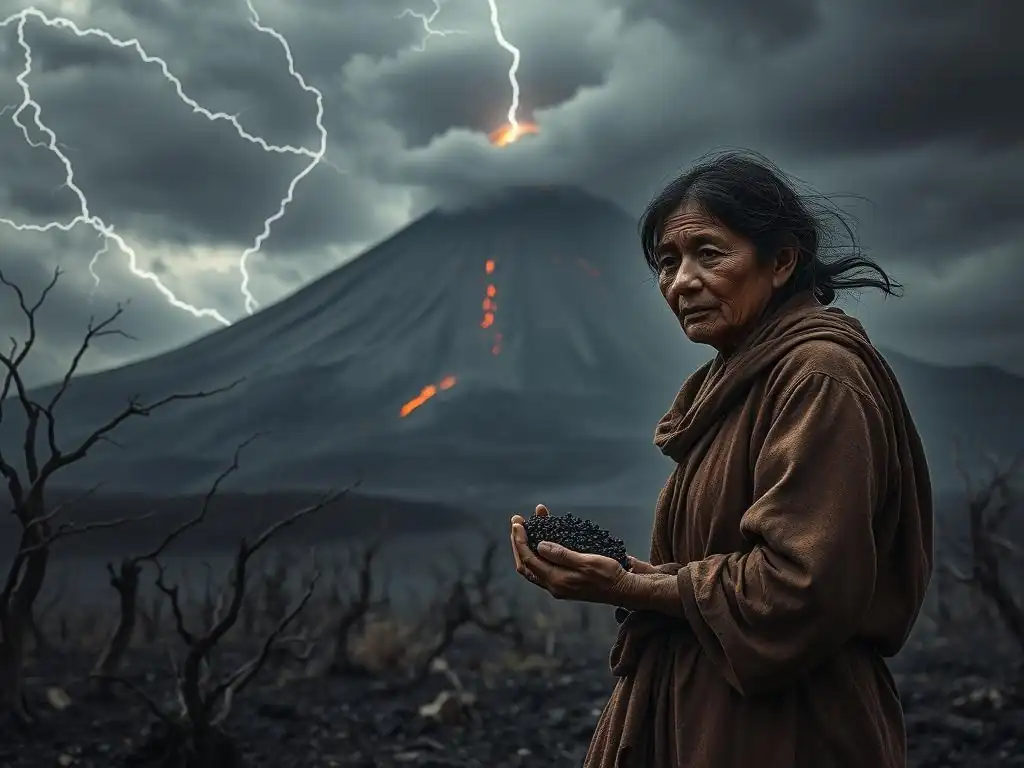
Welcome to Volcano Explorers.
Imagine a world choked by ash, where the sun is a forgotten memory, and famine grips the land in the wake of a cataclysmic eruption. Intrigued? Our latest exploration dives deep into the annals of history to unearth vital historical volcanic famines survival lessons. Discover how past societies coped with unimaginable adversity, and what we can learn from their resilience in the face of nature's fury. Are you ready to uncover the secrets hidden within the ashes?
- Introduction: The Devastating Link Between Volcanic Eruptions and Famine
- Historical Volcanic Famines: Case Studies in Catastrophe
-
Frequently Asked Questions
- What are some of the primary causes of volcanic famines throughout history?
- How can the study of historical volcanic famines help us prepare for future events?
- What were some of the most crucial survival lessons learned from past volcanic famines?
- How did volcanic ash impact food production and human health during historical famines?
- What role did social and political factors play in exacerbating the effects of historical volcanic famines?
- Final Reflection: Echoes of Eruption, Seeds of Resilience
- Unearth Your Inner Resilience: Learn From the Past!
Introduction: The Devastating Link Between Volcanic Eruptions and Famine
Volcano Explorers' Guide to Volcanic Disasters: Beyond the Eruption
Volcanic eruptions are often perceived as immediate, explosive events characterized by lava flows, pyroclastic flows, and ash clouds. While these initial hazards are undeniably destructive, the long-term consequences, particularly the potential for famine, are equally if not more devastating. Volcano Explorers aims to provide a comprehensive understanding of volcanic disasters, extending beyond the dramatic eruption phase to explore the less immediate but far-reaching impacts on food security and human survival. This article will delve into the historical record, examining instances where volcanic eruptions triggered widespread famines, and extract crucial lessons for modern preparedness and resilience.
Understanding the full scope of volcanic hazards requires looking beyond the immediate aftermath of an eruption. The release of ash and gases into the atmosphere can have profound and prolonged effects on climate and agriculture, disrupting ecosystems and jeopardizing food production on a regional and even global scale.
By studying historical volcanic famines, we can gain valuable insights into the complex chain of events that link eruptions to food shortages and identify strategies that communities can employ to mitigate these risks. Volcano Explorers believes that knowledge of past disasters is paramount to building a more resilient future in volcanically active regions.
Understanding the Ripple Effect: How Volcanic Ash Leads to Food Shortages
Volcanic ash, composed of fine particles of rock, mineral, and volcanic glass, is a primary culprit in eruption-induced famines. When massive eruptions occur, vast quantities of ash are ejected into the atmosphere, capable of traveling thousands of kilometers downwind. This ashfall can blanket agricultural lands, directly damaging crops through several mechanisms. Heavy ash deposits can physically smother plants, blocking sunlight essential for photosynthesis and burying fields under a thick layer of debris. Even thin layers of ash can contaminate water sources, making them undrinkable for both humans and livestock, and disrupt grazing lands, further impacting food production.
Beyond the direct physical damage, volcanic ash also has significant long-term effects on soil fertility and agricultural productivity. While some volcanic ash can enrich soil over very long periods, in the short to medium term, it can cause significant problems. The ash can alter soil pH, nutrient availability, and water retention capacity, creating unfavorable conditions for plant growth.
Furthermore, fluorine, often present in volcanic ash, can contaminate pastures and forage, leading to fluorosis in livestock, a debilitating condition that reduces animal productivity and can even be fatal. This complex interplay of immediate and long-term impacts underscores the devastating potential of volcanic ash to trigger widespread and prolonged food shortages.
Historical Volcanic Famines: Case Studies in Catastrophe
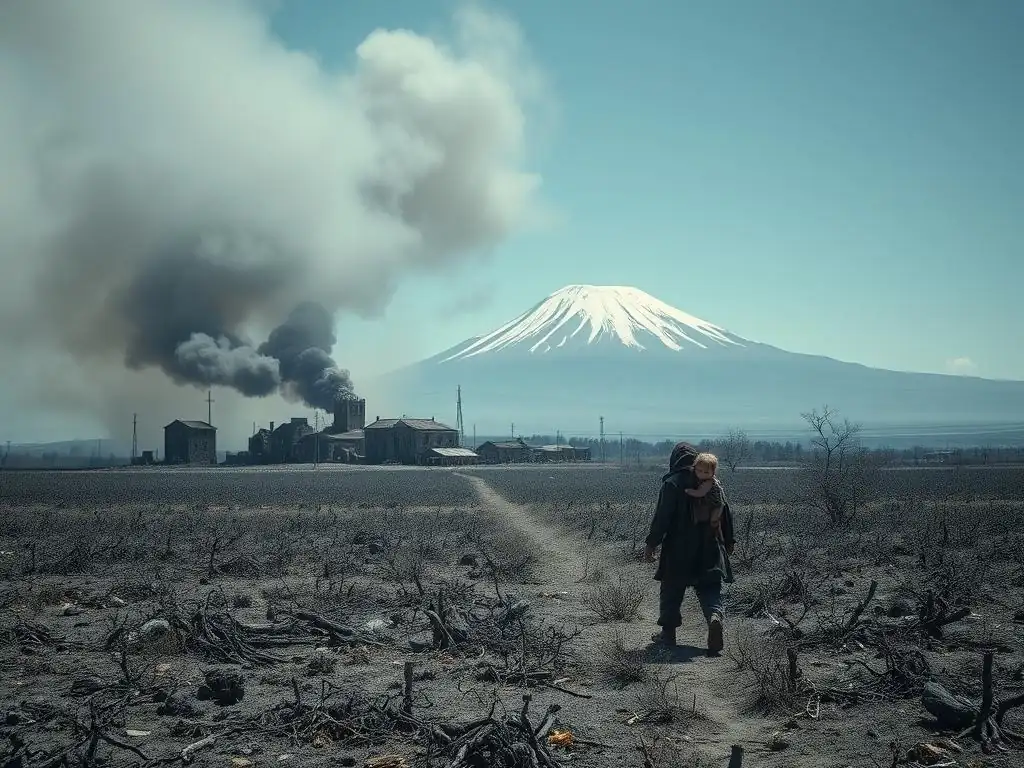
The Laki Fissure Eruption of 1783: A Case Study in Iceland's Famine
The Laki fissure eruption in Iceland, beginning in June 1783 and lasting for eight months, stands as a stark example of a volcanic eruption triggering a catastrophic famine. Laki was not a single volcano, but a volcanic fissure that erupted along a 25-kilometer length, releasing an estimated 14 cubic kilometers of basalt lava and vast quantities of volcanic gases, particularly sulfur dioxide. The eruption's impact on Iceland was devastating, leading to what is known as the "Mist Hardship" or Móðuharðindin in Icelandic.
The eruption's effects extended far beyond the immediate volcanic zone. The sulfur dioxide released into the atmosphere reacted with water vapor to form sulfuric acid aerosols, creating a persistent haze that enveloped Iceland and much of Europe.
This haze, described as a "dry fog," reduced sunlight, leading to significantly lower temperatures and altered weather patterns across the Northern Hemisphere. In Iceland, the haze and associated air pollution caused widespread respiratory problems in humans and livestock, while the fluorine in the volcanic gases poisoned grazing lands, leading to the death of over 80% of sheep, 50% of cattle, and 50% of horses in Iceland.
The "Mist Hardship": Atmospheric Effects and Crop Failure
The "Mist Hardship" was characterized by a pervasive bluish haze that dramatically reduced sunlight reaching the ground. Contemporary accounts describe a darkened sky and a strange, acrid smell in the air. The reduced sunlight and altered weather patterns had a devastating impact on agriculture. Hay yields, crucial for winter fodder in Iceland, plummeted. Crops failed to ripen, and grazing pastures were contaminated with fluorine, poisoning the livestock that survived the initial haze. The combination of reduced fodder and poisoned grazing land decimated Iceland's livestock population, the backbone of their agricultural economy and food supply.
The atmospheric effects were not limited to Iceland. The sulfuric acid haze spread across Europe, impacting weather patterns and agricultural yields across the continent. While the famine was most severe in Iceland, the Laki eruption is believed to have contributed to crop failures and food shortages in parts of Europe as well. This highlights the potential for large volcanic eruptions to have transcontinental impacts on climate and food security, far beyond the immediate vicinity of the eruption.
Survival Strategies and Societal Impact in 18th Century Iceland
Faced with widespread livestock death and crop failure, Icelanders endured a famine of unimaginable severity. Estimates suggest that approximately 20-25% of Iceland's population perished during the "Mist Hardship" famine of 1783-1784. Survival strategies during this period were often desperate and varied. People resorted to consuming unusual food sources, including seaweed, lichen, and animal carcasses. Trade networks, though limited in 18th century Iceland, became crucial for obtaining food from abroad, primarily from Denmark, which ruled Iceland at the time.
The societal impact of the Laki famine was profound and long-lasting. Beyond the immediate loss of life, the famine weakened the Icelandic economy and social fabric. Land abandonment increased, and poverty became widespread. The disaster also highlighted the vulnerability of island communities heavily reliant on agriculture to climatic and environmental shocks. The Laki eruption and subsequent famine serve as a chilling reminder of the devastating consequences of volcanic eruptions and the importance of preparedness and resilience in the face of such natural disasters.
Tambora's "Year Without a Summer" (1816): Global Famine and its Consequences
The eruption of Mount Tambora in Indonesia in April 1815 was one of the largest volcanic eruptions in recorded history. The Volcanic Explosivity Index (VEI) of 7 eruption ejected an estimated 100 cubic kilometers of volcanic material into the atmosphere, dwarfing the Laki eruption. The global climatic effects of Tambora were dramatic, leading to 1816 being known as the "Year Without a Summer." This period of unprecedented global cooling triggered widespread crop failures and famines across the Northern Hemisphere.
The massive injection of volcanic aerosols into the stratosphere from Tambora significantly reduced solar radiation reaching the Earth's surface. Global average temperatures plummeted, with some regions experiencing temperature drops of up to 2-3 degrees Celsius during the summer months. This cooling effect disrupted weather patterns globally, leading to unseasonably cold temperatures, persistent rainfall, and widespread frosts during the growing season in many parts of the world, particularly in Europe and North America.
Climate Change and Agricultural Devastation After Tambora
The "Year Without a Summer" brought agricultural devastation on an unprecedented scale. In Europe, the summer of 1816 was marked by continuous rainfall, cold temperatures, and late frosts that destroyed crops. Grain harvests failed across the continent, leading to soaring food prices and widespread food shortages. Similar conditions prevailed in North America, where frost and snow were reported in June, and multiple frosts throughout the summer ruined crops in New England and Canada. The agricultural devastation was not limited to grain crops; fruit trees failed to bear fruit, and livestock suffered from lack of fodder.
The climatic anomalies extended beyond the immediate year of 1816. The cooling effects of Tambora persisted for several years, continuing to disrupt weather patterns and impact agriculture. This prolonged period of climate instability exacerbated food shortages and contributed to social unrest in many regions. The Tambora eruption demonstrated the profound and global reach of volcanic eruptions in altering climate and triggering widespread agricultural crises.
Global Food Shortages and Social Unrest: Lessons from 1816
The global food shortages resulting from the Tambora eruption led to widespread famine and social unrest. In Europe, food prices skyrocketed, and many people faced starvation. Bread riots erupted in several countries, including Switzerland and parts of Great Britain. The famine also exacerbated existing social inequalities, with the poorest segments of society being disproportionately affected. Disease outbreaks, such as typhus, were also rampant due to malnutrition and weakened immune systems.
The social and economic consequences of the 1816 famine were significant and long-lasting. The crisis highlighted the vulnerability of global food systems to climate shocks and the potential for volcanic eruptions to trigger widespread social instability. The events of 1816 underscore the importance of international cooperation in addressing food security in the face of global environmental crises and the need for resilient agricultural systems that can withstand climate variability.
The Samalas Eruption (1257) and its Impact on Global Food Production
While less widely known than Laki or Tambora, the 1257 eruption of Mount Samalas in Indonesia was another colossal volcanic event with significant global impacts. Ice core analysis and geological studies have revealed that the Samalas eruption was likely even larger than Tambora, with a VEI estimated at 7+. The eruption injected massive quantities of sulfur dioxide into the stratosphere, leading to a period of significant global cooling and likely contributing to widespread famine in the mid-13th century.
The precise location of Mount Samalas was only rediscovered in recent decades, buried within the caldera of the Rinjani volcano on Lombok Island, Indonesia. The eruption left behind a massive caldera and a thick layer of volcanic ash that can be traced across a wide region. While historical records directly linking the Samalas eruption to specific famines are less detailed than for Laki or Tambora, accumulating evidence suggests a strong connection between the eruption and widespread food shortages in the years following 1257.
Unearthing Evidence: Linking Samalas to Widespread Famine
The link between the Samalas eruption and famine is primarily established through indirect evidence, including climate proxies and historical records of societal disruptions around the globe in the mid-13th century. Ice core data from Greenland and Antarctica show a massive sulfate spike in 1258, indicative of a large volcanic eruption in the tropics. Tree ring data from around the world also reveal a period of abrupt cooling and reduced tree growth in the years following 1257, consistent with the climatic effects of a major volcanic eruption.
Historical chronicles from Europe, Asia, and the Middle East from the mid-13th century document periods of unusual weather, crop failures, and famines. For example, European chronicles describe exceptionally cold winters and wet summers in the years following 1258, leading to grain shortages and widespread hardship. In China, historical records mention severe famines and social unrest during this period. While these records do not explicitly mention a volcanic eruption as the cause, the timing and global extent of these events strongly suggest a connection to the Samalas eruption and its climatic consequences.
Analysis of Historical Records and Climate Proxies
The convergence of evidence from climate proxies and historical records paints a compelling picture of the Samalas eruption triggering a global climate anomaly that led to widespread agricultural disruption and famine. Climate proxies, such as ice cores and tree rings, provide robust physical evidence of a large volcanic eruption and subsequent global cooling. Historical records, while often fragmented and geographically specific, corroborate the climate proxy data by documenting periods of unusual weather, crop failures, and societal distress in various parts of the world during the same period.
The Samalas eruption, despite being less known to the general public, serves as a powerful reminder of the global reach and long-term consequences of major volcanic eruptions. It underscores the interconnectedness of the global climate system and the vulnerability of human societies to volcanic-induced climate shocks. Further research, combining geological studies, climate modeling, and historical analysis, continues to refine our understanding of the Samalas eruption and its impact on global food production and human history.
Frequently Asked Questions
What are some of the primary causes of volcanic famines throughout history?
Volcanic famines are primarily caused by the destruction of crops from ashfall and volcanic gases, as well as the disruption of supply chains due to infrastructure damage and displacement. These lead to widespread food shortages.
How can the study of historical volcanic famines help us prepare for future events?
By analyzing past events, we can identify vulnerable regions, understand the specific challenges populations face (like contaminated water sources), and develop more effective preparedness strategies and early warning systems.
What were some of the most crucial survival lessons learned from past volcanic famines?
Key lessons include the importance of food storage and preservation, diversifying food sources to reduce reliance on single crops, and establishing community-based disaster response plans for rapid aid distribution.
How did volcanic ash impact food production and human health during historical famines?
Volcanic ash not only smothers crops directly but also contaminates water supplies, leading to crop failure and livestock deaths. Inhaling ash caused respiratory problems, further weakening populations already suffering from malnutrition.
Inequality, poor governance, and lack of access to resources exacerbated the impact, making already vulnerable populations even more susceptible. Effective disaster management requires addressing these underlying social and political weaknesses.
Final Reflection: Echoes of Eruption, Seeds of Resilience
The lessons gleaned from the ashes of historical volcanic famines are not mere historical curiosities; they are urgent reminders of our vulnerability and the enduring power of human adaptation. The past, etched in layers of volcanic ash and tales of resilience, speaks directly to our present, a world grappling with climate change and increasing environmental instability. Understanding how past societies navigated these catastrophic events offers invaluable insights into building more robust and equitable systems for the future.
The profound impact of these volcanic events, and the famines they triggered, continues to resonate in our understanding of societal fragility and the importance of community. Witnessing how communities either crumbled or rallied in the face of unimaginable hardship underscores the critical role of preparedness, resource management, and social cohesion. History doesn't repeat itself, but it often rhymes.
- Mark Twain. This "rhyme" echoes in our current challenges, urging us to learn from the past to avoid repeating its devastating consequences.
Let us not simply read these historical accounts as tales of woe, but as blueprints for survival. Consider how you can contribute to building more resilient communities, advocating for sustainable practices, and supporting initiatives that address food security. The ashes of the past hold the seeds of a more secure future; it is up to us to cultivate them.
Unearth Your Inner Resilience: Learn From the Past!
Thank you for exploring the critical lessons hidden within history's volcanic famines. You've gained invaluable insights into how past societies navigated these challenging events, and now it's time to consider how that knowledge can improve our preparedness for future crises.
Here's how you can put that knowledge into action:
- Begin building your personal emergency preparedness kit today, focusing on long-term food storage and resource management. Don't wait for a crisis to think about survival!
- Dive deeper: Research lesser-known volcanic events and their impact on food security in different regions. Share your findings with the Volcano Explorers community!
- Consider exploring educational resources, such as citizen science projects or volunteering with organizations dedicated to global disaster preparedness.
What specific adaptation strategy from the past resonated most with you, and how could you realistically implement it in your own community? Share your thoughts below!