
Unveiling Lava Domes: Nature's SlowMotion Volcanic Sculptures

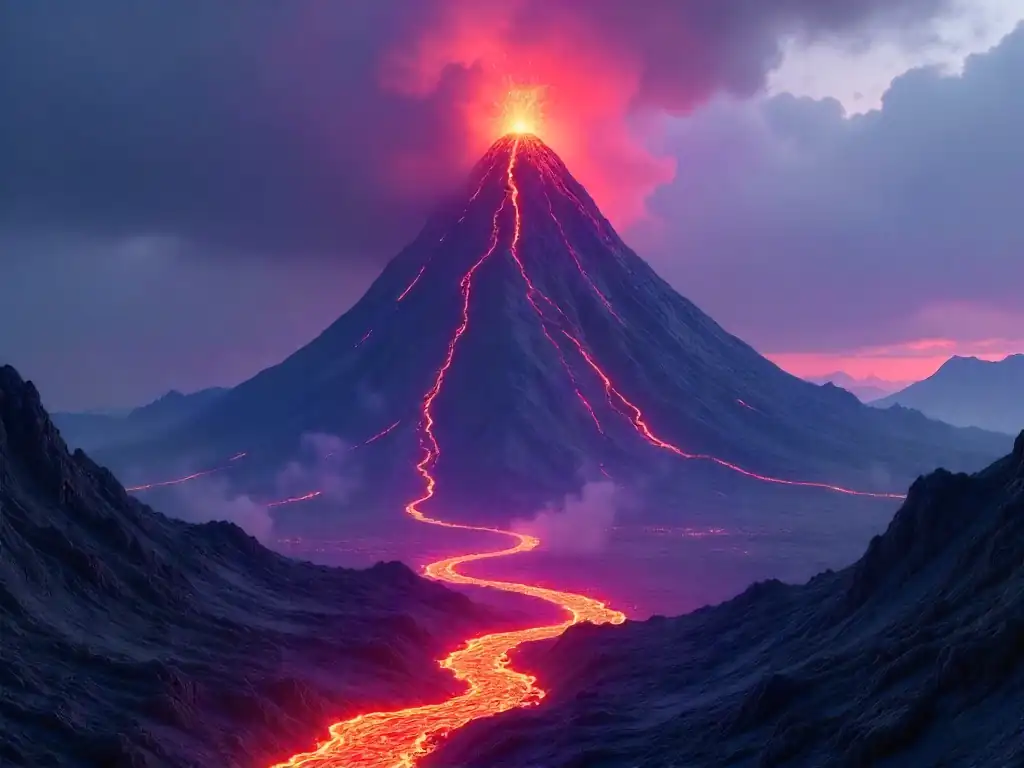
Welcome to Volcano Explorers! Ever wondered how a mountain slowly rises from within a volcano's heart, a silent giant sculpted by molten rock? Prepare to be mesmerized. Our latest exploration dives deep into lava dome formation explained, revealing the fascinating science behind these geological wonders. Uncover the secrets of their creation and the potential hazards they pose - your adventure begins now!
- Introduction to Lava Domes: Viscous Lava and Volcanic Growth
- The Science Behind Lava Dome Formation Explained
- Types of Lava Domes: Exploring the Diversity of Volcanic Structures
- Where Lava Domes Form: Geological Context and Locations
- The Dangers of Lava Domes: Instability and Potential Hazards
- Studying Lava Domes: Volcanological Research and Techniques
- The Beauty and Intrigue of Lava Domes: A Volcanic Wonder
- Conclusion: Appreciating the Dynamic Nature of Lava Domes
-
Frequently Asked Questions
- What exactly is a lava dome, and how does it differ from a typical volcanic eruption?
- What are the key factors that contribute to lava dome formation?
- Where are lava domes typically found, and are they always associated with active volcanoes?
- What are the potential hazards associated with lava dome formation?
- How do volcanologists monitor lava dome activity and predict potential hazards?
- Final Reflection: Embracing the Power of Slow Change
- Witness the Power: Ignite Your Inner Volcanologist!
Introduction to Lava Domes: Viscous Lava and Volcanic Growth
What are Lava Domes? Understanding the Basics
Lava domes are mound-shaped accumulations of viscous lava that form around volcanic vents. Unlike the fluid lava flows associated with shield volcanoes, the lava that creates domes is thick and sticky, preventing it from flowing far from the vent. Imagine honey versus water; lava dome-forming lava is akin to honey – it piles up rather than spreading out.
This high viscosity is due to its chemical composition, particularly a high silica content, which makes the lava resistant to flow. These formations can grow over time, ranging from weeks to years, and even decades, gradually expanding in size as more viscous lava is extruded from the vent.
The visual aspect of lava domes is quite distinct. They often resemble bulbous, steep-sided hills or spines within or around volcanic craters. Their surfaces are typically rough and fragmented, composed of cooled lava blocks, volcanic ash, and sometimes solidified lava flows that have barely moved. Lava domes are dynamic features, constantly changing as new lava is added internally or externally. They are a testament to the complex processes occurring beneath the Earth's surface and offer volcanologists valuable insights into the inner workings of volcanoes.
The Significance of Lava Domes in Volcanic Landscapes
Lava domes play a crucial role in shaping volcanic landscapes and understanding volcanic behavior. Their presence often indicates a specific stage in a volcano's eruptive cycle, typically following a more explosive phase or preceding one. Studying lava domes allows scientists to assess the type of magma a volcano is producing and the potential for future eruptions. For example, the growth rate and shape of a lava dome can provide clues about the magma supply rate and its viscosity, which are vital parameters for eruption forecasting.
Moreover, lava domes themselves can significantly influence the surrounding environment. They can block drainage systems, leading to the formation of lakes or changes in river courses. Their instability can also lead to hazardous events like pyroclastic flows and explosions, impacting areas far beyond the immediate vicinity of the dome. In essence, lava domes are not just passive features; they are active components of volcanic systems that reflect and influence the dynamics of volcanic activity and landscape evolution.
The Science Behind Lava Dome Formation Explained
Viscosity and Magma Composition: Key Factors in Lava Dome Development
The formation of lava domes is primarily governed by the viscosity of the erupting magma. Viscosity, in simple terms, is the resistance of a fluid to flow. Magma viscosity is largely determined by its silica (SiO2) content. Magmas rich in silica, such as rhyolite and dacite, are highly viscous. These silica molecules link together to form complex chains, hindering the magma's ability to flow easily. Conversely, magmas with lower silica content, like basalt, are less viscous and flow more readily, creating shield volcanoes or lava flows rather than domes.
The temperature of the magma also plays a role in viscosity. Hotter magma is generally less viscous than cooler magma. However, the compositional effect of silica content is usually the dominant factor in determining the high viscosity needed for lava dome formation. Think of it like this: even hot honey is still very viscous compared to water at the same temperature.
The mineral composition, specifically the presence of crystals within the magma, further increases viscosity. As magma cools and crystallizes, it becomes even more resistant to flow, contributing to the buildup and solidification of lava domes. Therefore, understanding magma composition and its resulting viscosity is crucial to understanding lava dome formation explained.
Gas Content and its Role in Explosivity vs. Dome Building
While high viscosity is key to lava dome formation, the gas content of the magma is a critical factor that determines whether an eruption will be effusive (dome-building) or explosive. Magma always contains dissolved gases, primarily water vapor, carbon dioxide, and sulfur dioxide. In less viscous magmas, these gases can escape relatively easily, leading to gentler effusive eruptions. However, in highly viscous, silica-rich magmas, gases struggle to escape. This build-up of pressure can lead to explosive eruptions if the gas pressure exceeds the strength of the surrounding rock.
The transition from explosive to effusive activity, and thus to lava dome formation, often occurs as the gas content of the magma decreases during an eruption. Initially, a volcano might erupt explosively, releasing a significant amount of gas and volcanic ash. As the eruption progresses and the magma degasses, the remaining magma becomes even more viscous and less gas-rich.
This degassed, viscous magma is then extruded more gently, piling up around the vent to form a lava dome. In some cases, lava domes can grow after a major explosive eruption, utilizing the same vent system but with magma that has lost much of its volatile content.
The Process of Lava Dome Formation: From Eruption to Solidification
The process of lava dome formation explained begins with the ascent of viscous, gas-poor magma towards the Earth's surface. As this magma reaches the vent, it is slowly extruded, much like toothpaste being squeezed from a tube. Due to its high viscosity, the lava does not flow far; instead, it accumulates around the vent, building upwards and outwards. The rate of extrusion can vary significantly, from slow, gradual growth over months or years to more rapid pulses of lava extrusion.
As the lava is extruded, the outer surface cools and solidifies, forming a crust. However, the interior of the dome often remains molten for some time. The dome grows through a combination of internal pressure from the ongoing magma supply and external addition of new lava flows or lobes onto its surface.
The solidified crust can fracture and break as the dome expands, creating a rubbly, unstable surface. Eventually, the magma supply may cease, and the entire dome cools and solidifies completely, becoming a more permanent feature of the volcanic landscape, although still susceptible to collapse and erosion over time.
Types of Lava Domes: Exploring the Diversity of Volcanic Structures
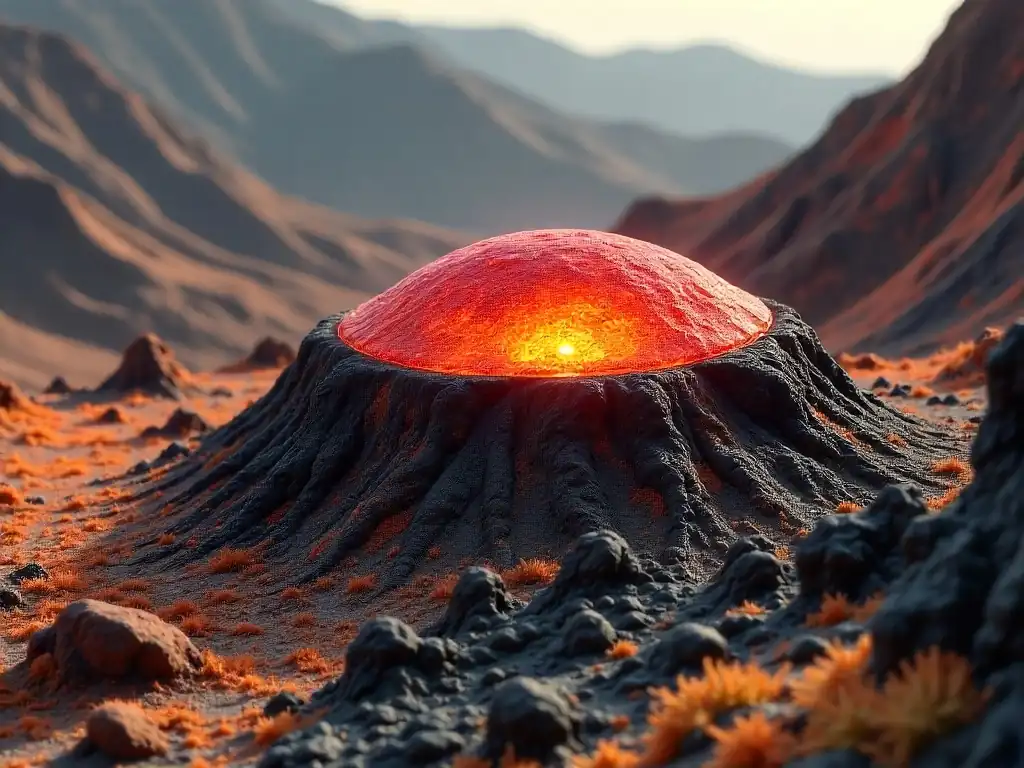
Endogenous Growth: Internal Expansion of Lava Domes
Endogenous growth refers to the expansion of a lava dome from within. In this process, new magma is injected into the core of the existing dome, causing it to swell and expand outwards. Imagine inflating a balloon from the inside; the surface stretches and expands as the volume increases. Endogenous growth often results in relatively smooth, rounded dome shapes as the pressure from within pushes the solidified outer crust outwards in a more uniform manner.
This type of growth is characterized by fracturing and faulting on the dome's surface as the outer crust is stretched and deformed by the internal pressure. Cracks and fissures may appear, sometimes accompanied by gas emissions or minor explosions as the internal pressure is released. Endogenous growth is often associated with slower, more sustained magma supply rates and can lead to significant increases in dome volume over time, even without significant surface lava flows.
Exogenous Growth: Surface Accumulation of Lava Flows
Exogenous growth, in contrast to endogenous growth, involves the addition of new lava flows onto the surface of the existing lava dome. In this process, viscous lava oozes out from the vent and flows sluggishly down the dome's flanks, accumulating on the outer surface. This type of growth tends to create steeper, more irregular dome shapes with distinct lobes and flow features visible on the surface.
Exogenous growth is often associated with slightly less viscous lava compared to endogenous growth, allowing it to flow, albeit slowly, across the dome's surface. The surface of exogenously grown domes is typically rough and blocky, composed of solidified lava flows and debris. This type of growth can be more visually dynamic, with observable lava flows slowly advancing down the dome's slopes. The Santiaguito lava dome complex in Guatemala is a prime example of a dome that has grown primarily through exogenous processes.
Cryptodomes are a less visible and often more insidious type of lava dome. "Crypto" means hidden, and cryptodomes are exactly that – lava domes that form beneath the surface of the volcano, causing a bulge or uplift of the overlying ground. Instead of erupting onto the surface, the viscous magma intrudes into the volcano's edifice, pushing the overlying rock upwards. This creates a dome-like structure that is concealed beneath the surface.
The formation of a cryptodome can be a precursor to a more significant eruption. The pressure exerted by the cryptodome can destabilize the surrounding rock, potentially leading to landslides or explosive eruptions when the confining pressure is released. The 1980 eruption of Mount St. Helens was triggered by the collapse of a cryptodome that had been growing on its north flank. Cryptodomes are more challenging to detect and monitor than surface lava domes, requiring geophysical techniques such as ground deformation measurements and seismic monitoring to identify their presence and growth.
Where Lava Domes Form: Geological Context and Locations
Lava Domes Associated with Stratovolcanoes
Lava domes are commonly found in association with stratovolcanoes, also known as composite volcanoes. Stratovolcanoes are steep-sided, conical volcanoes built up of layers of lava flows, volcanic ash, and pyroclastic deposits. They are typically formed by viscous, silica-rich magmas, making them prime locations for lava dome development. Often, lava domes form within the summit craters of stratovolcanoes after a period of explosive activity. The initial explosive eruption clears the vent, and then subsequent, less energetic eruptions extrude viscous lava that builds a dome.
The presence of a lava dome within a stratovolcano's crater can indicate a shift in eruptive style from explosive to effusive. However, it is important to remember that lava domes on stratovolcanoes can still be hazardous. The instability of these domes, combined with the explosive potential of stratovolcanoes, can lead to dangerous scenarios like dome collapse and pyroclastic flows. Many of the world's most dangerous volcanoes, such as Mount Merapi in Indonesia and Mount Unzen in Japan, are stratovolcanoes with active lava domes.
Lava Domes in Caldera Systems
Calderas, large volcanic depressions formed by the collapse of a magma chamber after a massive eruption, are another common setting for lava dome formation. Following a caldera-forming eruption, the magma system beneath the caldera often recharges, and subsequent eruptions within the caldera frequently produce viscous lava domes. These domes can form on the caldera floor, along the caldera rim, or even on the resurgent dome, a central uplifted area within some calderas.
The formation of lava domes within calderas is a crucial part of the caldera's post-collapse evolution. These domes can provide valuable information about the ongoing magmatic activity beneath the caldera and the potential for future eruptions. Yellowstone Caldera in the United States, for example, contains numerous rhyolitic lava domes that have erupted within the caldera over the past tens of thousands of years. The Long Valley Caldera in California is another example, with the Mono-Inyo Craters chain of lava domes and flows located along the caldera's rim.
Examples of Famous Lava Domes Around the World: Mount St. Helens, Santiaguito, Chaitén
Several lava domes worldwide have become iconic examples due to their dramatic formation, hazardous activity, or accessibility for study. Mount St. Helens in Washington State, USA, famously erupted in 1980, destroying a pre-existing lava dome and then subsequently building a new dome in its crater. This dome has been extensively studied, providing valuable insights into dome growth processes and hazards.
Santiaguito in Guatemala is a complex of multiple overlapping lava domes that have been growing almost continuously since 1922, following a major eruption of Santa María volcano in 1902. Santiaguito is known for its frequent dome collapses and pyroclastic flows, posing a significant hazard to nearby communities.
Chaitén volcano in Chile erupted in 2008 after thousands of years of dormancy, producing a rapidly growing rhyolitic lava dome within its caldera. The Chaitén eruption demonstrated the potential for unexpected and significant lava dome growth even at volcanoes considered long dormant, highlighting the dynamic and sometimes unpredictable nature of these volcanic features.
The Dangers of Lava Domes: Instability and Potential Hazards
Lava Dome Collapse: A Major Source of Pyroclastic Flows
One of the primary hazards associated with lava domes is their inherent instability, making lava dome collapse a significant concern. Lava domes are steep-sided and composed of fragmented, solidified lava, making them prone to gravitational collapse, especially as they grow larger and steeper. Collapse can be triggered by various factors, including internal pressure build-up, external events like earthquakes or heavy rainfall, or simply the weakening of the dome structure over time.
When a lava dome collapses, it can generate pyroclastic flows, which are fast-moving, extremely hot mixtures of volcanic gas, ash, and rock fragments. These flows can travel at speeds exceeding 100 kilometers per hour and reach temperatures of hundreds of degrees Celsius, posing a deadly threat to anything in their path. The 1999 eruption of the Soufrière Hills volcano on Montserrat was characterized by numerous lava dome collapses that generated devastating pyroclastic flows, causing widespread destruction and necessitating the evacuation of much of the island.
Explosive Eruptions Triggered by Lava Dome Instability
While lava domes are often associated with effusive eruptions, their instability can also trigger explosive eruptions. The solidified crust of a lava dome can act like a plug, trapping gas and pressure beneath it. If the pressure build-up becomes excessive, it can overcome the strength of the dome, leading to a sudden and violent explosion. These explosions can range in size from small bursts of ash and rock fragments to larger events that can generate pyroclastic surges and ash clouds that reach high into the atmosphere.
Furthermore, the interaction of fresh magma with a pre-existing, solidified lava dome can also trigger explosions. If new, hotter magma intrudes into a cooler dome, the rapid heating and expansion of trapped gases within the dome can cause it to fragment explosively. The explosive potential of lava domes underscores the need for careful monitoring and assessment of their stability to mitigate volcanic risk.
Monitoring Lava Domes: Predicting and Mitigating Volcanic Risk
Given the hazards associated with lava domes, continuous monitoring is crucial for predicting potential collapses and explosions and mitigating volcanic risk. Volcanologists employ a variety of techniques to monitor lava domes, including ground deformation measurements using GPS and satellite radar interferometry (InSAR) to detect changes in dome shape and volume. Seismic monitoring is used to detect earthquakes and volcanic tremor, which can indicate magma movement and dome instability.
Gas monitoring, including measuring sulfur dioxide (SO2) emissions, can provide insights into magma degassing and potential pressure build-up. Thermal monitoring using infrared cameras can track temperature changes on the dome's surface, which can be indicative of new lava extrusion or cooling and solidification. By integrating data from these different monitoring techniques, volcanologists can assess the current state of a lava dome, identify signs of increasing instability, and provide timely warnings to at-risk communities, enabling effective evacuation and mitigation strategies.
Studying Lava Domes: Volcanological Research and Techniques
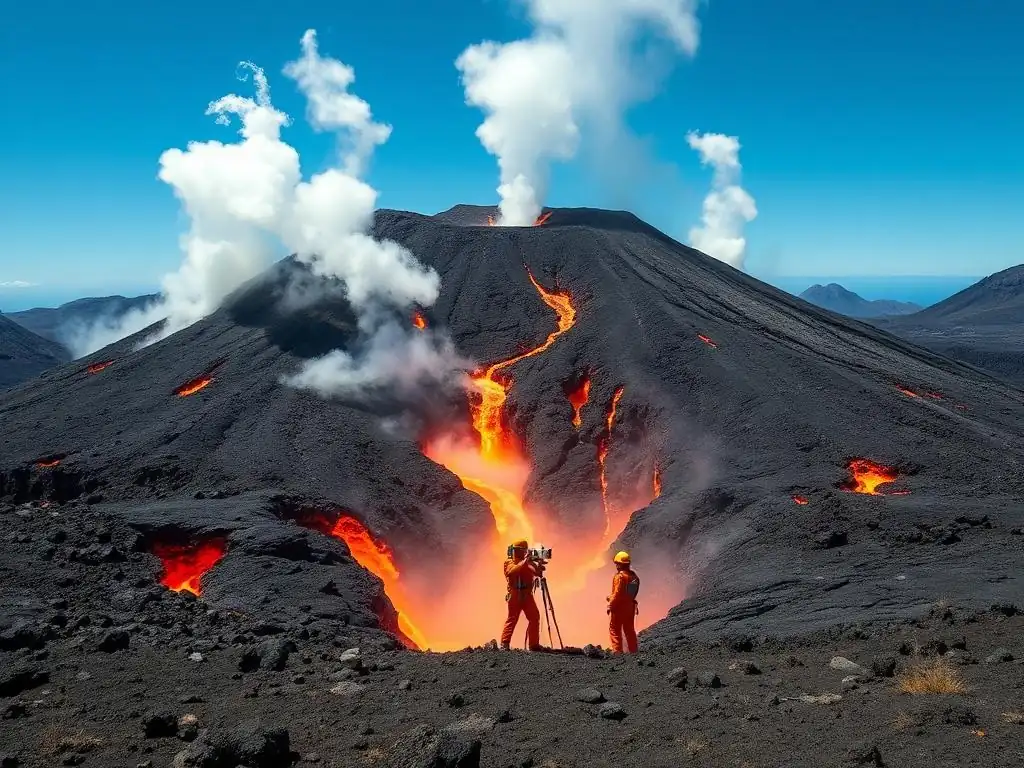
Remote Sensing Techniques for Lava Dome Monitoring
Remote sensing technologies play a vital role in studying lava domes, particularly for volcanoes in remote or inaccessible locations. Satellite-based radar interferometry (InSAR) is a powerful tool for measuring ground deformation associated with lava dome growth. InSAR can detect subtle changes in the Earth's surface over time, allowing scientists to track the inflation and deflation of lava domes, providing insights into magma supply rates and dome volume changes.
Thermal infrared (TIR) imagery from satellites and aircraft is used to map temperature variations on lava domes. This helps to identify areas of active lava extrusion, cooling rates, and potential hot spots that may indicate areas of instability. LiDAR (Light Detection and Ranging) is another remote sensing technique used to create high-resolution topographic maps of lava domes, allowing for precise measurements of dome volume and shape changes over time. These remote sensing methods provide valuable data for monitoring dome activity and understanding their growth dynamics from a distance.
Ground-Based Observations and Data Collection
While remote sensing provides a broad overview, ground-based observations and data collection are essential for detailed studies of lava domes. Volcanologists conduct fieldwork to directly observe dome features, collect samples of lava and volcanic gases, and deploy ground-based monitoring instruments. GPS stations are installed on and around lava domes to continuously measure ground deformation with high precision. Seismic networks are deployed to record local earthquakes and volcanic tremor, providing information about subsurface magma movement and dome stability.
Time-lapse cameras are often used to visually document dome growth and changes over time. Gas sensors are deployed to measure volcanic gas emissions at vents and fumaroles, providing insights into magma degassing processes. Direct sampling of lava and volcanic rocks allows for detailed geochemical analysis, helping to understand the magma composition and its viscosity, key factors in lava dome formation explained. Ground-based observations complement remote sensing data, providing a more comprehensive understanding of lava dome behavior.
Modeling Lava Dome Growth and Behavior
Numerical and analog models are crucial tools for understanding the complex processes governing lava dome growth and behavior. Numerical models use computer simulations to represent the physics of magma flow, heat transfer, and dome deformation. These models can incorporate factors like magma viscosity, extrusion rate, and cooling to simulate dome growth and predict potential instability scenarios, such as dome collapse.
Analog models use scaled physical experiments to simulate lava dome formation. These experiments often use materials like silicone or wax to mimic the properties of viscous lava and explore the influence of various parameters on dome shape and stability. For example, analog models can be used to study the effects of different extrusion rates or vent geometries on dome morphology and collapse mechanisms. Both numerical and analog models help to test hypotheses, improve our understanding of lava dome dynamics, and refine hazard assessments.
The Beauty and Intrigue of Lava Domes: A Volcanic Wonder
Lava Domes as Unique Geological Features
Lava domes, despite their hazardous nature, are fascinating and unique geological features. They represent a distinct style of volcanic eruption, showcasing the power and complexity of Earth's internal processes. Their slow, almost imperceptible growth over time contrasts with the explosive violence often associated with volcanoes, offering a different perspective on volcanic activity – a slow-motion volcanic sculpture crafted by viscous lava.
The diverse shapes and textures of lava domes, from smooth, rounded forms to jagged, blocky structures, reflect the variations in magma composition, extrusion rates, and growth processes. They are tangible evidence of the ongoing interaction between magma and the Earth's surface, constantly evolving and reshaping the volcanic landscape. For geologists and volcano enthusiasts alike, lava domes are captivating features that reveal much about the inner workings of volcanoes and the dynamic nature of our planet.
The Role of Lava Domes in Shaping Volcanic Landscapes
Lava domes play a significant role in shaping volcanic landscapes, contributing to the overall morphology and evolution of volcanic areas. Their presence can create distinctive topographic features, adding to the diversity of volcanic landforms. Domes can fill craters, create new hills within calderas, and modify the drainage patterns around volcanoes. Over time, erosion and weathering further sculpt lava domes, revealing their internal structures and contributing to the long-term evolution of volcanic landscapes.
Furthermore, the materials erupted during lava dome formation, including volcanic ash and debris from dome collapses, contribute to the soil composition and nutrient cycling in volcanic areas. These materials can also influence vegetation patterns and ecosystem development. Lava domes are therefore not just isolated geological features but integral components of the broader volcanic environment, shaping both the physical landscape and the ecological systems that thrive within it.
Exploring Lava Domes Safely: A Guide for Volcano Enthusiasts
For volcano enthusiasts, observing lava domes can be an exciting and educational experience. However, safety must always be the top priority when exploring areas with active or potentially active lava domes. It is crucial to heed warnings and advisories from local authorities and volcano observatories. Maintain a safe distance from lava domes, as collapses and explosions can occur with little or no warning. Never approach a lava dome from downwind, as pyroclastic flows and ash clouds can travel rapidly in the direction of the wind.
When visiting volcanic areas with lava domes, stay on marked trails and designated viewing areas. Be aware of potential hazards such as unstable ground, volcanic gases, and falling rocks. Carry essential safety equipment, including sturdy hiking boots, protective clothing, and a dust mask to protect against volcanic ash. Inform someone of your hiking plans and expected return time. By exercising caution and respecting the power of nature, volcano enthusiasts can safely appreciate the beauty and intrigue of lava domes.
Conclusion: Appreciating the Dynamic Nature of Lava Domes
Lava domes are more than just piles of rock; they are dynamic, evolving volcanic features that offer a window into the complex processes occurring beneath the Earth's surface. Understanding lava dome formation explained, their diverse types, locations, and associated hazards is crucial for both scientific advancement and volcanic risk mitigation.
From their slow-motion growth to their potential for explosive activity, lava domes embody the fascinating duality of volcanic phenomena – both creative and destructive forces shaping our planet. By continuing to study and monitor these volcanic wonders, we can better appreciate their role in Earth's dynamic systems and strive to coexist safely with these powerful natural forces.
Frequently Asked Questions
What exactly is a lava dome, and how does it differ from a typical volcanic eruption?
A lava dome is a mound-shaped structure formed by the slow extrusion of highly viscous lava. Unlike explosive eruptions, lava domes involve lava that doesn't flow easily, piling up around the vent.
What are the key factors that contribute to lava dome formation?
The primary factors are high lava viscosity (stickiness) and a relatively low gas content. This combination prevents explosive eruptions, causing the lava to slowly build up.
Where are lava domes typically found, and are they always associated with active volcanoes?
Lava domes often form within the craters of stratovolcanoes or alongside existing volcanic structures. While mostly associated with active volcanoes, they can persist for years or even decades after an eruption.
What are the potential hazards associated with lava dome formation?
Lava domes can be unstable and prone to partial or complete collapse, generating dangerous pyroclastic flows and lahars. The accumulation of gas within the dome can also lead to explosive eruptions.
How do volcanologists monitor lava dome activity and predict potential hazards?
Volcanologists use various techniques, including satellite imagery, ground deformation measurements, and gas emission monitoring, to track dome growth and assess stability. This data helps forecast potential collapses and eruptions.
Final Reflection: Embracing the Power of Slow Change
The exploration of lava dome formation, as we've seen, is far more than a geological study; it's a window into the Earth's dynamic processes and a reminder of the planet's immense power, even in its seemingly slow and deliberate transformations. Understanding these formations allows us to better predict volcanic activity and mitigate potential hazards, making this knowledge profoundly relevant in our increasingly interconnected world.
The subtle, yet relentless, growth of lava domes serves as a powerful metaphor for change itself. It reminds us that even the most monumental shifts often occur gradually, building momentum over time. Nature does not hurry, yet everything is accomplished.
- Lao Tzu. This quote perfectly encapsulates the essence of lava dome formation and its broader implications for understanding the world around us.
As we conclude this journey into the heart of volcanic landscapes, I invite you to reflect on the power of slow, persistent change in your own life. Just as lava domes are sculpted by the steady flow of molten rock, so too can your dreams and aspirations be realized through consistent effort and unwavering dedication. Embrace the process, trust in the journey, and witness the extraordinary transformations that unfold when you commit to the power of slow change.
Witness the Power: Ignite Your Inner Volcanologist!
Thank you for exploring the fascinating world of lava domes! We hope you've gained a deeper appreciation for these incredible geological formations. Now, it's time to take that newfound knowledge and explore further.
Here are a few ways to continue your volcanic journey:
- Dive Deeper: Explore some of the world’s most iconic lava domes using online geological surveys and 3D models – uncover hidden details and fascinating insights.
- Share the Wonder: Share this article with a friend who appreciates the power and beauty of nature, and ignite their curiosity about these majestic formations.
- Plan a Safe Volcanic Adventure: Research accessible volcanic sites near you (or add some to your travel bucket list!) and start planning a future trip. Remember to always prioritize safety and follow local guidelines.
What's one surprising thing you learned about lava domes? Share your thoughts in the comments below!