
Ashfall and Power Outages: When Volcanic Eruptions Plunge Cities into Darkness

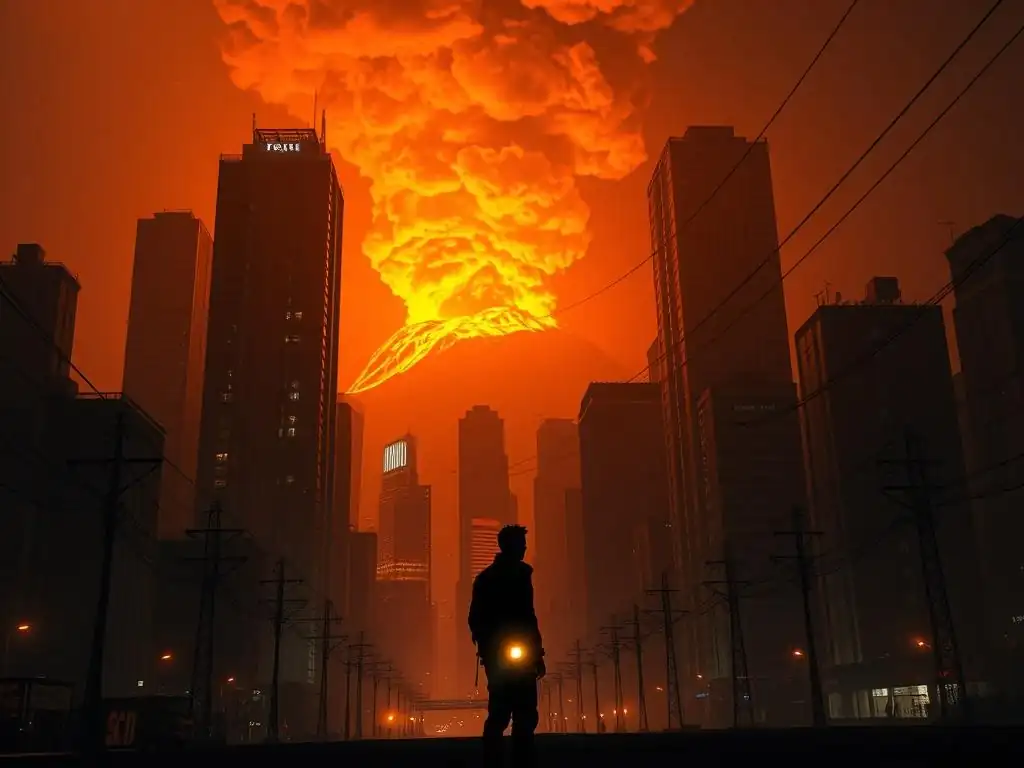
Welcome to Volcano Explorers, where we unravel the Earth's fiery secrets. Ever wondered how a volcano's roar can silence an entire city? In this article, we delve into a critical, often overlooked consequence of volcanic eruptions: volcanic eruption power outages. Discover how ashfall can cripple power grids and what you can do to prepare, sparking a journey through the science and safety surrounding these powerful events. Read on to illuminate the hidden dangers.
- Understanding the Connection: Volcanic Eruptions and Electrical Grid Vulnerability
- Real-World Examples: Volcanic Eruption Power Outage Case Studies
- Preventing and Mitigating Volcanic Eruption-Related Power Outages
- Restoring Power After a Volcanic Eruption: Challenges and Strategies
- The Future of Power Grids in Volcanic Regions: Resilience and Adaptation
- Staying Safe During a Volcanic Eruption and Power Outage: A Practical Guide
-
Frequently Asked Questions
- What is the primary cause of power outages during volcanic eruptions?
- How does volcanic ash damage power grids specifically?
- What types of volcanic eruptions are most likely to cause widespread power outages?
- Can anything be done to protect power grids from volcanic ashfall?
- What kind of emergency preparedness should people living near volcanoes have in place to deal with power outages?
- Final Reflection: Embracing Resilience in the Face of Volcanic Fury
- Empower Yourself: Prepare for Volcanic Power Outages!
Understanding the Connection: Volcanic Eruptions and Electrical Grid Vulnerability
How Ashfall Disrupts Electrical Infrastructure: A Detailed Look
Volcanic ash, far from being the soft, fluffy material its name might suggest, is composed of tiny, jagged particles of rock and volcanic glass. This seemingly innocuous substance poses a significant threat to electrical infrastructure. When a volcanic eruption occurs, plumes of ash can be propelled high into the atmosphere and carried by wind over vast distances, affecting areas hundreds or even thousands of kilometers downwind from the volcano itself.
The accumulation of ash on insulators, which are crucial components designed to prevent electrical current leakage from power lines and equipment to the ground, is a primary cause of disruption. These insulators are typically made of ceramic or glass, and their effectiveness relies on a clean, dry surface. However, volcanic ash, especially when combined with moisture from rain or dew, becomes conductive.
This conductivity creates a pathway for electrical current to flow across the surface of the insulator, effectively short-circuiting the system. The sharp, abrasive nature of ash particles also contributes to the problem. They can scratch and erode the surface of insulators over time, further reducing their insulating capacity and making them more susceptible to moisture-induced conductivity.
Moreover, the weight of accumulated ash itself can cause significant stress on power lines and supporting structures. A heavy ashfall can add considerable weight, potentially leading to lines sagging, breaking, or even the collapse of utility poles and towers. The sheer volume of ash can also clog ventilation systems in substations and power plants, leading to overheating and equipment malfunction.
The Domino Effect: From Ash Deposition to Widespread Power Loss
The disruption caused by volcanic ash to electrical infrastructure often initiates a cascading series of failures, leading to widespread power outages. The initial deposition of ash on insulators can cause localized faults and short circuits within the electrical grid. These faults can trigger protective mechanisms designed to prevent damage, such as circuit breakers tripping and isolating affected sections of the grid.
While these safety measures are crucial, if the ashfall is widespread and intense, numerous faults can occur simultaneously across a large area. This can overwhelm the grid's ability to compensate, leading to instability and ultimately, a broader system collapse.
Furthermore, the loss of power to critical substations, which are essential nodes in the electrical transmission and distribution network, can have a ripple effect. Substations transform voltage levels and direct power flow to different areas. If a key substation is disabled by ashfall-induced faults, large regions dependent on that substation for power can experience blackouts.
The interconnected nature of modern power grids means that problems in one area can quickly propagate to others. Just as a single domino falling can trigger a chain reaction, initial ash-related faults can escalate into widespread and prolonged power outages, affecting not only homes and businesses but also essential services like hospitals, communication networks, and water treatment plants. This domino effect underscores the vulnerability of interconnected power systems to the seemingly localized hazard of volcanic ashfall.
Real-World Examples: Volcanic Eruption Power Outage Case Studies
Case Study 1: Mount St. Helens Eruption (1980) - Impact on Power Generation and Transmission
The eruption of Mount St. Helens in Washington State on May 18, 1980, serves as a significant early example of the impact of volcanic ash on power systems in a developed nation. While the immediate devastation was concentrated in the areas closest to the volcano, the effects of ashfall extended much further, reaching communities across the Pacific Northwest. The eruption produced a massive ash cloud that drifted eastward, depositing significant amounts of ash in areas like Yakima, Washington, located approximately 130 kilometers (80 miles) downwind. In Yakima, the ashfall, which reached depths of several centimeters, caused widespread power outages.
The Bonneville Power Administration (BPA), responsible for high-voltage transmission in the region, reported numerous flashovers on transmission lines and substations due to ash contamination of insulators. While the BPA system was designed to withstand certain environmental stresses, the volume and conductivity of the Mount St. Helens ash proved to be a significant challenge. Power outages were not only caused by direct ash contamination but also by the subsequent clean-up efforts.
Water used to wash ash off insulators and equipment, when not properly managed, could also contribute to electrical faults and further outages. The Mount St. Helens eruption highlighted the vulnerability of even relatively robust power grids to substantial ashfall events, demonstrating the need for specific preparedness and mitigation strategies in volcanically active regions.
Case Study 2: Eyjafjallajökull Eruption (2010) - European Air Traffic and Power Grid Effects
The 2010 eruption of Eyjafjallajökull volcano in Iceland is globally renowned for its dramatic impact on European air traffic, causing unprecedented airspace closures. However, the eruption also had notable, though less widely publicized, effects on Iceland's power grid, demonstrating the vulnerability even of infrastructure located relatively close to the volcanic source. Iceland's power grid relies heavily on hydroelectric and geothermal energy, with transmission lines often traversing exposed and remote volcanic landscapes. The Eyjafjallajökull eruption, while not directly causing widespread power outages across Iceland, presented significant operational challenges to the national power company, Landsnet.
Heavy ashfall accumulated on insulators across the transmission network, particularly in southern Iceland, close to the eruption site. Landsnet reported increased instances of flashovers and electrical faults due to ash contamination, necessitating intensive cleaning and maintenance efforts. Teams were dispatched to physically clean insulators to prevent widespread outages.
While Iceland managed to maintain overall grid stability during the eruption, the event underscored the constant threat posed by ashfall to power infrastructure in volcanic regions. The Eyjafjallajökull eruption, although not resulting in major blackouts comparable to other ashfall events globally, served as a stark reminder of the operational strain and increased risk of power disruptions that volcanic ash places on electrical grids, even in technologically advanced nations with robust infrastructure.
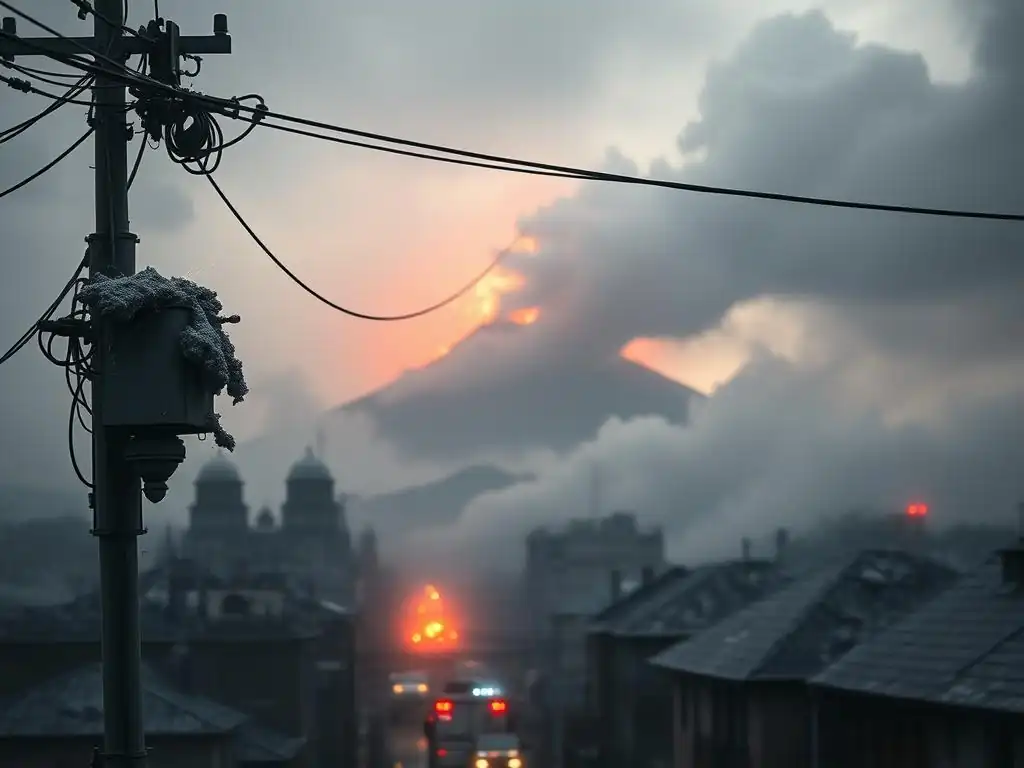
Protective Measures for Electrical Substations and Power Lines
Hardening Infrastructure Against Ash Infiltration
Protecting electrical infrastructure from volcanic ash requires a multi-faceted approach, beginning with physically hardening substations and power lines against ash infiltration. Substations, which house critical equipment like transformers and circuit breakers, can be made more resilient by improving building sealing and ventilation systems. Ensuring that substation buildings are well-sealed minimizes ash entry into sensitive areas. Ventilation systems should be equipped with high-efficiency particulate air (HEPA) filters designed to capture fine ash particles, preventing them from clogging equipment and causing overheating. Furthermore, consider constructing barriers or enclosures around critical outdoor equipment within substations to reduce direct ash deposition.
For power lines themselves, while complete enclosure is impractical, several measures can enhance their resilience. Using insulators with aerodynamic profiles can reduce ash accumulation. These designs minimize the surface area where ash can settle and adhere. Applying hydrophobic coatings to insulators can also be effective. These coatings repel water, and since wet ash is more conductive, reducing moisture accumulation on insulator surfaces helps to mitigate flashover risks. Regular inspections of power lines and supporting structures are also crucial to identify and address any signs of stress or damage from ash loading before failures occur.
Implementing Regular Cleaning and Maintenance Schedules
Even with infrastructure hardening, regular cleaning and maintenance are essential components of a comprehensive ash mitigation strategy for power systems. Volcanic ash is persistent and can accumulate even in protected areas over time. Therefore, establishing proactive cleaning schedules, especially in regions prone to volcanic ashfall, is vital. This includes regular washing of insulators, ideally using high-pressure water spray to remove accumulated ash effectively. However, dry cleaning methods, such as compressed air or specialized brushes, may be preferable in certain situations to avoid introducing moisture that could temporarily exacerbate conductivity issues during cleaning.
Maintenance schedules should also incorporate thorough inspections of substation equipment, including transformers, switchgear, and control panels, to identify and remove any accumulated ash. Ventilation filters in substations should be replaced regularly, and cooling systems should be checked for blockages caused by ash. Furthermore, vegetation management around power lines becomes even more critical in ashfall-prone areas.
Ash-laden vegetation can sag and come into contact with power lines, creating flashover risks. Regular trimming and removal of vegetation help minimize this hazard. Investing in specialized cleaning equipment and training personnel in safe and effective ash removal techniques are crucial for ensuring the long-term reliability of power infrastructure in volcanic regions.
Early Warning Systems and Emergency Response Planning
Utilizing Volcanic Ashfall Forecasts for Proactive Measures
Early warning systems and accurate volcanic ashfall forecasts are invaluable tools for proactively mitigating power outage risks during volcanic eruptions. Volcanological observatories and meteorological agencies increasingly provide ashfall forecasts that predict the trajectory, concentration, and deposition areas of volcanic ash plumes. Power companies can leverage these forecasts to implement preemptive measures to protect their infrastructure. For example, upon receiving an ashfall warning, power companies can increase inspection frequencies in the predicted impact zones. They can pre-position maintenance crews and equipment in strategic locations to be ready for rapid response after ashfall begins.
Furthermore, in areas expected to experience heavy ashfall, power companies might consider temporarily adjusting grid configurations to enhance redundancy and minimize the impact of potential outages. This could involve rerouting power flows or bringing backup generation capacity online. Communicating ashfall forecasts and potential power outage risks to the public is also a critical proactive step.
This allows communities and businesses to prepare for potential disruptions, secure backup power sources if available, and take steps to protect sensitive equipment from ash infiltration. The integration of real-time ashfall forecasts into power grid management systems enables a more proactive and effective approach to mitigating volcanic eruption-related power outages.
Developing Community Preparedness Plans for Power Outages
While power companies play a crucial role in mitigating ashfall-related outages, community preparedness plans are equally essential for minimizing the impact of these events on residents and businesses. These plans should be developed collaboratively by local governments, emergency management agencies, power companies, and community organizations. A key component of community preparedness is public education. Residents need to be informed about the risks of volcanic ashfall, its potential impacts on power supplies, and how to prepare for power outages. This includes advising households and businesses to have emergency kits that include flashlights, batteries, non-perishable food, water, and a first-aid kit.
Community plans should also designate emergency shelters with backup power generation for vulnerable populations, such as the elderly and individuals with medical needs that rely on electricity. Communication protocols are critical. Plans should outline how emergency information, including volcanic activity updates and power outage information, will be disseminated to the public.
This might involve utilizing local radio stations, community alert systems, and social media platforms. Furthermore, community preparedness plans should include procedures for post-outage recovery, such as establishing community resource centers where residents can access information, support, and potentially charge electronic devices if prolonged outages occur. Well-developed community preparedness plans empower residents to take proactive steps to protect themselves and minimize the disruption caused by volcanic eruption-related power outages.
Restoring Power After a Volcanic Eruption: Challenges and Strategies
Assessing Damage to the Electrical Grid Post-Eruption
The immediate aftermath of a volcanic eruption and associated ashfall necessitates a rapid and thorough assessment of damage to the electrical grid. This assessment is crucial for prioritizing restoration efforts and deploying resources effectively. Damage assessment teams, often comprising power company engineers and technicians, need to systematically inspect substations, power lines, and other critical infrastructure. Visual inspections are a primary method, looking for signs of insulator flashovers, conductor sag or breaks, and structural damage to towers and poles caused by ash loading or potential volcanic debris flows or lahars in areas close to the volcano.
Advanced diagnostic tools can also be employed to assess the condition of equipment. For example, infrared thermography can detect overheating components within substations, which might indicate insulation damage or overload. Electrical testing, such as insulation resistance testing, can identify compromised insulators that may not be visually apparent.
Drone technology is increasingly being used for rapid aerial surveys of power lines, providing a faster and more comprehensive overview of damage across potentially large and inaccessible areas affected by ashfall. The data gathered during damage assessments informs the development of a prioritized restoration plan, focusing on the most critical infrastructure and areas with the most significant power outages.
Prioritizing Power Restoration Efforts: Critical Infrastructure and Community Needs
Once the extent of damage is assessed, prioritizing power restoration efforts becomes paramount. The restoration strategy should prioritize critical infrastructure and community needs to minimize societal disruption and ensure public safety. Hospitals, emergency services (police, fire, ambulance), water treatment plants, communication networks, and essential government facilities are typically considered the highest priority for power restoration. These facilities are vital for maintaining public health, safety, and essential services during and after a volcanic eruption.
Following critical infrastructure, power restoration efforts should focus on residential areas, starting with densely populated areas and areas with vulnerable populations, such as nursing homes and schools. Industrial and commercial areas are typically prioritized next, recognizing their importance to economic recovery. The restoration plan should also consider the duration of outages and the potential for prolonged disruptions.
In cases of severe and widespread damage, a phased approach may be necessary, focusing initially on restoring power to essential services and then progressively expanding restoration to broader areas. Transparent communication with the public about restoration priorities and timelines is crucial for managing expectations and maintaining community trust during the recovery process.
Innovative Solutions for Rapid Power Restoration in Ash-Affected Areas
Traditional power restoration methods can be slow and challenging in ash-affected areas due to the need for extensive cleaning and repair of equipment. Innovative solutions are being explored to expedite power restoration and enhance resilience in volcanic regions. Mobile substations, which are essentially substations mounted on trailers, can be rapidly deployed to areas where fixed substations are damaged or overwhelmed. These mobile units can quickly restore power to critical facilities and communities while permanent repairs are underway.
Microgrids and distributed generation technologies offer another promising approach. Microgrids are localized power grids that can operate independently of the main grid. They can incorporate renewable energy sources like solar and wind power, along with battery storage.
During a volcanic eruption and ashfall event, microgrids can provide a resilient power supply to critical facilities and communities, even if the main grid is disrupted. Furthermore, advancements in insulator technology, such as self-cleaning insulators that utilize wind and rain to remove ash, are being developed to reduce the need for manual cleaning and minimize flashover risks. Investing in these innovative solutions can significantly enhance the speed and effectiveness of power restoration efforts and build greater resilience into power grids in volcanically active regions.
The Future of Power Grids in Volcanic Regions: Resilience and Adaptation
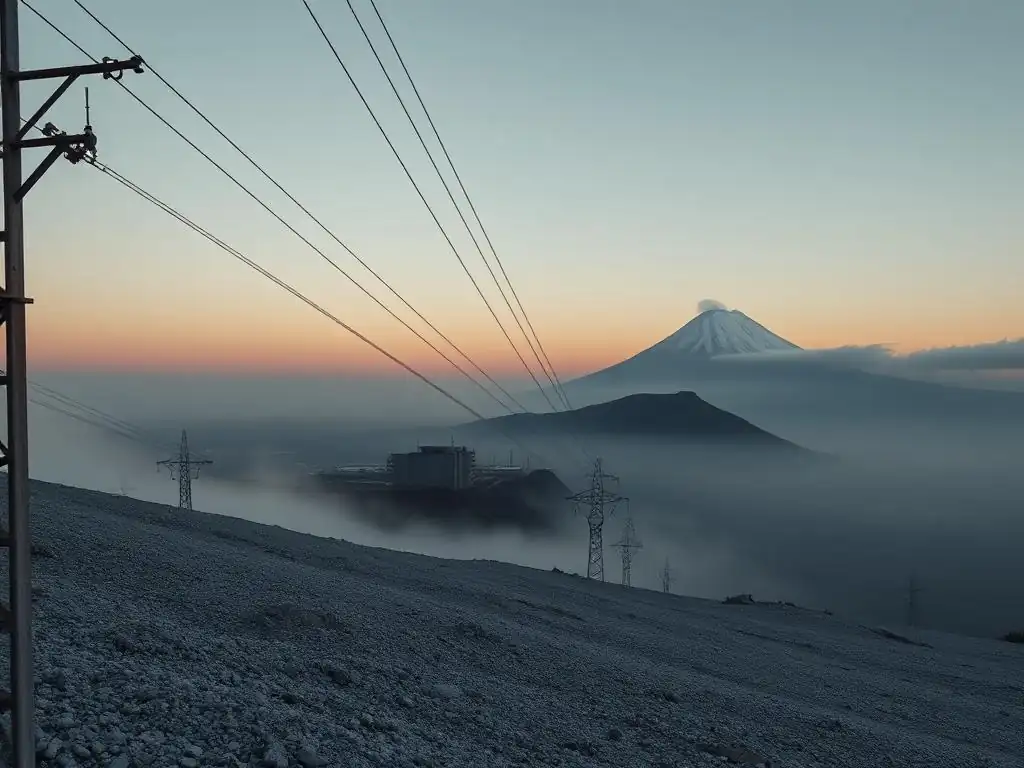
Investing in Smart Grid Technologies for Enhanced Monitoring and Control
The future of power grids in volcanic regions hinges on enhancing resilience and adapting to the ongoing threat of volcanic hazards. Investing in smart grid technologies is a crucial step in this direction. Smart grids utilize advanced sensors, communication networks, and data analytics to provide real-time monitoring and control of the electrical grid. This enhanced situational awareness is invaluable during volcanic eruptions and ashfall events. Smart grid sensors can detect ash-related faults and outages rapidly, allowing for faster identification of affected areas and more efficient dispatch of restoration crews.
Advanced metering infrastructure (AMI), a key component of smart grids, provides detailed data on power consumption and outages at the customer level, enabling power companies to pinpoint outage locations with greater precision. Smart grid control systems can also facilitate automated switching and rerouting of power flows, allowing for faster isolation of faulted sections and quicker restoration of power to unaffected areas. Furthermore, smart grids can support the integration of distributed generation resources and microgrids, enhancing the overall resilience of the power system and reducing reliance on centralized power plants that may be more vulnerable to volcanic hazards.
Developing Ash-Resistant Materials for Electrical Equipment
Another critical aspect of building resilient power grids in volcanic regions is the development and deployment of ash-resistant materials for electrical equipment. Research and development efforts are focused on creating insulators, coatings, and other materials that are less susceptible to ash accumulation, conductivity, and abrasion. Self-cleaning insulator designs, as mentioned earlier, are one promising avenue. These designs utilize natural forces like wind and rain to minimize ash buildup. Hydrophobic and superhydrophobic coatings, which repel water and thus reduce the conductivity of wet ash, are also being actively investigated.
Furthermore, materials with improved abrasion resistance are needed to withstand the erosive effects of volcanic ash particles over time. This includes developing more durable coatings for insulators and protective materials for substation equipment enclosures. Investing in materials science research and development focused on ash resistance is essential for creating power grids that are inherently more resilient to volcanic hazards, reducing the frequency and duration of ashfall-related power outages in the future.
Community Engagement and Education: Building Resilience to Volcanic Hazards
Ultimately, building resilience to volcanic hazards, including power outages, requires strong community engagement and education. Power companies, emergency management agencies, and local governments must work collaboratively with communities to raise awareness of volcanic risks and promote preparedness measures. Public education campaigns should focus on informing residents about the specific hazards of volcanic ashfall, its potential impacts on power supplies, and steps they can take to prepare their homes and businesses. This includes promoting the development of household and business emergency plans, encouraging the assembly of emergency kits, and advising on safe practices during and after ashfall events.
Community drills and exercises that simulate volcanic ashfall scenarios and power outages can help to test preparedness plans and identify areas for improvement. Furthermore, fostering community participation in hazard monitoring and reporting can enhance early warning systems and improve overall situational awareness. By actively engaging communities in resilience building efforts, and empowering residents with knowledge and preparedness skills, societies can become significantly more resilient to the challenges posed by volcanic eruptions and associated power disruptions.
Staying Safe During a Volcanic Eruption and Power Outage: A Practical Guide
Preparing Your Home for a Volcanic Ashfall Event
Preparing your home in advance of a potential volcanic ashfall event is crucial for safety and minimizing disruption. Start by sealing your home as much as possible to prevent ash infiltration. Close windows and doors tightly, and use weather stripping and duct tape to seal any gaps. Cover ventilation openings, chimneys, and air conditioning intakes with plastic sheeting or damp cloths. If you have valuable electronics, consider covering them with plastic sheeting to protect them from fine ash particles. Stock up on essential supplies, including bottled water, non-perishable food, medications, flashlights, batteries, a battery-powered radio, and a first-aid kit.
It is also wise to have dust masks or respirators available for everyone in your household. Ordinary cloth masks may offer limited protection against fine ash particles. Consider having a supply of plastic sheeting and duct tape for sealing your car windows and vents if you need to travel.
If you have livestock or pets, ensure you have a plan for their care and protection from ash, including providing them with clean water and shelter. Trimming trees and branches around your home can reduce the risk of them breaking under the weight of accumulated ash and potentially damaging power lines or your property.
Managing Without Power: Essential Tips and Precautions
If a volcanic eruption causes a power outage, knowing how to manage safely without electricity is essential. Use flashlights or battery-powered lanterns for light instead of candles, which pose a fire hazard. Unplug sensitive electronic equipment to protect them from power surges when electricity is restored. Keep refrigerator and freezer doors closed as much as possible to conserve food. A full freezer can keep food frozen for about 48 hours, while a half-full freezer can maintain temperature for around 24 hours. If you have a generator, operate it outdoors in a well-ventilated area to prevent carbon monoxide poisoning.
Use battery-powered radios or your car radio to stay informed about volcanic activity updates and power restoration progress. Conserve water, as water pumping and treatment may be affected by power outages. If you rely on well water, have an alternative water source available, as your well pump will not function without electricity.
Be mindful of food safety. Discard any perishable food that has been at room temperature for more than two hours, or four hours in cooler temperatures. If you have medical needs that rely on electricity, such as oxygen concentrators or electric wheelchairs, have a backup plan in place, such as battery backups or alternative power sources, and register with your local emergency services so they are aware of your needs.
Staying Informed: Monitoring Volcanic Activity and Power Outage Updates
Staying informed is crucial during a volcanic eruption and subsequent power outage. Monitor official sources for information about volcanic activity, ashfall forecasts, and power outage updates. This includes websites and social media channels of volcanological observatories, meteorological agencies, and your local power company or emergency management agency. Battery-powered radios are invaluable during power outages for receiving emergency broadcasts from local radio stations. Sign up for community alert systems or emergency notification services if available in your area.
If you have a smartphone with sufficient battery charge or a portable power bank, you may be able to access online information via mobile data networks, although network congestion may occur during emergencies. Be aware of potential misinformation circulating on social media and rely on official sources for accurate and verified information. Share reliable information with neighbors and family members, especially those who may have limited access to official updates. By staying informed and sharing information, you contribute to community safety and resilience during volcanic eruption events and associated power outages.
Frequently Asked Questions
What is the primary cause of power outages during volcanic eruptions?
The main culprit is ashfall, which can blanket power lines and substations. The ash is often electrically conductive when wet, leading to short circuits and equipment failure.
How does volcanic ash damage power grids specifically?
Ash can contaminate insulators, causing flashovers and disrupting the flow of electricity. The weight of accumulated ash can also cause power lines to sag or break entirely.
What types of volcanic eruptions are most likely to cause widespread power outages?
Eruptions that produce large volumes of ash are the biggest threat. These are typically explosive eruptions that eject ash high into the atmosphere, allowing it to spread over a wide area.
Can anything be done to protect power grids from volcanic ashfall?
Yes, there are several mitigation strategies. These include regular cleaning of insulators, using ash-resistant equipment, and implementing early warning systems to prepare for ashfall events.
What kind of emergency preparedness should people living near volcanoes have in place to deal with power outages?
Residents should have a backup power source like a generator or battery storage system. It's also essential to have emergency supplies such as flashlights, food, water, and a first-aid kit.
Final Reflection: Embracing Resilience in the Face of Volcanic Fury
The preceding exploration of volcanic eruption power outages underscores a critical reality: the forces of nature, while awe-inspiring, can swiftly disrupt the very infrastructure upon which modern society depends. From the immediate chaos of ashfall to the long-term economic repercussions, these events demand a proactive and informed approach to mitigation and preparedness.
The impact of volcanic eruptions extends far beyond the immediate disaster zone, rippling through communities and economies in unforeseen ways. Understanding the vulnerabilities of our power grids and developing resilient strategies is not merely a technical challenge, but a moral imperative to protect vulnerable populations. The only constant is change,
as Heraclitus famously stated, and our ability to adapt to the changing landscape of natural disasters will define our future.
As we conclude this examination, I urge you to consider your own preparedness for such events. What steps can you take, both individually and collectively, to strengthen your community's resilience against the unpredictable power of volcanic eruptions? Let us not be caught off guard, but instead, embrace a spirit of proactive planning and collaborative action, ensuring a brighter and more secure future for all.
Empower Yourself: Prepare for Volcanic Power Outages!
Thank you for learning about the impact of volcanic ashfall on power grids. Now that you understand the risks, it's time to prepare.
Here's how you can protect yourself and your community:
- Develop a comprehensive household emergency plan that includes ashfall scenarios. Don't delay – start planning today! This is your first line of defense.
- Support local initiatives focused on building resilient infrastructure by volunteering your time or donating. Every contribution makes a difference.
- Share this article and your preparedness tips with family and friends. Consider organizing a neighborhood workshop to educate others.
What's the first step you'll take this week to prepare for volcanic ashfall in your area? Share your plans in the comments below!