
Galapagos Islands Wildlife Encounters: Nature and Culture in a Volcanic Archipelago

Welcome to Volcano Explorers!
Imagine yourself face-to-face with unique creatures in a land forged by fire. Beyond the science and the spectacle of volcanic activity, lies a world teeming with life. Intrigued? Our latest exploration dives into the captivating wildlife encounters in Galapagos, where nature and culture intertwine amidst a volcanic archipelago. But what secrets does this unique ecosystem hold, and how do the islands' fiery origins shape the lives of its inhabitants? Discover the answers and much more as you journey with us!
- Exploring Galapagos Wildlife: A Unique Volcanic Ecosystem
- Unforgettable Wildlife Encounters in the Galapagos Islands
- Galapagos Islands: Where Wildlife Meets Volcanic Landscapes
- Galapagos Cultural Experiences: Exploring the Human Side of a Volcanic Archipelago
- Planning Your Galapagos Wildlife Adventure: Tips and Considerations
- The Future of Galapagos Wildlife: Conservation and Sustainability
- Galapagos Islands: A Synthesis of Nature, Culture, and Volcanic Activity
-
Frequently Asked Questions
- What makes the Galapagos Islands unique for wildlife encounters?
- How does the volcanic landscape of the Galapagos contribute to its wildlife?
- Are there guided tours specifically focused on wildlife in the Galapagos?
- What safety precautions should I take when observing wildlife in the Galapagos?
- How does VolcanoExplorers.org enhance my understanding of the Galapagos' natural history?
- Final Reflection: A Legacy of Untamed Wonder
- Plan Your Galapagos Adventure: Unveil the Magic!
Exploring Galapagos Wildlife: A Unique Volcanic Ecosystem
The Volcanic Origins of Galapagos Biodiversity
The Galapagos archipelago, a cluster of volcanic islands in the Pacific Ocean, owes its extraordinary biodiversity to its fiery birth. Born from underwater volcanic eruptions millions of years ago, these islands emerged as pristine landscapes devoid of terrestrial life. Over time, species from the South American mainland, carried by winds and currents, colonized these isolated lands.
The volcanic soil, rich in minerals, coupled with diverse microclimates created by varying elevations and rainfall patterns across the islands, provided fertile ground for adaptation and diversification. This unique setting, far from continental influences and shaped by volcanic forces, laid the foundation for the Galapagos' unparalleled evolutionary story.
The very geology of the Galapagos, sculpted by volcanic activity, continues to influence its ecosystems. Different islands, formed at different times and with varying volcanic compositions, boast distinct landscapes ranging from black lava fields to lush highlands. This geological diversity directly impacts habitat availability and resource distribution, leading to the specialization of species across the archipelago.
For example, the nutrient-rich waters surrounding volcanic coasts support abundant marine life, while volcanic craters often harbor unique plant communities adapted to specific mineral compositions and moisture levels. The ongoing volcanic processes, including occasional eruptions, further reshape island environments, creating new opportunities for colonization and adaptation, ensuring the Galapagos remains a dynamic laboratory of evolution.
Unique Galapagos Animals: An Evolutionary Showcase
The Galapagos Islands are renowned as a living laboratory of evolution, a place where isolation and unique environmental pressures have sculpted species found nowhere else on Earth. Charles Darwin's observations of Galapagos finches, with their beaks adapted to different food sources, famously contributed to his theory of natural selection.
These finches, along with marine iguanas, giant tortoises, flightless cormorants, and Galapagos penguins, are just a few examples of the endemic species that have evolved in remarkable ways to thrive in this volcanic archipelago. Their adaptations, often driven by the specific conditions on each island, showcase the power of evolution in shaping biodiversity.
The isolation of the Galapagos has not only resulted in unique species but also in a remarkable tameness of wildlife. Having evolved without significant land predators, Galapagos animals exhibit a lack of fear towards humans, allowing for unparalleled wildlife encounters.
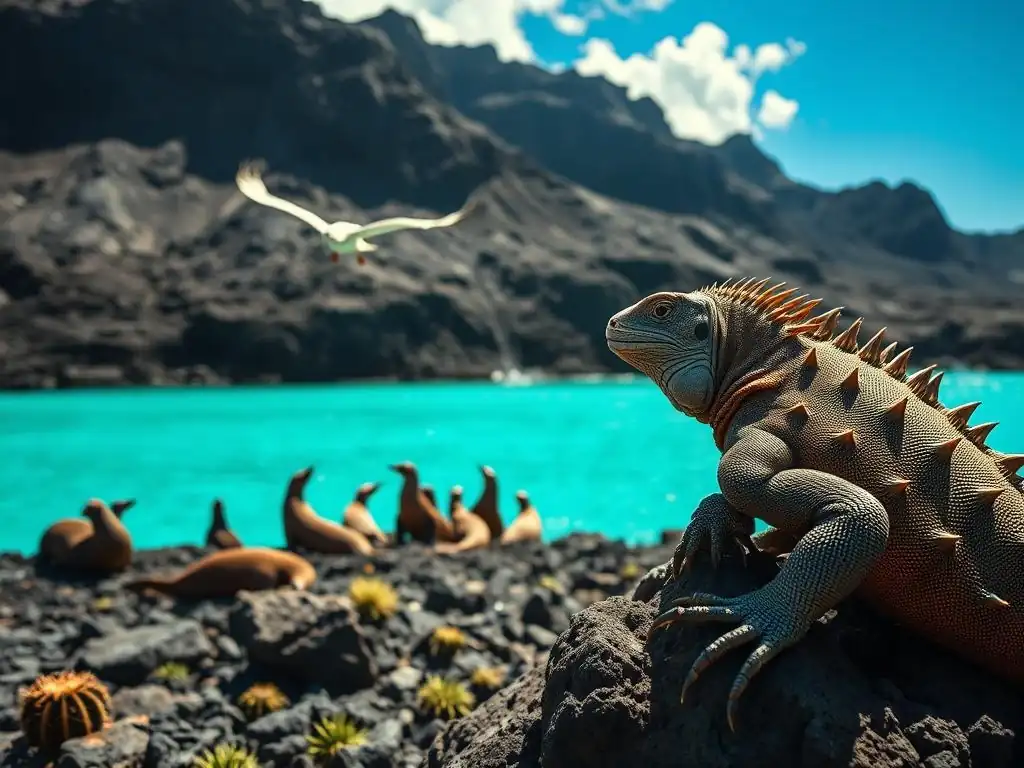
Visitors can often approach close to marine iguanas basking on lava rocks, observe blue-footed boobies performing their mating dances without disturbing them, and even swim alongside playful sea lions. This exceptional accessibility to wildlife makes the Galapagos a truly extraordinary destination for observing evolution in action and experiencing nature in its most intimate and unspoiled form, making wildlife encounters in Galapagos especially memorable.
Unforgettable Wildlife Encounters in the Galapagos Islands
Snorkeling with Marine Iguanas: An Aquatic Reptile Experience
Snorkeling with marine iguanas in the Galapagos Islands presents an unparalleled wildlife encounter. These unique reptiles, the only lizard species in the world to forage in the ocean, are commonly seen along the rocky shores and in shallow waters. Despite their terrestrial appearance, marine iguanas are adept swimmers, diving to depths of up to 30 feet to graze on algae. Entering the water and observing these ancient-looking creatures gracefully navigating their aquatic environment is a surreal experience, a glimpse into a world where reptiles have conquered the sea.
During a snorkeling excursion, you might witness marine iguanas congregating in groups, warming themselves on the black lava rocks before entering the cold Pacific waters. Once submerged, they move with surprising agility, their powerful tails propelling them through the currents. Observing them feeding on algae-covered rocks underwater, or even sneezing out excess salt after surfacing, provides an intimate look at their unique adaptations to a marine lifestyle. Locations like Española and Fernandina Island are particularly known for offering excellent opportunities for snorkeling with marine iguanas, making these wildlife encounters in Galapagos truly unforgettable.
Observing Giant Tortoises in the Highlands
Encountering giant tortoises in the highlands of the Galapagos Islands is like stepping back in time to a prehistoric era. These gentle giants, the largest living tortoise species, roam freely in several islands including Santa Cruz, Española, and Isabela. Their massive size, reaching up to five feet in length and weighing over 500 pounds, coupled with their slow, deliberate movements, evokes a sense of ancient wisdom and resilience. Observing these iconic reptiles in their natural habitat, grazing on vegetation or basking in the sun, is a quintessential Galapagos wildlife encounter.
The highlands, with their lush vegetation and humid climate, provide the ideal environment for giant tortoises. On Santa Cruz Island, for example, visiting reserves like El Chato allows you to walk amongst these magnificent creatures as they roam through pastures and forests.
You can witness them engaging in their daily routines: slowly munching on grasses, wallowing in mud puddles for thermoregulation, or lumbering along well-worn paths. The different subspecies of giant tortoises, each adapted to their specific island, further highlight the evolutionary diversity within the archipelago and make each giant tortoise encounter unique, solidifying wildlife encounters in Galapagos as truly special.
Blue-Footed Boobies: Witnessing the Mating Ritual on Española Island
Española Island in the Galapagos is a prime location to witness the captivating mating rituals of blue-footed boobies. These iconic birds, famed for their distinctive bright blue feet, engage in elaborate courtship displays to attract a mate. The male booby performs a high-stepping dance, proudly displaying his blue feet to the female, often presenting her with a pebble as a symbolic gift. Observing this comical and endearing display is a truly unique wildlife encounter, and Española Island offers some of the best vantage points to witness this spectacle.
During the mating season, which varies throughout the year but is often active, Española Island becomes a stage for booby courtship. Visitors can observe these birds nesting close to trails, allowing for close-up views of their elaborate dances and interactions. The intensity of the blue feet color is an indicator of the male's health and attractiveness to females, adding another layer of intrigue to their displays. The boobies' seemingly clumsy gait on land contrasts sharply with their aerial grace as they plunge-dive into the ocean to hunt for fish, further enhancing the fascination of these wildlife encounters in Galapagos.
Galapagos Penguins: Spotting the Northernmost Penguin Species near the Equator
The Galapagos penguin, the only penguin species found north of the equator, offers a surprising and delightful wildlife encounter in the Galapagos Islands. These small penguins, reaching just about 19 inches tall, are uniquely adapted to the warm equatorial climate. They are primarily found in the western Galapagos Islands, particularly around Isabela and Fernandina, where the cold, nutrient-rich Cromwell Current provides them with ample food. Spotting these penguins waddling on volcanic rocks or darting through the water while snorkeling is a truly special experience, defying expectations of penguin habitats.
Wildlife encounters in Galapagos often include the chance to observe Galapagos penguins in several locations. During boat tours, you might see them perched on rocky outcrops along the coastlines or swimming in the clear waters. Snorkeling near penguin colonies allows for an even closer view as they gracefully swim and hunt for small fish, crustaceans, and cephalopods. The small population size of Galapagos penguins, estimated at around 2,000 individuals, makes each sighting even more precious and underscores the importance of conservation efforts to protect this unique equatorial penguin and the wildlife encounters in Galapagos it provides.
Galapagos Islands: Where Wildlife Meets Volcanic Landscapes
The Influence of Volcanic Activity on Galapagos Wildlife
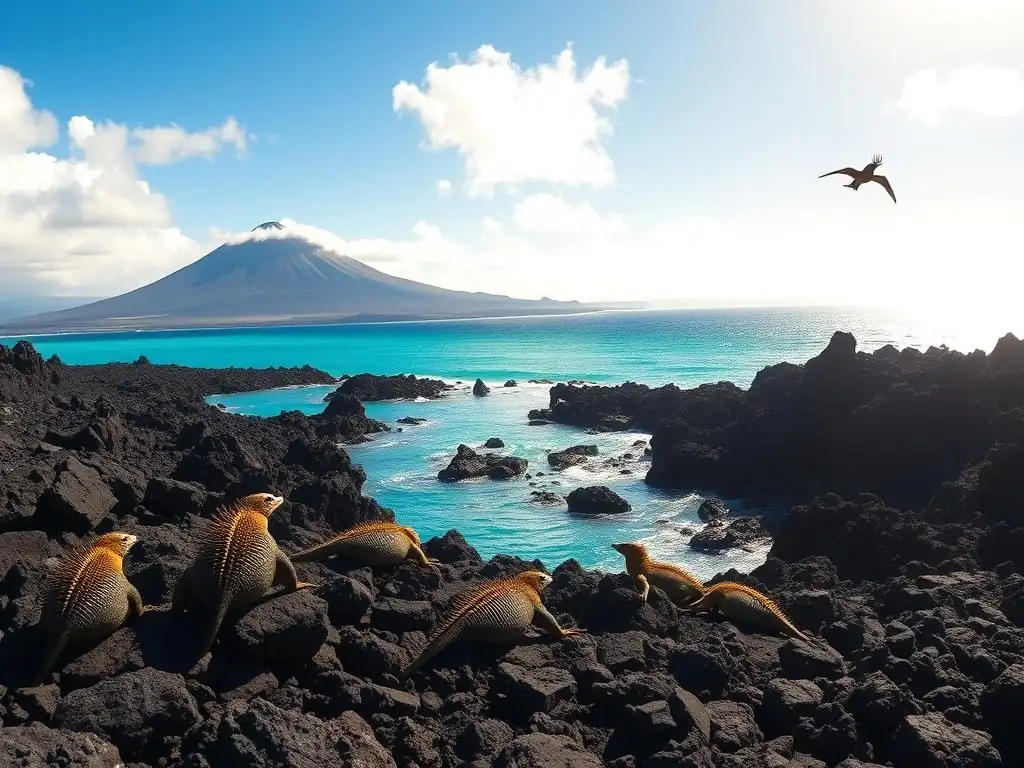
Volcanic activity has profoundly shaped the Galapagos Islands and continues to influence its unique wildlife. The islands' very existence is a result of volcanic eruptions, and the diverse volcanic landscapes, from barren lava fields to fertile highlands, create a mosaic of habitats that support a wide array of species.
The nutrient-rich volcanic soil and ash contribute to the fertility of the land and surrounding waters, fostering abundant plant and marine life that forms the base of the Galapagos food web. Volcanic processes, therefore, are not just a geological phenomenon but a fundamental driver of the Galapagos ecosystem and the wildlife encounters in Galapagos it offers.
The impact of volcanic activity extends beyond habitat creation and nutrient enrichment. Volcanic eruptions, while potentially disruptive in the short term, can also create new opportunities for colonization and adaptation. Lava flows can reshape coastlines, creating new tide pools and rocky intertidal zones that are quickly colonized by marine organisms. Ash deposits can fertilize previously barren land, promoting plant growth and attracting herbivores. This constant cycle of creation and renewal driven by volcanic activity ensures that the Galapagos ecosystem remains dynamic and resilient, continuously influencing the evolution and distribution of its wildlife, enriching wildlife encounters in Galapagos.
Lava Tunnels and Coastal Habitats: A Wildlife Perspective
Lava tunnels and coastal habitats in the Galapagos offer unique perspectives on the interplay between volcanic landscapes and wildlife. Lava tunnels, formed by flowing lava cooling on the surface while molten rock continues to flow beneath, create subterranean ecosystems. These tunnels provide shelter from the harsh sun and predators, and can even harbor unique cave-adapted species like invertebrates. Exploring these geological formations offers a different kind of wildlife encounter in Galapagos, showcasing life in unexpected environments.
Coastal habitats, shaped by volcanic processes and wave action, are biodiversity hotspots in the Galapagos. Rocky shores, mangrove forests, and sandy beaches provide crucial breeding and feeding grounds for a variety of species, from marine iguanas and sea lions basking on lava rocks to shorebirds foraging along the waterline and sea turtles nesting on sandy beaches.
The black volcanic sand beaches, warmed by the equatorial sun, are particularly important nesting sites for sea turtles. Observing wildlife in these coastal zones highlights the direct connection between the volcanic origins of the islands and the rich tapestry of life they support, making wildlife encounters in Galapagos diverse and captivating.
Galapagos Cultural Experiences: Exploring the Human Side of a Volcanic Archipelago
Island Communities and Sustainable Tourism in Galapagos
Beyond its extraordinary wildlife, the Galapagos Islands boast a vibrant human culture deeply intertwined with its volcanic environment and conservation ethos. Small island communities, primarily located on San Cristobal, Santa Cruz, Isabela, and Floreana, have developed a unique way of life that balances economic activities, largely centered on tourism and fishing, with the imperative of preserving the islands' fragile ecosystems. Sustainable tourism practices are crucial to the Galapagos model, aiming to minimize environmental impact while supporting local livelihoods and enriching wildlife encounters in Galapagos.
Visiting these communities provides insight into the human dimension of the Galapagos experience. You can interact with local residents, learn about their traditions, and support local businesses, contributing directly to the sustainability of the islands. Many residents are actively involved in conservation efforts, working as park rangers, guides, or in community-based tourism initiatives. This integration of human communities and conservation sets the Galapagos apart as a model for sustainable tourism, where wildlife encounters in Galapagos are enhanced by an understanding of the cultural context and the commitment to preservation.
Charles Darwin Research Station: Understanding Conservation Efforts
A visit to the Charles Darwin Research Station on Santa Cruz Island is essential for understanding the extensive conservation efforts underway in the Galapagos. Established in 1959, the research station plays a crucial role in scientific research, conservation management, and education. It serves as a hub for scientists from around the world studying the Galapagos ecosystems, conducting research on endemic species, and developing strategies to address threats to the islands' biodiversity. Visiting the station offers a deeper appreciation for the scientific basis of Galapagos conservation and the ongoing work to protect these unique islands and wildlife encounters in Galapagos.
At the Charles Darwin Research Station, you can learn about ongoing projects focused on species conservation, invasive species control, and ecosystem monitoring. The station's facilities include laboratories, research collections, and public exhibits that explain the research being conducted. The famous Fausto Llerena Tortoise Center, part of the station, provides a sanctuary for giant tortoises, including the iconic Lonesome George, who sadly passed away but remains a symbol of conservation challenges. Engaging with the research station enhances wildlife encounters in Galapagos by providing a crucial understanding of the scientific and conservation context surrounding the islands' unique biodiversity.
Local Cuisine and Cultural Traditions of the Galapagos
Exploring the local cuisine and cultural traditions of the Galapagos offers another dimension to the island experience, complementing the wildlife encounters in Galapagos. Galapagos cuisine is characterized by fresh seafood, locally grown produce, and influences from Ecuadorian mainland cuisine. Dishes often feature fresh fish, lobster, and shrimp, prepared in flavorful ways. Sampling local specialties not only provides a taste of Galapagos culture but also supports local fishermen and farmers practicing sustainable harvesting methods.
Beyond food, the cultural traditions of the Galapagos reflect the islands' unique history and isolation. Festivals and celebrations often incorporate maritime themes and celebrate the islands' natural heritage. Local crafts, often made from sustainable materials, offer unique souvenirs and support local artisans. Engaging with Galapagos culture, whether through trying local dishes, attending community events, or interacting with residents, enriches the overall travel experience and provides a deeper understanding of the human-wildlife relationship in this volcanic archipelago, enhancing wildlife encounters in Galapagos with cultural insights.
Planning Your Galapagos Wildlife Adventure: Tips and Considerations
Best Time to Visit the Galapagos for Wildlife Viewing
Determining the best time to visit the Galapagos for wildlife viewing depends on specific interests, as different seasons offer unique wildlife encounters in Galapagos. Generally, the Galapagos experiences two main seasons: a cool, dry season from June to November and a warm, wet season from December to May. The cool, dry season, influenced by the Humboldt Current, brings cooler water temperatures and nutrient-rich waters, attracting marine life and seabirds. This season is excellent for observing whale sharks, sea lions, and seabird nesting.
The warm, wet season offers warmer water temperatures, making snorkeling and diving more comfortable. This season is also the breeding season for many land birds and reptiles, including giant tortoises and marine iguanas. While rainfall is more frequent during this season, it is typically in short bursts and does not significantly impact wildlife viewing opportunities. Ultimately, there is no definitively "best" time to visit, as wildlife encounters in Galapagos are rewarding year-round; the ideal time depends on individual preferences for specific species and weather conditions.
Choosing the Right Galapagos Tour or Cruise for Animal Lovers
Choosing the right Galapagos tour or cruise is crucial for maximizing wildlife encounters in Galapagos, especially for animal lovers. Several options are available, ranging from small yachts and catamarans to larger expedition vessels and land-based tours. For a more intimate and wildlife-focused experience, smaller boats (typically accommodating 16-20 passengers) often provide more personalized attention, access to smaller landing sites, and greater flexibility in itineraries. These smaller vessels often emphasize naturalist guides and in-depth wildlife interpretation.
Larger cruise ships (over 100 passengers) offer more amenities and often lower prices but may provide a less personalized and immersive experience. Land-based tours, staying in hotels on the inhabited islands, offer more flexibility in terms of activities and budget but may involve more travel time between visitor sites and limit access to some of the more remote islands. Animal lovers should prioritize tours that emphasize wildlife viewing, employ knowledgeable naturalist guides, and adhere to responsible tourism practices, ensuring that wildlife encounters in Galapagos are both enriching and sustainable.
Essential Packing List for Galapagos Wildlife Observation
Packing appropriately is essential for a comfortable and rewarding Galapagos wildlife observation experience. Given the equatorial climate and focus on outdoor activities, lightweight, breathable clothing is crucial. Sun protection is paramount, including a wide-brimmed hat, sunglasses with UV protection, and high SPF sunscreen, as the equatorial sun is intense. Comfortable walking shoes or hiking boots are essential for island excursions, and sandals or water shoes are useful for boat landings and wet landings.
For wildlife observation, binoculars are highly recommended to enhance viewing of birds and distant wildlife. A camera with a good zoom lens is essential for capturing photos of the unique Galapagos fauna. Snorkeling gear (mask, snorkel, fins) is often provided on cruises, but bringing your own ensures a comfortable fit. A reusable water bottle is important for staying hydrated and reducing plastic waste. Insect repellent may be useful, especially in the highlands. Packing light layers allows for adjusting to varying temperatures throughout the day, ensuring comfortable wildlife encounters in Galapagos in all conditions.
The Future of Galapagos Wildlife: Conservation and Sustainability
Threats to Galapagos Wildlife and Ecosystems
Despite their protected status, Galapagos wildlife and ecosystems face a number of ongoing threats. Invasive species, introduced by human activity, pose a significant danger, outcompeting native species, disrupting food webs, and altering habitats. Feral goats, cats, dogs, rats, and introduced plants have had devastating impacts on Galapagos ecosystems. Climate change is another growing threat, with rising sea temperatures, ocean acidification, and changing weather patterns impacting marine and terrestrial life.
Unsustainable tourism practices, if not carefully managed, can also contribute to environmental stress. Overfishing and illegal fishing activities threaten marine populations. Plastic pollution and waste management remain challenges. These interconnected threats require ongoing vigilance, proactive conservation measures, and a commitment to sustainable practices to ensure the long-term survival of Galapagos wildlife and the continuation of wildlife encounters in Galapagos.
Protecting the Galapagos: Conservation Initiatives and Responsible Tourism
Protecting the Galapagos Islands requires a multi-faceted approach involving government regulations, scientific research, conservation organizations, local communities, and responsible tourism. The Galapagos National Park Directorate and the Charles Darwin Foundation play key roles in managing the islands, enforcing regulations, conducting research, and implementing conservation programs. Eradication programs target invasive species, while biosecurity measures aim to prevent new introductions. Marine protected areas help safeguard marine biodiversity.
Responsible tourism is crucial to the long-term conservation of the Galapagos. Choosing tour operators committed to sustainability, respecting park regulations, minimizing waste, and supporting local communities are all ways visitors can contribute. Educating oneself about Galapagos conservation issues and advocating for responsible practices are also important. By working together, these efforts aim to mitigate threats and ensure the continued preservation of Galapagos wildlife and the unique wildlife encounters in Galapagos for future generations.
Eradicating Invasive Goats on Isabela Island
The eradication of invasive goats on Isabela Island stands as a remarkable example of successful conservation efforts in the Galapagos. Feral goats, introduced centuries ago, had caused widespread environmental damage, overgrazing native vegetation, causing soil erosion, and disrupting habitats for native species like giant tortoises. Project Isabela, a large-scale eradication program, utilized aerial hunting and ground-based trapping to systematically remove goats from Isabela and other islands.
Over several years, hundreds of thousands of goats were removed, leading to a dramatic recovery of native vegetation and ecosystems. Giant tortoise populations have rebounded, and overall biodiversity has increased. The success of Project Isabela demonstrates the effectiveness of targeted eradication programs in restoring degraded ecosystems and underscores the importance of addressing invasive species threats to protect Galapagos wildlife and preserve the opportunity for future wildlife encounters in Galapagos.
Galapagos Islands: A Synthesis of Nature, Culture, and Volcanic Activity
The Interconnectedness of Volcanic Landscapes, Wildlife, and Human Culture in the Galapagos
The Galapagos Islands offer a compelling example of the interconnectedness of volcanic landscapes, wildlife, and human culture. The volcanic origins of the islands have shaped their unique ecosystems and biodiversity, which in turn have influenced the development of human communities and cultural practices. The extraordinary wildlife encounters in Galapagos are not just about observing animals; they are about experiencing a place where geology, biology, and human society are inextricably linked.
The volcanic landscapes provide the stage for the Galapagos drama, creating habitats that have driven evolution and shaped the unique fauna. Wildlife, in turn, is the primary draw for tourism, which is the economic backbone of the island communities. Sustainable tourism, when practiced responsibly, supports conservation efforts and local livelihoods, creating a positive feedback loop that benefits both nature and culture. Understanding and appreciating these interconnections is key to experiencing the Galapagos in its full complexity and ensuring the long-term preservation of this extraordinary archipelago and its wildlife encounters in Galapagos.
Experiencing the Galapagos: A Call to Responsible Exploration
Experiencing the Galapagos Islands is a privilege and a responsibility. It is a call to responsible exploration, urging visitors to engage with this unique environment in a way that minimizes impact and maximizes conservation benefits. Choosing sustainable tour operators, respecting park regulations, supporting local communities, and educating oneself about Galapagos conservation issues are all crucial aspects of responsible travel. The wildlife encounters in Galapagos are a precious gift, and their continuation depends on our collective commitment to protecting these volcanic islands and their extraordinary biodiversity.
By embracing responsible exploration, visitors can contribute to the long-term sustainability of the Galapagos, ensuring that future generations can also experience the magic of this volcanic archipelago and its unparalleled wildlife encounters in Galapagos. The Galapagos Islands serve as a powerful reminder of the interconnectedness of nature and humanity and the importance of conservation in a rapidly changing world. Let us explore these islands with respect, appreciation, and a commitment to preserving their unique natural and cultural heritage.
Frequently Asked Questions
What makes the Galapagos Islands unique for wildlife encounters?
The Galapagos Islands are renowned for their unique biodiversity and lack of natural predators, allowing visitors to get incredibly close to endemic species like marine iguanas, giant tortoises, and blue-footed boobies. This proximity offers unparalleled wildlife viewing opportunities.
How does the volcanic landscape of the Galapagos contribute to its wildlife?
The volcanic activity that formed the Galapagos Islands created diverse habitats, from lava fields to highlands, which support a wide range of specialized species. This geological history has driven unique evolutionary adaptations in the islands' fauna.
Are there guided tours specifically focused on wildlife in the Galapagos?
Yes, many tour operators offer specialized wildlife tours led by expert naturalists. These tours focus on observing and learning about the Galapagos's unique flora and fauna, often including snorkeling and hiking experiences.
What safety precautions should I take when observing wildlife in the Galapagos?
It's crucial to maintain a respectful distance from wildlife, avoid feeding animals, and follow the instructions of your guide. Adhering to these conservation guidelines ensures the safety of both visitors and the animals.
How does VolcanoExplorers.org enhance my understanding of the Galapagos' natural history?
VolcanoExplorers.org provides insights into the volcanic origins of the Galapagos, connecting the islands' geological past to the present-day wildlife and ecological processes. This enhances appreciation for the interplay between nature and culture in this remarkable archipelago.
Final Reflection: A Legacy of Untamed Wonder
The Galapagos Islands, as we've explored, are more than just a collection of volcanic rocks; they are a living testament to the power and beauty of evolution, a place where unparalleled wildlife encounters shape our understanding of the natural world. The enduring relevance of these islands lies in their fragility and the urgent need to protect their unique ecosystems, ensuring that future generations can witness the same breathtaking biodiversity we have discussed.
The impact of the Galapagos extends far beyond scientific circles. It has influenced art, literature, and our collective consciousness about the interconnectedness of life. My own fascination with these islands began with a childhood dream of seeing blue-footed boobies dance, a dream that speaks to the inherent human desire to connect with the wild. In the long history of humankind (and animal kind, too) those who learned to collaborate and improvise most effectively have prevailed.
- Charles Darwin. This quote reminds us that the Galapagos, and indeed the entire planet, thrives on collaboration and adaptation, principles we must embrace to ensure its survival.
As we conclude this journey through the Galapagos, I invite you to reflect on your own relationship with the natural world. How can you contribute to the preservation of these precious ecosystems, whether through conscious consumption, supporting conservation efforts, or simply spreading awareness? Let the spirit of the Galapagos inspire you to become a steward of our planet, ensuring that the legacy of untamed wonder continues to thrive for generations to come.
Plan Your Galapagos Adventure: Unveil the Magic!
Thank you for exploring the wonders of the Galapagos Islands with us. We hope you've gained a deeper appreciation for this unique ecosystem and are inspired by the incredible wildlife encounters it offers. Now, it's time to turn that inspiration into action!
Here's how you can take the next step:
- Start planning your dream Galapagos trip! Visit Volcano Explorers (volcanoexplorers.org) to explore our curated tour packages and find the perfect itinerary for you.
- Share this article with fellow nature enthusiasts and inspire them to discover the magic of the Galapagos.
- Learn more about the fascinating endemic species of the Galapagos. Which one captivates you the most, and why?
What aspect of the Galapagos Islands most captured your imagination, and how will you bring a piece of that wonder into your own life? Share your thoughts in the comments below!