
Earthquakes and Eruptions: How Seismic Activity Influences Hydrothermal Systems

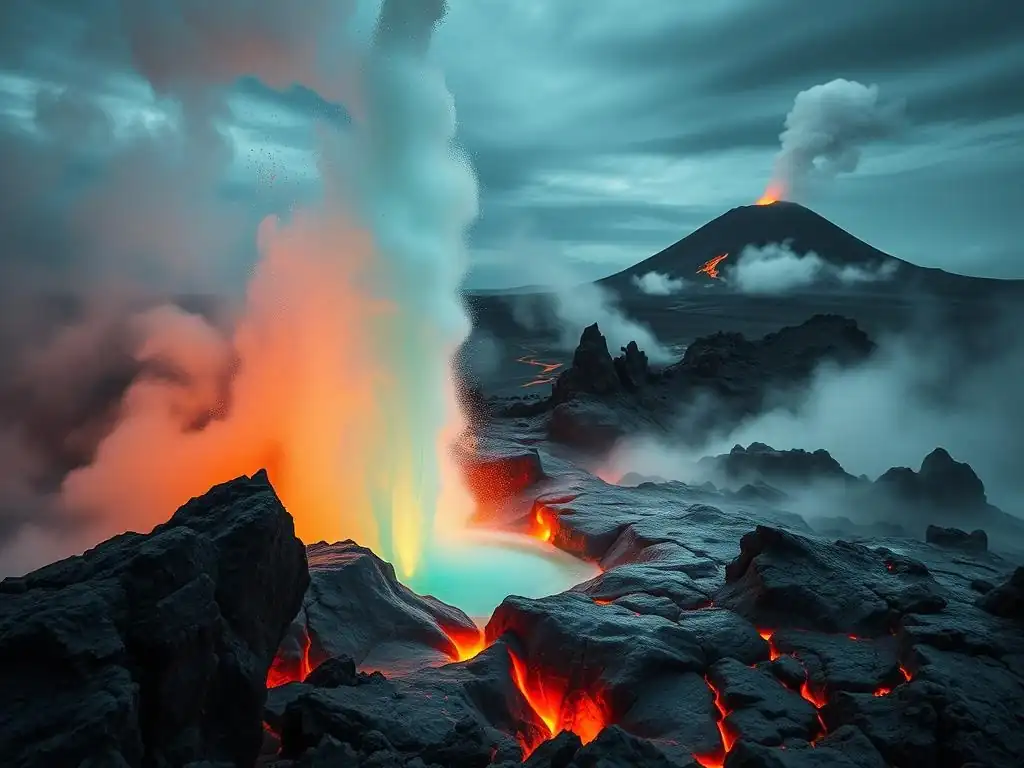
Welcome to Volcano Explorers, where the Earth breathes fire!
Ever wondered how the ground trembles before a volcano roars? Dive deep into the fascinating connection between earthquakes and eruptions as we explore how seismic activity powerfully influences the volatile world of hydrothermal systems beneath these fiery giants. Unravel the mysteries that link the Earth's tremors to the boiling heart of volcanoes and prepare to be amazed. The journey begins now...
- Introduction: The Interplay of Earthquakes, Volcanic Eruptions, and Hydrothermal Activity
- Understanding Hydrothermal Systems in Volcanic Regions
- Seismic Activity: The Trigger for Hydrothermal Change
- Volcanic Eruptions: A Direct Link to Hydrothermal Activity
- Seismic Signals and Hydrothermal System Dynamics
- The Chemical Impact: How Seismic Events Alter Hydrothermal Fluid Composition
- Modeling the Interaction: Seismic Activity, Eruptions, and Hydrothermal Systems
- Conclusion: The Complex Relationship and Future Research
-
Frequently Asked Questions
- How does seismic activity typically affect hydrothermal systems near volcanoes?
- What role do hydrothermal systems play in volcanic eruptions?
- How do volcanologists use seismic data to understand hydrothermal systems?
- What are some of the potential hazards associated with the interaction between seismic activity and hydrothermal systems?
- What is the relationship between "seismic swarms" and changes in hydrothermal activity?
- Final Reflection: The Earth's Breath and Blood
- Ignite Your Inner Geologist: Explore the Earth's Hidden Depths!
Introduction: The Interplay of Earthquakes, Volcanic Eruptions, and Hydrothermal Activity
The Earth's crust is a dynamic and interconnected system, where seismic activity, volcanic eruptions, and hydrothermal systems are intimately linked. These phenomena, often perceived as separate geological events, are in fact deeply intertwined, influencing and responding to one another in complex ways.
Understanding these interactions is crucial for comprehending the behavior of volcanoes and the hazards they pose, as well as for harnessing the valuable geothermal energy stored within hydrothermal systems. This article will delve into the fascinating relationship between earthquakes, volcanic eruptions, and hydrothermal systems, exploring how seismic activity can trigger changes in hydrothermal systems and how these systems, in turn, can provide clues about impending volcanic unrest and the overall dynamics of volcanic regions.
From the steaming fumaroles and geysers of Yellowstone National Park to the bubbling mud pots of Iceland, hydrothermal systems are captivating manifestations of the Earth’s internal heat. These systems, fueled by magmatic heat sources, are sensitive to changes in pressure and stress within the Earth’s crust. Seismic activity, ranging from minor tremors to powerful earthquakes, can act as a significant perturbation to these delicate systems.
Furthermore, volcanic eruptions, the most dramatic expression of Earth's internal energy, are intrinsically linked to hydrothermal activity, often driven by the same magmatic processes and sharing subsurface pathways. By examining the interplay of these forces, we can gain a deeper appreciation for the intricate workings of our planet and improve our ability to monitor and forecast volcanic and hydrothermal hazards.
Understanding Hydrothermal Systems in Volcanic Regions
What are Hydrothermal Systems? Defining the Basics
Hydrothermal systems are essentially underground plumbing networks where water, heated by a magmatic or geothermal heat source, circulates through fractured rocks and permeable sediments. The term "hydrothermal" itself signifies "hot water," aptly describing the core component of these systems. These systems are characterized by the movement of water that has been heated significantly above the average surface temperature, often reaching temperatures exceeding 300°C (572°F) at depth. This heated water dissolves minerals from the surrounding rocks, becoming a chemically rich fluid that can then rise towards the surface due to buoyancy or pressure gradients.
The architecture of a hydrothermal system is typically composed of several key elements. Firstly, a heat source is essential, often provided by a magma body cooling at depth or radiogenic heat in regions with high geothermal gradients. Secondly, a source of water is required, which can be meteoric water (rainwater and snowmelt) percolating downwards, magmatic water released from cooling magma, or even seawater in coastal volcanic areas.
Thirdly, permeable pathways are necessary to allow fluid flow, typically provided by fractures, faults, and porous rock formations. Finally, a caprock or impermeable layer can trap the hot fluids at depth, creating a pressure buildup that can lead to surface manifestations like hot springs, geysers, and fumaroles where the hydrothermal fluids discharge. Understanding these basic components is fundamental to grasping how seismic activity and volcanic eruptions can influence the behavior of hydrothermal systems.
The Role of Magma in Driving Hydrothermal Processes
Magma is the fundamental energy source that drives most hydrothermal systems in volcanic regions. As molten rock rises from the Earth's mantle and accumulates in magma chambers within the crust, it releases immense amounts of heat. This heat is transferred to the surrounding rocks and groundwater, initiating and sustaining hydrothermal circulation. The temperature of magma can range from approximately 700°C to 1300°C (1292°F to 2372°F), providing a potent heat source capable of driving hydrothermal systems to significant depths and temperatures.
Beyond just heat, magma also contributes volatile components, including water vapor, carbon dioxide, sulfur dioxide, and hydrogen sulfide, directly into hydrothermal systems. These magmatic volatiles significantly influence the chemical composition of hydrothermal fluids. For instance, magmatic water can be a significant component of hydrothermal fluids in certain volcanic systems, especially during periods of volcanic unrest.
Furthermore, the degassing of magma can create pressure changes within the crust, which can in turn affect the flow pathways and discharge rates of hydrothermal systems. The proximity and activity of a magma body are therefore primary controls on the intensity, temperature, and chemical characteristics of hydrothermal systems in volcanic areas, making them inherently linked to volcanic processes.
Seismic Activity: The Trigger for Hydrothermal Change
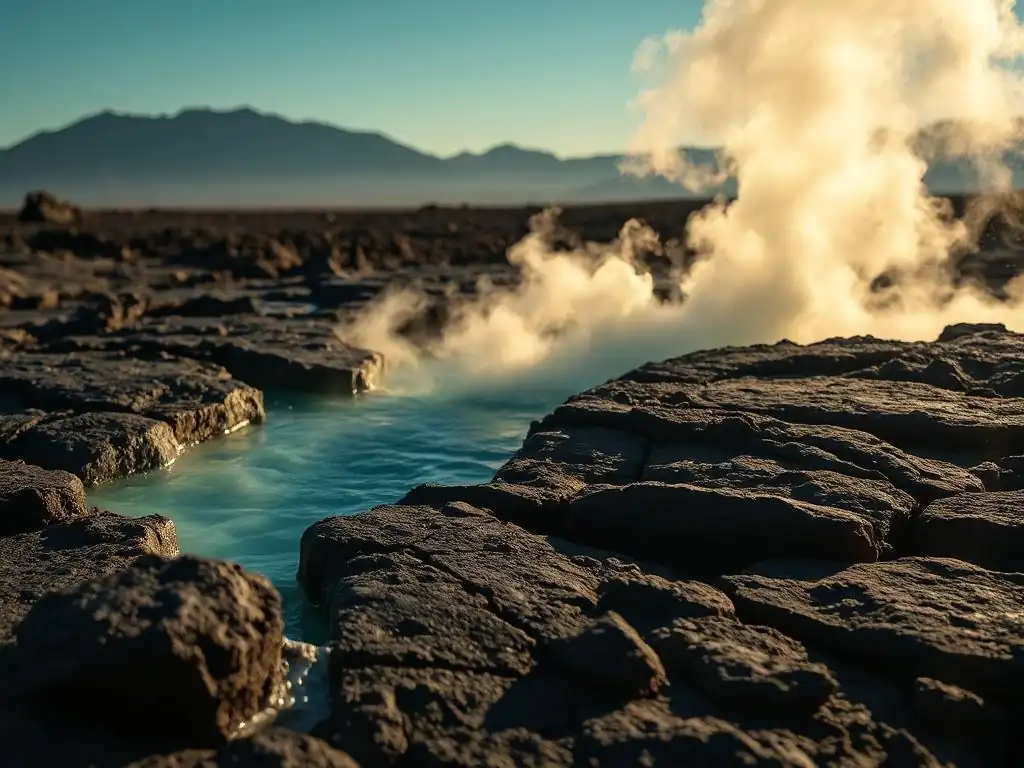
Earthquakes as Perturbations to Hydrothermal Equilibrium
Earthquakes, the sudden release of energy in the Earth's crust, act as significant perturbations to the often delicate equilibrium of hydrothermal systems. The seismic waves generated by earthquakes, particularly strong ones, can induce a variety of changes within hydrothermal systems. These changes can range from subtle shifts in fluid flow to dramatic alterations in the system's overall behavior, including changes in geyser eruption patterns, hot spring discharge rates, and even triggering new hydrothermal activity.
One primary mechanism by which earthquakes influence hydrothermal systems is through the alteration of permeability and porosity within the subsurface. Seismic shaking can cause fractures to open or close, and unconsolidated materials to compact or dilate, thereby changing the pathways and ease with which hydrothermal fluids can flow. For example, strong earthquakes can fracture previously impermeable rock, creating new conduits for fluid flow and potentially increasing the discharge of hot springs or triggering new springs to emerge.
Conversely, in some cases, seismic shaking can cause fractures to close or sediments to compact, reducing permeability and potentially decreasing the flow of hydrothermal fluids. The specific response of a hydrothermal system to seismic activity depends on a complex interplay of factors, including the magnitude and proximity of the earthquake, the geological structure of the area, and the pre-existing state of the hydrothermal system itself.
Case Studies: Earthquakes and Hydrothermal System Response
Numerous case studies around the world demonstrate the profound impact of earthquakes on hydrothermal systems. The 1995 Kobe earthquake in Japan, for example, caused significant changes in the hot spring activity in the surrounding region. Studies documented increased discharge rates and temperature changes in several hot springs following the earthquake, attributed to earthquake-induced fracturing and enhanced permeability.
Similarly, the 2010 eruption of Eyjafjallajökull volcano in Iceland, which was preceded by seismic activity, saw marked changes in the hydrothermal areas around the volcano. Geothermal areas near the volcano exhibited increased steam discharge and changes in gas composition, indicating a clear response to the seismic and magmatic activity.
Perhaps one of the most well-documented examples is the response of Yellowstone National Park's hydrothermal system to earthquakes. Yellowstone, one of the largest and most dynamic hydrothermal systems on Earth, is highly sensitive to seismic activity. Following the 2002 Denali Fault earthquake in Alaska, which occurred over 3,000 kilometers (1,864 miles) away, Yellowstone experienced measurable changes in geyser eruption intervals and hot spring discharge rates.
This long-distance response highlights the interconnectedness of the Earth’s crust and the sensitivity of large hydrothermal systems to even distant seismic events. These examples underscore the importance of considering seismic activity as a crucial factor influencing the behavior and evolution of hydrothermal systems globally.
Volcanic Eruptions: A Direct Link to Hydrothermal Activity
Eruptions and the Release of Hydrothermal Fluids
Volcanic eruptions and hydrothermal activity are intrinsically linked, often representing different expressions of the same underlying magmatic processes. Volcanic eruptions frequently involve the release of significant quantities of hydrothermal fluids, in the form of steam, hot water, and dissolved gases. These fluids, which have been heated and chemically modified by magma at depth, are often expelled alongside volcanic ash, lava, and pyroclastic flows during an eruption. The eruption itself can be viewed, in part, as a dramatic and rapid discharge event for the hydrothermal system associated with the volcano.
The interaction between magma and hydrothermal fluids can also play a critical role in the style and explosivity of volcanic eruptions. When magma encounters groundwater or pre-existing hydrothermal systems, the rapid heating and vaporization of water can lead to phreatomagmatic eruptions. These eruptions are characterized by their highly explosive nature, driven by the sudden expansion of steam generated by the magma-water interaction.
The 1996 eruption of Karymsky Lake volcano in Kamchatka, Russia, is a notable example of a phreatomagmatic eruption triggered by the interaction of magma with a crater lake, highlighting the significant influence of hydrothermal fluids on eruption dynamics. Even in eruptions that are not explicitly phreatomagmatic, the presence of hydrothermal fluids within the volcanic conduit can affect magma viscosity, degassing behavior, and overall eruption intensity.
Monitoring Hydrothermal Systems as a Proxy for Volcanic Unrest
Hydrothermal systems can serve as valuable natural laboratories for monitoring volcanic unrest. Changes in hydrothermal activity, such as variations in hot spring temperature, discharge rate, gas composition, and ground deformation in hydrothermal areas, can often precede and accompany volcanic eruptions. These changes reflect alterations in the magmatic system at depth, as magma movement, degassing, and pressure changes directly impact the overlying hydrothermal system. Therefore, continuous monitoring of hydrothermal systems is an important component of volcano monitoring strategies worldwide.
For example, increased fumarole temperatures and steam discharge at a volcano can indicate an increase in magmatic heat flux or the ascent of magma towards the surface. Changes in the chemical composition of hydrothermal gases, such as an increase in the ratio of sulfur dioxide to hydrogen sulfide, can also signal magma degassing and potential eruption. Ground deformation in hydrothermal areas, measured using techniques like GPS and InSAR, can reflect pressure changes within the hydrothermal system and underlying magmatic system.
By carefully observing and analyzing these hydrothermal parameters, volcanologists can gain valuable insights into the state of a volcano and improve eruption forecasting capabilities. The monitoring of hydrothermal systems thus provides a crucial, often early, warning system for potential volcanic eruptions.
Seismic Signals and Hydrothermal System Dynamics
Seismic Monitoring Techniques for Studying Hydrothermal Systems
Seismic monitoring is a cornerstone of studying hydrothermal systems, providing crucial information about their subsurface dynamics. Various seismic techniques are employed to probe the structure and activity of hydrothermal areas. Microearthquake monitoring is particularly valuable, as hydrothermal systems are often associated with swarms of small earthquakes. These microearthquakes can be generated by fluid pressure changes, thermal stresses, and faulting related to hydrothermal circulation. Analyzing the location, frequency, and magnitude of these microearthquakes can help delineate the boundaries of hydrothermal reservoirs and track changes in their activity.
Seismic tomography, another important technique, uses the travel times of seismic waves to create 3D images of the subsurface. By analyzing variations in seismic wave velocities, researchers can identify areas of low velocity, which are often associated with hot, fluid-saturated zones characteristic of hydrothermal systems. Seismic reflection surveys can also be used to map subsurface geological structures, including faults and fractures that control fluid flow in hydrothermal systems.
Furthermore, techniques like seismic noise interferometry are increasingly being applied to monitor temporal changes in seismic velocity within hydrothermal areas, providing insights into dynamic processes like fluid pressure variations and thermal expansion. These diverse seismic monitoring techniques offer complementary perspectives on the structure and dynamics of hydrothermal systems.
Identifying Seismic Precursors to Hydrothermal Changes
Seismic signals can act as precursors to changes observed in hydrothermal systems, providing valuable early warnings of shifts in hydrothermal activity. Changes in the rate of microearthquake activity, the occurrence of specific types of seismic events like volcanic tremor, and alterations in seismic wave velocities can all precede observable changes in surface hydrothermal manifestations like geyser eruptions or hot spring discharge. Recognizing and interpreting these seismic precursors is crucial for understanding the dynamic interplay between seismic and hydrothermal processes.
For instance, an increase in the frequency and magnitude of microearthquakes beneath a hydrothermal area may indicate increased fluid pressure or fracturing, potentially leading to enhanced hydrothermal discharge or even hydrothermal explosions. Volcanic tremor, a continuous seismic signal often associated with fluid movement, can also be an indicator of changes in hydrothermal flow.
Furthermore, changes in seismic velocity, as detected by techniques like seismic noise interferometry, can reflect variations in fluid saturation and temperature within the hydrothermal system, providing advance notice of potential shifts in hydrothermal activity. By carefully analyzing seismic data in conjunction with other monitoring parameters, scientists can improve their ability to anticipate and understand the complex evolution of hydrothermal systems.
The Chemical Impact: How Seismic Events Alter Hydrothermal Fluid Composition
Earthquake-Induced Changes in Geochemical Signatures
Earthquakes can induce significant changes in the geochemical signatures of hydrothermal fluids. The shaking and stress changes associated with seismic events can alter subsurface fluid pathways, mixing different fluid reservoirs, and changing the rates of water-rock interaction. These processes can lead to detectable shifts in the chemical composition of hot springs, fumaroles, and other hydrothermal discharges following earthquakes. Analyzing these geochemical changes provides valuable insights into the subsurface response of hydrothermal systems to seismic activity.
One common observation is a change in the concentration of dissolved gases in hydrothermal fluids after earthquakes. For example, increases in the concentration of gases like helium or radon can be observed, which are often attributed to the release of gases from deeper crustal or mantle sources due to earthquake-induced fracturing and enhanced permeability. Changes in the ratios of different isotopes, such as helium isotopes, can also provide clues about the source of fluids and the mixing of different fluid components.
Furthermore, earthquakes can alter the concentrations of major dissolved ions in hydrothermal waters, reflecting changes in water-rock interaction and fluid flow paths. These geochemical shifts provide a sensitive record of the subsurface hydrological and chemical changes triggered by seismic events.
Using Geochemistry to Trace Fluid Pathways and Magmatic Input
Geochemical analysis of hydrothermal fluids is a powerful tool for tracing fluid pathways and assessing the magmatic input into hydrothermal systems. The chemical and isotopic composition of hydrothermal fluids reflects the rocks they have interacted with, the temperature and pressure conditions they have experienced, and the contribution of magmatic volatiles. By carefully analyzing these geochemical signatures, researchers can gain a better understanding of the origin and evolution of hydrothermal fluids and their relationship to magmatic processes.
For example, the presence of magmatic gases like sulfur dioxide and hydrogen sulfide in hydrothermal discharges indicates a direct magmatic contribution to the system. The isotopic composition of water (e.g., oxygen and hydrogen isotopes) can help distinguish between meteoric water, magmatic water, and metamorphic water sources. Trace element concentrations in hydrothermal fluids can provide information about water-rock interaction processes and the leaching of specific minerals.
By combining geochemical data with other geophysical and geological information, scientists can develop comprehensive models of hydrothermal fluid flow pathways, identify areas of magmatic degassing, and assess the overall dynamics of volcanic-hydrothermal systems. Geochemistry therefore plays a vital role in unraveling the complex interplay between magmatism and hydrothermal activity.
Modeling the Interaction: Seismic Activity, Eruptions, and Hydrothermal Systems
Numerical Models of Fluid Flow and Heat Transfer
Numerical models are essential tools for understanding the complex interaction between seismic activity, volcanic eruptions, and hydrothermal systems. These models simulate fluid flow, heat transfer, and chemical transport within hydrothermal systems, incorporating the effects of seismic perturbations and magmatic activity. By varying model parameters and boundary conditions, researchers can investigate the sensitivity of hydrothermal systems to different seismic and volcanic scenarios and test hypotheses about the underlying physical and chemical processes.
Sophisticated numerical models can simulate the coupled processes of fluid flow, heat transfer, and rock deformation in response to seismic waves and volcanic pressure changes. These models can incorporate realistic geological structures, including faults, fractures, and permeable rock layers, to represent the complex architecture of hydrothermal systems.
They can also account for the effects of temperature and pressure on fluid properties, such as viscosity and density, and simulate the chemical reactions between fluids and rocks. By comparing model predictions with observational data from real hydrothermal systems, researchers can refine their understanding of the governing processes and improve the predictive capabilities of these models.
Integrating Seismic and Hydrothermal Data for Improved Understanding
Integrating seismic and hydrothermal data is crucial for achieving a comprehensive understanding of the dynamic relationship between these phenomena. By combining seismic monitoring data, hydrothermal geochemical data, ground deformation measurements, and numerical modeling results, scientists can develop holistic models of volcanic-hydrothermal systems and their response to seismic activity and magmatic unrest. This integrated approach is essential for improving volcanic hazard assessment and geothermal resource management.
For example, correlating changes in seismic activity with variations in hydrothermal discharge rates and geochemical signatures can reveal causal relationships and help identify seismic precursors to hydrothermal changes. Combining seismic tomography images with geochemical analyses of hydrothermal fluids can provide a clearer picture of fluid pathways and magmatic input.
Integrating ground deformation data with numerical models can constrain model parameters and improve simulations of fluid flow and pressure changes. This synergistic approach, combining diverse datasets and modeling tools, is essential for advancing our knowledge of the intricate interplay between seismic activity, volcanic eruptions, and hydrothermal systems and for translating this knowledge into practical applications for hazard mitigation and resource utilization.
Conclusion: The Complex Relationship and Future Research
The relationship between earthquakes, volcanic eruptions, and hydrothermal systems is demonstrably complex and multifaceted. Seismic activity can act as a significant trigger for changes in hydrothermal systems, altering fluid flow paths, geochemical signatures, and surface manifestations. Volcanic eruptions, in turn, are intrinsically linked to hydrothermal activity, often driven by the same magmatic processes and sharing subsurface pathways. Understanding these interactions is crucial for monitoring volcanic unrest, assessing hydrothermal hazards, and harnessing geothermal energy.
Future research directions should focus on further refining numerical models to better simulate the coupled processes within volcanic-hydrothermal systems. Improved integration of diverse datasets, including seismic, geochemical, geodetic, and thermal data, is essential for developing more comprehensive and predictive models.
Continued monitoring of hydrothermal systems in seismically active volcanic regions is vital for building a robust observational database and for improving our ability to anticipate and mitigate the hazards associated with these dynamic natural phenomena. By advancing our understanding of this complex interplay, we can better appreciate the intricate workings of our planet and improve our capacity to live safely and sustainably in volcanically active regions.
Frequently Asked Questions
How does seismic activity typically affect hydrothermal systems near volcanoes?
Seismic activity, such as earthquakes, can significantly alter the permeability of the rock surrounding a hydrothermal system. This can lead to changes in fluid flow and temperature within the system.
What role do hydrothermal systems play in volcanic eruptions?
Hydrothermal systems can act as pressure regulators within a volcano. They can either increase the likelihood of an eruption by weakening surrounding rock or decrease it by dissipating heat and pressure.
How do volcanologists use seismic data to understand hydrothermal systems?
Volcanologists analyze seismic waves to map the subsurface structure of volcanoes, including the location and extent of hydrothermal systems. Changes in seismic velocity can indicate changes in fluid content or temperature.
What are some of the potential hazards associated with the interaction between seismic activity and hydrothermal systems?
Increased seismic activity can trigger hydrothermal explosions or mudflows, posing a significant threat to nearby communities. It can also destabilize slopes, leading to landslides.
What is the relationship between "seismic swarms" and changes in hydrothermal activity?
Seismic swarms, or sequences of many small earthquakes, can be indicative of increased fluid pressure within a hydrothermal system. This can signal a potential eruption or other hazardous event.
Final Reflection: The Earth's Breath and Blood
The intricate dance between seismic activity and hydrothermal systems is not merely a geological curiosity; it's a vital understanding for our future. As populations grow and resources become scarcer, comprehending how earthquakes and eruptions influence the Earth's plumbing becomes increasingly crucial for sustainable energy, resource management, and hazard mitigation. The lessons learned from studying these dynamic interactions are directly applicable to safeguarding communities and harnessing the planet's power responsibly.
The profound connection between seismic events and the flow of geothermal energy has shaped, and continues to shape, our world in subtle yet powerful ways. Understanding this interplay is not just about scientific advancement; it's about respecting the Earth's inherent processes and learning to coexist with its raw power. The Earth does not belong to us: we belong to the Earth.
- Chief Seattle. This quote encapsulates the humility required to approach the study of seismic activity and hydrothermal systems, recognizing our role as observers and stewards of a complex and interconnected planet.
Now, consider the implications of this knowledge in your own life. How can you become more aware of the Earth's dynamic processes and their impact on your community? Let us all strive to be informed citizens, advocating for responsible resource management and supporting research that deepens our understanding of the delicate balance between seismic activity and hydrothermal systems. By embracing this knowledge, we can contribute to a more sustainable and resilient future for all.
Thank you for diving into the fascinating world of earthquakes, eruptions, and hydrothermal systems! We hope you've gained a new appreciation for the complex interplay of forces shaping our planet. Now, let's put that knowledge into action.
Here are a few ways you can continue your volcanic exploration:
- Map out a local area known for geothermal activity, identifying potential earthquake risks and possible impacts on local hydrothermal systems. This is your chance to apply what you've learned!
- Share this article with three friends or family members who are curious about the earth sciences. Help them uncover the connection between seismic activity and hydrothermal wonders!
- Brainstorm a creative solution for monitoring earthquake activity near a known geothermal area, focusing on low-cost, accessible technology.
What fascinating geological feature are you most eager to explore next? Share your thoughts in the comments below!