
Unveiling the Invisible: The Secret World of Volcanic Gases

Welcome to Volcano Explorers, where the Earth's fiery secrets are revealed!
Ever wondered what a volcano's breath smells like? Beyond the lava and ash, a hidden world of volcanic gas emissions shapes our planet and holds clues to its inner workings. Prepare to be amazed as we unveil this invisible realm, exploring its profound impact on everything from climate to the very air we breathe. Intrigued? Dive in to discover the science behind these silent, yet powerful, forces…
- USGS Volcano Hazards Program: Exploring Volcanic Gases and Atmospheric Impact
- The Composition of Volcanic Gas Emissions Explained
- Sources of Volcanic Gas Release: Where Do Gases Come From?
- Monitoring Volcanic Gas Emissions: Techniques and Technologies
- The Impact of Volcanic Gases on the Atmosphere
- Volcanic Gases and Human Health: Risks and Mitigation
- Volcanic Gas Emissions and Eruption Forecasting
- The Beauty and Danger of Volcanic Gases: A Final Perspective
-
Frequently Asked Questions
- What are the main types of volcanic gases released during an eruption?
- Why are volcanic gas emissions monitored by scientists?
- How do volcanic gases affect the environment?
- What is the role of volcanic gases in the formation of volcanic smog (vog)?
- Are volcanic gas emissions dangerous to people living near volcanoes?
- Final Reflection: Breathing with the Earth
- Embark on Your Volcanic Gas Journey!
USGS Volcano Hazards Program: Exploring Volcanic Gases and Atmospheric Impact
Understanding Volcanic Gases: An Introduction
Volcanic gases are an integral part of volcanic activity, often unseen yet profoundly impactful. These gases, released from magma beneath the Earth's surface, are the driving force behind many volcanic phenomena, from gentle lava flows to explosive eruptions. Understanding their composition, behavior, and impact is crucial for comprehending volcanoes themselves and their broader effects on our planet. The study of volcanic gases is a cornerstone of volcanology, providing insights into the inner workings of volcanoes and offering vital clues for eruption forecasting and hazard assessment.
The invisible nature of volcanic gases belies their significance. They are not merely byproducts of volcanic eruptions; they are active agents that influence eruption style, atmospheric chemistry, and even climate. Scientists at institutions like the USGS Volcano Hazards Program dedicate significant resources to studying these emissions. Their research aims to unravel the complexities of volcanic gas emissions explained, from their source within the Earth to their ultimate fate in the atmosphere. This understanding is vital not only for scientific advancement but also for mitigating the hazards posed by volcanic activity to human populations and the environment.
The Composition of Volcanic Gas Emissions Explained
Major Components of Volcanic Gases: Water Vapor, Carbon Dioxide, and Sulfur Dioxide
When we discuss volcanic gas emissions explained, it’s crucial to understand their primary constituents. Water vapor (H₂O) is typically the most abundant volcanic gas, often comprising more than 60% of the total gas released. This water vapor originates from various sources, including water dissolved in magma, groundwater heated by volcanic activity, and even atmospheric water entrained into volcanic plumes. The sheer volume of water vapor released during major eruptions can contribute significantly to local and regional weather patterns.
Carbon dioxide (CO₂) is the second most abundant volcanic gas. While often invisible and odorless at low concentrations, CO₂ plays a critical role in both volcanic processes and global climate. In magma, CO₂ influences viscosity and eruption explosivity. Globally, while volcanic CO₂ emissions are smaller than anthropogenic emissions, they represent a natural contribution to the carbon cycle and can be substantial during periods of heightened volcanic activity.
Sulfur dioxide (SO₂) is another significant component, notorious for its pungent odor and its environmental impacts. SO₂ reacts in the atmosphere to form sulfate aerosols, which can reflect sunlight and lead to short-term cooling effects on the climate. These three gases – water vapor, carbon dioxide, and sulfur dioxide – form the backbone of volcanic gas emissions, each with its unique properties and effects.
Trace Elements in Volcanic Plumes: Halogens, Mercury, and Noble Gases
Beyond the major components, volcanic plumes contain a fascinating array of trace elements. These less abundant gases, though present in smaller quantities, can have disproportionately large impacts. Halogens, such as fluorine (F), chlorine (Cl), and bromine (Br), are highly reactive. Hydrogen halides (HF, HCl, HBr) contribute to acid rain and can be extremely corrosive, damaging vegetation and infrastructure downwind of volcanoes. In the stratosphere, chlorine and bromine from volcanic eruptions can participate in ozone depletion, although their overall contribution compared to anthropogenic sources is debated.
Mercury (Hg) is another trace element of concern in volcanic emissions. Volcanoes are a natural source of mercury to the atmosphere, and volcanic eruptions can release significant pulses of this toxic heavy metal. Mercury can accumulate in ecosystems and pose health risks.
Noble gases, such as helium (He), argon (Ar), and radon (Rn), while chemically inert, are valuable tracers in volcanology. Different isotopic ratios of noble gases can provide insights into the origin and history of magmas, helping scientists to understand magma sources and pathways deep within the Earth. The study of these trace elements in volcanic gas emissions explained provides a more complete picture of the complex chemical processes at play in volcanic systems and their wider environmental consequences.
Sources of Volcanic Gas Release: Where Do Gases Come From?
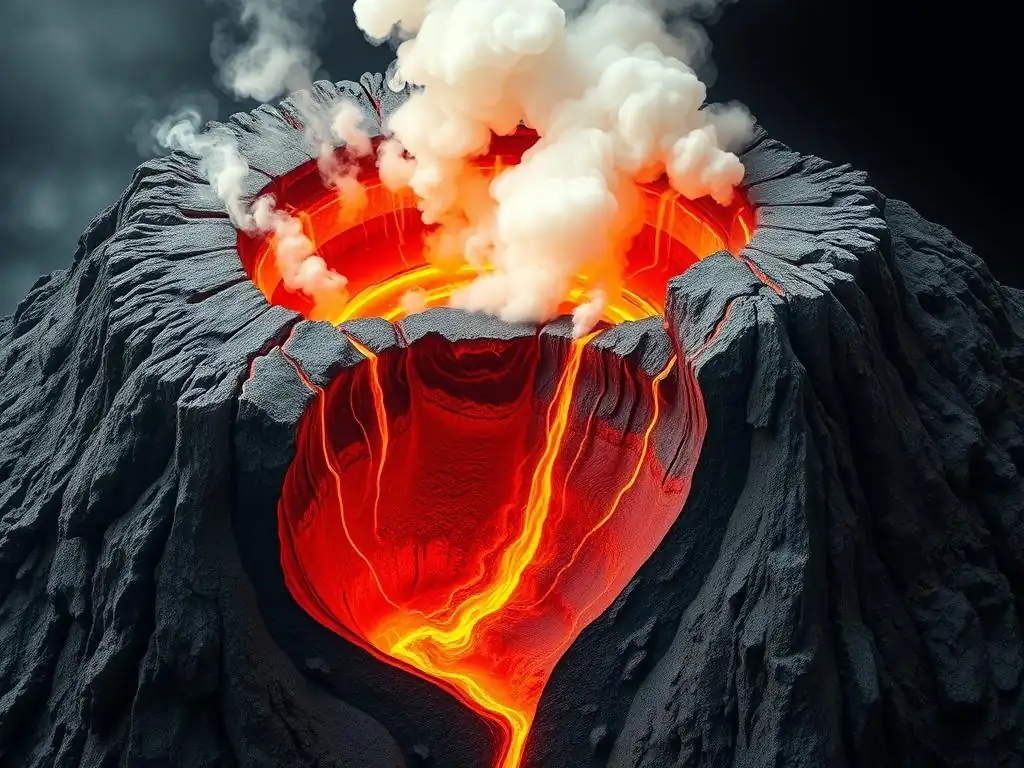
Magmatic Degassing: Gases Released from Molten Rock
The primary source of volcanic gases lies deep within the Earth, in the molten rock known as magma. Magma is not simply liquid rock; it is a complex mixture of molten rock, crystals, and dissolved gases. These dissolved gases, under immense pressure at depth, are trapped within the magma. As magma rises towards the surface, the pressure decreases. This reduction in pressure causes the solubility of gases in the magma to decrease, much like opening a soda bottle releases dissolved carbon dioxide. This process, known as magmatic degassing, is the fundamental mechanism for the release of volcanic gases.
Different types of magma contain varying amounts and compositions of dissolved gases. Magmas rich in silica, like those associated with explosive eruptions, tend to be more viscous and trap more gas. As these gas-rich magmas ascend, the expanding gas bubbles can drive explosive eruptions. Conversely, less viscous magmas, such as basaltic magmas, allow gases to escape more readily, often leading to effusive eruptions with lava flows. The efficiency of magmatic degassing and the composition of the released gases are critical factors influencing volcanic activity and the character of volcanic gas emissions explained.
Hydrothermal Systems: Gases Dissolved in Volcanic Waters
Volcanic gases are not solely released directly from magma. A significant portion of volcanic gas emissions explained originates from hydrothermal systems. These systems develop when groundwater and surface water are heated by magma or hot volcanic rocks. As water circulates through the hot volcanic environment, it dissolves gases emanating from the magma at depth. This process creates hot, chemically enriched fluids that can then migrate towards the surface along fractures and faults.
Hydrothermal systems are essentially underground plumbing networks that transport heat and dissolved chemicals, including volcanic gases. The gases dissolved in hydrothermal fluids can include not only magmatic gases but also gases generated by reactions between the hot fluids and the surrounding rocks. When these hydrothermal fluids reach the surface, they can manifest as hot springs, geysers, and steaming ground.
The gases released from hydrothermal systems often have a distinct composition compared to directly degassed magma, reflecting the interaction with water and rocks along their pathway. These systems are important contributors to the overall volcanic gas budget and play a role in shaping volcanic landscapes and ecosystems.
Fumaroles and Solfataras: Visible Vents of Volcanic Gas Activity
Fumaroles and solfataras are visible surface expressions of volcanic gas activity, offering direct windows into the degassing processes occurring beneath. Fumaroles are vents that release steam and other volcanic gases. They are common features in volcanic areas, often found along fractures, crater rims, and lava flows. The temperature of fumaroles can vary widely, from near boiling point to several hundred degrees Celsius, depending on the depth and heat source. The composition of fumarole gases also varies, reflecting the source magma and any interactions with hydrothermal systems.
Solfataras are a specific type of fumarole characterized by the emission of sulfurous gases, particularly hydrogen sulfide (H₂S). The name "solfatara" itself comes from the Italian word for sulfur mine. Solfataras are often associated with yellowish sulfur deposits around the vent, formed by the oxidation of H₂S in the atmosphere. Both fumaroles and solfataras are important sites for volcanic gas emissions explained, and they provide valuable locations for scientists to directly sample and monitor volcanic gases. Their presence and activity can also serve as indicators of underlying volcanic unrest or activity.
Monitoring Volcanic Gas Emissions: Techniques and Technologies
Direct Sampling of Volcanic Gases: Collecting and Analyzing Samples
To understand volcanic gas emissions explained in detail, direct sampling is essential. This involves physically collecting volcanic gas samples from fumaroles, vents, or plumes and then analyzing their composition in a laboratory. Scientists use specialized equipment to collect gas samples, often employing evacuated flasks or gas-tight containers to prevent atmospheric contamination. Sampling can be challenging, especially in hazardous volcanic environments, requiring careful planning and safety protocols.
Once collected, gas samples are analyzed using various analytical techniques. Gas chromatography is a common method used to separate and quantify the different gaseous components, such as water vapor, carbon dioxide, sulfur dioxide, and hydrogen sulfide. Mass spectrometry can be used to determine isotopic ratios of certain gases, providing insights into their origin and magmatic processes. Direct sampling provides the most accurate and detailed information about the composition of volcanic gases, serving as a crucial reference point for other monitoring techniques.
Remote Sensing of Volcanic Plumes: Using Satellites and Drones
Remote sensing technologies offer powerful tools for monitoring volcanic gas emissions explained over large areas and in inaccessible locations. Satellites equipped with specialized sensors can detect and measure volcanic gas plumes from space. Instruments like the Ozone Monitoring Instrument (OMI) and the Tropospheric Monitoring Instrument (TROPOMI) can measure sulfur dioxide (SO₂) concentrations in the atmosphere, allowing for the detection and tracking of volcanic plumes globally. This is particularly valuable for volcanoes in remote or poorly monitored regions.
Drones, or Unmanned Aerial Vehicles (UAVs), are increasingly being used for volcanic gas monitoring. Drones can fly closer to volcanic vents and plumes than satellites, providing higher spatial resolution data. Equipped with gas sensors, drones can measure concentrations of various gases, such as SO₂, CO₂, and H₂S, within volcanic plumes. Remote sensing techniques are crucial for continuous and wide-area monitoring of volcanic gas emissions explained, complementing direct sampling and ground-based measurements.
Ground-Based Monitoring: Continuous Measurement of Gas Fluxes
Ground-based monitoring instruments provide continuous, real-time measurements of volcanic gas emissions explained directly at volcanoes. One widely used instrument is the COSPEC (Correlation Spectrometer), which measures the flux of sulfur dioxide (SO₂) emitted from a volcano. COSPEC instruments are often deployed at volcano observatories and used to track changes in SO₂ emissions over time, which can be indicative of changes in volcanic activity.
MultiGAS instruments are another type of ground-based sensor that can simultaneously measure the concentrations of multiple volcanic gases, including CO₂, SO₂, H₂S, and water vapor. These instruments provide valuable information about the relative proportions of different gases, which can be used to infer magmatic processes and volcanic state. Ground-based monitoring stations, often integrated into volcano monitoring networks, provide crucial continuous data for assessing volcanic activity and potential hazards associated with volcanic gas emissions.
The Impact of Volcanic Gases on the Atmosphere
Volcanic Gases and Climate Change: A Complex Relationship
Volcanic gases play a complex and multifaceted role in Earth's climate system. While anthropogenic emissions are the primary driver of current climate change, volcanic eruptions can have both cooling and warming effects on the atmosphere. The most significant climate-relevant volcanic gas is sulfur dioxide (SO₂). During large explosive eruptions, vast quantities of SO₂ are injected into the stratosphere, the layer of the atmosphere above the troposphere.
In the stratosphere, SO₂ reacts with water vapor to form sulfate aerosols, tiny particles that reflect incoming sunlight back into space. This reflection of solar radiation reduces the amount of sunlight reaching the Earth's surface, leading to a temporary cooling effect. Large volcanic eruptions, such as the 1815 Tambora eruption, have been linked to periods of global cooling and even "volcanic winters." However, it's crucial to understand that this cooling effect is relatively short-lived, typically lasting for a few years.
In contrast, volcanic emissions of carbon dioxide (CO₂), a greenhouse gas, contribute to long-term warming. While annual volcanic CO₂ emissions are smaller than human-caused emissions, over geological timescales, volcanic activity has played a significant role in regulating Earth's climate. Therefore, the relationship between volcanic gas emissions explained and climate change is complex, involving both short-term cooling and long-term warming influences.
Acid Rain Formation: The Role of Sulfur Dioxide in Volcanic Emissions
Sulfur dioxide (SO₂) from volcanic emissions is a major contributor to acid rain. When SO₂ is released into the atmosphere, it undergoes a series of chemical reactions, primarily with water vapor and oxygen. These reactions lead to the formation of sulfuric acid (H₂SO₄) and sulfurous acid (H₂SO₃). These acids are then incorporated into cloud droplets and precipitation, resulting in acid rain.
Acid rain has detrimental effects on the environment. It can acidify lakes and rivers, harming aquatic life. Acid rain also damages forests, soils, and buildings, particularly those made of limestone or marble. Volcanic acid rain can be particularly intense in areas downwind of active volcanoes, causing localized environmental damage and impacting agriculture. The formation of acid rain is a direct consequence of volcanic gas emissions explained, specifically the release of sulfur dioxide, highlighting the environmental impact of these gases.
Ozone Depletion: Volcanic Gases and Stratospheric Chemistry
Volcanic gases can also influence stratospheric ozone chemistry. While chlorofluorocarbons (CFCs) from human activities are the primary cause of long-term ozone depletion, volcanic eruptions can contribute to temporary ozone loss, particularly in the polar regions. Volcanic eruptions release halogens, such as chlorine and bromine, in the form of hydrogen halides (HCl and HBr).
When these halogen-containing gases reach the stratosphere, they can participate in catalytic cycles that destroy ozone molecules. The effect is particularly pronounced when volcanic aerosols are present in the stratosphere, as these aerosols provide surfaces for chemical reactions that enhance ozone depletion. While the ozone depletion caused by volcanic eruptions is typically shorter-lived and less severe than that caused by CFCs, it is still a significant atmospheric impact of volcanic gas emissions explained, especially in the context of large, explosive eruptions that inject gases and aerosols into the stratosphere.
Volcanic Gases and Human Health: Risks and Mitigation
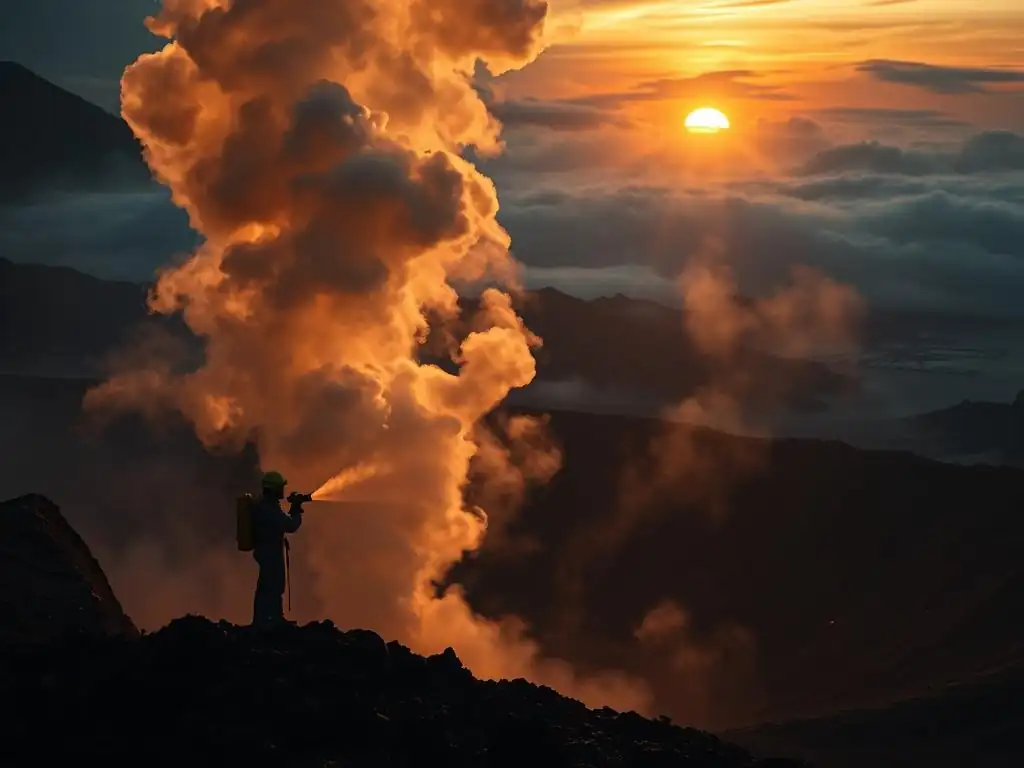
Respiratory Hazards: Inhaling Volcanic Gases
Inhaling volcanic gases poses significant respiratory hazards. Several volcanic gases are irritants or toxic to the respiratory system. Sulfur dioxide (SO₂), even at relatively low concentrations, can irritate the eyes, nose, throat, and lungs. Higher concentrations can cause more severe respiratory problems, including bronchitis, asthma attacks, and pulmonary edema. Hydrogen sulfide (H₂S) is another toxic gas present in volcanic emissions. At low concentrations, it has a characteristic rotten egg smell, but at higher concentrations, it can paralyze the olfactory nerves, leading to loss of smell and potentially causing respiratory failure and death.
Other volcanic gases, such as hydrogen halides (HCl, HF), are also highly irritating and corrosive to the respiratory tract. Exposure to volcanic gases can exacerbate pre-existing respiratory conditions, such as asthma and chronic obstructive pulmonary disease (COPD). People living near active volcanoes or visiting volcanic areas need to be aware of the respiratory hazards associated with volcanic gas emissions explained and take appropriate precautions.
Volcanic Smog (Vog): Formation and Health Effects
Volcanic smog, or "vog," is a type of air pollution formed when volcanic gases, primarily sulfur dioxide (SO₂), react with sunlight, oxygen, and moisture in the atmosphere. Vog is a common phenomenon in areas downwind of active volcanoes, particularly in Hawaii, where Kilauea volcano has been a persistent source of SO₂ emissions. The formation of vog is similar to the formation of photochemical smog in urban areas, but the primary pollutant source is volcanic rather than anthropogenic.
Vog appears as a hazy bluish or brownish haze and can extend for hundreds of kilometers downwind of a volcano. It poses various health effects, primarily respiratory irritation. Symptoms of vog exposure can include coughing, wheezing, shortness of breath, eye and throat irritation, headaches, and fatigue. People with asthma, respiratory conditions, children, and the elderly are particularly vulnerable to the health effects of vog. Understanding the formation and health effects of vog is crucial for mitigating the risks associated with volcanic gas emissions explained in areas prone to this type of volcanic air pollution.
Safety Measures: Protecting Yourself from Volcanic Gas Exposure
Protecting yourself from volcanic gas exposure is essential for people living near active volcanoes or visiting volcanic areas. The primary safety measure is to be aware of volcanic gas hazards and heed warnings from local authorities and volcano observatories. During periods of increased volcanic gas emissions or vog events, it is advisable to stay indoors as much as possible and keep windows and doors closed to minimize exposure.
If you must be outdoors in areas affected by volcanic gases, consider wearing a respirator mask, such as an N95 mask, to filter out particulate matter and some gases. However, it's important to note that standard dust masks may not be effective against all volcanic gases. In areas prone to vog, monitor air quality reports and limit strenuous outdoor activities when vog levels are high. If you experience respiratory symptoms related to volcanic gas exposure, seek medical attention. Educating yourself about volcanic gas emissions explained and following safety guidelines are crucial steps in protecting your health in volcanic regions.
Volcanic Gas Emissions and Eruption Forecasting
Changes in Gas Composition: A Precursor to Eruptions?
Monitoring volcanic gas emissions explained is not only important for assessing atmospheric impacts and health hazards but also for eruption forecasting. Changes in the composition of volcanic gases can be an important precursor to volcanic eruptions. As magma rises and approaches the surface before an eruption, changes in pressure and temperature can alter the degassing process and the proportions of different gases released.
For example, an increase in the ratio of carbon dioxide (CO₂) to sulfur dioxide (SO₂) in volcanic gas emissions may indicate that magma is rising and degassing at shallower depths. Similarly, changes in the isotopic ratios of certain gases, such as helium or carbon, can provide clues about changes in magma source or pathways. Volcanologists carefully monitor the composition of volcanic gases, looking for subtle changes that might signal an impending eruption. Analyzing trends in gas composition, in conjunction with other monitoring data, can improve eruption forecasting capabilities.
Gas Flux Measurements: Monitoring Volcanic Activity
In addition to gas composition, the rate at which volcanic gases are released, known as gas flux, is a crucial parameter for monitoring volcanic activity. An increase in gas flux can indicate an increase in magma supply to the surface or a change in degassing efficiency. Volcano observatories routinely measure gas fluxes, particularly sulfur dioxide (SO₂) flux, using instruments like COSPEC and ground-based spectrometers.
Changes in SO₂ flux can be correlated with other volcanic activity indicators, such as seismicity and ground deformation. A sudden increase in SO₂ flux, accompanied by other signs of unrest, may suggest an increased likelihood of an eruption. Conversely, a decrease in gas flux may indicate a decrease in volcanic activity. Continuous monitoring of gas flux provides valuable real-time information about the state of a volcano and its potential for eruption, making gas flux measurements a vital component of volcanic gas emissions explained in eruption forecasting.
Case Studies: Using Gas Data to Predict Volcanic Eruptions at Kilauea
Kilauea volcano in Hawaii provides a compelling case study of how volcanic gas data has been used to understand and predict eruptions. The Hawaiian Volcano Observatory (HVO) has been continuously monitoring volcanic gas emissions from Kilauea for decades. Data from COSPEC and MultiGAS instruments, along with direct gas sampling, have provided a long-term record of gas fluxes and compositions.
During the 2018 Kilauea eruption, which was preceded by weeks of increasing volcanic activity, gas monitoring played a crucial role in tracking the eruption's progression. Increases in SO₂ flux and changes in gas ratios were observed in the weeks leading up to the eruption, providing early warning signs of escalating activity. Real-time gas data, combined with seismic and deformation data, helped HVO scientists to assess the eruption's intensity and evolution, informing hazard assessments and public safety measures. The Kilauea example demonstrates the practical application of volcanic gas emissions explained in eruption forecasting and hazard mitigation.
The Beauty and Danger of Volcanic Gases: A Final Perspective
The Allure of Volcanic Landscapes: Created by Gas Activity
Volcanic gases, despite their potential hazards, are also responsible for creating some of the most stunning and unique landscapes on Earth. Geothermal areas, with their colorful hot springs, geysers, and fumaroles, are direct manifestations of volcanic gas activity. The vibrant colors in hot springs are often due to dissolved minerals and microbial life thriving in the chemically rich environment created by volcanic gases. The dramatic formations of sulfur deposits around solfataras are another example of gas-driven landscape artistry.
Even volcanic caves, some of which are adorned with delicate mineral formations, can be influenced by volcanic gas emissions explained. The gases released from volcanoes contribute to the weathering and alteration of rocks, shaping volcanic landforms over time. The very fertility of volcanic soils, which are renowned for their agricultural productivity, is partly due to the release of nutrients from volcanic gases and ash. Thus, volcanic gases, while posing hazards, are also agents of creation, shaping landscapes of breathtaking beauty and ecological significance.
Respecting the Power of Nature: Understanding Volcanic Hazards
Volcanic gases are a powerful reminder of the immense forces at work within our planet. Understanding volcanic gas emissions explained is crucial not only for scientific curiosity but also for respecting the power of nature and mitigating volcanic hazards. Volcanic gases can be invisible and odorless, yet they can pose significant risks to human health, the environment, and even global climate.
Living in volcanic regions requires awareness and preparedness. Volcano monitoring, including gas monitoring, plays a vital role in providing early warning of potential eruptions and gas-related hazards. By studying volcanic gases, scientists can gain a deeper understanding of volcanic processes, improve eruption forecasting, and contribute to safer and more resilient communities in volcanic areas. Ultimately, respecting the power of nature means acknowledging both the beauty and the danger of volcanic phenomena, and striving to live in harmony with these dynamic forces of our planet.
Frequently Asked Questions
What are the main types of volcanic gases released during an eruption?
The primary volcanic gases are water vapor (H2O), carbon dioxide (CO2), and sulfur dioxide (SO2). Other gases include hydrogen sulfide (H2S), hydrogen halides (HCl and HF), and trace amounts of other elements.
Why are volcanic gas emissions monitored by scientists?
Monitoring volcanic gas emissions helps scientists to predict potential eruptions and understand a volcano's activity level. Changes in gas composition or flux can indicate changes in the magma system below.
How do volcanic gases affect the environment?
Volcanic gases can contribute to acid rain, affect air quality, and influence the global climate. Sulfur dioxide, in particular, can form sulfate aerosols that reflect sunlight and cool the planet.
What is the role of volcanic gases in the formation of volcanic smog (vog)?
Volcanic smog, or vog, is created when sulfur dioxide and other volcanic gases react with sunlight, oxygen, and moisture in the atmosphere. This creates a haze of sulfuric acid aerosols that can be harmful to human health.
Are volcanic gas emissions dangerous to people living near volcanoes?
Yes, high concentrations of volcanic gases can be dangerous. They can cause respiratory problems, skin irritation, and even death. It is crucial to follow evacuation orders and heed warnings from local authorities.
Final Reflection: Breathing with the Earth
The exploration of volcanic gas emissions, as we've seen, isn't just an academic exercise; it's a crucial window into the Earth's inner workings and its profound impact on our atmosphere and climate. Understanding the composition and behavior of these gases is now more critical than ever, as we grapple with the challenges of climate change and strive to predict and mitigate volcanic hazards.
The invisible world of volcanic gases subtly but powerfully shapes our environment, influencing everything from acid rain to long-term climate patterns. This exploration has deepened my appreciation for the interconnectedness of our planet and the constant, dynamic exchange between the Earth's interior and its surface. The earth is what we all have in common.
- Wendell Berry. This quote resonates deeply, reminding us that understanding these natural processes is essential for responsible stewardship of our shared home.
Now, armed with a deeper understanding of volcanic gas emissions, I encourage you to look beyond the surface. Consider the invisible forces constantly shaping our world. Reflect on how even seemingly distant geological processes can have profound and lasting impacts on our lives and the future of our planet. Let's all strive to be more informed and responsible inhabitants of this dynamic Earth.
Embark on Your Volcanic Gas Journey!
Thanks for exploring the fascinating world of volcanic gases with us! Now that you've learned about their invisible power and impact, it's time to take the next step.
Here are a few ways you can delve deeper and contribute to our understanding:
- Report Unusual Odors: If you live near a volcano, be vigilant and report any unusual sulfurous or acrid smells to your local geological survey immediately. This vital information helps scientists monitor volcanic activity and potential hazards.
- Explore interactive volcano maps to learn more about the gases emitted by volcanoes in your area.
- Share This Knowledge: Spread awareness by sharing this article with friends and family interested in geology and volcanology.
What fascinating fact about volcanic gases surprised you the most, and what questions does it raise for you? Share your thoughts in the comments below!