
The Moral Imperative of VolcanoResilient Infrastructure: Protecting Lives and Livelihoods


Welcome to Volcano Explorers!
Dare to peer into the heart of the Earth's fiery breath? We invite you to uncover the raw power and profound impact of volcanoes. In a world increasingly vulnerable to these geological titans, the question becomes: how can we coexist? Dive into our latest exploration of volcano resilient infrastructure benefits and discover the vital role it plays in safeguarding communities. But is it enough? The answer, and the moral imperative behind it, might surprise you…
- Understanding the Need for Volcano-Resilient Infrastructure
- Defining Volcano-Resilient Infrastructure
- Volcano-Resilient Infrastructure Benefits: Why Invest?
-
Frequently Asked Questions
- What are the main benefits of volcano-resilient infrastructure?
- How does VolcanoExplorers.org advocate for volcano-resilient infrastructure?
- What types of infrastructure are most crucial to make volcano-resilient?
- What are some examples of volcano-resilient infrastructure techniques?
- Why is volcano-resilient infrastructure considered a moral imperative?
- Final Reflection: Embracing Resilience in the Shadow of Giants
- Build a Safer Future: Take Action Now!
Understanding the Need for Volcano-Resilient Infrastructure
Populations at Risk: The Concentration of Communities Near Active Volcanoes
The allure of fertile volcanic soils, geothermal energy, and even tourism tied to volcanic landscapes has historically drawn populations to settle near active volcanoes. Globally, it's estimated that hundreds of millions of people live within range of potential volcanic hazards.
For instance, the densely populated island of Java, Indonesia, home to over 140 million people, hosts numerous active volcanoes like Mount Merapi and Mount Bromo, placing a significant portion of its population at risk from eruptions. Similarly, in Latin America, cities like Quito, Ecuador, are nestled in valleys surrounded by active volcanoes such as Pichincha and Cotopaxi, creating a constant state of potential volcanic threat for millions of urban dwellers.
This concentration isn't just a historical artifact; urbanization trends continue to push development closer to volcanic zones. As populations grow and land becomes scarcer, communities expand into areas previously considered too hazardous. Consider the region around Mount Vesuvius in Italy, where despite the well-documented history of devastating eruptions that buried Pompeii and Herculaneum, the metropolitan area of Naples has expanded to encompass the volcano's flanks, creating one of the most densely populated volcanic regions in the world. This continued encroachment necessitates a critical focus on volcano-resilient infrastructure to safeguard these vulnerable populations.
Economic Vulnerability: The Impact of Volcanic Eruptions on Regional Economies
Volcanic eruptions are not just environmental disasters; they are significant economic shocks that can devastate regional and even national economies. The immediate impacts, such as the destruction of infrastructure, agricultural land buried under ashfall, and the disruption of transportation networks, can cripple local economies for years.
For example, the 2010 eruption of Eyjafjallajökull in Iceland, while relatively small in volcanic explosivity, caused widespread disruption to air travel across Europe, resulting in billions of dollars in losses for the airline industry and related sectors. Beyond immediate damage, the long-term consequences can include decreased tourism, loss of agricultural productivity due to soil contamination, and the need for costly reconstruction efforts.
Furthermore, the economic vulnerability extends beyond direct damage. Volcanic unrest, even without a major eruption, can trigger economic downturns. Increased seismic activity or gas emissions can lead to evacuation orders, business closures, and a decline in tourism as fear and uncertainty spread. The ongoing volcanic activity on La Palma in the Canary Islands since 2021 has not only caused immense property damage but has also severely impacted the island's economy, heavily reliant on tourism and agriculture, highlighting the far-reaching economic implications of volcanic events and the crucial need for volcano resilient infrastructure to mitigate these economic vulnerabilities.
The Moral Responsibility: Protecting Communities from Volcanic Hazards
The imperative to invest in volcano-resilient infrastructure transcends mere economic considerations; it is fundamentally a moral responsibility. Governments and communities have a duty to protect their citizens from foreseeable natural hazards, and volcanic eruptions, in many regions, are not only foreseeable but inevitable. Ignoring the risks and failing to implement preventative measures is a dereliction of this duty, leaving populations unnecessarily vulnerable to displacement, injury, and loss of life.
This moral obligation is amplified by the disproportionate impact of volcanic disasters on vulnerable populations. Often, it is marginalized communities, with fewer resources and less political power, who reside in the most hazardous volcanic zones. These communities are often the least equipped to recover from volcanic events, exacerbating existing inequalities. Investing in volcano-resilient infrastructure is therefore not just about protecting property and economies; it is about upholding fundamental human rights, ensuring equitable protection, and demonstrating a commitment to social justice in the face of natural hazards.
Defining Volcano-Resilient Infrastructure
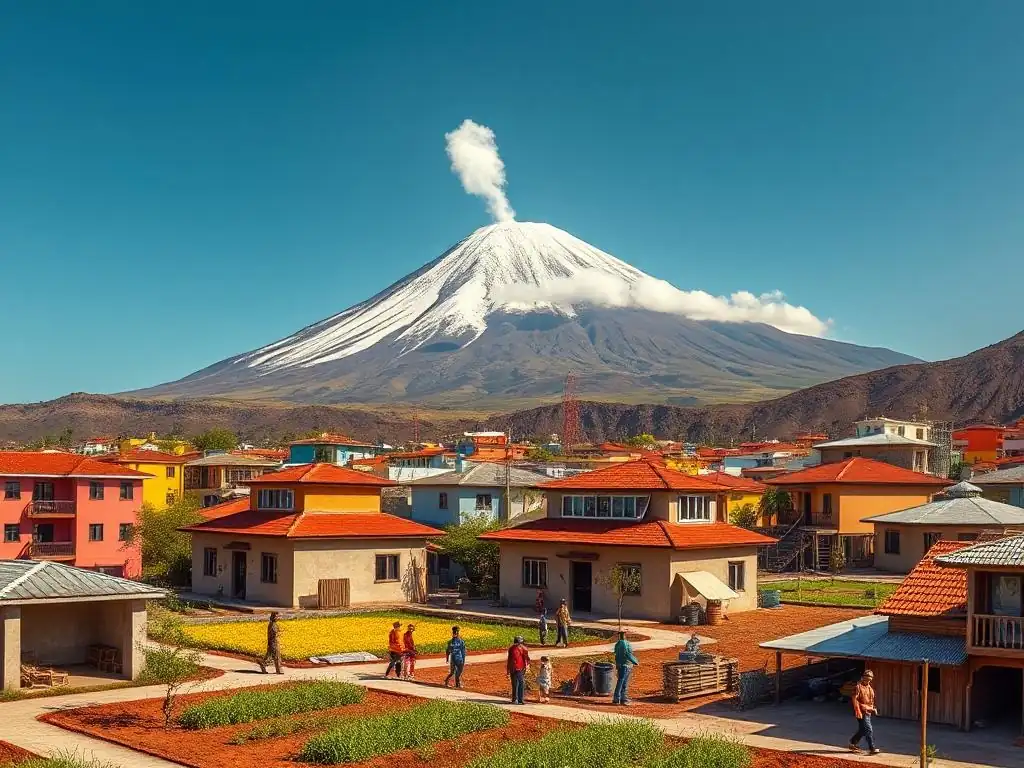
Volcano-Resilient Infrastructure: A Definition Focused on Mitigation and Adaptation
Volcano-resilient infrastructure is defined as the systems, networks, and structures designed, constructed, and maintained to withstand the impacts of volcanic hazards, minimizing damage, ensuring functionality during and after an eruption, and facilitating rapid recovery. This concept goes beyond simply building stronger structures; it encompasses a holistic approach that integrates hazard mitigation and adaptation strategies into infrastructure planning and development. It recognizes that volcanic events are not just isolated incidents but recurring processes that require proactive and adaptive solutions.
This definition emphasizes both mitigation – reducing the severity of impacts – and adaptation – adjusting to the unavoidable effects of volcanic activity. Mitigation strategies may include constructing infrastructure in less hazardous zones, implementing protective structures like lahar barriers, or reinforcing buildings against ashfall. Adaptation strategies focus on designing infrastructure that can function under volcanic conditions, such as developing ash-resistant power grids or establishing alternative transportation routes. Volcano-resilient infrastructure, therefore, is not a static endpoint but an ongoing process of learning, adapting, and improving infrastructure systems in response to the dynamic nature of volcanic hazards.
Key Components: Robust Infrastructure Systems in Volcanic Zones
Building volcano-resilient infrastructure requires a multi-faceted approach targeting key infrastructure systems. Critical components include transportation networks, such as roads, bridges, and railways, designed to withstand ashfall, lahars, and potential ground deformation. For example, bridges in volcanic areas may need to be designed with increased load-bearing capacity to accommodate ash accumulation, while road networks should include alternative routes for evacuation and emergency response. Energy infrastructure, including power plants and transmission lines, must be protected from ash contamination and potential pyroclastic flows. Undergrounding power lines or developing ash-resistant generators are crucial considerations.
Water and sanitation systems are also paramount. Water sources need protection from ash contamination, and water distribution networks must be designed to function even with disruptions to power supply. Wastewater treatment facilities should be located outside high-hazard zones and designed to handle increased sediment loads from volcanic runoff.
Communication networks are vital for early warning systems and emergency response. Establishing redundant communication systems, including satellite-based networks, and protecting communication infrastructure from ash and pyroclastic flows are essential for maintaining connectivity during a volcanic crisis. Finally, buildings themselves, particularly critical facilities like hospitals, schools, and emergency shelters, must be constructed to withstand ash loads, seismic activity, and potential lahars or pyroclastic flows based on location-specific hazard assessments.
Differentiating Resilient Infrastructure from Standard Construction in Volcanic Areas
Volcano-resilient infrastructure differs significantly from standard construction practices, even in volcanic areas. Standard construction often focuses primarily on building codes related to seismic activity, which is certainly relevant in volcanic regions. However, it frequently overlooks the unique and multifaceted hazards posed by volcanoes, such as ashfall, lahars, pyroclastic flows, and volcanic gases. Volcano-resilient infrastructure, on the other hand, is specifically tailored to address these diverse volcanic threats.
The key difference lies in the proactive integration of volcanic hazard assessments into the design and construction process. Volcano-resilient design incorporates specific engineering solutions and materials that can withstand volcanic impacts. This might include steeper roof slopes to shed ash, reinforced structures to resist lahar forces, or air filtration systems to protect against volcanic ash and gases.
Furthermore, volcano-resilient infrastructure planning goes beyond individual structures to consider the interconnectedness of infrastructure systems and their vulnerability to cascading failures during a volcanic event. This holistic approach, focused on anticipating and mitigating the full spectrum of volcanic hazards, distinguishes volcano-resilient infrastructure from standard construction in volcanic regions and underscores its critical importance for community safety and resilience.
Volcano-Resilient Infrastructure Benefits: Why Invest?
Enhanced Safety: Reducing Casualties and Injuries During Volcanic Events
The most significant benefit of volcano-resilient infrastructure is the enhanced safety it provides to communities living near active volcanoes. By designing buildings and infrastructure to withstand volcanic hazards, the risk of collapse, damage, and subsequent injuries or fatalities is substantially reduced. For example, buildings constructed with reinforced roofs in ashfall zones are less likely to collapse under heavy ash loads, protecting occupants from injury. Evacuation routes built to withstand lahars and pyroclastic flows ensure safer and more efficient evacuations, minimizing the number of people exposed to these deadly hazards.
Furthermore, resilient infrastructure supports effective emergency response, which is crucial for saving lives during and after an eruption. Functional hospitals, emergency shelters, and communication networks, all components of volcano-resilient infrastructure, are essential for providing medical care, refuge, and information to affected populations. Early warning systems, enabled by resilient monitoring and communication infrastructure, provide crucial time for evacuation and preparation, drastically reducing casualties. Investing in volcano-resilient infrastructure is therefore a direct investment in saving lives and minimizing human suffering during volcanic crises.
Economic Stability: Minimizing Disruption to Commerce and Industry
Volcano-resilient infrastructure is not just about safety; it is also a cornerstone of economic stability in volcanic regions. By minimizing damage to critical infrastructure, such as transportation, energy, and communication networks, resilient infrastructure reduces the economic disruption caused by volcanic eruptions. For instance, a port designed to quickly resume operations after an ashfall event allows for the continued flow of goods and commerce, mitigating economic losses. Ash-resistant power grids ensure continued electricity supply to businesses and industries, minimizing downtime and productivity losses.
Moreover, investing in resilience can enhance investor confidence and attract businesses to volcanic regions. Demonstrating a commitment to managing volcanic risks through resilient infrastructure can create a more stable and predictable economic environment. This can lead to increased investment, job creation, and sustainable economic development in areas that might otherwise be perceived as too hazardous. Volcano-resilient infrastructure, therefore, is not an economic burden but rather a strategic investment that fosters long-term economic prosperity and stability in volcanic regions.
Environmental Protection: Reducing the Environmental Impact of Eruptions
While volcanic eruptions are natural events, the environmental impact can be exacerbated by poorly planned infrastructure and development. Volcano-resilient infrastructure can play a significant role in mitigating these secondary environmental consequences. For example, well-designed drainage systems and sediment control structures, like sabo dams, can reduce the erosion and sedimentation caused by lahars and volcanic debris flows, protecting downstream ecosystems and water resources. Properly managed waste disposal systems, designed to withstand volcanic events, prevent the release of pollutants into the environment during eruptions.
Furthermore, resilient infrastructure can support sustainable land use planning in volcanic areas. By directing development away from high-hazard zones and promoting resilient construction practices, communities can minimize their environmental footprint and reduce the vulnerability of ecosystems to volcanic impacts. Investing in volcano-resilient infrastructure, therefore, contributes to a more sustainable and environmentally responsible approach to living with volcanoes, minimizing the long-term environmental consequences of eruptions.
Long-Term Cost Savings: Economic Advantages of Proactive Resilience Measures
Although the initial investment in volcano-resilient infrastructure may seem substantial, it yields significant long-term cost savings compared to the reactive approach of disaster relief and reconstruction after each eruption. Studies consistently demonstrate that proactive disaster risk reduction measures are far more cost-effective than post-disaster response. For every dollar invested in resilience, multiple dollars can be saved in avoided losses and reduced recovery costs.
The costs of inaction are immense. Major volcanic eruptions can cause billions of dollars in damage, requiring extensive and prolonged recovery efforts. Investing in resilience upfront reduces the scale of damage, minimizes disruption, and accelerates recovery, ultimately saving significant public and private resources. Furthermore, resilient infrastructure reduces the indirect costs associated with volcanic disasters, such as business interruption, loss of productivity, and health impacts. The economic advantages of proactive resilience measures, including the "volcano resilient infrastructure benefits," are clear: it is a financially sound and responsible approach to managing volcanic risks and ensuring long-term economic sustainability.
Frequently Asked Questions
What are the main benefits of volcano-resilient infrastructure?
Volcano-resilient infrastructure significantly reduces the risk of damage and loss of life during volcanic eruptions. It also ensures continuity of essential services, such as water, power, and transportation, after an eruption.
How does VolcanoExplorers.org advocate for volcano-resilient infrastructure?
We provide educational resources on the importance of resilient design and construction in volcanic hazard zones. We also highlight successful examples of communities that have implemented such infrastructure. Finally, we advocate for policies that prioritize volcano-resilient infrastructure development.
What types of infrastructure are most crucial to make volcano-resilient?
Critical infrastructure includes transportation networks (roads, bridges), communication systems, water and power supplies, and healthcare facilities. These are essential for evacuation, emergency response, and post-eruption recovery.
What are some examples of volcano-resilient infrastructure techniques?
Some techniques include reinforcing buildings against ashfall and seismic activity, designing drainage systems to manage lahars (mudflows), and creating protected evacuation routes. Also, early warning systems are crucial.
Why is volcano-resilient infrastructure considered a moral imperative?
Because failure to invest in such infrastructure leads to unnecessary loss of life, economic hardship, and displacement of communities. Protecting vulnerable populations from volcanic hazards is a fundamental ethical responsibility.
Final Reflection: Embracing Resilience in the Shadow of Giants
The preceding discussion has illuminated the critical need for volcano resilient infrastructure benefits, moving beyond theoretical discussions to tangible strategies for safeguarding communities. The reality is stark: volcanic eruptions are not a matter of "if," but "when," and our preparedness directly translates to saved lives and preserved livelihoods. Ignoring this imperative is not merely a logistical oversight, but a profound moral failing.
The impact of volcanic eruptions extends far beyond immediate destruction; it ripples through generations, shaping cultural landscapes and economic stability. Witnessing the devastation firsthand underscores the urgency of proactive measures, transforming abstract concepts of resilience into concrete necessities. The best time to plant a tree was 20 years ago. The second best time is now.
This ancient proverb resonates deeply, urging us to act decisively and invest in volcano resilient infrastructure not just for ourselves, but for the future we wish to build.
Now, consider your own role in fostering resilience. How can you advocate for proactive planning in your community? How can you support initiatives that prioritize the safety and well-being of those living in volcanic regions? Let us all commit to becoming champions of volcano resilient infrastructure, ensuring that future generations inherit a world where communities can thrive, even in the shadow of giants.
Okay, here's a CTA designed to go at the end of the article "The Moral Imperative of VolcanoResilient Infrastructure: Protecting Lives and Livelihoods" on VolcanoExplorers.org:
Build a Safer Future: Take Action Now!
Thank you for taking the time to explore the critical importance of volcano-resilient infrastructure. You've gained valuable insights into the moral imperative of protecting vulnerable communities. Now, let's translate that understanding into tangible change.
Here are a few ways you can contribute:
- Sign our petition to advocate for increased funding for volcano-resilient infrastructure in at-risk communities. Every signature makes a difference! This is the primary call to action.
- Share this article with your friends, family, and colleagues to raise awareness about the urgent need for volcano preparedness and resilient infrastructure.
- Explore our "Resources" page on VolcanoExplorers.org to discover volunteer opportunities and ways to directly support communities affected by volcanic activity.
What specific steps will you take today to help build a more resilient future for communities living near volcanoes?