
Preventing Another Armero: The Future of Lahar Early Warning Systems

Welcome to Volcano Explorers!
Ever wonder how we can predict and prevent devastation like the tragic Armero disaster? Delve into the cutting-edge world of lahar early warning systems technology and uncover how scientists are racing against time to protect communities living in the shadow of these magnificent, yet volatile, giants. Discover the innovative methods being deployed and the critical role they play in safeguarding lives. What if the next eruption could be predicted with pinpoint accuracy? Let's explore the possibilities...
- Introduction: Remembering Armero and the Need for Advanced Lahar Detection
- Understanding Lahars: A Deadly Volcanic Hazard
- Current Lahar Early Warning Systems: Technologies and Limitations
- Lahar Early Warning Systems Technology: Innovations and Advancements
- Case Studies: Successful Lahar Early Warning Systems
- Challenges in Implementing Effective Lahar Early Warning Systems
- The Future of Lahar Early Warning Systems: A Multi-Faceted Approach
- The Importance of International Collaboration in Lahar Risk Reduction
- Conclusion: Towards a Safer Future for Communities at Risk from Lahars
-
Frequently Asked Questions
- What is a lahar, and why are they so dangerous?
- How do Lahar Early Warning Systems (LEWS) work?
- What technologies are used in modern Lahar Early Warning Systems technology?
- What are some challenges in implementing effective Lahar Early Warning Systems technology?
- How can Lahar Early Warning Systems technology help prevent disasters like the Armero tragedy?
- Final Reflection: Embracing Vigilance for a Safer Tomorrow
- Safeguard Communities: Become a Lahar Preparedness Advocate!
Introduction: Remembering Armero and the Need for Advanced Lahar Detection
The Devastating 1985 Nevado del Ruiz Lahar Tragedy
On November 13, 1985, the Nevado del Ruiz volcano in Colombia erupted, triggering a catastrophic lahar that obliterated the town of Armero and caused widespread devastation in surrounding areas. The eruption itself was relatively small in volcanic terms, but it melted the volcano's summit ice cap, sending a torrent of mud, rock, and debris down the Lagunilla River valley. This lahar, travelling at speeds estimated up to 50 kilometers per hour, reached Armero approximately three hours after the eruption began.
Tragically, despite warnings issued hours before the lahar arrived, inadequate communication and preparedness resulted in a staggering death toll. Official estimates place the number of fatalities at over 25,000, making it one of the deadliest volcanic disasters in recorded history. The Armero tragedy stands as a stark reminder of the immense destructive power of lahars and the critical importance of effective early warning systems.
The devastation in Armero was compounded by a lack of understanding of lahar hazards and insufficient infrastructure for communication and evacuation. While volcanologists had identified Nevado del Ruiz as a potential lahar threat prior to the eruption, these warnings were not effectively translated into actionable plans for the local population. The night of the eruption, many residents were advised to stay indoors, unaware of the impending lahar.
This catastrophic event highlighted the urgent need for improved lahar early warning systems technology and community education to prevent similar tragedies in the future. The lessons learned from Armero became a turning point, emphasizing the critical need to prioritize lahar risk mitigation globally.
The Critical Role of Early Warning Systems in Mitigating Lahar Risk
Lahar early warning systems play a crucial role in mitigating the risk posed by these deadly volcanic phenomena. These systems are designed to detect the initiation or imminent arrival of a lahar and provide timely warnings to downstream communities, allowing for evacuation and minimizing casualties. The primary objective of a lahar early warning system is to bridge the gap between scientific monitoring of volcanic activity and effective community response. By providing advance notice, even just minutes ahead, these systems can significantly reduce the impact of lahars, transforming a potentially catastrophic event into a manageable emergency.
Effective lahar early warning systems are not merely about technology; they are complex socio-technical systems that integrate scientific monitoring, communication infrastructure, community preparedness, and emergency response protocols. A successful system relies on accurate and reliable detection technologies, efficient communication channels to disseminate warnings, and, most importantly, a well-informed and prepared community capable of responding effectively to alerts. The development and implementation of robust lahar early warning systems technology are therefore paramount for safeguarding communities living in volcanically active regions prone to lahar hazards and preventing future tragedies like Armero.
Understanding Lahars: A Deadly Volcanic Hazard
What are Lahars and How are They Formed?
Lahars are rapidly flowing mixtures of volcanic debris and water, often described as volcanic mudflows or debris flows. Originating from the slopes of volcanoes, they are among the most destructive volcanic hazards, capable of traveling tens of kilometers from their source and causing widespread devastation. The term "lahar" itself is of Indonesian origin, reflecting the significant lahar risk in volcanic regions of Indonesia. Lahars are not simply mudslides; they are powerful flows with the consistency of wet concrete, capable of carrying massive boulders, trees, and even buildings in their path.
The formation of lahars is typically triggered by volcanic activity, although heavy rainfall or glacial melt can also initiate them in certain volcanic environments. During a volcanic eruption, several mechanisms can generate lahars. Pyroclastic flows or surges can deposit hot volcanic debris onto snow or ice, causing rapid melting and mixing with the volcanic material.
Similarly, lava flows can trigger lahars by melting ice or snow. Even without an eruption, intense rainfall on loose volcanic ash deposits can saturate the material, destabilize it, and initiate a lahar. Volcanoes capped with glaciers or snowfields, like Nevado del Ruiz, are particularly prone to lahars, as the readily available water source significantly increases the risk.
Factors Contributing to Lahar Formation: Ice Caps, Rainfall, and Volcanic Activity
Several key factors contribute to lahar formation, making certain volcanic environments more susceptible to these hazards. Ice caps and glaciers are significant contributors, as demonstrated tragically at Nevado del Ruiz. Volcanoes covered in ice or snow, like Mount Rainier in the USA or many volcanoes in the Andes, possess a vast reservoir of water that can be rapidly mobilized by volcanic heat or geothermal activity.
Even a relatively small eruption can melt substantial volumes of ice, generating large and destructive lahars. The presence of glacial meltwater also increases the likelihood of lahars during periods of heightened volcanic unrest, even without a full-scale eruption.
Rainfall is another critical factor, particularly in regions with heavy precipitation or during intense storm events. Loose volcanic ash and debris deposits, often unconsolidated and highly erodible, are readily mobilized by heavy rainfall. Steep volcanic slopes further exacerbate this risk, allowing rainwater to quickly accumulate and trigger lahars.
In areas like the Philippines and Central America, where volcanic activity is coupled with tropical climates and heavy rainfall, lahars are a frequent and recurring threat. Volcanic activity itself, of course, is the ultimate driver in many lahar events. Eruptions that produce pyroclastic flows, lava flows, or significant ashfall directly contribute to lahar formation by providing both the volcanic debris and the energy (heat, ground shaking) needed to initiate these flows.
The Destructive Power of Lahars: Velocity, Volume, and Impact
Lahars are incredibly destructive due to a combination of factors: their high velocity, immense volume, and the sheer density and abrasive nature of the material they carry. Lahars can flow at speeds ranging from tens to over 50 kilometers per hour, depending on factors like slope angle, volume, and channel morphology. This rapid flow makes them incredibly difficult to outrun and dramatically reduces warning times. The 1985 Armero lahar, for example, travelled at an estimated 50 km/h, reaching the town in a matter of hours after the eruption onset.
The volume of lahars can be enormous, ranging from thousands to millions of cubic meters. Large volume lahars can inundate vast areas, burying landscapes and infrastructure under thick layers of mud and debris. The sheer force of such volumes can demolish buildings, bridges, and roads, causing catastrophic damage.
Furthermore, lahars are not just water and mud; they are dense mixtures containing rocks, boulders, trees, and any other debris picked up along their path. This dense and abrasive mixture acts like a destructive slurry, scouring landscapes, eroding river channels, and causing significant long-term environmental damage. The impact of lahars is not limited to the immediate flow path; they can also trigger secondary hazards like flooding and landslides, further amplifying their destructive potential and highlighting the critical need for effective lahar early warning systems technology.
Current Lahar Early Warning Systems: Technologies and Limitations
Traditional Methods: Visual Monitoring and Seismic Activity Analysis
For many years, traditional methods formed the backbone of lahar early warning systems. Visual monitoring, relying on human observers stationed at strategic locations on or around volcanoes, was a primary technique. Observers would watch for signs of lahar initiation, such as changes in river flow, unusual noises, or visual sightings of mudflows.
This method, while simple, is limited by visibility (especially at night or during bad weather), human fatigue, and the inherent subjectivity of visual interpretation. Despite these limitations, visual monitoring, often by local communities, remains a valuable supplementary tool in many areas, particularly for smaller volcanoes or regions with limited technological resources.
Seismic activity analysis is another traditional method used to infer potential lahar triggers. Volcanic eruptions, which are often precursors to lahars, are typically accompanied by increased seismic activity. Monitoring seismographs around a volcano can detect changes in seismic patterns that might indicate an impending eruption or increased volcanic unrest.
While seismic data can provide valuable information about the potential for lahar generation, it is not a direct lahar detection method. Seismic activity can signal an eruption, but it doesn't directly confirm lahar initiation or provide precise timing. Furthermore, some lahars can occur without significant precursory seismic signals, limiting the reliability of seismic monitoring as a standalone lahar early warning system.
Modern Approaches: Sensor Networks and Remote Sensing Technologies
Modern lahar early warning systems increasingly rely on sophisticated sensor networks and remote sensing technologies for more accurate and timely detection. Sensor networks deployed in lahar-prone areas can provide real-time data on various parameters indicative of lahar initiation and flow. These networks often include sensors like rain gauges to monitor rainfall intensity (a lahar trigger), flow sensors installed in river channels to detect changes in water level and flow velocity, and acoustic sensors to detect the characteristic sounds of lahar movement. Data from these sensors are typically transmitted wirelessly to a central monitoring station for analysis and alert triggering.
Remote sensing technologies offer a broader perspective and can cover larger areas, complementing ground-based sensor networks. Satellite imagery, particularly radar and optical imagery, can be used to monitor changes in snow and ice cover, detect new volcanic deposits, and even track the initial stages of lahar flow in some cases.
Ground-based radar systems are also increasingly used for lahar detection, capable of monitoring wide areas and detecting flow movement even in poor weather conditions. These modern approaches significantly enhance lahar detection capabilities, providing more comprehensive and real-time information compared to traditional methods, and forming the basis for more effective lahar early warning systems technology.
Limitations of Existing Lahar Detection Technologies: Accuracy, Range, and Cost
Despite advancements in lahar detection technologies, limitations still exist in terms of accuracy, range, and cost. Accuracy can be affected by various factors, including sensor calibration drift, environmental noise, and the complex and unpredictable nature of lahar initiation and flow. False alarms, triggered by non-lahar events like heavy rainfall or landslides, can erode public trust in the warning system. Conversely, missed detections, failing to detect an actual lahar, can have catastrophic consequences. Improving the accuracy and reliability of lahar detection remains a key challenge in lahar early warning systems technology.
The range of sensor networks is limited by factors like terrain, power availability, and data transmission distances. Deploying sensors in remote and rugged volcanic environments can be logistically challenging and expensive. Wireless data transmission can be hindered by topography and vegetation, requiring repeater stations or satellite communication, which adds to the cost and complexity.
The cost of deploying, maintaining, and operating sophisticated lahar early warning systems can be substantial, particularly for developing countries with limited resources. The initial investment in sensors, communication infrastructure, and data processing systems, along with ongoing maintenance and personnel costs, can be a barrier to implementing effective lahar early warning systems in many at-risk regions.
Lahar Early Warning Systems Technology: Innovations and Advancements
Emerging Technologies for Lahar Detection: Acoustic Flow Monitors, Infrasound Arrays, and Ground-Based Radar
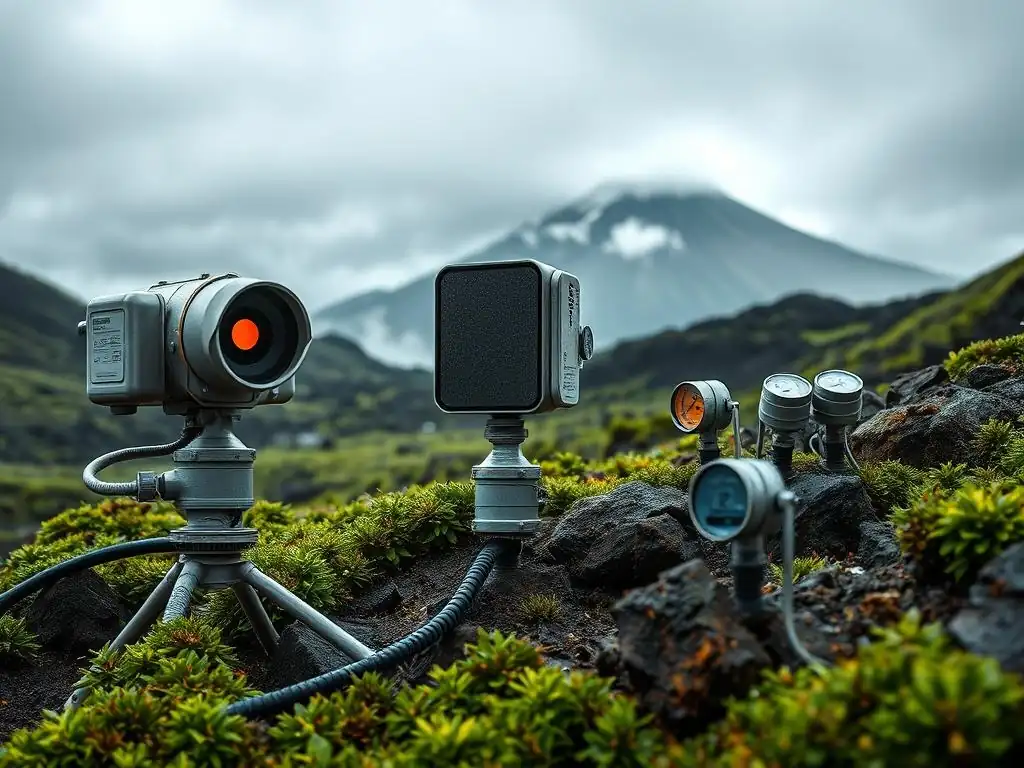
Ongoing research and development are continuously introducing emerging technologies to enhance lahar early warning systems technology. Acoustic flow monitors are showing promise in detecting lahars by "listening" to the characteristic sounds generated by these flows. Lahars produce unique acoustic signatures due to the movement of sediment, rocks, and water, which can be detected by sensitive microphones or hydrophones deployed in river channels or on volcano flanks. These acoustic signals can provide early warning of lahar initiation and potentially estimate flow velocity and volume.
Infrasound arrays, designed to detect low-frequency sound waves, are also being explored for lahar detection. Lahars, particularly larger ones, can generate infrasound waves that propagate through the atmosphere and ground. Arrays of infrasound sensors strategically placed around a volcano can detect these signals and potentially provide directional information about the lahar source.
Ground-based radar systems are another rapidly evolving technology. Beyond traditional radar for weather monitoring, specialized ground-based radar systems are being developed for high-resolution monitoring of volcanic slopes and river channels. These systems can detect subtle changes in surface topography and flow movement, even in challenging weather conditions, offering a powerful tool for lahar detection and monitoring.
Real-Time Data Acquisition and Analysis for Lahar Prediction
The effectiveness of any lahar early warning system hinges on real-time data acquisition and rapid analysis. Modern systems are designed to collect data from sensor networks and remote sensing platforms continuously and transmit it to central processing centers in near real-time. This requires robust communication infrastructure, often utilizing a combination of radio links, cellular networks, and satellite communication, especially in remote volcanic areas.
Once data is acquired, sophisticated algorithms and software are crucial for rapid analysis and interpretation. These systems automatically process sensor data, looking for patterns and thresholds that indicate lahar initiation or imminent arrival. Advanced data analysis techniques, including machine learning and artificial intelligence, are being explored to improve the accuracy and speed of lahar detection and prediction. The goal is to minimize the time lag between lahar initiation and warning dissemination, maximizing the lead time for evacuation and risk mitigation. Real-time data analysis is the nerve center of modern lahar early warning systems technology, enabling timely and effective responses.
Integrating Weather Data and Volcanic Activity for Improved Forecasts
Improving lahar forecasting requires a holistic approach that integrates various data streams, particularly weather data and volcanic activity data. Weather data, including rainfall intensity, duration, and snowmelt rates, are critical for assessing the likelihood of rainfall-induced lahars. Real-time weather information from meteorological stations, weather radar, and satellite-based precipitation estimates can be integrated into lahar forecasting models. Volcanic activity data, such as seismic monitoring, gas emissions, ground deformation, and thermal anomalies, provides insights into the state of the volcano and the potential for eruption-triggered lahars.
Combining weather and volcanic data allows for a more comprehensive assessment of lahar risk. For example, integrating rainfall forecasts with volcanic monitoring data can help predict the likelihood of lahars following periods of heavy rainfall on ash-covered slopes or during times of increased volcanic unrest. Advanced forecasting models can incorporate these diverse data streams to generate probabilistic lahar forecasts, providing communities and emergency managers with more nuanced and actionable information about lahar hazards. This integrated approach, leveraging both meteorological and volcanological data, represents a significant advancement in lahar early warning systems technology and risk management.
Case Studies: Successful Lahar Early Warning Systems
Mount Rainier, USA: A Proactive Approach to Lahar Monitoring
Mount Rainier, a massive stratovolcano in Washington State, USA, poses a significant lahar risk to communities in the Puyallup River valley, including parts of Tacoma. Recognizing this hazard, the U.S. Geological Survey (USGS) and partner agencies have implemented a proactive lahar monitoring system. This system utilizes a network of acoustic flow monitors (AFMs) deployed in river channels draining Mount Rainier. These AFMs are designed to detect the characteristic acoustic signals of lahars and transmit alerts in real-time.
The Mount Rainier lahar early warning system is not just about technology; it also incorporates community education and preparedness. Regular drills and public awareness campaigns are conducted to ensure that residents know how to respond to a lahar warning. The system is integrated with local emergency management agencies, enabling rapid dissemination of warnings and coordinated evacuation efforts. While Mount Rainier has not experienced a major lahar in recent history, this proactive and comprehensive approach serves as a model for lahar risk mitigation, demonstrating the effectiveness of integrated lahar early warning systems technology.
Mount Ruapehu, New Zealand: Integrated Monitoring and Alert Levels
Mount Ruapehu, an active volcano in New Zealand's North Island, is another example of successful lahar risk management through an integrated monitoring and alert system. Ruapehu is prone to crater lake break-out lahars, where the collapse of the crater lake rim can release large volumes of water and debris. To address this hazard, GeoNet, New Zealand's geological hazard monitoring agency, operates a comprehensive monitoring network on Ruapehu. This network includes seismic sensors, GPS stations, web cameras, and specialized lahar detection sensors.
The Mount Ruapehu system employs a tiered alert level system, providing clear and concise warnings to the public. Alert levels range from "Normal" to "Major Eruption," with specific lahar warnings issued when relevant thresholds are exceeded. Real-time data from the monitoring network informs these alert levels, ensuring timely and appropriate responses.
Furthermore, Ruapehu's early warning system is integrated with infrastructure management, including automated closure of roads and railway lines in lahar hazard zones when alerts are triggered. This integrated approach, combining advanced monitoring with a clear alert system and infrastructure controls, showcases effective lahar early warning systems technology and risk management in a complex volcanic environment.
Lessons Learned from Existing Systems: Best Practices and Challenges
Analyzing the successes and challenges of existing lahar early warning systems provides valuable lessons for improving future systems. Best practices include a multi-hazard approach, integrating lahar monitoring with monitoring of other volcanic hazards like eruptions and ashfall. Community engagement is paramount; effective systems are built on strong partnerships with local communities, ensuring their understanding of the risks and their active participation in preparedness and response plans. Redundancy in sensor networks and communication systems is crucial to ensure system reliability, especially during volcanic events or extreme weather.
Challenges remain, even in well-established systems. Maintaining public awareness and preparedness over long periods, especially during volcanic quiescence, is a constant challenge. False alarms can erode public trust, highlighting the need for accurate and reliable systems. The cost of maintaining and upgrading technology is an ongoing consideration. Furthermore, transferring best practices and technologies to developing countries with limited resources remains a significant challenge. Addressing these challenges and building upon the lessons learned from existing systems are crucial for advancing lahar early warning systems technology and global lahar risk reduction.
Challenges in Implementing Effective Lahar Early Warning Systems
Technical Challenges: Sensor Placement, Data Transmission, and Power Supply
Implementing effective lahar early warning systems faces numerous technical hurdles. Sensor placement in harsh volcanic environments is a significant challenge. Volcanic slopes are often steep, unstable, and exposed to extreme weather conditions, including heavy rainfall, strong winds, and volcanic gases. Deploying and maintaining sensors in these locations requires robust and weather-resistant equipment, specialized installation techniques, and regular maintenance visits, often in hazardous conditions.
Data transmission from remote sensor locations to central monitoring stations is another critical technical challenge. Volcanic areas are often geographically isolated with limited communication infrastructure. Establishing reliable wireless communication links, whether using radio, cellular, or satellite technology, can be complex and costly. Ensuring a continuous and reliable power supply to sensor networks and communication equipment is also a major challenge, particularly in remote areas. Solar power, batteries, and thermoelectric generators are often used, but these require careful planning, installation, and maintenance to ensure uninterrupted operation of the lahar early warning systems technology.
Beyond technical aspects, social and economic challenges are equally crucial in the successful implementation of lahar early warning systems. Community engagement is paramount. Effective systems require the active participation and ownership of local communities at risk. This includes raising awareness about lahar hazards, educating communities about warning signals and evacuation procedures, and involving them in the planning and maintenance of the early warning system. Building trust between scientists, emergency managers, and communities is essential for ensuring effective responses to warnings.
Securing adequate and sustained funding is a persistent economic challenge. Developing and implementing lahar early warning systems is a significant investment, requiring funding for equipment, installation, operation, maintenance, and community education programs. Funding may come from government agencies, international organizations, or private donors. However, securing long-term funding commitments can be difficult, especially in developing countries where resources are often limited and competing priorities exist. Economic constraints can hinder the development, implementation, and long-term sustainability of effective lahar early warning systems technology.
Political Challenges: Government Support and International Cooperation
Political challenges can also impede the development and effectiveness of lahar early warning systems. Government support is crucial for establishing policy frameworks, allocating resources, and coordinating efforts across different agencies and levels of government. Political will and commitment are essential for prioritizing lahar risk reduction and ensuring the long-term sustainability of early warning systems. Lack of political support can lead to underfunding, inadequate policy frameworks, and a lack of coordination, undermining the effectiveness of lahar mitigation efforts.
International cooperation is also vital, particularly in regions where lahar hazards cross national borders or where developing countries require technical and financial assistance. Sharing knowledge, data, and best practices across countries can accelerate the development and implementation of effective lahar early warning systems globally. International collaborations can also facilitate technology transfer, capacity building, and funding support for countries with limited resources. Overcoming political challenges, both within countries and internationally, is essential for fostering a supportive environment for lahar risk reduction and advancing lahar early warning systems technology worldwide.
The Future of Lahar Early Warning Systems: A Multi-Faceted Approach
Improving Sensor Technology for Enhanced Lahar Detection Accuracy
The future of lahar early warning systems hinges on continuous innovation and improvement in sensor technology. Research is focused on developing more accurate, reliable, and robust sensors that can withstand harsh volcanic environments and provide earlier and more precise lahar detection. This includes advancements in acoustic sensors, infrasound sensors, radar technology, and potentially the integration of new sensor modalities. Miniaturization and lower power consumption are also key areas of development, enabling the deployment of denser sensor networks and reducing maintenance requirements.
Improving sensor accuracy also involves refining signal processing algorithms and reducing false alarm rates. Machine learning and artificial intelligence techniques are increasingly being applied to sensor data analysis to enhance lahar detection capabilities and filter out noise and non-lahar signals. The development of "smart sensors" with on-board processing capabilities can also improve system efficiency by reducing data transmission bandwidth and enabling faster alert triggering. Future lahar early warning systems technology will likely incorporate increasingly sophisticated and intelligent sensor networks for enhanced detection accuracy and reliability.
Developing Predictive Models for More Accurate Lahar Forecasting
Beyond improved sensor technology, advancements in predictive modeling are crucial for more accurate lahar forecasting. Current lahar forecasting models often rely on simplified assumptions and limited data. Future models will need to incorporate more complex physical processes, including lahar initiation mechanisms, flow dynamics, and interactions with topography and infrastructure. This requires integrating diverse data streams, such as weather forecasts, volcanic monitoring data, hydrological models, and terrain data, into sophisticated numerical models.
Probabilistic forecasting is also gaining importance, providing communities and emergency managers with a range of possible lahar scenarios and associated probabilities. This allows for more informed decision-making and risk-based preparedness planning. Furthermore, integrating real-time data assimilation techniques into forecasting models can improve forecast accuracy by continuously updating model predictions with new sensor observations. The future of lahar forecasting lies in developing more comprehensive, data-driven, and probabilistic models that provide more accurate and actionable information for lahar risk management.
Enhancing Community Preparedness and Evacuation Strategies
While technological advancements are crucial, enhancing community preparedness and evacuation strategies remains equally important for effective lahar risk reduction. Even the most advanced lahar early warning system is ineffective if communities are not prepared to respond appropriately to warnings. Future efforts must focus on strengthening community education programs, conducting regular drills and simulations, and developing clear and concise evacuation plans. Tailoring communication strategies to local contexts and using multiple communication channels to disseminate warnings are also essential.
Community-based early warning systems, where local communities are actively involved in monitoring, warning dissemination, and response planning, are increasingly recognized as a valuable approach. Empowering communities and building local capacity enhances ownership and ensures that early warning systems are culturally appropriate and effectively integrated into community life. Furthermore, improving infrastructure for evacuation, including evacuation routes, shelters, and communication networks, is crucial for ensuring safe and efficient evacuations when warnings are issued. A multi-faceted approach that combines advanced lahar early warning systems technology with robust community preparedness is essential for creating safer and more resilient communities in lahar-prone areas.
The Importance of International Collaboration in Lahar Risk Reduction
International collaboration is paramount for advancing lahar risk reduction globally. Sharing knowledge, data, and best practices across countries is crucial for accelerating the development and implementation of effective lahar management strategies. International workshops, conferences, and training programs provide platforms for scientists, emergency managers, and policymakers from different countries to exchange experiences, learn from each other's successes and failures, and build collaborative partnerships.
Sharing data and research findings, particularly on lahar processes, monitoring techniques, and early warning systems technology, benefits all countries facing lahar hazards. Collaborative research projects can address common challenges and accelerate innovation in lahar risk reduction. Furthermore, resource sharing, including technical expertise, equipment, and funding, is essential for supporting developing countries in implementing effective lahar mitigation measures. International collaboration fosters a global community of practice dedicated to reducing lahar risk and saving lives.
Developing Global Standards for Lahar Early Warning Systems
Developing global standards and best practices for lahar early warning systems is essential for ensuring consistency and effectiveness worldwide. Currently, there is no universally agreed-upon set of standards for lahar monitoring, warning criteria, or communication protocols. Establishing international guidelines and best practices would promote interoperability, facilitate technology transfer, and enhance the overall effectiveness of lahar early warning systems globally.
These standards could cover various aspects, including sensor performance specifications, data quality control, warning dissemination protocols, and community preparedness guidelines. International organizations, such as the United Nations, the World Meteorological Organization, and scientific bodies like the International Association of Volcanology and Chemistry of the Earth's Interior (IAVCEI), can play a leading role in developing and promoting these global standards. Adopting global standards would improve the quality and reliability of lahar early warning systems worldwide and contribute to a more consistent and effective approach to lahar risk reduction.
Supporting Developing Countries in Implementing Lahar Mitigation Strategies
Developing countries are often disproportionately vulnerable to lahar hazards due to factors such as higher population densities in lahar-prone areas, limited resources, and less developed infrastructure. Providing targeted support to developing countries in implementing lahar mitigation strategies is a critical aspect of international collaboration. This support can take various forms, including financial assistance, technical expertise, capacity building programs, and technology transfer.
Financial assistance can help developing countries invest in lahar monitoring equipment, communication infrastructure, and community preparedness programs. Technical expertise can be provided through training workshops, expert consultations, and collaborative projects. Capacity building programs can strengthen local scientific and technical capabilities for lahar risk assessment and management. Technology transfer initiatives can facilitate the adoption of proven lahar early warning systems technology in developing countries. Prioritizing support for developing countries is essential for ensuring that all communities at risk from lahars, regardless of their economic status, benefit from advances in lahar risk reduction and early warning systems technology.
Conclusion: Towards a Safer Future for Communities at Risk from Lahars
The Potential of Lahar Early Warning Systems to Save Lives
Lahar early warning systems hold immense potential to save lives and reduce the devastating impact of these volcanic hazards. As demonstrated by case studies and advancements in technology, effective early warning systems can provide crucial minutes to hours of advance notice, enabling communities to evacuate and move to safer locations before a lahar strikes. The difference between a community with and without a functioning lahar early warning system can be the difference between life and death for thousands of people.
The tragedy of Armero serves as a powerful illustration of the consequences of inadequate early warning systems. Conversely, successful examples like Mount Rainier and Mount Ruapehu demonstrate the life-saving potential of well-designed and implemented systems. Continued investment in lahar early warning systems technology, coupled with community preparedness and international collaboration, is essential for realizing this potential and creating a safer future for communities living in lahar-prone regions around the world.
A Call to Action: Investing in Lahar Research and Mitigation Efforts
Preventing future Armero-like tragedies requires a global call to action. Increased investment in lahar research is crucial for improving our understanding of lahar processes, developing more accurate forecasting models, and innovating new detection technologies. Sustained investment in the development, implementation, and maintenance of lahar early warning systems is equally vital. This includes funding for sensor networks, communication infrastructure, data processing systems, and community education programs.
Governments, international organizations, scientific institutions, and the private sector all have a role to play in this call to action. Prioritizing lahar risk reduction and allocating resources to support research, technology development, and community preparedness are essential steps towards creating safer and more resilient communities. Investing in lahar mitigation is not just a cost; it is an investment in saving lives and protecting livelihoods in volcanically active regions.
Remembering Armero: A Constant Reminder of the Importance of Prevention.
The name Armero remains etched in the collective memory as a symbol of the devastating power of lahars and the critical importance of prevention. The 1985 tragedy serves as a constant reminder of the human cost of inadequate lahar preparedness and the urgent need for effective early warning systems.
Remembering Armero should motivate continued efforts to improve lahar risk reduction globally. It is a call to action to learn from past mistakes, invest in the future, and work collaboratively towards a world where communities at risk from lahars are better protected and more resilient to these deadly volcanic hazards, thanks to advancements in lahar early warning systems technology and comprehensive mitigation strategies.
Frequently Asked Questions
What is a lahar, and why are they so dangerous?
A lahar is a destructive mudflow composed of volcanic debris, rock, and water. They are dangerous because of their high speed and density, capable of burying or destroying everything in their path.
How do Lahar Early Warning Systems (LEWS) work?
LEWS typically use a combination of technologies, including seismic sensors, rain gauges, and flow detectors, to monitor volcanic activity and rainfall. Data is analyzed to predict the likelihood and scale of a lahar, triggering alerts when necessary.
What technologies are used in modern Lahar Early Warning Systems technology?
Modern LEWS incorporate technologies such as acoustic flow monitors, GPS sensors for ground deformation, and real-time video monitoring. These provide comprehensive data for more accurate lahar prediction.
What are some challenges in implementing effective Lahar Early Warning Systems technology?
Challenges include high costs of installation and maintenance, the need for reliable communication networks, and ensuring community awareness and preparedness for evacuation.
How can Lahar Early Warning Systems technology help prevent disasters like the Armero tragedy?
By providing timely warnings, LEWS give communities at risk valuable time to evacuate to safer ground. This significantly reduces the potential for loss of life from lahars.
Final Reflection: Embracing Vigilance for a Safer Tomorrow
The lessons learned from the Armero tragedy, and the advancements in lahar early warning systems technology, are not just historical footnotes or scientific achievements. They are a stark reminder of our responsibility to protect vulnerable communities and a testament to the power of innovation in mitigating natural disasters. The urgency of this topic resonates deeply today, as climate change intensifies extreme weather events and increases the risk of similar catastrophes around the world.
The development and implementation of effective lahar early warning systems represent more than just technological progress; they signify a profound shift in our approach to disaster preparedness. This ongoing evolution, driven by both scientific understanding and a deep empathy for those at risk, is crucial for building resilient communities. The only way to predict the future is to have the power to shape the future.
- Eric Hoffer. This quote encapsulates the spirit of proactive intervention that must guide our efforts in deploying and refining these life-saving technologies.
Let us not forget the lessons of Armero. Let us embrace the potential of lahar early warning systems technology to safeguard lives and livelihoods. Consider how you can contribute, whether through supporting research, advocating for policy changes, or simply raising awareness within your own community. The future of disaster preparedness rests on our collective commitment to vigilance, innovation, and compassion.
Safeguard Communities: Become a Lahar Preparedness Advocate!
Thank you for exploring the critical role of lahar early warning systems. We hope this article has illuminated the importance of preparedness and innovation in protecting vulnerable communities. Now, let's put that knowledge into action and help prevent future tragedies.
Here's how you can make a difference:
- Become a Citizen Scientist: Report any unusual mudflow activity near volcanic regions using our dedicated app, available for download at volcanoexplorers.org.
- Share this vital information with your friends, family, and local community to raise awareness about lahar risks.
- Explore our "Volunteer Opportunities" section on volcanoexplorers.org to find out how you can directly support lahar monitoring initiatives.
What specific steps will you take this week to promote lahar preparedness in your community? Let us know in the comments below!