
The Krakatoa Echo Chamber: How News of the 1883 Eruption Spread Globally

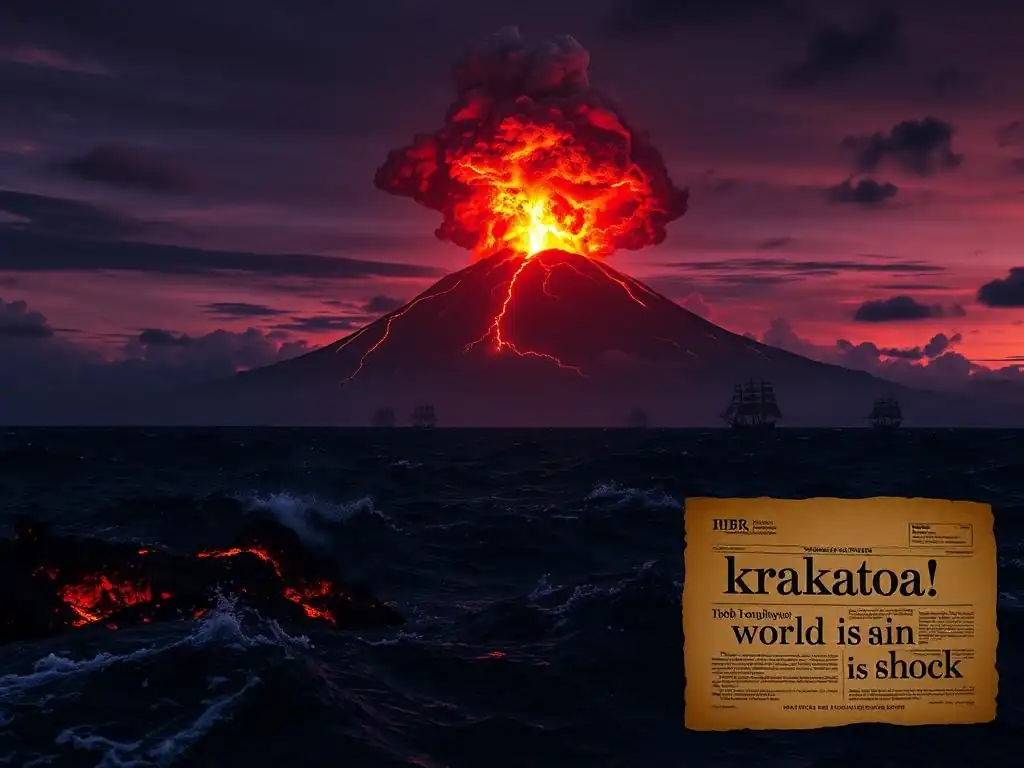
Welcome to Volcano Explorers, where we unravel the mysteries of Earth's fiery giants! Ever wondered how the news of a catastrophic eruption could ripple across the globe in an age before instant communication? Prepare to be captivated as we delve into the 1883 Krakatoa eruption news impact, exploring how whispers of destruction transformed into a worldwide echo, forever changing our understanding of volcanic power and the speed of information. Intrigued? Your journey into this historical cataclysm begins now...
- Introduction: The Global Reach of the 1883 Krakatoa Eruption
- Initial News Reports: First Accounts of the Krakatoa Explosion
- The Spread of Information via Telegraph Networks
- Newspapers and the Press: Amplifying the Krakatoa Story
- The Impact on Maritime Communication and Shipping
- Scientific Investigation and the Dissemination of Knowledge
- The "Echo Chamber" Effect: Rumors, Misinformation, and the Spread of Panic
- Long-Term Impact on Global Communication and Disaster Response
- Krakatoa 1883: A Turning Point in Global News Dissemination.
-
Frequently Asked Questions
- How did news of the 1883 Krakatoa eruption spread so quickly across the globe?
- What was the immediate impact of the 1883 Krakatoa eruption news on global weather patterns?
- How did the 1883 Krakatoa eruption news influence the development of volcanology as a science?
- What role did photography play in disseminating news and information about the 1883 Krakatoa eruption?
- What were some of the long-term social and cultural impacts of the 1883 Krakatoa eruption news?
- Final Reflection: Whispers Across the World
- Unearth More Volcanic Tales!
Introduction: The Global Reach of the 1883 Krakatoa Eruption
Setting the Scene: Krakatoa's Explosive 1883 Eruption
The year 1883 is etched in history not only for the devastating eruption of Krakatoa, but also for marking a pivotal moment in global communication. On August 27th, the volcanic island of Krakatoa, situated in the Sunda Strait between Java and Sumatra, Indonesia, unleashed a cataclysmic explosion that reverberated around the planet.
The eruption, estimated to be equivalent to 200 megatons of TNT, dwarfed even the most powerful nuclear weapons detonated in history. The sound from the eruption was reportedly heard as far away as Rodrigues Island near Mauritius, approximately 4,800 kilometers (3,000 miles) west, and Alice Springs, Australia, about 3,600 kilometers (2,200 miles) to the east, demonstrating the sheer magnitude of the event.
The immediate consequences were catastrophic for the surrounding region. Pyroclastic flows and colossal tsunamis, reaching heights of over 40 meters (130 feet), ravaged coastal areas of Java and Sumatra. Entire settlements were obliterated, and tens of thousands perished in the immediate aftermath of the eruption.
The sky darkened as volcanic ash was propelled into the stratosphere, leading to spectacular sunsets and a noticeable cooling of global temperatures in the years that followed. However, beyond the immediate physical destruction, the 1883 Krakatoa eruption news impact extended far beyond the Indonesian archipelago, testing the limits of 19th-century communication and revealing the interconnectedness of the world in the face of disaster.
The Unprecedented Scale of the Disaster: A Global Event
While volcanic eruptions were not uncommon in the 19th century, the sheer scale and reach of the 1883 Krakatoa eruption transformed it from a regional catastrophe into a global event. The energy released was immense, creating atmospheric pressure waves that circled the Earth multiple times, recorded on barographs across the globe.
These pressure waves, traveling at speeds exceeding 1,100 kilometers per hour (700 mph), were detected in Washington D.C. and even Saint Petersburg, Russia, providing irrefutable evidence of the eruption's global reach. This physical phenomenon itself was unprecedented in recorded history, immediately alerting scientists and the public alike to the extraordinary nature of what had occurred.
Furthermore, the 1883 Krakatoa eruption news impact transcended geographical boundaries due to the burgeoning global communication networks of the time, primarily the telegraph. Although slower and less comprehensive than modern communication systems, the telegraph allowed news of the disaster to spread rapidly across continents.
This event became a shared global experience, reported and discussed in newspapers from London to New York, demonstrating the nascent stages of a globally interconnected world grappling with a natural disaster of unimaginable proportions. The eruption served as a stark reminder of nature's power and highlighted the growing capacity for news, however imperfectly, to traverse vast distances and unite global attention.
Initial News Reports: First Accounts of the Krakatoa Explosion
Early Telegraph Dispatches: Communicating the Initial Shockwaves
The first inklings of the Krakatoa eruption reaching the wider world came through the marvel of the 19th century – the telegraph. Submarine telegraph cables, snaking across the ocean floors, were the arteries of global communication, carrying coded messages at speeds previously unimaginable. Within hours of the major explosions on August 27th, telegraph stations in Batavia (now Jakarta) and other locations in Java began receiving fragmented and often confused reports.
These initial dispatches, often relayed through British and Dutch colonial networks, spoke of immense explosions, darkness, and seismic disturbances. The very first telegraphic reports, arriving in Singapore and then further afield, were understandably sparse on detail but conveyed a sense of extraordinary events unfolding in the Sunda Strait.
These early telegraph dispatches, while lacking the immediacy of modern news, were crucial in alerting colonial authorities and international news agencies to the unfolding catastrophe. For example, reports reaching Singapore, a major telegraph hub, quickly triggered inquiries and further investigations. Telegraph operators worked tirelessly to piece together the scattered information, facing challenges such as damaged cables and the sheer volume of messages related to the disaster. Despite these hurdles, the telegraph network acted as the first, albeit imperfect, global alarm system, broadcasting the initial shockwaves of the 1883 Krakatoa eruption news impact across continents.
Eyewitness Accounts: Survivors' Stories and the First News Reports from Nearby Islands
Beyond the terse telegraph messages, the earliest detailed accounts of the Krakatoa eruption emerged from survivors and those on ships near the affected region. Sailors and residents of nearby islands, who had witnessed the eruption firsthand, provided harrowing testimonies that painted a vivid picture of the unfolding disaster.
These eyewitness accounts, initially relayed by ships reaching ports in Singapore, Batavia, and beyond, were crucial in giving a human face to the tragedy and conveying the true scale of the devastation. Stories of towering waves, skies blackened by ash, and the deafening roar of the explosions began to circulate, adding emotional weight to the bare facts conveyed by telegraph.
For instance, reports from ships that had survived the tsunamis described terrifying walls of water engulfing coastlines and vessels alike. Survivors who reached safe harbors recounted tales of entire villages swept away and landscapes dramatically altered. These personal narratives, often published in newspapers alongside telegraphic reports, resonated deeply with the public, transforming the 1883 Krakatoa eruption news impact from a distant event into a tangible human tragedy. The combination of official telegraphic reports and emotional eyewitness accounts created a powerful and impactful early narrative of the disaster.
Challenges in Early Reporting: Language Barriers and Limited Communication Technology
The dissemination of accurate and timely information about the 1883 Krakatoa eruption news impact faced significant obstacles rooted in the communication technology and socio-political landscape of the time. Language barriers posed a considerable challenge, as initial reports often originated from Dutch colonial sources in Indonesia, requiring translation and interpretation as the news spread internationally. The nuances of language and potential for misinterpretation inevitably introduced inaccuracies and delays in the flow of information.
Furthermore, while the telegraph was revolutionary, it was still a relatively nascent technology with limitations. Telegraph lines were vulnerable to damage, especially in disaster zones, and communication was often slow and prone to errors.
The process of relaying messages across vast distances involved multiple operators and re-transcriptions, increasing the possibility of inaccuracies creeping into the reports. Moreover, access to telegraph services was not universal, particularly in less developed regions, meaning that information flow was often channeled through colonial networks and major urban centers, potentially skewing the early narrative and delaying the full understanding of the disaster's impact in more remote areas.
The Spread of Information via Telegraph Networks
The Role of Telegraph Cables in Disseminating Krakatoa News
The global telegraph network was instrumental in disseminating news of the 1883 Krakatoa eruption, transforming the event into a globally discussed phenomenon. Submarine telegraph cables, laid across the ocean floor in the preceding decades, formed a crucial communication infrastructure connecting continents.
These cables allowed for relatively rapid transmission of messages, even across vast distances, making it possible for news of the eruption to reach Europe and North America within days, a feat unimaginable just a few decades prior. The existing telegraph network, though still developing, provided the essential arteries for the 1883 Krakatoa eruption news impact to be felt worldwide.
The strategic location of telegraph hubs, such as Singapore, Batavia, and London, played a vital role in the speed and direction of news dissemination. These centers acted as relay points, receiving initial reports and re-transmitting them along the network to other parts of the globe.
The efficiency of these hubs and the robustness of the cable infrastructure directly influenced how quickly and effectively the 1883 Krakatoa eruption news impact spread. Without the telegraph, the eruption might have remained largely a regional disaster in terms of immediate global awareness, but the cables ensured its rapid transition into a matter of international concern and public discourse.
Major News Agencies: Reuters, Associated Press, and the Krakatoa Coverage
Major international news agencies, such as Reuters and the Associated Press (AP), played a pivotal role in amplifying and distributing the 1883 Krakatoa eruption news impact. These agencies, already established as key players in global news dissemination, leveraged the telegraph network to gather reports from various sources, verify information (to the extent possible in the era), and distribute news articles to newspapers and other publications worldwide. Reuters, with its strong connections to the British Empire and global reach, and AP, serving a growing American readership, were at the forefront of shaping the global narrative of the Krakatoa disaster.
These news agencies acted as crucial intermediaries, sifting through often fragmented and conflicting initial reports, consolidating information, and producing coherent news stories for a global audience. They employed correspondents and stringers in key locations to gather firsthand accounts and official statements, and then utilized the telegraph to transmit these stories to their subscribers around the world. The reach and influence of Reuters and AP ensured that the 1883 Krakatoa eruption news impact was not just limited to technical telegraphic reports but was transformed into compelling news narratives that captured public attention and fueled widespread interest in the event.
Delays and Inaccuracies: The Challenges of Long-Distance Telegraph Communication
Despite the revolutionary nature of the telegraph, long-distance communication in the 1880s was still fraught with challenges that contributed to delays and inaccuracies in the 1883 Krakatoa eruption news impact. Telegraph lines, particularly submarine cables, were susceptible to damage from storms, ship anchors, and even marine life. Breaks in cables could disrupt communication for extended periods, leading to information bottlenecks and reliance on slower, less reliable methods of news transmission. Furthermore, the process of sending and receiving telegraph messages was inherently prone to errors.
Morse code, the standard telegraphic language, required skilled operators to transmit and interpret messages. Human error in transcription, misinterpretations of coded signals, and the degradation of signal quality over long distances could all introduce inaccuracies into the news flow. Additionally, the need for translation as news crossed linguistic boundaries further increased the potential for misreporting. While the telegraph facilitated unprecedented speed in news dissemination, it was not a perfect system, and the 1883 Krakatoa eruption news impact was inevitably shaped by these limitations, resulting in some initial confusion and inaccuracies before a clearer picture of the disaster emerged.
Newspapers and the Press: Amplifying the Krakatoa Story
Newspaper Coverage Worldwide: From Local Papers to International Publications
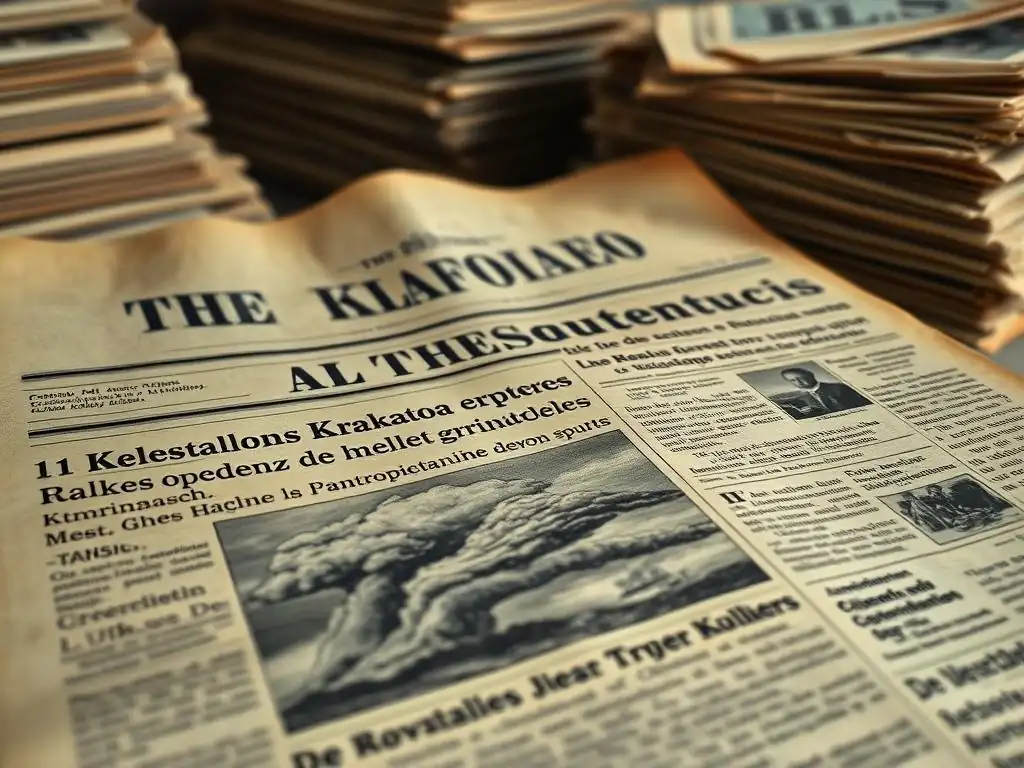
Newspapers across the globe played a crucial role in amplifying the 1883 Krakatoa eruption news impact, transforming it from telegraphic dispatches into detailed narratives accessible to a mass audience. From local papers in small towns to major international publications in London, New York, and Paris, the Krakatoa eruption became front-page news for weeks, and in some cases, months following the event.
The story captivated public imagination, and newspapers dedicated significant space to reporting on the unfolding disaster, its causes, and its consequences. This widespread newspaper coverage ensured that the 1883 Krakatoa eruption news impact permeated societies worldwide, reaching far beyond the immediate circles of government officials and scientists who initially received telegraphic reports.
Newspapers utilized a variety of sources for their coverage, drawing upon telegraphic agency reports, eyewitness accounts from survivors and ship captains, and expert commentary from scientists and geographers. They also re-printed stories from other newspapers, creating a cascading effect of news dissemination. The competitive nature of the newspaper industry in the late 19th century further fueled the extensive coverage, as editors sought to provide the most comprehensive and compelling accounts of the Krakatoa disaster to attract readers and maintain their publication's relevance in a rapidly changing news landscape.
Headline News: How Newspapers Presented the Catastrophic Eruption
The 1883 Krakatoa eruption news impact was dramatically presented in newspaper headlines, reflecting the sensational nature of the event and the public's fascination with natural disasters. Headlines screamed of "Volcanic Catastrophe," "Island Destroyed," and "Thousands Perish," utilizing strong, evocative language to capture the magnitude of the eruption and its human toll. Newspapers understood the power of headlines to draw readers in and convey the urgency and importance of the news. The headlines surrounding the Krakatoa eruption were designed to be attention-grabbing and to communicate the scale of the disaster in a concise and impactful manner.
Beyond the immediate shock value, headlines also evolved over time as more information became available. Initial headlines focused on the immediate destruction and loss of life. As scientific understanding of the eruption developed, headlines began to reflect this, discussing the volcanic forces at play and the global atmospheric effects. The changing headlines surrounding the 1883 Krakatoa eruption news impact provide a snapshot of how the narrative of the disaster unfolded in the public consciousness, moving from initial shock and awe to a more nuanced understanding of the geological and global implications.
The Power of Visuals: Illustrations and Early Photography of the Aftermath
In an era before widespread photographic reproduction in newspapers, illustrations played a vital role in conveying the visual impact of the 1883 Krakatoa eruption news impact. Newspapers employed artists to create drawings and engravings based on eyewitness descriptions and early photographs, providing readers with a visual representation of the devastation. These illustrations, often depicting towering tsunamis, erupting volcanoes, and ash-covered landscapes, helped to make the distant disaster more tangible and emotionally resonant for readers who had never witnessed such events firsthand.
While photographic technology was advancing, the process of reproducing photographs in newspapers was still complex and expensive in 1883. However, early photographs taken in the aftermath of the eruption, primarily by colonial officials and scientists, did begin to circulate, and some were reproduced as engravings or lithographs in newspapers and illustrated magazines. These visual representations, whether illustrations or early photographs, added a powerful dimension to the 1883 Krakatoa eruption news impact, making the event more vivid and memorable for a global audience and enhancing the overall impact of the newspaper coverage.
The Impact on Maritime Communication and Shipping
Shipping Reports: Confirming the Disaster and Assessing Damage at Sea
Shipping reports played a crucial role in confirming the 1883 Krakatoa eruption news impact and providing early assessments of the disaster's reach and consequences at sea. Ships at sea, particularly those in the Sunda Strait and surrounding waters, were directly affected by the eruption, experiencing the tsunamis, atmospheric pressure waves, and falling ash.
Reports from ship captains and crews, relayed to port authorities upon arrival, provided independent verification of the volcanic activity and offered valuable insights into the geographical extent of the disaster. These shipping reports became important pieces of evidence in piecing together the timeline and scope of the Krakatoa eruption.
Furthermore, shipping reports were instrumental in assessing the damage inflicted by the eruption on maritime infrastructure and shipping routes. Ports were damaged, navigation channels were altered by volcanic debris, and ships sustained damage from tsunamis and pumice. Insurance companies and maritime authorities relied heavily on shipping reports to understand the extent of the disruption and to begin to address the logistical and economic consequences of the 1883 Krakatoa eruption news impact on global shipping.
The Impact on Trade Routes: Disruptions Caused by the Eruption's Aftermath
The 1883 Krakatoa eruption and its aftermath significantly disrupted maritime trade routes, impacting global commerce and highlighting the interconnectedness of the world economy even in the 19th century. The Sunda Strait, a vital waterway for shipping between the Indian Ocean and the Pacific Ocean, was directly affected by the eruption, becoming hazardous due to volcanic debris, altered sea depths, and lingering atmospheric disturbances. This disruption forced ships to divert to alternative routes, leading to delays and increased shipping costs. The 1883 Krakatoa eruption news impact therefore extended beyond the immediate disaster zone, affecting global trade networks.
The disruption to trade routes also had economic consequences, impacting the flow of goods and commodities across the globe. Delays in shipments of raw materials and finished products affected industries and markets worldwide. For instance, the eruption impacted the spice trade, which was still significant in the region, as well as the movement of other goods such as tea, coffee, and textiles. The 1883 Krakatoa eruption news impact on trade routes served as a stark reminder of the vulnerability of global commerce to natural disasters and the far-reaching consequences of such events in an increasingly interconnected world.
The Role of Ships in Relaying News: Accounts from Captains and Crews
Beyond reporting damage and disruptions, ships themselves played a vital role in relaying news of the 1883 Krakatoa eruption news impact. In the absence of direct telegraphic communication from the immediate disaster zone, ships arriving at ports in Singapore, Batavia, Colombo, and other locations became crucial sources of information. Captain's logs, crew accounts, and passenger testimonies offered firsthand perspectives on the eruption and its immediate effects. These accounts were eagerly sought after by news agencies and colonial authorities, providing valuable details that supplemented the initial telegraphic reports.
Ships essentially acted as mobile news platforms, carrying eyewitness accounts and physical evidence (such as ash samples) from the disaster zone to communication hubs. The information relayed by ships was often more detailed and emotionally resonant than the terse telegraphic dispatches, providing a more complete and humanized picture of the catastrophe. The role of ships in relaying news underscores the importance of maritime networks in the 19th-century global communication system and highlights how seafarers became unintentional but crucial contributors to the 1883 Krakatoa eruption news impact on the wider world.
Scientific Investigation and the Dissemination of Knowledge
Early Scientific Reports: Analyzing the Cause and Impact of the Eruption
The 1883 Krakatoa eruption news impact extended beyond immediate news reporting to spur significant scientific investigation and the dissemination of knowledge about volcanology and related phenomena. Early scientific reports, compiled by geologists, meteorologists, and other scientists, began to emerge soon after the eruption, attempting to analyze the causes of the cataclysm and document its multifaceted impacts. These initial reports, often published in scientific journals and presented at scientific societies, aimed to understand the geological processes behind the eruption and to quantify its global effects, such as atmospheric disturbances and temperature changes.
These early scientific investigations relied on diverse data sources, including seismic records, barometric readings from around the world, eyewitness accounts, and geological surveys of the Krakatoa region. Scientists sought to determine the magnitude of the eruption, the types of volcanic materials ejected, and the mechanisms behind the devastating tsunamis. The 1883 Krakatoa eruption news impact on the scientific community was profound, prompting a surge of research and laying the groundwork for advancements in volcanology, seismology, and atmospheric science.
The Royal Society's Investigation: A Comprehensive Study of Krakatoa
Perhaps the most significant scientific undertaking in response to the 1883 Krakatoa eruption news impact was the comprehensive investigation commissioned by the Royal Society of London. Recognizing the unprecedented scale and global implications of the eruption, the Royal Society established a committee to collect and analyze data from around the world and produce a definitive scientific report. This ambitious project, published in 1888 as "The Eruption of Krakatoa and Subsequent Phenomena," became a landmark publication in volcanology and remains a valuable resource for understanding large volcanic eruptions.
The Royal Society's investigation was remarkably thorough for its time, encompassing diverse aspects of the eruption, from the geological setting and volcanic processes to the atmospheric and oceanographic consequences. It included detailed analyses of seismic records, atmospheric pressure waves, tsunami observations, and the distribution of volcanic ash.
The report also incorporated numerous eyewitness accounts and illustrations, providing a rich and multifaceted understanding of the event. "The Eruption of Krakatoa and Subsequent Phenomena" significantly advanced scientific knowledge of volcanic eruptions and set a precedent for future comprehensive studies of natural disasters, solidifying the 1883 Krakatoa eruption news impact on scientific understanding.
Public Understanding of Volcanic Activity: Krakatoa as a Case Study
The 1883 Krakatoa eruption news impact extended to public understanding of volcanic activity, transforming Krakatoa into a prominent case study for illustrating the power and potential hazards of volcanoes. Newspaper coverage and popular science publications disseminated simplified explanations of volcanic processes and the science behind the Krakatoa eruption, reaching a broad public audience. The dramatic nature of the eruption and its global reach captured public imagination, making volcanoes less of a mysterious and distant phenomenon and more of a tangible and potentially threatening force of nature.
Krakatoa became a synonym for volcanic catastrophe in the public consciousness, and the eruption served as a compelling example in educational materials and popular culture. Lectures, books, and even theatrical performances drew upon the Krakatoa story to illustrate the power of volcanoes and the importance of scientific understanding. The 1883 Krakatoa eruption news impact on public understanding of volcanic activity was significant, contributing to increased awareness of geological processes and fostering a greater appreciation for the scientific study of the Earth's dynamic forces.
The "Echo Chamber" Effect: Rumors, Misinformation, and the Spread of Panic
Exaggerated Reports and Conspiracy Theories: The Spread of Misinformation
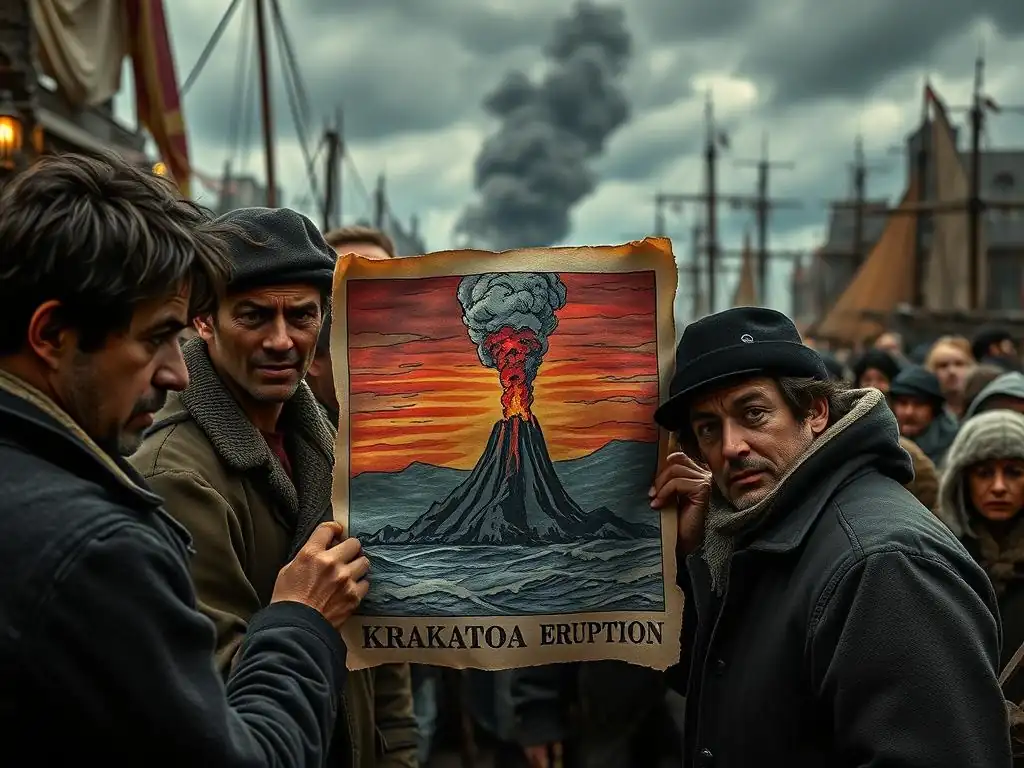
While the telegraph and newspapers facilitated the rapid spread of information about the 1883 Krakatoa eruption news impact, they also inadvertently contributed to the propagation of rumors, exaggerated reports, and even conspiracy theories. In the initial days and weeks after the eruption, when reliable information was still scarce and fragmented, misinformation thrived. Telegraphic errors, sensationalized newspaper accounts, and the inherent human tendency to embellish stories all contributed to the spread of inaccurate and often alarming narratives about the Krakatoa disaster.
Exaggerated reports of the death toll, the geographical extent of the devastation, and the potential for future eruptions circulated widely. Some newspapers, eager to capture readers' attention, prioritized sensationalism over accuracy, contributing to a climate of fear and uncertainty.
Conspiracy theories, although less prevalent than in modern times, also emerged, with some attributing the eruption to supernatural causes or even secret human interventions. This "echo chamber" effect, where misinformation amplified itself through various channels, highlighted the challenges of maintaining accuracy and combating rumors in the early stages of a global news event, even with the advent of faster communication technologies.
The Role of Word-of-Mouth: How Rumors Influenced Public Perception
In the 19th century, word-of-mouth communication remained a powerful force, even alongside the telegraph and newspapers, and it played a significant role in shaping public perception of the 1883 Krakatoa eruption news impact. Rumors and anecdotal accounts, passed along through personal conversations and community networks, could spread rapidly and influence public opinion, sometimes even more effectively than official news reports. Word-of-mouth communication was particularly potent in amplifying sensationalism and exaggerations, as stories tended to become embellished and distorted in each retelling.
For example, rumors of entire islands sinking beneath the waves or of the eruption triggering earthquakes across the globe gained traction through word-of-mouth, even though they lacked factual basis. These rumors contributed to public anxiety and fear, sometimes overshadowing the more accurate, but often less dramatic, information presented in newspapers. The 1883 Krakatoa eruption news impact was therefore not solely shaped by formal news channels but also by the informal and often unreliable dissemination of information through word-of-mouth, highlighting the complex interplay of different communication methods in shaping public understanding of major events.
The Importance of Verification: Distinguishing Fact from Fiction in Early Reports
The spread of rumors and misinformation following the 1883 Krakatoa eruption news impact underscored the critical importance of verification and fact-checking, even in an era with relatively rapid communication. While news agencies and reputable newspapers attempted to verify information to the best of their abilities, the challenges of long-distance communication and the pressure to be first with the news sometimes led to the publication of inaccurate reports. The Krakatoa experience served as a cautionary tale about the potential for misinformation to proliferate during crises and the need for robust mechanisms to distinguish fact from fiction in early news reporting.
The Royal Society's comprehensive investigation, while primarily aimed at scientific understanding, also implicitly served as a form of post-event verification, meticulously collecting and analyzing data to establish a more accurate and reliable account of the eruption and its consequences. The lessons learned from the 1883 Krakatoa eruption news impact contributed to the development of journalistic practices and scientific methodologies that emphasized the importance of verification, accuracy, and critical evaluation of sources, principles that remain crucial in modern news reporting and disaster communication.
Long-Term Impact on Global Communication and Disaster Response
Lessons Learned from the Krakatoa Eruption: Improving Communication During Crises
The 1883 Krakatoa eruption news impact provided valuable lessons for improving global communication and disaster response in subsequent crises. The event highlighted both the strengths and limitations of 19th-century communication technologies, particularly the telegraph, in disseminating news of a major disaster. The rapid spread of initial reports demonstrated the potential of global communication networks to alert the world to emergencies, but the delays, inaccuracies, and proliferation of rumors also revealed the need for improvements in communication infrastructure, information verification, and public education.
One key lesson was the importance of establishing reliable and redundant communication channels, particularly in disaster-prone regions. The vulnerability of telegraph cables to damage underscored the need for alternative communication methods and more robust infrastructure. Furthermore, the Krakatoa experience emphasized the necessity of clear and consistent communication protocols among government agencies, news organizations, and scientific institutions to ensure the accurate and timely dissemination of information during crises. The 1883 Krakatoa eruption news impact thus contributed to the evolution of disaster communication strategies, paving the way for more effective information management in future emergencies.
The Evolution of Disaster Reporting: From Telegraph to Modern Media
The 1883 Krakatoa eruption news impact can be seen as a turning point in the evolution of disaster reporting, marking a transition from reliance on telegraphic dispatches and print media to the beginnings of more modern and instantaneous forms of communication. The event demonstrated the power of mass media to shape public perception of disasters and to mobilize global attention and aid. While the 19th-century response was limited by technological constraints, the Krakatoa eruption set a precedent for international news coverage of large-scale disasters and highlighted the growing role of media in shaping global responses to crises.
In the decades following Krakatoa, advancements in communication technologies, such as radio and later television, further revolutionized disaster reporting, enabling near-instantaneous global coverage and visual documentation of events. The principles of rapid dissemination, verification, and public education, which were underscored by the 1883 Krakatoa eruption news impact, remained central to disaster reporting in the 20th and 21st centuries, evolving alongside technological advancements to create the real-time, multimedia news environment we experience today.
Remembering Krakatoa: Its Legacy in Global Communication History
The 1883 Krakatoa eruption remains a significant event in global communication history, not only for the scale of the disaster itself but also for its role in highlighting the capabilities and limitations of 19th-century news dissemination. The "Krakatoa echo chamber," with its mix of rapid telegraphic reports, newspaper amplification, rumors, and scientific investigations, provides a fascinating case study in how news of a global catastrophe traveled in a pre-digital age.
The 1883 Krakatoa eruption news impact serves as a reminder of the transformative power of communication technologies, even in their nascent stages, to connect the world and shape collective responses to major events.
Krakatoa's legacy extends beyond the immediate disaster and its scientific aftermath. It stands as a historical landmark in the development of global news networks and disaster reporting, illustrating the challenges and opportunities inherent in communicating complex and impactful events across vast distances and cultural divides. Remembering Krakatoa in the context of global communication history underscores the long evolution of news dissemination and the enduring importance of accuracy, verification, and effective communication in navigating crises and fostering global understanding.
Krakatoa 1883: A Turning Point in Global News Dissemination.
Frequently Asked Questions
How did news of the 1883 Krakatoa eruption spread so quickly across the globe?
News spread via a combination of telegraph cables, ships carrying first-hand accounts, and the rapid dissemination of information through existing news networks.
What was the immediate impact of the 1883 Krakatoa eruption news on global weather patterns?
The eruption injected massive amounts of ash and sulfur dioxide into the atmosphere, leading to vivid sunsets and a temporary decrease in global temperatures.
How did the 1883 Krakatoa eruption news influence the development of volcanology as a science?
The scale of the eruption prompted increased scientific investigation into volcanic processes and the development of new monitoring techniques to predict future eruptions.
What role did photography play in disseminating news and information about the 1883 Krakatoa eruption?
Photographs captured the devastation caused by the eruption, providing visual evidence that significantly amplified the impact of news reports and eyewitness accounts.
The eruption became a powerful symbol of nature's destructive force, influencing art, literature, and shaping perceptions of risk and vulnerability in coastal communities.
Final Reflection: Whispers Across the World
The story of the 1883 Krakatoa eruption, as we've explored, is far more than a geological event; it's a testament to the nascent power of global communication. The rapid dissemination of news, even in the absence of instant digital connectivity, reveals a deeply interconnected world struggling to understand a cataclysmic event. The echoes of Krakatoa, both literal and metaphorical, continue to resonate today, reminding us of the fragility of our planet and the enduring human need to share and interpret extraordinary events.
The impact of the 1883 Krakatoa eruption news impact extends beyond scientific understanding; it shaped cultural perceptions of disaster and the role of media in its aftermath. The speed and reach of the news, even with its imperfections and inaccuracies, demonstrated the growing power of global networks and their ability to connect people across vast distances in the face of shared tragedy. The telegraph has shortened the world, and made all mankind neighbors.
This quote, often attributed to various figures of the era, perfectly encapsulates the sentiment of a world shrinking under the influence of rapidly advancing communication technologies, a sentiment amplified by the Krakatoa disaster.
As we reflect on the "1883 Krakatoa eruption news impact," let us consider the lessons learned about the power of information, the importance of accurate reporting, and the enduring human spirit in the face of adversity. How can we, in our own lives, be more mindful of the information we consume and share? How can we contribute to a more informed and compassionate global community, one that learns from the past and strives to build a more resilient future? Let the echoes of Krakatoa inspire us to connect, to understand, and to act with wisdom and empathy.
Unearth More Volcanic Tales!
Thanks for exploring the fascinating story of how news of Krakatoa's 1883 eruption spread globally. Now that you understand its historical impact, let's delve deeper into the world of volcanoes.
Here are a few ways to continue your exploration:
- Research other significant historical volcanic eruptions and compare their global impact and the methods used to disseminate news.
- Share your newfound knowledge! Discuss the Krakatoa eruption and 19th-century news dissemination with friends and family.
- Stay informed about modern volcanic activity and research by following Volcano Explorers on social media.
What other historical events had a similarly widespread global impact, and how do you think news of them traveled? Let us know in the comments!