
The Fury Within: Exploring Nyiragongo's Magma Chamber and Lava Flow Potential

Welcome to Volcano Explorers!
Prepare to journey into the heart of Earth's fiery secrets. Ever wondered what truly fuels the raw power of a volcano? Dive in and begin your exploration with us into Nyiragongo's magma chamber, a crucial piece of the puzzle that dictates the volcano's behavior and lava flow potential. What secrets lie beneath the surface, and what does the future hold for this volatile giant? Unearth the answers and more, as we delve into the science and stories behind these formidable forces of nature.
- Nyiragongo: Magma Chamber Dynamics and Lava Flow Hazards
- Introduction: Nyiragongo's Volcanic Context
- Historical Eruptions: Patterns and Impacts
- Lava Flow Characteristics: Analysis of Past Events
- Magma Chamber Dynamics: Understanding the Reservoir
- Linking Magma Chamber to Eruptive Behavior
- Monitoring Techniques: Assessing Volcanic Activity
- Hazard Assessment and Mitigation Strategies
- Long-Term Risk Management: Living with Nyiragongo
- Conclusion: Reducing Risk and Enhancing Resilience
- Frequently Asked Questions
- Final Reflection: Embracing the Volcanic Truth
- Unleash Your Inner Volcanologist!
Nyiragongo: Magma Chamber Dynamics and Lava Flow Hazards
Introduction: Nyiragongo's Volcanic Context
Nyiragongo: A Stratovolcano in the Virunga Mountains
Mount Nyiragongo, a majestic stratovolcano, dominates the landscape of the Virunga Mountains in the Democratic Republic of Congo. This active volcano is renowned for its persistent lava lake within its summit crater, a feature that has captivated volcanologists and the public alike for decades. Part of the East African Rift System, Nyiragongo's volcanic activity is driven by the tectonic forces pulling apart the continent, creating pathways for magma to ascend from deep within the Earth. Its steep slopes are composed of layers of solidified lava and ash from past eruptions, a testament to its long and fiery history.
Characterized by its unique and hazardous volcanic behavior, Nyiragongo stands out from other volcanoes in the region. Unlike its neighboring volcanoes, which are often associated with more explosive eruptions, Nyiragongo is infamous for its highly fluid lava flows. This fluidity stems from the unique composition of its magma, which is relatively low in silica, making it less viscous and enabling it to flow at remarkably high speeds. This distinctive characteristic poses significant risks to the densely populated areas surrounding the volcano.
Goma's Vulnerability: The Proximity to Nyiragongo
The city of Goma, a bustling urban center in the eastern Democratic Republic of Congo, lies perilously close to the flanks of Mount Nyiragongo. Home to over one million people, Goma's expansion has brought it alarmingly close to the volcano's base, placing a large population directly in the path of potential lava flows. This proximity transforms Nyiragongo from a natural wonder into a significant threat, as eruptions can have catastrophic consequences for the city and its inhabitants.
The vulnerability of Goma is further exacerbated by its location within a rift valley, which funnels lava flows directly towards the urban area. The terrain surrounding Nyiragongo offers little natural barrier to impede lava flow, allowing molten rock to rapidly descend towards the city. This geographical setting, combined with the volcano's propensity for effusive eruptions and the high fluidity of its lava, makes Goma one of the most at-risk urban areas in the world facing volcanic hazards. The potential for a major eruption to directly impact Goma is a constant concern for both residents and authorities.
Historical Eruptions: Patterns and Impacts
The 1977 Eruption: High-Speed Lava Flows
The eruption of Nyiragongo in 1977 remains one of the most dramatic and scientifically significant volcanic events of the 20th century. This eruption was characterized by the rapid draining of the lava lake within the summit crater, leading to an astonishing discharge of lava down the volcano's flanks. The speed of these lava flows was unprecedented, reaching velocities estimated at up to 60 kilometers per hour (approximately 37 miles per hour). This extraordinary speed was attributed to the extremely low viscosity of the lava, a consequence of its unique chemical composition.
The 1977 eruption served as a stark reminder of the extreme hazards posed by Nyiragongo. While the eruption was relatively short-lived, lasting less than an hour, the fast-moving lava flows overwhelmed communities on the volcano's slopes. The eruption resulted in hundreds of fatalities, primarily due to asphyxiation from volcanic gases and burns from the rapidly advancing lava. This event highlighted the critical need for improved monitoring and preparedness strategies to mitigate the risks associated with Nyiragongo's unique eruptive style.
The 2002 Eruption: Devastation of Goma
In January 2002, Nyiragongo erupted again, this time with even more devastating consequences for the city of Goma. Unlike the 1977 event, the 2002 eruption involved fissures opening on the southern flank of the volcano, directly towards Goma. Lava flowed from these fissures into the city, dividing Goma and causing widespread destruction. The eruption lasted for several days, and the volume of lava erupted was significantly larger than in 1977.
The impact of the 2002 eruption on Goma was catastrophic. Lava flows engulfed a significant portion of the city, including residential areas, commercial centers, and infrastructure. It is estimated that approximately 14,000 homes were destroyed, and hundreds of thousands of people were displaced. The eruption also caused significant disruption to the city's water supply and sanitation systems, leading to outbreaks of disease. While the death toll was lower than initially feared, estimated at around 250, the long-term socio-economic impact on Goma was immense, leaving scars that are still visible today.
Lava Flow Characteristics: Analysis of Past Events
Lava Flow Rheology: Viscosity and Cooling Rates
The exceptional hazard posed by Nyiragongo stems largely from the unique rheology of its lava. Rheology is the study of the flow of matter, and in the context of lava, it refers to its viscosity and how it deforms under stress. Nyiragongo's lava is characterized by an extremely low viscosity, making it highly fluid and capable of flowing at remarkable speeds.
This low viscosity is primarily attributed to its mafic composition, meaning it is rich in magnesium and iron and relatively poor in silica (SiO2). Silica content is a major control on lava viscosity; lower silica content leads to lower viscosity.
Furthermore, the cooling rate of Nyiragongo's lava also contributes to its hazard potential. While basaltic lavas, in general, tend to cool and solidify relatively quickly compared to more silica-rich lavas, Nyiragongo's lava, due to its specific composition and eruption dynamics, can maintain its fluidity over considerable distances and for extended periods. This prolonged fluidity allows the lava to travel further and faster, exacerbating the threat to populated areas like Goma. Studies of the 2002 lava flows indicated rapid flow rates even several kilometers from the fissures, highlighting the efficient heat retention and flow characteristics of this particular magma type.
Impact on Infrastructure: Destruction and Displacement
The 2002 eruption of Nyiragongo provided a stark illustration of the devastating impact of lava flows on infrastructure. As lava inundated Goma, it relentlessly destroyed buildings, roads, and essential services. The intense heat of the lava, estimated to be around 1000-1200 degrees Celsius (1832-2192 degrees Fahrenheit), ignited combustible materials and melted or crushed structures in its path. Concrete and asphalt offered little resistance, and even reinforced buildings were often structurally compromised or completely engulfed.
The destruction of infrastructure during the 2002 eruption led to widespread displacement and long-term disruption. Hospitals, schools, and marketplaces were destroyed or rendered unusable, severely impacting essential services. The lava flows cut off major transportation routes, hindering rescue efforts and the delivery of aid.
The disruption of water and electricity supplies further compounded the crisis, leading to unsanitary conditions and increased health risks. The economic cost of the infrastructure damage was immense, requiring years of rebuilding and recovery efforts. The experience of the 2002 eruption underscores the critical need for lava flow hazard mitigation strategies in volcanically active regions, especially those densely populated like Goma.
Magma Chamber Dynamics: Understanding the Reservoir
Magma Chamber Structure: Depth, Size, and Geometry
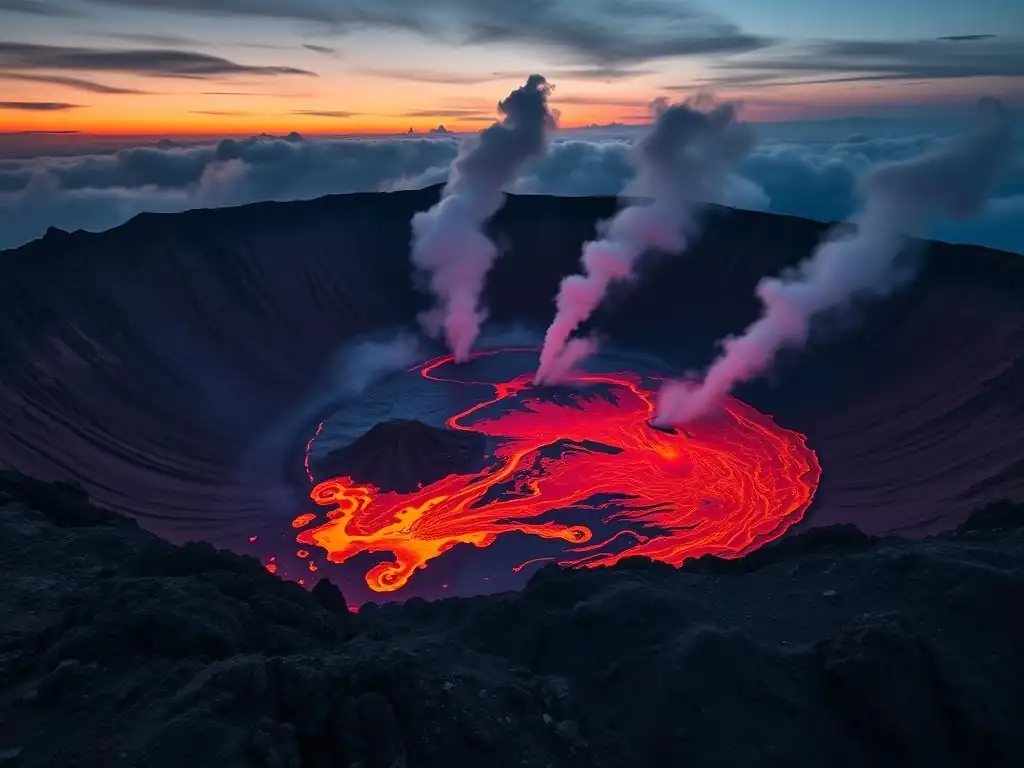
Understanding the magma chamber beneath Nyiragongo is crucial for assessing its eruptive potential and predicting future hazards. Seismic studies and other geophysical investigations have provided insights into the structure of this subsurface reservoir. It is believed that Nyiragongo possesses a complex magma system, likely involving multiple interconnected chambers at varying depths. The primary magma chamber, considered the main source for eruptions, is estimated to be located at a relatively shallow depth, possibly between 2 to 5 kilometers (approximately 1.2 to 3.1 miles) beneath the summit crater.
The size and geometry of the Nyiragongo magma chamber are still subjects of ongoing research, but estimations suggest a significant volume capable of producing substantial eruptions. Geophysical data and modeling suggest a chamber that is elongated or sill-like in shape, rather than a perfectly spherical body.
The precise dimensions remain uncertain, but studies suggest a volume ranging from several to tens of cubic kilometers. The shallow depth and substantial size of this magma chamber contribute to the rapid and voluminous eruptions characteristic of Nyiragongo, as the magma has a relatively short distance to travel to the surface and a large reservoir to draw from.
Magma Composition: Mafic, Volatile-Rich Magma
The unique eruptive behavior of Nyiragongo is intimately linked to the composition of its magma. Analysis of erupted lava samples reveals that Nyiragongo's magma is predominantly mafic, specifically a melilitite nephelinite. This composition is characterized by extremely low silica content (around 40-45% SiO2), high concentrations of incompatible elements, and significant volatile content, particularly carbon dioxide (CO2). The low silica content is the primary reason for the exceptionally low viscosity of Nyiragongo's lava.
The high volatile content, particularly CO2, plays a critical role in driving eruptions at Nyiragongo. CO2 is highly soluble in magma at depth under pressure, but as magma ascends towards the surface and pressure decreases, CO2 exsolves or comes out of solution, forming gas bubbles. The rapid exsolution of large volumes of CO2 can significantly increase the explosivity of eruptions.
While Nyiragongo is primarily known for its effusive eruptions and lava lake, the presence of volatile-rich magma indicates the potential for more explosive phases, especially if the magma ascent is rapid and pressure release is sudden. The specific mineral assemblage and chemical fingerprints of Nyiragongo's magma are key to understanding its unique and hazardous eruptive style.
Linking Magma Chamber to Eruptive Behavior
Pressure Buildup and Eruption Triggers
Eruptions at Nyiragongo, like most volcanoes, are ultimately driven by the buildup of pressure within the magma chamber. This pressure increase can be caused by several factors, including the influx of new magma into the chamber, the exsolution of volatiles as magma rises, and tectonic stresses in the surrounding crust. As magma accumulates in the chamber, the pressure exerted on the surrounding rocks increases. When this pressure exceeds the strength of the overlying rocks, it can trigger fracturing and faulting, creating pathways for magma to ascend to the surface.
The specific triggers for eruptions at Nyiragongo are complex and still under investigation. Seismic activity, ground deformation, and changes in gas emissions are often precursors to eruptions, indicating magma movement and pressure changes within the volcanic system. However, the rapid onset of some Nyiragongo eruptions, such as the 1977 event, suggests that the pressure buildup and eruption initiation can be very rapid and potentially difficult to predict with long lead times. Understanding the precise mechanisms that lead to pressure buildup and eruption triggering is crucial for improving eruption forecasting capabilities at Nyiragongo.
Magma Ascent Mechanisms: Dike Propagation
Once the pressure within the magma chamber is sufficient to overcome the surrounding rock strength, magma ascent begins. At Nyiragongo, magma ascent is primarily facilitated by the formation and propagation of dikes. A dike is a vertical or near-vertical fracture in the Earth's crust that is filled with magma. The buoyant magma, being less dense than the surrounding solid rock, forces its way upwards along these fractures. The propagation of dikes from the magma chamber towards the surface is a key process in transporting magma and initiating eruptions.
The orientation and pathway of dike propagation influence the location and style of eruptions. At Nyiragongo, the 2002 eruption involved dike propagation towards the south flank of the volcano, leading to fissures opening directly towards Goma. The direction of dike propagation is likely controlled by the regional stress field and pre-existing weaknesses in the crustal structure. Understanding the pathways of magma ascent and dike propagation is essential for delineating potential eruption vent locations and assessing the areas at highest risk from lava flows and other volcanic hazards.
Eruption Styles: Fissure Eruptions and Lava Lakes
Nyiragongo exhibits a range of eruption styles, primarily characterized by effusive activity, including fissure eruptions and the persistent lava lake. Fissure eruptions, as seen in 2002, involve the opening of elongated cracks or fissures on the volcano's flanks, from which large volumes of lava are rapidly erupted. These fissure eruptions are responsible for the most destructive lava flows impacting Goma. The high effusion rates and low viscosity of the lava contribute to the rapid advance of these flows.
The persistent lava lake within Nyiragongo's summit crater is another defining feature. This lava lake is a relatively rare phenomenon, representing a continuous outgassing of magma from the underlying chamber. While the lava lake itself poses a localized hazard within the crater, its drainage can lead to rapid and voluminous lava flows, as exemplified by the 1977 eruption. The interplay between fissure eruptions and lava lake dynamics contributes to the complex and hazardous eruptive behavior of Nyiragongo.
Monitoring Techniques: Assessing Volcanic Activity
Seismic Monitoring: Detecting Magma Movement
Seismic monitoring is a cornerstone of volcano monitoring at Nyiragongo and worldwide. Seismometers, sensitive instruments that detect ground vibrations, are deployed around the volcano to record earthquakes and volcanic tremor. Magma movement within the volcano, both within the magma chamber and during ascent through dikes, generates seismic signals. Changes in seismic activity, such as increases in earthquake frequency, magnitude, or tremor amplitude, can indicate unrest and potential eruption.
Different types of seismic signals provide information about different volcanic processes. Volcano-tectonic earthquakes, caused by fracturing of the surrounding rock, can indicate stress buildup and magma intrusion. Long-period earthquakes and volcanic tremor are often associated with fluid movement, including magma and gas, within the volcanic system. Analysis of seismic data, including earthquake locations, magnitudes, and waveforms, allows volcanologists to track magma movement, assess the state of volcanic unrest, and provide crucial information for eruption forecasting and early warning.
Gas Geochemistry: Tracking Volatile Emissions
Monitoring volcanic gas emissions is another vital technique for assessing Nyiragongo's activity. Volcanic gases, such as sulfur dioxide (SO2), carbon dioxide (CO2), and water vapor (H2O), are released from magma and provide insights into magma degassing processes and subsurface conditions. Changes in the composition and flux of volcanic gases can indicate changes in magma supply, magma ascent, and eruption potential.
Gas monitoring at Nyiragongo involves both ground-based measurements and satellite observations. Ground-based instruments, such as spectrometers and gas sensors, are used to measure the concentration and composition of volcanic gases at fumaroles and vents. Satellite instruments can detect SO2 plumes emitted from volcanoes, providing a broader spatial and temporal coverage of gas emissions. Increases in SO2 flux, changes in CO2/SO2 ratios, and the detection of other volatile species can be indicative of magma unrest and potential eruptions.
Deformation Monitoring: Measuring Ground Changes
Deformation monitoring techniques measure changes in the shape of the volcano's surface, providing information about magma accumulation and movement beneath the ground. As magma intrudes into the magma chamber or ascends through dikes, it can cause the ground surface to inflate or deform. Conversely, magma withdrawal can lead to deflation. Precise measurements of ground deformation can reveal the location, volume, and rate of magma movement.
Several techniques are used for deformation monitoring at Nyiragongo. Global Positioning System (GPS) stations are deployed on the volcano flanks to measure horizontal and vertical ground movements. Satellite Interferometric Synthetic Aperture Radar (InSAR) provides high-resolution maps of ground deformation over large areas. Tiltmeters, highly sensitive instruments that measure ground tilt, can detect subtle changes in slope. Combining data from these deformation monitoring techniques provides a comprehensive picture of ground deformation patterns and magma dynamics at Nyiragongo, contributing to eruption forecasting and hazard assessment.
Hazard Assessment and Mitigation Strategies
Lava Flow Modeling: Predicting Inundation Zones
Lava flow modeling is a crucial tool for hazard assessment at Nyiragongo. These models utilize computer simulations to predict the paths and extent of potential lava flows based on factors such as topography, lava viscosity, and eruption rate. By simulating various eruption scenarios, lava flow models can delineate areas that are most vulnerable to lava inundation, helping to define hazard zones and inform land-use planning.
Different types of lava flow models exist, ranging from simple empirical models to more complex physics-based models. Empirical models rely on historical lava flow data to statistically predict future flow paths. Physics-based models simulate lava flow dynamics using equations that describe fluid flow and heat transfer, requiring detailed input data on topography, lava properties, and eruption parameters. Lava flow modeling, particularly when calibrated with past eruption data from Nyiragongo, provides valuable insights for hazard mitigation and emergency preparedness in Goma.
Early Warning Systems: Real-Time Monitoring and Alerting
Effective early warning systems are essential for mitigating the risks associated with Nyiragongo. These systems rely on real-time monitoring data from seismic, gas, and deformation networks to detect signs of volcanic unrest and provide timely alerts to at-risk communities. A robust early warning system for Nyiragongo requires continuous data acquisition, rapid data processing, and clear communication channels to disseminate warnings to the population in Goma.
Components of an effective early warning system include: a reliable monitoring network, automated data analysis and eruption detection algorithms, a clear alert level system, and effective communication strategies to reach vulnerable populations. Community involvement and education are also critical components, ensuring that people understand the warnings and know how to respond appropriately, including evacuation procedures. Strengthening the early warning system for Nyiragongo is a priority for reducing the impact of future eruptions on Goma.
Community Preparedness: Evacuation Planning and Education
Community preparedness is a vital component of volcanic hazard mitigation in Goma. This involves developing and implementing evacuation plans, conducting regular drills, and providing comprehensive education to the population about volcanic hazards and safety procedures. Effective community preparedness empowers residents to take appropriate actions to protect themselves and their families during a volcanic crisis.
Evacuation planning requires identifying safe evacuation routes, establishing assembly points, and ensuring transportation and shelter capacity. Regular evacuation drills help to familiarize the population with evacuation procedures and identify areas for improvement. Public education campaigns should focus on raising awareness about volcanic hazards, explaining the early warning system, and providing clear instructions on what to do during an eruption, including evacuation routes and safety measures. Community-based disaster preparedness initiatives are essential for building resilience and reducing vulnerability to Nyiragongo's volcanic hazards.
Long-Term Risk Management: Living with Nyiragongo
Sustainable Development: Balancing Growth and Safety
Long-term risk management for Nyiragongo requires integrating volcanic hazard considerations into sustainable development planning for Goma. This involves balancing the needs for economic growth and urban development with the imperative to reduce volcanic risk and enhance community safety. Sustainable development strategies should incorporate land-use planning, building codes, and infrastructure development that minimize vulnerability to volcanic hazards.
Land-use planning can restrict development in high-hazard zones, such as lava flow inundation areas, and promote safer development in lower-risk areas. Building codes can be implemented to ensure that structures are more resistant to volcanic hazards, such as ashfall and earthquakes. Infrastructure development, such as roads and water systems, should be designed to be resilient to volcanic impacts and facilitate evacuation and emergency response. Integrating volcanic risk considerations into sustainable development planning is crucial for creating a safer and more resilient Goma in the long term.
International Collaboration: Supporting Research and Monitoring
Addressing the volcanic risks posed by Nyiragongo requires sustained international collaboration. Volcano monitoring, hazard assessment, and risk mitigation are complex and resource-intensive endeavors that benefit greatly from international scientific and technical cooperation. International collaboration can provide financial support, technical expertise, equipment, and training to enhance local monitoring capabilities and research efforts.
International partnerships are essential for strengthening the volcano observatory in Goma (GVO), which plays a crucial role in monitoring Nyiragongo and providing early warnings. Collaboration with international volcano observatories and research institutions can facilitate the exchange of knowledge, data, and best practices in volcano monitoring and hazard assessment. Joint research projects can advance our understanding of Nyiragongo's magma system and eruptive behavior, leading to improved hazard assessments and risk mitigation strategies. International collaboration is vital for supporting long-term risk management and building resilience in Goma.
Conclusion: Reducing Risk and Enhancing Resilience
Nyiragongo volcano, with its dynamic magma chamber and potential for rapid lava flows, presents a significant and ongoing threat to the city of Goma. Understanding the dynamics of the Nyiragongo volcano magma chamber is paramount to mitigating these risks. Through continuous monitoring, advanced research, and robust hazard assessment, scientists are working to unravel the complexities of this volcanic system.
Implementing effective early warning systems, community preparedness programs, and sustainable development strategies are crucial steps in reducing vulnerability and enhancing resilience in the face of Nyiragongo's fury. Ultimately, a multi-faceted approach, combining scientific understanding with community action and international support, is essential for safeguarding the population of Goma and fostering a safer future in the shadow of this formidable volcano.
Frequently Asked Questions
What makes the Nyiragongo volcano magma chamber unique?
Nyiragongo's magma chamber is unique due to its highly fluid magma, rich in unusually low silica content. This composition contributes to the volcano's dangerous and fast-moving lava flows.
How do volcanologists study the magma chamber of Nyiragongo?
Volcanologists use various methods, including seismic monitoring, gas emission analysis, and satellite imagery, to understand the size, shape, and activity within Nyiragongo's magma chamber.
What is the potential danger of Nyiragongo's lava flows?
The lava flows from Nyiragongo are exceptionally dangerous because they are extremely fluid and can move at high speeds, overwhelming communities with little warning.
Why is it important to monitor the Nyiragongo volcano?
Continuous monitoring is crucial to predict potential eruptions and provide timely evacuation warnings to the nearby city of Goma and surrounding communities, saving lives.
What factors contribute to the high fluidity of Nyiragongo's magma?
The low silica content and high gas content of Nyiragongo's magma significantly reduce its viscosity, making it exceptionally fluid and prone to fast-moving lava flows.
Final Reflection: Embracing the Volcanic Truth
The exploration of Nyiragongo's magma chamber and its lava flow potential, as detailed in this article, isn't just an academic exercise; it's a stark reminder of the powerful forces shaping our planet and the precariousness of life lived in their shadow. Understanding the inner workings of this volatile volcano is paramount, not only for scientific advancement but for the safety and well-being of the communities who call its slopes home.
The ongoing threat posed by Nyiragongo profoundly influences the cultural and social landscape of the region. The constant awareness of the volcano's potential for eruption has undoubtedly shaped the resilience and resourcefulness of its inhabitants, fostering a deep connection to their environment, however dangerous it may be. We cannot stop the volcano, but we can understand it, prepare for it, and ultimately, respect its power.
This sentiment encapsulates the complex relationship between the people and the mountain, a relationship built on both fear and reverence.
Now, as you reflect on the insights shared in this exploration of Nyiragongo, consider the broader implications of living in a world shaped by powerful, unpredictable forces. How can we, as individuals and as a global community, better prepare for and mitigate the risks posed by natural disasters? Let the knowledge gained here inspire you to advocate for responsible land use, support scientific research, and foster a deeper understanding of the planet we inhabit, ensuring a safer and more sustainable future for all.
Unleash Your Inner Volcanologist!
Thank you for exploring Nyiragongo's fiery heart with us! We hope you've gained a deeper understanding of this powerful volcano and the science behind its eruptions. Now, let's put that knowledge to use.
Here are a few ways to continue your exploration:
- Sign up for our exclusive email list to receive updates on Nyiragongo and other active volcanoes worldwide. This is the best way to stay informed about the latest research.
- Share this article with fellow science enthusiasts and spark their interest in the power of volcanoes. Use the hashtag #VolcanoExplorers on social media.
- Learn more about the Goma Volcano Observatory and its crucial role in monitoring Nyiragongo. What innovative technologies do they use to predict eruptions?
Which volcanoes ignite your curiosity? Share your thoughts in the comments below!