
From Catastrophe to Curiosity: Why Scientists Still Study Mount St. Helens

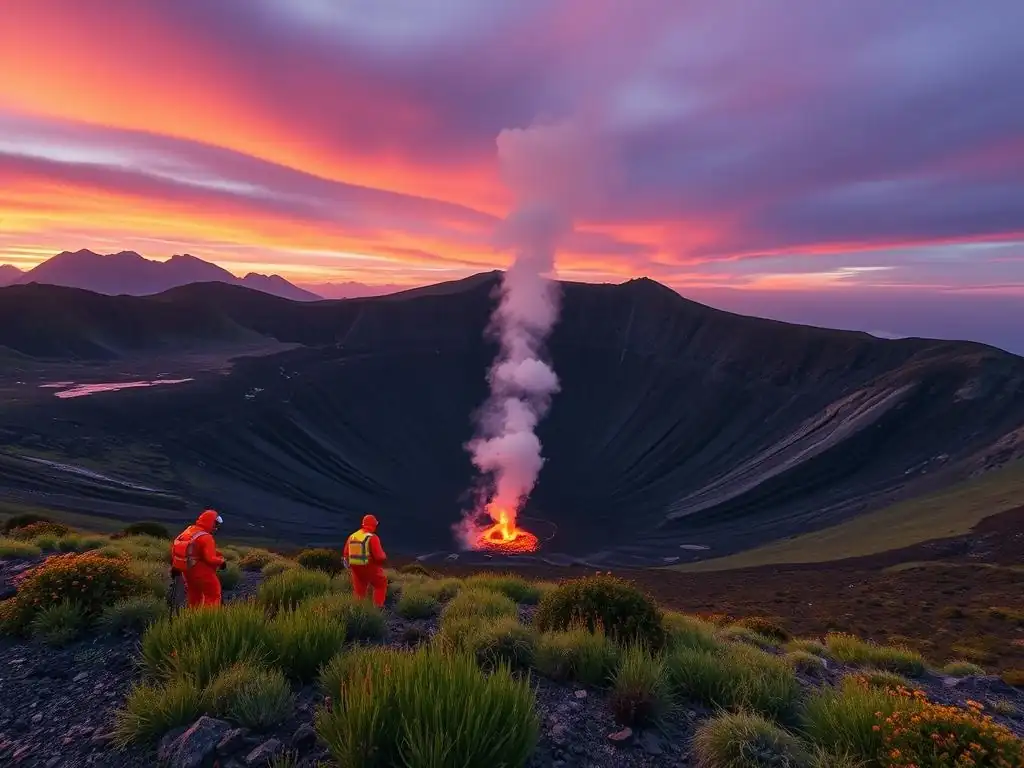
Welcome to Volcano Explorers, where the Earth's raw power takes center stage. Ever wondered what secrets lie buried beneath the ash and fire? This time, we journey back to the monumental eruption of Mount St. Helens. But what if the true story isn't just about destruction, but about groundbreaking discovery? Explore the Mount St. Helens research significance and uncover why, decades later, its legacy continues to reshape our understanding of the volcanic world. The eruption may be over, but the science is just beginning...
- Introduction: The Enduring Legacy of Mount St. Helens
- Understanding the Initial Catastrophe at Mount St. Helens
- The Resurgence of Life: Ecological Succession at Mount St. Helens
- Mount St. Helens: A Natural Laboratory for Volcanic Processes
- Advancements in Volcanology Driven by Mount St. Helens Research
- Mount St. Helens: A Living Classroom for Future Generations of Scientists
- The Cultural and Historical Significance of Mount St. Helens
- Conclusion: The Continuing Importance of Mount St. Helens Research Significance
-
Frequently Asked Questions
- What makes Mount St. Helens a significant focus of scientific research even decades after its eruption?
- How does studying Mount St. Helens help us understand other volcanoes around the world?
- What are some specific ecological recovery processes that scientists are observing at Mount St. Helens?
- What advancements in volcanology have been made thanks to the research conducted at Mount St. Helens?
- How can the lessons learned from Mount St. Helens research benefit communities living near active volcanoes?
- Final Reflection: The Enduring Legacy of Resilience
- Rediscover the Raw Power of Nature!
Introduction: The Enduring Legacy of Mount St. Helens
Remembering the 1980 Eruption: A Pivotal Moment in Volcanology
The eruption of Mount St. Helens on May 18, 1980, was a watershed moment in the field of volcanology, not just in the United States, but globally. At 8:32 a.m. Pacific Daylight Time, a magnitude 5.1 earthquake triggered the largest debris avalanche in recorded history, unleashing a powerful lateral blast that traveled at supersonic speeds.
This event dramatically altered the landscape of southwestern Washington state, reducing the volcano's summit by 1,300 feet and devastating approximately 230 square miles of forest. The eruption, which registered a 5 on the Volcanic Explosivity Index (VEI), was a stark reminder of the raw power of nature and provided scientists with an unprecedented opportunity to study volcanic processes in near real-time.
The 1980 eruption was particularly significant because it was one of the first well-documented lateral blasts from a stratovolcano. Prior to this event, much of volcanology focused on vertical eruptions and caldera collapses. Mount St. Helens demonstrated the destructive potential of lateral explosions, forcing a re-evaluation of volcanic hazard assessments worldwide. The eruption also spurred significant advancements in volcano monitoring techniques, emergency response protocols, and our fundamental understanding of how volcanoes work, making it a pivotal event that continues to shape volcanological research and practice even decades later.
Why Mount St. Helens Remains a Vital Research Site Today
Even four decades after the cataclysmic 1980 eruption, Mount St. Helens remains an unparalleled natural laboratory for scientists across a multitude of disciplines. Its ongoing volcanic activity, coupled with the remarkable ecological recovery of the blast zone, provides continuous research opportunities in volcanology, ecology, geology, and hydrology.
The readily accessible and well-documented eruption history makes it an ideal location for studying long-term geological processes and ecosystem dynamics. Furthermore, the area's designation as the Mount St. Helens National Volcanic Monument ensures that research is prioritized and protected, fostering a sustained scientific investigation that benefits global understanding of volcanic and ecological systems.
The unique combination of dramatic geological change and subsequent rapid ecological rebound at Mount St. Helens offers invaluable insights into natural resilience and recovery processes. Scientists continue to monitor the volcano's activity, studying magma movement, gas emissions, and ground deformation to better understand eruption precursors and improve forecasting capabilities.
The devastated landscape also presents a living laboratory for observing primary succession, the process by which life recolonizes barren terrain. This long-term ecological research is crucial for understanding ecosystem recovery after major disturbances, not only from volcanic eruptions but also from other large-scale environmental events such as wildfires and glacial retreats.
Understanding the Initial Catastrophe at Mount St. Helens
The Devastating Lateral Blast: Immediate Impacts and Aftermath
The lateral blast of Mount St. Helens was the most devastating aspect of the 1980 eruption, responsible for the majority of the immediate destruction and fatalities. Traveling at speeds exceeding 300 miles per hour and reaching temperatures of up to 750 degrees Fahrenheit, the blast flattened forests for miles in a fan-shaped zone north of the volcano.
Within minutes, everything within an eight-mile radius was obliterated, and severe damage extended outwards for up to 19 miles. The force of the blast was so intense that it ripped trees from the ground, stripped bark from standing timber, and propelled ash and debris across the landscape, leaving behind a scene of utter devastation.
The immediate aftermath of the lateral blast was characterized by a landscape transformed into a gray, ashen wasteland. Sixty-three lives were tragically lost, including geologist David A. Johnston, who was monitoring the volcano from a nearby ridge. Millions of animals perished, and vast tracts of old-growth forest were instantly incinerated or flattened. The blast zone was a silent, surreal environment, covered in thick ash and devoid of visible life. The sheer scale of the destruction was initially overwhelming, challenging scientists to understand the complex processes that had unfolded and to begin documenting the unprecedented ecological and geological changes.
Ecological Destruction: Documenting the Initial Loss of Life and Habitat
The ecological consequences of the Mount St. Helens eruption were catastrophic in the short term. The lateral blast and subsequent pyroclastic flows and ashfall effectively sterilized vast areas, destroying entire ecosystems. Scientists estimated that over 1.3 billion animals perished in the blast zone, including mammals, birds, reptiles, amphibians, and countless invertebrates. The once-lush forests, teeming with wildlife, were reduced to a barren, ash-covered expanse. Spirit Lake, a pristine mountain lake near the volcano, was inundated with debris and volcanic material, drastically altering its water chemistry and aquatic life.
Beyond the immediate fatalities, the eruption destroyed critical habitats and disrupted ecological processes across a wide region. The thick blanket of volcanic ash smothered vegetation, contaminated water sources, and altered soil properties. The loss of mature forests had cascading effects on food webs and nutrient cycles. Early scientific studies focused on documenting the extent of the ecological damage, assessing the impact on different species and habitats, and establishing baseline data for monitoring the long and uncertain process of ecological recovery in the wake of such a profound disturbance.
Geological Changes: Reshaping the Landscape of Southwestern Washington
The 1980 eruption of Mount St. Helens wrought dramatic geological changes across the landscape, fundamentally reshaping the topography and geological features of the region. The massive debris avalanche and lateral blast removed the volcano's summit and carved out a large horseshoe-shaped crater on its north flank. This landslide, the largest in recorded history, deposited vast amounts of rock and debris into the North Fork Toutle River valley, raising the valley floor by hundreds of feet in places. The eruption also triggered pyroclastic flows and surges, which sculpted the landscape with deposits of hot ash, pumice, and volcanic rock.
The eruption significantly altered drainage patterns in the area. The debris avalanche dammed Spirit Lake, raising its water level by approximately 200 feet and creating a new outlet. The eruption also deposited ash and sediment into rivers and streams, impacting water quality and flow regimes. Over time, erosion and deposition processes have continued to modify the landscape, carving new channels and shaping the volcanic deposits. The geological changes at Mount St. Helens provided geologists with a unique opportunity to study rapid landscape evolution and the interplay between volcanic activity, erosion, and depositional processes.
The Resurgence of Life: Ecological Succession at Mount St. Helens

Primary Succession: The Return of Life to a Barren Landscape
Mount St. Helens became a globally significant site for studying primary succession, the ecological process by which life colonizes completely barren environments devoid of soil and previous vegetation. The Pumice Plain, a large area directly north of the volcano covered by thick deposits of pumice and ash from the eruption, represented a near-sterile landscape. Initially, it appeared devoid of life, presenting a stark contrast to the lush forests that had surrounded it before 1980. However, even in this seemingly desolate environment, life began to return remarkably quickly, offering unprecedented insights into the resilience of nature.
The first colonizers of the Pumice Plain were often microscopic organisms like bacteria and fungi, along with wind-dispersed seeds and spores. These pioneer species played a crucial role in initiating soil formation and nutrient cycling, gradually making the environment more hospitable for other life forms.
Scientists were astounded to observe the emergence of plants and animals within just a few years of the eruption, demonstrating the remarkable capacity of ecosystems to recover even from extreme disturbances. Mount St. Helens provided a natural laboratory to observe and document the stages of primary succession in detail, from the initial colonization by pioneer species to the development of more complex plant and animal communities.
Studying Plant and Animal Colonization: Key Insights into Ecosystem Recovery
The rapid and diverse colonization of Mount St. Helens by plants and animals has yielded crucial insights into the mechanisms of ecosystem recovery. Scientists have meticulously documented the arrival and establishment of various species, tracking their interactions and their roles in shaping the recovering ecosystem. Pocket gophers, surprisingly, emerged as key ecosystem engineers, their burrowing activities mixing soil, aerating the ground, and creating microhabitats that facilitated plant growth. Wind-dispersed seeds of plants like fireweed and pearly everlasting were among the early plant colonizers, quickly establishing themselves in the nutrient-poor ash and pumice.
The return of animal life was equally remarkable. Insects, spiders, and other invertebrates were among the first to reappear, followed by birds and mammals. Animals played a vital role in seed dispersal, pollination, and nutrient cycling, accelerating the pace of ecological succession. Studies at Mount St. Helens have highlighted the importance of dispersal mechanisms, species interactions, and environmental heterogeneity in driving ecosystem recovery. The research has also underscored the concept of ecological resilience, demonstrating that even severely disturbed ecosystems can exhibit a remarkable capacity to reorganize and regenerate.
Long-Term Ecological Studies: Decades of Data on Resilience
Mount St. Helens is unique in offering decades of continuous ecological data following a major volcanic eruption. Long-term monitoring programs, initiated shortly after the 1980 event, have provided invaluable insights into the trajectory of ecosystem recovery over time. Researchers have tracked changes in plant communities, animal populations, soil development, and nutrient cycling, creating a rich dataset that spans decades. This long-term perspective is essential for understanding the complex and often slow processes of ecological succession and ecosystem development.
Decades of research at Mount St. Helens have revealed that ecological recovery is not a linear process but rather a dynamic and complex one, characterized by periods of rapid change and slower, more gradual development. The long-term studies have demonstrated the importance of both biotic and abiotic factors in shaping ecosystem trajectory. They have also highlighted the role of chance events and stochastic processes in influencing the specific pathways of recovery. The ongoing long-term ecological research at Mount St. Helens continues to provide valuable lessons about ecosystem resilience, recovery, and the long-term consequences of large-scale natural disturbances.
Mount St. Helens: A Natural Laboratory for Volcanic Processes
Monitoring Volcanic Activity: Understanding Magma Movement and Gas Emissions
Mount St. Helens remains an active volcano and a crucial site for monitoring volcanic activity and improving our understanding of subsurface magmatic processes. The volcano is equipped with a sophisticated network of monitoring instruments, including seismometers, GPS stations, and gas sensors, which continuously track ground deformation, earthquake activity, and gas emissions. Data from these instruments provide valuable insights into the movement of magma beneath the surface, the build-up of pressure within the volcanic system, and the potential for future eruptions.
Continuous monitoring at Mount St. Helens has significantly advanced our ability to detect subtle changes in volcanic behavior that may precede eruptions. Scientists analyze seismic signals to track the movement of magma and identify patterns that might indicate an increased risk of eruption. Gas emissions, particularly sulfur dioxide (SO2) and carbon dioxide (CO2), are carefully measured to assess the degassing of magma and changes in volcanic activity.
Ground deformation measurements, using GPS and other techniques, reveal swelling or shrinking of the volcano, which can also be indicative of magma movement. The comprehensive monitoring data from Mount St. Helens contributes to a better understanding of volcanic unrest and improves eruption forecasting capabilities.
Studying Lahars and Pyroclastic Flows: Improving Hazard Assessment
Mount St. Helens is an ideal location for studying lahars (volcanic mudflows) and pyroclastic flows, two of the most dangerous volcanic hazards. The 1980 eruption generated both lahars and pyroclastic flows, leaving behind extensive deposits that provide valuable information about their formation, flow dynamics, and destructive potential. Scientists study these deposits to reconstruct past events, understand the factors that control lahar and pyroclastic flow behavior, and develop better models for hazard assessment and mitigation.
Research at Mount St. Helens has contributed significantly to our understanding of lahar initiation, flow paths, and inundation zones. By analyzing the characteristics of past lahar deposits, scientists can estimate the size and extent of potential future lahars, which is crucial for hazard mapping and land-use planning in volcanic areas. Similarly, studies of pyroclastic flow deposits have improved our understanding of the dynamics of these hot, fast-moving flows of gas and volcanic debris. This research is essential for developing strategies to reduce the risks posed by lahars and pyroclastic flows to communities living near active volcanoes worldwide.
Geochemical Analysis: Unlocking Secrets of the Earth's Interior
Geochemical analysis of volcanic rocks and gases from Mount St. Helens provides a window into the Earth's interior, allowing scientists to study the composition and processes occurring deep beneath the volcano. By analyzing the chemical and isotopic composition of erupted materials, researchers can gain insights into the origin of magma, the processes of magma generation and evolution within the Earth's crust and mantle, and the plumbing system that feeds volcanic eruptions.
Geochemical studies at Mount St. Helens have revealed important details about the source of its magma, which is derived from the subduction of the Juan de Fuca plate beneath the North American plate. Analysis of trace elements and isotopes in volcanic rocks provides clues about the melting processes in the mantle wedge above the subducting plate and the pathways magma takes as it ascends to the surface. Geochemical monitoring of volcanic gases also provides real-time information about changes in magma composition and degassing behavior, which can be valuable for eruption forecasting and understanding the dynamics of the volcanic system.
Advancements in Volcanology Driven by Mount St. Helens Research
Improved Monitoring Techniques: Early Warning Systems and Real-Time Data
The 1980 eruption of Mount St. Helens spurred significant advancements in volcano monitoring techniques, leading to the development of more sophisticated early warning systems and real-time data acquisition capabilities. The eruption highlighted the need for improved monitoring networks and faster data analysis to provide timely warnings of volcanic hazards. In response, volcanologists developed and implemented new technologies and methodologies for monitoring ground deformation, seismic activity, gas emissions, and other volcanic parameters.
Modern volcano monitoring networks now incorporate a range of instruments, including high-precision GPS, advanced seismometers, satellite-based radar interferometry (InSAR), and sophisticated gas analyzers. Data from these instruments are often transmitted in real-time to volcano observatories, where they are analyzed by computer algorithms and expert volcanologists. The rapid data acquisition and analysis capabilities enable faster detection of volcanic unrest and more timely warnings to at-risk communities. The lessons learned from Mount St. Helens have been instrumental in shaping modern volcano monitoring practices worldwide, improving the safety of populations living near active volcanoes.
Enhanced Understanding of Eruption Dynamics: Modeling and Prediction
Research at Mount St. Helens has significantly enhanced our understanding of eruption dynamics, leading to improvements in volcanic eruption modeling and prediction capabilities. The well-documented 1980 eruption, and subsequent smaller eruptions, provided valuable datasets for testing and refining models of volcanic processes, including magma ascent, fragmentation, and dispersal of volcanic ash and gas. Scientists have used numerical models and computational simulations to simulate different types of volcanic eruptions and to understand the factors that control their intensity and impact.
The detailed observations and data collected at Mount St. Helens have been used to validate and improve eruption forecasting models. These models can be used to assess volcanic hazards, predict the potential impact of future eruptions, and inform emergency response planning. Advances in eruption modeling have also improved our understanding of complex volcanic phenomena, such as lateral blasts, pyroclastic flows, and ash cloud dispersal. The ongoing research at Mount St. Helens continues to contribute to the development of more accurate and reliable eruption forecasting tools, enhancing our ability to anticipate and prepare for future volcanic events.
New Approaches to Volcanic Hazard Mitigation: Protecting Communities
The experiences at Mount St. Helens have led to new approaches in volcanic hazard mitigation and strategies for protecting communities living near active volcanoes. The eruption highlighted the importance of effective hazard communication, emergency preparedness, and land-use planning in reducing volcanic risk. Lessons learned from the 1980 event have been applied to volcanic hazard mitigation efforts around the world, informing policies and practices aimed at minimizing the impact of future eruptions.
Volcanic hazard mitigation strategies now emphasize community education and public awareness programs to ensure that residents understand volcanic risks and know how to respond during an eruption. Emergency management agencies have developed evacuation plans and early warning systems to facilitate timely evacuations when necessary. Land-use planning policies in volcanic areas are increasingly incorporating volcanic hazard assessments to restrict development in high-risk zones and to guide infrastructure planning. The ongoing research and monitoring at Mount St. Helens continue to inform and refine volcanic hazard mitigation practices, contributing to safer and more resilient communities in volcanic regions globally.
Mount St. Helens: A Living Classroom for Future Generations of Scientists
Educational Opportunities: Field Studies and Research Programs
Mount St. Helens serves as an exceptional outdoor classroom, offering unparalleled educational opportunities for students and researchers in a variety of scientific disciplines. The Mount St. Helens National Volcanic Monument provides access to diverse volcanic landscapes and recovering ecosystems, making it an ideal location for field studies and research programs. Universities, colleges, and research institutions conduct field courses, workshops, and research projects at Mount St. Helens, providing hands-on learning experiences for students and advancing scientific knowledge.
Educational programs at Mount St. Helens cover a wide range of topics, including volcanology, geology, ecology, hydrology, and environmental science. Students can learn about volcanic processes firsthand by observing volcanic landforms, studying volcanic deposits, and monitoring volcanic activity. They can also investigate ecological succession by studying plant and animal communities in the recovering blast zone. Field studies at Mount St. Helens provide invaluable experiential learning opportunities, inspiring the next generation of scientists and fostering a deeper understanding of natural processes.
Inspiring Scientific Curiosity: The Power of a Natural Disaster
The dramatic story of Mount St. Helens, from its cataclysmic eruption to its remarkable recovery, has a powerful ability to inspire scientific curiosity and ignite a passion for science in people of all ages. The volcano serves as a compelling example of the Earth's dynamic processes and the resilience of nature. The visual impact of the volcanic landscape, combined with the scientific discoveries made at Mount St. Helens, can spark an interest in science and encourage young people to pursue careers in STEM fields.
Mount St. Helens demonstrates that even from devastation, there can be opportunities for learning and discovery. The ongoing scientific research at the volcano highlights the importance of scientific inquiry in understanding natural hazards and environmental change. By studying Mount St. Helens, students and the public can gain a greater appreciation for the power of science to unravel complex natural phenomena and to contribute to a safer and more sustainable world. The story of Mount St. Helens is a testament to the enduring human curiosity and our drive to understand the world around us.
The Role of Pocket Gophers in Ecosystem Engineering
The unassuming pocket gopher has emerged as a surprisingly significant ecosystem engineer at Mount St. Helens, playing a crucial role in the recovery of the blast zone. These burrowing rodents, initially overlooked in the aftermath of the eruption, have been found to have a profound impact on soil development, plant colonization, and nutrient cycling. Their burrowing activities mix the volcanic ash and pumice deposits, aerating the soil and creating pathways for water and nutrients to penetrate deeper into the ground.
Pocket gopher burrows also provide important microhabitats for plants and other animals. The disturbed soil around burrows creates favorable conditions for seed germination and seedling establishment. Gopher tunnels can also serve as refuges for invertebrates and small mammals. By redistributing soil and nutrients, pocket gophers facilitate plant growth and accelerate the pace of ecological succession. Research at Mount St. Helens has highlighted the often-underappreciated role of keystone species and ecosystem engineers in driving ecosystem recovery and resilience.
The Cultural and Historical Significance of Mount St. Helens
Remembering the Victims: Honoring the Memory of Those Lost
Mount St. Helens holds significant cultural and historical importance, not only for the scientific community but also for the local communities and the nation. The 1980 eruption, while a major scientific event, was also a tragic human event, resulting in the loss of 57 lives. Remembering and honoring the victims is an important aspect of the Mount St. Helens story. Memorials and educational exhibits at the Mount St. Helens National Volcanic Monument serve to commemorate those who perished and to share their stories with visitors.
The stories of those who died in the eruption, including scientists, residents, and visitors, provide a human dimension to the Mount St. Helens narrative. Their lives and experiences underscore the risks associated with living near active volcanoes and the importance of respecting the power of nature. By remembering the victims, we acknowledge the human cost of volcanic eruptions and emphasize the need for preparedness, mitigation, and community resilience in volcanic regions. The memory of those lost serves as a reminder of the power and unpredictability of natural forces and the importance of living in harmony with our environment.
Lessons Learned: Preparedness and Mitigation Strategies
Mount St. Helens has provided invaluable lessons about volcanic hazards, preparedness, and mitigation strategies. The 1980 eruption exposed vulnerabilities in monitoring systems, hazard assessments, and emergency response protocols, leading to significant improvements in these areas. The experiences at Mount St. Helens have shaped volcanic hazard management practices not only in the United States but also globally. The lessons learned have emphasized the need for continuous volcano monitoring, effective hazard communication, robust emergency planning, and community engagement in risk reduction efforts.
The successful response to subsequent volcanic unrest at Mount St. Helens, including minor eruptions in the 2000s, demonstrates the effectiveness of improved monitoring and preparedness strategies. Early warnings and timely evacuations during these events prevented further loss of life and minimized disruption. Mount St. Helens serves as a case study in successful volcanic hazard management, highlighting the importance of investing in science, preparedness, and community resilience to reduce the risks posed by active volcanoes. The ongoing research and monitoring at Mount St. Helens continue to inform and refine best practices in volcanic hazard mitigation worldwide.
Mount St. Helens as a Symbol of Resilience and Renewal
Mount St. Helens has become a powerful symbol of resilience and renewal, both in terms of ecological recovery and human adaptation. The remarkable resurgence of life in the blast zone, from the seemingly barren landscape to the re-establishment of diverse ecosystems, is a testament to the resilience of nature. The human response to the eruption, characterized by scientific inquiry, community rebuilding, and long-term commitment to research and monitoring, also reflects human resilience in the face of natural disaster.
Mount St. Helens National Volcanic Monument stands as a place of both remembrance and hope. It commemorates the destructive power of volcanic eruptions but also celebrates the capacity for recovery and renewal. The volcano serves as a reminder that even after catastrophic events, life can rebound, and communities can rebuild. Mount St. Helens is a symbol of nature's ability to heal and regenerate, and of humanity's capacity to learn, adapt, and thrive in the face of environmental challenges.
Conclusion: The Continuing Importance of Mount St. Helens Research Significance
Mount St. Helens: A Window into the Earth's Power and its Capacity for Renewal
Mount St. Helens remains a cornerstone of volcanological and ecological research, providing an unparalleled window into the Earth's dynamic processes and its remarkable capacity for renewal. The volcano's ongoing activity and the long-term ecological recovery of the blast zone offer continuous opportunities for scientific discovery. Research at Mount St. Helens has not only advanced our understanding of volcanic eruptions and ecosystem dynamics but has also contributed significantly to improved volcanic hazard assessment, monitoring techniques, and mitigation strategies worldwide, underscoring the Mount St. Helens research significance.
The lessons learned from Mount St. Helens are invaluable for communities living near active volcanoes globally. The volcano serves as a natural laboratory for studying fundamental Earth processes, from magma generation deep within the Earth to the surface expression of volcanic eruptions and the subsequent ecological responses. The ongoing research at Mount St. Helens ensures that it will continue to be a vital site for scientific investigation and education for generations to come, furthering our knowledge of our planet and our ability to live sustainably within it.
Further Research Opportunities: Understanding Long-Term Carbon Sequestration
Looking to the future, Mount St. Helens presents exciting research opportunities, particularly in understanding long-term carbon sequestration in volcanic landscapes. Volcanic soils, derived from volcanic ash and rock, are known to be fertile and can play a significant role in carbon storage. The recovering ecosystems at Mount St. Helens offer a unique setting to study the processes of carbon sequestration in volcanic soils and vegetation over decades and centuries.
Investigating carbon cycling and storage in the Mount St. Helens environment can provide valuable insights into the role of volcanic landscapes in the global carbon cycle and their potential for mitigating climate change. Research in this area could explore how different plant communities and soil types in the blast zone contribute to carbon sequestration, and how volcanic disturbances influence long-term carbon storage. Further research into carbon sequestration at Mount St. Helens could contribute to a broader understanding of the Earth's carbon cycle and inform strategies for enhancing natural carbon sinks in volcanic regions and beyond.
Frequently Asked Questions
What makes Mount St. Helens a significant focus of scientific research even decades after its eruption?
The 1980 eruption created a unique natural laboratory. Scientists can study ecosystem recovery and geological processes in real-time. The scale and type of eruption was also a very rare event.
How does studying Mount St. Helens help us understand other volcanoes around the world?
Research provides insights into volcanic hazards and eruption dynamics. The data gathered helps predict future eruptions and improve risk assessment strategies.
What are some specific ecological recovery processes that scientists are observing at Mount St. Helens?
Scientists are observing the re-establishment of plant life and animal populations. They are also studying the succession of species in the disturbed landscape.
What advancements in volcanology have been made thanks to the research conducted at Mount St. Helens?
The research has advanced our understanding of lahar formation and pyroclastic flow behavior. It has also helped refine volcanic monitoring techniques.
How can the lessons learned from Mount St. Helens research benefit communities living near active volcanoes?
The research informs emergency preparedness plans and evacuation strategies. It also helps educate the public about volcanic hazards and how to stay safe.
Final Reflection: The Enduring Legacy of Resilience
The eruption of Mount St. Helens was a moment of profound destruction, but as this article has shown, it also sparked an unparalleled era of scientific discovery. The ongoing research at Mount St. Helens serves as a powerful testament to humanity's capacity to find knowledge and growth even in the face of devastation. It's a reminder that even from the ashes, new life, new understanding, and new possibilities can emerge.
The impact of Mount St. Helens research extends far beyond the immediate vicinity of the volcano. It has shaped our understanding of ecological succession, volcanic processes, and the resilience of life itself. Personally, witnessing the sheer tenacity of nature reclaiming this landscape has been deeply inspiring, reinforcing the importance of long-term scientific inquiry and the power of observation. The greatest glory in living lies not in never falling, but in rising every time we fall.
- Nelson Mandela, a sentiment perfectly mirrored by the re-emergence of life on Mount St. Helens.
As we conclude this exploration of Mount St. Helens research significance, I invite you to consider the lessons learned from this remarkable natural laboratory. How can we apply the principles of resilience, observation, and long-term commitment to our own lives and to the challenges facing our planet? Let the story of Mount St. Helens inspire you to embrace curiosity, to seek understanding in the face of adversity, and to contribute to a future where science and nature work in harmony.
Rediscover the Raw Power of Nature!
Thank you for exploring the enduring mysteries of Mount St. Helens with us. You've gained a glimpse into the incredible resilience of nature and the invaluable lessons scientists continue to uncover within its volcanic landscape. Now, it's time to channel that knowledge into action.
Here are a few ways you can continue your exploration:
- Become a Citizen Scientist: Contribute directly to ongoing research by submitting your own observations of the Mount St. Helens ecosystem through our citizen science portal. This is your chance to make a real difference!
- Share Your "Aha!" Moment: Reflect on the most surprising thing you learned about Mount St. Helens and share it with a friend or on social media using #VolcanoExplorers.
- Plan a (Virtual) Visit: Using online resources like 3D models and panoramic views, virtually explore Mount St. Helens from the comfort of your home. Observe the regrowth, spot the unique formations, and imagine the power that reshaped the landscape.
What small action will YOU take today to better understand our planet's dynamic forces? Let us know in the comments below!