
Mount Fuji's Majesty: Is Japan's Soul Reflected in its Volcano?

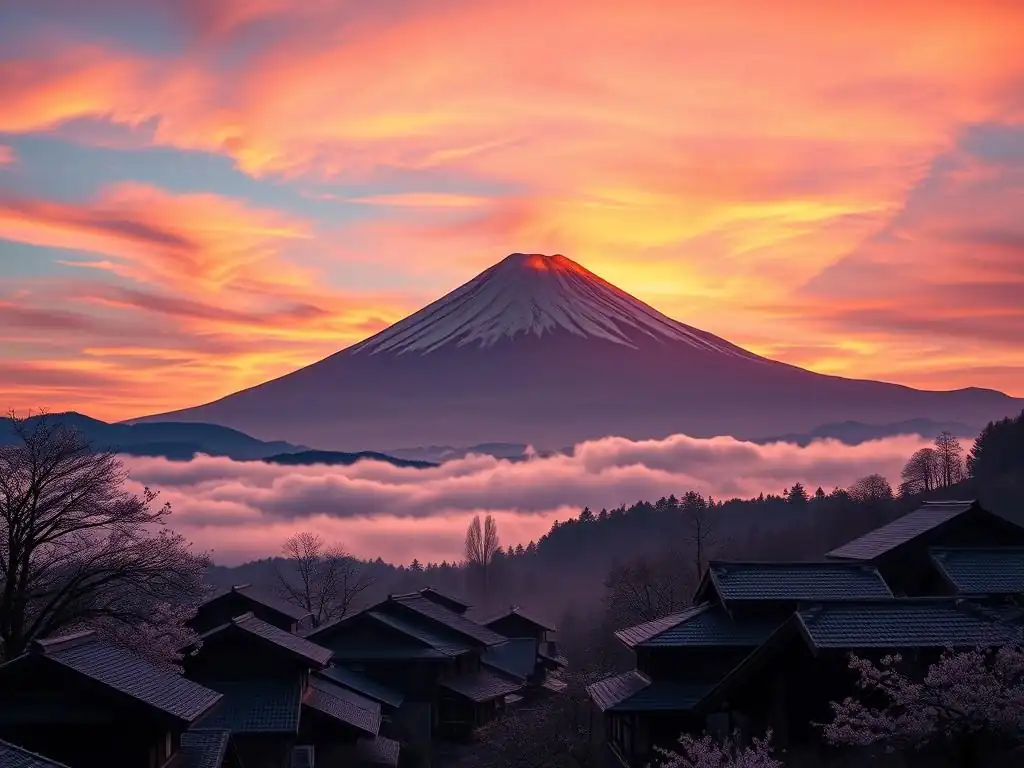
Welcome to Volcano Explorers!
Prepare to be captivated. Beneath the serene beauty of Mount Fuji lies a story far deeper than molten rock. But what if this iconic volcano is more than just a geographical marvel? Join us as we explore the profound cultural significance woven into its slopes, uncovering how this majestic peak became a mirror reflecting the very soul of Japan. Intrigued? The journey begins now...
- Introduction: Unveiling Mount Fuji's Cultural Significance
- Mount Fuji in Japanese Art and Literature: A Symbol of National Identity
- Mount Fuji and Shinto: Sacred Mountain, Spiritual Center
- Mount Fuji and Buddhism: A Place of Enlightenment
- Mount Fuji's Influence on Japanese Tradition and Customs
- Mount Fuji and National Identity: A Unifying Symbol
- Preserving Mount Fuji's Cultural Heritage for Future Generations
- Conclusion: Mount Fuji - The Soul of Japan Embodied in a Volcano
-
Frequently Asked Questions
- What is the primary focus of VolcanoExplorers.org regarding volcanoes?
- What types of information can I find about Mount Fuji on the website?
- What does the website offer for people living near active volcanoes?
- Does VolcanoExplorers.org only focus on the scientific aspects of volcanoes?
- Why is Mount Fuji considered so important in Japanese culture?
- Final Reflection: Echoes of Fuji's Enduring Spirit
- Ignite Your Inner Explorer: Take Action!
Introduction: Unveiling Mount Fuji's Cultural Significance
Exploring the Enduring Allure of Mount Fuji
Mount Fuji, or Fuji-san as it's respectfully known in Japan, is more than just a mountain; it's a profound symbol deeply embedded in the Japanese psyche. Its perfectly symmetrical cone, often capped with snow, has captivated artists, poets, and pilgrims for centuries. The mountain's allure stems not only from its physical beauty but also from its volcanic nature, which evokes a sense of both awe and respect.
Rising to a height of 3,776 meters (12,389 feet), Mount Fuji is Japan's tallest peak and dominates the landscape from many vantage points in central Japan. This imposing presence has made it a natural focal point, drawing people to its slopes and shaping their cultural and spiritual beliefs.
The enduring appeal of Mount Fuji is evident in the millions of visitors it attracts annually. Beyond the hikers seeking to conquer its summit, countless others come to admire its beauty from afar, whether from the shores of the Fuji Five Lakes or the bustling metropolis of Tokyo. This consistent fascination underscores the mountain's unique position in the Japanese cultural landscape. It's a place of pilgrimage, artistic inspiration, and national pride. Understanding the enduring allure of Mount Fuji requires delving into its multifaceted cultural significance, exploring how it has become intertwined with Japan's identity and traditions over millennia.
Mount Fuji: More Than Just a Volcano - A Cultural Icon
While geologically classified as an active stratovolcano, Mount Fuji transcends its volcanic identity to become a powerful cultural icon. It is not merely a geographical feature but a symbol laden with meaning, representing Japan's spirit and aesthetic ideals. For the Japanese people, Mount Fuji embodies concepts like beauty, strength, and the sublime. Its iconic shape is instantly recognizable worldwide as a symbol of Japan itself, appearing on everything from postcards and advertisements to the official emblem of the 2020 Tokyo Olympics.
The mountain's cultural resonance goes far beyond its aesthetic appeal. It is deeply woven into the fabric of Japanese society, influencing art, literature, religion, and even daily life. From ancient Shinto beliefs that venerate it as a sacred deity to Buddhist philosophies that see it as a representation of impermanence, Mount Fuji has served as a spiritual anchor for generations.
Its image permeates Japanese culture, reflecting a deep connection between the people and their natural environment. Exploring this cultural dimension reveals how Mount Fuji has become more than just a volcano; it has evolved into a cornerstone of Japanese national identity.
Mount Fuji in Japanese Art and Literature: A Symbol of National Identity
Mount Fuji's Ubiquitous Presence in Ukiyo-e Art
Mount Fuji's image is perhaps most famously immortalized in ukiyo-e art, the woodblock prints that flourished during the Edo period (1603-1868). Artists like Hokusai and Hiroshige elevated Mount Fuji to an iconic status through their masterpieces. Hokusai's "Thirty-six Views of Mount Fuji," particularly "The Great Wave off Kanagawa" and "Fine Wind, Clear Morning (Red Fuji)," are globally recognized images, showcasing the mountain from diverse perspectives and in varying weather conditions. These prints weren't just landscapes; they were artistic explorations of the mountain's multifaceted beauty and its integration into the lives of ordinary Japanese people.
Hiroshige, another master of ukiyo-e, also frequently depicted Mount Fuji in his series "The Fifty-three Stations of the Tōkaidō" and "One Hundred Famous Views of Edo." His works often presented Mount Fuji as a backdrop to scenes of daily life, seamlessly blending the majestic mountain with the human element. The sheer volume of ukiyo-e prints featuring Mount Fuji testifies to its immense popularity and its significance as a national symbol even during the Edo period.
These artworks not only captured the physical form of the volcano but also contributed to shaping and solidifying its cultural significance in the collective Japanese consciousness. The accessibility and widespread distribution of ukiyo-e prints ensured that the image of Mount Fuji became deeply ingrained in the visual culture of Japan.
Literary Depictions: Basho's Haiku and Soseki's Novel "Kusamakura"
Beyond visual arts, Mount Fuji has been a recurring motif in Japanese literature, from classical poetry to modern novels. Matsuo Basho, the renowned haiku poet of the Edo period, frequently invoked Mount Fuji in his verses. While not always explicitly named, the mountain's presence is often implied in his poems celebrating nature and the Japanese landscape. For example, while debated, some interpret haiku like "Splitting apart, / The darkness of the mountain, / A cuckoo's voice" as being inspired by the dawn breaking over Mount Fuji, capturing its imposing presence and the sense of awe it inspires.
In later periods, Mount Fuji continued to inspire literary works. Natsume Soseki, a prominent novelist of the Meiji era, featured Mount Fuji in his novel "Kusamakura" (The Grass Pillow). The novel, written in 1906, follows an artist who seeks refuge in a mountain village and reflects on art, life, and beauty, with Mount Fuji serving as a constant, majestic presence in the backdrop.
Soseki's depiction of Mount Fuji is less about its physical grandeur and more about its symbolic resonance, using it as a mirror reflecting the protagonist's inner thoughts and artistic sensibilities. These literary examples, spanning centuries, demonstrate the enduring power of Mount Fuji to evoke emotions and inspire creative expression, further cementing its position as a cultural touchstone in Japan.
How Mount Fuji Shapes the Japanese Aesthetic Sense
Mount Fuji's symmetrical and serene beauty has profoundly influenced the Japanese aesthetic sense, often characterized by concepts like wabi-sabi and mono no aware. Wabi-sabi, which finds beauty in imperfection and impermanence, might seem contradictory to Mount Fuji's seemingly perfect form. However, the mountain's volcanic nature, a force of creation and destruction, and its ever-changing appearance with seasons and weather, embodies the essence of impermanence. The fleeting moments of seeing Mount Fuji perfectly framed or illuminated by a sunrise are treasured precisely because they are transient.
Mono no aware, the pathos of things, or a sensitivity to ephemerality, is also deeply connected to Mount Fuji. The mountain’s snow-capped peak melts and reforms annually, a constant cycle of change that mirrors the cycles of life and nature. This awareness of impermanence, coupled with the mountain's sublime beauty, fosters a deep appreciation for the present moment and the delicate balance of nature.
The clean lines and minimalist aesthetic often found in Japanese art and design can be seen as reflections of Mount Fuji's pure and uncluttered silhouette against the sky. Therefore, Mount Fuji is not just a subject of art but also a shaper of the very aesthetic principles that underpin Japanese artistic and cultural expression, influencing how beauty is perceived and appreciated in Japan.
Mount Fuji and Shinto: Sacred Mountain, Spiritual Center
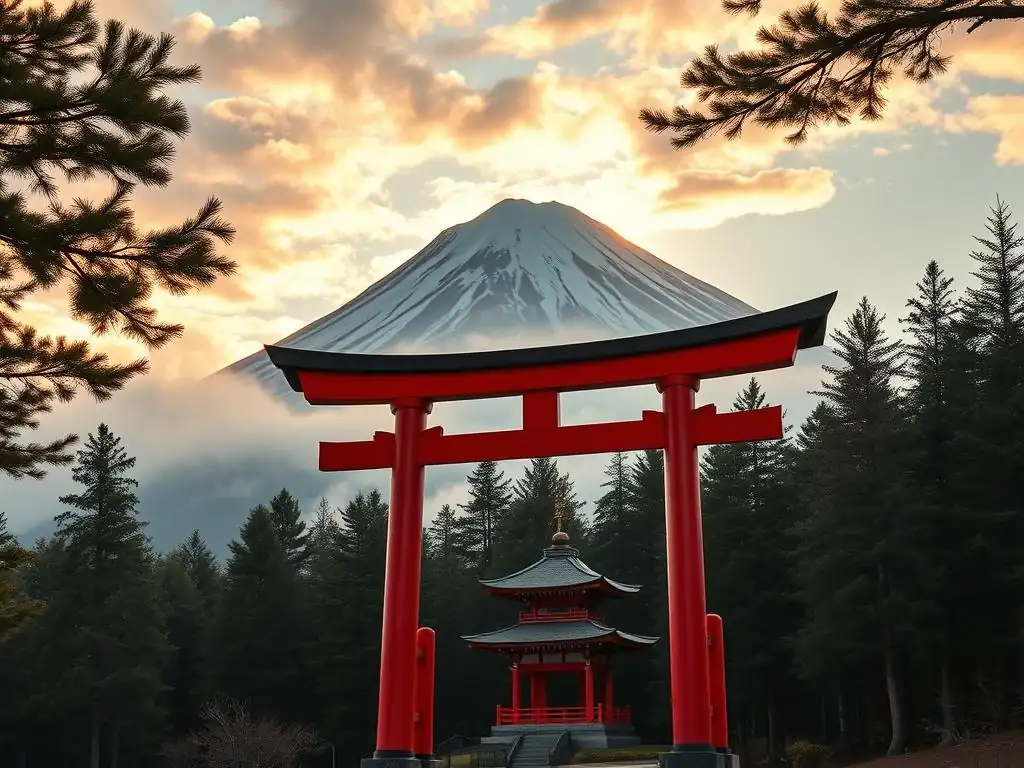
Mount Fuji as a Kami: The Mountain's Divine Essence
In Shinto, the indigenous religion of Japan, Mount Fuji is revered as a sacred kami, a divine spirit embodying natural forces. Long before Buddhism arrived in Japan, Mount Fuji was recognized as a dwelling place of deities. Konohanasakuya-hime, the Shinto goddess of cherry blossoms and Mount Fuji, is particularly associated with the volcano.
She is believed to reside on the mountain and is often invoked for safe childbirth and prosperous harvests, linking the mountain to fertility and life-giving forces. The very volcanic energy of Mount Fuji, capable of both creation and destruction, was seen as a manifestation of divine power.
The veneration of Mount Fuji as a kami is not merely symbolic; it translates into tangible religious practices. Ancient Shinto shrines were established at the base and on the slopes of Mount Fuji to honor and appease the mountain deity. These shrines served as focal points for worship and rituals, reinforcing the mountain's sacred status.
Even today, many Japanese people, regardless of their personal religious affiliations, hold a deep respect for Mount Fuji as a spiritual entity. This enduring reverence underscores the powerful role of Shinto beliefs in shaping the cultural significance of Mount Fuji, transforming a natural wonder into a sacred landscape imbued with divine essence.
Pilgrimages to Mount Fuji: A Journey of Spiritual Renewal
The sacred nature of Mount Fuji has made it a traditional site for pilgrimages for centuries. Ascending Mount Fuji was, and to some extent still is, considered a spiritual journey, a means of purification and connection with the divine. Historically, pilgrimages were undertaken by Shinto priests and devout followers, often clad in white robes, symbolizing purity and spiritual intent. These pilgrimages were not merely physical endeavors but deeply spiritual experiences, involving prayers, rituals, and contemplation amidst the awe-inspiring natural environment.
While the nature of pilgrimage has evolved over time, the tradition of climbing Mount Fuji for spiritual reasons persists. During the official climbing season in July and August, many visitors, both Japanese and international, undertake the ascent, some with explicit religious intentions, others seeking a sense of personal accomplishment and connection with nature.
The climb itself is often seen as a metaphor for life's journey, with the summit representing enlightenment or spiritual fulfillment. Even for non-religious climbers, the experience of reaching the summit and witnessing the sunrise, known as Goraiko, can be profoundly moving and spiritually significant, reflecting the enduring legacy of Mount Fuji as a place of pilgrimage and spiritual renewal.
Shinto Rituals and Mount Fuji: Sengen Shrine Rituals and their Meaning
Sengen shrines, dedicated to Konohanasakuya-hime, are central to Shinto rituals associated with Mount Fuji. The most prominent is Fujisan Hongū Sengen Taisha, located at the base of Mount Fuji in Fujinomiya, Shizuoka Prefecture. This grand shrine serves as the head shrine of all Sengen shrines across Japan and plays a crucial role in perpetuating Shinto traditions related to Mount Fuji. Annual festivals and rituals are conducted here to honor Konohanasakuya-hime and pray for the mountain's benevolence, ensuring good harvests and protection from volcanic eruptions.
One significant ritual is the Oyamabiraki, the mountain opening ceremony, marking the start of the official climbing season. This Shinto ceremony involves prayers and blessings for the safety of climbers and the mountain's continued tranquility. Throughout the year, various other rituals are performed at Sengen shrines, often involving music, dance, and offerings to the kami.
These rituals are not static historical reenactments but living traditions that continue to connect contemporary Japanese society with the ancient spiritual significance of Mount Fuji. They reinforce the mountain's role as a sacred space within Shinto cosmology and ensure the ongoing veneration of Konohanasakuya-hime, the divine embodiment of Mount Fuji.
Mount Fuji and Buddhism: A Place of Enlightenment
Buddhist Temples and Mount Fuji: Kakugon-ji Temple and its Connection to the Volcano
While primarily a Shinto sacred site, Mount Fuji also holds significance in Japanese Buddhism. Over centuries, Buddhism and Shinto have often coexisted and syncretized in Japan, and Mount Fuji became a site where both religious traditions intertwined. Buddhist temples were established around Mount Fuji, recognizing its spiritual power and integrating it into Buddhist cosmology.
Kakugon-ji Temple, also known as Fujidera, is a notable example, located on the slopes of Mount Fuji in Yamanashi Prefecture. Founded in the early Heian period (794-1185), Kakugon-ji Temple is dedicated to Yakushi Nyorai, the Buddha of healing, and has historically served as a significant center for Buddhist practice related to Mount Fuji.
Kakugon-ji Temple's location offers breathtaking views of Mount Fuji, fostering a sense of tranquility and spiritual contemplation. The temple's history is intertwined with the mountain's spiritual narrative, attracting Buddhist pilgrims and contributing to the mountain's multifaceted religious significance. Other temples around Mount Fuji, such as Seiganto-ji Temple in Nachi Falls (though geographically distant, it shares similar syncretic traditions), also demonstrate the integration of mountain worship into Buddhist practice. These temples highlight the way Mount Fuji transcended religious boundaries, becoming a shared sacred space for both Shinto and Buddhist devotees, reflecting the religious landscape of Japan.
Mount Fuji as a Symbol of Impermanence in Buddhist Philosophy
In Buddhist philosophy, impermanence ( anicca in Pali, mujo in Japanese) is a central concept, emphasizing the transient nature of all things. Mount Fuji, despite its seemingly permanent and majestic appearance, can be interpreted as a powerful symbol of impermanence within this Buddhist framework. Its volcanic nature reminds us of constant change and the potential for dramatic transformation. The snow-capped peak melts and reforms with the seasons, and even the mountain itself, geologically speaking, is subject to erosion and eventual change over vast timescales.
Buddhist practitioners often meditate on natural phenomena to grasp the concept of impermanence, and Mount Fuji provides a compelling visual and symbolic aid for this practice. Contemplating the mountain's grandeur alongside its inherent impermanence can foster a deeper understanding of Buddhist teachings on detachment and the acceptance of change. The mountain’s beauty is all the more poignant because it is not eternal, mirroring the fleeting beauty of life itself. Thus, Mount Fuji, beyond its aesthetic and religious significance, serves as a potent reminder of the Buddhist principle of impermanence, offering a natural metaphor for profound philosophical concepts.
The Fusion of Shinto and Buddhist Beliefs on Mount Fuji
The religious landscape of Mount Fuji is characterized by a fascinating fusion of Shinto and Buddhist beliefs, a phenomenon common throughout Japanese religious history. This syncretism, known as Shinbutsu-shūgō, saw Shinto kami and Buddhist deities often worshipped together, and sacred sites like Mount Fuji became centers where these traditions blended seamlessly. Sengen shrines, primarily Shinto, incorporated Buddhist elements, and Buddhist temples acknowledged the Shinto kami of Mount Fuji, creating a rich tapestry of religious practices.
This fusion is evident in the way Mount Fuji is perceived and venerated. It is simultaneously a dwelling place of Shinto kami like Konohanasakuya-hime and a place conducive to Buddhist meditation and contemplation on impermanence. Pilgrimages to Mount Fuji often incorporated elements from both Shinto and Buddhist traditions, reflecting a holistic spiritual approach. This syncretic nature of Mount Fuji's religious significance underscores the fluidity and inclusiveness of Japanese religious practices, where different belief systems often coexist and enrich one another, creating a unique spiritual environment centered around the iconic volcano.
Mount Fuji's Influence on Japanese Tradition and Customs
Mount Fuji in Festivals and Celebrations: Fuji Five Lakes Fireworks Festival
Mount Fuji's cultural significance extends into various Japanese traditions and customs, prominently featuring in festivals and celebrations. The Fuji Five Lakes Fireworks Festival, held annually in August around Lake Kawaguchiko, is a spectacular example. This festival is not just a fireworks display; it's a celebration of Mount Fuji and the surrounding natural beauty. Fireworks are launched over the lake, with Mount Fuji providing a breathtaking backdrop, creating a visual symphony that blends natural majesty with human artistry.
The festival attracts hundreds of thousands of visitors each year, highlighting the enduring appeal of Mount Fuji as a focal point for communal celebrations. Beyond the visual spectacle, the Fuji Five Lakes Fireworks Festival often incorporates traditional Japanese music and food stalls, further embedding it within local customs and cultural expressions.
Many other smaller local festivals around the base of Mount Fuji also feature the mountain prominently, reinforcing its role as a symbol of community and regional identity. These festivals demonstrate how Mount Fuji is not just a distant icon but an active participant in the cultural life of the communities that surround it, bringing people together in celebration and appreciation of their shared heritage.
Mount Fuji's Role in Japanese Folklore and Mythology
Japanese folklore and mythology are rich with stories and legends that feature Mount Fuji, further amplifying its cultural significance. One popular folktale recounts the creation of Mount Fuji, often attributed to the earth being split open during an earthquake, contrasting with the formation of other mountains created by piling up earth. These myths often imbue Mount Fuji with supernatural origins and powers, solidifying its status as a special and revered place. Legends also speak of mythical creatures and spirits inhabiting Mount Fuji, adding layers of mystery and enchantment to the mountain's image.
Another prominent myth involves Princess Konohanasakuya-hime, whose fiery birth is sometimes linked to the volcanic nature of Mount Fuji. These mythological narratives are not mere stories; they are integral to understanding the cultural perception of Mount Fuji. They transmit cultural values, explain natural phenomena in symbolic terms, and deepen the emotional connection between the Japanese people and their iconic volcano. The enduring power of these folktales and myths in popular culture ensures that Mount Fuji's cultural significance is not just rooted in history and religion but also actively perpetuated through storytelling and shared cultural narratives.
Mount Fuji's Impact on Japanese Values: Harmony, Respect for Nature, and Perseverance
Mount Fuji's presence has subtly yet profoundly influenced Japanese values, particularly the emphasis on harmony, respect for nature, and perseverance. The symmetrical beauty of Mount Fuji is often seen as embodying the ideal of harmony and balance, qualities highly valued in Japanese culture. Its majestic and serene presence fosters a sense of tranquility and inspires a reverence for the natural world. This respect for nature is a cornerstone of Japanese culture, deeply rooted in Shinto and Buddhist beliefs that see nature as sacred and interconnected.
The challenging climb to the summit of Mount Fuji, often undertaken as a symbolic act of pilgrimage or personal growth, can be seen as fostering the value of perseverance ( ganbari in Japanese). The arduous ascent requires determination and resilience, qualities highly prized in Japanese society. The shared experience of climbing Mount Fuji, whether individually or in groups, can also reinforce a sense of community and collective effort. Therefore, Mount Fuji, beyond its symbolic representations, acts as a silent teacher, embodying and promoting key Japanese values that have shaped the nation's cultural ethos for generations.
Mount Fuji and National Identity: A Unifying Symbol
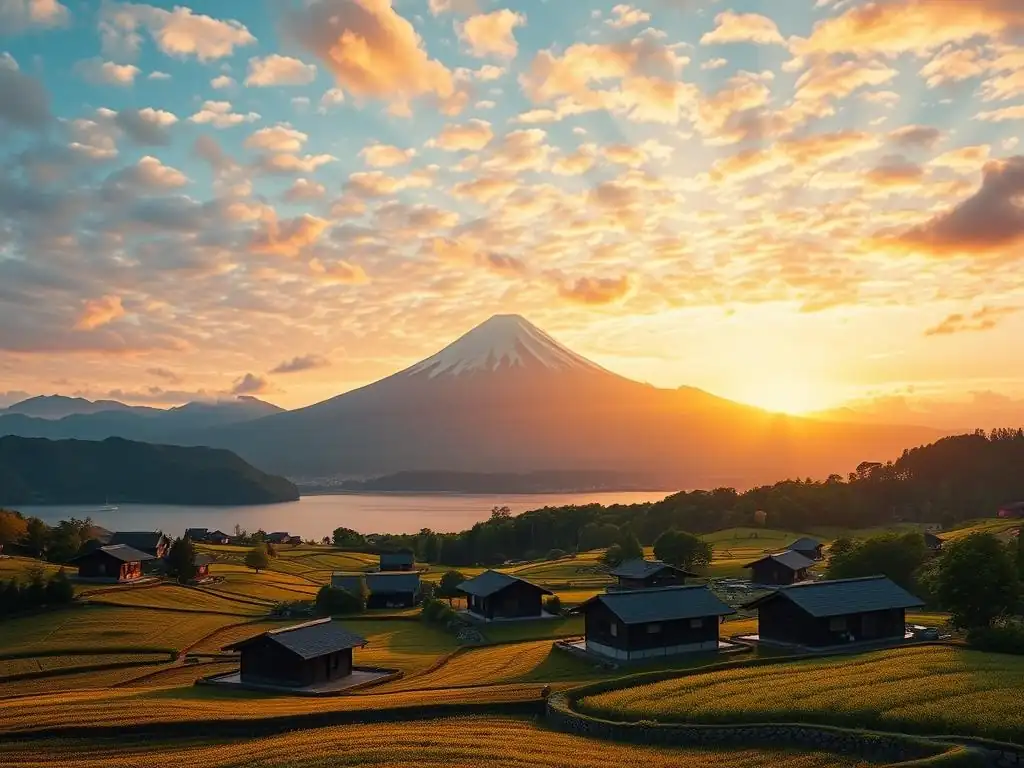
Mount Fuji as a Representation of Japanese Resilience
Mount Fuji serves as a potent symbol of Japanese resilience, reflecting the nation's ability to overcome challenges and endure through adversity. As an active volcano, Mount Fuji embodies both destructive and creative forces of nature, mirroring Japan's own history of experiencing natural disasters and subsequent recovery. The mountain’s enduring presence, despite volcanic activity and the passage of time, symbolizes steadfastness and unwavering strength. This representation of resilience is particularly significant in a country prone to earthquakes, typhoons, and other natural calamities.
The image of Mount Fuji has been invoked during times of national crisis and recovery, serving as a visual reminder of Japan's inherent strength and ability to rebuild. Following events like the Great Hanshin earthquake in 1995 and the Great East Japan earthquake and tsunami in 2011, images of Mount Fuji often appeared in media and public discourse, acting as a symbol of hope and national unity.
This symbolic association of Mount Fuji with resilience reinforces its role as a unifying national icon, representing a core aspect of Japanese identity – the ability to persevere and emerge stronger from adversity.
Mount Fuji in Popular Culture: Reinforcing National Pride
Mount Fuji's image is ubiquitous in Japanese popular culture, continuously reinforcing national pride and identity across generations. It appears in anime, manga, films, television dramas, advertisements, and countless everyday products, from food packaging to clothing designs. This constant visual presence ensures that Mount Fuji remains a prominent symbol in the collective consciousness, particularly among younger generations who may have less direct exposure to traditional religious or artistic representations. Its depiction in modern media often emphasizes its beauty, majesty, and iconic status as "the symbol of Japan."
The use of Mount Fuji in popular culture is not merely decorative; it actively contributes to shaping and reinforcing national pride. By associating Mount Fuji with positive imagery and narratives, popular culture strengthens its symbolic value as a national emblem. During national sporting events or celebrations, Mount Fuji often features prominently in visual displays and promotional materials, further solidifying its link to national identity and collective pride. This continuous exposure in popular culture ensures that Mount Fuji remains a vibrant and relevant symbol of Japan in the contemporary world.
The Ongoing Significance of Mount Fuji in Modern Japan
Despite rapid modernization and globalization, Mount Fuji retains its profound significance in modern Japan. It continues to be a source of national pride, artistic inspiration, and spiritual connection. While traditional pilgrimages may have evolved, the mountain still attracts millions of visitors annually, demonstrating its enduring appeal. The Japanese government recognizes Mount Fuji's cultural importance, designating it as a UNESCO World Heritage Site in 2013, specifically as a "Cultural Site," acknowledging its artistic and religious value. This recognition further elevates its status and ensures its preservation for future generations.
In contemporary Japanese society, Mount Fuji serves as a reminder of cultural heritage and national identity amidst global influences. Its image provides a sense of continuity and connection to the past, while also representing Japan's unique beauty and spirit to the world. In a rapidly changing world, Mount Fuji stands as a timeless symbol, anchoring Japanese identity and providing a sense of cultural stability and pride. Its ongoing significance in modern Japan underscores its remarkable ability to transcend time and remain a vital and relevant symbol for the nation.
Preserving Mount Fuji's Cultural Heritage for Future Generations
Conservation Efforts to Protect Mount Fuji's Natural Beauty
Preserving Mount Fuji's natural beauty is crucial for maintaining its cultural heritage. Recognizing the environmental pressures from tourism and development, various conservation efforts are underway to protect the mountain's ecosystem and scenic landscapes. National park status and UNESCO World Heritage designation bring legal frameworks and resources for conservation. Efforts include managing visitor traffic, controlling development around the mountain, and protecting its unique alpine environment. For example, regulations are in place to limit construction and development within designated zones, ensuring the visual integrity of the landscape is maintained.
Organizations like the Fujisan Club actively engage in reforestation projects and trail maintenance, combating erosion and preserving biodiversity. These conservation efforts are not just about environmental protection; they are intrinsically linked to preserving Mount Fuji's cultural significance. Its beauty is not just aesthetic; it is an integral part of its cultural and spiritual value. Protecting the natural environment is therefore essential for safeguarding the cultural heritage associated with Mount Fuji for future generations, ensuring that its iconic beauty remains undiminished.
Sustainable Tourism and Mount Fuji's Cultural Preservation
Sustainable tourism is vital for balancing visitor access with the need to preserve Mount Fuji's cultural heritage. While tourism contributes to the local economy and allows people to experience the mountain's majesty, uncontrolled tourism can also lead to environmental degradation and cultural disruption. Promoting responsible tourism practices is essential. This includes encouraging visitors to use designated trails, minimize waste, and respect local customs and traditions. For instance, campaigns promote "Leave No Trace" principles among climbers and visitors, emphasizing the importance of minimizing environmental impact.
Local communities and tourism operators are increasingly involved in developing sustainable tourism initiatives. These initiatives focus on eco-friendly practices, supporting local businesses, and educating visitors about the cultural and environmental sensitivity of Mount Fuji. By promoting sustainable tourism, it is possible to ensure that Mount Fuji remains accessible for future generations while minimizing negative impacts on its natural and cultural heritage. This balanced approach is crucial for long-term preservation.
The Importance of Education in Maintaining Mount Fuji's Legacy
Education plays a critical role in maintaining Mount Fuji's cultural legacy for future generations. Educating young people about the mountain's history, cultural significance, and environmental importance is essential for fostering a sense of stewardship and responsibility. Schools and educational institutions in Japan often incorporate Mount Fuji into their curriculum, teaching students about its geological formation, artistic representations, religious significance, and ecological value. Museums and cultural centers around Mount Fuji also play a vital role in disseminating knowledge and raising awareness.
Educational programs are not limited to formal settings. Community events, workshops, and online resources also contribute to public education about Mount Fuji. By increasing awareness and understanding of Mount Fuji's multifaceted significance, education empowers individuals to become active participants in its preservation. This includes promoting responsible behavior when visiting the mountain, supporting conservation efforts, and advocating for policies that protect its cultural and natural heritage. Investing in education is therefore a long-term strategy for ensuring that Mount Fuji's legacy continues to inspire and enrich future generations of Japanese people and the world.
Conclusion: Mount Fuji - The Soul of Japan Embodied in a Volcano
Reflecting on Mount Fuji's Deep Cultural Resonance
Mount Fuji's cultural resonance extends far beyond its physical presence, deeply permeating the Japanese soul. It is more than a mountain; it is a repository of cultural memory, spiritual significance, and national identity. From its prominent place in art and literature to its sacred status in Shinto and Buddhism, Mount Fuji has served as a cultural anchor for centuries.
Its image evokes a sense of awe, tranquility, and national pride, reflecting core Japanese values such as harmony, respect for nature, and resilience. The mountain’s enduring appeal lies in its ability to connect the Japanese people to their past, their environment, and their shared cultural identity.
The multifaceted cultural significance of Mount Fuji is a testament to the enduring power of nature to shape human culture and belief systems. It demonstrates how a natural landmark can transcend its geological origins to become a powerful symbol imbued with layers of meaning and significance. Mount Fuji's cultural resonance is not static; it continues to evolve and adapt to modern Japanese society, remaining a vital and relevant symbol in the 21st century. Understanding this deep cultural resonance is crucial for appreciating the profound connection between Mount Fuji and the soul of Japan.
The Enduring Power of Mount Fuji as a Symbol of Japan
Mount Fuji's enduring power as a symbol of Japan is undeniable. It is an instantly recognizable icon, representing the nation both domestically and internationally. Its image is synonymous with Japan, appearing on countless products and promotional materials, serving as a visual shorthand for Japanese culture and identity. This enduring symbolic power stems from its deep roots in Japanese history, religion, art, and folklore, as well as its continued relevance in contemporary popular culture.
The future of Mount Fuji as a symbol of Japan appears secure, as conservation efforts and educational initiatives work to preserve its natural and cultural heritage for generations to come. Its enduring power lies not only in its majestic physical presence but also in its ability to evoke a sense of shared identity, national pride, and cultural continuity. Mount Fuji stands as a testament to the profound and lasting connection between the Japanese people and their iconic volcano, a symbol that will undoubtedly continue to represent the soul of Japan for centuries to come.
Frequently Asked Questions
What is the primary focus of VolcanoExplorers.org regarding volcanoes?
VolcanoExplorers.org focuses on exploring the science behind volcanic activity, including magma formation and eruptions, while also providing safety information and celebrating the cultural significance of volcanoes.
What types of information can I find about Mount Fuji on the website?
You can find information about Mount Fuji's cultural significance, its formation, and its place in Japanese history and art. The site likely explores its role as a sacred symbol.
What does the website offer for people living near active volcanoes?
The website provides safety guides and evacuation tips to help people prepare for and respond to volcanic eruptions. It also offers real-time updates on volcanic activity around the world.
Does VolcanoExplorers.org only focus on the scientific aspects of volcanoes?
No, the website also explores the cultural significance of volcanoes, including their place in art, mythology, and local traditions. It also includes sections on photography and travel related to volcanoes.
Why is Mount Fuji considered so important in Japanese culture?
Mount Fuji is considered sacred and is a symbol of Japan. Its iconic shape has inspired artists and writers for centuries, making it deeply ingrained in Japanese identity.
Final Reflection: Echoes of Fuji's Enduring Spirit
The journey through Mount Fuji's cultural significance reveals that its impact transcends mere geography, deeply interwoven with Japan's identity and artistic expression. From ancient folklore to modern-day inspiration, the volcano's presence continues to shape the nation's collective consciousness, proving its enduring power as a symbol of beauty, resilience, and spiritual connection.
The enduring allure of Mount Fuji has not only influenced art and literature but also profoundly shaped the Japanese psyche. This connection, a silent dialogue between the people and the mountain, underscores the importance of preserving its legacy for future generations. The mountain does not merely stand; it speaks, it dreams, it remembers.
This sentiment, echoed throughout Japanese history, highlights the profound and multifaceted relationship between Mount Fuji and the soul of Japan.
As we conclude this exploration, let us carry the spirit of Mount Fuji within us. Let its majesty inspire us to appreciate the beauty in the world around us, to find strength in the face of adversity, and to recognize the profound connection between nature and culture. Embrace the enduring spirit of Fuji, and allow it to guide your own journey towards a deeper understanding of yourself and the world.
Ignite Your Inner Explorer: Take Action!
Thank you for exploring the captivating story of Mount Fuji and its profound cultural significance. We hope you've gained a deeper appreciation for this iconic volcano and its place in Japanese history and spirit. Ready to turn that inspiration into action?
Here are a few ways to continue your adventure:
- Plan Your Trip: Begin researching your next trip to Japan, making Mount Fuji a key part of your itinerary. Imagine standing in awe at its base or conquering its slopes!
- Explore Further: Discover the hidden geological wonders of Japan's lesser-known volcanoes. What other volcanic stories await you?
- Share the Beauty: Share this article with friends and family who appreciate the power and beauty of nature, or are planning their own trip to Japan.
What aspect of Mount Fuji's story resonated most with you, and how will you integrate that inspiration into your life and travels?