
Volcanic Legacies: How Eruptions Shape Ecosystems for Generations

Welcome to Volcano Explorers, where the Earth's raw power is on full display. Ever wondered how fiery cataclysms can actually give life? Prepare to be amazed as we uncover the profound Impact of Volcanic Eruptions on Ecosystems, revealing the surprising ways these destructive events pave the way for new beginnings. But what exactly happens after the ash settles? Let's ignite your curiosity and delve into the long-term legacies of volcanic activity...
- Introduction: The Enduring Impact of Volcanic Eruptions on Ecosystems
- Volcanic Eruptions: A Catalyst for Ecological Change
- The Role of Volcanic Ash in Ecosystem Regeneration
- Long-Term Ecological Recovery in Volcanic Landscapes
- The Influence of Volcanic Activity on Water Systems
- Case Studies: Examining Ecosystem Recovery After Major Eruptions
- The Positive Impacts of Volcanic Eruptions on Biodiversity
- Challenges to Ecosystem Recovery in Volcanic Regions
- Conservation Efforts in Volcanic Landscapes
- Conclusion: The Continuing Legacy of Volcanic Eruptions on Earth's Ecosystems
-
Frequently Asked Questions
- How do volcanic eruptions initially impact ecosystems surrounding the volcano?
- What are the long-term positive effects of volcanic eruptions on ecosystems?
- How does the type of volcanic eruption influence its impact on ecosystems?
- What role do pioneer species play in the recovery of ecosystems after volcanic eruptions?
- How do scientists study the impact of volcanic eruptions on ecosystems?
- Final Reflection: The Enduring Power of Renewal
- Ignite Your Curiosity: Explore the Volcanic World!
Introduction: The Enduring Impact of Volcanic Eruptions on Ecosystems
Understanding the Long-Term Ecological Effects of Volcanic Activity
Volcanic eruptions are often perceived as purely destructive events, capable of obliterating landscapes and extinguishing life. While the immediate aftermath of an eruption can indeed be devastating, it is crucial to recognize that volcanoes are also powerful agents of ecological renewal and change. The impact of volcanic eruptions on ecosystems extends far beyond the initial destruction, setting in motion a series of ecological processes that shape environments for centuries, even millennia. Understanding these long-term effects is key to appreciating the complex and often beneficial role volcanoes play in the Earth's dynamic systems.
The study of volcanic ecology reveals a fascinating story of resilience, adaptation, and regeneration. From the ashes of destruction, new life emerges, often in forms uniquely adapted to the harsh volcanic environment. Volcanic landscapes, far from being barren wastelands, become dynamic mosaics of habitats, supporting a diverse array of species and contributing significantly to global biodiversity. By examining the ecological legacies of past eruptions, scientists gain insights into the fundamental processes of ecological succession and the remarkable capacity of nature to recover and thrive even in the face of dramatic disturbance.
Volcanic Eruptions: A Catalyst for Ecological Change
Initial Devastation: The Immediate Effects on Flora and Fauna
The immediate impact of a volcanic eruption is undeniably destructive. Pyroclastic flows, searing hot ash clouds, and lava flows can incinerate vegetation and directly kill animals in their path. For example, the 1980 eruption of Mount St. Helens in Washington State, USA, unleashed a lateral blast and pyroclastic flows that flattened forests across an area of approximately 600 square kilometers in minutes.
Similarly, lava flows from the 2021 Cumbre Vieja eruption in La Palma, Canary Islands, engulfed homes, infrastructure, and agricultural land, leaving behind a barren, solidified rockscape. These events demonstrate the raw power of volcanic eruptions to reshape landscapes and cause widespread mortality in the short term.
Beyond direct destruction, ashfall from volcanic eruptions can blanket vast areas, disrupting ecosystems far from the volcano itself. Heavy ashfall can smother vegetation, block sunlight, contaminate water sources, and cause respiratory problems in animals. The 2010 eruption of Eyjafjallajökull in Iceland, though relatively small in terms of explosivity, released ash that disrupted air travel across Europe and also deposited significant ashfall on Icelandic landscapes. This ashfall impacted grazing lands for livestock and temporarily reduced plant growth, illustrating the wide-reaching ecological consequences of even moderate eruptions.
Primary Succession: Life's First Steps on Volcanic Landscapes
Following the initial devastation, volcanic landscapes become sites for primary succession, the ecological process where life colonizes previously barren terrain. Newly formed volcanic rock, devoid of soil and organic matter, presents an extreme environment. However, it is precisely in these seemingly inhospitable conditions that life begins to re-establish itself. Pioneer species, such as lichens and mosses, are the first colonizers, playing a crucial role in initiating soil formation. These organisms are incredibly resilient, able to withstand harsh conditions and extract nutrients directly from rock.
Lichens, for instance, are symbiotic associations of fungi and algae. They secrete acids that slowly break down volcanic rock, releasing minerals and creating the first rudimentary soil particles. As lichens and mosses grow and die, they contribute organic matter to this nascent soil, further enriching it and paving the way for more complex plant life. This process of primary succession is a slow and gradual one, often taking decades or even centuries, but it is fundamental to the long-term ecological recovery of volcanic landscapes and demonstrates the remarkable ability of life to colonize even the most challenging environments.
The Role of Volcanic Ash in Ecosystem Regeneration
Nutrient Enrichment: How Volcanic Ash Fertilizes the Soil
Volcanic ash, often perceived as a destructive byproduct of eruptions, is in fact a potent natural fertilizer. Fresh volcanic ash is rich in essential plant nutrients, including phosphorus, potassium, calcium, magnesium, and various micronutrients. These nutrients are released as the ash weathers and breaks down, enriching the soil and promoting plant growth. The fertility boost provided by volcanic ash can be significant, particularly in regions with nutrient-poor soils.
For example, studies following the 1991 eruption of Mount Pinatubo in the Philippines showed a notable increase in soil fertility due to ash deposition. Farmers in the region experienced improved crop yields in the years following the eruption, directly attributed to the nutrient enrichment from the volcanic ash. Similarly, volcanic soils in regions like Italy (around Mount Vesuvius and Mount Etna) and parts of Indonesia are renowned for their high fertility, supporting productive agriculture for centuries. This natural fertilization is a key factor in the long-term ecological recovery and productivity of volcanic regions.
The Impact of Ashfall on Plant Life and Soil Composition
While volcanic ash provides beneficial nutrients, the immediate impact of ashfall on plant life can be complex and depends on several factors, including the thickness and composition of the ash, as well as the type of vegetation. Light ashfall can have a positive effect, acting as a natural fertilizer and even suppressing certain plant diseases. However, heavy ashfall can be detrimental, burying plants, blocking sunlight necessary for photosynthesis, and physically damaging leaves and stems.
The physical properties of volcanic ash also influence soil composition. Ash can alter soil texture, drainage, and water-holding capacity. For instance, fine ash can compact soil, reducing aeration and water infiltration, while coarser ash can improve drainage in clay-rich soils. The long-term effect of ashfall on soil composition is generally positive, contributing to the development of fertile volcanic soils over time. These soils, known as Andisols, are characterized by their high nutrient content, excellent water retention, and unique mineral composition, making them highly productive agricultural lands in many volcanic regions globally.
Long-Term Ecological Recovery in Volcanic Landscapes
Pioneer Species: The First Colonizers of Volcanic Terrain
Adaptations of Pioneer Plants to Volcanic Environments
Pioneer species are the vanguard of ecological recovery in volcanic landscapes. These hardy organisms are uniquely adapted to survive and thrive in the harsh conditions of newly formed volcanic terrain. Lichens and mosses, as previously mentioned, are primary examples, but certain vascular plants also play crucial roles as pioneer colonizers. These plants often exhibit traits that enable them to tolerate nutrient-poor soils, extreme temperature fluctuations, and high levels of ultraviolet radiation common in volcanic environments.
Many pioneer plants have efficient nutrient uptake mechanisms, allowing them to extract scarce nutrients from volcanic rock and ash. Some species form symbiotic relationships with nitrogen-fixing bacteria, enhancing soil fertility. Others have wind-dispersed seeds, enabling them to reach isolated volcanic sites.
For example, the lupine ( Lupinus lepidus) was one of the first flowering plants to colonize the Mount St. Helens blast zone after the 1980 eruption. It is adapted to nutrient-poor soils and plays a vital role in nitrogen fixation, further enriching the soil and facilitating the establishment of other plant species. These adaptations are crucial for initiating the process of ecological succession in volcanic landscapes.
Secondary Succession: The Gradual Return of Biodiversity
Krakatoa: Secondary Succession in a Tropical Volcanic Environment
Following primary succession and the initial establishment of pioneer species, secondary succession ensues, marking the gradual return of biodiversity to volcanic landscapes. As soil develops and environmental conditions become less extreme, a wider range of plant and animal species can colonize the area. This process involves a series of ecological stages, with plant communities becoming progressively more complex and diverse over time. Shrubs and fast-growing trees typically follow pioneer plants, eventually leading to the establishment of mature forests or other climax vegetation types, depending on the climate and geographical location.
The island of Krakatoa in Indonesia provides a classic example of secondary succession in a tropical volcanic environment. The catastrophic eruption of Krakatoa in 1883 effectively sterilized the island. However, within decades, life began to return.
Seeds and spores arrived via wind and ocean currents, and by the early 20th century, vegetation was re-establishing itself. Studies conducted over the past century have documented the progressive stages of secondary succession on Krakatoa, from pioneer grasslands to developing forests. Today, Krakatoa is a biodiversity hotspot, supporting a rich array of plant and animal life, demonstrating the remarkable capacity of ecosystems to recover even after catastrophic volcanic events.
The Influence of Volcanic Activity on Water Systems
Volcanic Lakes: Unique Habitats Formed by Eruptions
Volcanic activity profoundly influences water systems, creating unique aquatic habitats such as volcanic lakes. Crater lakes, formed within volcanic craters or calderas, are distinctive features of volcanic landscapes. These lakes often exhibit unique chemical and physical properties, influenced by volcanic gases and geothermal activity. For instance, crater lakes can be highly acidic due to the dissolution of volcanic gases like sulfur dioxide. Lake Nyos in Cameroon, a crater lake, is infamous for its high concentrations of dissolved carbon dioxide, which tragically suffocated thousands of people and animals in 1986 when it was suddenly released.
Despite their often-extreme conditions, volcanic lakes can support specialized aquatic ecosystems. Acidophilic microorganisms, adapted to highly acidic environments, thrive in some crater lakes. Geothermal inputs can also create thermal gradients within volcanic lakes, leading to diverse microbial communities. Furthermore, volcanic lakes can serve as important water sources for wildlife and contribute to regional hydrology. Their unique characteristics make them fascinating subjects of ecological study and valuable components of volcanic landscapes.
Geothermal Activity and its Effect on Aquatic Ecosystems
Beyond volcanic lakes, geothermal activity associated with volcanoes creates a variety of aquatic ecosystems, including hot springs and hydrothermal vents. These geothermal features release heat and chemicals from the Earth's interior, influencing the water chemistry and temperature of surrounding aquatic environments. Hot springs, for example, are characterized by elevated temperatures and often contain dissolved minerals from volcanic sources. These unique conditions support specialized microbial communities, including thermophiles (heat-loving organisms) and chemotrophs (organisms that derive energy from chemical compounds).
Geothermal activity can also influence the broader aquatic ecosystems of volcanic regions. Warm geothermal waters can create thermal refugia in colder environments, providing habitats for species that might not otherwise survive. The input of volcanic chemicals can also affect nutrient cycling and primary productivity in aquatic ecosystems. Studies in Yellowstone National Park, a volcanically active region with numerous geothermal features, have revealed the complex interplay between geothermal activity and aquatic biodiversity, highlighting the significant ecological influence of volcanic processes on water systems.
Case Studies: Examining Ecosystem Recovery After Major Eruptions
Mount St. Helens: A Classic Example of Ecological Resilience
The 1980 eruption of Mount St. Helens provides a compelling case study of ecological resilience in the face of volcanic devastation. The eruption drastically altered the landscape, creating a barren blast zone and depositing thick ashfall over a wide area. However, within a remarkably short time, life began to re-establish itself. Scientists have closely monitored the ecological recovery at Mount St. Helens, documenting the stages of succession and the factors contributing to ecosystem resilience.
One key aspect of recovery was the survival of "biological legacies" – pockets of surviving organisms within the devastated zone, such as plants in unburned areas, seeds buried in the soil, and aquatic organisms in lakes and streams that were shielded from the most intense impacts. These biological legacies served as sources for recolonization, accelerating the recovery process.
The rapid re-establishment of vegetation, driven by pioneer species and aided by nutrient input from volcanic ash, transformed the landscape from barren wasteland to a mosaic of recovering ecosystems within a few decades. Mount St. Helens stands as a testament to the remarkable capacity of nature to recover from even catastrophic volcanic disturbances.
Eyjafjallajökull: Impacts and Recovery of Icelandic Ecosystems
The 2010 eruption of Eyjafjallajökull in Iceland, while less destructive than Mount St. Helens in terms of immediate landscape alteration, provides insights into the impacts and recovery of ecosystems in a different volcanic setting – a subglacial volcanic environment. The eruption released significant amounts of volcanic ash, which blanketed glaciers, agricultural lands, and natural vegetation across Iceland. The ashfall had immediate impacts on agriculture, disrupting grazing and causing temporary reductions in plant growth.
However, the long-term ecological effects in Iceland are also tied to the unique characteristics of Icelandic ecosystems, which are adapted to volcanic disturbances. Icelandic vegetation is relatively resilient to ashfall, and the nutrient-rich ash can, over time, enhance soil fertility. Furthermore, the melting of glaciers during the eruption released meltwater and sediments, altering river systems and creating new habitats. Studies are ongoing to assess the long-term ecological consequences of the Eyjafjallajökull eruption, but initial observations suggest that Icelandic ecosystems are exhibiting their characteristic resilience and capacity for recovery, albeit with unique challenges related to the subglacial volcanic context.
The Positive Impacts of Volcanic Eruptions on Biodiversity
Creating New Habitats: The Formation of Unique Ecological Niches
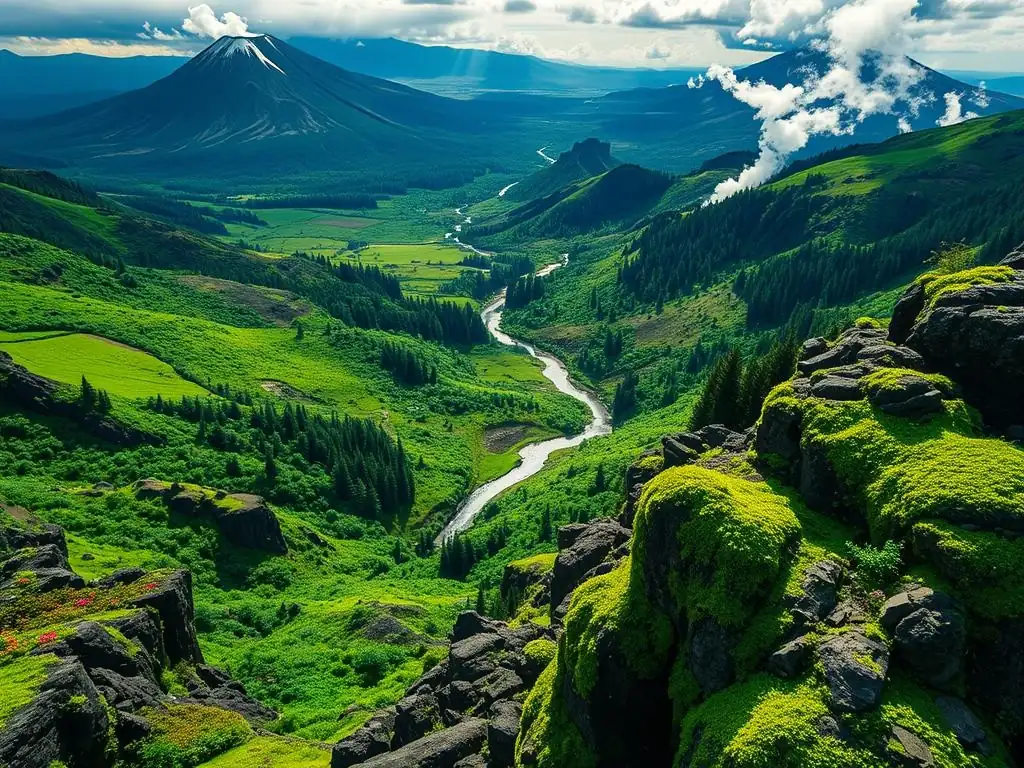
Beyond ecological recovery, volcanic eruptions also play a crucial role in creating new habitats and shaping biodiversity over geological timescales. Lava flows, for instance, create new land surfaces that are initially barren but progressively colonized by life, forming unique ecological niches. Volcanic islands, born from underwater eruptions, are prime examples of entirely new ecosystems arising from volcanic activity. These islands often exhibit high levels of endemism, with species evolving in isolation and adapting to the specific volcanic environment.
The Galapagos Islands, a volcanic archipelago, are renowned for their unique biodiversity, famously studied by Charles Darwin. The volcanic origin of the islands, coupled with their isolation, has driven the evolution of numerous endemic species, including giant tortoises, marine iguanas, and Darwin's finches. Similarly, volcanic seamounts and hydrothermal vents in the deep ocean create unique habitats that support specialized communities of organisms adapted to these extreme environments. Volcanic activity, therefore, is not only a force of destruction but also a creative force in shaping and diversifying ecosystems.
Enhancing Genetic Diversity: Volcanic Activity as an Evolutionary Driver
Volcanic eruptions, as agents of disturbance and environmental change, can also act as drivers of evolution and enhance genetic diversity within populations. Eruptions can create environmental pressures that favor certain traits, leading to natural selection and adaptation. The isolation of populations in volcanic landscapes, fragmented by lava flows or ash-covered areas, can also promote genetic divergence and even speciation – the formation of new species.
The repeated volcanic eruptions and landscape changes in regions like the Pacific Ring of Fire have likely played a significant role in shaping the genetic diversity of plant and animal populations in these areas. Volcanic disturbances can create opportunities for genetic bottlenecks and founder effects, where new populations are established by a small number of individuals, potentially leading to rapid evolutionary change. While volcanic eruptions can cause local extinctions, they also contribute to the long-term evolutionary dynamism of ecosystems, driving adaptation and diversification across geological timescales.
Challenges to Ecosystem Recovery in Volcanic Regions
Invasive Species: Competing with Native Flora and Fauna
While volcanic ecosystems exhibit remarkable resilience, they are not immune to challenges that can hinder or alter the natural recovery process. Invasive species pose a significant threat to ecosystem recovery in volcanic regions worldwide. Introduced species, often arriving through human activities, can outcompete native flora and fauna for resources, disrupt ecological processes, and alter habitat structure. Volcanic landscapes, initially barren or sparsely vegetated, can be particularly vulnerable to invasion by aggressive non-native species.
For example, in Hawaii, a volcanic archipelago, invasive plant species have dramatically altered native Hawaiian ecosystems, displacing native vegetation and reducing biodiversity. After volcanic eruptions, invasive species can rapidly colonize disturbed areas, taking advantage of the reduced competition and altered environmental conditions. Managing invasive species is a critical challenge for conservation efforts in volcanic regions, requiring ongoing monitoring and control measures to protect native ecosystems and promote natural recovery.
Climate Change: Exacerbating the Effects of Volcanic Disturbances
Climate change represents another significant challenge to ecosystem recovery in volcanic regions, potentially exacerbating the effects of volcanic disturbances. Changes in temperature and precipitation patterns can alter vegetation growth, water availability, and disturbance regimes, impacting the trajectory of ecological succession in volcanic landscapes. For instance, increased frequency or intensity of droughts in volcanic regions could slow down vegetation recovery and increase the vulnerability of ecosystems to invasive species.
Climate change can also interact with volcanic hazards in complex ways. Glacier melting due to climate warming can increase the risk of volcanic mudflows (lahars) during eruptions in glaciated volcanic regions. Changes in sea level rise can also affect coastal volcanic ecosystems. Understanding the combined effects of climate change and volcanic disturbances is crucial for effective conservation and management strategies in volcanic regions, ensuring the long-term resilience of these dynamic ecosystems in a changing world.
Conservation Efforts in Volcanic Landscapes
Protecting Vulnerable Species in Volcanic Environments
Conservation efforts in volcanic landscapes are essential for protecting vulnerable species and maintaining the unique biodiversity of these dynamic environments. Volcanic regions often harbor endemic species that are found nowhere else, making their conservation a global priority. Protecting these species requires a range of strategies, including habitat preservation, invasive species control, and management of human activities in volcanic areas.
Establishing protected areas, such as national parks and reserves, is a crucial step in conserving volcanic ecosystems. These protected areas can safeguard critical habitats, provide refugia for vulnerable species, and facilitate ecological research and monitoring. Specific conservation actions may target endangered species, such as endemic plants or animals that are particularly threatened by habitat loss or invasive species. For example, conservation programs in volcanic regions may focus on propagating rare plant species, controlling invasive weeds, or managing grazing pressure to promote the recovery of native vegetation.
Sustainable Management of Volcanic Ecosystems
Sustainable management practices are vital for ensuring the long-term health and resilience of volcanic ecosystems. Volcanic regions often face pressures from tourism, agriculture, and resource extraction, which can impact ecological recovery and biodiversity. Sustainable management aims to balance human activities with ecosystem protection, ensuring that these activities are conducted in a way that minimizes negative impacts on the environment.
Sustainable tourism practices, for instance, can help to reduce the ecological footprint of tourism in volcanic areas, minimizing disturbance to sensitive habitats and promoting responsible visitor behavior. Sustainable agriculture in volcanic regions can focus on practices that enhance soil health, reduce chemical inputs, and minimize habitat conversion. Effective land-use planning and resource management are essential components of sustainable management, ensuring that volcanic ecosystems are protected for future generations while allowing for appropriate human use and development.
Conclusion: The Continuing Legacy of Volcanic Eruptions on Earth's Ecosystems
Appreciating the Complex Relationship Between Volcanoes and Life
Volcanic eruptions, while seemingly destructive, are integral to the Earth's dynamic systems and play a profound and multifaceted role in shaping ecosystems. From the initial devastation to the long-term ecological recovery and the creation of new habitats, volcanic activity leaves a lasting legacy on the environment. The impact of volcanic eruptions on ecosystems is not simply a story of destruction but also a story of resilience, regeneration, and ecological innovation.
Understanding the complex relationship between volcanoes and life requires a shift in perspective, moving beyond the perception of volcanoes as purely destructive forces to recognizing their role as agents of ecological change and biodiversity enhancement. Volcanic landscapes, far from being barren wastelands, are dynamic and vibrant ecosystems, showcasing the remarkable capacity of nature to recover and thrive even in the face of dramatic disturbance. Appreciating this complex relationship is crucial for informed conservation and management of volcanic regions, ensuring that the ecological legacies of volcanic eruptions continue to shape our planet for generations to come.
Frequently Asked Questions
How do volcanic eruptions initially impact ecosystems surrounding the volcano?
Volcanic eruptions cause immediate and devastating ecological damage, through processes like pyroclastic flows, ashfall, and lava flows, which can destroy plant and animal life. This leads to habitat loss and displacement of species.
What are the long-term positive effects of volcanic eruptions on ecosystems?
Over time, volcanic ash and lava break down, enriching the soil with essential nutrients like phosphorus and potassium. This creates fertile ground for new plant growth and supports diverse ecosystems.
How does the type of volcanic eruption influence its impact on ecosystems?
Different eruption styles have varying effects. Explosive eruptions cause widespread devastation with ashfall, while effusive eruptions (lava flows) create localized but intense alteration of the landscape. The chemical composition of the released materials also plays a role.
What role do pioneer species play in the recovery of ecosystems after volcanic eruptions?
Pioneer species, like certain lichens and grasses, are the first organisms to colonize barren volcanic landscapes. They help to stabilize the soil and create conditions for other plants and animals to return.
How do scientists study the impact of volcanic eruptions on ecosystems?
Scientists monitor vegetation recovery, analyze soil composition, and track animal populations in areas affected by volcanic eruptions. They also study succession patterns and the role of different species in ecosystem restoration.
Final Reflection: The Enduring Power of Renewal
The exploration of volcanic legacies reveals a profound truth: destruction is often a precursor to vibrant renewal. While the immediate aftermath of an eruption paints a picture of devastation, the long-term impact on ecosystems is one of remarkable resilience and adaptation, shaping landscapes and fostering biodiversity in unexpected ways. This understanding is crucial today, as we grapple with the impacts of climate change and seek to learn from nature's capacity to recover from catastrophic events.
The story of volcanic ecosystems is a testament to the enduring power of life. It reminds us that even in the face of seemingly insurmountable challenges, nature finds a way to rebuild and thrive. The barren landscapes left behind by eruptions become fertile grounds for new life, showcasing the interconnectedness of geological processes and biological evolution. The volcano is both destroyer and creator, a force of nature that can obliterate life but also provide the building blocks for new beginnings.
This duality is a powerful reminder of the cyclical nature of existence and the potential for growth even in the most unlikely of circumstances.
As we conclude this journey through volcanic landscapes, consider the lessons they offer. How can we, like the ecosystems forged in fire, embrace change and adapt to adversity? How can we learn to see destruction not as an end, but as an opportunity for renewal and growth? Let us carry forward the spirit of resilience and the understanding that even from the ashes, life finds a way to flourish, and let that inspire us to cultivate a more sustainable and harmonious relationship with our planet.
Ignite Your Curiosity: Explore the Volcanic World!
Thank you for exploring the fascinating world of volcanic ecosystems and the lasting impact of eruptions. We hope this article has sparked a newfound appreciation for nature's resilience in the face of dramatic change. Now, let's put that knowledge into action:
- Embark on a virtual expedition! Use our interactive map to explore lesser-known volcanic regions and discover the unique ecosystems they support. Consider the post-eruption recovery processes discussed in this article when observing different areas.
- Share the wonder! Spread the knowledge by sharing this article with friends and family. You could even start a conversation about local volcanic history.
- Unearth local stories. Dig into local history archives, visit nearby museums, or talk to community members who might share stories and anecdotes about volcanic activity and its effects on the environment. You might be surprised by what you discover!
What questions about volcanic ecosystem recovery remain? Share your thoughts and insights in the comments below!