
Pompeii and the Roman Empire: A City's Place in a Vast World

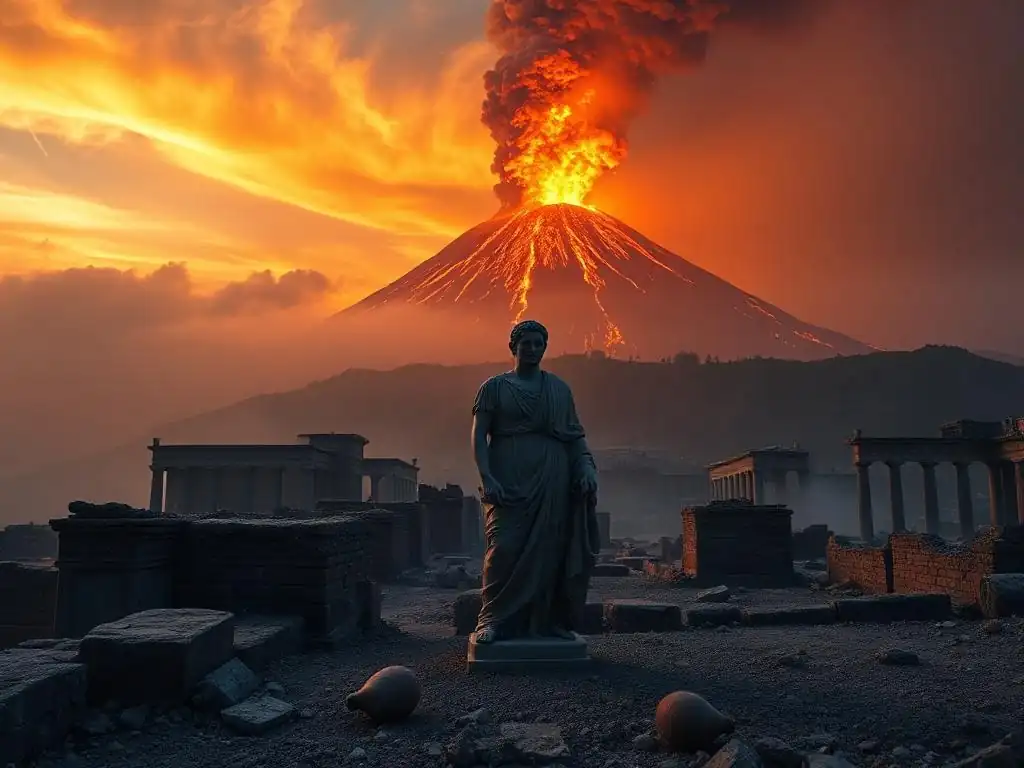
Welcome to Volcano Explorers, where the Earth's fiery heart comes alive. Ever wondered how a single, cataclysmic eruption could freeze a moment in time? Our journey begins with Pompeii history and volcanic impact, a chilling tale of a Roman city swallowed by Vesuvius, forever etched in the annals of "Famous Eruptions." Uncover the secrets buried beneath the ash and ask yourself: what can we learn from this ancient tragedy about living with the raw power of volcanoes? Prepare to descend into the depths of history and geology - the story of Pompeii is just the beginning…
- Introduction: Pompeii, Vesuvius, and Roman Civilization
- Pompeii History: A Microcosm of Roman Life
- The Volcanic Impact: Mount Vesuvius and the Destruction of Pompeii
- Pompeii's Rediscovery and Archaeological Significance
- Pompeii's Legacy: Lessons from the Past
- Pompeii and the Roman Empire: A Lasting Connection
- Conclusion: Pompeii, a Timeless Window into Roman History and Volcanic Impact
-
Frequently Asked Questions
- What was Pompeii, and what is its historical significance?
- How did the eruption of Mount Vesuvius affect the city of Pompeii and its inhabitants?
- What can we learn about Roman culture and society from the ruins of Pompeii?
- What role did Pompeii play within the larger Roman Empire?
- How do volcanologists use the Pompeii disaster to understand and predict future volcanic eruptions?
- Final Reflection: Echoes of Pompeii, Lessons for Today
- Rediscover the Echoes of Pompeii: Become a Modern Explorer!
Introduction: Pompeii, Vesuvius, and Roman Civilization
Setting the Stage: The Flourishing City of Pompeii Before the Eruption
Before the catastrophic eruption of Mount Vesuvius in 79 AD, Pompeii was a thriving Roman city nestled in the fertile Campania region. Located approximately 200 kilometers south of Rome, it was strategically positioned near the Bay of Naples, a crucial hub for maritime trade and commerce within the Roman Empire. The city benefited from rich volcanic soil, ideal for agriculture, particularly vineyards and olive groves, which contributed significantly to its prosperity.
By the first century AD, Pompeii was a bustling urban center, estimated to house between 10,000 and 20,000 inhabitants. This population density reflects its importance as a regional commercial and agricultural center within the larger Roman network.
Pompeii's urban landscape was characterized by a sophisticated infrastructure typical of Roman cities. It boasted paved streets, a complex system of aqueducts providing fresh water, public baths, theaters, and a large amphitheater capable of holding thousands of spectators. The city's forum served as its political, religious, and economic heart, surrounded by important public buildings and temples.
Wealthy citizens resided in spacious villas adorned with frescoes and mosaics, while the majority of the population lived in more modest houses and apartments. This vibrant pre-eruption Pompeii provides a stark contrast to the preserved ruins we see today, highlighting the sudden and devastating impact of the volcanic disaster on a flourishing Roman community.
Understanding Pompeii's Significance within the Roman Empire
Pompeii was not merely an isolated settlement; it was deeply integrated into the vast and complex structure of the Roman Empire. As a Roman city, Pompeii adhered to Roman laws, customs, and administrative systems. Latin was the language of administration and commerce, and Roman deities were worshipped in its temples alongside local cults.
The city's political structure mirrored that of Rome, with elected officials and municipal councils managing local affairs, while ultimately being subject to the authority of the Roman Senate and, later, the Emperor. This integration ensured that Pompeii benefited from the stability and infrastructure provided by the empire, while also contributing to its economic and cultural dynamism.
Furthermore, Pompeii's location on the Bay of Naples made it a vital link in the Roman trade network. Its port facilitated the movement of goods throughout the Mediterranean, connecting it to other major Roman centers like Ostia, the port of Rome, and Puteoli, another significant harbor in the region. Pompeian merchants engaged in trade of agricultural products, wine, olive oil, and garum, a popular Roman fish sauce, alongside manufactured goods.
The city's economic prosperity was therefore intrinsically tied to the wider Roman economic system. Pompeii's story is thus not just the tale of a single city, but a window into the functioning and interconnectedness of the Roman Empire, demonstrating how even a seemingly provincial town played a crucial role in the empire's overall structure and prosperity.
Pompeii History: A Microcosm of Roman Life
Daily Life in Pompeii: Insights into Roman Society
The remarkably preserved ruins of Pompeii offer an unparalleled glimpse into the daily life of a Roman city during the first century AD. Excavations have revealed details about housing, food, work, and leisure activities, painting a vivid picture of Roman society at the time. Pompeian houses ranged from grand villas with elaborate gardens and multiple rooms to smaller dwellings and apartments, reflecting the social stratification of Roman society.
Frescoes adorning walls depict scenes of daily life, mythology, and landscapes, showcasing Roman artistic tastes and cultural values. Graffiti found on walls provides informal insights into public opinions, personal messages, and even advertisements, offering a direct connection to the voices of ordinary Pompeians.
Evidence from bakeries, workshops, and shops reveals the economic activities that sustained Pompeii. Carbonized loaves of bread found in ovens, tools of artisans preserved in workshops, and the layout of market stalls provide tangible evidence of the city's commercial life. Public baths, theaters, and the amphitheater highlight the importance of leisure and entertainment in Roman society.
The presence of numerous thermopolia (fast-food counters) suggests a culture of eating out and communal sociability. Even the discovery of latrines and sewage systems speaks to Roman concerns about public health and sanitation. Through these archaeological findings, Pompeii transcends being just ruins; it becomes a living tableau of Roman daily life, offering a detailed and intimate understanding of a society frozen in time by the volcanic ash.
Pompeii's Economy: Commerce and Trade in the Roman World
Pompeii's economic engine was driven by a combination of agriculture, commerce, and artisanal production, all interconnected within the larger Roman economic system. The fertile volcanic soil surrounding Pompeii was ideal for cultivating grapes and olives, making wine and olive oil key exports. Pompeian wine, in particular, was renowned throughout the region and traded widely. Archaeological evidence, including amphorae (Roman storage jars) bearing Pompeian stamps, confirms the extent of this trade. Beyond agriculture, Pompeii was also a center for artisanal crafts, with evidence of workshops producing textiles, pottery, metal goods, and garum.
Trade was facilitated by Pompeii's strategic location near the sea and its port, which served as a conduit for goods flowing in and out of the region. Pompeian merchants engaged in both local and long-distance trade, connecting the city to markets across the Roman Empire. The forum, with its surrounding shops and public buildings, was the bustling heart of Pompeian commerce.
The presence of foreign goods in Pompeii, such as spices from the East and pottery from Gaul, attests to the city's integration into the wider Roman trade network. This economic activity contributed significantly to Pompeii's prosperity and its importance within the Roman Empire, highlighting how local economies were interwoven into the vast imperial system.
Roman Influence on Pompeii's Architecture and Infrastructure
Pompeii's urban landscape is a testament to the pervasive influence of Roman architectural and engineering prowess. The city's grid plan, paved streets, aqueducts, and public buildings are all hallmarks of Roman urban design. The forum, the central public space, was laid out according to Roman principles, with temples dedicated to Roman deities like Jupiter, Venus, and Apollo, reflecting the integration of Roman religious practices. Public buildings like the basilica (law court and public hall) and curia (municipal senate house) are classic examples of Roman civic architecture, adapted for local needs but adhering to Roman architectural styles.
The impressive amphitheater, capable of seating around 20,000 spectators, is a prime example of Roman entertainment infrastructure, built for gladiatorial contests and public spectacles that were popular throughout the empire. Public baths, with their complex systems of heating and pools, were another essential feature of Roman urban life, promoting hygiene and social interaction.
Private houses, while varying in size and opulence, often incorporated Roman architectural elements like atria (inner courtyards), peristyles (colonnaded gardens), and frescoes in Roman styles. The sophisticated aqueduct system, bringing fresh water from distant springs, and the network of paved streets and drainage systems, demonstrate Roman engineering expertise applied to urban development in Pompeii, showcasing how Roman infrastructure shaped the city's physical form and daily life.
The Volcanic Impact: Mount Vesuvius and the Destruction of Pompeii
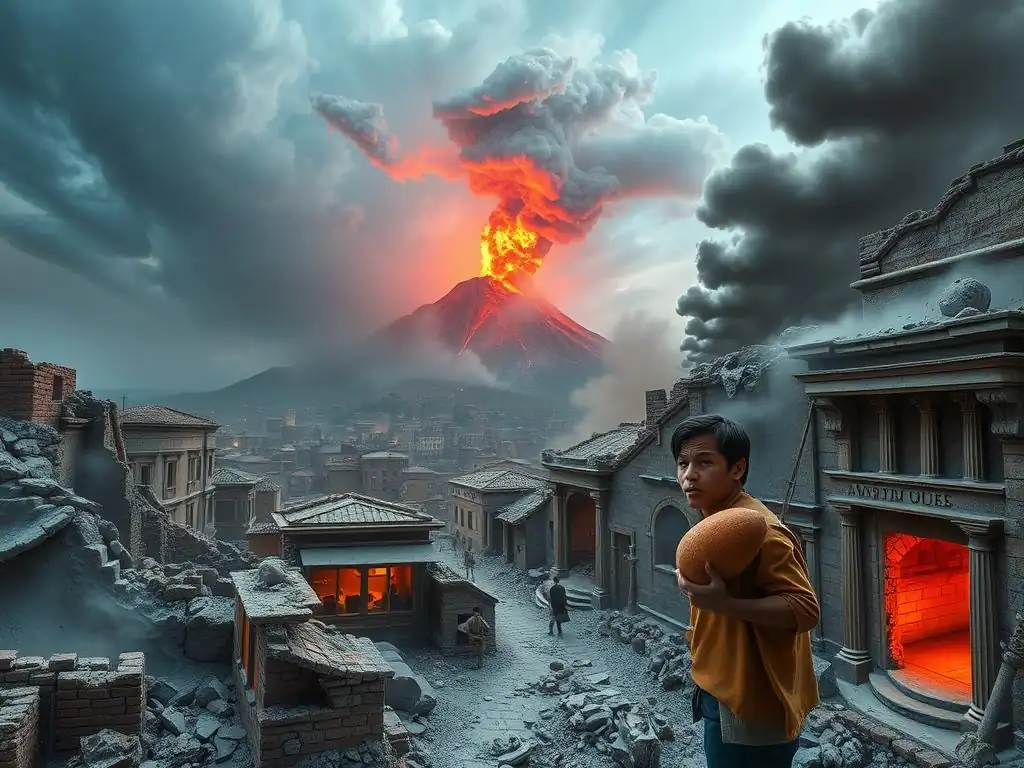
The Geological Context: Understanding Mount Vesuvius's Volcanic Activity
Mount Vesuvius, the volcano that looms over Pompeii, is part of the Campanian volcanic arc, a region characterized by intense geological activity due to the subduction of the African tectonic plate beneath the Eurasian plate. Vesuvius is a stratovolcano, also known as a composite volcano, built up over centuries by layers of solidified lava, volcanic ash, and pumice from previous eruptions. Its volcanic history is marked by periods of explosive eruptions, interspersed with longer periods of dormancy.
Before the 79 AD eruption, Vesuvius had been dormant for centuries, leading the inhabitants of Pompeii and the surrounding area to believe it was an extinct volcano. This prolonged dormancy contributed to the element of surprise and devastation when the volcano reawakened.
The geological composition of Vesuvius is characterized by highly explosive magma, rich in silica and gas. This type of magma, when it erupts, tends to produce pyroclastic flows and surges – fast-moving currents of hot gas and volcanic debris – as well as ash and pumice falls. The Bay of Naples region has been shaped by volcanic activity for millennia, with Vesuvius being just one of several active volcanic centers.
Understanding the geological context of Mount Vesuvius is crucial for comprehending the nature of the 79 AD eruption and its catastrophic impact on Pompeii. The volcano's history of explosive eruptions and its location in a densely populated area continue to make it a significant volcanic hazard today.
The 79 AD Eruption: A Catastrophic Event in Pompeii History
The eruption of Mount Vesuvius in 79 AD was a Plinian eruption, a type of volcanic eruption characterized by its explosivity and the ejection of vast quantities of ash, pumice, and gas into the atmosphere. The eruption began in the late morning or early afternoon of August 24th, 79 AD, and lasted for approximately 18 hours.
The first phase of the eruption involved a Plinian phase, where a towering column of ash and pumice rose high into the stratosphere. This phase rained pumice and ash down on Pompeii, initially causing roofs to collapse and forcing many inhabitants to seek shelter indoors.
The most devastating phase of the eruption occurred in the early hours of August 25th with the onset of pyroclastic flows and surges. These superheated clouds of gas and volcanic debris, traveling at speeds of hundreds of kilometers per hour, swept down the slopes of Vesuvius and engulfed Pompeii and neighboring Herculaneum. The pyroclastic surges were responsible for the majority of deaths in Pompeii, instantly killing those who had not yet evacuated or were trapped within buildings.
The intense heat and toxic gases within the surges caused immediate asphyxiation and thermal shock. The eruption concluded with further ash and pumice falls, burying Pompeii and Herculaneum under meters of volcanic debris, effectively erasing them from the map for centuries. The 79 AD eruption stands as a stark example of the destructive power of volcanic forces and their profound impact on human settlements.
The Immediate Impact: Destruction, Loss of Life, and the Covering of Pompeii
The immediate impact of the 79 AD eruption on Pompeii was catastrophic. The initial pumice fall caused structural damage to buildings, particularly roofs, but the most devastating effects were caused by the subsequent pyroclastic flows and surges. These surges incinerated everything in their path, destroying buildings, infrastructure, and, most tragically, causing massive loss of life.
Estimates of the death toll in Pompeii range from 2,000 to 16,000, representing a significant portion of the city's population. Many victims were caught unaware or were unable to escape the rapidly advancing pyroclastic surges. The heat and toxic gases caused instant death, and the ash and debris entombed the victims, preserving their remains in the positions they were in at the moment of death.
The eruption buried Pompeii under approximately 4 to 6 meters of volcanic ash and pumice. This thick layer of volcanic material effectively sealed the city, preserving buildings, artifacts, and even the forms of the victims in remarkable detail. While a tragedy of immense proportions, the volcanic burial paradoxically became Pompeii's salvation in terms of archaeological preservation.
The lack of air and moisture beneath the volcanic layer prevented the usual processes of decay and decomposition, creating a time capsule of Roman life in the first century AD. The immediate devastation was followed by centuries of oblivion, as Pompeii was lost to memory, buried beneath the volcanic landscape until its accidental rediscovery in the 18th century.
Pompeii's Rediscovery and Archaeological Significance
Unearthing Pompeii: The History of Excavations
Pompeii was not entirely forgotten after its burial in 79 AD, but its exact location was lost, and it was largely relegated to local legends. Initial hints of the city's existence emerged in 1599 during the construction of an aqueduct in the region, when architect Domenico Fontana unearthed some Roman ruins.
However, these discoveries were not recognized for their true significance at the time, and systematic excavations did not begin until the mid-18th century. In 1748, under the Bourbon King Charles VII of Naples, official excavations commenced at Pompeii, initially driven by the desire to find antiquities and treasures rather than a systematic archaeological approach.
Early excavations were often haphazard and destructive, focused on recovering valuable artifacts and artworks, sometimes at the expense of the archaeological context. However, as the scale and significance of the discoveries became apparent, archaeological methods gradually improved. Key figures like Giuseppe Fiorelli, who became director of excavations in 1863, introduced more systematic techniques, including the plaster cast method to preserve the forms of victims and voids left by organic materials.
Excavations have continued, with varying intensity, from the 18th century to the present day, uncovering approximately two-thirds of the city. The ongoing excavations at Pompeii continue to yield new discoveries and refine our understanding of the city and Roman life, marking a long and evolving history of unearthing this ancient Roman city from its volcanic tomb.
Preserving Pompeii: Challenges and Discoveries
Preserving Pompeii presents ongoing challenges due to the site's age, exposure to the elements, and the sheer scale of the archaeological area. The volcanic ash that initially preserved Pompeii is now contributing to its degradation as it absorbs moisture and salts, causing the deterioration of frescoes, mosaics, and buildings. Rainwater, pollution, and tourism also pose threats to the fragile ruins. Conservation efforts are constantly underway, involving restoration of buildings, stabilization of frescoes, and implementation of protective measures. Modern conservation techniques, including laser cleaning and advanced materials for consolidation, are employed to mitigate the effects of time and environmental factors.
Despite the challenges, preservation efforts have yielded remarkable discoveries and insights. The ongoing conservation process often reveals previously hidden details and artifacts, contributing to a deeper understanding of Pompeii. For example, the House of the Vettii, a well-preserved Roman house, provides invaluable information about domestic life and Roman interior decoration.
The Villa of Mysteries, with its enigmatic frescoes, offers insights into Roman religious practices and artistic conventions. The discovery of entire streets of shops and houses, complete with their contents, provides a unique snapshot of a Roman city in its final moments. Preservation at Pompeii is not just about maintaining ruins; it is a continuous process of discovery, research, and interpretation, ensuring that this invaluable window into the past remains accessible for future generations.
What Pompeii Reveals About Roman Society and the Volcanic Impact
Pompeii serves as an unparalleled archaeological site, offering profound insights into Roman society and the devastating impact of volcanic eruptions. The remarkably preserved city provides a detailed picture of Roman urban life in the first century AD, far exceeding what can be gleaned from textual sources alone.
The layout of the city, the architecture of houses and public buildings, the artifacts of daily life, and even the remains of the inhabitants themselves, all contribute to a rich tapestry of information about Roman culture, economy, social structure, and daily routines. Pompeii reveals the intricacies of Roman urban planning, engineering, art, commerce, and social customs in a way that no other archaeological site can.
Furthermore, Pompeii provides a unique case study in the impact of a catastrophic volcanic eruption on a Roman city. The preserved ruins serve as a stark reminder of the destructive power of nature and the vulnerability of human settlements to volcanic hazards. The study of Pompeii has contributed significantly to our understanding of Plinian eruptions, pyroclastic flows, and volcanic hazards in general.
The site also offers valuable lessons for modern volcanic risk assessment and mitigation strategies, particularly in the Vesuvius region, which remains densely populated and volcanically active. Pompeii is thus not only a window into the past but also a crucial resource for understanding and preparing for future volcanic events.
Pompeii's Legacy: Lessons from the Past
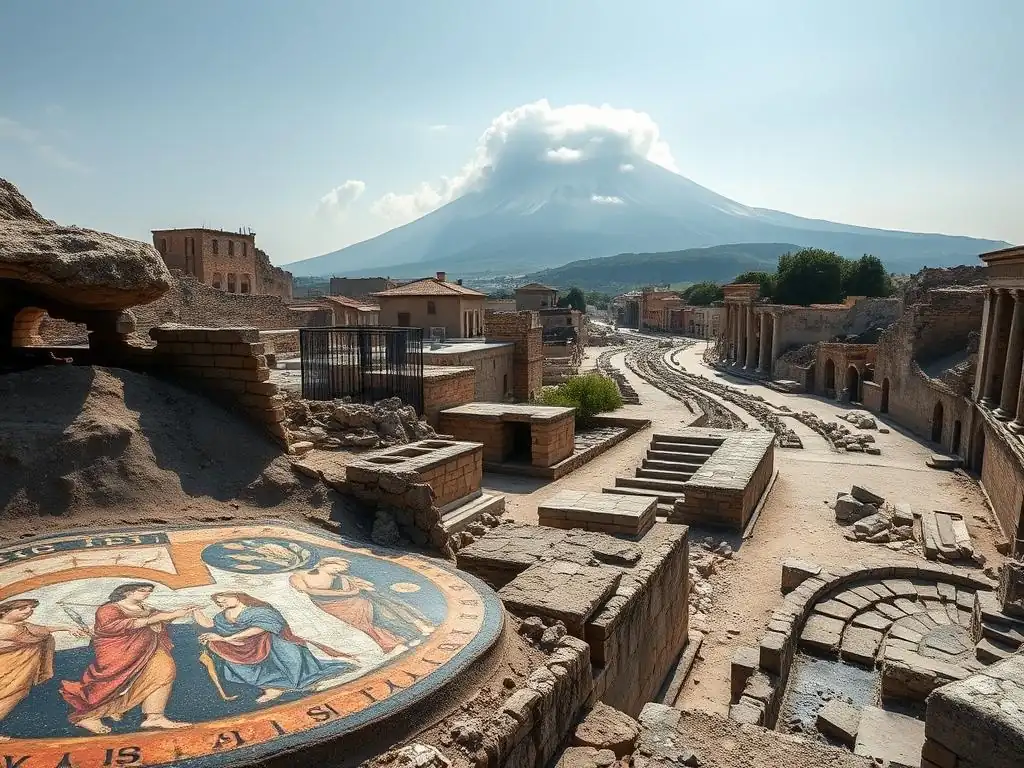
The Enduring Fascination with Pompeii and Mount Vesuvius
The fascination with Pompeii and Mount Vesuvius has endured for centuries, captivating the public imagination and inspiring art, literature, and scientific inquiry. The dramatic story of a city frozen in time by a volcanic eruption holds a powerful allure, combining elements of tragedy, mystery, and discovery. Pompeii's rediscovery in the 18th century sparked widespread interest in classical antiquity and fueled the Neoclassical movement in art and architecture. The site became a major destination for Grand Tourists, and its influence can be seen in art, literature, and popular culture ever since.
Mount Vesuvius, as the agent of Pompeii's destruction and preservation, is inextricably linked to the city's enduring appeal. The imposing presence of the volcano, still active and overlooking the Bay of Naples, serves as a constant reminder of the forces of nature and the fragility of human existence.
The combination of the dramatic volcanic disaster and the remarkably preserved Roman city creates a unique and compelling narrative that continues to resonate with people across cultures and generations. This enduring fascination ensures that Pompeii and Vesuvius remain iconic symbols of both the power of nature and the richness of Roman history.
Pompeii as a Reminder of Volcanic Hazards
Pompeii serves as a potent reminder of the ever-present threat of volcanic hazards, particularly in regions with active volcanoes. The catastrophic destruction of Pompeii underscores the speed, intensity, and devastating consequences of volcanic eruptions. The site acts as a tangible example of the potential for volcanic eruptions to cause widespread destruction, loss of life, and societal disruption. Studying the 79 AD eruption and its impact on Pompeii provides valuable insights into the types of hazards associated with stratovolcanoes like Vesuvius, including pyroclastic flows, ash falls, and volcanic gases.
The lessons learned from Pompeii are directly relevant to modern volcanic risk assessment and mitigation efforts. By understanding the geological history of Vesuvius and the mechanisms of past eruptions, scientists can better assess the potential for future volcanic events and develop strategies to reduce the risks to communities living in volcanic areas. Pompeii's legacy is not just historical; it is also a call to preparedness and vigilance in the face of natural hazards, reminding us of the importance of monitoring active volcanoes, developing evacuation plans, and educating the public about volcanic risks.
Volcanic Risk Assessment and Mitigation Strategies in the Vesuvius Region
The Vesuvius region, including the modern city of Naples, remains one of the most densely populated volcanic areas in the world. Approximately three million people live within the shadow of Mount Vesuvius, making volcanic risk assessment and mitigation strategies crucial for the safety of the population. Scientists continuously monitor Vesuvius for signs of volcanic unrest, using seismographs, GPS, gas sensors, and other instruments to detect changes in volcanic activity. Volcanic hazard maps have been developed to identify areas at highest risk from different types of volcanic hazards, such as pyroclastic flows, ash falls, and lava flows.
Evacuation plans are in place for the Vesuvius region, outlining procedures for the timely evacuation of residents in the event of a major eruption. These plans are regularly updated and exercised through drills and simulations. Public education campaigns are also essential to raise awareness of volcanic risks and preparedness measures among the population.
Mitigation strategies include strengthening buildings to withstand ashfall, improving infrastructure for evacuation routes, and developing early warning systems to provide timely alerts in case of volcanic unrest. The lessons learned from Pompeii, combined with modern scientific understanding and technological advancements, are vital for enhancing volcanic risk management and ensuring the safety of communities living near Vesuvius and other active volcanoes worldwide.
Pompeii and the Roman Empire: A Lasting Connection
How Pompeii Contributes to Our Understanding of Roman History
Pompeii offers an unparalleled archaeological record that significantly enriches our understanding of Roman history. The city provides a snapshot of Roman life in the first century AD, capturing a specific moment in time that is remarkably well-preserved. This "time capsule" allows historians and archaeologists to study Roman urbanism, architecture, art, commerce, social life, and daily routines in extraordinary detail.
Pompeii complements textual sources and other archaeological evidence, providing a more complete and nuanced picture of Roman civilization. The city's ruins offer a tangible connection to the past, bringing Roman history to life in a way that textbooks and museums alone cannot.
Pompeii's evidence extends to various aspects of Roman history, from the mundane details of daily life, such as food preparation and clothing, to broader themes like Roman social stratification, economic organization, and cultural values. The city's art, including frescoes, mosaics, and sculptures, reflects Roman artistic styles and tastes, as well as mythological narratives and cultural beliefs. Inscriptions and graffiti provide insights into Roman language, literacy, and public discourse.
Even the layout of Pompeian houses and streets reveals aspects of Roman social organization and urban planning. Pompeii, therefore, serves as a vital primary source for understanding Roman history, offering a wealth of information that continues to be studied and interpreted by scholars worldwide.
Pompeii's Influence on Art, Literature, and Cultural Perceptions of Rome
Pompeii's rediscovery in the 18th century had a profound impact on art, literature, and cultural perceptions of Rome, particularly during the Neoclassical period. The site's unearthed artworks, architectural styles, and stories of Roman life inspired artists, writers, and architects. Neoclassical art drew heavily on Pompeian motifs, colors, and decorative styles, seeking to emulate the perceived purity and rationality of classical Roman aesthetics. Pompeii's influence can be seen in painting, sculpture, decorative arts, and interior design of the 18th and 19th centuries.
In literature, Pompeii became a symbol of lost civilizations, sudden destruction, and the transience of human achievement. Novels, poems, and plays explored the dramatic narrative of Pompeii's demise, often using it as a backdrop for stories of love, tragedy, and moral reflection. Edward Bulwer-Lytton's novel "The Last Days of Pompeii" (1834) is a prominent example, popularizing the story of Pompeii and shaping public perceptions of the city and the eruption.
Pompeii's dramatic story continues to inspire creative works, influencing contemporary art, literature, film, and popular culture. The site's enduring appeal in the arts reflects its powerful narrative and its ability to resonate with timeless human themes.
The Disaster's Limited Impact on Roman Governance and Society
Despite the catastrophic destruction of Pompeii and Herculaneum, the 79 AD eruption had a limited impact on the overall governance and structure of the Roman Empire. While the loss of life and property in the affected region was significant, it was geographically localized and did not destabilize the vast Roman Empire. Roman governance was characterized by its resilience and ability to respond to disasters, providing relief and rebuilding efforts in affected areas. The Emperor Titus, who reigned during the eruption, is known to have personally contributed to relief efforts for the victims of the disaster.
The eruption did not significantly alter Roman political institutions, economic systems, or social structures. The Roman Empire was vast and decentralized, and the loss of Pompeii, while tragic for its inhabitants, did not cripple the empire's overall functioning. Roman society was accustomed to natural disasters, including earthquakes, floods, and fires, and had developed mechanisms for coping with such events.
The focus of Roman governance remained on maintaining stability, administering justice, and managing the vast territories of the empire. While Pompeii's destruction was a localized tragedy, it ultimately had a limited impact on the broader trajectory of Roman history and the overall functioning of the Roman Empire.
Conclusion: Pompeii, a Timeless Window into Roman History and Volcanic Impact
Pompeii stands as a timeless window into both Roman history and the dramatic power of volcanic forces. Its remarkably preserved ruins offer an unparalleled glimpse into the daily life of a Roman city, providing invaluable insights into Roman society, culture, economy, and urbanism. The catastrophic eruption of Mount Vesuvius in 79 AD, while devastating, paradoxically preserved Pompeii for posterity, creating a unique archaeological site that continues to captivate and inform.
Pompeii's legacy extends beyond its historical significance, serving as a potent reminder of volcanic hazards and the importance of preparedness in volcanically active regions. The city's enduring fascination reflects its powerful narrative, its archaeological richness, and its ability to connect us to the lives of people who lived and perished nearly two millennia ago. Pompeii remains a vital resource for understanding both the grandeur of the Roman Empire and the awesome, and sometimes destructive, forces of nature.
Frequently Asked Questions
What was Pompeii, and what is its historical significance?
Pompeii was an ancient Roman city tragically destroyed by the eruption of Mount Vesuvius in 79 AD. Its significance lies in its remarkably preserved state, offering invaluable insights into Roman life.
How did the eruption of Mount Vesuvius affect the city of Pompeii and its inhabitants?
The eruption buried Pompeii under layers of ash and pumice, killing thousands and preserving the city. The intense heat and ash created casts of the victims, providing a unique and horrifying record.
What can we learn about Roman culture and society from the ruins of Pompeii?
Pompeii offers a snapshot of daily life in a Roman city, revealing details about homes, businesses, art, and social structures. It provides a tangible link to the past.
What role did Pompeii play within the larger Roman Empire?
Pompeii was a thriving commercial center within the Roman Empire, strategically located for trade. Its economic and social life reflected the broader trends and influences of Roman civilization.
How do volcanologists use the Pompeii disaster to understand and predict future volcanic eruptions?
The study of Vesuvius and the Pompeii disaster helps volcanologists understand eruption patterns, ash dispersal, and the potential impact on populated areas. This aids in developing better warning systems.
Final Reflection: Echoes of Pompeii, Lessons for Today
The story of Pompeii, frozen in time by the cataclysmic eruption of Mount Vesuvius, isn't just ancient history; it's a stark reminder of the power of nature and the fragility of human existence. The meticulously preserved ruins offer an unparalleled glimpse into Roman life, but more importantly, they serve as a potent symbol of how quickly and unexpectedly life can change, a lesson profoundly relevant in our own era of rapid technological advancement and environmental uncertainty.
The enduring fascination with Pompeii speaks volumes about our desire to understand the past and learn from its triumphs and tragedies. The city's fate continues to resonate, prompting us to consider our own vulnerability in the face of natural disasters and the importance of preparedness and resilience. History is a guide to navigation in perilous times. History is who we are and why we are the way we are.
- David McCullough. This quote perfectly encapsulates why Pompeii continues to captivate and instruct us, offering a timeless perspective on the human condition.
Let the echoes of Pompeii inspire you to appreciate the present moment and to contemplate the legacy you wish to leave behind. Consider how you can contribute to a more resilient and prepared future, learning from the past to navigate the challenges that lie ahead. Embrace the lessons of Pompeii, not as a tale of destruction, but as a testament to the enduring spirit of humanity and a call to action for a better tomorrow.
Okay, here's a CTA tailored for an article titled "Pompeii and the Roman Empire: A City's Place in a Vast World" on a website called "Volcano Explorers" (volcanoexplorers.org):
Rediscover the Echoes of Pompeii: Become a Modern Explorer!
Thank you for joining us on this journey back in time to Pompeii and its place within the vast Roman Empire. We hope you’ve gained a deeper appreciation for this fascinating civilization and the forces that shaped its destiny. Now, it's your turn to connect with history.
Here are a few ways to become a modern explorer:
- Boldly explore the interactive map on our website (volcanoexplorers.org) and pinpoint specific buildings mentioned in the article, imagining what life was like for the people who lived there. This will give you a tangible connection to the past.
- Dive deeper by researching a specific aspect of Pompeian life that intrigued you – perhaps their trade networks, their art, or even their daily routines. Share your findings with friends!
- Consider donating to a Pompeii preservation organization. Your contribution, no matter the size, helps ensure that future generations can learn from this incredible site.
What specific artifact or building from Pompeii resonated most with you, and what does it tell us about Roman society? Share your thoughts in the comments below!