
Financial Preparedness for Volcano Evacuation: Minimizing Economic Impact


Welcome to Volcano Explorers, where the Earth breathes fire!
Imagine the unthinkable: the ground trembles, the sky darkens, and evacuation orders are issued. But what about your finances? Our latest deep dive into volcano evacuation financial planning uncovers crucial steps to safeguard your economic well-being amidst the chaos. Are you truly prepared for the unexpected? Discover the critical strategies you need to minimize the financial impact of a volcanic evacuation and protect your future. Read on... if you dare to face the heat.
- Volcanic Eruption Financial Planning: A Comprehensive Guide
- Assessing Your Financial Vulnerability to Volcanic Eruptions
- Creating a Volcanic Eruption Financial Plan
- Minimizing the Economic Impact of Volcanic Eruptions
- Long-Term Financial Planning in Volcano-Prone Areas
- Resources for Volcanic Eruption Financial Assistance
- Case Studies: Learning from Past Volcanic Eruptions and Their Financial Impact
-
Frequently Asked Questions
- How can I create a volcano evacuation financial plan?
- What financial resources are available to those affected by a volcano evacuation?
- Should I consider volcano insurance even if my area isn't typically considered high-risk?
- What are some unforeseen expenses to consider when planning for a volcano evacuation?
- How can I minimize the economic impact of a volcano evacuation on my business?
- Final Reflection: Embracing Financial Resilience in the Face of Volcanic Threat
- Secure Your Future: Prepare for a Volcano Evacuation
Volcanic Eruption Financial Planning: A Comprehensive Guide
Understanding the Economic Realities of Volcanic Eruptions
Volcanic eruptions, while awe-inspiring natural phenomena, carry significant economic consequences for individuals and communities in affected areas. The immediate aftermath of an eruption can trigger widespread financial disruption, ranging from property damage and business closures to displacement and loss of income. Consider the 1991 eruption of Mount Pinatubo in the Philippines, which, beyond the immediate devastation, caused long-term economic setbacks, including agricultural losses estimated in the hundreds of millions of dollars and the displacement of hundreds of thousands, impacting livelihoods for years to come. Understanding these potential economic realities is the first crucial step in volcano evacuation financial planning.
The economic impact of a volcanic eruption extends beyond immediate physical damage. Evacuation itself incurs substantial costs, including transportation, temporary housing, food, and essential supplies. Furthermore, the disruption to daily life and work can lead to lost wages and business revenue. For instance, the repeated eruptions of Kilauea in Hawaii have not only destroyed homes and infrastructure but have also severely impacted tourism, a major economic driver for the region. This demonstrates that volcano evacuation financial planning is not just about recovering from damage, but also about weathering the immediate and prolonged financial strain of displacement and disruption.
Assessing Your Financial Vulnerability to Volcanic Eruptions
Evaluating Current Assets and Liabilities
Before developing a robust volcano evacuation financial plan, it's essential to honestly assess your current financial standing. This involves a comprehensive evaluation of both your assets and liabilities. Assets encompass everything you own that has monetary value, such as savings accounts, investments, real estate, and personal property. Liabilities, on the other hand, are your debts, including mortgages, loans, credit card balances, and other outstanding obligations. Understanding this balance provides a clear picture of your financial resilience and capacity to absorb potential economic shocks from a volcanic event.
For residents in volcano-prone areas, this evaluation should specifically consider the vulnerability of assets. For example, property values in high-risk zones may be more volatile and susceptible to devaluation following an eruption. Similarly, businesses heavily reliant on local tourism or agriculture could face significant revenue losses due to volcanic activity. By meticulously listing and valuing assets and liabilities, and considering their specific vulnerability to volcanic risks, individuals can gain a realistic perspective on their financial vulnerability and identify areas requiring strengthening in their volcano evacuation financial planning strategy.
Identifying Potential Evacuation Expenses: A Detailed Breakdown
A crucial aspect of volcano evacuation financial planning is accurately estimating the potential expenses associated with an evacuation. This requires a detailed breakdown of various cost categories to ensure comprehensive financial preparedness. These expenses can be broadly categorized into immediate evacuation costs and potential longer-term displacement costs.
Accommodation Costs During Evacuation
Evacuation often necessitates temporary accommodation away from the danger zone. These costs can vary significantly depending on the duration of the evacuation and the type of accommodation chosen. Options range from staying with friends or family, which may minimize direct costs, to hotels, motels, or short-term rentals. Hotel costs in evacuation zones can surge due to increased demand, potentially reaching hundreds of dollars per night. For example, during the 2018 Kilauea eruption, evacuees in Hawaii faced hotel rates that doubled or even tripled in some areas. Longer evacuations will naturally amplify these accommodation expenses.
Transportation Expenses for Safe Evacuation
Transportation is a critical expense during a volcano evacuation. This includes the cost of fuel for personal vehicles, potential wear and tear, and, if necessary, public transportation or even airfare to reach safe locations. For families with multiple vehicles or those needing to travel long distances, fuel costs alone can become substantial. Moreover, unexpected vehicle repairs or the need to rent a vehicle if yours is unreliable can add to the financial burden. Consider also the potential cost of pet transportation and boarding, which can be a significant factor for pet owners.
Food and Essential Supplies for Evacuees
Evacuees will require food, water, and essential supplies throughout the evacuation period. While emergency shelters may provide basic provisions, these are often limited and designed for short-term stays. For longer evacuations, families will need to purchase groceries, prepared meals, and essential personal care items. The cost of food, especially in emergency situations, can be inflated. Furthermore, essential supplies like medications, toiletries, diapers, and baby formula need to be factored into the budget. Maintaining a well-stocked "go-bag" with some of these essentials can mitigate immediate costs, but replenishment will likely be necessary.
Replacing Damaged or Lost Documents
Volcanic eruptions can lead to the damage or loss of critical documents, necessitating costly and time-consuming replacements. These documents include identification cards (passports, driver's licenses), birth certificates, social security cards, insurance policies, financial records, and property deeds. Replacing these documents often involves application fees, notarization costs, and potential travel to government offices or consulates. The cumulative cost of replacing multiple documents for each family member can be surprisingly high and is an often-overlooked aspect of volcano evacuation financial planning.
Creating a Volcanic Eruption Financial Plan

Step 1: Building an Emergency Evacuation Fund
Determining the Right Amount for Your Volcanic Eruption Fund
Establishing a dedicated emergency evacuation fund is paramount for volcano evacuation financial planning. Determining the "right" amount for this fund is a personalized process, contingent on several factors. Consider your household size, typical monthly expenses, insurance coverage deductibles, and the potential duration of an evacuation in your specific volcanic risk zone. A general guideline is to aim for at least 3-6 months' worth of essential living expenses readily accessible in a liquid account. For families in areas with a history of prolonged volcanic unrest, a larger fund may be prudent.
To calculate a more precise target, itemize potential evacuation expenses as outlined earlier (accommodation, transportation, food, supplies, document replacement). Research average costs in potential evacuation destinations. Factor in a buffer for unforeseen expenses and potential inflation of prices during an emergency. For instance, if your monthly expenses are $3,000 and you anticipate a potential evacuation lasting up to two months, a fund of $6,000 - $9,000 would be a reasonable starting point. Regularly reassess this target amount based on changes in your circumstances and updated risk assessments.
Strategies for Rapidly Growing Your Emergency Fund
Building an emergency fund, especially rapidly, requires focused effort and strategic financial adjustments. One effective strategy is to aggressively reduce non-essential spending. Identify areas where you can temporarily cut back, such as dining out, entertainment, or subscription services, and allocate those savings directly to your emergency fund. Another approach is to explore opportunities to increase income, even temporarily. This could involve taking on a side hustle, selling unused items, or working overtime if feasible.
Automating savings is a powerful tool for consistently growing your fund. Set up automatic transfers from your checking account to your emergency fund savings account each payday. Even small, regular contributions accumulate significantly over time. Consider also allocating any unexpected income, such as tax refunds or bonuses, directly to your emergency fund. Finally, prioritize debt reduction, particularly high-interest debt. Lower debt payments free up more cash flow that can be channeled into building your volcano evacuation financial planning emergency fund.
Step 2: Securing Insurance Coverage for Volcanic Events
Homeowners Insurance and Volcanic Damage
Homeowners insurance is a critical component of volcano evacuation financial planning, but understanding the nuances of coverage for volcanic events is essential. Standard homeowners policies often cover damage directly caused by volcanic eruptions, such as ashfall, lava flow, and volcanic blast. However, coverage varies significantly depending on the policy and the specific type of volcanic event. Carefully review your policy to understand what is explicitly covered and what exclusions may apply.
It's crucial to understand that damage from earthquakes triggered by volcanic activity may be treated differently than direct volcanic damage. Similarly, damage caused by mudflows or landslides, which are common hazards associated with volcanic eruptions, may require specific endorsements or separate policies. Contact your insurance provider to clarify your coverage, specifically inquire about volcanic eruption coverage, and consider adding endorsements or supplemental policies to bridge any gaps in your protection. Document your property thoroughly with photos and videos to facilitate claims processing in the event of volcanic damage.
Understanding Flood and Landslide Insurance in Volcanic Areas
Volcanic eruptions frequently trigger secondary hazards like floods and landslides, which can cause extensive property damage. Standard homeowners insurance policies typically do not cover flood or landslide damage. If your property is located in a volcano-prone area susceptible to these hazards, obtaining separate flood insurance and potentially landslide insurance is a critical aspect of volcano evacuation financial planning.
Flood insurance is available through the National Flood Insurance Program (NFIP) and private insurers. Landslide insurance is less common but may be available as an endorsement to homeowners policies or through specialty insurers, particularly in regions with known landslide risks. Assess your property's vulnerability to floods and landslides based on geological surveys and historical data for your area. Investing in these additional insurance policies provides crucial financial protection against these significant risks often associated with volcanic eruptions.
Vehicle Insurance Considerations During Evacuation
Vehicle insurance plays a vital role in volcano evacuation financial planning, covering potential vehicle damage or accidents during an evacuation. Comprehensive coverage under your auto insurance policy typically covers damage to your vehicle from volcanic events such as ashfall or lava flow, as well as damage from falling objects like trees weakened by ashfall. Collision coverage protects against damage resulting from accidents during evacuation travel.
Review your vehicle insurance policy to confirm your coverage levels and deductibles. Ensure you have adequate comprehensive and collision coverage. Consider increasing your coverage limits if your current policy is insufficient to replace your vehicle in case of total loss. During an evacuation, drive cautiously, maintain your vehicle to prevent breakdowns, and be aware of potential road hazards caused by volcanic activity. Keep your insurance information readily accessible in your vehicle and digitally for easy access during an emergency.
Step 3: Protecting Important Financial Documents
Creating Digital Backups of Essential Documents
In the digital age, creating digital backups of essential financial documents is a cornerstone of volcano evacuation financial planning. Digitizing documents ensures accessibility even if physical copies are lost or destroyed during a volcanic event. Scan or photograph important documents such as insurance policies, bank statements, investment records, tax returns, identification cards, and property deeds.
Store these digital backups securely in multiple locations. Utilize cloud storage services with robust security measures, ensuring data encryption and password protection. Consider also storing backups on a portable encrypted USB drive that you can keep in your go-bag or evacuate with. Regularly update your digital backups to reflect any changes in your financial situation or documents. Digital backups offer a readily accessible and secure way to safeguard crucial financial information during a volcano evacuation.
Storing Physical Copies in a Waterproof and Fireproof Container
While digital backups are essential, maintaining physical copies of critical financial documents in a waterproof and fireproof container remains a prudent aspect of volcano evacuation financial planning. This provides an additional layer of security and accessibility, particularly in situations where digital access may be limited or unavailable. Invest in a quality fireproof and waterproof safe or lockbox specifically designed for document storage.
Store original copies of key documents such as birth certificates, passports, social security cards, marriage certificates, insurance policies, and property deeds in this container. Keep the container in a readily accessible location within your home, ideally in a place that is easily retrievable during a rapid evacuation. Regularly review and update the contents of your physical document container to ensure it remains current and relevant to your volcano evacuation financial plan.
Step 4: Establishing a Communication Plan with Financial Institutions
Notifying Banks and Credit Card Companies of Potential Displacement
Proactive communication with financial institutions is a crucial yet often overlooked element of volcano evacuation financial planning. Informing your banks, credit card companies, and investment firms about the potential for volcanic activity and possible evacuation is essential. This notification can prevent disruptions to your accounts and facilitate smoother financial transactions during and after an evacuation.
Contact your financial institutions in advance of a potential eruption to inform them of your address and contact information changes in case of evacuation. Advise them that you may be displaced due to volcanic activity and may require access to funds from a different location. Inquire about any specific procedures or alerts they have in place for customers affected by natural disasters. This proactive communication can help ensure uninterrupted access to your finances during a volcano evacuation.
Setting Up Online Access to Accounts
Ensuring seamless online access to all your financial accounts is paramount for effective volcano evacuation financial planning. Online banking and investment platforms provide 24/7 access to your funds and account information, regardless of your physical location. If you haven't already, set up online access for all your bank accounts, credit card accounts, brokerage accounts, and any other relevant financial platforms.
Familiarize yourself with the online functionalities of each platform, including transferring funds, paying bills, and accessing account statements. Ensure you have strong passwords and understand the security protocols for each online account. Download mobile banking apps for convenient access from your smartphone. Online access provides critical financial flexibility and control during a volcano evacuation, enabling you to manage your finances remotely and efficiently.
Step 5: Developing a Post-Eruption Financial Recovery Strategy
Applying for Government Assistance Programs
Following a volcanic eruption, various government assistance programs may become available to support affected individuals and communities. A key component of volcano evacuation financial planning is understanding and preparing to access these resources. Familiarize yourself with potential programs offered by federal, state, and local government agencies. In the United States, FEMA (Federal Emergency Management Agency) provides disaster assistance, including housing assistance, financial grants for essential needs, and low-interest disaster loans.
Research specific programs that may be activated in the event of a volcanic eruption in your region. Keep informed about application deadlines and eligibility requirements. Gather necessary documentation, such as proof of residency, identification, and damage assessments, to expedite the application process. Government assistance programs can provide crucial financial support for recovery, but navigating the application process effectively is key.
Seeking Support from Charitable Organizations
In addition to government aid, charitable organizations play a vital role in providing financial and material assistance to communities affected by volcanic eruptions. Including these resources in your volcano evacuation financial planning is essential. Organizations like the American Red Cross, Salvation Army, and local community foundations often mobilize to provide emergency relief, shelter, food, and financial aid following disasters.
Research organizations that have a history of providing disaster relief in your area or related to volcanic events. Identify local community-based organizations that may offer specific support programs. Be prepared to contact these organizations for assistance if needed after an eruption. Charitable aid can supplement government assistance and provide crucial support for immediate needs and long-term recovery.
Managing Debt and Credit During Recovery
Volcanic eruptions can significantly disrupt income and financial stability, making debt management a critical aspect of post-eruption financial recovery. Volcano evacuation financial planning should include strategies for managing debt and credit during this challenging period. If your income is disrupted due to the eruption, contact your lenders and creditors immediately. Explain your situation and inquire about options such as temporary payment deferral, reduced payment plans, or forbearance.
Prioritize essential debt payments, such as mortgages and secured loans, if possible, to avoid foreclosure or repossession. Be cautious about taking on new debt during the recovery period unless absolutely necessary. Seek credit counseling if you are struggling to manage debt. Maintaining open communication with creditors and proactively seeking solutions can help navigate debt management challenges during the post-eruption recovery phase and protect your credit standing.
Minimizing the Economic Impact of Volcanic Eruptions
While volcano evacuation financial planning focuses on preparedness, implementing strategies to actively reduce evacuation-related costs is equally important. These proactive measures can significantly lessen the economic burden associated with volcanic emergencies. Careful pre-planning and resourcefulness are key to minimizing expenses during an evacuation.
Pre-Planning Evacuation Routes and Accommodation
Thorough pre-planning of evacuation routes and potential accommodation is a cost-effective strategy. Identify multiple evacuation routes from your home and workplace, considering potential road closures or congestion. Research safe locations outside the volcano hazard zone where you could evacuate. Explore options for free or low-cost accommodation, such as staying with friends or family in safer areas. If hotel stays are necessary, research hotels in advance and identify more affordable options in locations further from the immediate evacuation zone but still accessible. Pre-planning routes and accommodation can prevent last-minute, rushed decisions that often lead to higher expenses.
Maintaining a Go-Bag with Essential Supplies
Maintaining a well-stocked "go-bag" is a cost-saving measure within volcano evacuation financial planning. A go-bag contains essential supplies needed for immediate evacuation, such as food, water, first-aid kit, medications, toiletries, and basic clothing. By having these supplies readily available, you avoid the need to purchase them at inflated prices during an emergency or rely solely on potentially limited emergency aid provisions. Regularly check and replenish your go-bag to ensure supplies are fresh and adequate for your family's needs.
Negotiating Payment Plans with Creditors
In the event of income disruption due to volcanic activity, proactively negotiating payment plans with creditors can significantly mitigate financial strain. Contact your lenders, utility companies, and service providers to explain your situation and inquire about temporary payment reductions or deferrals. Many companies have disaster relief programs or hardship policies that can provide temporary financial flexibility. Negotiating reduced payment plans or temporary forbearance can help manage cash flow during the evacuation and recovery period, preventing late fees and protecting your credit score.
Long-Term Financial Planning in Volcano-Prone Areas
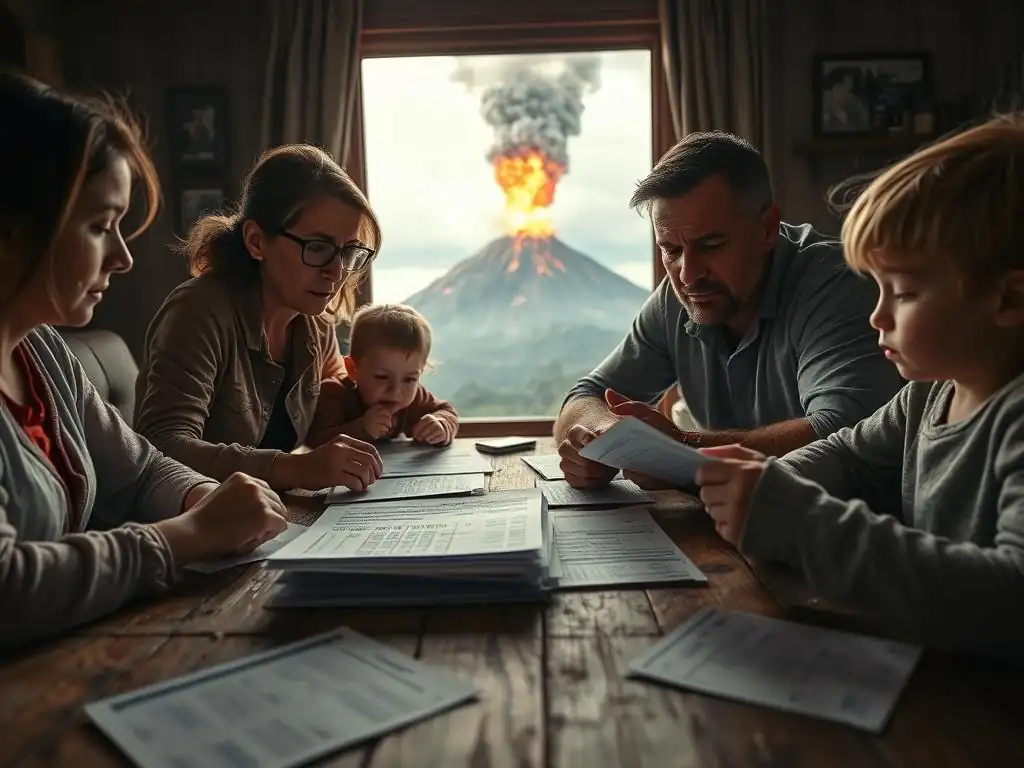
Investing Wisely in High-Risk Zones
Long-term financial planning in volcano-prone areas requires a nuanced approach to investing, acknowledging the inherent risks. While living near volcanoes offers unique lifestyle advantages, it's essential to balance those benefits with prudent financial strategies. When investing in property or businesses in high-risk zones, conduct thorough risk assessments. Consider the potential for property devaluation due to volcanic hazards and factor this into your investment decisions.
Diversify your investment portfolio beyond local assets. Avoid over-concentration of investments in volcano-sensitive sectors like local tourism or agriculture. Explore investment opportunities in geographically diverse locations and asset classes that are less susceptible to volcanic risks. Long-term financial success in volcano-prone areas hinges on informed investment decisions that acknowledge and mitigate the potential economic impacts of volcanic activity.
Diversifying Assets to Mitigate Risk
Diversification is a fundamental principle of risk management and is particularly crucial for volcano evacuation financial planning in high-risk areas. Diversifying assets across different types and locations reduces overall financial vulnerability to volcanic events. Beyond geographical diversification of investments, consider diversifying income streams. Explore opportunities for remote work or businesses that are not solely dependent on the local volcano-affected economy.
Maintain a balanced portfolio that includes a mix of liquid assets, such as savings and money market accounts, and longer-term investments, such as stocks, bonds, or real estate in safer locations. Diversification ensures that a volcanic eruption impacting one area or asset class will not devastate your entire financial portfolio. It provides a buffer against economic shocks and enhances long-term financial resilience in volcano-prone regions.
Regularly Reviewing and Updating Your Volcanic Eruption Financial Plan
Volcano evacuation financial planning is not a one-time task but an ongoing process that requires regular review and updates. Life circumstances change, financial situations evolve, and volcanic risk assessments may be updated. At least annually, and ideally more frequently, revisit your volcano evacuation financial plan to ensure it remains relevant and effective.
Review your emergency fund amount and adjust it based on changes in your expenses, income, or family size. Reassess your insurance coverage to ensure it remains adequate for current property values and potential volcanic hazards. Update your list of essential documents and digital backups. Re-evaluate your evacuation routes and accommodation plans. Regularly reviewing and updating your volcano evacuation financial plan ensures it remains a robust and reliable guide for financial preparedness in the face of volcanic risks.
Resources for Volcanic Eruption Financial Assistance
Government Agencies Offering Disaster Relief
Numerous government agencies offer disaster relief programs that can provide financial assistance following volcanic eruptions. Understanding these resources is vital for volcano evacuation financial planning. In the United States, FEMA (Federal Emergency Management Agency) is the primary federal agency for disaster response and recovery. FEMA provides individual assistance programs, including housing assistance, financial grants for essential needs, and crisis counseling.
The Small Business Administration (SBA) offers low-interest disaster loans to homeowners, renters, and businesses to repair or replace damaged property. State and local government agencies also often have disaster relief programs tailored to specific regional needs. Research the relevant government agencies in your area and familiarize yourself with their disaster assistance programs, eligibility requirements, and application procedures.
Non-Profit Organizations Providing Financial Aid
Non-profit organizations are crucial resources for financial aid and support following volcanic eruptions, complementing government assistance. Organizations like the American Red Cross provide immediate disaster relief, including shelter, food, and emergency financial assistance. The Salvation Army also offers disaster relief services, including food, shelter, and financial aid. Community foundations and local charities often mobilize to provide targeted assistance to affected communities.
Research non-profit organizations active in disaster relief and specifically those with a presence in your volcano-prone region. Identify organizations that offer financial aid, housing assistance, or other forms of support relevant to your needs. Keep a list of these organizations and their contact information readily accessible in your volcano evacuation financial plan.
Local Community Support Programs
Local community support programs form a vital safety net in volcano evacuation financial planning, often providing immediate and personalized assistance. These programs can include community centers, religious organizations, local charities, and neighborhood associations. They often offer grassroots support, such as food banks, clothing donations, temporary housing assistance, and volunteer services.
Engage with your local community organizations and understand the support programs available in your area. Build connections with community leaders and neighbors who can provide assistance or information during an emergency. Local community support can be invaluable for immediate needs and navigating the initial recovery phase following a volcanic eruption.
Case Studies: Learning from Past Volcanic Eruptions and Their Financial Impact
Analysis of the Financial Impact of the 1980 Mount St. Helens Eruption
The 1980 eruption of Mount St. Helens in Washington State serves as a stark reminder of the profound financial impact of volcanic events. The eruption caused over $1 billion in damages (in 1980 dollars), adjusted for inflation, this is several billions today. The forestry industry suffered immense losses, with vast timberlands destroyed. Agriculture was significantly impacted by ashfall, leading to crop failures and livestock losses. Infrastructure damage was extensive, including roads, bridges, and communication lines.
The eruption also had a significant impact on tourism in the short term, although in the longer term, the volcano became a major tourist attraction, demonstrating the complex and evolving economic consequences of volcanic eruptions. The Mount St. Helens eruption underscores the importance of comprehensive insurance coverage, business continuity planning, and government disaster assistance in mitigating the financial devastation of volcanic events. It highlights the need for volcano evacuation financial planning that considers both immediate and long-term economic impacts.
Lessons Learned in Financial Preparedness from the 2018 Kilauea Eruption
The 2018 eruption of Kilauea volcano in Hawaii provides contemporary lessons in volcano evacuation financial planning. The eruption, which lasted for several months, destroyed hundreds of homes and caused widespread displacement. Homeowners who were underinsured or uninsured faced devastating financial losses. The eruption highlighted the importance of adequate homeowners insurance, including coverage for volcanic events and related hazards like lava flow and volcanic gases.
The Kilauea eruption also emphasized the need for robust emergency funds to cover evacuation expenses and lost income. Many residents faced prolonged displacement, incurring significant costs for temporary housing, food, and transportation. The event underscored the critical role of government and charitable assistance in supporting affected communities, but also the necessity for individuals to take proactive steps in volcano evacuation financial planning to minimize their personal financial vulnerability.
Frequently Asked Questions
How can I create a volcano evacuation financial plan?
Start by assessing your current financial situation. Then, build an emergency fund specifically for evacuation-related expenses. Finally, consider insurance options that cover volcano-related damages.
What financial resources are available to those affected by a volcano evacuation?
Government assistance programs, such as FEMA, may offer financial aid and disaster relief. Also, insurance payouts can help cover property damage and living expenses. Look into non-profit organizations too.
Should I consider volcano insurance even if my area isn't typically considered high-risk?
Yes, you should. Volcanic activity can be unpredictable, and standard homeowner's insurance often doesn't cover volcano-related damage. Specific volcano insurance can provide crucial financial protection.
What are some unforeseen expenses to consider when planning for a volcano evacuation?
Beyond immediate needs like shelter and food, remember pet boarding or care, lost wages due to displacement, and potential property damage clean-up. Temporary housing costs can also be significant.
How can I minimize the economic impact of a volcano evacuation on my business?
Develop a business continuity plan that includes financial aspects. Secure business interruption insurance to cover lost revenue. Also, establish a line of credit for emergency funding.
Final Reflection: Embracing Financial Resilience in the Face of Volcanic Threat
The preceding discussion underscores a critical truth: volcano evacuation financial planning is no longer a niche concern, but a vital component of comprehensive disaster preparedness. The potential economic devastation wrought by volcanic eruptions extends far beyond immediate property damage, impacting livelihoods, community stability, and long-term recovery. Ignoring this reality leaves individuals and communities vulnerable to compounding crises.
The lessons learned from past volcanic events, and the strategies outlined in this article, highlight the profound impact that proactive financial planning can have on mitigating the long-term effects of displacement and economic hardship. This isn't just about saving money; it's about preserving dignity and agency in the face of unimaginable circumstances. By failing to prepare, you are preparing to fail.
- Benjamin Franklin. This quote resonates deeply when considering the potential financial fallout of a volcanic eruption.
Now, consider the power you hold to shape your own future and the future of your community. Take the knowledge you've gained here and transform it into action. Develop your own volcano evacuation financial plan, share these strategies with your neighbors, and advocate for policies that support financial resilience in vulnerable regions. By embracing preparedness, you not only safeguard your own well-being but also contribute to a more secure and resilient future for all.
Secure Your Future: Prepare for a Volcano Evacuation
Thanks for learning about vital financial strategies for volcano evacuations! We hope you've gained valuable insights into protecting your finances during such an event. Now, let's put that knowledge into action and safeguard your financial future.
Here's how you can start today:
- Immediately create a detailed financial emergency plan. This should include identifying essential documents and outlining your evacuation budget. This is your primary safeguard.
- Research emergency loan options available in your area before a crisis. Knowing your resources in advance will provide immense peace of mind.
- Share this article with your friends and family. Spreading awareness helps build a stronger, more resilient community.
What concrete financial step will you take this week to improve your volcano evacuation preparedness? Share your plans in the comments below!