
Decoding Danger: Understanding Volcano Evacuation Orders


Welcome to Volcano Explorers, where the Earth breathes fire! Ever wondered what it really means when a volcano evacuation order is issued? Before the ground trembles and the skies darken, knowing the signals can be the difference between safety and disaster. Dive into our exploration of volcano evacuation order guidelines and uncover the vital knowledge that could save your life. Are you prepared to understand the language of the mountain? Let's begin...
- Volcano Evacuation Order Guidelines: A Critical Guide
- Understanding the Urgency: What is a Volcano Evacuation Order?
- Types of Volcano Evacuation Orders: Levels of Alert
- Volcano Evacuation Order Guidelines: Before the Order
- Responding to a Volcano Evacuation Order: Step-by-Step
- What to Expect During a Volcano Evacuation
- Post-Volcano Evacuation: Returning Home Safely
- The Science Behind Volcano Evacuations: Minimizing Risk
- Real-World Examples: Case Studies of Volcano Evacuations
- Staying Informed: Resources for Volcano Evacuation Preparedness
-
Frequently Asked Questions
- What triggers a volcano evacuation order?
- Where can I find the most up-to-date information about potential volcano evacuations?
- What are some key things to include in a volcano evacuation plan?
- What does a "Volcano Alert Level" actually mean?
- Are there any specific guidelines for people with disabilities or special needs during a volcano evacuation?
- Final Reflection: Embracing Preparedness in the Shadow of Giants
- Prepare, Plan, and Protect: Your Next Steps After Learning About Volcano Safety!
Volcano Evacuation Order Guidelines: A Critical Guide
Volcanic eruptions, while awe-inspiring displays of nature's power, pose significant threats to communities living in their vicinity. Understanding and adhering to volcano evacuation order guidelines is paramount for ensuring safety and minimizing casualties during these events. These guidelines are not arbitrary suggestions; they are the result of extensive scientific research and emergency planning, designed to protect lives in the face of imminent volcanic danger. This guide serves as a comprehensive resource to decode the complexities of volcano evacuation orders, empowering individuals and communities to respond effectively when the earth rumbles and the skies darken with volcanic ash.
Understanding the Urgency: What is a Volcano Evacuation Order?
Defining Volcano Evacuation Orders: When is it Time to Leave?
A volcano evacuation order is a directive issued by authorities, typically emergency management agencies in coordination with volcanologists, mandating the immediate departure of people from areas threatened by an impending or ongoing volcanic eruption. This is not a voluntary suggestion; it is a legally binding instruction to evacuate, signifying that the risk to life is deemed too high to remain in the designated zone.
The decision to issue an evacuation order is based on a careful assessment of volcanic activity, monitoring data, and predictive models that indicate an increasing likelihood of hazardous events such as pyroclastic flows, lahars (volcanic mudflows), heavy ashfall, or lava flows that could impact populated areas. When a volcano evacuation order is issued, it means that the time for preparation is over, and immediate action is required to move to safety.
The urgency behind a volcano evacuation order cannot be overstated. Volcanic eruptions can escalate rapidly, transitioning from periods of relative calm to explosive activity in a matter of hours, or even minutes. For instance, the 1980 eruption of Mount St. Helens demonstrated the sudden and devastating nature of volcanic events.
While there were warning signs in the weeks leading up to the major eruption, the lateral blast and subsequent pyroclastic flows caught many off guard. Similarly, lahars can travel at speeds exceeding 30 miles per hour, leaving little time for escape once they are triggered. Therefore, a volcano evacuation order is a critical intervention to preemptively move people out of harm's way before these fast-moving and destructive volcanic hazards strike.
The authority to issue volcano evacuation orders typically rests with local or regional government officials, specifically emergency management agencies or civil protection authorities. These agencies work in close collaboration with volcanological observatories, such as the United States Geological Survey (USGS) Volcano Hazards Program in the United States, or equivalent organizations in other countries. Volcanologists at these observatories are responsible for monitoring volcanic activity, interpreting data from monitoring networks, and providing scientific assessments of volcanic hazards to emergency managers.
The process for issuing an evacuation order is usually triggered by an increase in volcanic activity that surpasses pre-defined thresholds. This might include a significant increase in seismicity (earthquakes), ground deformation, gas emissions, or changes in thermal activity. Volcanologists will analyze this data to determine the potential for an eruption and the likely hazards that could result.
They then communicate their assessment and recommendations to the emergency management agencies. Ultimately, the decision to issue a volcano evacuation order is made by the designated government officials, who weigh the scientific advice along with other factors, such as the population at risk, available evacuation resources, and the overall public safety situation. It is a multi-layered process designed to ensure that evacuation orders are issued based on the best available scientific information and in a timely manner to protect communities.
Official Communication Channels: How Will You Be Notified?
Effective communication is crucial during a volcano crisis, and authorities utilize multiple channels to disseminate volcano evacuation orders and related information to the public. Traditional methods, such as sirens, are often employed in areas with established volcano early warning systems. These sirens, when activated in a specific pattern, signal the need for immediate evacuation.
Alongside sirens, radio and television broadcasts remain vital communication tools. Emergency Alert Systems (EAS) can interrupt regular programming to deliver urgent messages about volcano evacuation orders, affected areas, and safety instructions. Local radio stations often provide up-to-the-minute updates and information in the immediate aftermath of an eruption.
In the digital age, mobile alerts and notifications are increasingly important. Many regions prone to volcanic activity have implemented systems that send emergency alerts directly to mobile phones via SMS text messages or dedicated mobile apps. These alerts can provide location-specific information about evacuation orders, shelter locations, and real-time updates on the volcanic situation.
Furthermore, official government websites and social media accounts (e.g., those of emergency management agencies, volcanological observatories, and local governments) serve as central hubs for disseminating information. These platforms are updated frequently during a volcanic crisis and provide detailed information, maps of evacuation zones, and answers to frequently asked questions. It is crucial for residents in volcanic hazard zones to be aware of the specific communication channels used in their area and to actively monitor these channels during periods of heightened volcanic activity.
Types of Volcano Evacuation Orders: Levels of Alert
Volcano Alert Levels Explained: USGS Alert Levels
Volcano observatories worldwide, including the USGS in the United States, employ a standardized system of alert levels to communicate the status of volcanic activity to the public and emergency responders. The USGS volcano alert-level system utilizes two parallel tracks: one for ground-based volcano hazards and another for aviation hazards related to volcanic ash clouds. For ground-based hazards, the alert levels range from NORMAL (green) to ADVISORY (yellow), WATCH (orange), and WARNING (red).
- NORMAL (Green): Indicates typical background activity at a volcano in a non-eruptive state. This level signifies no immediate threat and is the baseline status for most volcanoes most of the time.
- ADVISORY (Yellow): Signifies that a volcano is exhibiting signs of elevated unrest above known background levels. This could include increased seismicity, gas emissions, or minor ground deformation. An eruption is not necessarily imminent, but increased vigilance and monitoring are warranted.
- WATCH (Orange): Indicates heightened unrest with increased probability of eruption, timeframe uncertain, OR eruption is underway with limited hazards. This level suggests that an eruption is possible in the near future. It is a call for increased preparedness and readiness to evacuate.
- WARNING (Red): Signifies a hazardous eruption is imminent, underway, or suspected. This is the highest alert level and indicates that a significant volcanic event is occurring or about to occur, posing immediate threats to life and property. Volcano evacuation orders are most likely to be issued at the WARNING (Red) level.
Understanding these alert levels is crucial for interpreting official communications and gauging the level of risk associated with volcanic activity. It is important to note that these levels are not rigid triggers for evacuation but rather indicators of increasing volcanic hazard that inform decision-making by emergency managers.
Understanding the Difference Between Volcano Watch, Warning, and Evacuation
The terms "Volcano Watch," "Volcano Warning," and "Volcano Evacuation" are distinct but interconnected stages in the emergency response to volcanic activity. A Volcano Watch (USGS Orange alert level) is a preparatory phase. It indicates that a volcano is showing signs of unrest that suggest an eruption is possible, though not necessarily imminent. During a Volcano Watch, authorities and communities should be actively reviewing and updating emergency plans, checking evacuation routes, and ensuring that emergency supplies are readily available. It is a time for heightened awareness and preparation, but not yet for immediate evacuation.
A Volcano Warning (USGS Red alert level) signals a much more critical situation. It means that an eruption is considered imminent, is underway, or is suspected to be occurring and poses a significant threat. A Volcano Warning is a direct call to action, indicating that hazardous volcanic phenomena are likely and that immediate protective measures are necessary. A Volcano Evacuation Order is typically issued in conjunction with a Volcano Warning. The evacuation order is the specific instruction to leave designated danger zones and move to safer locations.
Therefore, the progression is generally: Volcano Watch (prepare) → Volcano Warning (imminent danger) → Volcano Evacuation Order (action to leave). It is vital to understand this sequence and to respond appropriately at each stage. Waiting for a Volcano Warning to begin preparing is too late. Preparation should begin during the Volcano Watch phase to ensure a swift and safe response when a Volcano Evacuation Order is issued under a Volcano Warning.
Immediate Evacuation vs. Preparedness: Knowing the Difference
Knowing when to evacuate immediately versus when to focus on preparedness is crucial for effective response to volcanic threats. Immediate evacuation is required when a volcano evacuation order is issued by authorities. This order signifies that the risk is imminent and that staying in the designated area poses a direct and immediate threat to life.
When an evacuation order is given, the time for preparation has passed, and the priority is to execute the pre-established evacuation plan quickly and efficiently. This means gathering your go-bag, following designated evacuation routes, and proceeding to designated safe areas or evacuation centers as instructed by authorities. Hesitation or delay during an immediate evacuation order can have serious consequences due to the rapid onset and destructive nature of volcanic hazards.
Preparedness, on the other hand, is the proactive phase that occurs before an immediate evacuation order is issued. Preparedness involves taking steps to mitigate risk and ensure readiness in the event of a volcanic crisis. This includes creating a family emergency plan, assembling an evacuation kit with essential supplies, identifying safe evacuation routes, and staying informed about volcano monitoring and alert levels.
Preparedness is an ongoing process, not a one-time event. It involves regularly reviewing and updating emergency plans, participating in community drills, and staying informed about the volcanic hazards in your area. The goal of preparedness is to be ready to respond swiftly and effectively if and when a volcano evacuation order becomes necessary, minimizing chaos and maximizing safety during a volcanic emergency.
Volcano Evacuation Order Guidelines: Before the Order

Preparing Your Evacuation Kit: Essential Supplies Checklist
Proactive preparation is key to a smooth and safe volcano evacuation. A well-stocked evacuation kit, often referred to as a "go-bag," is an essential component of preparedness. This kit should contain enough supplies to sustain you and your family for at least 72 hours away from home. Essential items include:
- Water: At least one gallon of water per person per day for drinking and sanitation. Consider water purification tablets or a water filter as a backup.
- Food: Non-perishable food items such as canned goods, energy bars, dried fruits, and ready-to-eat meals. Include a manual can opener.
- First-aid kit: A comprehensive first-aid kit with bandages, antiseptic wipes, pain relievers, personal medications, and any necessary medical supplies (e.g., inhalers, EpiPens).
- Flashlight and extra batteries: Essential for navigating in the dark, especially if power outages occur.
- Radio (battery-powered or hand-crank): To receive emergency broadcasts and updates if other communication channels are disrupted. NOAA Weather Radio is ideal in the US.
- Whistle: To signal for help if needed.
- Dust mask/N95 respirator: To protect your lungs from volcanic ash, which can be harmful to breathe.
- Protective eyewear (goggles): To shield your eyes from ash and irritants.
- Moist towelettes, garbage bags, and plastic ties: For personal sanitation.
- Wrench or pliers: To turn off utilities if instructed to do so.
- Local maps: In case GPS and digital navigation are unavailable.
- Cell phone with chargers and a portable power bank: To maintain communication, though cell service may be unreliable during an emergency.
- Copies of important documents: Insurance policies, identification, medical records, and bank account information in a waterproof bag.
- Cash: ATMs and credit card systems may be unavailable during an emergency.
- Prescription medications and eyeglasses: Ensure you have enough for several days.
- Infant formula, diapers, and baby wipes (if applicable).
- Pet supplies: Food, water, leash, carrier, and any necessary medications for pets.
- Warm clothing, blankets, or sleeping bags: Even in warmer climates, temperatures can drop, especially at night or in evacuation shelters.
- Personal hygiene items: Soap, toothbrush, toothpaste, etc.
Customize your kit to meet the specific needs of your family, considering factors like age, medical conditions, and dietary requirements. Store your evacuation kit in an easily accessible location and ensure everyone in the household knows where it is. Regularly check and replenish perishable items and batteries to ensure your kit is always ready for use.
Establishing a Family Emergency Plan: Communication and Meeting Points
A well-defined family emergency plan is crucial for ensuring everyone knows what to do and how to reconnect in the event of a volcano evacuation. This plan should cover several key elements:
- Communication Plan: Designate an out-of-area contact person. During a widespread emergency, local phone lines and cell networks can become overloaded or damaged. An out-of-area contact may be easier to reach and can act as a central point of communication for family members. Ensure everyone in the family knows the contact person's name and phone number. Establish a communication method, such as texting, as text messages may get through when voice calls do not.
- Meeting Points: Designate two meeting points:
- Local Meeting Point: A location near your home where family members can gather if separated during an emergency, such as a neighbor's house, a park, or a community center.
- Out-of-Area Meeting Point: A location further away from your home, in case you cannot return home or need to evacuate to a different city or town. This could be the home of your out-of-area contact or another pre-determined location.
- Evacuation Routes: Identify primary and alternate evacuation routes from your home to safer areas. Practice these routes with your family so everyone is familiar with them. Consider potential road closures or traffic congestion during an evacuation and plan for alternatives.
- Shelter-in-Place vs. Evacuation Decisions: Discuss scenarios where sheltering in place might be safer (e.g., during heavy ashfall) versus when immediate evacuation is necessary. Ensure everyone understands the difference and knows how to respond in each situation.
- Practice Drills: Conduct regular family emergency drills to practice your plan. This helps everyone become familiar with the procedures and identify any weaknesses in the plan. Drills can include practicing evacuation routes, assembling the go-bag, and communicating with the out-of-area contact.
Regularly review and update your family emergency plan, especially if there are changes in your family's circumstances (e.g., new family members, changes in work or school locations). Ensure that everyone in the family, including children, understands the plan and their roles in it. Having a plan in place will reduce confusion and stress during a volcano emergency and increase the likelihood of a safe and coordinated response.
Monitoring Volcano Activity: Staying Informed Before an Evacuation
Staying informed about volcano activity is a crucial aspect of preparedness. Reliable and timely information allows you to anticipate potential volcanic events and take proactive steps to protect yourself and your family. Several resources are available for monitoring volcano activity:
- Volcano Observatory Websites: The USGS Volcano Hazards Program website ( www.usgs.gov/volcanoes ) provides comprehensive information about volcanoes in the United States, including current alert levels, monitoring data, and eruption updates. Similar volcano observatories exist in other countries (e.g., the Philippine Institute of Volcanology and Seismology - PHIVOLCS, the National Institute of Geophysics and Volcanology in Italy - INGV). These websites are often the most authoritative sources of information.
- NOAA Weather Radio: NOAA Weather Radio broadcasts official weather forecasts and hazard information 24/7. During volcanic events, they will broadcast alerts and warnings, including volcano evacuation orders, if applicable to your area.
- Emergency Alert Systems (EAS): EAS broadcasts on radio and television are activated during national and local emergencies, including volcanic eruptions. These broadcasts will provide critical information and instructions from emergency authorities.
- Mobile Alert Systems: Sign up for mobile alert systems offered by your local or regional emergency management agency. These systems send alerts directly to your mobile phone via SMS text message or dedicated apps, often providing location-specific warnings and instructions.
- Social Media (Official Sources): Follow official social media accounts of volcano observatories, emergency management agencies, and local government. These accounts often provide real-time updates and information during volcanic events. However, be sure to verify information from social media with official sources to avoid misinformation.
- Local News Media: Local television and radio stations and newspapers will also report on volcano activity and evacuation orders. However, official sources should always be prioritized for the most accurate and up-to-date information.
Regularly check these resources, especially if you live near an active or potentially active volcano. Understand the volcano alert levels and what they mean for your area. Being proactive in monitoring volcano activity and staying informed is a key component of volcano safety and preparedness.
Responding to a Volcano Evacuation Order: Step-by-Step
Immediate Actions Upon Receiving a Volcano Evacuation Order
When a volcano evacuation order is issued, time is of the essence. Immediate and decisive action is crucial for safety. The first step is to confirm the evacuation order through official channels. Do not rely solely on word-of-mouth or unverified sources. Check official sources such as NOAA Weather Radio, Emergency Alert System broadcasts, official government websites, or mobile alerts. Once the order is confirmed, immediately cease any non-essential activities and focus on preparing to evacuate.
Gather your evacuation kit (go-bag). Ensure you have all the essential supplies you prepared beforehand. If you have pets, gather them and their supplies, including carriers or leashes. Inform your family members about the evacuation order and ensure everyone understands the plan and their roles. If possible, quickly check on immediate neighbors, especially elderly or disabled individuals, to see if they need assistance.
However, do not delay your own evacuation to provide extensive help if it compromises your safety. Turn off utilities at your home only if instructed to do so by authorities. This may include turning off gas, electricity, and water. However, in some cases, authorities may advise against turning off utilities to maintain essential services for emergency responders.
Listen carefully to official instructions. Lock your doors and windows as you leave your home. This helps to protect your property from looting or damage. Finally, follow your pre-determined evacuation route and proceed to the designated safe area or evacuation center as directed by authorities.
Safe Evacuation Routes: Identifying and Planning Alternatives
Planning safe evacuation routes is a critical part of volcano preparedness. Prior to any evacuation order, identify primary and alternate evacuation routes from your home to safer locations outside of the designated hazard zones. These routes should be clearly marked on official evacuation maps, which are often available from local emergency management agencies. Familiarize yourself and your family with these routes. Drive or walk these routes in advance to understand the terrain, potential traffic bottlenecks, and estimated travel times.
Consider different scenarios when planning evacuation routes. Traffic congestion is a common problem during mass evacuations. Therefore, identify alternate routes in case your primary route becomes blocked or congested. These alternate routes may involve less direct paths or using secondary roads.
Be prepared for potential road closures due to volcanic hazards such as lahars, lava flows, or heavy ashfall. Authorities will typically communicate road closures through official channels. Have a map (paper map) available in your vehicle in case GPS or digital navigation systems become unreliable or power outages occur. If you do not have a vehicle or rely on public transportation, identify designated public transportation evacuation routes or assembly points for transportation assistance.
Consider the needs of all family members when planning evacuation routes, including those with mobility limitations, young children, or pets. Ensure the routes are accessible and suitable for everyone in your household. During an actual evacuation, follow the designated routes and instructions from emergency personnel. Do not deviate from official routes unless instructed to do so by authorities, as this could lead you into more hazardous areas.
Securing Your Home: Quick Checklist Before Leaving
While the priority during a volcano evacuation is personal safety, taking a few quick steps to secure your home can help minimize potential damage and loss. This checklist should be completed rapidly as you prepare to evacuate:
- Turn off appliances: Unplug non-essential appliances such as televisions, computers, and small kitchen appliances to reduce the risk of electrical fires if power surges occur.
- Secure outdoor items: Bring loose outdoor items inside, such as lawn furniture, garbage cans, and toys, or tie them down securely. Volcanic ash can be heavy and can damage or displace unsecured items.
- Close and lock windows and doors: Secure all windows and doors to protect your home from wind, ash intrusion, and potential looting. Close curtains or blinds to further protect windows from ash and debris.
- Move vehicles to higher ground (if applicable and time permits): If you live in a lahar hazard zone or an area prone to flooding, and if time and safety allow, move vehicles to higher ground to protect them from mudflows or floodwaters.
- Leave a note (optional): Place a note on your door indicating that you have evacuated and the time you left. This can help emergency responders know that the house has been evacuated.
- Turn off propane tanks (if applicable): If you have propane tanks, turn them off at the tank valve for safety.
- Turn off water main (optional and if instructed): Only turn off the main water valve to your house if instructed to do so by authorities. In some cases, maintaining water pressure is important for firefighting efforts.
- Do NOT turn off natural gas unless instructed: Turning off natural gas service should only be done by trained professionals. If you smell gas leaks after an eruption, evacuate immediately and report it to authorities from a safe location.
This checklist should be adapted to your specific home and circumstances. Remember that personal safety is paramount. Do not spend excessive time securing your home if it delays your evacuation or puts you at increased risk. Focus on the most critical actions that can be completed quickly and efficiently.
Assisting Vulnerable Individuals: Helping Neighbors During Evacuation
Community solidarity is vital during a volcano evacuation. While your primary responsibility is your own safety and that of your family, if it is safe to do so and you have time, consider assisting vulnerable neighbors during the evacuation process. Vulnerable individuals may include elderly residents, people with disabilities, families with young children, or those without transportation.
Check on neighbors: If you have time and it does not significantly delay your evacuation, quickly check on your immediate neighbors, especially those you know are elderly, have disabilities, or live alone. Inquire if they have received the evacuation order and if they need assistance.
Offer transportation: If you have a vehicle and space, offer transportation to neighbors who may not have their own vehicle or are unable to drive. Prioritize those who are most vulnerable.
Assist with mobility: Help neighbors with mobility limitations to gather their belongings and evacuate safely. This may involve assisting them with wheelchairs, walkers, or simply providing physical support.
Share information: Ensure that your neighbors are aware of the evacuation order, designated evacuation routes, and shelter locations. Share any official information you have received.
Provide emotional support: Evacuations are stressful and frightening. Offer reassurance and emotional support to your neighbors, especially those who are anxious or distressed.
Coordinate with community groups: If you are part of a neighborhood association or community group, coordinate efforts to assist vulnerable individuals during evacuations. Establish a system for checking on and assisting those who may need help.
Prioritize safety: While assisting others is commendable, do not put yourself or your family at undue risk. If assisting a neighbor will significantly delay your evacuation or place you in danger, prioritize your own safety. Inform emergency responders about neighbors who may need assistance if you are unable to help them directly. Remember that emergency responders are equipped to provide assistance to vulnerable individuals during evacuations.
What to Expect During a Volcano Evacuation
Evacuation Center Information: Locations and Available Resources
Evacuation centers are designated safe locations where evacuees can seek temporary shelter and assistance during a volcano emergency. These centers are typically established in schools, community centers, churches, or other large public buildings outside of the volcanic hazard zones. Prior to a volcanic event, local emergency management agencies will publicize the locations of designated evacuation centers. This information is often available on government websites, emergency preparedness brochures, and through public service announcements. It is crucial to identify the evacuation centers closest to your home and workplace as part of your preparedness planning.
During an evacuation, authorities will communicate the locations of open evacuation centers through official channels such as radio, television, mobile alerts, and social media. Evacuation centers provide basic necessities, including:
- Shelter: A safe place to stay, typically indoors, protected from volcanic hazards and the elements.
- Food and water: Emergency rations of food and potable water will be provided. However, it is advisable to bring some of your own non-perishable food and water from your evacuation kit if possible.
- First aid: Basic medical assistance and first aid supplies will be available. Individuals with specific medical needs should bring their own medications and medical supplies.
- Information: Evacuation centers serve as information hubs, providing updates on the volcanic situation, evacuation status, and resources available to evacuees.
- Registration: Evacuees will be asked to register at the evacuation center. This helps authorities track who is sheltered and facilitates communication and reunification with family members if separated.
- Basic hygiene facilities: Restrooms and basic sanitation facilities will be provided, although they may be limited depending on the scale of the evacuation.
Evacuation centers are intended for temporary shelter. They are not long-term housing solutions. Evacuees should be prepared to stay at an evacuation center for several days, or until authorities deem it safe to return home. Be prepared to be patient and cooperative at evacuation centers, as they can be crowded and resources may be stretched during a large-scale emergency.
Maintaining communication during a volcano evacuation is critical for staying informed and connected with authorities and family members. Continue to monitor official communication channels for updates and instructions. Tune into NOAA Weather Radio, listen to Emergency Alert System broadcasts on radio and television, and check official government websites and social media accounts for the latest information on the volcanic situation, evacuation status, road closures, and shelter locations.
Utilize mobile phones for communication, but be aware that cell service may be unreliable or overloaded during a volcanic emergency. Text messaging may be more effective than voice calls if networks are congested. Conserve battery power on your mobile devices by minimizing usage and using power-saving modes. Bring portable power banks or car chargers to recharge devices if possible.
Communicate with your out-of-area contact person. Keep your designated out-of-area contact informed of your location and situation. They can serve as a central point of contact for family members and relay information if local communication is disrupted.
Inform evacuation center staff of your contact information and any specific needs you may have. This will help them communicate with you and provide appropriate assistance.
If separated from family members, make every effort to reconnect at designated meeting points or evacuation centers. Use your out-of-area contact to relay messages and coordinate reunification. Evacuation centers often have systems in place to assist with family reunification.
Be prepared for communication disruptions. Volcanic eruptions can damage communication infrastructure, leading to power outages and cell service disruptions. Have backup communication methods in place, such as a battery-powered radio, paper maps, and pre-arranged family meeting points. Do not rely solely on digital communication during a volcanic emergency.
Potential Hazards During Evacuation: Ashfall, Lahars, and Other Dangers
Volcano evacuations are not without their own set of hazards. Evacuees may encounter various dangers during the evacuation process, depending on the type and intensity of the volcanic eruption and the specific evacuation routes. Volcanic ashfall is a common hazard during evacuations. Ash clouds can reduce visibility, making driving difficult and dangerous.
Ash is also abrasive and can damage vehicle engines and windshield wipers. Ashfall can make roads slippery and cause breathing difficulties, especially for individuals with respiratory conditions. Lahars (volcanic mudflows) are fast-moving flows of water and volcanic debris that can occur during or after eruptions. Lahars can travel down river valleys and inundate areas far from the volcano itself.
Evacuation routes may cross lahar pathways, posing a significant risk. Pyroclastic flows are hot, fast-moving currents of gas and volcanic debris that are extremely dangerous. While evacuation zones are designed to avoid pyroclastic flow paths, it is essential to follow designated evacuation routes and avoid entering areas where pyroclastic flows are a risk.
Lava flows are streams of molten rock that can destroy everything in their path. While lava flows typically move slower than pyroclastic flows or lahars, they can still pose a threat to evacuation routes if they cross roads or infrastructure. Volcanic gases such as sulfur dioxide can be irritating to the eyes, nose, and throat, and can cause respiratory problems.
Concentrations of volcanic gases may be higher in certain areas, especially downwind of the volcano. Earthquakes and ground deformation can accompany volcanic eruptions, potentially causing structural damage to buildings and roads, and triggering landslides. Heavy rainfall can exacerbate volcanic hazards, increasing the risk of lahars and flooding.
To mitigate these hazards during evacuation:
- Follow designated evacuation routes and instructions from authorities.
- Drive cautiously in ashfall conditions, use headlights, and maintain a safe following distance.
- Wear a dust mask or N95 respirator and protective eyewear to protect against ash inhalation and eye irritation.
- Be aware of lahar pathways and avoid crossing streams or valleys during periods of heavy rainfall or volcanic activity.
- Be prepared for potential road closures and have alternate routes planned.
- Monitor official communication channels for updates on hazards and evacuation instructions.
Post-Volcano Evacuation: Returning Home Safely
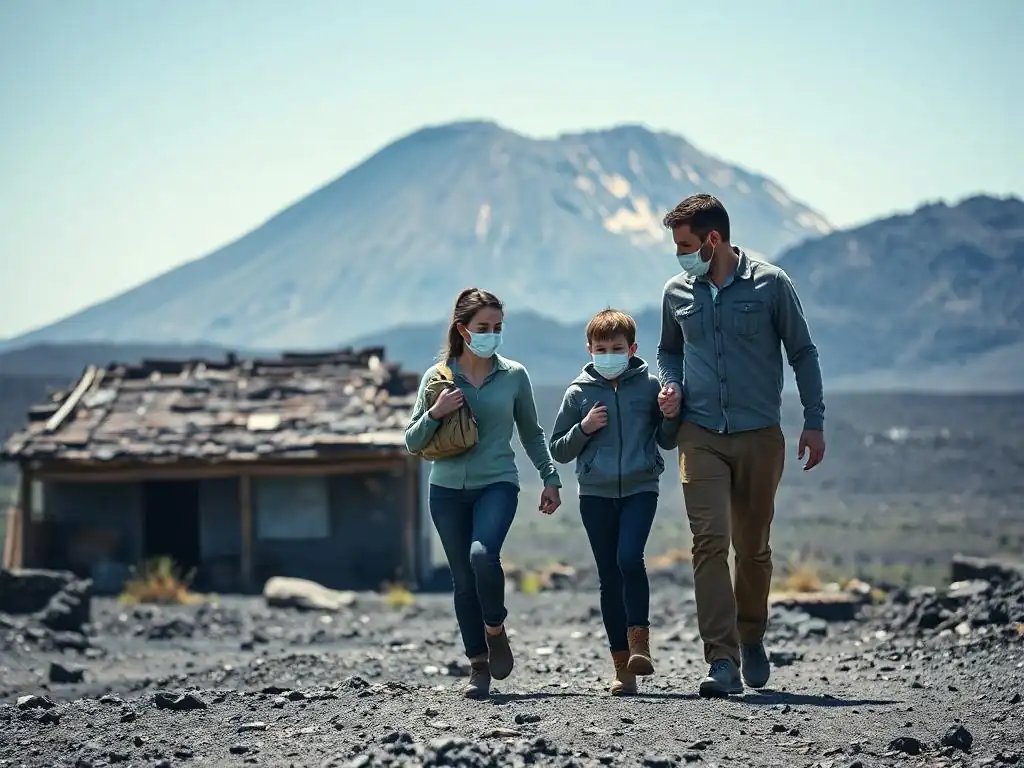
Official "All Clear" Announcements: Waiting for the Signal to Return
Returning home after a volcano evacuation should only occur after receiving an official "all clear" announcement from authorities. Do not return home prematurely based on assumptions or unofficial information. Volcanic activity can be unpredictable, and hazards may persist even after the most intense phase of an eruption has subsided. The "all clear" signal will be issued by local or regional emergency management agencies in coordination with volcanologists. This announcement signifies that scientific monitoring indicates volcanic activity has decreased to a safe level and that the evacuated areas are deemed safe for re-entry.
Official "all clear" announcements will be disseminated through the same communication channels used for evacuation orders, including radio, television, mobile alerts, government websites, and social media. Pay close attention to these official sources for the "all clear" signal. The announcement will specify the areas that are cleared for re-entry and any remaining precautions or restrictions that may be in place. Be patient and wait for the official announcement.
Prematurely returning home can put you and your family at risk from ongoing volcanic hazards, such as continued ashfall, lahars triggered by rainfall, or renewed volcanic activity. Authorities need time to assess the situation, ensure the safety of infrastructure, and coordinate the safe return of evacuees. Follow the instructions provided in the "all clear" announcement regarding re-entry procedures, designated return routes, and any necessary safety precautions.
Assessing Your Home for Damage: Safety Precautions After an Eruption
Upon returning home after a volcano evacuation, exercise caution and systematically assess your property for damage before fully reoccupying it. Approach your home carefully and be aware of potential hazards, such as structural damage, unstable ash deposits, or lingering volcanic gases. Do not enter your home immediately.
First, visually inspect the exterior of your house for any signs of structural damage, such as cracks in walls, leaning structures, or damage to the roof. Check for downed power lines or gas leaks around your property. If you suspect any structural damage or gas leaks, do not enter your home and contact utility companies and emergency services from a safe location.
If the exterior appears safe, enter your home cautiously. Use a flashlight to navigate, as power may be out. Check for gas leaks by smelling for a distinctive odor. If you smell gas, evacuate immediately, leave doors and windows open, and report the leak to the gas company from outside the house. Inspect for structural damage inside your home, including cracks in walls, ceilings, and foundations.
Check for damage to plumbing and electrical systems. Be aware of potential ceiling collapses due to the weight of accumulated ash on the roof. If you suspect significant structural damage, do not enter further and consult with a qualified building inspector before reoccupying your home. Check food and water supplies. Discard any food or water that may have been contaminated by volcanic ash or that has been exposed to prolonged power outages.
Ensure your water supply is safe before drinking it. If in doubt, use bottled water or boil water before consumption. Document any damage to your property with photographs and videos for insurance purposes. Contact your insurance company to report the damage and initiate the claims process.
Dealing with Ashfall: Cleaning and Health Considerations
Volcanic ashfall can pose significant challenges after a volcanic eruption. Ash is abrasive, corrosive, and can be harmful to health. Wear protective gear when cleaning up volcanic ash, including a dust mask or N95 respirator to prevent inhalation, goggles to protect your eyes, and long sleeves and pants to protect your skin. Start cleaning ash from your roof first, as accumulated ash can be heavy and cause roof collapses, especially if it becomes wet from rain.
Use a broom or shovel to remove ash, starting from the edges and working your way inwards. Avoid using water to wash ash off the roof, as wet ash is heavier and can further stress the roof structure. Clear gutters and downspouts to prevent blockages and ensure proper drainage.
Clean ash from your property and yard. Sweep sidewalks, driveways, and patios. Be cautious when using power equipment such as leaf blowers, as they can stir up ash and increase exposure. Lightly dampen ash with water before sweeping to reduce dust. Clean ash from vehicles frequently to prevent damage to paint and mechanical parts. Use gentle washing techniques and avoid abrasive scrubbing. Indoors, dust surfaces frequently with a damp cloth or vacuum cleaner with a HEPA filter. Avoid dry dusting, as this can stir up ash particles. Wash clothing and bedding that may have been exposed to ash.
Protect your respiratory health. Limit outdoor activities when ashfall is heavy. Stay indoors with windows and doors closed as much as possible. If you have respiratory conditions such as asthma or bronchitis, take extra precautions and consult your doctor if you experience any respiratory symptoms. Avoid contact lenses during ashfall, as ash particles can scratch your cornea.
Wear eyeglasses instead. Wash your hands frequently with soap and water, especially before eating or drinking. Drink plenty of water to stay hydrated and help clear ash from your respiratory system. Be aware of potential long-term health effects of ash exposure, such as respiratory problems and eye irritation. Consult a doctor if you have any concerns about your health after ash exposure.
The Science Behind Volcano Evacuations: Minimizing Risk
Volcano Monitoring Techniques: How Volcanologists Predict Eruptions
Volcanologists employ a variety of sophisticated monitoring techniques to detect changes in volcanic activity and assess the likelihood of an eruption. These techniques provide crucial data that inform volcano evacuation order guidelines and help minimize risk to communities. Seismometers are used to detect and measure earthquakes, which are often precursors to volcanic eruptions. Changes in the frequency, intensity, and location of earthquakes can indicate magma movement beneath the volcano and increasing pressure within the volcanic system.
Ground deformation monitoring measures changes in the shape of the volcano's surface. Instruments such as GPS receivers and tiltmeters can detect subtle swelling or tilting of the ground, which may indicate magma accumulation beneath the surface. Gas monitoring involves measuring the composition and emission rates of volcanic gases, such as sulfur dioxide, carbon dioxide, and water vapor. Changes in gas emissions can signal changes in magma degassing and potential eruption activity.
Thermal monitoring uses infrared sensors to detect changes in the temperature of the volcano's surface. Increased thermal activity can indicate rising magma or hydrothermal activity. Remote sensing techniques, such as satellite imagery and radar, provide a broad overview of volcanic activity and can detect changes in ground deformation, thermal anomalies, and ash plumes. Geochemical analysis of volcanic rocks, gases, and water provides insights into the composition and behavior of magma and the volcanic system. Historical eruption records and geological studies of past eruptions help volcanologists understand a volcano's eruptive history, potential eruption styles, and hazard zones.
Data from these monitoring techniques are continuously analyzed and interpreted by volcanologists. They use sophisticated models and forecasting methods to assess the likelihood of an eruption and to estimate the potential timing, size, and style of an eruption. This scientific information is then communicated to emergency management agencies, who use it to make decisions about volcano evacuation orders and other protective measures.
Volcano monitoring is not an exact science, and predicting eruptions remains a challenging endeavor. However, advances in monitoring techniques and scientific understanding have significantly improved the ability to forecast volcanic activity and to provide timely warnings to at-risk communities.
Understanding Volcanic Hazards: Lahars, Pyroclastic Flows, and Ashfall
Understanding the specific volcanic hazards associated with a particular volcano is essential for effective evacuation planning and risk mitigation. Lahars (volcanic mudflows) are one of the most dangerous volcanic hazards. They are rapid flows of water and volcanic debris that can travel down river valleys at high speeds, inundating areas far from the volcano. Lahars are triggered by various mechanisms, including melting snow and ice during an eruption, heavy rainfall on volcanic ash deposits, or breakout of crater lakes.
Lahars are extremely destructive and can bury or destroy everything in their path. Pyroclastic flows are hot, fast-moving currents of gas and volcanic debris that can travel down the flanks of a volcano at speeds exceeding hundreds of kilometers per hour. Pyroclastic flows are extremely hot (temperatures can reach hundreds of degrees Celsius) and are instantly lethal. They are typically generated during explosive eruptions or dome collapses.
Volcanic ashfall is a widespread hazard that can affect large areas downwind of a volcano. Ash is composed of fine particles of volcanic rock and glass. While not as immediately destructive as lahars or pyroclastic flows, ashfall can cause significant disruption and damage. Heavy ashfall can collapse roofs, disrupt transportation and infrastructure, contaminate water supplies, and cause respiratory problems.
Lava flows are streams of molten rock that erupt effusively from a volcano. Lava flows are extremely hot and can destroy everything in their path. However, lava flows typically move slower than lahars or pyroclastic flows, giving people time to evacuate areas in their path. Volcanic gases such as sulfur dioxide, carbon dioxide, and hydrogen sulfide are released during volcanic eruptions.
High concentrations of volcanic gases can be toxic and pose health risks, especially in areas near volcanic vents or downwind of the volcano. Volcanic landslides can occur on steep volcanic slopes, triggered by earthquakes, eruptions, or heavy rainfall. Volcanic landslides can be large and destructive, and can sometimes generate lahars or tsunamis if they enter bodies of water.
Each volcano has a unique set of potential hazards, depending on its eruptive history, geology, and surrounding environment. Volcano hazard assessments are conducted by volcanologists to identify and map the areas at risk from different volcanic hazards. This information is used to develop volcano evacuation order guidelines and land-use planning in volcanic regions.
The Importance of Following Volcano Evacuation Orders: Saving Lives
Following volcano evacuation orders is of paramount importance because it is a direct measure to save lives and minimize casualties during volcanic eruptions. Volcano evacuation orders are not issued lightly. They are the result of careful scientific assessment of volcanic hazards and are based on the best available information to protect public safety. Volcanic eruptions are inherently dangerous and unpredictable events.
Volcanic hazards such as pyroclastic flows, lahars, and heavy ashfall can be rapidly onsetting and extremely destructive. These hazards can overwhelm unprepared communities and cause widespread death and destruction. Volcano evacuation orders are designed to move people out of harm's way before these hazardous events occur. By adhering to evacuation orders, individuals and communities significantly reduce their risk of exposure to volcanic hazards and increase their chances of survival.
Delaying or ignoring evacuation orders can have fatal consequences. Volcanic eruptions can escalate rapidly, and conditions can change quickly. Waiting to see what happens or attempting to "ride out" an eruption in a hazardous area is extremely risky and can be deadly. The 1980 eruption of Mount St. Helens tragically demonstrated the consequences of ignoring warnings and evacuation orders.
Despite warnings and precursory activity, some people chose to remain in the designated danger zone and perished in the eruption. Volcano evacuation orders are not suggestions; they are directives to move to safety. They are issued by authorities who have the responsibility to protect public safety and who rely on scientific expertise to assess volcanic risk. Cooperation and compliance with evacuation orders are essential for effective emergency response.
When people follow evacuation orders promptly and efficiently, it allows emergency responders to focus on rescue and relief efforts and minimizes the strain on resources. Volcano evacuation orders are a critical tool for saving lives and building resilient communities in volcanic regions. Understanding the rationale behind evacuation orders and adhering to them is a fundamental aspect of volcano safety and preparedness.
Real-World Examples: Case Studies of Volcano Evacuations
Mount St. Helens Eruption: Lessons Learned
The 1980 eruption of Mount St. Helens in Washington State, USA, serves as a stark reminder of the destructive power of volcanoes and the importance of heeding warnings. Preceding the major eruption on May 18, 1980, Mount St. Helens exhibited several weeks of increased seismic activity and steam explosions, providing clear warning signs of an impending volcanic event. The USGS issued warnings and established restricted zones around the volcano. However, despite these warnings, some residents and tourists underestimated the danger and remained within or near the restricted zones.
On May 18, a magnitude 5.1 earthquake triggered a massive landslide on the north flank of Mount St. Helens, which in turn unleashed a powerful lateral blast followed by a Plinian eruption. The lateral blast and subsequent pyroclastic flows and lahars devastated a wide area north of the volcano.
Tragically, 57 people were killed in the eruption, many of whom were within the designated danger zone and had not evacuated despite the warnings. Lessons learned from the Mount St. Helens eruption emphasized the need for clear and consistent communication of volcanic hazards, the importance of public education about volcano risks, and the necessity of enforcing evacuation orders and restricted zones.
The eruption also highlighted the potential for unexpected and rapid changes in volcanic activity, underscoring the need for vigilance and preparedness even during periods of apparent calm. The Mount St. Helens eruption became a pivotal event in volcanology and emergency management, leading to significant improvements in volcano monitoring, hazard assessment, and public safety protocols in volcanic regions worldwide.
Pinatubo Eruption: A Successful Evacuation
In contrast to the Mount St. Helens tragedy, the 1991 eruption of Mount Pinatubo in the Philippines is widely considered a successful example of volcano monitoring and evacuation, resulting in a remarkably low death toll despite the magnitude of the eruption. Mount Pinatubo had been dormant for centuries before it reawakened in 1990. The Philippine Institute of Volcanology and Seismology (PHIVOLCS) and the USGS Volcano Hazards Program collaborated to intensively monitor the volcano as signs of unrest increased in early 1991. Volcanologists detected increasing seismicity, gas emissions, and ground deformation, indicating a growing likelihood of a major eruption.
Based on the monitoring data and hazard assessments, PHIVOLCS issued timely warnings and evacuation orders for areas surrounding Mount Pinatubo. A phased evacuation plan was implemented, starting with areas closest to the volcano and gradually expanding the evacuation zone as the eruption progressed. The evacuation involved relocating hundreds of thousands of people, including residents of nearby towns and U.S. military personnel stationed at Clark Air Base.
The eruption of Mount Pinatubo on June 15, 1991, was one of the largest volcanic eruptions of the 20th century, producing massive pyroclastic flows, lahars, and heavy ashfall that devastated the surrounding landscape. Despite the magnitude of the eruption, the death toll was relatively low, estimated at around 800 people. The vast majority of these fatalities were indirectly related to the eruption, such as from roof collapses due to ashfall and lahars in areas outside the main evacuation zones.
The successful evacuation of hundreds of thousands of people before the main eruption is credited with saving tens of thousands of lives. The Pinatubo evacuation demonstrated the effectiveness of volcano monitoring, hazard assessment, timely warnings, and well-executed evacuation plans in mitigating the risks of volcanic eruptions.
Staying Informed: Resources for Volcano Evacuation Preparedness
Official Government Resources for Volcano Monitoring and Evacuation
Staying informed about volcano monitoring and evacuation preparedness is crucial for residents of volcanic regions. Numerous official government resources provide valuable information and tools to help individuals and communities prepare for volcanic emergencies. In the United States, the USGS Volcano Hazards Program ( www.usgs.gov/volcanoes ) is the primary federal agency responsible for monitoring volcanoes and assessing volcanic hazards. Their website provides real-time volcano monitoring data, current alert levels, volcano hazard assessments, educational materials, and eruption updates. NOAA (National Oceanic and Atmospheric Administration) ( www.noaa.gov ) through its National Weather Service, operates NOAA Weather Radio, which broadcasts official weather forecasts and hazard information, including volcano warnings and evacuation orders. FEMA (Federal Emergency Management Agency) ( www.fema.gov ) provides comprehensive resources on emergency preparedness, including volcano preparedness guides, evacuation planning tools, and information on building emergency kits.
Many state and local emergency management agencies also offer volcano preparedness resources specific to their regions. These agencies often have websites with local evacuation plans, shelter locations, and community-specific emergency information. Search for your state or local emergency management agency online to find these resources. Ready.gov ( www.ready.gov ) is a national public service campaign that provides resources on preparing for various emergencies, including volcanic eruptions. Their website offers guides on building emergency kits, making family emergency plans, and staying informed about hazards. The Smithsonian Institution's Global Volcanism Program ( volcano.si.edu ) provides a global database of volcanic activity and eruption information, offering a broader perspective on volcano hazards worldwide. Utilize these official government resources to stay informed about volcano risks in your area, to develop your personal and family preparedness plans, and to access reliable information during volcanic emergencies.
Emergency Preparedness Resources
Beyond volcano-specific resources, general emergency preparedness resources offer valuable guidance applicable to volcano evacuations and other disasters. The American Red Cross ( www.redcross.org ) provides extensive information and training on emergency preparedness, including creating emergency plans, building disaster kits, and responding to various emergencies. They offer online courses, workshops, and resources for families and communities. The Centers for Disease Control and Prevention (CDC) ( www.cdc.gov ) offers resources on health and safety during emergencies, including information on protecting yourself from volcanic ash and other hazards. The National Safety Council ( www.nsc.org ) provides safety tips and resources for various emergencies, including natural disasters.
Local community organizations and non-profits often offer emergency preparedness training and resources. Check with your local community centers, libraries, and faith-based organizations for preparedness workshops and materials. Participate in community emergency preparedness drills and exercises. These drills provide valuable hands-on experience and help you practice your emergency plans. Review and update your emergency plans and supplies regularly. Emergency preparedness is an ongoing process, not a one-time event. Stay informed, stay prepared, and be ready to act when volcanic hazards threaten your community.
Community Involvement: Participating in Local Emergency Drills
Community involvement is a vital component of volcano evacuation preparedness. Participating in local emergency drills and exercises is a proactive way to enhance community resilience and ensure effective response during a volcanic crisis. Emergency drills simulate real-life evacuation scenarios, allowing residents, emergency responders, and community organizations to practice their roles and responsibilities. These drills help identify strengths and weaknesses in emergency plans and procedures, allowing for improvements and refinements. Participating in drills increases individual and community preparedness. Drills provide hands-on experience in evacuation procedures, communication protocols, and shelter operations, building confidence and competence in responding to a volcanic emergency.
Drills improve coordination and communication among different stakeholders, including residents, emergency responders, government agencies, and community organizations. They provide opportunities to test communication systems and ensure that information flows effectively during an emergency. Drills help to educate the public about volcano hazards, evacuation routes, shelter locations, and emergency procedures. They raise awareness and promote a culture of preparedness within the community. Community involvement in drills fosters a sense of collective responsibility and strengthens social cohesion. Working together to prepare for emergencies builds community bonds and enhances the ability to support each other during a crisis.
Look for announcements about local emergency drills and exercises in your community. These announcements are often made through local government websites, community newsletters, and social media channels. Volunteer to participate in drills and encourage your family, friends, and neighbors to participate as well. Active participation in drills is the best way to learn and practice emergency procedures. Provide feedback and suggestions for improvement after drills.
Your input can help emergency planners refine evacuation plans and make them more effective. Support community-based emergency preparedness initiatives. Get involved in local preparedness groups and organizations to promote community-wide resilience to volcanic hazards. By actively participating in local emergency drills and community preparedness efforts, you contribute to a safer and more resilient community in the face of volcanic threats.
Frequently Asked Questions
What triggers a volcano evacuation order?
A volcano evacuation order is typically issued when scientific monitoring data indicates an imminent eruption that poses a direct threat to human life and property.
Where can I find the most up-to-date information about potential volcano evacuations?
Reliable sources for updates include official government agencies, such as local emergency management services, and trusted volcano observatories, like those listed on VolcanoExplorers.org.
What are some key things to include in a volcano evacuation plan?
Your plan should include designated meeting points, pre-packed emergency kits containing essential supplies, and clearly defined evacuation routes to avoid congested areas.
What does a "Volcano Alert Level" actually mean?
The Volcano Alert Level is a standardized system used to communicate the level of volcanic activity and the associated risks, helping officials determine if an evacuation is necessary.
Are there any specific guidelines for people with disabilities or special needs during a volcano evacuation?
People with disabilities should register with local emergency services to receive priority assistance, and ensure they have a personal support network in place to aid with evacuation.
Okay, here's a final reflection designed for your article "Decoding Danger: Understanding Volcano Evacuation Orders," optimized for the keyword "volcano evacuation order guidelines" and following your specified structure:
Final Reflection: Embracing Preparedness in the Shadow of Giants
The detailed exploration of volcano evacuation order guidelines presented throughout this article underscores a critical truth: knowledge is our strongest defense against the unpredictable power of nature. Understanding the nuances of these guidelines, from alert levels to designated evacuation routes, is not merely academic; it's a matter of life and death for communities living in the shadow of active volcanoes.
The impact of volcanic eruptions, and the effectiveness of the response, resonates deeply within the collective consciousness. The stories of resilience and, tragically, loss, serve as constant reminders of the need for vigilance and proactive planning. By failing to prepare, you are preparing to fail.
- Benjamin Franklin. This quote encapsulates the essence of why understanding and adhering to volcano evacuation order guidelines is paramount. It's about respecting the power of the earth and taking responsibility for our own safety and the safety of those around us.
As you reflect on the information presented in this article, consider your own preparedness. Are you familiar with the volcano evacuation order guidelines specific to your region? Do you have an emergency plan in place? Let this knowledge empower you to take action, to educate yourself and your community, and to become an active participant in ensuring a safer future for all who live near these magnificent, yet potentially devastating, giants.
Prepare, Plan, and Protect: Your Next Steps After Learning About Volcano Safety!
Thanks for reading "Decoding Danger: Understanding Volcano Evacuation Orders"! We hope this article has provided you with the knowledge to stay safe and informed during volcanic events. Now, let's put that knowledge into action.
Here's what you can do next:
- Immediately review your local emergency plans and identify your evacuation zone. This crucial step will help ensure your safety.
- Share this article with friends and family in areas with active or potentially active volcanoes. Spreading awareness can save lives.
- Join our Volcano Explorers community forum to discuss your experiences and ask questions about volcano safety. Let's learn together!
What's in your volcano preparedness kit, and what are the specific challenges you face in your area? Share your thoughts below!