
Beyond Hawaii: Unexplored Lava Flow Photography Locations Worldwide

Welcome to Volcano Explorers.
Dare to witness the raw power of the Earth? Prepare to journey beyond the familiar landscapes of Hawaii as we unveil a world of Unexplored Lava Flow Photography Locations. These fiery rivers of molten rock offer unparalleled opportunities to capture nature's most dramatic displays. But where are they, and how can you safely access them? Read on, and unlock the secrets to some of the planet's most breathtaking – and potentially perilous – photographic experiences.
- Introduction: Discovering Hidden Gems for Lava Flow Photography
- I. Iceland: Capturing Glacial Lava Flows
- II. Kamchatka, Russia: A Volcanic Peninsula Paradise
- III. Democratic Republic of Congo: Witnessing the Nyiragongo Lava Lake
- IV. Vanuatu: Island Volcanoes and Coastal Lava Flows
-
Frequently Asked Questions
- What are some unexplored locations for lava flow photography besides Hawaii?
- What are the main challenges photographers face when shooting in unexplored lava flow areas?
- What safety precautions should photographers take when exploring active lava flows?
- How can photographers find information about active lava flows in less-visited locations?
- What unique photographic opportunities do unexplored lava flow locations offer compared to more popular sites?
- Final Reflection: Embracing the Earth's Fiery Canvas
- Ignite Your Passion: Plan Your Next Volcanic Photo Expedition!
Expanding Your Volcanic Photography Horizons Beyond the Familiar
For many aspiring and seasoned photographers alike, Hawaii often stands as the quintessential destination for capturing the raw power and mesmerizing beauty of active lava flows. The readily accessible flows of Kilauea and Mauna Loa have provided iconic imagery, shaping our collective vision of volcanic landscapes.
However, limiting your photographic pursuits to this well-trodden path means missing out on a world of equally, if not more, dramatic and diverse volcanic phenomena across the globe. This article aims to broaden your horizons, guiding you to unexplored lava flow photography locations that offer unique geological features and unparalleled visual narratives far beyond the familiar Hawaiian vistas.
Venturing beyond the popular spots unlocks opportunities to capture truly unique and less-seen perspectives of volcanic activity. From the glacial ice fields of Iceland interacting with fiery lava to the remote and untamed volcanic peninsulas of Russia, and the surreal lava lakes of Africa and Ethiopia, the world is brimming with undiscovered volcanic photography gems. Exploring these locations not only provides fresh photographic subjects but also challenges your skills, pushing you to adapt to diverse environments and logistical hurdles, ultimately enriching your portfolio and your understanding of our planet's dynamic geological processes.
Why Explore Unexplored Lava Flow Locations?
The allure of photographing unexplored lava flow locations extends beyond simply seeking novelty. These less-visited volcanic areas often present landscapes untouched by mass tourism, offering a more authentic and intimate experience with nature’s raw power. In places like Kamchatka or the Danakil Depression, you're not just capturing lava; you're documenting geological formations and ecosystems that are rarely witnessed by the human eye. This exclusivity adds a layer of profound significance to your work, turning your photographs into valuable records of Earth's most dramatic expressions.
Furthermore, venturing into unexplored territories often translates to fewer photographers and crowds. This allows for a more immersive and focused photographic experience. Imagine capturing the ethereal glow of a lava lake under the vast, star-studded skies of the Danakil Depression, without the distraction of fellow photographers. Beyond the artistic rewards, exploring these locations often supports local economies in less-developed regions and promotes a more sustainable form of volcano tourism, shifting the focus from over-saturated destinations to areas that can truly benefit from responsible exploration.
I. Iceland: Capturing Glacial Lava Flows
The Unique Beauty of Iceland's Volcanic Landscapes
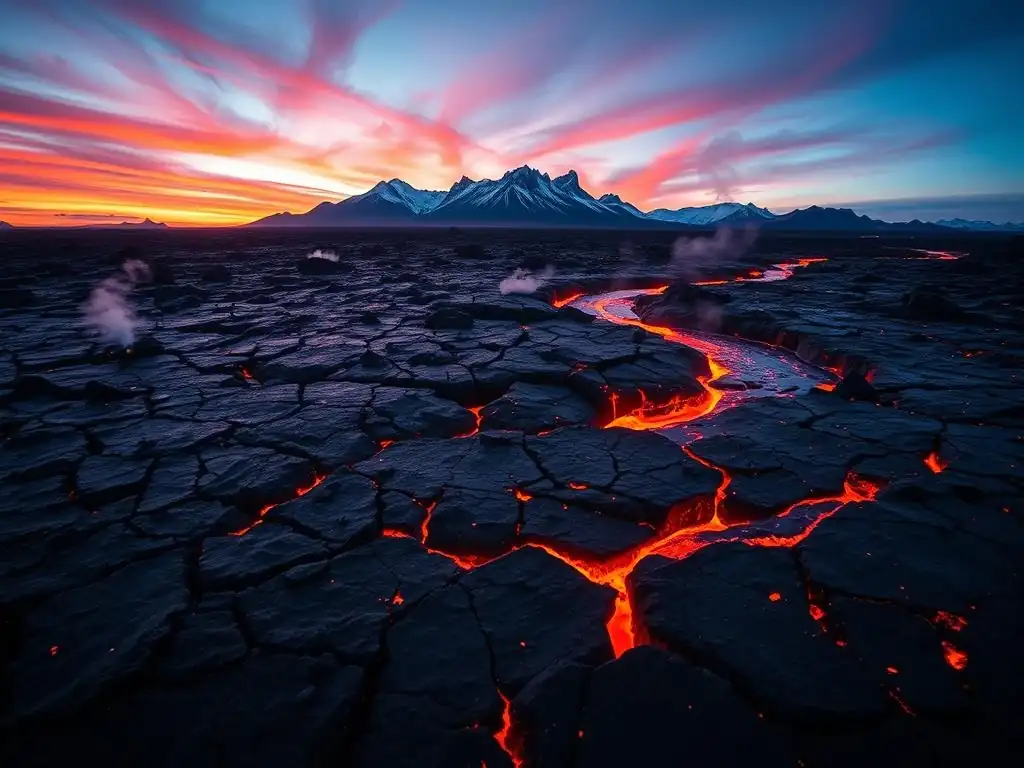
Iceland, the "Land of Fire and Ice," presents a truly unique setting for lava flow photography, distinct from the tropical volcanic scenes of Hawaii. Here, active volcanoes interact dramatically with glaciers, ice fields, and stark, black sand beaches, creating a visual symphony of contrasting elements.
The interplay of fire and ice manifests in surreal landscapes where rivers of molten rock carve paths through glacial valleys, and steam plumes rise against the backdrop of snow-capped peaks. This juxtaposition provides photographers with opportunities to capture images that are both breathtaking and scientifically fascinating, showcasing the powerful forces that shape our planet in real-time.
The volcanic landscapes of Iceland are further characterized by diverse geological formations, shaped by centuries of eruptions under glacial and subglacial conditions. Imagine capturing the vibrant orange glow of lava contrasting with the deep blue hues of glacial ice caves, or photographing newly formed lava fields still steaming amidst a winter snowstorm.
Iceland's volcanic activity is not always explosive; effusive eruptions are common, allowing for relatively safe observation and photography of slow-moving lava flows. This accessibility, combined with the dramatic backdrop of glaciers, waterfalls, and the Northern Lights, makes Iceland a prime, yet often overlooked, destination for lava flow photography that rivals the iconic imagery of Hawaii.
Photography Tips for Icelandic Lava Flows: Light and Composition
Photographing lava flows in Iceland requires adapting your techniques to the unique environmental conditions. The ever-changing weather and light conditions of Iceland demand flexibility and preparedness. Overcast skies, common in Iceland, can actually enhance the dramatic effect of lava flows, diffusing the harsh light and allowing for richer color saturation in both the lava and the surrounding landscape. Utilize long exposures to capture the ethereal movement of clouds and the flowing texture of lava, particularly during the blue hour or at night. The long twilight hours during summer months offer extended opportunities to photograph lava under soft, golden light.
Compositionally, Iceland's landscapes offer endless possibilities. Incorporate the vastness of the glacial landscapes to emphasize the scale of the volcanic activity. Look for leading lines created by rivers, roads, or rock formations to guide the viewer's eye toward the lava flows.
Consider using foreground elements like ice formations, moss-covered rocks, or black sand dunes to add depth and context to your images. Experiment with different perspectives – shooting from higher vantage points can reveal the intricate patterns of lava fields, while getting closer to the flow (safely, of course) can emphasize the intense heat and textures. Don't forget to capture the steam plumes and volcanic gases, which can add an otherworldly atmosphere to your photographs.
Accessing Remote Icelandic Lava Fields: Holuhraun and Geldingadalir
While some volcanic areas in Iceland are readily accessible, reaching the most photogenic and less-explored lava fields often requires venturing off the beaten path. The Holuhraun lava field, formed during the 2014-2015 Bárðarbunga eruption, is a prime example. Initially requiring helicopter access, parts of Holuhraun became more accessible over time via guided tours, offering photographers the chance to witness a vast, relatively young lava field stretching across the highlands. Researching current access conditions and permitted tour operators is crucial for planning a trip to Holuhraun or similar remote locations.
The Geldingadalir eruptions on the Reykjanes Peninsula, beginning in 2021, provided another, more recent example of accessible yet dramatic lava flow photography opportunities in Iceland. While initially requiring a significant hike, trails were established, allowing relatively easy access to viewpoints overlooking the active flows and lava fountains. However, volcanic activity is dynamic, and access conditions can change rapidly.
Always consult local authorities and volcano monitoring websites for up-to-date information on safety conditions, trail closures, and potential hazards before venturing out to photograph lava flows in Iceland, especially in less-developed areas. Utilizing local guides who are familiar with the terrain and volcanic activity is highly recommended for both safety and maximizing your photographic opportunities in remote Icelandic lava fields.
II. Kamchatka, Russia: A Volcanic Peninsula Paradise
Kamchatka's Active Volcanoes and Lava Flow Potential
The Kamchatka Peninsula in far eastern Russia stands as a true volcanic paradise, boasting a remarkable concentration of active volcanoes, geysers, and hot springs. Often referred to as the "Land of Fire and Ice" – a title it arguably shares with Iceland – Kamchatka is home to over 300 volcanoes, with around 30 still considered active.
This high density of volcanic activity translates into a significant potential for witnessing and photographing lava flows, although accessibility can be more challenging than in Iceland. Kamchatka's volcanic landscapes are incredibly diverse, ranging from snow-capped stratovolcanoes like Klyuchevskaya Sopka, Eurasia's highest active volcano, to caldera lakes and vast, desolate lava plateaus.
The remote and largely undeveloped nature of Kamchatka contributes to its allure for adventurous volcano photographers. Unlike the more frequently visited volcanic regions, Kamchatka offers a sense of true wilderness and exploration. Eruptions, while less frequent than in places like Hawaii or Iceland, can be spectacularly powerful when they occur.
Volcanoes such as Tolbachik have produced significant lava flows in recent decades, carving new landscapes and offering unique photographic subjects. The peninsula's geographical isolation has preserved its pristine volcanic environments, making it a truly exceptional, and often unexplored, location for capturing the raw beauty and power of lava flows in a dramatically wild setting.
Photographing Kamchatka's Wild and Untamed Lava Rivers
Photographing lava flows in Kamchatka presents a unique set of challenges and rewards compared to more accessible volcanic regions. The "wild and untamed" nature of Kamchatka’s volcanic rivers stems from the peninsula's rugged terrain, unpredictable weather, and limited infrastructure. Reaching active lava flow sites often involves helicopter transport, long hikes through challenging terrain, or even boat trips along the coast to access volcanoes erupting near the sea. This logistical complexity demands meticulous planning, robust equipment, and a high degree of self-sufficiency.
However, the rewards for overcoming these challenges are substantial. Imagine capturing images of a fiery lava river snaking its way through a pristine, snow-covered valley, with no signs of human development in sight. The scale of Kamchatka's volcanic landscapes is immense, allowing for compositions that emphasize the raw power of nature and the insignificance of human presence.
Photographing lava flows here often means working in extreme conditions – from sub-zero temperatures to strong winds and unpredictable volcanic activity. These conditions necessitate specialized gear and a deep understanding of mountain safety and wilderness survival, but they also contribute to the unique and unforgettable experience of capturing Kamchatka's untamed volcanic beauty.
Permits and Safety Considerations for Kamchatka Volcano Photography
Venturing into Kamchatka for volcano photography requires careful attention to permits, safety regulations, and logistical planning. Due to its remote location and proximity to military installations, certain areas within Kamchatka may require permits for access, especially for foreign visitors. It is essential to research permit requirements well in advance of your trip and to work with reputable local tour operators who are experienced in navigating these regulations. These operators can also assist with transportation, accommodation, and guiding services, which are crucial for exploring Kamchatka's vast and challenging terrain.
Safety considerations are paramount when photographing volcanoes in Kamchatka. Volcanic activity can be unpredictable, and hazards include gas emissions, ashfall, pyroclastic flows, and glacial outburst floods (jökulhlaups). Always monitor volcano activity reports from the Kamchatkan Volcanic Eruption Response Team (KVERT) and heed the advice of local guides and authorities.
Carry appropriate safety gear, including gas masks, sturdy hiking boots, warm layers of clothing, and communication devices. Bear safety is also a concern in Kamchatka, so traveling in groups and carrying bear deterrents is advisable. Given the remoteness of many volcanic sites, emergency evacuation can be challenging, making thorough planning and preparedness essential for a safe and successful volcano photography expedition in Kamchatka.
III. Democratic Republic of Congo: Witnessing the Nyiragongo Lava Lake
The Allure of Nyiragongo's Active Lava Lake for Photographers
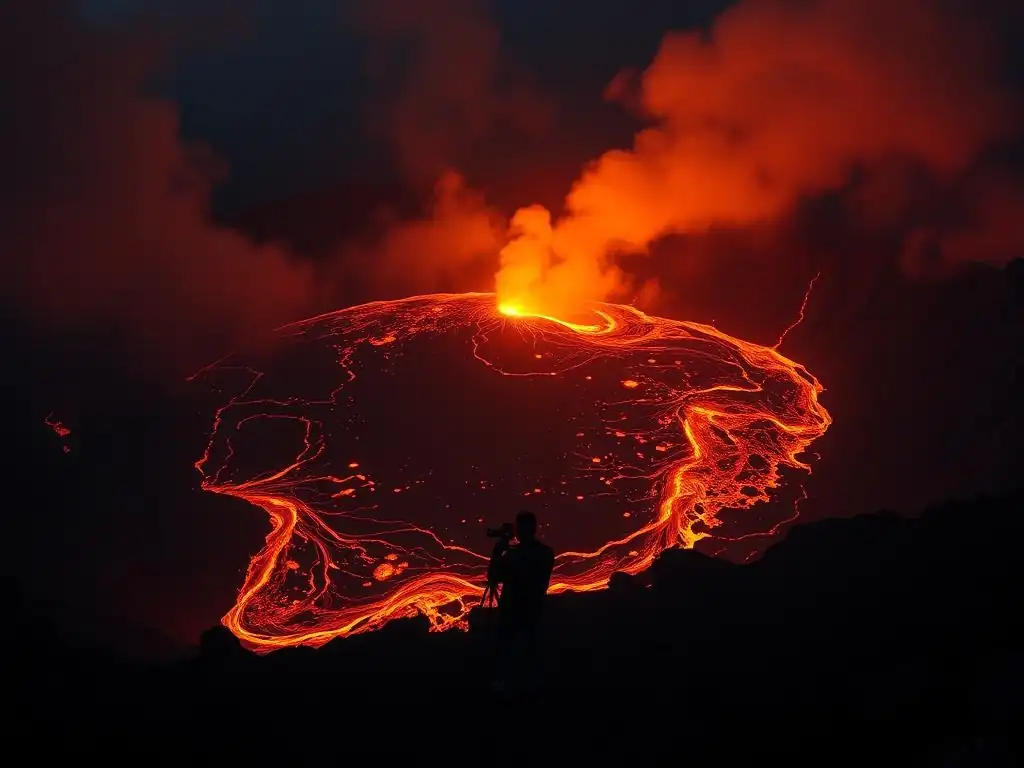
Mount Nyiragongo, located in the Virunga National Park of the Democratic Republic of Congo, holds a unique and intensely captivating allure for volcano photographers: its persistent and spectacularly active lava lake. Nyiragongo's summit crater contains one of the world’s largest and most volatile lava lakes, a churning cauldron of molten rock that emits intense heat and a mesmerizing orange glow, particularly visible at night. This lava lake is not just a geological curiosity; it's a dynamic and ever-changing spectacle, offering photographers unparalleled opportunities to capture the raw power and beauty of Earth's internal processes.
The sheer scale and activity of Nyiragongo's lava lake are what truly set it apart. Unlike lava flows that move across landscapes, the lava lake is a contained, yet constantly churning, body of molten rock. This allows photographers to capture a concentrated display of volcanic energy, from the fiery surface of the lake to the plumes of gas and steam rising above the crater rim.
The dramatic backdrop of the Virunga Mountains and the surrounding rainforest adds another layer of visual interest, creating a stark contrast between the fiery volcanic activity and the lush African environment. For photographers seeking to capture the ultimate image of volcanic intensity, Nyiragongo's lava lake is an almost irresistible destination.
Capturing the Scale and Intensity of the Nyiragongo Eruption
Photographing Nyiragongo's lava lake requires a specific approach to capture its immense scale and intense energy. Wide-angle lenses are essential to encompass the entirety of the crater and the lava lake within the frame, emphasizing its vastness. Utilizing foreground elements, such as the crater rim or nearby rock formations, can provide a sense of scale and perspective, highlighting the depth and dimensions of the lava lake.
Night photography is particularly rewarding at Nyiragongo, as the darkness amplifies the glow of the lava, creating a dramatic contrast against the night sky. Long exposures can blur the movement of the lava, producing ethereal and otherworldly images.
Capturing the intensity of the lava lake also involves careful attention to exposure settings. The extreme brightness of the molten lava can easily lead to overexposure, losing detail in the highlights. Shooting in RAW format and using spot metering to expose for the lava while allowing the darker areas to fall into shadow can help preserve detail in both the highlights and shadows.
Time-lapse photography is also a powerful technique for Nyiragongo, allowing you to capture the dynamic nature of the lava lake over time, showcasing its constant churning and gas emissions. Consider incorporating the sounds of the volcano – the roars and hisses of escaping gases and the bubbling of the lava – into your photographic narrative, even though you are primarily capturing visual images.
Safety Precautions and Ethical Considerations When Photographing Nyiragongo
Photographing Nyiragongo, while incredibly rewarding, demands strict adherence to safety precautions and ethical guidelines. The volcano is located in a region with ongoing security concerns, and Virunga National Park has a history of instability. It is absolutely essential to travel with reputable, park-approved guides and rangers, and to strictly follow their instructions. Hiking to the crater rim involves a strenuous climb at high altitude, requiring good physical fitness and proper acclimatization. Be prepared for cold temperatures at the summit, even at night, and bring appropriate warm layers, sturdy hiking boots, and rain gear.
Ethical considerations are also paramount when visiting and photographing Nyiragongo. Virunga National Park is a UNESCO World Heritage Site and home to endangered mountain gorillas. Respect the park's regulations, minimize your environmental impact, and avoid disturbing wildlife. Support the local community by using local guides and porters, and be mindful of the socio-political context of the region. Photography should be conducted responsibly, avoiding sensationalism or exploitation, and aiming to raise awareness about the natural beauty and fragility of this unique volcanic environment, as well as the challenges faced by the park and its surrounding communities.
IV. Vanuatu: Island Volcanoes and Coastal Lava Flows
Yasur Volcano: An Accessible Strombolian Eruption
Vanuatu, an island nation in the South Pacific, offers a different style of lava flow photography, characterized by accessible and consistently active Strombolian eruptions. Yasur Volcano on Tanna Island stands out as one of the world's most accessible active volcanoes, allowing photographers to witness and capture Strombolian eruptions – relatively mild, but visually spectacular bursts of lava and volcanic bombs – from the crater rim with relative ease and safety. Yasur’s consistent activity makes it a reliable destination for photographers seeking to capture dynamic volcanic explosions without the extreme risks associated with more hazardous volcanoes.
The accessibility of Yasur Volcano is a major draw. Visitors can drive relatively close to the volcano and then take a short walk to the crater rim, where viewing platforms offer safe vantage points for observing and photographing the eruptions.
This accessibility makes Yasur ideal for photographers of varying experience levels, from beginners looking to capture their first volcanic eruption to seasoned professionals seeking to refine their techniques in a relatively controlled environment. The Strombolian eruptions, while not massive lava flows, provide captivating photographic subjects – fiery bursts of molten rock against the twilight or night sky, offering dynamic and visually striking images.
Ambrym Island: Exploring Remote Lava Plains and Cones
For a more adventurous lava flow photography experience in Vanuatu, Ambrym Island offers remote and less-explored volcanic landscapes. Ambrym is home to two active volcanoes, Benbow and Marum, which are known for their vast caldera, lava lakes, and extensive lava plains. Exploring Ambrym requires more effort and planning than visiting Yasur, often involving multi-day treks through dense jungle and across rugged volcanic terrain. However, the rewards are significant: the opportunity to photograph vast, untouched lava fields and witness volcanic activity in a truly remote and pristine environment.
The volcanic landscapes of Ambrym are diverse and dramatic. Imagine capturing panoramic views of a vast caldera filled with steaming vents and solidified lava flows, or trekking across a black lava plain dotted with cinder cones and fumaroles.
Accessing the active craters of Benbow and Marum is challenging and requires expert local guides, but the views into these volcanic calderas, and the potential to witness lava lake activity (though less consistent than Nyiragongo), are truly awe-inspiring. Ambrym offers a more raw and adventurous volcano photography experience compared to the accessibility of Yasur, appealing to photographers seeking to push their boundaries and capture images from truly off-the-beaten-path volcanic locations.
Photographing Coastal Lava Flows: The Dance of Fire and Water
Vanuatu's island setting also presents unique opportunities to photograph coastal lava flows, where molten rock interacts directly with the ocean. While not as common as in Hawaii, eruptions on some of Vanuatu’s volcanic islands can send lava flows cascading down to the coast, creating dramatic scenes of fire and water.
Photographing this interaction requires careful planning and timing, as coastal lava flows are often ephemeral and dependent on specific eruption conditions and topography. However, capturing the moment when molten lava meets the ocean, creating plumes of steam and potentially explosive interactions, can result in incredibly dynamic and visually arresting images.
Coastal lava flow photography in Vanuatu often involves boat trips to access remote coastal areas where lava is entering the sea. This adds another layer of complexity and logistical planning, requiring coordination with local boat operators and careful monitoring of volcanic activity and sea conditions.
Safety is paramount when photographing coastal lava flows, as the interaction of lava and water can produce steam explosions and unstable coastal terrain. However, with careful planning and expert guidance, photographers can capture the breathtaking "dance of fire and water," documenting the powerful and dynamic interface between volcanic and oceanic forces in the unique island setting of Vanuatu.
Frequently Asked Questions
What are some unexplored locations for lava flow photography besides Hawaii?
While Hawaii is famous, consider places like Kamchatka in Russia, Ethiopia's Danakil Depression, or Vanuatu's Ambrym Island for less crowded and equally stunning lava flows. These locations offer unique geological features.
What are the main challenges photographers face when shooting in unexplored lava flow areas?
Challenges include logistical difficulties like remote locations and permits, extreme environmental conditions such as heat and toxic gases, and safety risks associated with unstable terrain and volcanic activity.
What safety precautions should photographers take when exploring active lava flows?
Essential precautions include wearing protective gear (heat-resistant clothing, gas masks), maintaining a safe distance from the lava, and being aware of evacuation routes and potential hazards like explosions or collapses.
How can photographers find information about active lava flows in less-visited locations?
Photographers should consult volcanological observatories, local authorities, and online forums dedicated to volcanology and photography to obtain the latest information on volcanic activity and safety guidelines.
What unique photographic opportunities do unexplored lava flow locations offer compared to more popular sites?
Unexplored locations provide opportunities for unique perspectives, untouched landscapes, and original compositions due to the absence of other photographers and the less-altered environment. This leads to more authentic imagery.
Final Reflection: Embracing the Earth's Fiery Canvas
The journey through unexplored lava flow photography locations reveals more than just stunning landscapes; it underscores the raw, untamed power of our planet and the boundless opportunities for artistic exploration it offers. These hidden gems, far beyond the familiar vistas of Hawaii, beckon photographers to push their boundaries and capture the Earth's fiery artistry in its most primal form.
The allure of these locations lies not only in their visual spectacle but also in their profound impact on the surrounding environment and, by extension, on our own understanding of nature's forces. Witnessing these landscapes firsthand fosters a deep respect for the Earth's dynamic processes and inspires a sense of responsibility towards its preservation. The best view comes after the hardest climb.
This sentiment perfectly encapsulates the dedication and perseverance required to reach and photograph these remote, challenging, yet ultimately rewarding locations.
Now, as you close this article, consider the landscapes that ignite your own passion. What unexplored corners of the world call to you, promising unique perspectives and unforgettable experiences? Let the spirit of adventure and the pursuit of beauty guide your lens, and may your photographs inspire others to appreciate and protect the Earth's fiery canvas for generations to come.
Ignite Your Passion: Plan Your Next Volcanic Photo Expedition!
Thank you for exploring the world of lava flow photography with us! We hope this article has inspired you and revealed exciting new destinations for your next adventure. Ready to capture the raw power and beauty of these incredible landscapes?
Here's how to take your passion to the next level:
- Start planning your dream trip: Research a specific location mentioned in the article, such as Iceland's Bardarbunga lava field or the Kamchatka Peninsula, and begin outlining your itinerary.: Consider factors like seasonal accessibility, safety regulations, and the need for local guides.
- Share your inspiration! Post your favorite image of volcanic landscapes on social media using the hashtag #VolcanoExplorers and tag us. We'd love to see your dream destinations!
- Dive deeper into volcanology: Visit volcanoexplorers.org to access exclusive content, join our community forum, and expand your knowledge of volcanic formations and photography techniques.
Where will your next adventure take you in search of molten wonders?