
Sakurajima's Ferry to Paradise: Island Hopping for Volcano Photography in Japan

Welcome to Volcano Explorers!
Ever wondered how to capture the raw power and ethereal beauty of an active volcano? Prepare to be captivated. This month, we journey to Japan, where fiery landscapes meet ancient traditions. Dive into our latest article, " Sakurajima's Ferry to Paradise: Island Hopping for Volcano Photography in Japan," and uncover the secrets to stunning volcano photography in Japan. What awaits beyond the ferry's horizon? Let's find out together...
- Capturing Volcanic Majesty: A Photographer's Journey to Sakurajima
- Planning Your Volcano Photography Trip to Sakurajima
- Essential Photography Gear for Sakurajima's Volcanic Landscapes
-
Prime Photography Locations on and Around Sakurajima
- The Best Vantage Points for Capturing Sakurajima's Eruptions
- Shiraishi Pass: Panoramic Views of the Volcano and Coastline
- Arimura Lava Observatory: Witnessing the Power of Past Eruptions
- Yunohira Observatory: Another Prime Location
- Island Hopping Around Sakurajima: Exploring Nearby Islands for Unique Perspectives [Example: Yokojima Island]
- Mastering Volcano Photography Techniques: Sakurajima Edition
- Post-Processing Tips for Striking Volcano Photography
- Safety Considerations for Volcano Photography at Sakurajima
- Beyond Sakurajima: Exploring Other Volcano Photography Opportunities in Japan
- Conclusion: A Volcano Photography Adventure to Remember in Japan
-
Frequently Asked Questions
- What makes Sakurajima a unique location for volcano photography?
- What safety precautions should I take when photographing Sakurajima?
- What time of day is best for volcano photography at Sakurajima?
- Are there any specific photography permits required for Sakurajima?
- What other photographic subjects besides the volcano can be found on Sakurajima?
- Final Reflection: Capturing the Soul of Fire
- Ignite Your Inner Explorer: Capture Sakurajima's Majesty!
Capturing Volcanic Majesty: A Photographer's Journey to Sakurajima
Introduction to Volcano Photography in Japan: Why Sakurajima?
Japan, an archipelago sculpted by fire and brimstone, boasts an impressive number of active volcanoes, making it a prime destination for adventurous photographers seeking to capture the raw power of nature. Among these fiery peaks, Sakurajima stands out as an exceptionally accessible and dramatically active volcano, offering unparalleled opportunities for volcano photography in Japan. Located in Kagoshima Bay, just a short ferry ride from the city of Kagoshima, Sakurajima presents a unique blend of convenience and volcanic spectacle, making it an ideal starting point or centerpiece for any photographer's volcanic journey through Japan.
The allure of Sakurajima for photographers is multifaceted. Firstly, its near-constant state of activity means that capturing plumes of ash, glowing lava flows (depending on activity levels), and the volcano's imposing silhouette is highly probable. Secondly, the ferry access and well-developed infrastructure around Kagoshima and Sakurajima itself make planning and executing photography trips relatively straightforward, even for those unfamiliar with volcano photography or Japan. Finally, the stunning backdrop of Kagoshima Bay and the surrounding landscapes provides context and scale to the volcanic drama, resulting in visually compelling images that go beyond mere documentation to become true works of art.
Sakurajima: A Volcanic Icon for Photographers
Sakurajima, translating to "Cherry Blossom Island," is a composite volcano that is actually connected to the Osumi Peninsula by a lava flow from a major eruption in 1914. This continuous volcanic activity, punctuated by frequent minor eruptions and occasional larger events, has shaped the landscape and the lives of those living in its shadow for centuries.
The volcano's geological history is rich, with records of eruptions dating back thousands of years, and its current active state is a continuation of this long and dynamic story. For volcano photographers, this constant state of flux translates into ever-changing photographic opportunities, from subtle shifts in the plume's shape to dramatic explosions that light up the night sky.
The volcano's iconic, almost symmetrical cone, often shrouded in ash and steam, is a subject that has captivated artists and photographers for generations. Its presence dominates the Kagoshima skyline, serving as a constant reminder of the powerful forces at play beneath the Earth's surface.
The interplay between the volcano's imposing mass and the surrounding human settlements creates a compelling narrative in photographs – a testament to the resilience of life in the face of natural power. Moreover, the varying seasons in Japan add another layer of complexity, with Sakurajima framed by cherry blossoms in spring, lush greenery in summer, vibrant autumn foliage, or stark winter landscapes, each offering a unique visual palette for volcano photography enthusiasts.
Planning Your Volcano Photography Trip to Sakurajima
Getting to Sakurajima: The Convenient Ferry from Kagoshima
Reaching Sakurajima is remarkably easy, thanks to the efficient and frequent ferry service operating from Kagoshima City. The Sakurajima Ferry, a vital part of the local transportation network, departs from Kagoshima Port, specifically from the Sakurajima Ferry Terminal, which is conveniently located near the city center and easily accessible by public transport, including city trams and buses.
The ferry journey itself is short, typically taking only about 15 minutes to cross Kagoshima Bay and arrive at Sakurajima Port. This brevity is a significant advantage for photographers, allowing for quick and easy access to the volcanic island and maximizing time spent capturing its dynamic landscapes.
The ferry operates around the clock, 24 hours a day, with departures every 10-15 minutes during peak hours and slightly less frequent services during the late night and early morning. This continuous operation provides incredible flexibility for photographers, enabling them to capture Sakurajima at various times of day and night, from sunrise and sunset to the dramatic volcanic glow under the stars.
The ferry itself is also a unique vantage point, offering excellent initial views of Sakurajima rising majestically from the bay. For those bringing their own vehicles, car ferries are also available, making it simple to explore different parts of Sakurajima and access various photography locations.
Ferry Schedules and Ticket Information for Photography Excursions
The Sakurajima Ferry operates on a simple and user-friendly system. Detailed schedules are readily available online on the Kagoshima City Transportation Bureau website, although given the high frequency of departures, checking the schedule is often unnecessary for daytime trips. For photographers planning specific sunrise or sunset shoots, or those traveling during less frequent late-night hours, consulting the timetable beforehand is advisable.
Tickets are purchased directly at the ferry terminal before boarding. The fare is very affordable, costing only a few hundred yen for a one-way trip for adults, making it an economical mode of transport for multiple trips to and from Sakurajima.
For photographers traveling with camera gear, it's worth noting that there are no additional charges for luggage or photography equipment on the ferry, making it a hassle-free option. Payment can be made in cash or using IC cards like Suica or Pasmo, common payment methods in Japan. Round-trip tickets are not typically sold, as the ferry is primarily used for commuting, but the low cost and frequency make single tickets perfectly convenient. The ease of ticket purchase and the affordability of the ferry service contribute significantly to Sakurajima's appeal as a readily accessible volcano photography destination.
Accommodation Options Near Sakurajima for Optimal Volcano Views
For photographers seeking to maximize their time capturing Sakurajima, Kagoshima City offers a wide range of accommodation options with varying price points and amenities. Many hotels in Kagoshima are strategically located to provide stunning views of Sakurajima across Kagoshima Bay. Hotels along the waterfront, particularly in the Tenmonkan and Dolphin Port areas, are prime choices for photographers who want to wake up to the sight of the volcano and easily access the ferry terminal. These hotels often feature rooms with volcano-facing balconies or panoramic windows, allowing for photography directly from your accommodation, especially during sunrise or sunset.
Alternatively, for a more immersive experience, accommodation is also available on Sakurajima itself, although options are more limited compared to Kagoshima City. Staying on Sakurajima can be particularly advantageous for photographers aiming to capture nighttime volcanic activity or early morning light on the volcano. Guesthouses, traditional Japanese Ryokans, and a few hotels can be found on the island, often offering a quieter and more intimate atmosphere than the city.
Choosing accommodation on Sakurajima allows for more direct access to photography locations and reduces travel time, especially for photographers planning to explore the island extensively over several days. Regardless of the chosen location, booking in advance, especially during peak tourist seasons or weekends, is recommended to secure the best options and volcano views.
Essential Photography Gear for Sakurajima's Volcanic Landscapes
Camera and Lens Recommendations for Volcano Photography
For capturing the dramatic landscapes and volcanic activity of Sakurajima, a versatile camera system is essential. A DSLR or mirrorless camera with interchangeable lenses offers the flexibility needed to adapt to varying shooting conditions and subjects. A full-frame sensor camera is ideal for capturing maximum detail and dynamic range, particularly in challenging lighting situations often encountered around volcanoes, but crop-sensor cameras can also perform admirably, especially when paired with appropriate lenses. Weather sealing is a significant advantage for volcano photography, as cameras may be exposed to ash, dust, and unpredictable weather conditions.
Lens selection is crucial for volcano photography in Japan. A wide-angle lens, in the range of 16-35mm (full-frame equivalent), is essential for capturing the expansive volcanic landscapes and incorporating the surrounding environment. A telephoto lens, such as a 70-200mm or even longer, is necessary for isolating details of the volcano, capturing eruption plumes, and compressing perspective to emphasize the volcano's scale.
For capturing distant details of the crater or lava flows (if visible), a super-telephoto lens, like a 100-400mm or longer, can be invaluable. A mid-range zoom lens, such as a 24-70mm, provides versatility for general landscape photography and documentary shots. Consider bringing a lens cleaning kit, as volcanic ash can be abrasive and easily settle on lenses.
Tripod and Filters: Stabilizing Your Shots in Dynamic Conditions
A sturdy tripod is an indispensable tool for volcano photography, particularly in the often windy conditions around Sakurajima and for capturing sharp images, especially in lower light conditions or when using long exposures. A robust tripod will ensure stability when using telephoto lenses, which magnify camera shake. Look for a tripod that is lightweight enough to carry around but sturdy enough to withstand wind gusts and provide a stable platform for your camera. Carbon fiber tripods offer a good balance of weight and stability.
Filters are also valuable accessories for volcano photography. A polarizing filter is useful for reducing glare from water surfaces (Kagoshima Bay) and enhancing colors, particularly the sky and foliage. Neutral density (ND) filters are essential for long exposure photography, allowing you to blur motion in clouds, water, or volcanic plumes, even in bright daylight.
Graduated neutral density (GND) filters are helpful for balancing the exposure between the bright sky and the darker foreground in landscape shots, especially during sunrise and sunset. Protecting your lenses with UV filters is also advisable, offering a layer of protection against scratches and dust, including volcanic ash.
Safety Gear: Protecting Yourself and Your Equipment Near an Active Volcano
Safety is paramount when photographing active volcanoes like Sakurajima. Essential safety gear includes a dust mask or respirator to protect your lungs from volcanic ash, which can be irritating and harmful if inhaled. Eye protection, such as goggles or wrap-around sunglasses, is crucial to shield your eyes from ash and volcanic gases. Wearing long sleeves, long pants, and closed-toe shoes provides further protection from ash and potential minor injuries. A hat is also recommended to protect your head and hair from ashfall.
For protecting your photography equipment, consider using rain covers or waterproof bags to shield your camera and lenses from ash and sudden rain showers, which can be common in volcanic regions. Zip-lock bags or airtight containers can be useful for storing memory cards and batteries, protecting them from dust and moisture. A sturdy camera bag that can withstand some rough handling and offer protection from impacts is also advisable.
Always be aware of your surroundings and heed any warnings or advisories issued by local authorities regarding volcanic activity or restricted areas. Carrying a first-aid kit is a good precaution, and informing someone of your photography plans and location is always a sensible safety measure when venturing into volcanic areas.
Prime Photography Locations on and Around Sakurajima
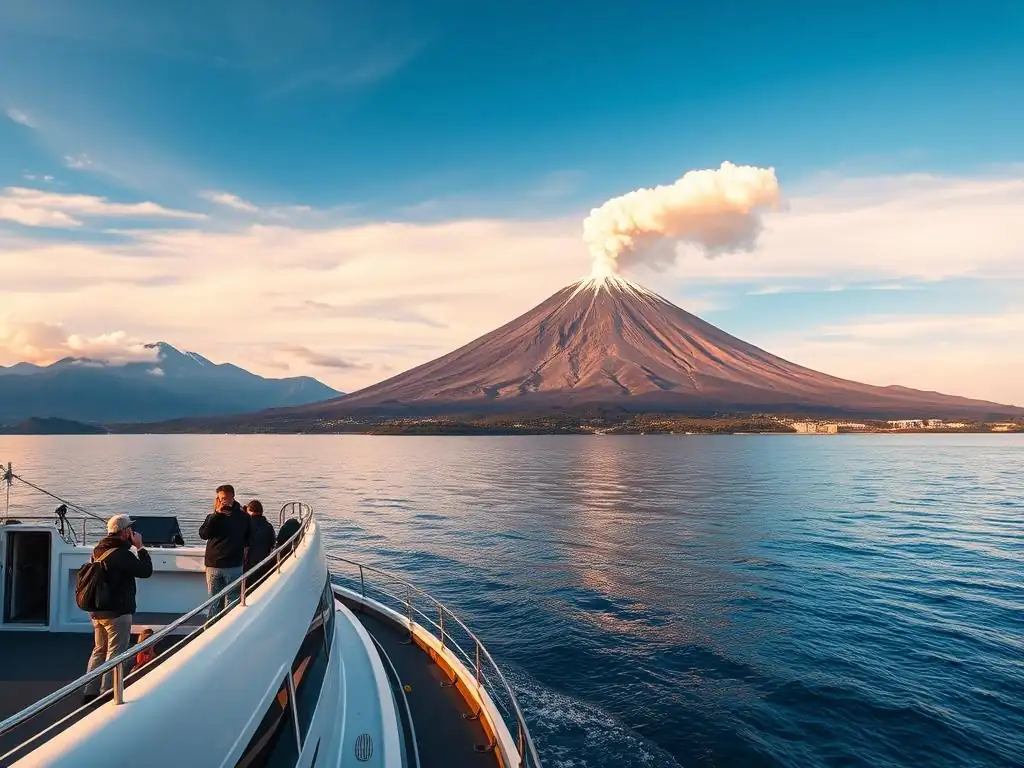
The Best Vantage Points for Capturing Sakurajima's Eruptions
Sakurajima offers numerous vantage points for capturing its volcanic grandeur, each providing a unique perspective. For photographing eruptions, locations on the flanks of the volcano itself, within designated safe zones, offer the most dramatic views. The Arimura Lava Observatory and Yunohira Observatory, mentioned later, are excellent examples, positioned to provide unobstructed views of the summit crater and potential eruption plumes. These locations are strategically placed to be safe distances from the active crater while offering clear lines of sight.
Beyond dedicated observatories, certain coastal areas on Sakurajima, particularly along the eastern and southern coasts, provide excellent perspectives of the volcano rising above the sea. These locations can be ideal for capturing wide-angle landscape shots that incorporate the coastline, the bay, and the volcano in a single frame.
For photographers seeking a different angle, vantage points from Kagoshima City itself, across Kagoshima Bay, offer stunning panoramic views of Sakurajima, especially during sunrise and sunset when the volcano is often silhouetted against colorful skies. The waterfront areas in Kagoshima, such as Dolphin Port or Shiroyama Park, are popular spots for capturing these iconic city-volcano vistas.
Shiraishi Pass: Panoramic Views of the Volcano and Coastline
Shiraishi Pass, located on Sakurajima, is a highly recommended photography spot renowned for its panoramic views encompassing the volcano, the coastline, and Kagoshima Bay. Situated at a higher elevation, Shiraishi Pass offers a sweeping vista that is particularly breathtaking during clear days and at sunrise or sunset. From this vantage point, photographers can capture the full scale of Sakurajima, its slopes descending towards the sea, and the vast expanse of water stretching towards the horizon. The pass is easily accessible by road and offers ample space to set up tripods and compose shots.
The location is especially favored for landscape photography, allowing for wide-angle compositions that capture the grandeur of the volcanic landscape. The interplay of light and shadow across the volcanic terrain, particularly during the golden hours of sunrise and sunset, is beautifully rendered from Shiraishi Pass. It's also a great spot to observe and photograph volcanic plumes rising from the summit crater, framed against the backdrop of the bay and distant mountains. The varying seasons also transform the scenery around Shiraishi Pass, offering different photographic opportunities throughout the year, from lush greenery in summer to vibrant autumn colors.
Arimura Lava Observatory: Witnessing the Power of Past Eruptions
The Arimura Lava Observatory, located on the southeastern flank of Sakurajima, is a particularly significant location for volcano photographers. This observatory is built on top of solidified lava flows from past eruptions, providing a tangible sense of the volcano's powerful history. From this vantage point, photographers are presented with a close-up view of the rugged lava landscape and the imposing summit of Sakurajima. The observatory is positioned to offer excellent views of the Minami-dake crater, one of Sakurajima's most active vents, and is a prime location for observing and photographing eruption plumes.
The observatory itself provides a safe and well-maintained platform for photography. Information panels at the site explain the geology of Sakurajima and the history of its eruptions, adding an educational dimension to the photographic experience. The stark, dark lava fields surrounding the observatory create a dramatic foreground for photographs, contrasting with the often ash-covered slopes of the volcano. The Arimura Lava Observatory is especially compelling at sunrise and sunset, when the low-angled light accentuates the textures of the lava flows and casts long shadows across the volcanic landscape, creating visually striking images.
Yunohira Observatory: Another Prime Location
Yunohira Observatory, situated on the western side of Sakurajima, offers another exceptional vantage point for volcano photography, providing a different perspective compared to Arimura. Located at a higher elevation than Arimura, Yunohira Observatory commands panoramic views that extend beyond Sakurajima itself, encompassing Kagoshima Bay, the city of Kagoshima, and even distant mountain ranges on clear days. This elevated position makes it an ideal location for capturing wide-angle landscape shots that showcase the volcano within its broader geographical context.
From Yunohira Observatory, photographers can observe and photograph the northern side of Sakurajima, including the Kita-dake peak. The observatory is particularly well-suited for capturing sunset views, as the western orientation provides excellent light during the late afternoon and evening. The viewpoint is easily accessible by road and features parking facilities, making it convenient for photographers with equipment. Like Arimura, Yunohira Observatory offers informational displays about Sakurajima's volcanic activity, enhancing the visitor experience. The combination of panoramic views and accessibility makes Yunohira Observatory a must-visit location for volcano photography enthusiasts exploring Sakurajima.
Island Hopping Around Sakurajima: Exploring Nearby Islands for Unique Perspectives [Example: Yokojima Island]
While Sakurajima itself offers abundant photographic opportunities, exploring nearby islands can provide unique and alternative perspectives for volcano photography in Japan. Yokojima Island, located just south of Sakurajima, is a prime example. Accessible by ferry from Kagoshima (though less frequent than the Sakurajima ferry), Yokojima offers views of Sakurajima from a slightly different angle and distance. Being further away, Yokojima allows photographers to capture Sakurajima in a broader landscape context, often emphasizing its isolation in Kagoshima Bay.
Yokojima Island itself is less developed and more rural than Sakurajima, offering a different atmosphere and potentially more tranquil photographic settings. The coastline of Yokojima provides various vantage points for photographing Sakurajima rising above the sea, particularly from beaches or headlands. Exploring Yokojima can also lead to discovering unique foreground elements, such as traditional fishing villages or natural rock formations, to incorporate into volcano landscape compositions. While requiring more planning and travel time compared to staying solely on Sakurajima, island hopping to places like Yokojima can significantly enrich a volcano photography portfolio with diverse perspectives and unique visual narratives.
Mastering Volcano Photography Techniques: Sakurajima Edition
Composition Techniques for Captivating Volcano Images
Effective composition is paramount in volcano photography to transform documentary shots into captivating images. Rule of thirds is a fundamental technique, positioning key elements like the volcano or eruption plumes off-center to create visual interest and balance. Leading lines, such as roads, coastlines, or lava flows, can draw the viewer's eye towards the volcano and create a sense of depth. Framing the volcano with foreground elements, like trees, rocks, or buildings, adds context and scale to the scene.
Utilizing negative space, the empty areas around the volcano, can emphasize its size and isolation. Symmetry can be effective when photographing Sakurajima's cone from certain angles, but asymmetry often creates more dynamic compositions. Consider the vertical and horizontal orientations – vertical compositions can emphasize the height of the volcano and eruption plumes, while horizontal compositions are well-suited for panoramic landscapes.
Experiment with different perspectives – shooting from high vantage points like observatories versus low angles near the shoreline will yield vastly different results. Paying attention to the relationship between the volcano and its surroundings is crucial in creating compelling and visually engaging volcano photographs.
Using Light to Enhance Volcanic Landscapes: Golden Hour Photography
Light is a photographer's most powerful tool, and understanding how to utilize it is crucial for enhancing volcanic landscapes. The golden hours, the periods shortly after sunrise and before sunset, are particularly magical for volcano photography. During these times, the low-angled sunlight casts warm, soft light, accentuating textures and creating long shadows that add depth and drama to the volcanic terrain. The warm hues of golden hour light can beautifully contrast with the often cool tones of volcanic ash and steam.
Sunrise and sunset also often paint the sky with vibrant colors, providing a stunning backdrop for Sakurajima. Silhouetting the volcano against a colorful sunrise or sunset sky can create powerful and iconic images. Even on overcast days, diffused light can be advantageous, reducing harsh shadows and revealing details in the volcanic landscape. However, for dramatic volcano photography, capturing images during the golden hours is highly recommended. Plan your photography excursions around sunrise and sunset times to take full advantage of the most flattering and visually enriching light conditions for photographing Sakurajima.
Capturing Eruptions: Tips for Photographing Volcanic Activity
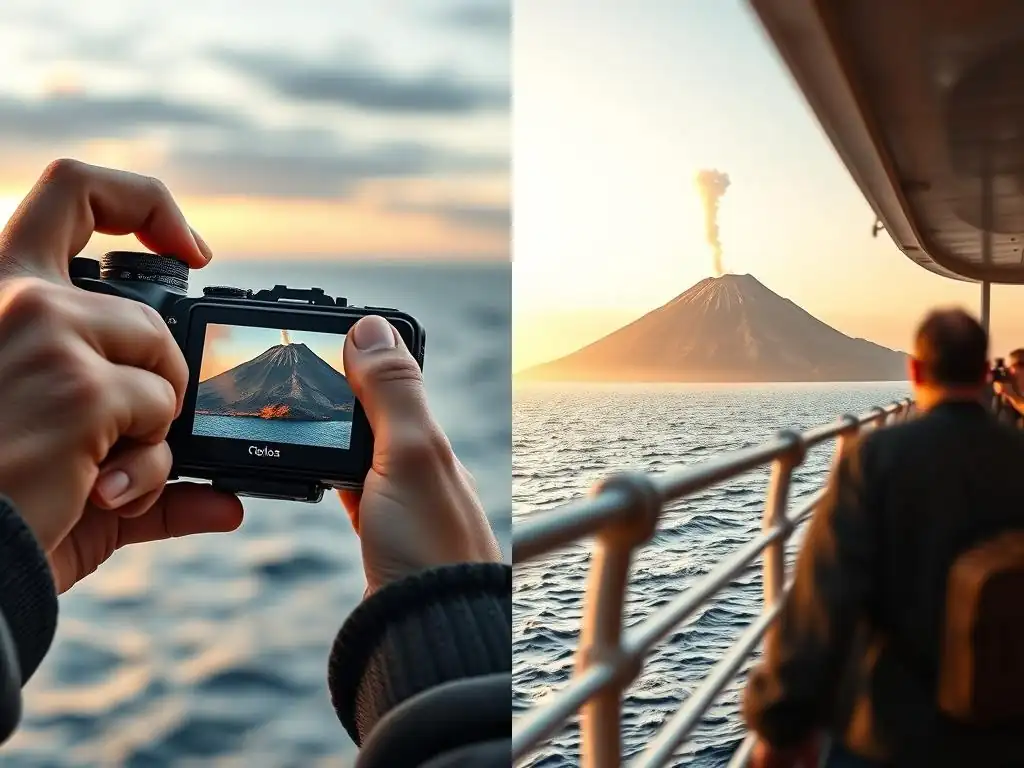
Photographing volcanic eruptions requires a combination of technical skill, patience, and safety awareness. Capturing sharp images of eruptions often necessitates fast shutter speeds to freeze the motion of ash plumes and ejecta. Using burst mode on your camera can increase your chances of capturing the peak moment of an eruption. Focusing can be challenging, especially in low light or when eruptions are obscured by ash. Pre-focusing on the volcano's summit or using back-button focus can be helpful.
Metering can also be tricky, as eruptions often involve bright plumes against darker backgrounds. Spot metering or evaluative metering with exposure compensation may be necessary to ensure proper exposure of both the plume and the surrounding landscape. Be prepared for changing conditions – eruptions are unpredictable, and light and visibility can shift rapidly. Patience is key – eruptions may not occur on demand, so be prepared to wait for the right moment.
Always prioritize safety and maintain a safe distance from active vents. Listen for warning sounds and be ready to evacuate if necessary. Respect any restricted areas and follow instructions from local authorities or volcano guides.
Long Exposure Photography: Creating Motion in Volcanic Scenes
Long exposure photography can be a creative technique for capturing the dynamic nature of volcanic landscapes. Using neutral density (ND) filters allows for extended shutter speeds, even in daylight, blurring motion and creating ethereal effects. Long exposures can smooth out water surfaces in Kagoshima Bay, creating a tranquil contrast with the dynamic volcano. Clouds moving across the sky can be rendered as soft streaks, adding a sense of motion and atmosphere to volcano landscape shots.
Volcanic plumes themselves can be captured with long exposures to create a sense of ethereal flow and dynamism. Experimenting with different shutter speeds will yield varying results – shorter long exposures might subtly blur motion, while longer exposures can completely smooth out moving elements. A tripod is essential for long exposure photography to ensure sharp, blur-free images. Consider using a remote shutter release or self-timer to minimize camera shake during long exposures. Long exposure photography can add a unique artistic dimension to volcano images, transforming familiar scenes into visually compelling and evocative representations of Sakurajima's dynamic landscape.
Post-Processing Tips for Striking Volcano Photography
Enhancing Colors and Details in Your Volcanic Images
Post-processing is an integral part of modern photography, and it plays a crucial role in enhancing volcano images. Adjusting white balance is often the first step, ensuring accurate color rendition. If the image appears too cool or warm, fine-tuning the white balance can bring out the natural colors of the volcanic landscape. Exposure adjustments can brighten or darken the image, recovering details in shadows or highlights. Contrast adjustments can enhance the overall dynamism and impact of the image.
Color saturation adjustments can be used to subtly boost the vibrancy of colors, particularly in sunrise and sunset shots, or to create a more muted, dramatic mood. Clarity and sharpness adjustments can enhance details and textures in the volcanic rock and ash. However, avoid over-sharpening, which can create unwanted artifacts. Vibrance adjustments are often preferred over saturation, as they tend to enhance colors more selectively, focusing on less saturated areas without overdoing already vibrant colors. Subtle and controlled post-processing is key to enhancing volcano images without making them look artificial or over-processed.
Removing Distractions and Correcting Imperfections
Post-processing can also be used to remove distractions and correct imperfections in volcano photographs. Spot removal tools can be used to eliminate dust spots on the sensor or minor unwanted elements in the scene. Content-aware fill or cloning tools can be employed to remove larger distractions, such as power lines or unwanted objects in the foreground or background. However, use these tools judiciously and ethically, avoiding significant alterations to the scene that misrepresent reality.
Lens corrections, often automatically applied in post-processing software, can correct for lens distortion and chromatic aberration, improving image quality. Horizon straightening is a simple but effective adjustment that can significantly improve the visual appeal of landscape photographs. Cropping can be used to refine composition, removing distracting edges or focusing attention on the main subject.
Subtle vignetting can be added in post-processing to draw the viewer's eye towards the center of the image and create a more focused composition. The goal of these corrections is to refine the image and remove minor imperfections, allowing the viewer to focus on the beauty and power of the volcano itself.
Creating Dramatic Black and White Volcano Photos
Converting color volcano photographs to black and white can be a powerful stylistic choice, emphasizing textures, tones, and shapes, and creating a more dramatic and timeless feel. Black and white conversion eliminates color distractions, allowing viewers to focus on the essential elements of the composition and the interplay of light and shadow. Adjusting contrast and tonal range is crucial in black and white processing to create impactful images. Increasing contrast can enhance the drama and mood, while carefully adjusting shadows and highlights can reveal details in both dark and bright areas.
Experiment with different black and white conversion methods – some software offers various presets or channels for conversion, each yielding slightly different tonal interpretations. Dodging and burning, selectively lightening and darkening areas of the image, can be used to guide the viewer's eye and enhance specific elements, such as eruption plumes or lava flows.
Adding grain or texture can further enhance the dramatic and artistic feel of black and white volcano images. Black and white processing can transform volcano photographs, stripping away color and revealing the raw power and stark beauty of these natural wonders in a uniquely compelling way.
Safety Considerations for Volcano Photography at Sakurajima
Understanding Volcanic Hazards: Ashfall, Lahars, and Explosions
Photographing active volcanoes like Sakurajima inherently involves risks, and understanding potential volcanic hazards is crucial for photographer safety. Ashfall is a common occurrence, even during relatively minor eruptions. Volcanic ash can be irritating to the eyes and respiratory system, and heavy ashfall can reduce visibility and make breathing difficult. Lahars, volcanic mudflows, are another significant hazard, particularly during periods of heavy rainfall. Lahars can be fast-moving and destructive, flowing down river valleys and posing a threat to low-lying areas around the volcano.
Volcanic explosions, ranging from small steam explosions to larger, more powerful eruptions, can eject hot rocks and volcanic bombs. Pyroclastic flows, fast-moving currents of hot gas and volcanic debris, are extremely dangerous but less likely during Sakurajima's typical activity levels, though understanding their potential risk in general volcano photography is important. Volcanic gases, such as sulfur dioxide, can be harmful to health, especially in high concentrations. Being aware of these potential hazards and understanding the specific risks associated with Sakurajima is essential for safe volcano photography.
Monitoring Volcanic Activity: Staying Informed About Sakurajima's Status
Staying informed about Sakurajima's volcanic activity is paramount for photographer safety. The Japan Meteorological Agency (JMA) provides real-time information on volcanic activity, including alerts, warnings, and eruption updates. Their website and mobile apps are valuable resources for monitoring Sakurajima's status. Local news outlets and Kagoshima City authorities also provide information and advisories related to volcanic activity. Before and during your photography trip, regularly check for updates and alerts from official sources.
Pay attention to any changes in volcanic activity, such as increased ash plumes, stronger explosions, or changes in gas emissions. Heed any warnings or advisories issued by authorities, including evacuation orders or restricted access zones. Be aware of the volcano's alert level and understand what each level signifies in terms of potential hazards and safety precautions. Local visitor centers and tourist information offices on Sakurajima and in Kagoshima City can provide up-to-date information and safety guidance. Staying informed and vigilant is crucial for mitigating risks and ensuring a safe volcano photography experience.
Emergency Procedures and Evacuation Plans
In the event of increased volcanic activity or an emergency at Sakurajima, it is essential to know and understand emergency procedures and evacuation plans. Familiarize yourself with designated evacuation routes and assembly points on Sakurajima. Pay attention to any evacuation instructions issued by local authorities or emergency personnel. Have a plan in place for quickly leaving the area if necessary. Know the location of emergency shelters, if any are designated in the area you are photographing.
In case of ashfall, seek shelter indoors or wear a dust mask or respirator and eye protection. If you are outdoors during heavy ashfall, try to find a sturdy structure for protection. If a larger eruption or explosion occurs, take cover immediately, protecting your head and body.
Be aware of the potential for lahars in river valleys and avoid low-lying areas during periods of heavy rain or increased volcanic activity. Carry a mobile phone and ensure it is charged, and know emergency contact numbers. In a serious emergency, follow the directions of local authorities and prioritize your safety and the safety of others.
Beyond Sakurajima: Exploring Other Volcano Photography Opportunities in Japan
Aso Volcano: Another Volcanic Hotspot for Photographers
While Sakurajima is a fantastic entry point for volcano photography in Japan, the country offers numerous other volcanic destinations worth exploring. Aso Volcano, located in Kumamoto Prefecture on Kyushu Island, is another volcanic hotspot offering diverse photographic opportunities. Aso is one of the largest active caldera volcanoes in the world, featuring a vast caldera basin containing several active volcanic cones, including Mount Nakadake, which is often steaming and sometimes eruptive. The scale of the Aso caldera landscape is immense, providing panoramic views and unique geological formations.
Mount Nakadake's active crater lake is a distinctive feature, often displaying vibrant turquoise or emerald green colors due to volcanic minerals. Photography opportunities at Aso range from capturing the vast caldera landscape and active crater to exploring the surrounding grasslands and volcanic hot springs. The area around Aso also offers cultural and historical sites, adding another dimension to a volcano photography trip. While access to Mount Nakadake's crater area can be restricted due to volcanic activity levels, numerous viewpoints around the caldera rim offer stunning perspectives of this impressive volcanic system.
Unzen Volcano: Expanding Your Volcano Photography Portfolio
Unzen Volcano, located on the Shimabara Peninsula in Nagasaki Prefecture, offers a different type of volcanic landscape and photographic experience compared to Sakurajima and Aso. Unzen is a complex volcano with multiple peaks and a history of both explosive eruptions and pyroclastic flows. The area is characterized by steaming fumaroles, hot springs, and volcanic hot earth, creating a visually striking and geothermally active environment. The Jigokudani ("Hell Valley") area at Unzen is particularly photogenic, with plumes of steam rising from vents and colorful mineral deposits staining the volcanic rocks.
Unzen's volcanic landscape is also known for its post-eruption regrowth, with forests and vegetation slowly reclaiming areas affected by past eruptions, creating a contrast between volcanic devastation and natural resilience. Photography opportunities at Unzen include capturing the geothermal features, the rugged volcanic peaks, and the recovering landscapes.
The Unzen Disaster Memorial Hall provides insights into the 1990-1995 eruption and its impact, adding a historical and educational dimension to a volcano photography trip to this region. Exploring Unzen offers a chance to expand a volcano photography portfolio beyond the typical conical volcano image, showcasing the diverse expressions of volcanic activity in Japan.
Conclusion: A Volcano Photography Adventure to Remember in Japan
Reflecting on the Beauty and Power of Sakurajima
A volcano photography journey to Sakurajima in Japan is an unforgettable adventure, offering a unique blend of accessibility, dramatic volcanic landscapes, and rich cultural experiences. From the convenient ferry ride across Kagoshima Bay to the breathtaking views from various vantage points around Sakurajima, every moment presents photographic opportunities to capture the raw beauty and immense power of this active volcano. The constant volcanic activity, the stunning scenery, and the ease of access make Sakurajima an ideal destination for both seasoned volcano photographers and those just beginning to explore this fascinating genre.
Beyond the technical aspects of photography, witnessing Sakurajima's volcanic dynamism firsthand is a humbling and awe-inspiring experience. The sight of ash plumes rising against the sky, the rugged volcanic terrain, and the ever-present reminder of the Earth's forces at play leave a lasting impression.
A volcano photography trip to Sakurajima is not just about capturing images; it's about immersing oneself in the volcanic world, connecting with nature's power, and creating memories that will endure long after the journey ends. Japan's volcanic landscapes, with Sakurajima as a prime example, offer a truly unique and rewarding photographic adventure for those seeking to capture the planet's fiery heart.
Frequently Asked Questions
What makes Sakurajima a unique location for volcano photography?
Sakurajima offers a combination of active volcanic landscapes and convenient accessibility via ferry, allowing photographers to capture stunning images of an active volcano from relatively close proximity. The island's diverse terrain, from lava fields to lush forests, provides varied photographic opportunities.
What safety precautions should I take when photographing Sakurajima?
It's crucial to monitor volcanic activity updates and heed any warnings issued by local authorities. Wear appropriate protective gear, such as a dust mask and eye protection, and be aware of potential hazards like falling rocks or ash.
What time of day is best for volcano photography at Sakurajima?
The golden hours (sunrise and sunset) typically offer the best lighting for landscape photography, including volcanoes. These times provide softer, more dramatic light that can enhance the volcanic textures and colors.
Are there any specific photography permits required for Sakurajima?
While general photography is usually permitted, it's always advisable to check with the Kagoshima Prefectural Government or local tourist information centers regarding any permit requirements for drone photography or commercial purposes.
What other photographic subjects besides the volcano can be found on Sakurajima?
Sakurajima offers a range of subjects beyond the volcano itself, including local wildlife, traditional Japanese architecture, and the island's unique agricultural practices. These elements can add depth and context to your volcano photography portfolio.
Okay, here's a final reflection designed to fit your article "Sakurajima's Ferry to Paradise: Island Hopping for Volcano Photography in Japan," optimized for the keyword "Volcano photography in Japan," and adhering to the structure you provided:
Final Reflection: Capturing the Soul of Fire
The allure of Sakurajima, a living, breathing volcano, extends far beyond its majestic silhouette; it represents the raw, untamed power of nature, a power that demands respect and inspires awe. This article has explored the unique opportunity it presents for volcano photography in Japan, a chance to capture not just images, but the very essence of Earth's fiery heart.
The journey to Sakurajima, the ferry ride across the shimmering waters, becomes a pilgrimage for the photographer, a moment of quiet anticipation before confronting the spectacle. This experience, this connection to the land and its volcanic spirit, is what elevates volcano photography from a technical exercise to a deeply personal and spiritual one. The best and most beautiful things in the world cannot be seen or even touched - they must be felt with the heart.
- Helen Keller. This quote encapsulates the essence of capturing Sakurajima; it's about feeling the heat, hearing the rumble, and translating that visceral experience into a visual narrative.
Now, armed with the knowledge and inspiration gleaned from this journey, I invite you to embark on your own photographic adventure. Let the fiery landscapes of Sakurajima ignite your creativity, and may your lens capture not just the volcano's power, but also the profound beauty and resilience that lie within its heart. Go forth and tell the story of fire, a story that resonates with the soul of Japan and the spirit of the Earth.
Okay, here's a CTA draft for the web article "Sakurajima's Ferry to Paradise: Island Hopping for Volcano Photography in Japan" targeting Volcano Explorers' audience:
Ignite Your Inner Explorer: Capture Sakurajima's Majesty!
Thank you for joining us on this visual journey to Sakurajima! We hope you've gained a deeper appreciation for the dynamic beauty of this active volcano and the unique photographic opportunities it offers. Now, it's time to turn inspiration into action.
Here are a few ways to further explore the volcanic wonders of Sakurajima:
- Plan Your Own Photographic Expedition: Start by researching the best times of year for visibility and eruptions, and begin mapping out your ferry route and preferred vantage points.
- Share your newfound knowledge: Teach or guide someone else about the photography of volcanoes, especially, Sakurajima.
- Connect with fellow Volcano Explorers: Share your favorite volcano photography tips and locations on our forum to inspire others.
What unique perspective are you most excited to capture when you finally stand before Sakurajima? Share your aspirations in the comments below!