
Crater Folklore: Tales Told Around Volcanic Openings

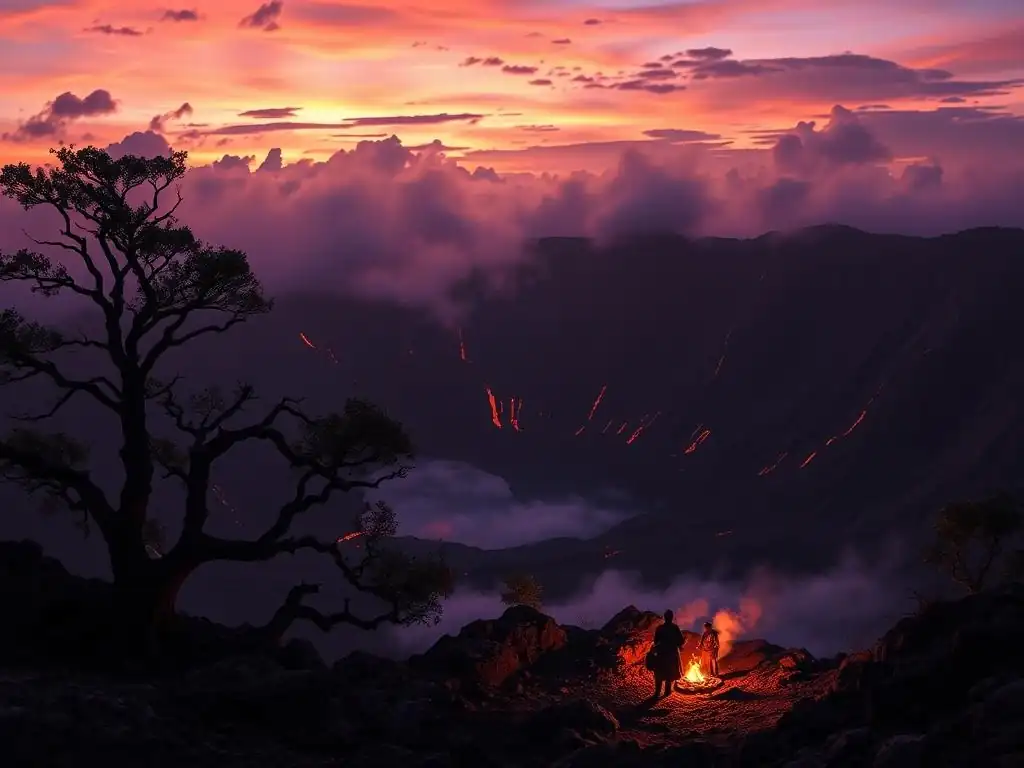
Welcome to Volcano Explorers, where the Earth breathes fire! Have you ever wondered what secrets lie hidden within the gaping mouths of volcanoes? Our latest exploration plunges into the captivating realm of Volcanic Crater Myths and Legends, uncovering the ancient tales woven around these fiery openings. Prepare to be amazed as we unravel the stories, superstitions, and cultural significance that have long surrounded these awe-inspiring geological features. But the real question is: Are these just stories, or do they hold a deeper truth about the power lurking beneath our feet? Dive in to find out!
- Introduction to Volcanic Crater Myths and Legends
- Ancient Beliefs and Volcanic Craters: Connecting the Supernatural
- Volcanic Crater Legends from Around the World
- The Science Behind the Myths: Geological Explanations and Folklore
- Evolving Crater Folklore: Modern Stories and Contemporary Myths
- Preserving and Sharing Volcanic Crater Folklore
- Conclusion: The Lasting Power of Volcanic Crater Myths and Legends
-
Frequently Asked Questions
- What are some common themes found in myths and legends about volcanic craters?
- How do cultures living near volcanoes incorporate craters into their beliefs?
- Do volcanic crater myths often reflect actual volcanic activity?
- Are there specific rituals or ceremonies performed at volcanic craters in some cultures?
- How can understanding crater folklore help us better understand volcanoes themselves?
- Final Reflection: Echoes in the Caldera
- Ignite Your Inner Explorer: Unearth More Volcanic Wonders!
Introduction to Volcanic Crater Myths and Legends
The Cultural Significance of Volcanic Craters: A Global Perspective
Volcanic craters, the dramatic openings at the summits of volcanoes, have captivated human imagination for millennia. Across diverse cultures, these geological features are far more than just depressions in the Earth's surface. They are imbued with deep cultural significance, often viewed as sacred spaces, powerful symbols, and focal points for mythology and folklore.
From the fiery depths of Mount Etna in Sicily to the mist-shrouded caldera of Crater Lake in Oregon, craters have served as natural amphitheaters for storytelling, shaping societal beliefs and spiritual practices. In many indigenous communities, craters are considered the dwelling places of deities, gateways to the spirit world, or even the very eyes of the Earth, watching over humanity. This global perspective reveals a common thread: volcanic craters are not merely geological formations but are deeply intertwined with the cultural and spiritual landscapes of the people who live in their shadows.
The perception of volcanic craters varies widely, reflecting the unique environmental and historical contexts of different regions. In some cultures, particularly those heavily impacted by volcanic activity, craters are treated with reverence and respect, understood as powerful forces of nature that must be appeased. For example, in Hawaii, the Halemaʻumaʻu crater within Kīlauea volcano is considered the sacred home of the goddess Pele, and offerings are traditionally made to honor her power.
Conversely, in other cultures, craters might be viewed with fear and trepidation, associated with destructive forces and the potential for catastrophe. Despite these variations, the consistent element is the recognition of craters as extraordinary places, distinct from ordinary landscapes, and deserving of special attention within cultural narratives and belief systems. This attention manifests in a rich tapestry of myths and legends that seek to explain the origins, behaviors, and spiritual significance of these awe-inspiring geological features.
VolcanoExplorers.org: Unveiling the Mysteries of Crater Folklore
VolcanoExplorers.org serves as a portal to the captivating world of volcanology, extending beyond the scientific study of eruptions and lava flows to explore the fascinating realm of volcanic folklore. Recognizing that the human experience of volcanoes is not solely defined by scientific data but also by cultural interpretation and storytelling, VolcanoExplorers.org delves into the rich tapestry of myths and legends woven around volcanic craters.
By examining these narratives, the website aims to provide a holistic understanding of how humanity has interacted with and interpreted these dramatic geological features across time and cultures. It acknowledges that understanding "Volcanic Crater Myths and Legends" is crucial for appreciating the full impact of volcanoes on human societies.
Through dedicated articles and resources, VolcanoExplorers.org seeks to unveil the mysteries embedded within "Volcanic Crater Myths and Legends," offering insights into the cultural, spiritual, and historical contexts that have shaped these narratives. The website explores how ancient civilizations and contemporary communities alike have used stories to explain the awe-inspiring and sometimes terrifying power of volcanoes, focusing specifically on the central role of craters in these narratives.
By presenting these myths and legends in an accessible and informative manner, VolcanoExplorers.org encourages visitors to appreciate the profound connection between humanity and volcanic landscapes, fostering a deeper understanding of both the geological and cultural significance of volcanic craters around the globe. The website acts as a bridge, connecting scientific knowledge with the rich heritage of human storytelling surrounding these natural wonders.
Ancient Beliefs and Volcanic Craters: Connecting the Supernatural
Volcanic Craters as Portals to the Underworld: Mythological Interpretations
Across numerous ancient cultures, volcanic craters were not merely seen as openings in the Earth but were often perceived as direct portals to the underworld, the realm of the dead, or other supernatural dimensions. This interpretation stemmed from the dramatic and often unsettling phenomena associated with craters: the release of smoke and gases, the deep, dark void of the opening, and the rumbling sounds emanating from within.
These sensory experiences naturally fostered the idea that craters were gateways to hidden worlds, often associated with deities of the underworld or the spirits of ancestors. In Greek mythology, for instance, some entrances to the underworld, such as the Cave of Avernus near Naples, were linked to volcanic vents and fumaroles, reinforcing the connection between volcanic activity and the subterranean realm.
Similarly, in Roman mythology, the god Vulcan, the deity of fire, metalworking, and volcanoes, was believed to have his forge beneath volcanic mountains like Mount Etna. The crater, in this context, became the visible manifestation of Vulcan's fiery domain, a place where the raw power of the underworld could break through into the surface world. Beyond the Greco-Roman world, in indigenous cultures of Central and South America, volcanic craters were often viewed as sacred sites associated with deities of death and the afterlife.
For example, in some Mesoamerican cultures, caves and volcanic openings were considered entrances to Xibalba, the Mayan underworld. This pervasive motif of volcanic craters as portals underscores the profound impact these geological features had on ancient belief systems, shaping their understanding of the cosmos and the relationship between the living and the dead.
Gods and Goddesses of Volcanoes: Stories Associated with Crater Formations
The awe-inspiring power and unpredictability of volcanoes naturally led ancient cultures to personify them as deities, and volcanic craters often played a central role in the narratives surrounding these gods and goddesses. These deities were believed to reside within or be intimately connected to the volcanic landscape, with craters frequently seen as their dwelling places or points of manifestation. Perhaps one of the most well-known examples is Pele, the Hawaiian goddess of volcanoes, fire, lightning, and wind.
Her primary home is believed to be Halemaʻumaʻu crater at the summit of Kīlauea volcano, and volcanic activity is directly attributed to her actions and emotions. The crater, in this context, is not just a geological feature, but the very embodiment of Pele's power and presence.
In Roman mythology, Vulcan, as mentioned earlier, was not only associated with the underworld but also directly linked to volcanic mountains. The craters of volcanoes like Mount Vesuvius were, in a sense, Vulcan's workshops, where he forged weapons for the gods and unleashed his fiery wrath upon the world. Stories of Vulcan's temper and his influence on volcanic eruptions further solidified the crater as a site of divine power and potential danger.
Across cultures, from the fire deities of Japan to the volcanic spirits of Iceland, the theme remains consistent: volcanic craters are not just geological features but are deeply interwoven with the stories and attributes of powerful deities, shaping religious beliefs and practices centered around these natural phenomena. These myths served to both explain the often-unpredictable nature of volcanoes and to provide a framework for human interaction with these powerful forces of nature.
Volcanic Crater Legends from Around the World
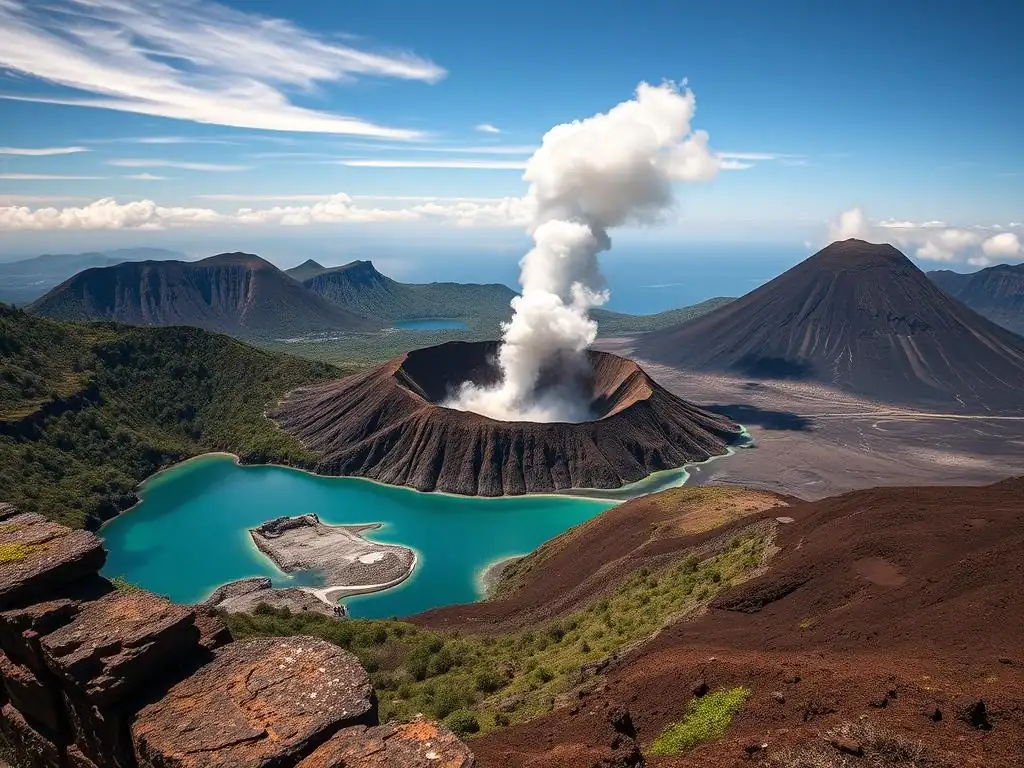
Hawaiian Crater Tales: Pele's Domain and Sacred Openings
The Hawaiian Islands, born from volcanic activity, are steeped in rich folklore centered around volcanoes, and particularly their craters. Central to these narratives is Pele, the fiery goddess of volcanoes, whose home and most sacred space is Halemaʻumaʻu crater within Kīlauea volcano on the Big Island.
According to traditional Hawaiian beliefs, Pele resides within this active crater, and her moods and actions directly influence volcanic eruptions and lava flows. Halemaʻumaʻu, meaning "house of the ʻāmaʻu fern," is not merely a geological depression but a deeply revered place, considered a piko, or spiritual center, connecting the earthly realm with the divine.
Offerings and prayers are traditionally directed towards Halemaʻumaʻu crater as a sign of respect and supplication to Pele. Legends abound of Pele appearing in various forms, often as a beautiful woman or an old crone, testing the respect and generosity of those who encounter her near the crater. Disrespecting Pele or taking anything from her domain, such as lava rocks, is believed to bring misfortune, a testament to the enduring power of these beliefs in Hawaiian culture.
The vibrant and dynamic nature of Halemaʻumaʻu crater, constantly changing with volcanic activity, further reinforces its status as Pele's living presence, making "Volcanic Crater Myths and Legends" intrinsically linked to the very landscape of Hawaii. These tales are not just stories; they are living traditions that shape cultural practices and the relationship between Hawaiians and their volcanic environment.
Mount Fuji Crater Lore: Japanese Folklore and Spiritual Significance
Mount Fuji, Japan's iconic stratovolcano, is not only a symbol of national pride but also a mountain deeply embedded in Japanese folklore and spiritual beliefs. While the summit crater of Mount Fuji is less overtly fiery compared to Kīlauea's Halemaʻumaʻu, it holds significant spiritual importance within Shinto and Buddhist traditions.
Mount Fuji itself is considered sacred, a kami or divine presence, and its crater is often viewed as the mountain's heart, a place of profound spiritual energy and connection to the heavens. Ascending to the crater rim is seen as a pilgrimage, a journey to a sacred space where one can connect with the mountain's spiritual essence.
Legends associated with Mount Fuji's crater often involve Konohanasakuya-hime, the Shinto goddess of Mount Fuji and blossoms, whose name translates to "blossom-princess." She is believed to reside on Mount Fuji and is associated with beauty, delicate life, and volcanic power. The crater, in this context, can be interpreted as both the source of the mountain's creative energy and a symbol of the ephemeral beauty of life, much like the cherry blossoms she represents.
Furthermore, Mount Fuji has been a site of Buddhist pilgrimage for centuries, with the crater and surrounding areas considered conducive to spiritual practice and enlightenment. The "Volcanic Crater Myths and Legends" of Mount Fuji thus blend Shinto and Buddhist beliefs, reflecting the syncretic nature of Japanese spirituality and the mountain's enduring role as a sacred landscape.
Icelandic Crater Stories: Elves, Trolls, and Volcanic Origins
Iceland, the land of fire and ice, is geologically dynamic, with volcanic craters dotting its stark landscapes. Icelandic folklore, deeply rooted in the island's dramatic environment, often incorporates volcanoes and craters into narratives populated by mythical beings like elves, trolls, and hidden people (Huldufólk).
Volcanic craters, with their otherworldly appearance and geothermal activity, are frequently depicted as entrances to the realms of these supernatural entities or as places where the veil between the human world and the magical world is thin. The raw power of volcanic forces is often attributed to the actions of these beings, adding a layer of myth and mystery to the geological landscape.
Stories abound of elves and hidden people dwelling within or near volcanic craters. These beings are often portrayed as guardians of the land, and disturbing their homes or showing disrespect towards volcanic sites is believed to bring misfortune. Trolls, in Icelandic folklore, are often associated with the wild and untamed aspects of nature, and volcanic craters, with their rugged and sometimes desolate environments, are fitting locations for these mythical creatures.
Some Icelandic craters are even said to have been formed by trolls or to be their dwelling places. The "Volcanic Crater Myths and Legends" of Iceland therefore reflect a deep connection to the land and a belief in the unseen forces that shape the natural world, with volcanic craters serving as potent symbols of this interconnectedness between the physical and the supernatural.
Mount Vesuvius Crater Lore: Pompeii, Herculaneum, and the Wrath of Vulcan
Mount Vesuvius, the volcano that famously buried Pompeii and Herculaneum in 79 AD, has a long history intertwined with Roman mythology and folklore. Even before the catastrophic eruption, Vesuvius was associated with Vulcan, the Roman god of fire, volcanoes, and metalworking. The crater of Vesuvius, in this context, was not only a geological feature but also a symbolic representation of Vulcan's fiery power and domain. The fertile slopes around Vesuvius, ironically enriched by volcanic soil, contrasted sharply with the destructive potential lurking within the mountain, creating a duality that resonated with the Roman understanding of nature's forces.
The eruption of 79 AD, which devastated thriving Roman cities, was later interpreted through a mythological lens as the wrath of Vulcan. The sudden and overwhelming destruction was seen as divine punishment, a demonstration of the gods' power and the consequences of human hubris or impiety.
While scientific understanding now explains the eruption through geological processes, the event solidified the association of Vesuvius' crater with divine anger and the unpredictable nature of volcanic forces within Roman and subsequent European folklore. The ruins of Pompeii and Herculaneum themselves became potent reminders of this volcanic wrath, further embedding "Volcanic Crater Myths and Legends" into the cultural memory of the region and beyond, serving as cautionary tales about the power of nature and the potential for sudden and dramatic change.
The Science Behind the Myths: Geological Explanations and Folklore
How Scientific Understanding Influences Modern Interpretations of Crater Legends
The advent of modern volcanology and geological science has profoundly influenced how we interpret ancient "Volcanic Crater Myths and Legends." While traditional narratives often attributed volcanic phenomena to divine actions or supernatural beings, scientific understanding provides explanations rooted in natural processes. For instance, the fiery eruptions once seen as the wrath of gods are now understood as the result of magma pressure, tectonic plate movement, and gas release. Similarly, the formation of craters, previously attributed to mythical events, is now explained through processes like explosive eruptions, caldera collapses, and erosion.
This scientific lens does not necessarily invalidate the cultural significance of crater myths, but rather offers a different perspective. Modern interpretations often view these legends as early attempts to understand and explain natural phenomena in the absence of scientific knowledge. Myths can be seen as pre-scientific models of the world, reflecting observations and interpretations based on available cultural and cognitive frameworks.
Furthermore, scientific understanding can enrich our appreciation of these myths by highlighting the real-world phenomena that inspired them. For example, knowing the geological processes behind explosive eruptions can deepen our understanding of why ancient cultures might have associated volcanic craters with powerful and volatile deities. Science and folklore, therefore, are not mutually exclusive but can offer complementary insights into the human experience of volcanoes.
Volcanic Activity and Myth Creation: The Role of Eruptions in Folklore
Volcanic activity, particularly eruptions, has played a crucial role in the creation and perpetuation of "Volcanic Crater Myths and Legends." Eruptions are dramatic and often terrifying events that leave a lasting impact on human societies. The sights, sounds, and consequences of eruptions – from fiery lava flows to ash plumes darkening the sky – naturally inspire awe, fear, and a desire to understand these powerful forces of nature. In pre-scientific societies, mythology provided a framework for explaining these phenomena, attributing them to supernatural causes and weaving them into narratives that shaped cultural beliefs and practices.
The unpredictable nature of volcanic eruptions further fueled myth creation. The sudden onset of eruptions, their variable intensity, and the destructive potential they unleash made volcanoes seem capricious and uncontrollable. This unpredictability was often mirrored in the personalities and actions of volcanic deities, who were frequently portrayed as powerful, emotional, and capable of both creation and destruction.
Eruptions, in this context, became dramatic episodes in the ongoing narrative of these deities, reinforcing their power and influence over the world. Furthermore, the geological features left behind by eruptions, such as craters, lava fields, and volcanic cones, became tangible reminders of these mythical events, solidifying the connection between volcanic activity and folklore across generations. Each eruption, therefore, served as a renewed source of inspiration and validation for the existing body of volcanic myths and legends.
Evolving Crater Folklore: Modern Stories and Contemporary Myths
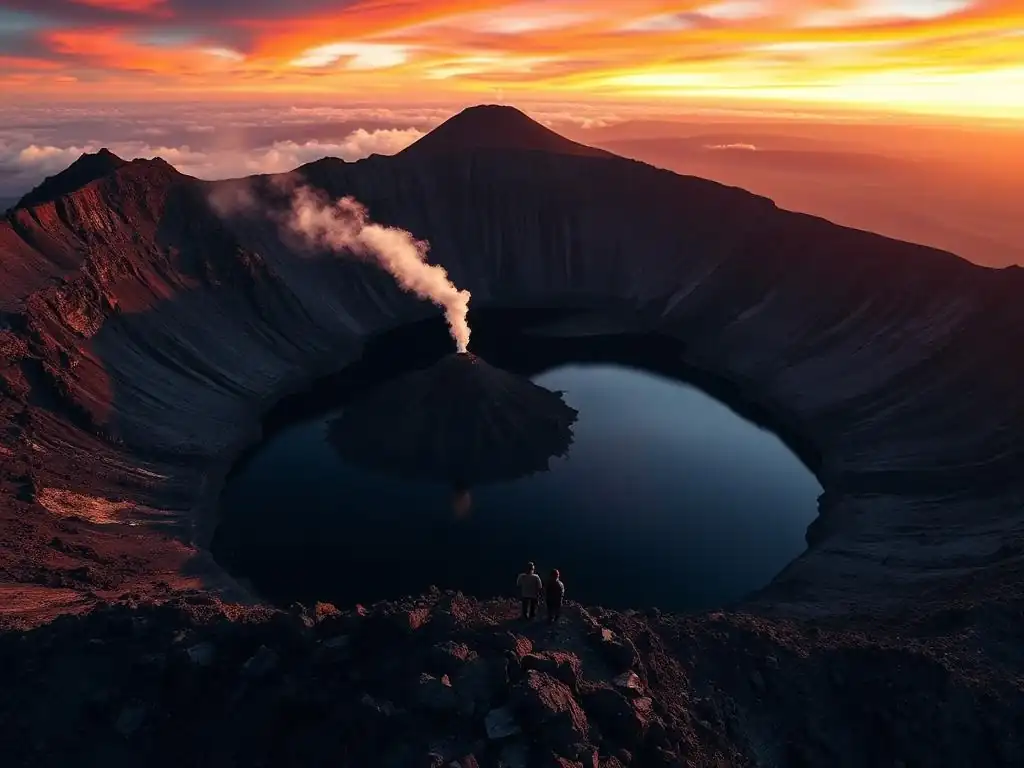
Urban Legends and Volcanic Craters: New Narratives in the Digital Age
While ancient "Volcanic Crater Myths and Legends" continue to resonate, new narratives and urban legends are emerging in the digital age, reflecting contemporary anxieties and fascinations related to volcanoes. These modern myths often incorporate elements of science fiction, conspiracy theories, and technological anxieties, adapting traditional themes to a contemporary context. The internet and social media play a significant role in disseminating and evolving these new forms of volcanic folklore, creating online communities that share and perpetuate these narratives.
Examples of modern volcanic urban legends might include stories of secret government facilities hidden within volcanic craters, conspiracies surrounding volcanic activity manipulation, or apocalyptic scenarios triggered by supervolcano eruptions. These narratives often tap into existing fears about natural disasters, technological overreach, and global instability, using the dramatic imagery of volcanoes and craters to amplify these anxieties.
The accessibility of information, both accurate and inaccurate, online contributes to the rapid spread and mutation of these urban legends, creating a dynamic and evolving landscape of contemporary volcanic folklore. VolcanoExplorers.org recognizes the importance of addressing these modern myths, providing factual information to counter misinformation while acknowledging the enduring human fascination with volcanic power and mystery.
The Enduring Appeal of Crater Mythology: Why We Tell Stories About Volcanoes
The enduring appeal of "Volcanic Crater Myths and Legends" stems from a deep-seated human fascination with the power and mystery of volcanoes. These geological features represent forces of nature that are both awe-inspiring and potentially destructive, embodying the primal energies of the Earth. Volcanoes challenge our sense of control and remind us of the immense power of the natural world, prompting us to seek meaning and understanding through storytelling. Myths and legends provide a framework for grappling with these powerful forces, offering explanations, assigning agency, and establishing cultural protocols for interacting with volcanic landscapes.
Furthermore, volcanic craters, as dramatic openings in the Earth's surface, tap into archetypal human anxieties and fascinations related to the unknown, the underworld, and the origins of the world. They represent a threshold between the familiar surface world and the hidden depths beneath, sparking the imagination and prompting narratives about what lies within and beyond.
The stories we tell about volcanoes and craters, both ancient and modern, reflect our ongoing attempt to make sense of our place in a dynamic and sometimes unpredictable world, using narrative to bridge the gap between scientific understanding and the enduring human need to find meaning and connection in the face of nature's grand spectacles. This enduring appeal ensures that "Volcanic Crater Myths and Legends" will continue to evolve and captivate audiences for generations to come.
Preserving and Sharing Volcanic Crater Folklore
The Importance of Documenting and Protecting Indigenous Crater Stories
Documenting and protecting indigenous "Volcanic Crater Myths and Legends" is of paramount importance for preserving cultural heritage and fostering respect for diverse worldviews. These stories often contain invaluable knowledge about the environment, traditional land management practices, and the spiritual connection between indigenous communities and volcanic landscapes. Many indigenous cultures have a deep and long-standing relationship with volcanoes, and their myths and legends represent a rich repository of cultural and ecological wisdom that is at risk of being lost due to globalization, cultural assimilation, and the passing of generations.
Efforts to document these stories, through oral history projects, archival research, and collaborative initiatives with indigenous communities, are crucial for ensuring their survival. Furthermore, protecting the sacred sites associated with these myths, such as volcanic craters themselves, is essential for maintaining cultural continuity and respecting indigenous spiritual practices.
VolcanoExplorers.org recognizes the ethical responsibility to engage with indigenous crater folklore in a respectful and collaborative manner, prioritizing indigenous voices and perspectives. By highlighting and promoting the importance of preserving these stories, the website aims to contribute to a broader understanding of the value of cultural heritage and the interconnectedness of human societies and the natural world.
Engaging with Crater Legends Responsibly: Respecting Cultural Heritage
Engaging with "Volcanic Crater Myths and Legends" responsibly requires a mindful approach that prioritizes respect for cultural heritage and avoids cultural appropriation. It is crucial to acknowledge the cultural context from which these stories originate and to understand that they are not merely entertaining narratives but often hold deep spiritual and cultural significance for specific communities. When sharing or interpreting crater legends, it is important to avoid sensationalizing or misrepresenting them, and to be mindful of the potential for causing offense or harm to the cultures from which they derive.
VolcanoExplorers.org advocates for a responsible approach to engaging with crater folklore, emphasizing the importance of attribution, accurate representation, and sensitivity to cultural nuances. This includes acknowledging the source of the stories, respecting intellectual property rights, and avoiding the commodification or trivialization of sacred narratives.
Furthermore, when exploring volcanic sites that are considered sacred in local cultures, it is essential to adhere to cultural protocols, seek permission where necessary, and behave in a respectful and mindful manner. By promoting responsible engagement with crater legends, VolcanoExplorers.org aims to foster cross-cultural understanding and appreciation for the diverse ways in which humanity has interacted with and interpreted volcanic landscapes across the globe.
Conclusion: The Lasting Power of Volcanic Crater Myths and Legends
Continuing the Exploration of Volcanic Folklore with VolcanoExplorers.org
"Volcanic Crater Myths and Legends" represent a powerful and enduring aspect of human culture, reflecting our long-standing fascination with the Earth's dramatic forces and our innate drive to understand the world around us through storytelling. From ancient tales of gods and goddesses residing within craters to contemporary urban legends circulating online, these narratives demonstrate the persistent human need to make sense of the awe-inspiring and sometimes terrifying power of volcanoes. Volcanic craters, as focal points of volcanic activity and dramatic geological features, have consistently served as potent symbols and narrative anchors across diverse cultures and time periods.
VolcanoExplorers.org remains committed to continuing the exploration of volcanic folklore, recognizing its integral role in understanding the human experience of volcanoes. By providing accessible and informative resources on "Volcanic Crater Myths and Legends," the website aims to foster a deeper appreciation for the cultural significance of these geological features and the rich tapestry of stories they have inspired.
Through ongoing research, documentation, and responsible engagement with volcanic folklore, VolcanoExplorers.org seeks to illuminate the enduring power of these narratives and their continued relevance in shaping our understanding of volcanoes and our relationship with the natural world. The journey into volcanic folklore is an ongoing exploration, one that VolcanoExplorers.org invites visitors to join, fostering a richer and more comprehensive appreciation for the multifaceted world of volcanoes.
Frequently Asked Questions
What are some common themes found in myths and legends about volcanic craters?
Many stories revolve around portals to the underworld or homes of powerful deities and spirits. Craters are often seen as places of great power and danger.
How do cultures living near volcanoes incorporate craters into their beliefs?
Volcanic craters frequently hold sacred significance, influencing rituals and storytelling. They can be viewed as sources of creation or places of punishment and destruction.
Do volcanic crater myths often reflect actual volcanic activity?
Yes, some myths may be historical accounts of eruptions disguised in symbolic language. They can also explain unusual geological features observed within the crater.
Are there specific rituals or ceremonies performed at volcanic craters in some cultures?
Absolutely, various cultures conduct rituals to appease volcanic spirits, ensure fertility, or prevent future eruptions. These practices often involve offerings and prayers.
How can understanding crater folklore help us better understand volcanoes themselves?
Studying these stories can offer insight into how people perceive and react to volcanic hazards. It also highlights the cultural importance of volcanoes and local knowledge passed down through generations.
Final Reflection: Echoes in the Caldera
The stories we tell about places of power and mystery reveal as much about ourselves as they do about the locations themselves. From ancient deities residing within fiery depths to cautionary tales of hubris punished by the earth, volcanic crater myths and legends continue to resonate today, reminding us of the raw, untamed forces that shape our world and our imaginations.
The enduring power of these narratives lies in their ability to connect us to something larger than ourselves. They are a testament to humanity's innate desire to understand the unknown, to find meaning in the face of overwhelming natural phenomena. Myth is the secret opening through which the inexhaustible energies of the cosmos pour into human cultural manifestation.
- Joseph Campbell. This quote perfectly encapsulates how these volcanic crater myths and legends serve as conduits, channeling the awe and fear inspired by these geological wonders into tangible cultural expressions.
Now, consider the stories you carry within you. What landscapes, both physical and metaphorical, have shaped your own personal mythology? Let the echoes of these volcanic crater myths and legends inspire you to explore the narratives that define your own life, and to find the power and wisdom hidden within the depths of your own experiences.
Ignite Your Inner Explorer: Unearth More Volcanic Wonders!
Thank you for venturing into the fascinating world of crater folklore with us! We hope you've enjoyed these captivating tales spun around volcanic openings. Now, let's keep that spark of curiosity alive with some actionable steps you can take to further explore this fiery subject:
- Delve deeper into regional myths and legends surrounding volcanoes near you. Research indigenous stories or historical accounts that connect people to these majestic formations.
- Share your favorite volcanic tale with friends and family! Spark a conversation and spread the wonder of these geological giants.
- Consider contributing your own experiences or research to Volcano Explorers. Your unique perspective could help others discover a new facet of the volcanic world.
What's one surprising volcano myth you've uncovered, and how does it change the way you view these powerful landscapes?