
Trade Winds Disrupted: How 18thCentury Eruptions Affected Global Commerce


Welcome to Volcano Explorers, where we unearth the fiery secrets of our planet! Ever wondered how a single volcanic eruption could ripple across continents, impacting more than just the immediate landscape? Today, we're diving deep into the past to explore the fascinating and often overlooked connection between volcanic activity and global trade. Prepare to discover how 18th-century volcanic eruptions triggered unexpected economic shifts, reshaping commerce in ways you never imagined. Intrigued? The story begins now...
- Introduction: 18th-Century Volcanic Eruptions and Global Trade
- The Science Behind Volcanic Impact on Climate and Trade Winds
- Key 18th-Century Volcanic Eruptions and Their Global Reach
- The Economic Consequences of Disrupted Trade Winds
- Case Studies: Specific Industries Affected by Volcanic Disruptions
- Societal Impacts: Famine, Disease, and Social Unrest
- Long-Term Economic and Social Adjustments
- Conclusion: The Enduring Legacy of 18th-Century Volcanic Eruptions on Global Commerce
-
Frequently Asked Questions
- What was the primary way 18th-century volcanic eruptions impacted commerce?
- Which specific 18th-century eruptions are most noted for impacting commerce?
- How did volcanic ash from 18th-century eruptions affect maritime trade?
- Beyond Europe, what other regions experienced commercial impacts from 18th-century volcanic eruptions?
- What long-term commercial consequences resulted from major 18th-century volcanic eruptions?
- Final Reflection: Echoes of Fire, Whispers of Change
- Unearth the Past: Explore the Impact of Volcanic Eruptions on Global Trade!
Introduction: 18th-Century Volcanic Eruptions and Global Trade
Setting the Stage: The Importance of Trade Winds in the 18th Century
The 18th century, often hailed as the Age of Enlightenment, was also a period deeply reliant on the rhythm of natural systems, particularly the trade winds. These consistent and predictable winds, blowing steadily across the globe's tropical regions, were the lifeblood of maritime commerce. Sailing vessels, the dominant mode of long-distance transport, depended entirely on these atmospheric currents to navigate the vast oceans.
The trade winds dictated shipping routes, travel times, and the very feasibility of international trade. For European powers with burgeoning colonial empires, control over trade routes powered by these winds was paramount to economic prosperity and geopolitical influence. Any disruption to these prevailing wind patterns would have had profound and cascading effects on global trade networks.
Imagine the intricate web of commerce in the 1700s. Ships laden with goods from the Americas, Asia, and Africa traversed the oceans, their journeys meticulously planned around the trade winds. Textiles from India, spices from the East Indies, sugar and tobacco from the Caribbean, and precious metals from South America flowed towards Europe, and manufactured goods moved in the opposite direction.
This global exchange fueled economic growth, shaped international relations, and influenced the daily lives of people across continents. The predictability of the trade winds was not just a matter of convenience; it was a fundamental pillar of the 18th-century economic system.
Overview: Connecting Volcanic Activity to Economic Disruptions
While the 18th century is celebrated for its advancements in science and reason, it was also punctuated by powerful natural events, notably significant volcanic eruptions. These eruptions, often occurring in remote locations, were not isolated incidents. Instead, they possessed the capacity to unleash atmospheric and climatic changes that rippled across the globe, far beyond their immediate surroundings. This article delves into the often-overlooked connection between major 18th-century volcanic eruptions and their disruptive impact on global commerce, primarily through their influence on trade winds.
We will explore how these eruptions, spewing vast quantities of gases and particles into the atmosphere, could alter global weather patterns, including the very trade winds that underpinned international trade. By examining specific eruptions, such as Laki in Iceland and Tambora in Indonesia, we will uncover the mechanisms through which volcanic activity translated into economic hardship, trade route disruptions, and societal challenges. The 18th century serves as a compelling historical case study to understand the interconnectedness of natural phenomena and human economic systems, and the vulnerability of global commerce to large-scale environmental events.
The Science Behind Volcanic Impact on Climate and Trade Winds
Volcanic Aerosols: How Eruptions Influence Atmospheric Circulation
Volcanic eruptions are not merely displays of raw power; they are significant agents of atmospheric change. When volcanoes erupt explosively, they inject massive amounts of sulfur dioxide gas and volcanic ash high into the stratosphere, the layer of the atmosphere above the troposphere where weather occurs. Sulfur dioxide, in particular, undergoes a chemical transformation in the stratosphere, reacting with water vapor to form sulfate aerosols. These microscopic particles can linger in the stratosphere for months or even years, effectively creating a global veil.
These volcanic aerosols play a crucial role in altering Earth's radiative balance. They reflect incoming solar radiation back into space, reducing the amount of sunlight that reaches the Earth's surface. This process leads to a cooling effect on the planet's lower atmosphere and surface temperatures. Furthermore, the uneven distribution of these aerosols can disrupt atmospheric circulation patterns. By changing temperature gradients between different regions, volcanic aerosols can influence wind patterns, including the strength and direction of prevailing winds like the trade winds, which are driven by temperature differences between the equator and the poles.
Understanding the Little Ice Age and Volcanic Influence
The 18th century fell within a period known as the Little Ice Age, a prolonged interval of cooler global temperatures that spanned roughly from the 14th to the mid-19th centuries. While the Little Ice Age was a complex phenomenon with multiple contributing factors, volcanic eruptions are now recognized as playing a significant role in its climatic fluctuations. Periods of increased volcanic activity during this era are strongly correlated with episodes of colder temperatures and altered weather patterns across the globe.
Scientific research, including ice core analysis and tree-ring studies, provides compelling evidence for the link between volcanic eruptions and the Little Ice Age. Ice cores, drilled from glaciers in Greenland and Antarctica, contain layers of volcanic ash and sulfate deposits that correspond to known eruptions. The analysis of these layers allows scientists to reconstruct past volcanic activity and correlate it with temperature proxies derived from the ice itself.
Similarly, tree rings, whose width is influenced by temperature and rainfall, reveal periods of slower growth coinciding with volcanic events. These paleoclimatological records demonstrate that volcanic eruptions were not just isolated events but were integral drivers of climate variability during the Little Ice Age.
How Sulfur Dioxide Emissions Alter Trade Wind Patterns
The mechanism through which volcanic sulfur dioxide emissions can specifically alter trade wind patterns involves complex atmospheric dynamics. The cooling effect of sulfate aerosols is not uniform across the globe. Volcanic aerosols tend to be concentrated more towards the poles than the equator, leading to a greater degree of cooling at higher latitudes. This differential cooling can strengthen the temperature gradient between the poles and the equator.
This enhanced temperature gradient can, in turn, influence the Hadley cells, large-scale atmospheric circulation patterns that are fundamental to the generation of trade winds. Hadley cells are characterized by rising air near the equator, poleward flow at higher altitudes, sinking air in the subtropics, and equatorward flow near the surface – the trade winds. Changes in the temperature gradient can affect the strength and position of these cells, potentially leading to shifts in the location and intensity of the trade winds.
Moreover, volcanic eruptions can also influence atmospheric pressure systems, which are directly linked to wind patterns. Changes in pressure gradients driven by volcanic forcing can further modify the direction and strength of trade winds, leading to unpredictable and disruptive shifts in these crucial atmospheric currents.
Key 18th-Century Volcanic Eruptions and Their Global Reach
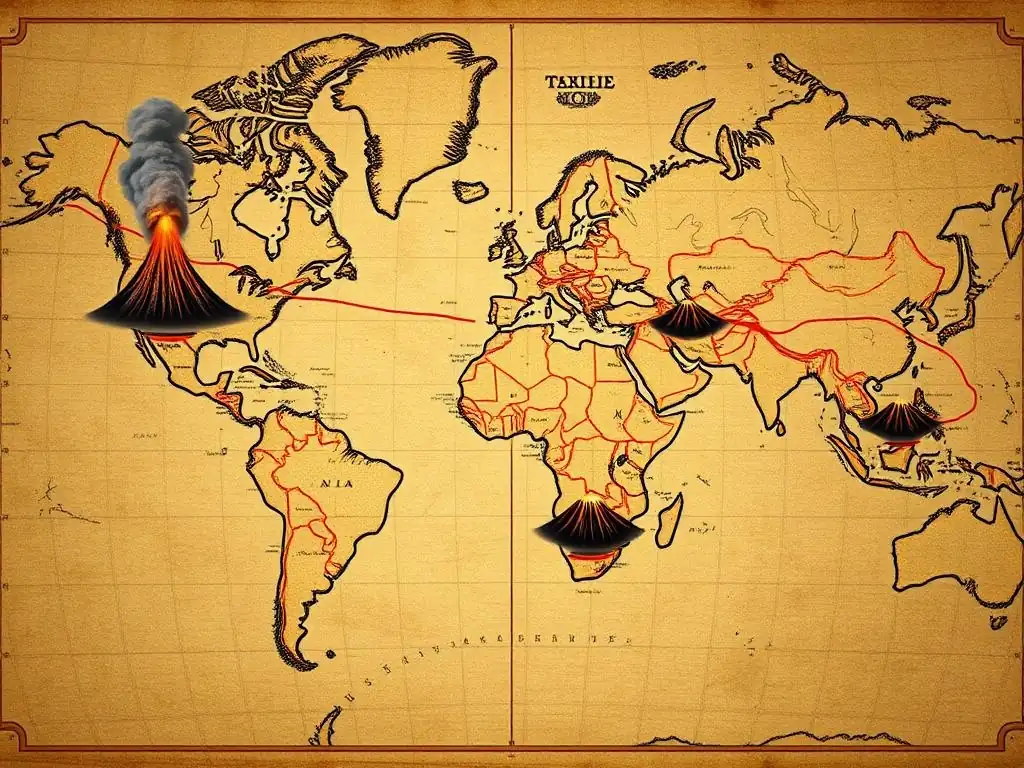
The Laki Fissure Eruption (1783-1784): A Case Study in Iceland
The Laki fissure eruption in Iceland, lasting from June 1783 to February 1784, was one of the most significant volcanic events of the 18th century, and indeed of the last millennium. It was not a single volcano erupting, but rather a fissure vent system stretching 25 kilometers long that released an estimated 14 cubic kilometers of basalt lava and a staggering amount of volcanic gases, including approximately 8 million tons of hydrogen fluoride and 120 million tons of sulfur dioxide.
The sheer scale of gas emissions, particularly sulfur dioxide, is what made Laki a globally impactful event, far beyond the shores of Iceland.
The eruption's impact was felt immediately in Iceland, with devastating consequences for the local population. Volcanic smog, known as "haze summer," blanketed the island, poisoning pastures and water sources. Acid rain contaminated the land, leading to widespread livestock deaths. It is estimated that over 50% of Iceland's livestock perished, and the ensuing famine killed approximately 25% of the human population. However, Laki's reach extended far beyond Iceland, impacting weather patterns and causing economic disruptions across Europe and potentially beyond.
Laki's Impact on European Weather and Agriculture
The vast plume of sulfur dioxide from Laki drifted across Europe, creating a persistent haze that significantly reduced sunlight reaching the continent. Contemporary accounts from across Europe describe a "dry fog" or "haze" that lingered for months, dimming the sun and causing unusually hot summers followed by severe winters. The reduced sunlight and altered atmospheric conditions had a detrimental effect on agriculture across Europe.
Crop yields suffered significantly in many regions. Reports from France, Germany, Italy, and Britain detail widespread crop failures of grains, fruits, and vegetables. The lack of sunlight hindered photosynthesis, while the volcanic haze may have also influenced rainfall patterns, further exacerbating agricultural distress. The consequences were widespread food shortages and rising food prices across Europe, contributing to economic hardship and social unrest in several countries. The Laki eruption demonstrated the profound vulnerability of 18th-century European agriculture to large-scale atmospheric disturbances.
The Ripple Effect: Trade Disruptions Across the Atlantic
The atmospheric changes caused by Laki extended beyond Europe, impacting weather patterns across the North Atlantic and potentially influencing trade winds. While direct records of trade wind disruptions solely attributed to Laki are sparse, historical weather data and shipping records suggest that the eruption contributed to unusual weather conditions in the Atlantic. Changes in atmospheric pressure systems and temperature gradients could have affected prevailing winds and ocean currents.
For maritime trade, this could have translated into altered sailing times, unpredictable weather at sea, and potentially increased risks of shipwrecks. While not definitively quantifiable, it is plausible that transatlantic trade routes, already subject to the vagaries of the weather, experienced further disruptions due to the Laki eruption. Delays in shipping, increased risks, and potential losses of cargo would have had economic repercussions, affecting merchants, shipping companies, and the flow of goods across the Atlantic, although the precise extent of these disruptions requires further research.
The Tambora Eruption (1815): A Global Climate Catastrophe
While the Laki eruption was devastating regionally and impactful globally, the eruption of Mount Tambora in Indonesia in April 1815 dwarfed it in scale and global consequences. Tambora is considered the largest volcanic eruption in recorded history, with a Volcanic Explosivity Index (VEI) of 7. It ejected an estimated 150-175 cubic kilometers of volcanic material and released even more sulfur dioxide into the stratosphere than Laki, estimated to be around 60 million tons. Tambora's eruption had truly global reach, triggering a period of unprecedented climate anomalies and economic turmoil worldwide.
The immediate effects of Tambora were catastrophic in the vicinity of the volcano. Pyroclastic flows and tsunami waves devastated the island of Sumbawa and surrounding regions, causing widespread destruction and tens of thousands of deaths. However, the truly global impact of Tambora stemmed from the massive stratospheric aerosol cloud it generated, which encircled the planet and drastically altered global climate patterns for several years.
Tambora's Ash Cloud and its Worldwide Impact
The immense cloud of volcanic ash and sulfate aerosols from Tambora spread rapidly around the globe, creating a visible veil that dimmed sunlight worldwide. Contemporary observers in Europe and North America noted unusually hazy skies, reduced solar intensity, and spectacular sunsets caused by the scattering of sunlight by the aerosols. This global veil significantly reduced the amount of solar radiation reaching the Earth's surface, leading to a pronounced global cooling effect.
Global average temperatures dropped by an estimated 0.4–0.7 °C (0.7–1.3 °F) in the year following the eruption. While this may seem like a small change, it was enough to disrupt weather patterns on a global scale, leading to widespread anomalies in temperature and precipitation across continents. The Tambora eruption demonstrated the capacity of a single volcanic event to induce a near-global climate perturbation, with far-reaching consequences for human societies.
"The Year Without a Summer": Famine and Economic Turmoil
1816 became known as "The Year Without a Summer," particularly in North America and Europe, due to the extreme weather anomalies triggered by Tambora. North America experienced severe frosts and snowstorms in June, July, and August, months typically associated with summer warmth. Crops were repeatedly destroyed by frost and cold temperatures, leading to widespread agricultural failures across New England, Canada, and parts of Europe.
Europe also endured exceptionally cold and wet conditions. Summer temperatures were significantly below average, and persistent rainfall led to widespread flooding and crop failures. Grain harvests were disastrously low across many parts of Europe, leading to soaring food prices and widespread famine.
The "Year Without a Summer" resulted in immense economic hardship, social unrest, and famine-related deaths in many regions, highlighting the devastating economic consequences of a volcanically induced global climate shock. The Tambora eruption and its aftermath serve as a stark reminder of the vulnerability of 19th-century, and indeed global, economies to sudden and significant climate change triggered by natural events.
The Grimsvötn Eruption (1783-1785): A Lesser-Known Contributor
While Laki often dominates discussions of 18th-century volcanic eruptions and their impacts, it's important to recognize that Iceland experienced another significant eruption contemporaneously at Grímsvötn volcano. Grímsvötn erupted from 1783 to 1785, overlapping with the Laki eruption. While Grímsvötn's eruption was smaller in scale than Laki in terms of lava volume, it still contributed significantly to the atmospheric sulfur dioxide load, exacerbating the climatic and economic disruptions of the period.
Grímsvötn, located beneath the Vatnajökull ice cap in Iceland, is a highly active volcano known for its frequent eruptions. The 1783-1785 eruption, while less studied than Laki, undoubtedly added to the overall volcanic forcing of the late 18th century, contributing to the prolonged period of atmospheric haze and climate anomalies experienced globally.
Grimsvötn's Concurrent Impact with Laki
Given the proximity in time and location, the Grímsvötn eruption cannot be considered in isolation from the Laki event. Both volcanoes were active during the same period, releasing volcanic gases into the atmosphere concurrently. This simultaneous volcanic activity resulted in a compounded injection of sulfur dioxide into the stratosphere, leading to a greater overall atmospheric aerosol load than either eruption would have produced individually.
The combined effect of Laki and Grímsvötn likely prolonged and intensified the atmospheric haze and associated climate anomalies observed across Europe and potentially globally. The synergistic effect of these eruptions meant that the climatic and economic impacts were more severe and longer-lasting than if only one eruption had occurred.
Synergistic Effects on European Climate and Trade
The concurrent eruptions of Laki and Grímsvötn likely amplified the disruptions to European climate and trade already initiated by Laki. The additional sulfur dioxide from Grímsvötn would have further reduced solar radiation, potentially intensifying the cooling effect and prolonging the period of atmospheric haze. This prolonged period of altered weather patterns would have exacerbated agricultural problems across Europe, leading to more severe and sustained food shortages.
For maritime trade, the combined volcanic forcing could have resulted in more persistent and widespread disruptions to weather patterns in the North Atlantic. The trade winds, already potentially affected by Laki, could have been further destabilized by the additional volcanic aerosols from Grímsvötn. The synergistic effect of these eruptions underscores the complex and interconnected nature of volcanic forcing and its potential to trigger cascading impacts on climate, weather, and human economic systems, particularly in the context of 18th-century global commerce.
The Economic Consequences of Disrupted Trade Winds
Impacts on Agriculture: Crop Failures and Food Shortages
The most immediate and widespread economic consequence of volcanic eruptions in the 18th century was their devastating impact on agriculture. As discussed, eruptions like Laki and Tambora injected vast quantities of aerosols into the stratosphere, leading to reduced sunlight and altered weather patterns. This translated directly into crop failures across vast regions, particularly in Europe and North America. Reduced sunlight hindered photosynthesis, while changes in temperature and precipitation led to frost damage, waterlogging, and other adverse conditions for crop growth.
The 1780s and 1810s witnessed widespread reports of failed harvests of staple crops such as wheat, rye, barley, and oats. Fruit and vegetable yields also suffered significantly. The cumulative effect of these crop failures was widespread food shortages, drastically reducing food supplies and triggering sharp increases in food prices.
For instance, in the aftermath of Laki, grain prices in Britain and France soared, putting immense pressure on household budgets, particularly for the poor. The "Year Without a Summer" following Tambora led to even more catastrophic food shortages and famine conditions in many regions, demonstrating the direct link between volcanic eruptions, agricultural collapse, and food insecurity.
Maritime Trade Routes: Delays, Shipwrecks, and Increased Costs
Disrupted trade winds directly impacted maritime trade, the backbone of 18th-century global commerce. Changes in wind patterns, driven by volcanic aerosols, could lead to unpredictable sailing conditions, altered currents, and increased storm frequency. For sailing vessels reliant on predictable winds, these changes meant longer voyages, delays in arrival, and increased risks at sea.
Ships could be becalmed for extended periods due to weakened trade winds or forced off course by unexpected storms or wind shifts. Delays in voyages increased transportation costs, as ships spent more time at sea, consuming supplies and increasing the risk of spoilage for perishable goods. Furthermore, altered weather patterns could have increased the frequency and intensity of storms, leading to a higher risk of shipwrecks and loss of cargo.
Insurance costs would have risen to reflect these increased risks, further adding to the cost of maritime trade. While precise quantification of these impacts is challenging due to limited data, anecdotal evidence and historical shipping records suggest that volcanic eruptions contributed to significant disruptions and increased costs in maritime trade during the 18th century.
The Rise of Smuggling and Black Markets
Economic disruptions caused by volcanic eruptions, particularly food shortages and trade restrictions, often fueled the growth of smuggling and black markets. When legitimate trade routes were hampered, and essential goods became scarce and expensive, opportunities arose for illicit trade to fill the gap. Smugglers could profit by circumventing official trade channels and bringing in goods that were in high demand but short supply.
For example, during periods of food shortages, grain smuggling became more prevalent. Merchants might illegally transport grain from regions with surpluses to areas experiencing famine, selling it at inflated prices on the black market. Similarly, trade disruptions could create shortages of other goods, such as textiles, spices, or sugar, leading to increased smuggling activity in these commodities as well. While difficult to quantify precisely, the rise of smuggling and black markets during periods of volcanic-induced economic hardship highlights the breakdown of legitimate trade systems and the desperate measures people took to access essential goods and maintain their livelihoods.
Global Economic Recession: A Chain Reaction
The cumulative impact of agricultural failures, maritime trade disruptions, and the rise of illicit markets could trigger a broader economic recession. Reduced agricultural output meant less income for farmers and rural populations, decreasing demand for manufactured goods and other non-essential items. Disruptions to maritime trade hampered international commerce, reducing the flow of goods and capital between regions. Rising food prices eroded consumer purchasing power, further dampening economic activity.
This chain reaction could lead to a contraction of the overall economy. Businesses might face reduced demand, leading to decreased production, job losses, and bankruptcies. Governments faced with reduced tax revenues and increased social unrest might struggle to maintain stability. While it is difficult to isolate the precise contribution of volcanic eruptions to broader economic recessions in the 18th century, it is plausible that they acted as a significant trigger or exacerbating factor, particularly in economies heavily reliant on agriculture and international trade, demonstrating how 18th century volcanic eruptions impact commerce on a global scale.
Case Studies: Specific Industries Affected by Volcanic Disruptions
The Sugar Trade: Caribbean Plantations and European Markets
The sugar trade, a cornerstone of 18th-century global commerce, was particularly vulnerable to the disruptions caused by volcanic eruptions. Caribbean plantations, heavily reliant on slave labor, produced vast quantities of sugar for European markets. This trade was highly dependent on predictable transatlantic shipping routes powered by trade winds. Volcanic eruptions, by altering weather patterns and trade winds, could significantly disrupt this trade.
For instance, if trade winds were weakened or became less predictable, sailing times between the Caribbean and Europe would increase, delaying sugar shipments. Stormier conditions could lead to higher risks of shipwrecks and sugar cargo losses. Delays and losses would reduce the supply of sugar reaching European markets, leading to price increases. Furthermore, if volcanic cooling affected weather patterns in the Caribbean itself, sugar production could be directly impacted through reduced yields or crop damage, further exacerbating supply chain issues and price volatility in the sugar trade.
The Spice Trade: Disrupted Supply Chains from the East Indies
The spice trade, another highly lucrative sector of 18th-century global commerce, relied on complex and lengthy supply chains stretching from the East Indies (modern-day Indonesia and surrounding regions) to Europe. Spices like cloves, nutmeg, cinnamon, and pepper were highly valued in Europe and constituted a significant component of international trade. Volcanic eruptions in the East Indies, such as Tambora, could directly disrupt spice production and trade routes.
Tambora's eruption, for example, occurred in the heart of the spice-producing region. The immediate devastation caused by the eruption in Sumbawa and surrounding islands would have directly impacted spice plantations and infrastructure. The subsequent global climate anomalies could have further affected spice production through altered rainfall patterns and temperatures in the East Indies.
Disruptions to shipping routes in the Indian Ocean and around the Cape of Good Hope, potentially influenced by volcanic aerosols, would have further hampered the flow of spices to Europe. These disruptions could have led to spice shortages in European markets and significant price fluctuations, impacting merchants, consumers, and the overall profitability of the spice trade.
The Grain Trade: European Dependence and Vulnerability
The grain trade was crucial for European food security in the 18th century. Many European countries relied on grain imports from other regions, such as Eastern Europe and North America, to supplement domestic production, especially in years of poor harvests. Volcanic eruptions, by causing widespread crop failures across Europe, exacerbated this dependence and vulnerability, placing immense strain on the grain trade.
When domestic grain harvests failed due to volcanic-induced climate anomalies, demand for imported grain surged. However, disruptions to maritime trade routes, as discussed earlier, hampered the ability to import grain efficiently. Delays in shipping, increased risks, and higher transportation costs made it more difficult and expensive to secure grain supplies from overseas.
This imbalance between increased demand and constrained supply led to soaring grain prices across Europe, triggering food shortages, famine, and social unrest, as seen in the aftermath of both Laki and Tambora eruptions. The grain trade case study highlights the critical link between volcanic eruptions, agricultural vulnerability, and food security in 18th-century Europe.
The Link Between Volcanic Eruptions and Public Health Crises
Beyond the immediate economic consequences, volcanic eruptions in the 18th century had profound societal impacts, particularly on public health. The widespread food shortages and famines triggered by volcanic-induced crop failures directly contributed to increased malnutrition and weakened immune systems, making populations more susceptible to disease.
Furthermore, volcanic eruptions could directly contribute to respiratory problems. Volcanic smog, like the "haze summer" from Laki, contained harmful gases and particulate matter that irritated the respiratory system, exacerbating existing conditions and increasing susceptibility to respiratory infections. Contaminated water sources, due to acid rain or volcanic ashfall, could also spread waterborne diseases. Historical records from the aftermath of major eruptions document increases in mortality rates, often attributed to a combination of famine-related illnesses and disease outbreaks, highlighting the significant public health consequences of these natural disasters.
The economic hardship and public health crises triggered by volcanic eruptions often led to social and political instability. Food shortages and rising prices fueled social unrest, as people struggled to afford basic necessities. Governments faced with widespread poverty, famine, and disease outbreaks often struggled to maintain order and provide adequate relief.
Historical records from the late 18th and early 19th centuries document instances of social unrest, protests, and even riots in response to food shortages linked to volcanic eruptions. The French Revolution, while having complex causes, occurred shortly after the Laki eruption and the associated period of economic hardship, and some historians argue that volcanic-induced famine may have been a contributing factor to the pre-revolutionary social and political climate in France.
Similarly, the "Year Without a Summer" following Tambora led to social unrest and food riots in several European countries, demonstrating the potential of volcanic eruptions to destabilize societies and challenge existing political structures.
Bread riots, fueled by eruption-related food scarcity, are a stark example of the social unrest triggered by volcanic events in the 18th century. Bread was a staple food for the majority of the population in Europe, and any significant increase in bread prices could lead to widespread hardship and anger. When volcanic eruptions caused crop failures and grain shortages, bread prices often soared, pushing basic sustenance out of reach for many.
This situation frequently led to bread riots, where desperate populations took to the streets to protest food shortages and demand government action. These riots could range from peaceful demonstrations to violent confrontations with authorities. Historical records from France, Britain, and other European countries document bread riots in the aftermath of volcanic eruptions like Laki and Tambora. These events illustrate the direct link between volcanic-induced food scarcity, social unrest, and the potential for civil disorder, demonstrating how natural events could directly impact social stability in the 18th century.
Adaptation Strategies: New Crops, Trade Routes, and Technologies
While volcanic eruptions caused significant disruptions, societies were not passive victims. Over time, people developed various adaptation strategies to mitigate the impacts of such events and build greater resilience. In agriculture, one form of adaptation was the diversification of crops. After periods of crop failures, farmers might experiment with new crops that were more resilient to climate variability or better suited to altered weather conditions. The potato, for example, gained popularity in Europe during the Little Ice Age, partly due to its relative resilience to colder temperatures compared to traditional grains.
In trade, disruptions prompted the exploration of new trade routes and the development of more efficient shipping technologies. The search for more reliable and faster sailing routes continued throughout the 18th and 19th centuries, partly driven by the need to overcome the challenges posed by unpredictable weather and trade wind variations. Technological advancements in shipbuilding and navigation also contributed to greater resilience in maritime trade over time.
The Role of Government and International Aid
Governments played a crucial role in responding to volcanic-induced crises and facilitating long-term adjustments. In the immediate aftermath of eruptions, governments were often called upon to provide famine relief, manage food distribution, and maintain social order. Over the longer term, governments could implement policies to promote agricultural diversification, invest in infrastructure to improve trade and transportation, and encourage technological innovation.
While formal international aid systems were not as developed in the 18th century as they are today, there were instances of cross-border assistance in times of crisis. Neighboring countries might provide grain or financial aid to regions affected by famine. The response to volcanic disasters, both domestically and internationally, gradually evolved over time, laying the groundwork for more formalized disaster relief mechanisms in later centuries.
Lessons Learned: Resilience and Preparedness for Future Volcanic Events
The experience of 18th-century volcanic eruptions offered valuable lessons about resilience and preparedness for future volcanic events and other natural disasters. The vulnerability of global commerce to volcanic climate forcing became evident. The importance of diversifying agricultural systems, strengthening trade networks, and investing in public health infrastructure was underscored.
The 18th century served as a period of learning, albeit through hardship, about the interconnectedness of natural systems and human societies. The lessons learned from these historical eruptions contributed to a growing understanding of climate variability, volcanic hazards, and the need for societies to develop greater resilience to environmental shocks. This historical perspective is crucial for informing contemporary strategies for disaster preparedness and climate change adaptation in a world still vulnerable to volcanic eruptions and other large-scale natural events.
Conclusion: The Enduring Legacy of 18th-Century Volcanic Eruptions on Global Commerce
Rethinking Global Interdependence in the Face of Natural Disasters
The 18th-century volcanic eruptions and their impact on global commerce serve as a powerful historical reminder of the interconnectedness of the world and the vulnerability of global systems to natural disasters. These events demonstrated that seemingly localized volcanic eruptions could trigger cascading effects that rippled across continents, disrupting trade, economies, and societies far removed from the source of the eruption.
The experience of the 18th century highlights the importance of understanding and acknowledging global interdependence, particularly in the face of environmental risks. Disruptions to one part of the world can have significant consequences for distant regions, underscoring the need for international cooperation and coordinated responses to global challenges, whether they stem from natural disasters or other sources.
The Importance of Volcanic Monitoring and Climate Modeling
The historical impact of 18th-century eruptions also underscores the importance of volcanic monitoring and climate modeling in the modern era. Understanding volcanic hazards and predicting their potential climatic impacts is crucial for mitigating risks and enhancing preparedness. Modern volcanology and climate science provide tools to monitor volcanic activity, assess eruption potential, and model the atmospheric and climatic consequences of eruptions.
Investing in volcanic monitoring networks, developing sophisticated climate models, and improving our understanding of volcanic forcing are essential steps in building resilience to future volcanic events. By learning from the past and leveraging scientific advancements, we can better anticipate and prepare for the potential impacts of volcanic eruptions on global systems, including commerce, agriculture, and public health.
Further Research: Exploring Paleoclimatology and Economic History
Further research at the intersection of paleoclimatology and economic history is crucial to deepen our understanding of the long-term impacts of volcanic eruptions on global commerce and societies. Analyzing historical climate records, economic data, and social indicators in conjunction with volcanic eruption chronologies can provide valuable insights into the complex interactions between natural events and human systems.
More research is needed to quantify the precise economic impacts of specific 18th-century eruptions, to disentangle volcanic forcing from other factors influencing economic fluctuations, and to explore the long-term social and political consequences of these events. By bridging the gap between paleoclimate science and economic history, we can gain a more comprehensive understanding of the enduring legacy of volcanic eruptions and their relevance to contemporary challenges of climate change, disaster preparedness, and global economic stability.
Frequently Asked Questions
What was the primary way 18th-century volcanic eruptions impacted commerce?
The primary impact was through disruptions to trade winds and altered weather patterns, which significantly affected shipping routes and agricultural production, ultimately affecting global trade.
Which specific 18th-century eruptions are most noted for impacting commerce?
The Laki eruption in Iceland (1783-1784) is particularly notorious. Its effects included widespread crop failures and famine across Europe, which directly impacted commerce and trade.
How did volcanic ash from 18th-century eruptions affect maritime trade?
Volcanic ash could travel vast distances, impairing visibility at sea and potentially damaging ships. This led to delayed voyages and increased risks for merchants.
Beyond Europe, what other regions experienced commercial impacts from 18th-century volcanic eruptions?
Regions reliant on agriculture, such as parts of Asia and the Americas, also suffered economic consequences. Altered weather patterns led to crop failures and disrupted trade networks.
What long-term commercial consequences resulted from major 18th-century volcanic eruptions?
Beyond immediate disruptions, the eruptions contributed to economic instability and social unrest in some areas. They also prompted new research into climate and its relationship to global trade.
Final Reflection: Echoes of Fire, Whispers of Change
The narrative of 18th-century volcanic eruptions and their impact on global commerce, as explored in this article, isn't just a historical account; it's a stark reminder of the fragility of interconnected systems. The disruption of trade winds, the ensuing famines, and the economic ripples felt across continents serve as a potent lesson in how natural events can reshape the very fabric of human society, a lesson particularly relevant in our increasingly globalized world.
The echoes of these volcanic events continue to resonate, shaping our understanding of risk management and the importance of resilience in the face of unforeseen crises. The study of these past disruptions underscores the vital need for proactive strategies to mitigate the impact of future environmental challenges on global supply chains and economic stability. History doesn't repeat itself, but it often rhymes.
- Mark Twain. This quote perfectly encapsulates how understanding the past, specifically the 18th century's volcanic disruptions, can inform our responses to contemporary global challenges.
Let us not view these historical events as mere footnotes in history books, but as powerful reminders of our interconnectedness and vulnerability. Consider how the lessons learned from the trade winds disrupted by 18th-century eruptions can inform your own understanding of global events and your role in building a more resilient future. Reflect on the importance of preparedness, diversification, and international cooperation in navigating the inevitable challenges that lie ahead, and strive to contribute to a world better equipped to weather the storms, both literal and metaphorical.
Unearth the Past: Explore the Impact of Volcanic Eruptions on Global Trade!
Thank you for exploring the fascinating ways 18th-century volcanic eruptions disrupted global trade. Now that you've learned how these natural events shaped economic history, we invite you to delve deeper and share your discoveries.
Here are a few ways to continue your exploration:
- Investigate local historical archives: Research how these global trade disruptions specifically affected your region. You might uncover surprising local connections!
- Join the discussion on our Volcano Explorers forum. Share your thoughts on how modern natural disasters could impact today's global supply chains and the potential consequences.
- Become a digital volunteer and help transcribe historical documents related to trade routes and natural events, making them accessible online. Help preserve our shared history!
Ready to join a community of history enthusiasts and uncover more untold stories?