
Iceland's Fire and Viking Voyages: Did Volcanic Events Shape Norse Exploration and Trade?

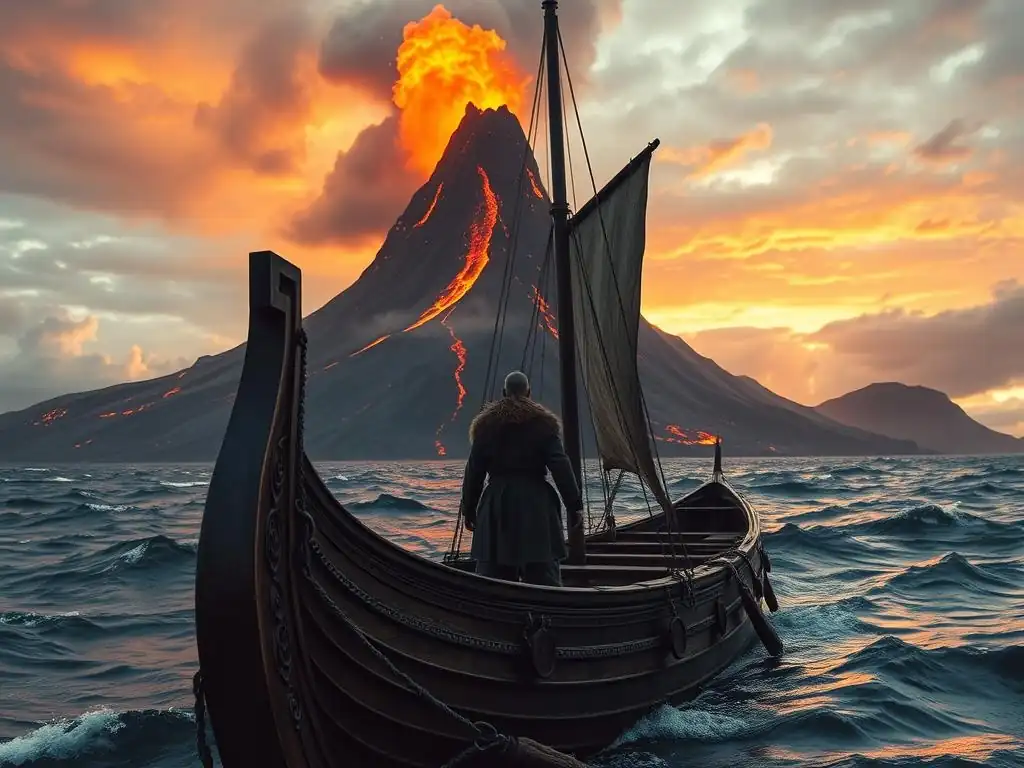
Welcome to Volcano Explorers!
Ever wondered if the fiery breath of Iceland's volcanoes played a hidden hand in shaping the Viking Age? Iceland's Fire and Viking Voyages: Did Volcanic Events Shape Norse Exploration and Trade? We invite you to explore the intriguing connection between historical eruptions and the daring voyages of Norse explorers. Uncover the secrets buried beneath the ash and discover how these dramatic events may have influenced trade routes and the very course of history. Dive in and ignite your curiosity!
- Introduction: Iceland, Volcanoes, and the Viking Age
- Iceland's Volcanic Activity: A Constant Presence in Viking Life
- The Impact of Volcanic Eruptions on Viking Navigation and Seafaring
- Volcanic Eruptions and Their Influence on Viking Trade Routes
- Volcanoes and Norse Mythology: Interpreting Volcanic Activity Through Viking Beliefs
- Case Studies: Specific Volcanic Events and Their Potential Impact on Viking Activity
- Alternative Theories and Counterarguments: Beyond Volcanic Influence
- Conclusion: Reassessing the Relationship Between Volcanic Events and Norse Exploration
-
Frequently Asked Questions
- Did volcanic eruptions in Iceland impact Norse seafaring capabilities?
- How might volcanic activity have influenced Viking settlements in Iceland and beyond?
- Is there evidence of Norse sagas referencing specific volcanic events?
- Could volcanic eruptions have altered the climate, affecting Norse trade routes?
- Did the abundance of volcanic resources in Iceland benefit Norse exploration?
- Final Reflection: The Echoes of Fire and Ice
- Ignite Your Inner Viking: Explore Iceland's Volcanic Legacy!
Introduction: Iceland, Volcanoes, and the Viking Age
Setting the Stage: Iceland's Volcanic Landscape During the Norse Era
Iceland, settled by Norse seafarers in the late 9th century, was and remains a land forged by fire. Throughout the Viking Age, which roughly spans from the late 8th to the mid-11th centuries, Iceland's volcanic systems were intensely active. Geological records indicate frequent eruptions from various volcanic centers across the island.
The landscape encountered by the first Viking settlers was dramatically shaped by recent and ongoing volcanism, with vast lava fields still cooling, geothermal areas steaming, and the ever-present threat of further eruptions looming. This fiery environment was not a backdrop, but an active participant in the lives of the early Icelanders, influencing their settlement patterns, resource availability, and worldview.
The geological underpinnings of Iceland are crucial to understanding this context. Situated on the Mid-Atlantic Ridge, a divergent plate boundary, Iceland experiences continuous volcanism as the North American and Eurasian plates drift apart. This rifting process allows magma from the Earth's mantle to ascend, resulting in both effusive and explosive eruptions.
During the Viking Age, volcanoes like Hekla, Katla, and Grímsvötn were already established centers of activity. The frequency of eruptions meant that Norse settlers were not just living in a volcanic landscape, but were constantly adapting to a world punctuated by volcanic events, making volcanism a significant, if often unacknowledged, factor in their history.
The Question: How Did Volcanic Activity Impact Viking Exploration and Trade?
Given Iceland's intense volcanic activity during the Viking Age and the Norse people's renowned seafaring prowess, a compelling question arises: did these volcanic events significantly influence Viking exploration and trade? This is not to suggest that volcanoes were the sole driver of Viking expansion, but rather to explore the potential interplay between natural forces and human actions. Could volcanic eruptions have created pressures or opportunities that shaped the trajectory of Norse voyages and commercial networks? Did the challenges and disruptions caused by volcanic events push Vikings to seek new resources, explore new territories, or adapt their trade routes?
Exploring this question requires considering various avenues of impact. Volcanic eruptions can have immediate and direct consequences, such as ashfall disrupting agriculture, or volcanic gases affecting health. They can also create longer-term environmental changes, influencing climate and resource availability. For a seafaring society like the Vikings, volcanic events could pose navigational hazards, alter coastal landscapes, and disrupt established trade routes. By examining the intersection of geological records and historical accounts, we can begin to assess the extent to which volcanic activity acted as a catalyst, constraint, or contributing factor in the story of Viking exploration and trade.
Exploring the Intersection of Geology and History
The investigation into the relationship between volcanic events and Norse exploration necessitates a multidisciplinary approach, bridging the gap between geology and history. Geology provides the timeline and magnitude of volcanic events through techniques like tephrochronology, analyzing volcanic ash layers found in ice cores, lake sediments, and peat bogs.
These layers act as time markers, allowing scientists to pinpoint when eruptions occurred and sometimes even estimate their intensity and geographical reach. Historical sources, including the Icelandic sagas, archaeological records, and accounts from other cultures who interacted with the Vikings, offer insights into the human responses to environmental challenges and the patterns of Viking voyages and trade.
By carefully correlating geological evidence of volcanic eruptions with historical timelines of Viking activity, we can begin to identify potential connections. For instance, if a major volcanic eruption coincides with a period of increased Viking exploration or shifts in trade routes, it raises the possibility of a causal link. However, establishing correlation is not causation.
Therefore, it is essential to consider other factors that were influencing Viking society, such as political dynamics, technological innovations, and broader climate trends. This interdisciplinary approach, combining the precision of geological dating with the nuanced interpretations of historical analysis, offers the most promising path towards understanding the true impact of volcanic events on Norse exploration and trade.
Iceland's Volcanic Activity: A Constant Presence in Viking Life
Major Volcanic Eruptions in Iceland During the Viking Age (c. 8th-11th Centuries)
The Viking Age in Iceland was punctuated by significant volcanic eruptions, leaving indelible marks on both the landscape and potentially Norse society. One of the most notable events was the massive Eldgjá eruption around 934 AD. Eldgjá, a volcanic fissure in the Icelandic Highlands, produced one of the largest basaltic eruptions in historical times, spewing an estimated 18 cubic kilometers of lava and tephra.
The sulfuric aerosols released into the atmosphere from this eruption likely had hemispheric or even global climatic impacts, potentially affecting weather patterns across the North Atlantic and beyond. For the nascent Viking settlements in Iceland, the immediate effects would have been devastating, with widespread ashfall and potential disruption of agriculture and water sources.
Beyond Eldgjá, other volcanic systems in Iceland were also active during this period. Hekla, known for its frequent and explosive eruptions, likely erupted multiple times during the Viking Age, though precisely dating these events with high accuracy for this early period is challenging. Similarly, the Katla volcanic system, hidden beneath the Mýrdalsjökull ice cap, is known for its powerful subglacial eruptions that can generate massive meltwater floods (jökulhlaups) and widespread tephra dispersal.
While specific eruption dates for Katla during the Viking Age are less precisely defined than Eldgjá, geological evidence suggests ongoing activity. The constant presence of these active volcanic systems meant that Norse Icelanders lived under the persistent shadow of volcanic hazards, shaping their daily lives and long-term societal development.
Tephrochronology: Dating Volcanic Events and Their Impact on Norse Society
Tephrochronology, the science of dating geological layers using volcanic ash (tephra), is a crucial tool for understanding the chronology of volcanic events in Iceland and their potential impact on Norse society. Volcanic eruptions deposit distinct layers of ash that can be identified and traced over wide areas. Each ash layer possesses a unique geochemical fingerprint, allowing scientists to correlate tephra deposits found in different locations, from ice cores in Greenland to peat bogs in Iceland and even lake sediments in Scandinavia. This method provides a precise dating framework, enabling researchers to synchronize volcanic events with historical and archaeological records.
For the Viking Age in Iceland, tephrochronology has been instrumental in establishing a timeline of major eruptions. For example, the prominent "Saksunarvatn Ash" layer, originating from Iceland, is dated to around 934 AD and is widely correlated with the Eldgjá eruption. This ash layer has been found in peat deposits across Iceland and even in Greenland ice cores, providing robust evidence for the scale and timing of this event.
By analyzing the tephra layers found in archaeological sites in Iceland, researchers can also investigate the immediate impact of volcanic ashfall on Norse settlements, looking for evidence of abandonment, changes in building styles, or shifts in agricultural practices following major eruptions. Tephrochronology, therefore, provides a crucial scientific link between volcanic events and the human history of Viking Age Iceland.
Understanding the Volcanic Hazards Faced by Early Icelanders
Early Icelanders faced a range of volcanic hazards that directly impacted their lives and livelihoods. The most immediate and widespread hazard was tephra fall, or ashfall. Volcanic ash, composed of fine particles of rock and glass, can blanket the landscape, contaminating water sources, damaging crops, and causing respiratory problems for humans and livestock. Even relatively thin layers of ash can render grazing lands unusable for extended periods, leading to food shortages and economic hardship. The heavier the ashfall, the more devastating the consequences, potentially collapsing roofs, burying settlements, and triggering widespread famine.
Another significant hazard was lava flows. While lava flows are typically slower-moving than other volcanic hazards, they can completely destroy anything in their path, including settlements, agricultural land, and infrastructure. The expansion of lava fields could also alter drainage patterns, impacting water availability and potentially creating new areas of geothermal activity.
Furthermore, subglacial eruptions, common in Iceland due to its ice caps, pose the threat of jökulhlaups. These glacial outburst floods are sudden and powerful, capable of eroding vast landscapes, destroying river crossings, and inundating coastal areas. Volcanic gases, such as sulfur dioxide, released during eruptions, could also create acid rain and contribute to respiratory problems, adding to the suite of volcanic hazards that early Icelanders had to contend with.

For Viking seafarers, accustomed to navigating by the sun, stars, and landmarks, volcanic eruptions presented significant navigational challenges, primarily due to ash clouds. Large explosive eruptions can inject vast quantities of ash and volcanic gases high into the atmosphere, forming dense plumes that can drift for hundreds or even thousands of kilometers downwind.
These ash clouds can dramatically reduce visibility, obscuring celestial bodies essential for navigation, especially during long sea voyages across the North Atlantic. Reduced visibility would have made it harder for Viking ships to maintain their course, increasing the risk of getting lost, delayed, or running into hazards.
The impact of ash clouds on navigation would have been particularly acute in the North Atlantic, a region known for its challenging weather conditions even without volcanic interference. Fog, storms, and unpredictable currents already posed risks to Viking voyages. The added element of volcanic ash clouds further compounded these difficulties, potentially making voyages longer and more perilous.
For ships relying on visual cues and celestial navigation, the sudden and unpredictable appearance of ash clouds could have been a serious threat, forcing them to rely more on dead reckoning or seek shelter until visibility improved. This could have disrupted planned itineraries and timelines for exploration and trade.
Volcanic Ashfall on Ships: Increased Weight and Potential Damage
Beyond the navigational challenges posed by ash clouds, volcanic ashfall directly onto Viking ships presented further problems. Volcanic ash, while appearing light and fluffy, is composed of tiny particles of rock and glass. When wet, it can become surprisingly heavy and cling to surfaces. Significant ashfall on a Viking ship could add considerable weight, especially accumulating on sails, rigging, and decks. This added weight could impact the ship's performance, making it slower and less maneuverable, potentially increasing the risk of capsizing in rough seas.
Furthermore, volcanic ash is abrasive and can cause damage to ship materials over time. The fine particles could scratch and wear down wooden components, sails, and ropes. If ash accumulated in the ship's bilges, it could clog pumps and drainage systems, creating further maintenance issues.
While Viking ships were robust and well-designed for the conditions of the North Atlantic, prolonged exposure to volcanic ashfall would have undoubtedly added to the wear and tear on the vessels, requiring more frequent repairs and potentially shortening their lifespan. The need to clean ash from ships and repair potential damage would have added to the logistical challenges and costs associated with Viking seafaring in volcanically active regions.
Coastal Changes and Harbor Alterations Due to Volcanic Activity
Volcanic activity can also lead to significant coastal changes and harbor alterations, impacting Viking settlements and maritime infrastructure. Large eruptions, particularly those from coastal or submarine volcanoes, can deposit substantial amounts of new land into the sea, altering coastlines. Lava flows reaching the sea can extend landmasses, while explosive eruptions can create new islands or reshape existing ones. These changes, while sometimes creating new harbors, could also disrupt existing ones. Sedimentation from volcanic ash and erosion of newly formed volcanic landscapes could lead to the silting up of harbors, making them shallower and less accessible to ships.
Jökulhlaups, triggered by subglacial eruptions, can also dramatically reshape coastal areas. The massive volumes of water and sediment carried by these floods can erode coastlines, deposit debris in harbors, and alter river mouths, which were often crucial for Viking settlements and trade routes. In Iceland, where many Viking settlements were located near the coast or along rivers, these volcanic-induced coastal changes could have had significant consequences.
Harbors might have become unusable, requiring relocation of settlements or significant investment in harbor maintenance. The dynamic nature of Iceland's volcanic coastline meant that Viking communities had to be adaptable and resilient in the face of these geological forces, constantly adjusting to the evolving landscape and its impact on their maritime activities.
Volcanic Eruptions and Their Influence on Viking Trade Routes
Disruption of Trade Networks: The Impact of Volcanic Ash on Agriculture and Resources
Volcanic eruptions, particularly large-scale events like Eldgjá, could have significantly disrupted Viking trade networks by impacting agriculture and resource availability across wide geographical areas. Volcanic ashfall, as previously discussed, can have devastating effects on crops and livestock. Extensive ash cover can blanket fields, smothering vegetation and contaminating grazing lands. The sulfuric aerosols released during eruptions can also lead to short-term cooling and altered precipitation patterns, potentially causing crop failures even in areas beyond the immediate ashfall zone. These agricultural disruptions could lead to food shortages, famine, and economic instability within Viking communities and across their trade networks.
For a society heavily reliant on agriculture and trade, widespread crop failures would have had cascading effects. Reduced agricultural output would limit the availability of food for local consumption and for trade. Essential goods, such as grains, dairy products, and textiles, which were likely part of Viking trade exchanges, would become scarcer and more expensive.
This scarcity could disrupt established trade routes, as the supply of goods diminished and the demand for essential resources increased in affected areas. Viking traders might have been forced to seek new sources of supply or adapt their trade routes to bypass regions experiencing volcanic-induced hardship, potentially leading to shifts in trade patterns and the development of new commercial relationships.
The Search for New Resources: Did Volcanic Events Drive Viking Expansion?
It is plausible to consider whether the resource scarcity and economic disruptions caused by significant volcanic events might have acted as a push factor, driving or at least contributing to Viking expansion and exploration. If volcanic eruptions led to prolonged periods of agricultural hardship and resource shortages in Scandinavia or Iceland, this could have incentivized Norse populations to seek new lands and resources elsewhere. The Viking voyages to the British Isles, continental Europe, and even North America could be partially understood as responses to environmental pressures, including those potentially exacerbated by volcanic activity.
While the primary motivations for Viking expansion were likely complex and multifaceted, encompassing factors like political ambition, population growth, and technological advancements in shipbuilding, environmental factors could have played a contributing role. Volcanic eruptions, by creating economic instability and resource scarcity, could have amplified existing pressures and made the prospect of seeking new opportunities abroad more attractive.
The search for fertile land, timber, metals, and other resources could have been intensified by the realization that the familiar environment was becoming less reliable due to volcanic disruptions. Therefore, while not the sole cause, volcanic events could be considered as a potential environmental catalyst that contributed to the broader phenomenon of Viking expansion and exploration.
Evidence of Volcanic Ash in Archaeological Sites Along Viking Trade Routes
Archaeological evidence offers tantalizing, though still developing, insights into the potential impact of volcanic events on Viking trade routes. The presence of volcanic ash layers in archaeological sites along known Viking trade routes could provide direct physical evidence of the reach of volcanic eruptions and their potential to affect trade activities. For example, if volcanic ash layers, geochemically linked to Icelandic eruptions, are found in Viking settlements in Greenland, the British Isles, or even further afield, it would suggest that these regions were indeed affected by Icelandic volcanic events.
Furthermore, analyzing the archaeological context of these ash layers could reveal more about their impact. If ash layers are found in association with signs of settlement abandonment, changes in building styles, or shifts in artifact assemblages, it could indicate that volcanic ashfall had a measurable impact on Viking communities and their activities in these locations.
While research in this area is ongoing, the potential to use tephrochronology in archaeological contexts along Viking trade routes offers a promising avenue for further investigating the complex interplay between volcanic events and Norse exploration and commerce. Future discoveries of volcanic ash layers in relevant archaeological sites could provide more concrete evidence to support the hypothesis that volcanic eruptions played a role in shaping the trajectory of Viking trade and expansion.
Volcanoes and Norse Mythology: Interpreting Volcanic Activity Through Viking Beliefs
Volcanic Eruptions as Omens and Portents in Norse Sagas
For the Norse people, deeply attuned to the natural world and their surrounding environment, volcanic eruptions were likely interpreted through the lens of their mythology and belief systems. In Norse sagas and Eddas, natural phenomena are often imbued with symbolic meaning and seen as omens or portents of future events. Volcanic eruptions, with their dramatic displays of fire, smoke, and earth-shaking power, would have been particularly potent and awe-inspiring events, likely interpreted as messages from the gods or signs of cosmic upheaval.
Sagas may describe periods of hardship or societal unrest following unusual natural events, which could potentially be linked to volcanic eruptions, even if not explicitly stated as such. The sudden appearance of ash clouds, the darkening of the sky, and the rumbling of the earth might have been seen as manifestations of divine displeasure or warnings of impending doom.
While Norse mythology does not explicitly detail volcanic eruptions in the same way as, for example, earthquakes are associated with Loki's struggles, the general framework of Norse belief systems, with its emphasis on fate, cyclical destruction, and renewal, provides a context for understanding how volcanic events might have been interpreted and integrated into their worldview.
The Representation of Fire and Destruction in Norse Mythology
Fire and destruction are prominent themes in Norse mythology, and volcanic eruptions would have provided a real-world manifestation of these concepts. The myth of Ragnarök, the twilight of the gods, foretells a cataclysmic end to the world, involving fire, earthquakes, and the sinking of land into the sea.
While not a direct description of a volcanic eruption, the imagery of Ragnarök shares striking similarities with the dramatic and destructive forces unleashed by volcanic activity. The giant Surtr, wielding a flaming sword, and the world consumed by fire in Ragnarök, resonate with the fiery nature of volcanic eruptions and their capacity for widespread devastation.
Furthermore, figures like Loki, often associated with chaos and trickery, could be linked to the unpredictable and sometimes destructive nature of volcanic events. The volcanic landscape itself, with its lava fields, steaming vents, and geothermal areas, might have been perceived as a realm of fire giants and other mythical beings inhabiting the edges of the cosmos. Norse mythology, therefore, provided a framework for understanding and contextualizing volcanic eruptions within a larger cosmic narrative, imbuing these natural events with deeper meaning and significance beyond their immediate physical impacts.
Connecting Volcanic Landscapes with Norse Cosmological Beliefs
The volcanic landscapes of Iceland, with their dramatic features and ongoing geothermal activity, could have profoundly shaped Norse cosmological beliefs and their understanding of the world. The very ground beneath their feet was visibly dynamic and alive, constantly being reshaped by volcanic forces. This environment likely fostered a worldview that emphasized the power of nature, the cyclical nature of creation and destruction, and the ever-present potential for upheaval. The steaming vents, bubbling mud pools, and vast lava fields could have been seen as tangible links to the underworld or realms beyond the human world.
Places like Hekla, known as the "gateway to Hell" in medieval times, demonstrate how volcanic features could become integrated into Norse cosmology and folklore. The fiery and otherworldly nature of volcanic landscapes might have reinforced beliefs in supernatural realms, mythical creatures, and the constant interplay between the forces of creation and destruction. The experience of living in a volcanically active region could have contributed to the development of a worldview that was both deeply respectful of nature's power and resilient in the face of environmental challenges, shaping the cultural and spiritual landscape of Viking Age Iceland.
Case Studies: Specific Volcanic Events and Their Potential Impact on Viking Activity
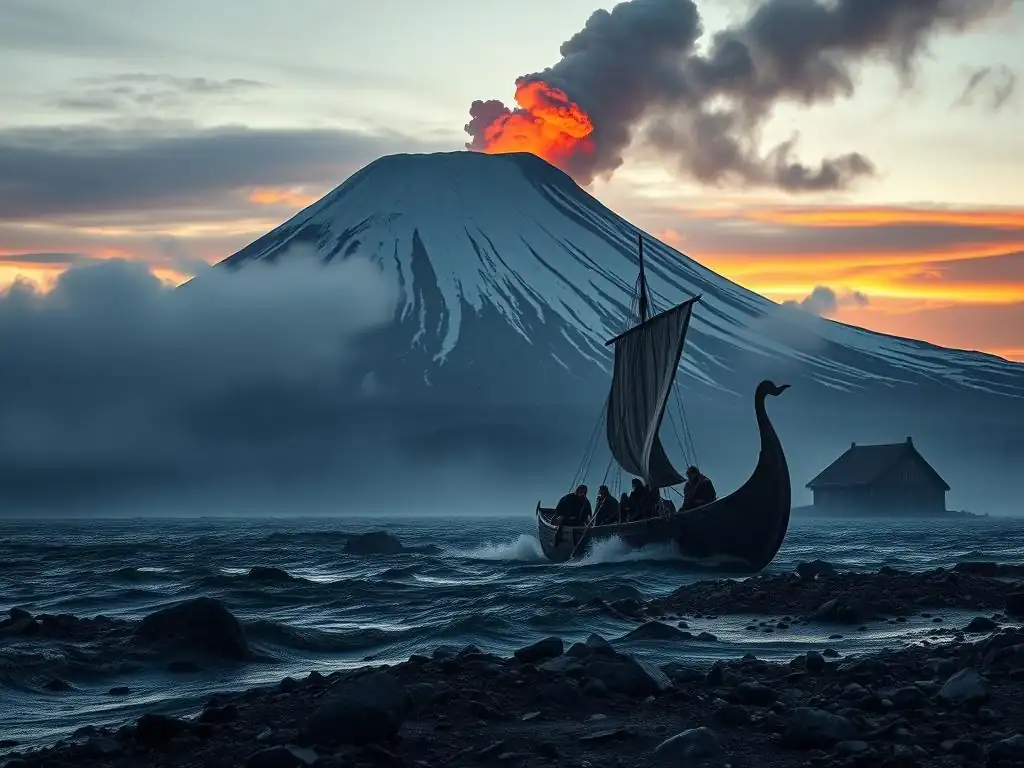
The Eldgjá Eruption (c. 934 AD): A Major Volcanic Event and Its Possible Consequences
The Eldgjá eruption, dated to around 934 AD, stands out as a particularly significant volcanic event during the Viking Age in Iceland. Its immense scale, releasing an estimated 18 cubic kilometers of lava and tephra, and the widespread dispersal of its ash, make it a prime candidate for examining potential impacts on Norse society and Viking activities. The eruption's timing coincides with a period of ongoing settlement and expansion in Iceland, raising questions about how such a major environmental disruption might have affected the developing Norse communities.
The immediate consequences of the Eldgjá eruption would have included widespread ashfall across Iceland and potentially beyond. This ashfall could have devastated agriculture, contaminated water sources, and caused respiratory problems. The resulting famine and hardship could have led to population displacement, social unrest, or even mortality.
In the longer term, the eruption's climatic effects, due to the release of sulfurous gases, might have contributed to cooler temperatures and altered weather patterns across the North Atlantic, potentially impacting navigation and agricultural productivity for years to come. It is plausible that the Eldgjá eruption had a profound impact on Viking Iceland, potentially influencing settlement patterns, economic activities, and even social structures, although direct archaeological evidence of these impacts is still being investigated.
The Lakagígar Eruption (1783-1784) Analogue: Potential Long-Term Societal Impacts
While the Lakagígar eruption occurred well outside the Viking Age (1783-1784), it serves as a valuable analogue for understanding the potential long-term societal impacts of large Icelandic volcanic eruptions. Lakagígar was a fissure eruption that released massive amounts of lava and volcanic gases, causing widespread environmental devastation in Iceland and impacting climate globally. In Iceland, the eruption, often referred to as the "Mist Hardships" (Móðuharðindin), resulted in widespread livestock deaths due to fluorine poisoning from volcanic gases, crop failures due to acid rain and ashfall, and a devastating famine that killed an estimated quarter of Iceland's population.
The societal consequences of Lakagígar were profound and long-lasting. Beyond the immediate mortality, the eruption led to economic collapse, social disruption, and significant emigration from Iceland. While the Viking Age Norse society was different from 18th-century Iceland, the Lakagígar analogue highlights the potential for large volcanic eruptions to trigger cascading societal crises. If an eruption of similar magnitude to Lakagígar had occurred during the Viking Age, it could have had similarly devastating long-term consequences for Norse communities in Iceland and potentially across their wider sphere of influence, impacting trade, exploration, and societal resilience.
Analyzing the Archaeological Evidence for Volcanic Impact on Viking Sites
Archaeological investigations in Iceland are increasingly revealing evidence of volcanic impact on Viking sites, though the precise nature and extent of these impacts are still being actively researched. Tephra layers, identified and dated through tephrochronology, are being found in Viking Age settlements and farmsteads across Iceland. The presence of these ash layers provides direct evidence that these sites were affected by volcanic eruptions. However, interpreting the archaeological context of these ash layers is crucial to understanding the specific impacts.
Researchers are looking for evidence of abandonment layers immediately above or below tephra deposits, suggesting that eruptions may have led to the temporary or permanent abandonment of settlements. Changes in building styles or settlement patterns following ashfall events could also indicate adaptation strategies to volcanic hazards. Analysis of pollen and plant macrofossils in association with tephra layers can reveal the impact of volcanic ash on agriculture and vegetation.
Isotopic analysis of animal bones and human remains could potentially provide insights into dietary changes and stress related to volcanic-induced environmental changes. While still in its early stages, this archaeological research holds significant promise for providing more concrete evidence of how volcanic events shaped the lives of Viking Age Icelanders and potentially influenced their broader activities, including exploration and trade.
Alternative Theories and Counterarguments: Beyond Volcanic Influence
Other Factors Influencing Viking Exploration and Trade: Climate Change, Political Dynamics
While volcanic events represent a potentially significant environmental factor influencing Viking exploration and trade, it is crucial to acknowledge and consider other factors that were undoubtedly at play. Climate change, for instance, is increasingly recognized as a major driver of historical events, including Viking expansion. The Medieval Warm Period, roughly coinciding with the Viking Age, may have created more favorable conditions for seafaring and agriculture in the North Atlantic, facilitating Viking voyages and settlement. Conversely, periods of colder climate or increased storminess could have hindered navigation and agricultural productivity.
Political dynamics within Scandinavia and across Europe also played a crucial role in shaping Viking activities. The rise of centralized kingdoms in Scandinavia, internal conflicts, and power struggles likely motivated some Vikings to seek wealth and power abroad through raiding and trade. The political landscape of Europe, with its fragmented kingdoms and rich resources, presented opportunities for Viking expansion. Therefore, while volcanic events could have acted as environmental stressors or catalysts, the broader context of climate change and political dynamics must be considered to gain a comprehensive understanding of the drivers behind Viking exploration and trade.
The Role of Technological Advancements in Viking Seafaring
Technological advancements in shipbuilding and navigation were fundamental to the success of Viking exploration and trade. The development of the Viking longship, with its shallow draft, maneuverability, and seaworthiness, enabled Vikings to undertake long voyages across the open ocean and navigate rivers and coastal waters effectively. Improved sailing techniques, potentially including advanced knowledge of winds and currents, and navigational tools, such as the sun compass and possibly rudimentary forms of celestial navigation, allowed Vikings to travel further and more reliably than previous seafarers in the North Atlantic.
These technological advancements provided the necessary tools for Viking exploration and trade, regardless of environmental factors like volcanic eruptions. Without the longship and Viking navigational expertise, it is unlikely that they would have been able to undertake the voyages that defined the Viking Age, even if environmental conditions were favorable. Therefore, technological innovation must be recognized as a primary enabler of Viking seafaring, alongside and potentially outweighing the influence of volcanic events.
Debating the Relative Importance of Volcanic Events in Shaping Viking History
The relative importance of volcanic events in shaping Viking history, and specifically their exploration and trade, remains a subject of ongoing debate and research. While the evidence for significant volcanic activity during the Viking Age in Iceland is clear, and the potential for volcanic eruptions to disrupt agriculture, navigation, and societal stability is undeniable, quantifying the precise degree to which volcanic events directly influenced Viking actions is challenging.
Some researchers argue that volcanic events, particularly major eruptions like Eldgjá, could have acted as significant environmental shocks, triggering social and economic changes that contributed to Viking expansion. They point to the potential for volcanic-induced resource scarcity and climate disruptions to have motivated Vikings to seek new opportunities elsewhere.
Others argue that volcanic events were just one of many environmental and societal factors influencing Viking history, and that political dynamics, technological advancements, and broader climate trends were more dominant drivers. Further research, particularly interdisciplinary studies combining geological, archaeological, and historical evidence, is needed to refine our understanding of the complex interplay between volcanic events and the trajectory of Viking history.
Conclusion: Reassessing the Relationship Between Volcanic Events and Norse Exploration
Summarizing the Evidence: Volcanic Activity as a Contributing Factor
The evidence presented suggests that volcanic activity in Iceland during the Viking Age was a constant and potentially significant environmental factor that could have influenced Norse exploration and trade. Major eruptions, such as Eldgjá, had the capacity to cause widespread environmental disruption through ashfall, climate cooling, and agricultural impacts. These disruptions could have created challenges for Viking communities in Iceland and potentially across their trade networks, affecting resource availability, navigation, and societal stability.
While volcanic events were unlikely to be the sole driver of Viking expansion, they could have acted as a contributing factor, exacerbating existing pressures and potentially incentivizing exploration and the search for new resources. The disruptive nature of volcanic eruptions might have prompted adaptations in Viking trade routes, settlement patterns, and resource management strategies. The extent to which volcanic events directly shaped Viking history is still under investigation, but the evidence points towards volcanic activity as a relevant environmental force that should be considered alongside other factors like climate change, political dynamics, and technological advancements.
The Enduring Legacy of Iceland's Volcanoes on Viking History and Culture
Iceland's volcanoes have left an enduring legacy on Viking history and culture, shaping the environment in which Norse society developed and potentially influencing their worldview and activities. The dramatic volcanic landscape of Iceland, with its active volcanoes, lava fields, and geothermal areas, was a constant presence in the lives of early Icelanders, influencing their settlement patterns, resource utilization, and mythology. The resilience and adaptability of Viking communities in Iceland, in the face of persistent volcanic hazards, is a testament to their capacity to thrive in challenging environments.
The potential impact of volcanic events on Viking exploration and trade highlights the complex interplay between natural forces and human history. While the precise extent of volcanic influence remains debated, the evidence suggests that Iceland's fiery nature was not merely a backdrop to Viking history, but an active participant, shaping the challenges and opportunities faced by Norse seafarers and traders. The story of Viking voyages and Iceland's volcanoes serves as a compelling example of how geological forces can intersect with human societies, leaving lasting imprints on history and culture.
Further Research: Exploring the Complex Interplay of Geology and Human History in the North Atlantic
Further research is crucial to deepen our understanding of the complex interplay between volcanic events and human history in the North Atlantic, particularly during the Viking Age. Interdisciplinary studies, combining geological data on volcanic eruptions with archaeological evidence from Viking sites and historical accounts, are essential to unraveling the precise nature and extent of volcanic influence. More detailed tephrochronological studies in archaeological contexts across the Viking world could provide further evidence of the reach and impact of specific volcanic eruptions.
Climate modeling and environmental reconstructions, incorporating volcanic forcing, could help to assess the broader climatic and environmental consequences of major eruptions and their potential effects on Viking agriculture and navigation. Comparative studies of Viking communities in Iceland and other regions less directly affected by volcanic activity could shed light on the specific adaptations and responses to volcanic hazards. By continuing to explore the intersection of geology and human history, we can gain a richer and more nuanced understanding of the factors that shaped the Viking Age and the enduring legacy of Iceland's volcanoes on Norse history and culture.
Frequently Asked Questions
Did volcanic eruptions in Iceland impact Norse seafaring capabilities?
Yes, significantly. Volcanic ash can darken the skies and impact visibility, making navigation at sea incredibly dangerous and unpredictable for Viking ships. This could affect both exploration and trade routes.
How might volcanic activity have influenced Viking settlements in Iceland and beyond?
Volcanic eruptions could create famine and displacement due to crop failures and destruction of settlements. This may have forced Vikings to seek new lands and resources, influencing their exploration patterns.
Is there evidence of Norse sagas referencing specific volcanic events?
While direct references are rare, some sagas contain descriptions of natural disasters that could be interpreted as volcanic eruptions. These tales may offer clues about the impact of volcanoes on Viking culture and worldview.
Could volcanic eruptions have altered the climate, affecting Norse trade routes?
Potentially, yes. Large eruptions can release aerosols into the atmosphere, leading to short-term cooling and changes in weather patterns. These changes could impact sailing conditions and disrupt established trade routes for the Vikings.
Did the abundance of volcanic resources in Iceland benefit Norse exploration?
Yes, in some ways. Volcanic materials like obsidian could be used for tools and trade. Moreover, geothermal energy could have provided warmth and resources. While the dangers were present, some benefits could be derived.
Final Reflection: The Echoes of Fire and Ice
The exploration of Iceland's volcanic influence on Norse voyages reveals a profound connection between environmental forces and human ambition. The interplay of volcanic events and Norse exploration highlights humanity's capacity to adapt and even thrive in the face of seemingly insurmountable natural challenges. This understanding is particularly relevant today, as we grapple with the impacts of climate change and the need for innovative solutions to navigate an increasingly unpredictable world.
The legacy of the Vikings, shaped in part by the volatile landscapes they inhabited, continues to resonate in our understanding of resilience and resourcefulness. The ability of the Norse to harness the very forces that threatened them – using volcanic glass for tools, navigating by the stars in the clear Icelandic air, and adapting to the harsh environment – speaks volumes about the human spirit. We are shaped and fashioned by what we love,
as Goethe so eloquently stated. The Norse loved the sea, the land, and the challenge, and that love forged their destiny, forever intertwined with the fire and ice of their homeland.
Now, consider the lessons learned from Iceland's fire and Viking voyages. How can we, like the Norse, adapt to the challenges that lie ahead, harnessing our ingenuity and resilience to navigate the uncertainties of our time? Let us embrace the spirit of exploration and innovation, drawing inspiration from the past to forge a brighter, more sustainable future, one where we, too, can thrive amidst the forces of nature.
Okay, I will craft a Call to Action (CTA) following your instructions for an article titled "Iceland's Fire and Viking Voyages: Did Volcanic Events Shape Norse Exploration and Trade?" on the "Volcano Explorers" website (volcanoexplorers.org).
Ignite Your Inner Viking: Explore Iceland's Volcanic Legacy!
Thank you for diving into the fascinating connection between Iceland's volcanoes and the Viking Age! We hope you've gained a new appreciation for how these fiery forces may have influenced Norse exploration. Now, it's your turn to explore further!
Here are a few ways to delve deeper into Iceland's volcanic history and the spirit of the Vikings:
- Chart Your Own Course: Research specific volcanic events from the Viking Age and map their potential impact on Norse voyages.: Think about wind patterns and navigation challenges alongside ash clouds and coastal changes.
- Share Your Discoveries: Connect with fellow volcano enthusiasts and history buffs on social media using #VikingVolcanoes to share your insights and discuss this unique relationship.
- Consider visiting Iceland's Volcanic Centres: While physically visiting these places might not be feasible for everyone, explore virtual tours of Iceland's volcanic regions to get a sense of the landscape that shaped the Vikings' world.
What volcanic mysteries will you uncover as you explore the saga of Iceland and the Vikings? Share your thoughts and research leads in the comments below!