
Hawaii's Fiery Cradle: The Volcanic Origins of a Pacific Paradise

Welcome!
Unravel the mysteries of Earth's fiery heart with Volcano Explorers. Ever wondered how paradise is forged in fire? Dive into our latest exploration of the volcanic history of Hawaii, a captivating saga of molten rock and breathtaking landscapes. Prepare to be amazed by the forces that sculpted this Pacific gem – but be warned, once you start uncovering these secrets, you'll want to explore every corner of the volcanic world with us.
- Introduction: Unveiling the Volcanic History of Hawaii
- The Genesis of Hawaiian Islands: A Deep Dive into Plate Tectonics
- Formation of the Hawaiian Islands: A Step-by-Step Volcanic Process
- Major Volcanoes of Hawaii: A Legacy of Eruptive Activity
- Hawaiian Volcanic Landscapes: Unique Features Shaped by Eruptions
- The Ecological Impact of Volcanism on Hawaii
- The Future of Hawaiian Volcanism: Monitoring and Predicting Eruptions
- Conclusion: Appreciating the Dynamic Volcanic History of Hawaii
- Frequently Asked Questions
- Final Reflection: Embracing the Islands' Volcanic Legacy
- Ignite Your Inner Explorer: Plan Your Hawaiian Volcanic Adventure!
Introduction: Unveiling the Volcanic History of Hawaii
Hawaii, a breathtaking archipelago in the heart of the Pacific Ocean, is famed for its stunning beaches, lush landscapes, and vibrant culture. However, beneath this idyllic facade lies a dramatic origin story deeply rooted in volcanic activity. The islands are not merely picturesque landmasses; they are the exposed summits of colossal volcanoes, born from the Earth's fiery depths. Understanding the volcanic history of Hawaii is crucial to appreciating the islands' unique geological identity and the ongoing processes that continue to shape them today.
This article will delve into the fascinating volcanic history of Hawaii, exploring the geological forces that sculpted these islands from the ocean floor. From the immense power of plate tectonics and mantle plumes to the step-by-step formation of shield volcanoes and the diverse volcanic landscapes they create, we will uncover the scientific narrative behind this Pacific paradise. We will also examine the major volcanoes that define the Hawaiian archipelago, their eruptive legacies, and the profound ecological impact of volcanism on the islands' unique ecosystems.
The Genesis of Hawaiian Islands: A Deep Dive into Plate Tectonics
The Hawaiian Islands owe their existence to a remarkable interplay of plate tectonics and a phenomenon known as a mantle plume, or hotspot. Unlike most volcanic activity that occurs at plate boundaries, Hawaii's volcanoes are located far from any such boundaries, in the middle of the Pacific Plate. To understand the volcanic history of Hawaii, it is essential to grasp these fundamental geological processes.
The Pacific Plate's Journey Over the Hawaiian Hotspot
The Earth's lithosphere is divided into several large and small tectonic plates that constantly move and interact. The Pacific Plate, one of the largest, is slowly drifting in a northwesterly direction over the Earth's mantle at a rate of approximately 7 to 10 centimeters per year – roughly the speed at which fingernails grow. This movement is crucial to understanding the volcanic history of Hawaii because the Pacific Plate is moving over a stationary hotspot in the mantle.
Imagine holding a piece of paper over a candle flame. If you keep the paper still, it will burn in one spot. But if you slowly move the paper, the burn mark will trace a line.
Similarly, as the Pacific Plate moves over the Hawaiian hotspot, it creates a chain of volcanic islands. The islands to the northwest, like Kauai and Niihau, are older because they were formed earlier when that part of the plate was directly over the hotspot. The southeastern islands, particularly the Big Island of Hawai'i, are younger and volcanically active because they are currently positioned over the hotspot.
Mantle Plumes and the Birth of Hawaiian Volcanoes
Deep beneath the Earth's crust, within the mantle, exist localized areas of exceptionally hot rock known as mantle plumes or hotspots. These plumes are thought to be columns of hot material rising from the core-mantle boundary, driven by intense heat and pressure. The Hawaiian hotspot is one of the most prominent and well-studied examples globally.
As the Pacific Plate drifts over this stationary hotspot, the intense heat causes the mantle rock to melt, generating magma. This magma, being less dense than the surrounding solid rock, rises through the crust and erupts onto the ocean floor. Over millions of years, repeated eruptions build up layer upon layer of solidified lava, eventually forming colossal underwater mountains.
If these volcanic mountains continue to grow, they can eventually emerge above sea level, giving birth to volcanic islands like those of Hawaii. The volcanic history of Hawaii is, therefore, a story of the Pacific Plate's continuous journey over this persistent mantle plume, leaving behind a trail of volcanic islands as a testament to its fiery path.
Formation of the Hawaiian Islands: A Step-by-Step Volcanic Process
The creation of the Hawaiian Islands is a protracted and fascinating process that unfolds in distinct stages, each contributing to the unique geological character of these volcanic landmasses. From the initial underwater eruptions to the final shaping by post-shield volcanism, understanding these steps provides a comprehensive view of the volcanic history of Hawaii.
Underwater Eruptions: The First Stage of Island Building
The journey of a Hawaiian island begins thousands of feet beneath the ocean surface with submarine eruptions. When magma from the mantle plume reaches the ocean floor, it encounters the immense pressure of the deep sea and the chilling effect of the surrounding water. These conditions lead to distinctive volcanic eruptions known as pillow lava formations.
As molten lava erupts underwater, the rapid cooling by seawater causes the outer surface to solidify almost instantly, forming a glassy crust. The molten interior then pushes outwards, creating lobe-like, pillow-shaped structures that stack upon each other. These pillow lavas accumulate over time, gradually building up the submarine foundation of the future island. This initial phase of underwater volcanism is crucial in establishing the base upon which the island will eventually rise above sea level. The volcanic history of Hawaii starts with these silent, deep-sea eruptions.
Shield Volcano Formation: Building Hawaii Layer by Layer
Once the underwater volcanic edifice grows tall enough to breach the ocean surface, the style of eruptions changes dramatically. No longer constrained by immense water pressure, eruptions become more effusive, characterized by the outpouring of large volumes of fluid basaltic lava. This is the stage of shield volcano formation, which is responsible for the characteristic broad, gently sloping shape of Hawaiian volcanoes.
Shield volcanoes are built layer by layer from countless lava flows that spread out over vast distances from the summit and rift zones. The fluid nature of basaltic lava allows it to flow easily, creating thin, extensive sheets that solidify and accumulate. Over hundreds of thousands to millions of years, this process of repeated lava flows builds up immense volcanic structures, some of the largest mountains on Earth, measured from their base on the ocean floor.
Mauna Loa and Mauna Kea on the Big Island of Hawai'i are prime examples of shield volcanoes, their massive size a direct result of this prolonged effusive volcanism. The shield-building stage is the primary phase in the volcanic history of Hawaii, shaping the islands into their recognizable forms.
Post-Shield Volcanism: Shaping the Islands Further
After the main shield-building phase, volcanic activity in Hawaii doesn't necessarily cease. Many Hawaiian volcanoes undergo a period of post-shield volcanism, characterized by changes in eruption style and lava composition. This phase often involves more explosive eruptions and the eruption of more viscous, silica-rich lavas, such as alkalic basalts, hawaiites, and mugearites.
Post-shield volcanism can lead to the formation of steeper slopes on the upper flanks of the volcanoes and the development of features like volcanic cones and calderas. It also contributes to the diversification of the volcanic landscape and can result in renewed periods of growth after a volcano has seemingly entered a later stage of its life cycle.
Examples of post-shield volcanism are evident on older Hawaiian islands like O'ahu, where Diamond Head is a tuff cone formed during explosive eruptions in the post-shield stage, and on the Big Island, where later stage eruptions have modified the shapes of the main shield volcanoes. This final stage adds complexity and variation to the volcanic history of Hawaii, further sculpting the islands we see today.
Major Volcanoes of Hawaii: A Legacy of Eruptive Activity
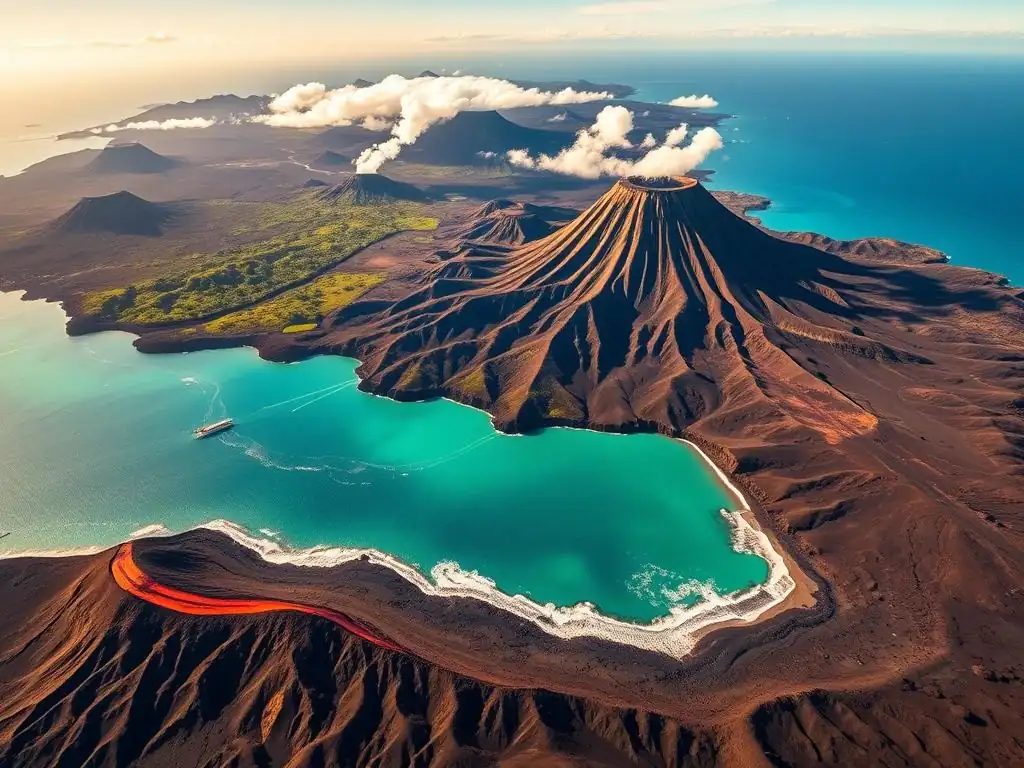
The Hawaiian archipelago is dotted with numerous volcanoes, each with its own unique history and characteristics. From continuously active giants to dormant peaks, these volcanoes collectively represent a powerful legacy of eruptive activity that defines the volcanic history of Hawaii.
Kīlauea: An Active Volcano and Its Ongoing Eruptions
Kīlauea, located on the southeastern flank of Mauna Loa on the Big Island, is one of the world's most active volcanoes. Its name means "spewing" or "much spreading" in Hawaiian, aptly describing its frequent and often persistent eruptions. For decades, Kīlauea was characterized by nearly continuous effusive eruptions from Puʻuʻōʻō cone and lava lake activity within Halemaʻumaʻu crater at its summit.
The 2018 eruption of Kīlauea was a significant event, marked by a major caldera collapse at the summit and a dramatic fissure eruption in the lower East Rift Zone, destroying hundreds of homes and reshaping the coastline. Despite periods of intense activity, Kīlauea also experiences quieter phases.
Currently, as of late 2023 and early 2024, Kīlauea is again experiencing eruptions within Halemaʻumaʻu crater, offering ongoing opportunities for scientific study and public viewing (from a safe distance). Kīlauea's continuous activity provides invaluable insights into the dynamic processes of Hawaiian volcanism and adds a vibrant chapter to the volcanic history of Hawaii.
Mauna Loa: The World's Largest Volcano
Mauna Loa, meaning "Long Mountain" in Hawaiian, is a truly colossal shield volcano and holds the title of the largest active volcano on Earth in terms of volume and area. Rising approximately 4,170 meters (13,681 feet) above sea level, its vast bulk extends far below sea level, making its total height from the ocean floor over 9,000 meters (30,000 feet), exceeding even Mount Everest if measured from its base.
Mauna Loa has a long and active eruptive history, with eruptions occurring from its summit caldera, Mokuʻāweoweo, and its northeast and southwest rift zones. Its eruptions are typically effusive, producing voluminous lava flows that can travel great distances. In November and December 2022, Mauna Loa erupted for the first time in 38 years, sending lava flows down its flanks but posing no threat to communities. Mauna Loa's immense size and frequent eruptions underscore its significant role in the volcanic history of Hawaii and its enduring power as a geological force.
Mauna Kea: From Fiery Giant to Dormant Peak
Mauna Kea, meaning "White Mountain" in Hawaiian, stands in stark contrast to its fiery neighbors. While it is the tallest volcano in the Hawaiian chain when measured from its base on the ocean floor – even exceeding Mauna Loa in height – it is currently considered dormant. Reaching a summit elevation of 4,207 meters (13,802 feet) above sea level, Mauna Kea is often capped with snow in winter, hence its name.
Mauna Kea’s last eruption occurred approximately 4,600 years ago, and it is not expected to erupt again in the foreseeable future. Its shield-building phase is complete, and it has undergone significant erosion over time. Despite its dormancy, Mauna Kea remains a vital part of the volcanic history of Hawaii. Its summit is home to world-renowned astronomical observatories, taking advantage of the exceptionally clear and dark skies above the mountain.
Hualālai: A Historically Active Volcano on the Island of Hawai'i
Hualālai, located on the western side of the Big Island of Hawai'i, is another historically active volcano. Although less frequently eruptive than Kīlauea or Mauna Loa, Hualālai has experienced several eruptions in recorded history, most notably in 1800 and 1801. These eruptions produced significant lava flows that reached the coast, burying villages and altering the landscape.
Hualālai is considered potentially active, and future eruptions are possible. The areas on its flanks are now heavily populated, including the town of Kailua-Kona. Monitoring of Hualālai is crucial to assess any signs of unrest and to mitigate potential volcanic hazards. Its past eruptions remind us that even less frequently active volcanoes play a significant role in the volcanic history of Hawaii.
Haleakalā: The House of the Sun
Haleakalā, meaning "House of the Sun" in Hawaiian, is a massive shield volcano that forms the eastern part of the island of Maui. Its most prominent feature is its enormous summit depression, often referred to as a crater but technically a large erosional valley combined with a volcanic caldera. Haleakalā is considered dormant, with its last eruptions occurring centuries ago, likely sometime between 1480 and 1600 CE.
While Haleakalā is not currently erupting, it is considered still potentially active. Future eruptions are possible, although they are expected to be less frequent than those of Kīlauea or Mauna Loa. Haleakalā National Park protects a diverse range of volcanic landscapes and ecosystems within and around the summit area, attracting visitors from around the world. Haleakalā's dormant state and dramatic summit landscape contribute a different chapter to the volcanic history of Hawaii.
Lōʻihi Seamount: Hawaii's Newest Volcano
Lōʻihi Seamount is the youngest volcano in the Hawaiian-Emperor seamount chain and is currently located about 35 kilometers (22 miles) southeast of the Big Island of Hawai'i. It is still entirely submerged beneath the ocean surface, its summit approximately 975 meters (3,200 feet) below sea level. Lōʻihi is actively growing and is expected to eventually emerge as a new Hawaiian island, perhaps tens of thousands of years in the future.
Lōʻihi experiences frequent volcanic activity, including submarine eruptions and hydrothermal venting. Scientists continuously monitor Lōʻihi to study the early stages of Hawaiian island formation and the unique deep-sea ecosystems that thrive around its hydrothermal vents. Lōʻihi represents the future of the volcanic history of Hawaii, a testament to the ongoing processes that continue to build and reshape these islands.
Hawaiian Volcanic Landscapes: Unique Features Shaped by Eruptions
The volcanic eruptions that have shaped Hawaii have created a diverse and dramatic landscape characterized by distinctive volcanic features. These features, from expansive lava flows to deep calderas and subterranean lava tubes, are direct results of the processes that define the volcanic history of Hawaii.
Lava Flows: Pāhoehoe and ʻAʻā
Two primary types of basaltic lava flows dominate the Hawaiian landscape: pāhoehoe and ʻaʻā. Pāhoehoe lava, often described as ropy lava, is characterized by its smooth, undulating, and sometimes billowy surface. It is highly fluid and flows easily, often creating intricate patterns as it cools and solidifies. The Hawaiian word pāhoehoe itself describes this smooth, satin-like texture.
ʻAʻā lava, in contrast, is characterized by its rough, jagged, and clinkery surface. It is more viscous than pāhoehoe and flows more slowly, breaking apart into angular fragments as it moves. The Hawaiian word ʻaʻā refers to the sharp, painful nature of walking on this type of lava. Both pāhoehoe and ʻaʻā flows are common throughout Hawaii, creating contrasting textures and appearances in the volcanic landscape, each reflecting different flow conditions and cooling rates.
Volcanic Craters and Calderas: Formation and Evolution
Volcanic craters and calderas are prominent features in the Hawaiian volcanic landscape. A volcanic crater is a bowl-shaped depression typically found at the summit of a volcano, formed by explosive eruptions or the collapse of the vent area. Calderas, on the other hand, are much larger, basin-shaped depressions that form due to the collapse of the ground surface after a large volume of magma has been erupted or withdrawn from beneath the volcano.
Hawaiian volcanoes feature both summit craters and large summit calderas. Kīlauea’s Halemaʻumaʻu crater is a well-known example of a summit crater, while Mauna Loa's Mokuʻāweoweo caldera is a vast summit caldera. Calderas can also form during major flank eruptions, as seen in Kīlauea's 2018 eruption which resulted in a significant caldera collapse at its summit. These depressions play a crucial role in the volcanic history of Hawaii, acting as vents for eruptions and reflecting the dynamic subsurface magma systems.
Lava Tubes: Subterranean Pathways of Molten Rock
Lava tubes are fascinating geological features common in Hawaii. They are natural tunnels formed within lava flows during effusive eruptions. As the surface of a lava flow cools and solidifies, the molten lava beneath continues to flow, eventually draining out and leaving behind a hollow tube-like conduit.
Lava tubes can extend for kilometers, transporting lava efficiently over long distances and contributing to the formation of extensive lava flow fields. They also provide unique habitats for specialized cave-adapted organisms. In Hawaii, lava tubes are often explored and studied, offering insights into the flow dynamics of lava and the subsurface geology of the islands. Their presence is a testament to the fluid nature of Hawaiian lava and a distinctive element of the volcanic history of Hawaii.
Volcanic Ash and Cinder Cones
While Hawaiian volcanism is primarily characterized by effusive eruptions, explosive eruptions do occur, particularly during post-shield volcanism or when magma interacts with groundwater. These explosive eruptions can produce volcanic ash and cinder cones. Volcanic ash consists of fine particles of fragmented volcanic rock, glass shards, and mineral crystals erupted into the atmosphere.
Cinder cones are cone-shaped hills formed from the accumulation of volcanic cinders and ash ejected during relatively small-scale explosive eruptions. Puʻuʻōʻō, a volcanic cone on Kīlauea’s East Rift Zone, is an example of a cinder cone built during prolonged periods of explosive activity. Diamond Head on O'ahu is a tuff cone, a type of cinder cone formed from the explosive interaction of magma and water. While less dominant than shield volcanoes and lava flows, volcanic ash and cinder cones add diversity to the volcanic landscapes and represent the explosive aspects of the volcanic history of Hawaii.
The Ecological Impact of Volcanism on Hawaii
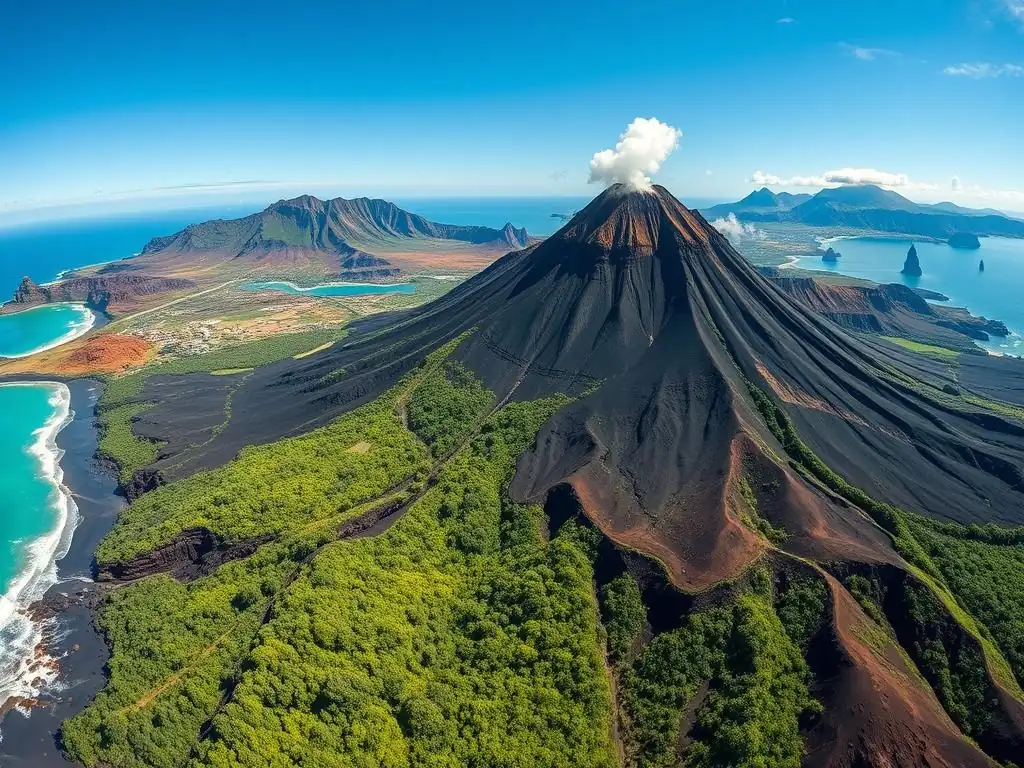
Volcanism is not just a geological force shaping the Hawaiian Islands; it is also a fundamental driver of ecological processes. The volcanic history of Hawaii is intrinsically linked to the unique ecosystems and biodiversity found on these islands.
Colonization of Volcanic Rock: Pioneering Species
Fresh volcanic rock is initially barren, devoid of soil and organic matter. The colonization of this new land by life is a remarkable process of ecological succession. Pioneering species, often lichens, mosses, and ferns, are the first to establish themselves on volcanic rock. These hardy organisms can withstand harsh conditions and begin the process of soil formation by breaking down the rock through physical and chemical weathering.
Wind and birds play a crucial role in transporting seeds and spores to these newly formed volcanic landscapes. Over time, as pioneering species modify the environment, they pave the way for the establishment of more complex plant communities. This process of ecological colonization is essential for creating the diverse ecosystems that characterize Hawaii today, all starting from the foundation of volcanic rock.
Endemic Flora and Fauna: Adapting to Volcanic Environments
The isolation of the Hawaiian Islands and their volcanic origin have resulted in a high degree of endemism – the evolution of species unique to a particular location. A significant portion of Hawaii's native flora and fauna are endemic, meaning they are found nowhere else on Earth. These species have adapted to the specific volcanic environments of the islands, including volcanic soils, varying altitudes, and diverse microclimates.
Examples of endemic Hawaiian species include iconic birds like the Hawaiian honeycreepers, unique plants like silverswords and ʻōhiʻa trees, and specialized insects and invertebrates. The volcanic history of Hawaii has provided the stage for this extraordinary evolutionary radiation, where species have diversified and adapted to fill ecological niches in these volcanic landscapes.
Volcanic Soils: Nutrient-Rich Ground for Unique Ecosystems
Paradoxically, despite their initially barren nature, volcanic soils in Hawaii are relatively fertile and nutrient-rich over time. The weathering of volcanic rock releases essential minerals and nutrients, such as phosphorus, potassium, and calcium, which are vital for plant growth. Volcanic ash, in particular, is rich in nutrients and can significantly enrich soil fertility.
The warm, humid climate of Hawaii further accelerates the weathering process and the development of volcanic soils. These fertile volcanic soils support the lush vegetation and diverse ecosystems that thrive on the islands. Agriculture in Hawaii also benefits from these rich soils, although careful management is needed to prevent erosion and nutrient depletion. The volcanic history of Hawaii has thus not only created the land but also the fertile ground that sustains its unique ecosystems.
The Future of Hawaiian Volcanism: Monitoring and Predicting Eruptions
Volcanic activity is an ongoing process in Hawaii, and understanding and monitoring these volcanoes is crucial for mitigating hazards and protecting communities. The volcanic history of Hawaii is not just a story of the past; it is a continuing saga with implications for the future.
Volcanic Monitoring Techniques: Tracking Seismic Activity and Gas Emissions
Scientists at the Hawaiian Volcano Observatory (HVO) and other institutions employ a variety of sophisticated techniques to monitor Hawaiian volcanoes. Seismometers are used to detect and measure ground vibrations caused by magma movement and volcanic activity. Changes in seismic patterns can indicate potential eruptions.
Gas monitoring is another vital tool. Volcanoes release gases like sulfur dioxide (SO2) and carbon dioxide (CO2). Changes in the composition and flux of these gases can signal changes in magma activity. Ground deformation monitoring, using GPS and satellite radar, tracks subtle changes in the shape of the ground surface, which can indicate magma accumulation or movement beneath the volcano. These comprehensive monitoring efforts are essential for understanding the current state of Hawaiian volcanoes and forecasting potential eruptions.
Assessing Volcanic Hazards: Protecting Communities
Volcanic hazards in Hawaii include lava flows, volcanic ashfall, volcanic gases (vog), ground deformation, and potential flank collapses and landslides. Hazard assessments are conducted to identify areas at risk from these hazards and to develop mitigation strategies. Lava flow hazard zones are delineated based on past eruption history and topography, helping to guide land-use planning and emergency preparedness.
Volcanic ashfall can impact air quality, infrastructure, and agriculture. Volcanic gases, particularly vog (volcanic smog), can cause respiratory problems. Monitoring and forecasting volcanic activity are crucial for providing timely warnings to communities at risk. Emergency management agencies work closely with scientists to develop evacuation plans and public awareness campaigns to enhance community resilience to volcanic hazards, acknowledging the ongoing volcanic history of Hawaii.
Conclusion: Appreciating the Dynamic Volcanic History of Hawaii
The volcanic history of Hawaii is a compelling narrative of creation, destruction, and renewal. From the depths of the Earth's mantle to the breathtaking landscapes above sea level, volcanoes have sculpted these islands and continue to shape their future. The Hawaiian archipelago stands as a testament to the immense power of geological forces and the enduring dynamism of our planet.
Understanding the volcanic origins of Hawaii provides a deeper appreciation for the islands' unique beauty and ecological significance. It also underscores the importance of ongoing volcanic monitoring and hazard preparedness for the communities living in this volcanically active region. As we marvel at the stunning landscapes and vibrant ecosystems of Hawaii, we are reminded of the profound and ongoing influence of its fiery cradle and the captivating volcanic history of Hawaii.
Frequently Asked Questions
What makes Hawaii such a volcanically active place?
Hawaii's volcanic activity stems from its location over a hotspot in the Earth's mantle. This fixed hotspot continuously melts the Pacific Plate as it moves, creating a chain of volcanoes. The ongoing eruption of Kilauea is a prime example.
How have volcanoes shaped the Hawaiian Islands?
Volcanic eruptions have been the primary force in creating the Hawaiian Islands. Over millions of years, lava flows have built up from the seafloor, eventually forming the islands we know today. The islands continue to grow with ongoing eruptions.
What are some of the most significant volcanic eruptions in Hawaii's history?
Notable eruptions include the 1959 eruption of Kilauea Iki, the 1983–present eruption of Kilauea, and the 1868 earthquake and tsunami accompanied by volcanic activity at Mauna Loa. These events have had significant impacts on the islands.
What types of volcanoes are found in Hawaii?
Hawaii is primarily characterized by shield volcanoes, known for their broad, gently sloping shapes. These are formed by the fluid basaltic lava that erupts relatively calmly. There are also cinder cones found on the islands.
How do scientists monitor volcanic activity in Hawaii?
Volcanologists use a variety of tools, including seismometers, gas sensors, and satellite imagery, to track volcanic activity. These tools help them monitor ground deformation, gas emissions, and other indicators of potential eruptions.
Final Reflection: Embracing the Islands' Volcanic Legacy
The journey through Hawaii's volcanic history reveals more than just geological processes; it unveils the very essence of the islands' existence. Understanding the fiery crucible from which these paradises emerged is crucial to appreciating their unique beauty and fragility. The story of Pele, the volcano goddess, isn't just a myth; it's a living testament to the dynamic forces that continue to shape the Hawaiian archipelago.
This exploration of the volcanic history has profoundly impacted my perspective, highlighting the impermanence and constant evolution of our world. It underscores the importance of respecting the power of nature and living in harmony with the environment. We are all children of the volcano,
a Hawaiian proverb reminds us, "born from the earth's fiery heart, forever bound to its rhythm." This connection to the land, forged in volcanic fire, defines the Hawaiian spirit and should guide our stewardship of these islands.
As you reflect on the volcanic history of Hawaii, consider how this knowledge can deepen your appreciation for the natural world. Let the islands' fiery origins inspire you to embrace change, respect the power of nature, and contribute to the preservation of these unique and precious landscapes for generations to come.
Ignite Your Inner Explorer: Plan Your Hawaiian Volcanic Adventure!
Thank you for diving into the fascinating volcanic history of Hawaii! We hope you've gained a deeper appreciation for the power and beauty that shaped these islands. Now, it's time to translate that knowledge into action and experience the volcanic wonders firsthand.
Here are a few ways to connect with Hawaii's fiery heart:
- Book a guided tour to Hawai'i Volcanoes National Park. Witness the Kilauea volcano's raw power, explore lava tubes, and learn about the geological forces at play. This is your chance to stand on the edge of creation!
- Explore the less-traveled volcanic trails on the Big Island, such as the Devastation Trail in Hawai'i Volcanoes National Park. See first-hand the results of past eruptions.
- Share this article with fellow travel enthusiasts and volcano aficionados! Inspire others to uncover the geological marvels of Hawaii. Or, Upload Your Own Volcanic Photo to our community gallery and share your unique perspective!
What's one thing you're most excited to discover on your Hawaiian volcanic exploration?