
Millions of Years in the Making: The Geological Timeline of a Volcanic Island

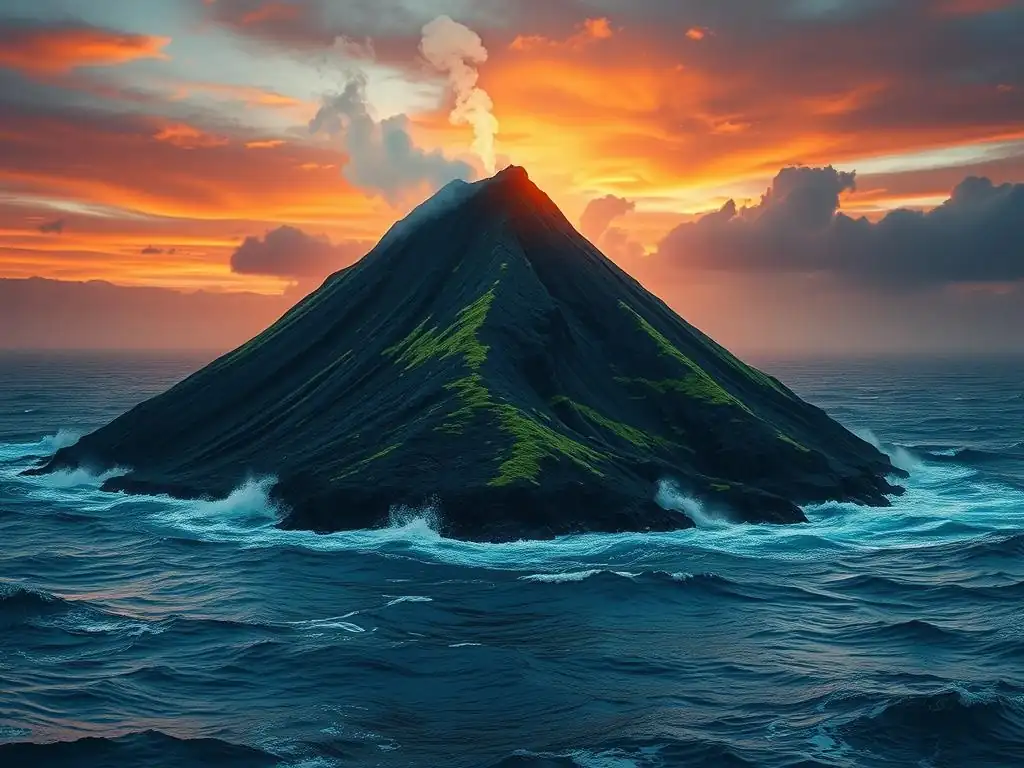
Welcome to Volcano Explorers. Ever wondered how seemingly impossible landscapes rise from the depths of the ocean? Prepare to unravel the captivating story of their birth, growth, and evolution. Dive into "Millions of Years in the Making: The Geological Timeline of a Volcanic Island" and discover the geological timeline of volcanic islands, a story etched in fire and stone. What secrets do these isolated paradises hold, and how do they change over millennia? Let's explore!
- Introduction: Unveiling the Deep History of Volcanic Islands
- The Birth of a Volcanic Island: Initial Stages of Formation
- The Emergence of Land: From Submerged Volcano to Island
- The Active Phase: Ongoing Volcanic Activity and Island Growth
- The Dormant Phase: Erosion, Sedimentation, and Biological Colonization
- Long-Term Evolution: The Future of a Volcanic Island
- Conclusion: Appreciating the Geological Legacy of Volcanic Islands
-
Frequently Asked Questions
- What is a geological timeline in the context of volcanic islands?
- How are volcanic islands formed according to VolcanoExplorers.org?
- What factors influence the geological timeline of a volcanic island?
- Why is understanding the geological timeline of volcanic islands important?
- Does VolcanoExplorers.org provide information on specific volcanic islands and their geological timelines?
- Final Reflection: Echoes of Ancient Fire
- Unearth Your Inner Geologist!
Introduction: Unveiling the Deep History of Volcanic Islands
Volcanic islands stand as dramatic testaments to the Earth's dynamic geological processes, rising majestically from the ocean depths. These landmasses, often breathtakingly beautiful and ecologically unique, are not formed overnight. Instead, their creation is a story told in millennia, a slow and powerful narrative etched in layers of solidified lava and sculpted by the relentless forces of nature.
Understanding the geological timeline of volcanic islands is akin to reading Earth's autobiography, revealing chapters written in fire, water, and time, each contributing to the island's unique character and eventual fate. From their unseen beginnings beneath the waves to their potential disappearance back into the ocean, volcanic islands offer a compelling glimpse into the vastness of geological time and the enduring power of volcanic activity.
The Birth of a Volcanic Island: Initial Stages of Formation
The journey of a volcanic island begins far beneath the ocean surface, in the Earth's mantle, where immense heat and pressure forge magma. This molten rock, less dense than the surrounding solid mantle, embarks on a slow ascent towards the crust, driven by buoyancy and pressure gradients. The initial stages of volcanic island formation are entirely submarine, hidden from our direct view, yet crucial in setting the stage for the island's eventual emergence. These underwater beginnings are marked by distinct volcanic processes that shape the nascent island from its very foundation.
Submarine Volcanism: The Undersea Origins
Submarine volcanism, the eruption of lava beneath the ocean surface, is the fundamental process initiating the geological timeline of volcanic islands. Most volcanic islands owe their origins to hotspots, plumes of exceptionally hot mantle material that rise and melt as they encounter the overlying lithosphere. As tectonic plates drift over these stationary hotspots, magma breaches the oceanic crust, erupting onto the seafloor.
The immense pressure exerted by the overlying water significantly influences these eruptions. Unlike explosive eruptions often seen on land, submarine eruptions at depth are typically effusive. Lava erupts and rapidly cools upon contact with the frigid seawater, forming distinctive pillow lavas – bulbous, interconnected shapes characteristic of underwater volcanic flows.
These pillow lavas accumulate layer upon layer, gradually building the submarine volcanic edifice. The process is slow and incremental; it can take hundreds of thousands to millions of years of continuous or intermittent submarine eruptions to construct a volcanic structure substantial enough to approach the sea surface.
Building the Foundation: Accumulation of Volcanic Material
The foundation of a volcanic island is meticulously built through the repeated accumulation of volcanic material ejected from submarine eruptions. As eruptions persist over geological timescales, the pile of pillow lavas, along with fragmented volcanic debris known as hyaloclastite (formed by the explosive interaction of magma and water), steadily grows in height and volume. The sheer scale of this accumulation is staggering.
For instance, the Hawaiian Islands, formed over the Hawaiian hotspot, are constructed from volcanic rock that has accumulated for millions of years. The Big Island of Hawaii, the youngest in the chain and still actively growing, rises over 9 kilometers from the seafloor, with the vast majority of this height built beneath sea level.
Each eruption adds another layer to this underwater mountain, solidifying the foundation upon which the island will eventually emerge. The chemical composition of the erupted lava, typically basaltic in oceanic settings, contributes to the density and strength of this foundation, enabling it to withstand the immense pressures and stresses of the ocean environment.
The Emergence of Land: From Submerged Volcano to Island
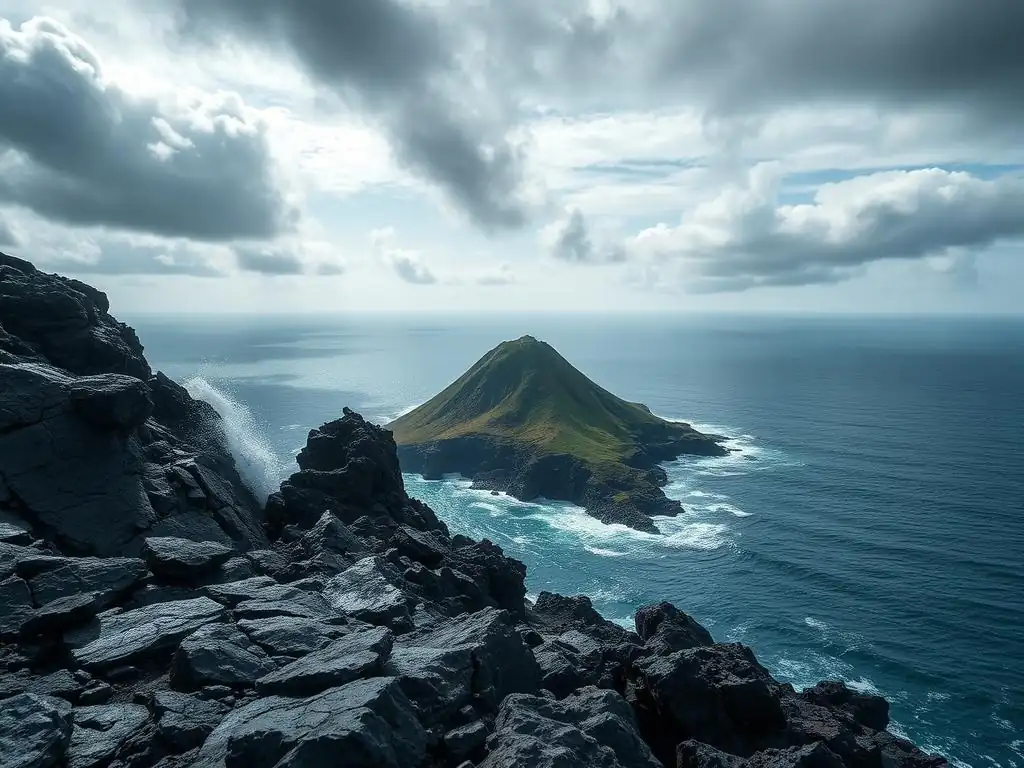
The transition from a completely submerged volcanic edifice to an island emerging above the waves marks a significant milestone in the geological timeline. This emergence is not a sudden event but a gradual process influenced by a combination of geological forces, primarily tectonic uplift and fluctuations in global sea levels. Once the submarine volcano has reached a sufficient height through continuous eruptions, it begins to interact with the surface environment, leading to new shaping processes.
Tectonic Uplift and Sea Level Changes
Tectonic uplift and sea level variations are the key factors determining when a submarine volcano breaches the ocean surface and becomes an island. Isostatic rebound, a process where the lithosphere rises in response to reduced weight, can play a role in the uplift of volcanic islands. As the massive weight of accumulating volcanic material presses down on the oceanic crust, the surrounding mantle material is displaced.
Over time, as eruptions slow or cease in a particular location, the mantle slowly rebounds, lifting the volcanic edifice upwards. Furthermore, global sea level changes, influenced by factors like glacial cycles and tectonic activity, can also expose previously submerged land. During periods of lower sea level, volcanic structures that were just below the surface may emerge as islands.
Conversely, rising sea levels can submerge islands or reduce their land area. The interplay between tectonic uplift and sea level fluctuations dictates the timing and pace of island emergence, shaping the coastline and influencing the initial terrestrial landscape.
Weathering and Erosion: Shaping the Island Landscape
Even before fully emerging above sea level, the uppermost parts of the volcanic structure begin to experience the effects of weathering and erosion. Chemical weathering, driven by the interaction of seawater with volcanic rocks, starts to break down the surface. Hydrolysis, oxidation, and carbonation processes slowly alter the mineral composition of the lava, creating clay minerals and releasing soluble ions.
Physical weathering, driven by wave action and currents, mechanically erodes the exposed volcanic material. Waves crashing against the submerged slopes gradually wear away the outer layers, transporting sediment further offshore. These early weathering and erosion processes, though subtle compared to later stages, begin to sculpt the submarine volcano, creating initial slopes and shaping the nascent island's form even before it fully emerges into the atmospheric realm.
The Active Phase: Ongoing Volcanic Activity and Island Growth
Once a volcanic island emerges above sea level, it enters a phase of dynamic activity where ongoing eruptions directly shape its landscape and contribute to its continued growth. This active phase is characterized by cycles of eruptions and periods of dormancy, with various types of volcanic events reshaping the island's surface and influencing its ecological development. The interplay between constructive volcanic processes and destructive erosional forces is most evident during this phase.
Eruptive Cycles: Periods of Eruption and Dormancy
Volcanic islands are rarely in a state of constant eruption. Instead, they typically exhibit eruptive cycles, alternating between periods of intense volcanic activity and periods of relative dormancy. The duration of these cycles can vary greatly, from years to centuries or even millennia, depending on the volcano's magma supply, the tectonic setting, and the internal pressure within the magma chamber.
During eruptive periods, magma ascends to the surface, leading to lava flows, explosive eruptions of ash and gas, and the construction of volcanic cones and other landforms. These periods of activity are often followed by phases of dormancy, where the magma supply diminishes, and volcanic activity subsides.
However, dormancy does not mean the volcano is extinct; it simply signifies a temporary lull before the next eruptive cycle begins. Monitoring volcanic activity, such as ground deformation, gas emissions, and seismic activity, is crucial to understanding these eruptive cycles and predicting future eruptions.
Lava Flows and Pyroclastic Flows: Reshaping the Surface
Lava flows and pyroclastic flows are the primary agents of surface reshaping during the active phase of a volcanic island's geological timeline. Effusive eruptions produce lava flows, rivers of molten rock that cascade down the volcano's flanks, solidifying to form new land. Basaltic lava flows, common in oceanic island volcanoes, can travel considerable distances, adding significant area to the island and creating distinctive volcanic landforms like lava tubes and pahoehoe and aa surfaces.
Explosive eruptions, on the other hand, generate pyroclastic flows – fast-moving, scalding mixtures of hot gas, ash, and volcanic rock fragments. These flows can devastate existing landscapes, but also deposit thick layers of volcanic material, rapidly building up the volcano's height and altering drainage patterns.
Ashfall from explosive eruptions can blanket the island, burying existing vegetation and contributing to soil formation over time. The interplay of lava flows and pyroclastic flows creates the complex and varied topography characteristic of active volcanic islands.
Caldera Formation and Collapse
Caldera formation represents a dramatic and often catastrophic event in the active phase of a volcanic island. A caldera is a large, basin-shaped depression formed by the collapse of a volcano's magma chamber after a massive eruption empties a significant volume of magma. These eruptions, among the largest and most powerful volcanic events, can eject enormous quantities of ash and gas into the atmosphere, impacting global climate.
Following such an eruption, the roof of the emptied magma chamber, no longer supported by the underlying pressure, collapses inwards, creating a caldera. Calderas can be many kilometers in diameter and hundreds of meters deep, significantly altering the island's landscape.
Over time, calderas may fill with water, forming caldera lakes, or become sites of renewed volcanic activity, leading to the formation of new volcanic cones within the caldera itself. The formation of a caldera marks a major turning point in the geological evolution of a volcanic island, representing both destruction and the potential for new phases of growth and change.
The Dormant Phase: Erosion, Sedimentation, and Biological Colonization
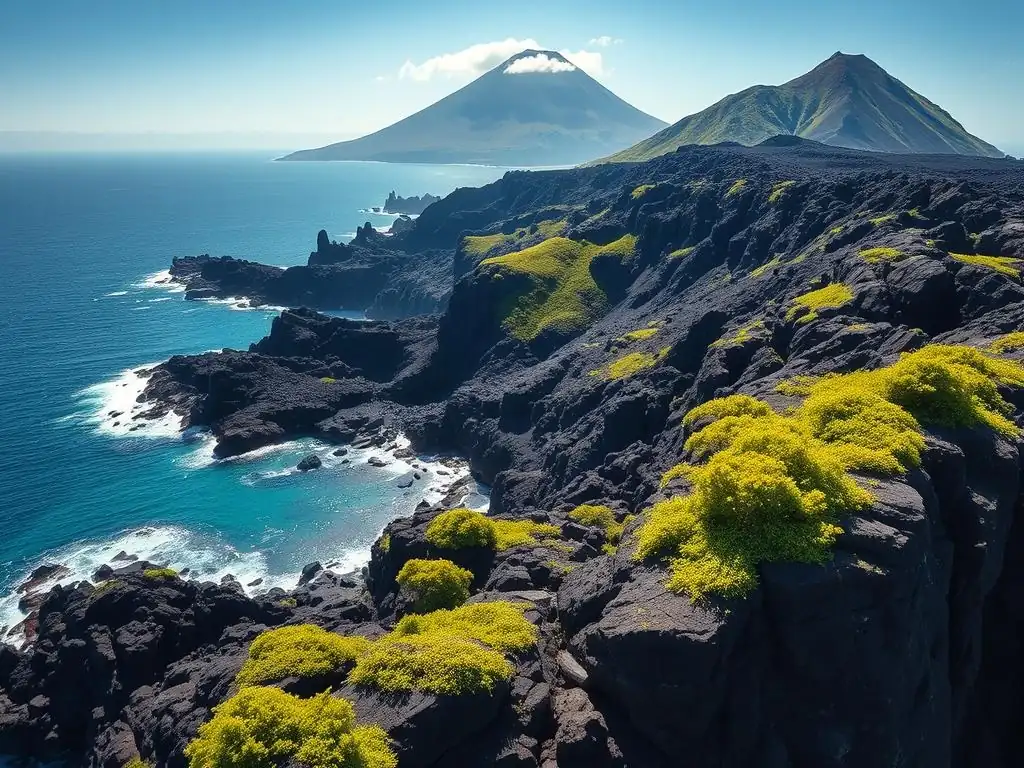
As volcanic activity wanes and the island enters a dormant phase, the forces of erosion and sedimentation become increasingly dominant in shaping its landscape. This phase is also marked by the gradual colonization of the island by life, transforming it from a barren volcanic rockscape into a vibrant ecosystem. The interplay between geological processes and biological development characterizes this stage in the geological timeline of a volcanic island.
Weathering and Erosion: Continued Shaping of the Landscape
Even after volcanic eruptions cease or become infrequent, weathering and erosion continue to relentlessly sculpt the volcanic island. Rainfall, wind, and temperature fluctuations contribute to both chemical and physical weathering processes. Rivers and streams carve valleys and canyons into the volcanic slopes, transporting sediment towards the coast.
Coastal erosion, driven by wave action and currents, continues to reshape the island's shoreline, creating cliffs, beaches, and other coastal landforms. Over time, these erosional processes gradually wear down the volcanic edifice, reducing its height and modifying its shape. The rate of erosion is influenced by factors such as climate, rock type, and vegetation cover, but it is a constant and ongoing force in the geological evolution of a volcanic island.
Sedimentation and Coastal Processes
Sedimentation plays a crucial role in modifying the coastal areas of dormant volcanic islands. Eroded volcanic material, transported by rivers and streams, is deposited along the coast, contributing to the formation of beaches, coastal plains, and deltas. Wave action and coastal currents redistribute this sediment, shaping the coastline and influencing the development of coastal ecosystems. Lagoons and estuaries may form behind barrier islands or sand spits, providing sheltered habitats.
The balance between erosion and sedimentation determines the overall shape and stability of the coastline. In some cases, sedimentation can lead to the progradation (outward growth) of the coastline, while in other areas, erosion may dominate, causing coastal retreat. These coastal processes are dynamic and constantly changing, influenced by sea level fluctuations, storm events, and sediment supply.
Biological Colonization: The Arrival of Life
Perhaps one of the most remarkable aspects of the dormant phase is the biological colonization of the volcanic island. Initially barren volcanic rock provides a challenging environment for life, but over time, pioneer species begin to arrive and establish themselves. Wind-dispersed seeds, spores, and insects are among the first colonizers. Lichens and mosses break down the volcanic rock, initiating soil formation.
As soil develops, more complex plants can take root, followed by animals. Ecological succession proceeds, with plant communities gradually evolving from early colonizers to more mature forests or grasslands, depending on climate and other environmental factors. The isolation of volcanic islands often leads to unique evolutionary pathways, with species adapting to the specific island environment and sometimes evolving into endemic forms found nowhere else on Earth. Biological colonization transforms the volcanic island into a vibrant and dynamic ecosystem, adding a new layer of complexity to its geological timeline.
Long-Term Evolution: The Future of a Volcanic Island
The geological timeline of a volcanic island does not end with dormancy. Over vast spans of geological time, these islands continue to evolve, often undergoing gradual decline and eventual disappearance. Subsidence, erosion, and the formation of coral reefs are key processes that shape the long-term future of volcanic islands, leading them through a cycle of birth, growth, maturity, and eventual senescence.
Subsidence and Erosion: Gradual Decline
Subsidence and erosion are the primary forces driving the long-term decline of volcanic islands. As the tectonic plate carrying the volcanic island moves away from the hotspot or volcanic center that created it, the lithosphere cools and becomes denser. This cooling leads to thermal subsidence, a gradual sinking of the island back into the ocean. Concurrently, erosion continues to wear down the island's landmass, reducing its elevation and area.
The combined effects of subsidence and erosion lead to a gradual shrinking of the island. Over millions of years, many volcanic islands eventually subside below sea level, becoming seamounts – underwater mountains that were once islands. The Hawaiian Islands provide a clear example of this process. The islands become progressively older and more eroded as one moves northwest along the island chain, with the oldest islands in the northwest now submerged seamounts.
The Formation of Coral Reefs
As volcanic islands subside, a remarkable biological process can temporarily counteract the effects of sinking – the formation of coral reefs. In warm, tropical waters, coral reefs can grow around the flanks of a subsiding volcanic island. Initially, fringing reefs form close to the shoreline. As the island continues to subside, the reef grows upwards, keeping pace with the sinking landmass and forming a barrier reef separated from the island by a lagoon.
If subsidence is slow enough and coral growth is vigorous, the island may eventually completely subside beneath the waves, leaving behind only a ring-shaped coral reef known as an atoll. Atolls represent the final stage in the life cycle of some volcanic islands, a testament to the interplay between geological subsidence and biological construction. These coral reef ecosystems provide vital habitats and are themselves geological structures built over millennia.
The Geological Timeline Recap: A Journey Through Time
The geological timeline of a volcanic island is a journey spanning millions of years, a testament to the Earth's slow but powerful geological processes. It begins with unseen submarine volcanism, building a foundation layer by layer beneath the ocean. Emergence above sea level marks a transition to surface processes, with active volcanism shaping the landscape through eruptions, lava flows, and caldera formation.
Dormancy brings erosion, sedimentation, and biological colonization, transforming the barren rock into a living ecosystem. Finally, long-term subsidence and erosion lead to gradual decline, potentially culminating in the island's submergence and the formation of seamounts or atolls. This cyclical journey, from birth to potential disappearance, underscores the dynamic and ever-changing nature of our planet and the enduring power of volcanic forces in shaping Earth's surface.
Conclusion: Appreciating the Geological Legacy of Volcanic Islands
Volcanic islands are more than just picturesque landscapes rising from the sea; they are geological archives, encapsulating millions of years of Earth's history within their volcanic rocks and evolving ecosystems. Understanding the geological timeline of volcanic islands allows us to appreciate the profound timescales involved in geological processes and the intricate interplay of volcanic, erosional, and biological forces that shape these unique landforms.
From their fiery birth beneath the waves to their eventual decline and potential return to the ocean depths, volcanic islands offer a compelling window into the dynamic nature of our planet and the enduring legacy of geological time. They serve as natural laboratories for studying Earth's processes and remind us of the powerful forces that have sculpted and continue to shape the world we inhabit.
Frequently Asked Questions
What is a geological timeline in the context of volcanic islands?
A geological timeline is essentially a chronological record of the events that shaped a volcanic island. It details the formation, evolution, and potential erosion of the island over millions of years.
How are volcanic islands formed according to VolcanoExplorers.org?
Volcanic islands are typically formed by undersea volcanic activity. Magma rises from the Earth's mantle, erupting onto the seafloor, and repeated eruptions build up layers of lava and ash until an island emerges above the water's surface.
What factors influence the geological timeline of a volcanic island?
Several factors influence the timeline, including the rate of volcanic activity, the type of magma involved, the erosional forces of the ocean and weather, and the impact of tectonic movements.
Why is understanding the geological timeline of volcanic islands important?
Understanding the timeline helps scientists predict future volcanic activity. It also provides insights into island ecosystems, geological processes, and the long-term stability of the landmass.
Does VolcanoExplorers.org provide information on specific volcanic islands and their geological timelines?
While the site offers general information about volcanic island formation, it also includes examples of famous eruptions and may provide case studies of specific islands. Further exploration of the site will provide insight into specific islands.
Final Reflection: Echoes of Ancient Fire
The journey through the geological timeline of a volcanic island, as we've explored, is more than just a recitation of dates and events; it's a profound connection to the Earth's raw power and patient artistry. The very ground beneath our feet, often taken for granted, is a testament to millions of years of fiery creation and slow, deliberate shaping. Understanding this deep history allows us to appreciate the fragility and resilience of these unique ecosystems in a world increasingly impacted by human activity.
The story of a volcanic island is a story of constant change, a dance between destruction and renewal. This understanding profoundly impacts how we view our own place within the grand narrative of the planet. We are but fleeting observers in a process that dwarfs our comprehension, yet our actions can have lasting consequences. We are all connected; To each other, biologically. To the earth, chemically. To the rest of the universe atomically.
- Neil deGrasse Tyson. This quote reminds us of our intrinsic link to the Earth and the responsibility we bear to protect its ancient wonders.
As you reflect on the geological timeline of volcanic islands, consider the immense scale of time and the forces that have shaped our world. What lessons can we learn from the resilience of these landscapes? How can we apply this knowledge to ensure the preservation of these natural treasures for generations to come? Let the echoes of ancient fire inspire you to become a steward of our planet, recognizing the profound interconnectedness of all things and acting with mindful intention to protect the delicate balance of our world.
Unearth Your Inner Geologist!
Thank you for diving deep into the incredible geological history of this volcanic island! We hope you've gained a newfound appreciation for the immense power and patience of nature's artistry. Now, it's time to take that knowledge and passion a step further!
Here are a few things you can do to continue your exploration:
- Plan your next volcanic adventure: Research and select a volcanic site you've always dreamed of visiting. Let the geological timeline guide your exploration!
- Share your newfound knowledge: Create an engaging infographic or short presentation about the volcanic island's geological timeline and share it with your friends, family, or local community.
- Contribute to our map: If you have personally visited this island, share your findings. Let us know if you have identified any unusual geological features.
What element of this volcanic island's geological history are you most excited to explore further? Share your thoughts and planned expeditions in the comments below!