
Black and White Ash Plumes: Stripping Down to Raw Power

Welcome to Volcano Explorers!
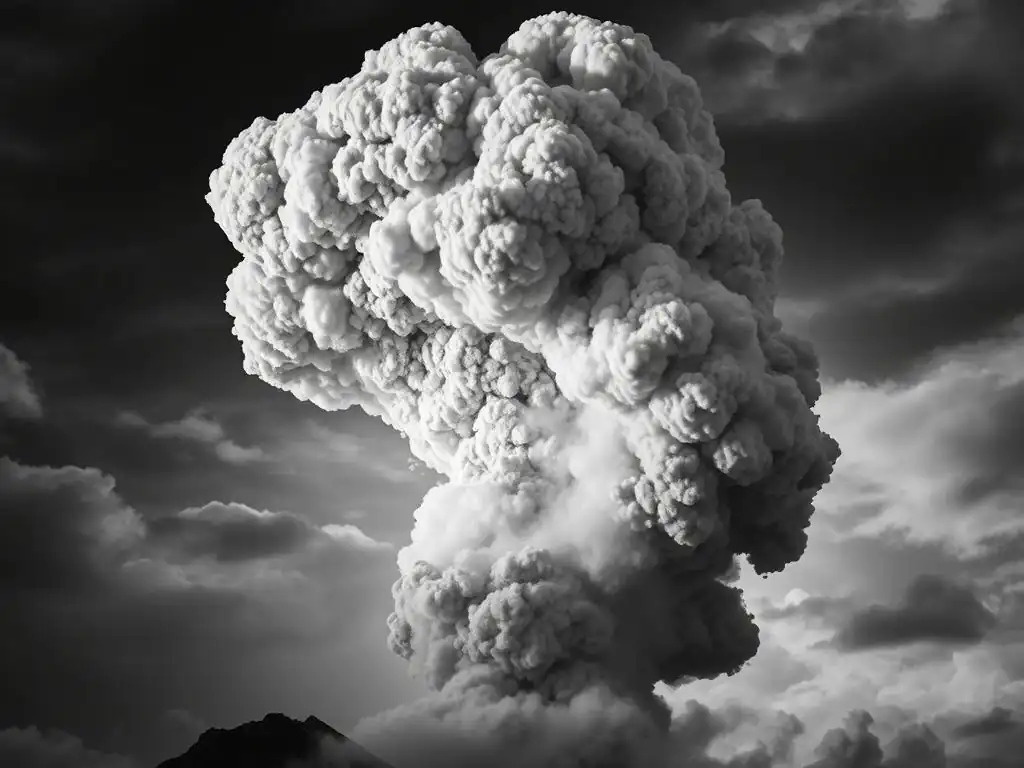
Ever wondered what secrets are hidden within the heart of a volcanic eruption? Prepare to be captivated. This isn't just about fire and brimstone; it's about the raw, untamed power of nature distilled into its most primal form. We invite you to explore the haunting beauty and dramatic impact of black and white ash plume photography, where color fades away, leaving only the stark, breathtaking essence of volcanic fury. What stories do these monochrome masterpieces tell? Dive in and discover...
- Understanding Black and White Ash Plume Photography
- Capturing the Essence: Camera Settings for Ash Plumes
- Composition Techniques for Striking Ash Plume Photos
- Post-Processing Black and White Ash Plume Images
- Black and White Ash Plume Photography: Equipment Essentials
- Showcasing Black and White Ash Plume Photography: Inspiration and Examples
- Safety Considerations for Photographing Ash Plumes
- The Art of Black and White: Conveying the Power of Volcanic Eruptions
-
Frequently Asked Questions
- What makes black and white photography of ash plumes so compelling?
- What camera settings are best for capturing black and white ash plume photos?
- What are some post-processing techniques to enhance black and white ash plume photos?
- What safety precautions should I take when photographing volcanic ash plumes?
- Where can I find examples of stunning black and white ash plume photography?
- Final Reflection: Unveiling the Raw Essence
- Ignite Your Inner Volcanologist: Dive Deeper!
Understanding Black and White Ash Plume Photography
The Allure of Monochrome Volcanic Photography
Monochrome volcanic photography possesses a unique and enduring appeal, stripping away the distractions of color to reveal the raw, elemental power of nature's most dramatic displays. In the absence of hues, the viewer is compelled to focus on form, texture, and light—elements that are profoundly amplified in volcanic landscapes and especially within the dynamic forms of ash plumes.
This minimalist approach allows for a deeper engagement with the subject, inviting contemplation of the immense forces at play beneath the Earth's surface. The stark contrast inherent in black and white imagery mirrors the dramatic dichotomy of creation and destruction that volcanoes embody, capturing a timeless essence that transcends fleeting moments in color.
The choice to render volcanic ash plumes in monochrome is not merely an aesthetic preference; it is a deliberate decision to emphasize the primal energy and geological significance of these events. Black and white photography inherently lends itself to capturing drama and intensity.
Think of iconic historical images of war, natural disasters, or powerful landscapes—many are in monochrome, leveraging the medium's capacity to convey gravity and timelessness. Volcanic eruptions, with their ash plumes reaching kilometers into the sky, are events of immense geological significance, and monochrome photography serves to underscore this importance, allowing viewers to connect with the raw power of the planet.
Why Black and White Enhances Ash Plume Images
Black and white photography inherently enhances the visual impact of ash plumes by removing the potential distractions of color, allowing the viewer to concentrate on the plume's structure, texture, and the interplay of light and shadow. Ash plumes, composed of pulverized rock, volcanic glass, and gases, exhibit a complex range of tones and textures.
In monochrome, these subtle variations become more pronounced, revealing the intricate patterns within the plume as it billows and expands. The absence of color also emphasizes the contrast between the plume and its surroundings, often a stark juxtaposition of dark ash against a lighter sky or landscape, heightening the dramatic effect.
Furthermore, black and white photography excels at conveying a sense of timelessness and universality, qualities perfectly suited to the geological timescale of volcanic activity. While color can anchor an image to a specific time and place, monochrome transcends these limitations, presenting the ash plume as a phenomenon that has occurred throughout history and will continue to shape our planet.
This timeless quality allows viewers to connect with the image on a deeper, more primal level, appreciating the enduring power of nature irrespective of contemporary trends in photography or color palettes. The focus shifts from the immediate visual appeal of color to the underlying, enduring power of the volcanic event itself.
Capturing the Essence: Camera Settings for Ash Plumes
Mastering Shutter Speed for Dynamic Ash Plume Movement
Mastering shutter speed is crucial when photographing the dynamic movement of ash plumes, as it dictates how motion is rendered in your black and white images. For capturing the crisp details and sharp edges of an erupting plume, especially during explosive phases, faster shutter speeds are essential.
Speeds of 1/500th of a second or faster can effectively freeze the motion of the rapidly ascending ash and ejecta, rendering a detailed snapshot of the plume's form at a specific moment. This technique is particularly effective when photographing pyroclastic flows or when you want to emphasize the sheer force of the eruption.
Conversely, slower shutter speeds, ranging from 1/30th of a second to several seconds or even minutes (depending on the desired effect and ambient light), can be used to introduce motion blur, conveying the dynamism and ethereal nature of the ash plume. This technique can transform the plume into a soft, flowing entity, emphasizing its gaseous and particulate composition.
When using slower shutter speeds, a tripod is indispensable to maintain sharpness in the static elements of the landscape while allowing the ash plume to blur gracefully. Experimentation is key; observing the plume's movement and adjusting shutter speed accordingly will allow you to capture a range of interpretations, from frozen action to fluid motion, in your black and white ash plume photography.
Aperture and Depth of Field in Volcanic Photography
Aperture selection plays a vital role in volcanic photography, influencing depth of field and consequently, the overall composition and storytelling of your black and white ash plume images. A wide aperture, such as f/2.8 or f/4, creates a shallow depth of field, ideal for isolating the ash plume from its surroundings.
This technique can be particularly effective when you want to emphasize the plume itself as the primary subject, blurring the foreground and background to draw the viewer's eye directly to the volcanic spectacle. This isolation can enhance the sense of drama and focus attention on the intricate details within the plume.
Conversely, a narrower aperture, such as f/8 or f/11, provides a greater depth of field, ensuring that both the ash plume and the surrounding volcanic landscape are in sharp focus. This approach is often preferred when you want to capture the ash plume within its broader geological context, showcasing the scale of the eruption and its impact on the environment.
By including the landscape in sharp focus, you can convey a more comprehensive narrative, illustrating the relationship between the volcanic activity and its surroundings. Choosing the appropriate aperture depends on your artistic vision and the story you aim to tell with your black and white ash plume photography.
ISO Considerations for Low-Light Ash Plume Shots
ISO sensitivity is a critical setting, especially when photographing ash plumes in low-light conditions, such as during twilight, at night, or under heavy cloud cover. In these situations, increasing the ISO allows you to maintain a usable shutter speed and aperture, preventing blurry images due to camera shake or subject motion. However, higher ISO settings generally introduce more digital noise, which can affect the image quality, particularly in black and white photography where noise can be more apparent. Modern cameras offer improved high ISO performance, allowing for cleaner images even at sensitivities like ISO 1600 or 3200.
For optimal black and white ash plume photography in low light, it is crucial to strike a balance between ISO, shutter speed, and aperture. Start with the lowest ISO possible (typically ISO 100 or 200 in daylight), and gradually increase it as needed to achieve your desired shutter speed and aperture combination.
If shooting at night or in very dim conditions, you may need to use higher ISO settings, such as ISO 6400 or even higher, while being mindful of the potential increase in noise. Post-processing techniques, such as noise reduction software, can be employed to mitigate the effects of high ISO noise, but it is always preferable to capture the cleanest image possible in-camera by optimizing your ISO settings according to the lighting conditions.
Composition Techniques for Striking Ash Plume Photos
Framing the Ash Plume Within the Landscape
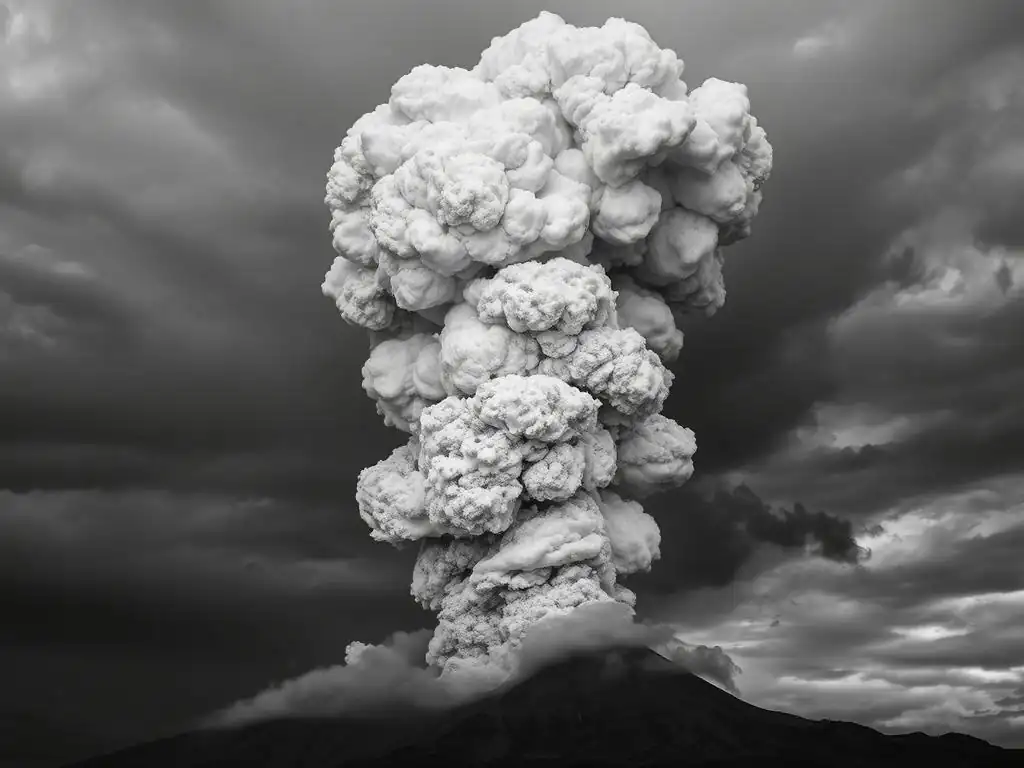
Framing the ash plume effectively within the broader volcanic landscape is essential for creating compelling and visually narrative black and white photographs. Consider the surroundings as integral components of your composition, rather than just background elements. Utilize foreground elements, such as volcanic rocks, lava flows, or distinctive geological formations, to add depth and perspective to your images. These elements can lead the viewer's eye into the scene and provide a sense of scale to the immense ash plume towering above. Experiment with different vantage points and perspectives to find the most dynamic and engaging framing.
Applying the rule of thirds is a classic compositional technique that can be particularly effective in volcanic photography. Imagine dividing your frame into nine equal rectangles with two horizontal and two vertical lines. Positioning the ash plume, or key elements of the landscape, along these lines or at their intersections can create a more balanced and visually appealing composition.
Furthermore, pay attention to the horizon line. Placing the horizon low in the frame emphasizes the sky and the verticality of the ash plume, while a higher horizon can draw attention to the foreground landscape and the relationship between the plume and the terrain. Careful consideration of framing transforms a simple photograph of an ash plume into a powerful visual story about the volcanic event and its environment.
Utilizing Leading Lines to Guide the Viewer's Eye
Leading lines are powerful compositional tools that can effectively guide the viewer's eye through your black and white ash plume photographs, creating depth, perspective, and a sense of journey within the image. In volcanic landscapes, natural leading lines can be found in various forms, such as lava flows snaking across the terrain, ridges and valleys converging towards the volcano, or even roads and paths that may exist in the vicinity. Position yourself and your camera to emphasize these lines, directing them towards the ash plume or other points of interest within the frame.
By strategically incorporating leading lines, you can create a sense of flow and movement within your images, drawing the viewer deeper into the scene and towards the central subject – the ash plume. For example, a winding lava flow in the foreground can lead the eye upwards to the erupting volcano and its plume, establishing a visual connection between the foreground landscape and the dramatic volcanic activity.
Experiment with different angles and perspectives to maximize the impact of leading lines in your compositions, transforming a static scene into a dynamic and engaging visual experience that effectively showcases the power of black and white ash plume photography.
Creating a Sense of Scale with Black and White Ash Plumes
Creating a sense of scale is paramount when photographing ash plumes, as it allows viewers to truly grasp the immense size and power of these volcanic phenomena, especially effectively conveyed in black and white. Ash plumes can reach tens of kilometers into the atmosphere, dwarfing everything in their vicinity.
To convey this scale, incorporate elements of human or natural scale into your compositions. Including recognizable objects like trees, buildings (if safely distant), or even human figures (again, if safe and contextually appropriate) in the foreground or mid-ground can provide a visual reference point, highlighting the colossal dimensions of the plume.
Wide-angle lenses are particularly effective for emphasizing scale in volcanic photography. By using a wide-angle lens, you can capture a vast expanse of the landscape in the foreground, while still including the towering ash plume in the background. This juxtaposition of near and far elements exaggerates the perceived distance and size difference, making the plume appear even more monumental.
Consider positioning yourself at a distance that allows you to capture both the broad landscape and the full vertical extent of the ash plume. The stark contrast and tonal range of black and white photography further enhance this sense of scale, emphasizing the dramatic difference in size and power between the landscape and the eruptive force.
Post-Processing Black and White Ash Plume Images
Converting Color Photos to Black and White: Channel Mixer Technique
Converting color photographs of ash plumes to black and white is a crucial step in achieving impactful monochrome images. While simply desaturating an image can remove color, the Channel Mixer technique offers far greater control and allows for nuanced adjustments to tonal values, particularly vital for capturing the subtle textures within ash plumes.
The Channel Mixer allows you to selectively adjust the contribution of the red, green, and blue color channels to the final black and white image. By manipulating these channels, you can control how different colors are translated into shades of gray, effectively emphasizing or suppressing certain tones within the ash plume and its surroundings.
For example, to darken skies and enhance the contrast between the ash plume and the sky, you might increase the red channel's contribution. Conversely, adjusting the green or blue channels can affect the rendering of foliage or water in the landscape, allowing you to fine-tune the overall tonal balance of your black and white ash plume photograph.
Experimentation with the Channel Mixer is key to understanding its potential. By carefully adjusting the channel sliders, you can create a wide range of black and white interpretations from a single color image, optimizing the tonal relationships and highlighting the specific characteristics of the ash plume you wish to emphasize.
Contrast Adjustments for Dramatic Effect in Ash Plume Photography
Contrast adjustments are paramount in post-processing black and white ash plume photographs to enhance their dramatic impact and visual power. Contrast, the difference between the lightest and darkest tones in an image, is a fundamental element in monochrome photography. Increasing contrast can amplify the drama inherent in volcanic eruptions, emphasizing the starkness of the ash plume against the sky and landscape. Tools like curves and levels in image editing software provide precise control over contrast. An S-curve adjustment in curves, for instance, typically increases overall contrast, deepening shadows and brightening highlights, resulting in a more punchy and dynamic image.
For ash plume photography, consider focusing contrast adjustments on the mid-tones to enhance the textural details within the plume itself. While high contrast can create drama, excessive contrast can lead to a loss of detail in both shadows and highlights. Therefore, a balanced approach is often most effective. Experiment with different levels of contrast to find the sweet spot that maximizes the visual impact of the ash plume without sacrificing important tonal information. Careful contrast adjustments are essential for transforming a flat, gray image into a compelling and visually arresting black and white representation of volcanic power.
Dodging and Burning Techniques for Emphasizing Ash Plume Details
Dodging and burning are traditional darkroom techniques, now digitally replicated in post-processing software, that are invaluable for selectively adjusting the brightness of specific areas in black and white ash plume photographs. Dodging lightens areas, while burning darkens them. These techniques are particularly useful for emphasizing details within the ash plume, guiding the viewer's eye, and creating a more three-dimensional feel in your images.
For example, you might dodge (lighten) the brighter, more textured parts of the ash plume to make them stand out against the darker, less detailed areas. Conversely, burning (darkening) the shadows around the plume can enhance its shape and create a greater sense of depth and volume.
Selective dodging and burning allow for a high degree of control over the tonal balance and visual emphasis within your black and white ash plume photographs. Instead of applying global adjustments that affect the entire image uniformly, these techniques enable you to refine specific areas, drawing attention to key elements and creating a more nuanced and visually engaging final image.
When applied subtly and thoughtfully, dodging and burning can transform a good photograph into an exceptional one, enhancing the drama and impact of your black and white ash plume imagery by sculpting light and shadow to emphasize the power and beauty of volcanic eruptions.
Black and White Ash Plume Photography: Equipment Essentials
Choosing the Right Lens for Capturing Volcanic Eruptions
Choosing the right lens is paramount for effectively capturing volcanic eruptions and their ash plumes in black and white, as lens selection directly impacts perspective, reach, and the overall visual narrative. For photographing ash plumes, a versatile lens kit often includes both telephoto and wide-angle options. Telephoto lenses, such as a 70-200mm or longer, are essential for reaching distant volcanic plumes, compressing perspective, and isolating the plume as the primary subject. These lenses allow you to capture detailed shots of the plume's structure and dynamics even from a safe distance, crucial for volcanic photography.
Wide-angle lenses, such as a 16-35mm or similar, are equally important for capturing the ash plume within its broader landscape context. Wide-angle lenses allow you to showcase the scale of the eruption, incorporating foreground elements and the surrounding volcanic terrain, creating a more immersive and informative image.
A standard zoom lens, like a 24-70mm, can serve as a versatile middle ground, offering flexibility for various compositions. Ultimately, the choice of lens depends on your photographic goals and the specific shooting situation, but a combination of telephoto and wide-angle lenses provides the greatest versatility for capturing compelling black and white ash plume photographs.
Tripods and Remote Shutters for Stability and Sharpness
Tripods and remote shutters are indispensable accessories for achieving sharp and stable black and white ash plume photographs, particularly in challenging volcanic environments. Tripods are crucial for maintaining camera stability, especially when using longer lenses, shooting in windy conditions (common near volcanoes), or employing slower shutter speeds to capture motion blur in ash plumes. A sturdy tripod minimizes camera shake, ensuring sharp images, especially critical for maximizing detail in black and white photography where sharpness is often highly emphasized.
Remote shutters, or cable releases, further enhance stability by eliminating camera shake caused by physically pressing the shutter button. This is particularly important when using slow shutter speeds or telephoto lenses, where even minor vibrations can result in blurry images. Using a remote shutter allows for hands-free operation, ensuring the camera remains perfectly still during the exposure. In volcanic environments, which can be unpredictable and sometimes unstable terrain, a reliable tripod and remote shutter are not just accessories but essential tools for capturing high-quality, sharp black and white images of ash plumes.
Filters for Enhancing Black and White Ash Plume Images
Filters, although often associated with color photography, can still play a valuable role in enhancing black and white ash plume images. While color filters are primarily used in black and white film photography to alter tonal relationships, certain filters remain relevant in the digital monochrome workflow. Neutral Density (ND) filters are particularly useful, allowing for longer exposures in bright daylight.
This is beneficial for creating motion blur in ash plumes even in midday, or for using wider apertures for shallow depth of field in bright conditions. Graduated Neutral Density (GND) filters can also be helpful for balancing exposure between a bright sky and a darker volcanic landscape, preventing blown-out highlights in the sky while maintaining detail in the foreground.
Polarizing filters, while primarily used to reduce glare and enhance colors in color photography, can also have a subtle effect in black and white. They can reduce atmospheric haze, potentially increasing contrast and clarity, especially in distant ash plumes.
However, their impact in black and white is less pronounced than in color. Ultimately, while the range of filters directly applicable to black and white digital photography is narrower than for color, ND and GND filters, and to a lesser extent polarizing filters, can still be valuable tools for enhancing certain aspects of your black and white ash plume photography, providing greater creative control over exposure and image quality.
Showcasing Black and White Ash Plume Photography: Inspiration and Examples
Iconic Black and White Volcano Photos Throughout History
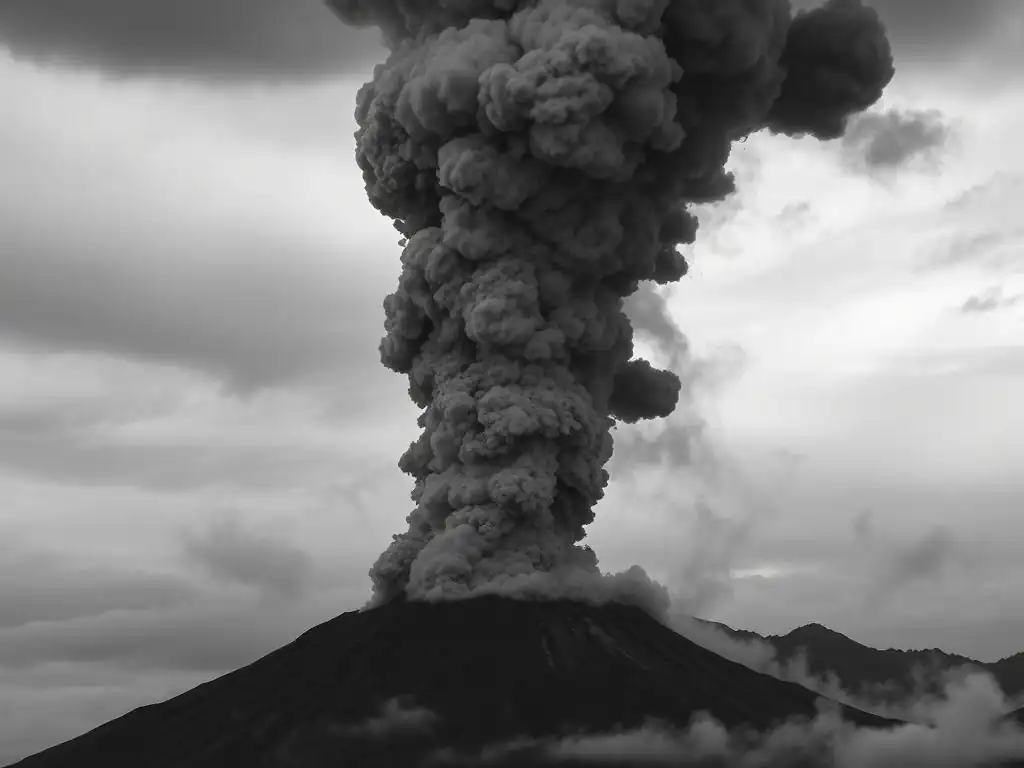
Throughout the history of photography, black and white has been a dominant medium for capturing the awe-inspiring power of volcanoes. Early volcano photography, often constrained by the technical limitations of the time, naturally gravitated towards monochrome.
Images from the late 19th and early 20th centuries, though sometimes lacking in the technical sharpness of modern photography, possess a raw, almost primal quality that effectively conveys the dramatic nature of volcanic eruptions. These pioneering photographs, often taken on glass plates and with rudimentary equipment, documented significant eruptions like those of Mount Vesuvius or Krakatoa, capturing the immense scale of ash plumes and lava flows in stark black and white.
While specific names of early iconic black and white volcano photographers may be less widely known than landscape photographers like Ansel Adams, their collective body of work established a visual language for depicting volcanic events. These historical images, preserved in archives and collections, serve as a testament to the enduring power of black and white photography to capture geological drama.
They remind us that even without color, the essence of a volcanic eruption – its force, its scale, and its impact on the landscape – can be profoundly communicated through monochrome imagery, a legacy that continues to inspire contemporary volcano photographers.
Modern Masters of Black and White Volcanic Photography
In contemporary photography, numerous artists continue to explore the power of black and white in capturing volcanic landscapes and ash plumes, pushing the boundaries of the medium and utilizing modern techniques to create impactful imagery. While specific names dedicated solely to black and white volcano photography might be niche, many landscape and nature photographers incorporate volcanic subjects into their monochrome portfolios.
These modern masters often leverage the dynamic range and tonal subtlety of digital black and white conversion to reveal intricate details within ash plumes and volcanic terrains. They employ sophisticated post-processing techniques, such as advanced dodging and burning, channel mixing, and noise reduction, to refine their images and maximize visual impact.
The work of these contemporary photographers often transcends mere documentation, aiming to evoke an emotional response and convey a deeper understanding of the geological forces at play. Their black and white volcano photographs are frequently characterized by strong contrasts, dramatic compositions, and a meticulous attention to detail, reflecting a conscious choice to strip away color and focus on the essential elements of form, texture, and light. By studying the work of these modern practitioners, aspiring volcano photographers can gain valuable insights into the artistic and technical possibilities of black and white ash plume photography in the digital age.
Sebastião Salgado's Approach to Black and White Ash Plume Imagery
Sebastião Salgado, renowned for his powerful black and white documentary photography, particularly his work on environmental and social themes, offers a compelling approach that, while not explicitly focused on volcanoes, provides valuable inspiration for black and white ash plume imagery. Salgado's signature style is characterized by high contrast, rich tonal range, and a deep empathy for his subjects.
His images often possess a timeless quality, achieved through meticulous composition, masterful use of light and shadow, and a commitment to long-term projects that delve deeply into complex themes. While Salgado may not be primarily known for volcano photography, his approach to black and white imagery is highly relevant.
Applying Salgado's principles to black and white ash plume photography involves focusing on the human element (where relevant and safe – perhaps depicting the impact on communities or the work of volcanologists), emphasizing the textures and forms of the volcanic landscape and ash plumes, and using contrast to create dramatic and emotionally resonant images. His commitment to social and environmental storytelling suggests a potential narrative approach to volcano photography, moving beyond purely aesthetic representations to explore the broader context of volcanic activity – its geological significance, its impact on the environment, and its relationship with human life.
Studying Salgado's work encourages a deeper, more meaningful engagement with black and white photography as a medium for conveying powerful stories about the natural world, including the dramatic realm of volcanoes and ash plumes.
Safety Considerations for Photographing Ash Plumes
Protecting Yourself from Volcanic Hazards
Photographing ash plumes, while visually rewarding, necessitates a paramount focus on safety due to the inherent hazards associated with volcanic eruptions. Volcanic environments can be unpredictable and dangerous, posing risks from various sources. Direct volcanic hazards include projectile ejecta (volcanic bombs and rocks), pyroclastic flows (fast-moving currents of hot gas and volcanic debris), and lava flows. These hazards can cause severe injury or death and require maintaining a safe distance from active volcanic vents and flow paths. Always heed official warnings and exclusion zones established by volcanological agencies and local authorities.
Beyond direct hazards, secondary risks include structural collapses, landslides triggered by volcanic activity, and flash floods in volcanic valleys. The terrain around volcanoes can be unstable and uneven, increasing the risk of slips, trips, and falls. Prioritize personal safety by staying informed about current volcanic activity levels, planning your photography expeditions meticulously, and always being aware of potential escape routes. Never approach an active volcano without proper authorization and guidance from experienced professionals, and always prioritize your well-being over capturing a photograph.
Understanding Volcanic Gas and Ashfall Risks
Beyond the immediate physical dangers, volcanic gas and ashfall pose significant health risks to photographers venturing near erupting volcanoes. Volcanic gases, such as sulfur dioxide (SO2), hydrogen sulfide (H2S), and carbon dioxide (CO2), can be invisible and odorless at certain concentrations but can be toxic and irritating to the respiratory system, eyes, and skin. Breathing volcanic gases can cause respiratory distress, headaches, and in high concentrations, even death.
Ashfall, composed of fine particles of volcanic rock and glass, can also be hazardous to health. Inhaling volcanic ash can irritate the respiratory tract, exacerbate existing respiratory conditions, and cause eye irritation.
Long-term exposure to volcanic ash can lead to silicosis and other respiratory illnesses. Protecting yourself from volcanic gas and ashfall requires wearing appropriate respiratory protection, such as a properly fitted gas mask or respirator with appropriate filters (N95 or higher for ash, specific filters for volcanic gases). Eye protection, such as goggles, is also essential to prevent eye irritation from ash and gases.
Covering exposed skin with long sleeves and pants can minimize skin irritation. Be aware of wind direction, as it can carry volcanic gases and ash downwind, potentially exposing you to hazardous conditions even at a distance from the vent. Monitoring gas levels and ashfall forecasts from volcanological agencies is crucial for assessing and mitigating these risks.
Essential Gear for Safe Volcanic Photography
Safe volcanic photography necessitates specific gear designed to protect against the unique hazards of these environments. Beyond standard photographic equipment, essential safety gear includes sturdy hiking boots with good ankle support, crucial for navigating uneven volcanic terrain. Long sleeves and pants made of durable, fire-resistant material provide protection against heat, ash, and minor abrasions. A hard hat or helmet is vital for protecting against falling rocks and projectiles. Eye protection, such as goggles or safety glasses, is essential for shielding eyes from ash, dust, and volcanic gases.
Respiratory protection is paramount. A properly fitted gas mask or respirator with appropriate filters is necessary to filter out volcanic gases and fine ash particles. For communication, a two-way radio or satellite communication device is crucial, especially in remote volcanic areas without reliable cell phone service, allowing for emergency communication and coordination.
Carrying a first-aid kit equipped to treat minor injuries and respiratory issues is also essential. Finally, always bring sufficient water and food, as volcanic expeditions can be physically demanding and prolonged. Proper safety gear is not optional; it is a prerequisite for responsible and safe black and white ash plume photography.
The Art of Black and White: Conveying the Power of Volcanic Eruptions
Evoking Emotion Through Monochrome Volcanic Landscapes
Black and white photography possesses a unique ability to evoke powerful emotions in viewers, making it an exceptional medium for conveying the raw power and dramatic atmosphere of volcanic landscapes. By stripping away the distractions of color, monochrome imagery focuses attention on form, texture, and tonal contrast – elements that are intrinsically linked to emotional response.
The stark contrasts often inherent in black and white photographs can mirror the dramatic forces at play in volcanic eruptions, amplifying feelings of awe, fear, and respect for nature's power. The absence of color can also lend a sense of timelessness and universality, connecting viewers to the enduring geological processes shaping our planet.
Monochrome rendition can emphasize the textures of volcanic rock, the ethereal quality of ash plumes, and the dramatic interplay of light and shadow across volcanic terrains, all contributing to a heightened emotional impact. The deliberate choice to present volcanic landscapes in black and white is often an artistic decision to move beyond mere documentation, aiming to create images that resonate with viewers on a deeper, emotional level.
By carefully controlling tonal values and composition, photographers can harness the evocative power of monochrome to transform a photograph of an ash plume into a visceral experience, inviting viewers to feel the immense power and sublime beauty of volcanic eruptions.
Telling a Story with Black and White Ash Plume Photographs
Black and white ash plume photographs are not merely static images; they possess the potential to tell compelling stories about volcanic events, geological processes, and the dynamic relationship between nature and our planet. A single, well-composed monochrome image can encapsulate a moment of dramatic eruption, conveying the scale and intensity of the event. However, a series of black and white photographs can weave a more complex narrative, documenting the evolution of an eruption over time, showcasing the different phases of volcanic activity, or exploring the impact of the eruption on the surrounding landscape and potentially, communities.
Black and white photography's inherent timeless quality lends itself particularly well to storytelling about geological events, which unfold over vast timescales. Monochrome images can evoke a sense of historical record, transforming contemporary volcanic eruptions into events that feel connected to the deep history of the Earth. By carefully selecting viewpoints, focusing on specific details, and thoughtfully sequencing images, photographers can use black and white ash plume photography to create powerful visual narratives that inform, educate, and inspire viewers, fostering a deeper understanding and appreciation of the dynamic forces shaping our world.
Black and White Ash Plumes: A Timeless Photographic Subject
Black and white ash plume photography stands as a timeless subject within the broader realm of visual art, retaining its relevance and impact even in our increasingly color-saturated digital world. The inherent drama and elemental power of volcanic eruptions, combined with the evocative qualities of monochrome imagery, create a compelling and enduring photographic genre. The stark contrasts, textural richness, and timeless aesthetic of black and white photography perfectly complement the raw, geological nature of volcanic ash plumes, making them a perpetually captivating subject for artistic exploration.
In a world dominated by color photography, the deliberate choice to render ash plumes in black and white is a powerful statement, emphasizing artistic intent and focusing attention on the essential elements of form, light, and emotion. The timeless quality of black and white imagery ensures that these photographs transcend fleeting trends, offering a lasting visual record of volcanic power that resonates across generations. Black and white ash plume photography, therefore, remains a vital and compelling art form, continuing to inspire photographers and viewers alike with its stark beauty and profound connection to the Earth's dynamic processes.
Frequently Asked Questions
What makes black and white photography of ash plumes so compelling?
Black and white photography emphasizes texture and form, stripping away color distractions to reveal the raw power and scale of the volcanic eruption. This allows viewers to focus on the dynamic shapes and intricate details of the ash plume.
What camera settings are best for capturing black and white ash plume photos?
Prioritize high shutter speeds to freeze the motion of the ash plume. Experiment with different aperture settings to control depth of field and ensure sharpness. RAW format is highly recommended for post-processing flexibility.
What are some post-processing techniques to enhance black and white ash plume photos?
Adjust contrast and brightness to maximize the tonal range and create a dramatic effect. Sharpening can bring out the fine details of the ash. Consider using dodging and burning to selectively lighten or darken areas.
What safety precautions should I take when photographing volcanic ash plumes?
Always maintain a safe distance from active volcanoes and be aware of wind direction to avoid ashfall. Wear a respirator mask and eye protection to protect yourself from harmful particles. Monitor official alerts and advisories.
Where can I find examples of stunning black and white ash plume photography?
Websites like VolcanoExplorers.org often showcase galleries dedicated to volcanic photography. Search online photography communities and social media platforms using relevant keywords, such as "black and white volcano photography".
Okay, here's a final reflection section, formatted in Markdown, designed to resonate with readers of your "Black and White Ash Plumes: Stripping Down to Raw Power" article and optimized for the keyword "Black and white ash plume photography":
Final Reflection: Unveiling the Raw Essence
The enduring allure of black and white ash plume photography lies in its ability to distill raw power and primal energy into stark, unforgettable images. In a world saturated with color, these monochrome depictions cut through the noise, forcing us to confront the fundamental forces shaping our planet. They are not merely pictures; they are visual poems of destruction and creation, captured in a timeless medium.
The impact of these images extends beyond the purely aesthetic. They serve as potent reminders of the Earth's volatile nature and our own vulnerability in the face of its power. They also highlight the photographer's skill in capturing these fleeting moments, transforming chaos into art. Photography takes an instant out of time, altering life by holding it still.
- Dorothea Lange. This quote perfectly encapsulates the power of black and white ash plume photography: freezing a moment of immense energy and allowing us to contemplate its significance.
Now, as you close this article, I invite you to look beyond the technical aspects of black and white ash plume photography and consider the deeper message these images convey. Let them inspire you to appreciate the raw beauty of our planet, to acknowledge its power, and to reflect on your own place within its grand, ever-changing narrative. Seek out these images, study them, and perhaps even venture out to capture your own, contributing to the ongoing visual dialogue about the Earth's untamed spirit.
Ignite Your Inner Volcanologist: Dive Deeper!
Thanks for exploring the raw power of volcanic ash plumes with us! We hope you found this glimpse into nature's artistry captivating. Now, let's turn that fascination into action:
- Share your newfound knowledge! Teach someone about the incredible forces behind these striking black and white displays – you might just ignite their passion for volcanoes.
- Explore our extensive photo gallery for more breathtaking images of ash plumes from around the world and try identifying the eruption styles.
- Consider submitting your volcano photography to our community gallery and help us document these incredible phenomena.
What is the most awe-inspiring volcanic image you've ever seen, and what made it so unforgettable? Share your stories in the comments below!