
The Volcano and the Village: Community Resilience in Eruption Tales

Welcome to Volcano Explorers!
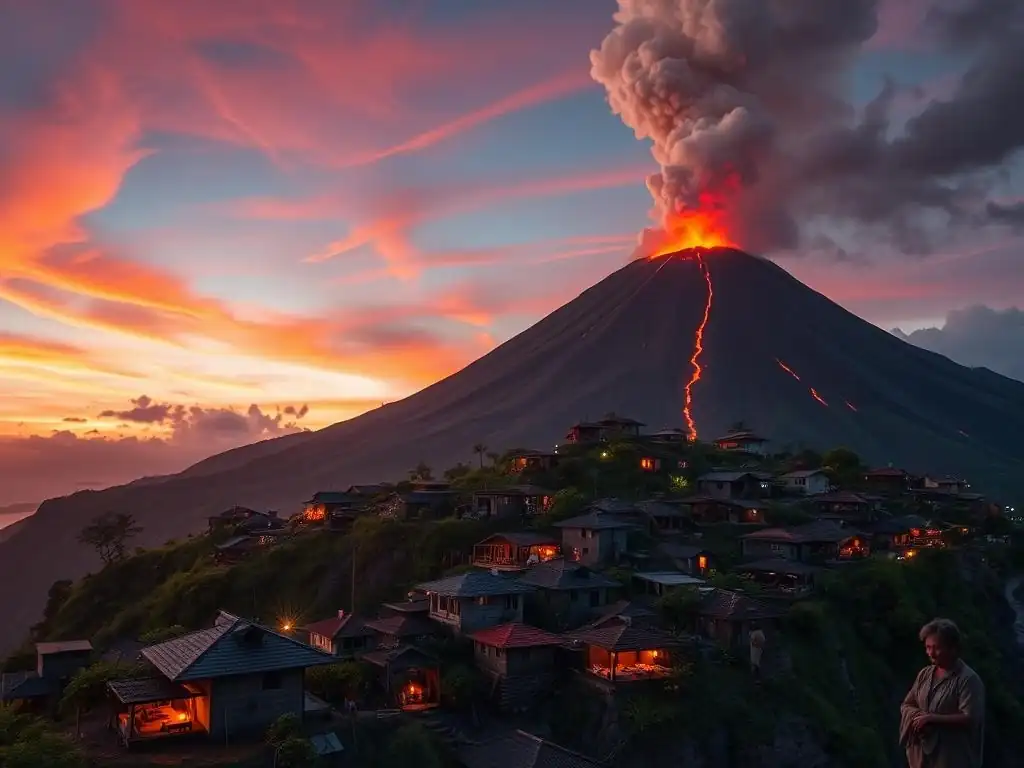
Prepare to be captivated by the raw power and profound impact of volcanoes. But beyond the fiery spectacle, lies a story of human spirit and adaptation. Today, we're exploring Community Resilience During Volcanic Eruptions, delving into the heart of how communities living in the shadow of these giants not only survive, but thrive. What secrets do they hold, and what lessons can we learn from their enduring connection to the land? Unearth these answers and more as we journey into the cultural significance of volcanoes and the incredible resilience forged in their fiery embrace.
- Case Studies: Tales of Community Resilience During Volcanic Eruptions
-
Frequently Asked Questions
- How does VolcanoExplorers.org define "Community Resilience" in the context of volcanic eruptions?
- What specific resources does VolcanoExplorers.org offer to help communities prepare for volcanic eruptions?
- How does VolcanoExplorers.org address the psychological impact of volcanic eruptions on communities?
- Does VolcanoExplorers.org showcase examples of successful community resilience strategies following past volcanic eruptions?
- What role does local knowledge and cultural practices play in community resilience, according to VolcanoExplorers.org?
- Final Reflection: Embers of Hope, Seeds of Renewal
- Unearth Your Inner Strength: Learn From Volcano Villages!
Case Studies: Tales of Community Resilience During Volcanic Eruptions
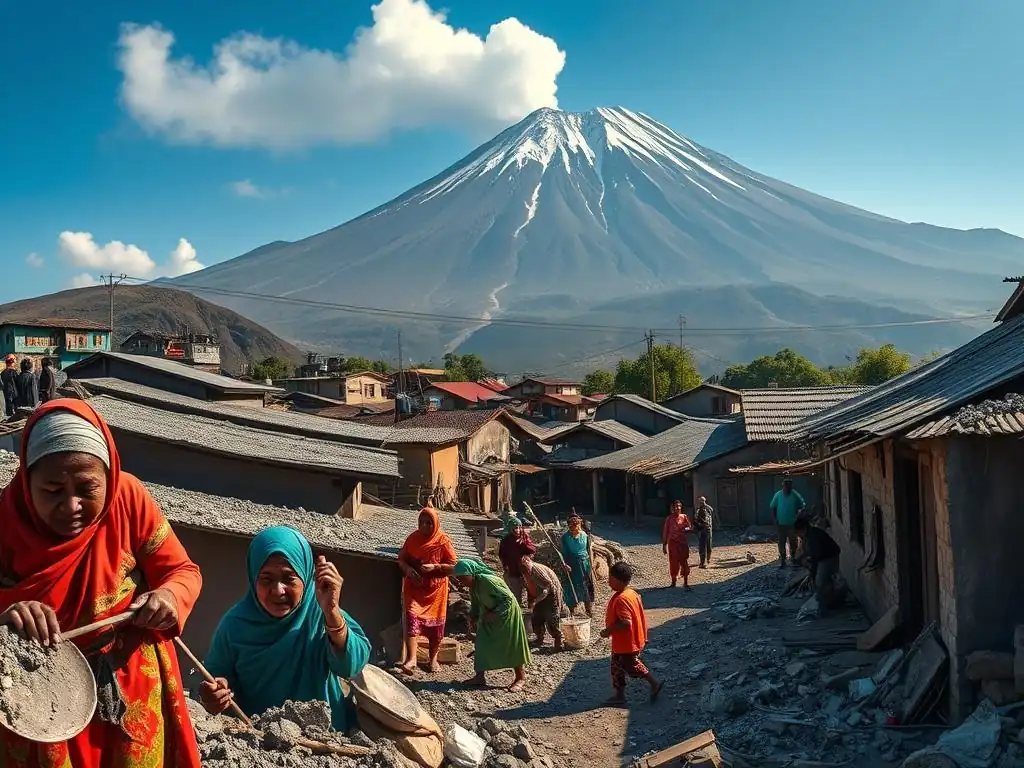
Case Study 1: Herculaneum - Lessons in Preservation
Proactive Measures Taken by the Community Before the Eruption
While the catastrophic eruption of Mount Vesuvius in 79 AD is famously associated with the sudden destruction of Pompeii, the neighboring town of Herculaneum presents a subtly different narrative, one that hints at potential, albeit ultimately insufficient, proactive measures taken by its inhabitants. Unlike Pompeii, which was buried under a thick layer of ash and pumice, Herculaneum was engulfed by pyroclastic flows, a faster and hotter volcanic hazard.
Historical accounts, though fragmented and primarily from Pliny the Younger's letters detailing the events at Misenum, suggest that the inhabitants of Herculaneum may have had a slightly longer window of time before the most devastating phase of the eruption struck. This might have allowed for some degree of evacuation or attempts to secure valuables, although archaeological evidence indicates that many people perished in the town, suggesting these measures were either limited in scope or ultimately overwhelmed by the eruption's intensity.
Further research into the pre-eruption infrastructure, such as the harbor facilities at Herculaneum, might reveal if any contingency plans for maritime evacuation were in place, or if the town's layout and building construction reflected any awareness of seismic or volcanic risks, even if rudimentary by modern standards.
The Roman era, while possessing sophisticated engineering and urban planning capabilities, lacked the modern scientific understanding of volcanology. Therefore, "proactive measures" in Herculaneum would not have resembled contemporary disaster preparedness strategies. Instead, they may have been more akin to responses based on accumulated local knowledge of natural phenomena, perhaps passed down through generations. For instance, if Vesuvius had exhibited precursory signs of unrest, such as increased seismic activity or changes in fumarole emissions – even if not fully understood as volcanic precursors – the community might have intuitively recognized these as potentially dangerous and taken actions like moving livestock to safer locations, reinforcing structures, or even temporarily relocating to nearby areas further from the mountain. However, the very sudden and violent nature of the 79 AD eruption likely minimized the effectiveness of any such rudimentary preparations, highlighting the unpredictable power of volcanic events even for seemingly well-established and organized communities.
The Role of Local Leadership in Disaster Preparedness
In Roman society, local leadership played a crucial role in managing community affairs, including responses to natural disasters. Herculaneum, as a Roman town, would have had a structured municipal government, likely consisting of elected officials, local magistrates, and potentially religious authorities.
In the context of a volcanic crisis, the effectiveness of these leaders in disaster preparedness would have been paramount. While we lack direct written accounts detailing the specific actions of Herculaneum's leadership during the 79 AD eruption, we can infer their potential responsibilities and limitations based on general Roman administrative practices and the historical context.
Local leaders would have been responsible for maintaining public order, organizing any evacuation efforts, distributing resources if available, and appealing to higher Roman authorities for assistance if needed. Their effectiveness would have depended on factors such as their existing authority, communication networks, the availability of resources within the town, and, crucially, the speed and nature of the volcanic crisis itself.
Furthermore, the Roman system of governance, while generally efficient, could also be bureaucratic and hierarchical. Decisions regarding large-scale disaster relief might have required approvals from regional or even imperial authorities, potentially leading to delays in aid reaching affected communities like Herculaneum. The local leadership's ability to effectively advocate for their community's needs in such a system would have been critical.
Additionally, the social structure of Roman towns, with its distinctions between citizens and non-citizens, elites and commoners, could have influenced how disaster preparedness and response were implemented and experienced across different segments of the population. Archaeological findings, particularly the skeletal remains and their locations within Herculaneum, might offer further insights into whether leadership structures were able to facilitate a more equitable or effective response, or if the disaster exacerbated existing social inequalities in the face of overwhelming natural forces.
Frequently Asked Questions
How does VolcanoExplorers.org define "Community Resilience" in the context of volcanic eruptions?
Community resilience, as discussed on VolcanoExplorers.org, refers to a community's ability to withstand, recover from, and adapt to the challenges posed by volcanic eruptions. It encompasses physical, social, and economic dimensions.
What specific resources does VolcanoExplorers.org offer to help communities prepare for volcanic eruptions?
The website provides safety guides, evacuation tips, and real-time updates on volcanic activity. These resources aim to empower communities to make informed decisions and take proactive measures.
How does VolcanoExplorers.org address the psychological impact of volcanic eruptions on communities?
While not explicitly a primary focus, the site's emphasis on community support and shared experiences implicitly acknowledges the psychological toll. Further resources on mental health during disasters might be considered.
Does VolcanoExplorers.org showcase examples of successful community resilience strategies following past volcanic eruptions?
Yes, the "Eruption Tales" section, as the article suggests, likely shares case studies and stories of communities that have effectively navigated volcanic crises. These examples provide valuable insights and inspiration.
What role does local knowledge and cultural practices play in community resilience, according to VolcanoExplorers.org?
The site recognizes the cultural significance of volcanoes. It implicitly acknowledges that local knowledge and traditional practices can contribute to effective risk management and adaptation strategies within affected communities.
Final Reflection: Embers of Hope, Seeds of Renewal
The stories we've explored, tales of villages nestled in the shadow of volcanoes, are not just historical accounts; they are living testaments to the enduring power of community resilience. In a world increasingly facing unpredictable crises, from climate change to global pandemics, understanding how communities not only survive but thrive in the face of devastation is more critical than ever. These eruptions, though destructive, have also served as crucibles, forging stronger bonds and revealing the remarkable capacity of the human spirit to rebuild and adapt.
The echoes of these volcanic events resonate deeply, reminding us that our shared humanity is the most potent force against adversity. The lessons learned from these resilient communities – their resourcefulness, their unwavering support for one another, and their deep connection to the land – offer invaluable insights for navigating the challenges of our own time. The human spirit is like a volcano; when broken, it pours forth lava of hope, resilience, and determination.
This quote, though perhaps not directly from a historical figure, encapsulates the essence of what we've witnessed: a phoenix rising from the ashes, time and time again.
As you reflect on these stories of resilience, consider the volcanoes in your own life – the unexpected challenges, the moments of upheaval. What resources do you have within yourself, and within your community, to weather the storm? What seeds of renewal can you plant amidst the devastation? Let the spirit of these resilient villagers inspire you to cultivate your own inner strength, to foster stronger connections with those around you, and to embrace the transformative power of hope, even in the face of seemingly insurmountable odds.
Unearth Your Inner Strength: Learn From Volcano Villages!
Thanks for delving into the incredible stories of resilience from communities living near volcanoes. You've gained valuable insights into how people adapt, rebuild, and thrive in the face of natural disasters. Now, it's your turn to apply those lessons!
Here are some ways you can connect with this spirit of resilience:
- Take a deep dive: Research a specific community living near a volcano, focusing on their unique adaptation strategies and cultural practices. Share your findings with a friend or family member!
- Reflect on how these stories can inspire preparedness in your own life. Could you be better prepared for unforeseen challenges, big or small?
- Consider how you can contribute to organizations that support communities impacted by natural disasters. Even a small donation or spreading awareness can make a difference.
What specific resilience tactic from the article resonates most with you, and how can you apply it to your own life's challenges starting today?