
Stories from the Ring of Fire: Volcano Myths Across the Pacific

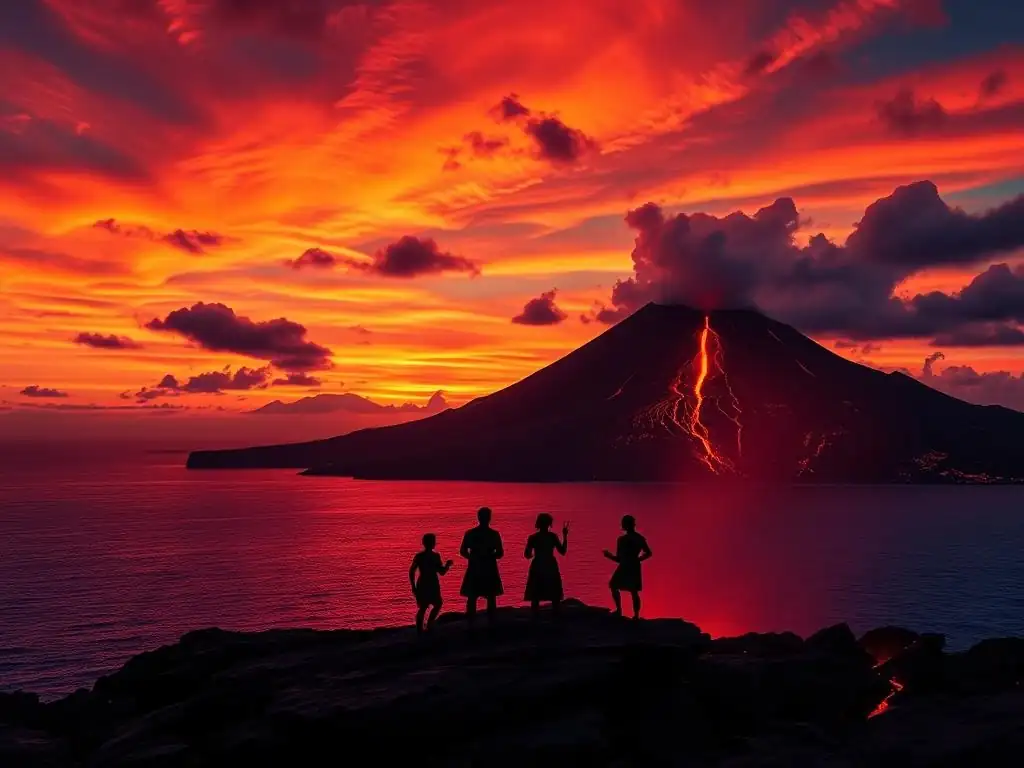
Welcome to Volcano Explorers!
Prepare to be captivated by the fiery tales whispered across generations. Ever wondered how ancient cultures explained the earth-shattering power of volcanoes? Dive into our latest exploration of Pacific volcano myths and legends, where we unravel the captivating stories born from the Ring of Fire and discover how these myths reflect the raw power and profound respect for these geological giants. What secrets do these legends hold, and how do they continue to shape our understanding of these magnificent, yet volatile, landscapes? Let's begin the journey...
- Introduction: Exploring Pacific Volcano Myths and Legends
- Understanding the Ring of Fire and Its Volcanic Activity
- Mythological Origins of Pacific Volcanoes: A Comparative Look
-
Specific Pacific Volcano Myths and Legends: Case Studies
- Pele, the Hawaiian Volcano Goddess: Myths and Legends of Kilauea
- Mount Fuji's Spiritual Significance: Japanese Volcano Mythology
- Tane Mahuta and the Volcanic Landscape of New Zealand: Maori Mythology
- Myths from the Philippines: Volcanoes as Abodes of Spirits and Deities
- Volcano Myths of Indonesia: Tales from Krakatoa and Other Volcanic Islands
- Common Themes in Pacific Volcano Mythology
- The Enduring Influence of Volcano Myths and Legends
- Conclusion: The Rich Tapestry of Pacific Volcano Lore
-
Frequently Asked Questions
- What are some common themes found in Pacific volcano myths and legends?
- How do Pacific cultures typically view volcanoes?
- Can you give an example of a specific Pacific volcano myth?
- Do these myths and legends still hold relevance today?
- How can understanding these myths help us better understand volcanoes?
- Final Reflection: Echoes of Fire and Legend
- Unearth Your Inner Explorer: Ignite Your Passion for Volcanic Tales!
Introduction: Exploring Pacific Volcano Myths and Legends
The Cultural Significance of Volcanoes in the Pacific Ring of Fire
The Pacific Ring of Fire, a seismically and volcanically active region encircling the Pacific Ocean, is not just a geological phenomenon; it's a cradle of rich cultural narratives. For millennia, the fiery mountains that punctuate this ring have profoundly shaped the beliefs, traditions, and identities of the peoples who live in their shadow. Volcanoes in this region are more than just geological features; they are living entities, imbued with spirit, power, and profound meaning.
From the Hawaiian Islands to Japan, New Zealand, the Philippines, and Indonesia, the looming presence of volcanoes has inspired a vast collection of myths and legends, each reflecting a unique cultural understanding of these powerful forces of nature. These stories are not mere entertainment; they are integral to understanding how Pacific cultures perceive their world, their origins, and their place within the dynamic landscape shaped by volcanic activity.
The myths and legends surrounding Pacific volcanoes serve as a vital link between the physical world and the spiritual realm. They offer explanations for natural phenomena, codify social behaviors, and transmit cultural values across generations. For communities living with the constant threat and undeniable benefits of volcanic activity, these narratives provide a framework for understanding and coping with their environment.
The stories often personify volcanoes as deities or spirits, capable of both creation and destruction, demanding respect and appeasement. Exploring these Pacific volcano myths and legends provides a window into the intricate relationship between humanity and nature, revealing the deep-seated reverence and awe that volcanoes inspire in the cultures of the Pacific Ring of Fire.
Volcanoes and Cultural Identity: Unveiling Lore of the Pacific
The lore surrounding Pacific volcanoes is deeply interwoven with the cultural identity of the communities that inhabit these volcanic landscapes. These myths and legends are not simply tales of the past; they are living narratives that continue to shape cultural practices, social structures, and even daily interactions with the environment.
For many Pacific cultures, volcanoes are considered ancestral lands or sacred spaces, imbued with the mana, or spiritual power, of their deities and ancestors. Understanding these narratives is crucial to appreciating the profound connection between the people and the land, and how this connection forms the bedrock of their cultural identity.
Across the Pacific, the stories of volcanoes are as diverse as the cultures themselves, yet they share common threads that speak to the universal human experience of living in proximity to these powerful natural forces. Whether it's the fiery goddess Pele in Hawaii, the sacred Mount Fuji in Japan, or the volcanic deities of Maori legends in New Zealand, these narratives reflect a deep understanding of volcanic processes, albeit framed within a mythological context.
These Pacific volcano myths and legends are not just about explaining eruptions; they are about defining cultural values, establishing social norms, and forging a collective identity in the face of the awe-inspiring and sometimes terrifying power of volcanoes.
Understanding the Ring of Fire and Its Volcanic Activity
The Geology of the Pacific Ring of Fire: A Volcanic Hotspot
The Pacific Ring of Fire is a 40,000-kilometer horseshoe-shaped region characterized by intense volcanic and seismic activity. It encircles the Pacific Ocean, tracing the boundaries of several tectonic plates, including the Pacific, Cocos, Indian-Australian, Nazca, North American, and Philippine plates. This region is home to approximately 75% of the world's active and dormant volcanoes and is the site of about 90% of the world's earthquakes. The sheer concentration of volcanic activity makes the Ring of Fire a globally significant geological feature, and understanding its formation is key to appreciating the context of Pacific volcano myths and legends.
The intense volcanism of the Ring of Fire is primarily attributed to plate tectonics, specifically subduction. Subduction occurs when one tectonic plate slides beneath another into the Earth's mantle. Along the Ring of Fire, the denser oceanic plates are subducting beneath lighter continental plates or other oceanic plates. As the subducting plate descends, it melts due to increasing temperature and pressure, forming magma.
This molten rock, being less dense than the surrounding solid rock, rises to the surface, leading to volcanic eruptions. The type of volcanic activity, from explosive eruptions to effusive lava flows, is influenced by the composition of the magma, the tectonic setting, and the presence of water. The geological processes within the Ring of Fire directly influence the landscapes and environments that have, in turn, shaped the cultural narratives and myths of the region.
Plate Tectonics and Volcanic Activity: An Explanation
Plate tectonics is the unifying theory that explains the large-scale motions of Earth's lithosphere. The lithosphere, Earth's rigid outer shell, is broken into several plates that "float" and move on the semi-molten asthenosphere beneath. These plates interact at their boundaries, and these interactions are responsible for most of the Earth's seismic and volcanic activity. The Ring of Fire is a prime example of the dramatic consequences of plate tectonic interactions, particularly convergent plate boundaries where subduction occurs.
At convergent boundaries within the Ring of Fire, such as along the coasts of South America, North America, and East Asia, the oceanic Pacific Plate is subducting beneath the continental plates. In other areas, like island arcs in the western Pacific, one oceanic plate is subducting beneath another. The process of subduction is crucial for generating magma.
As the subducting plate descends, it carries water-rich sediments and hydrated minerals into the mantle. This water lowers the melting point of the mantle rock, causing partial melting and the formation of magma. The magma then rises through the crust, feeding volcanoes that form the Ring of Fire.
The explosive nature of many Ring of Fire volcanoes is often due to the high water content in the magma, which leads to increased pressure and volatile-rich eruptions. Understanding this scientific explanation provides a contrasting yet complementary perspective to the mythological interpretations of volcanic activity found in Pacific cultures.
Mythological Origins of Pacific Volcanoes: A Comparative Look
Creation Myths and Volcanoes: Explanations Across Cultures
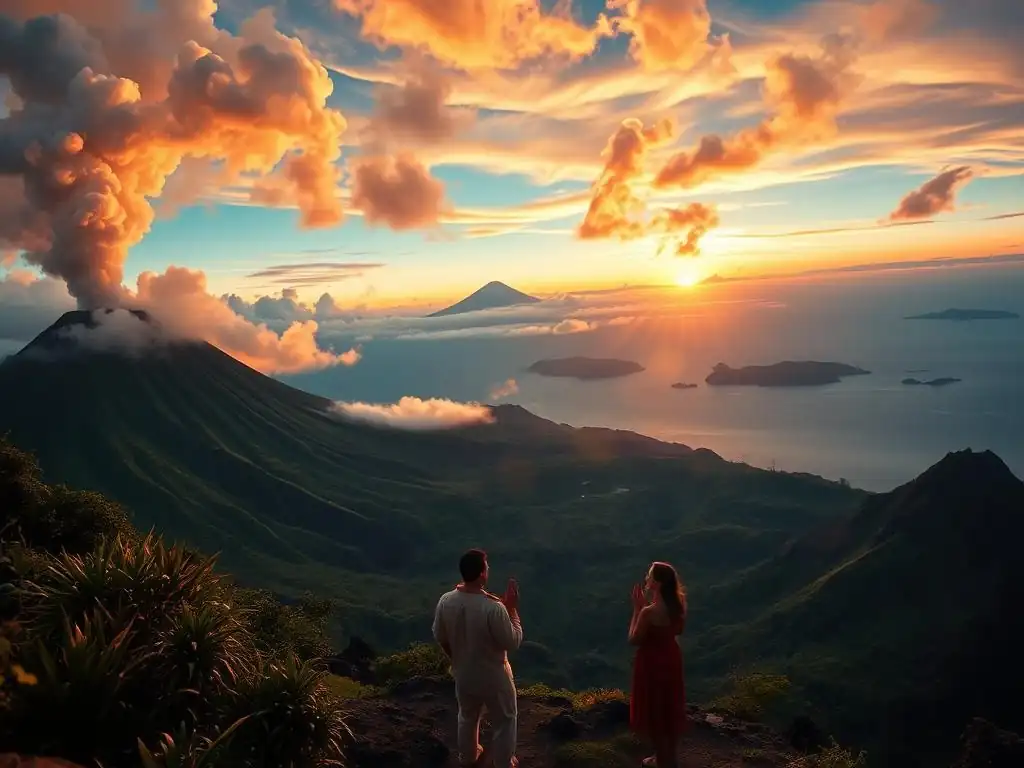
Across the Pacific Ring of Fire, creation myths frequently incorporate volcanoes as pivotal elements in the formation of the world and the emergence of life. These narratives often depict volcanoes not merely as destructive forces, but as agents of creation and transformation. In many cultures, the very land itself is believed to have been born from volcanic activity, with eruptions seen as acts of divine creation, shaping the islands and landscapes that people inhabit. Comparing creation myths across different Pacific cultures reveals fascinating parallels in how volcanoes are understood as fundamental to the origins of their world.
For instance, in some Polynesian cosmologies, volcanic eruptions are seen as the birthing pains of islands rising from the sea. The fiery power of volcanoes is associated with primordial forces that brought order out of chaos. Similarly, in parts of Melanesia, volcanic landscapes are considered sacred sites of creation, where ancestral beings emerged from the earth or where the world was molded by volcanic deities.
These creation myths often emphasize the duality of volcanoes – their capacity for both destruction and creation – reflecting a deep understanding of the transformative power inherent in volcanic processes. By examining these diverse creation narratives, we can appreciate the profound role volcanoes play in the foundational beliefs of Pacific cultures.
The Role of Gods and Spirits in Pacific Volcano Legends
A central theme in Pacific volcano legends is the personification of volcanoes as dwelling places of gods, spirits, or powerful ancestral beings. This animistic worldview, common across many Pacific cultures, imbues the natural world with spiritual significance, and volcanoes, with their dramatic and awe-inspiring nature, are particularly potent loci of spiritual power.
These volcanic deities and spirits are often depicted as having control over eruptions and other natural phenomena, demanding respect, offerings, and adherence to specific cultural protocols. Understanding the roles these supernatural entities play in Pacific volcano myths is crucial for appreciating the cultural significance of these geological features.
In Hawaiian mythology, Pele is perhaps the most famous example, embodying the fiery power of volcanoes and the dynamic forces of creation and destruction. In Japanese Shinto beliefs, Mount Fuji is revered as a sacred mountain and associated with the goddess Konohanasakuya-hime, the Blossom Princess, representing beauty and ephemeral life. In Maori mythology, volcanic mountains like Ruapehu, Tongariro, and Ngauruhoe are personified as ancestral figures with complex relationships and powerful mana.
Across Indonesia and the Philippines, various spirits and deities are believed to reside within volcanoes, influencing their activity and the lives of people living nearby. These examples illustrate how Pacific volcano legends are deeply intertwined with spiritual beliefs, shaping cultural practices and reinforcing the sacred status of volcanoes.
Specific Pacific Volcano Myths and Legends: Case Studies
Pele, the Hawaiian Volcano Goddess: Myths and Legends of Kilauea
Pele's Wrath: Stories of Eruptions and Consequences
Pele, the Hawaiian goddess of volcanoes, fire, lightning, and wind, is perhaps the most iconic figure in Pacific volcano mythology. Her home is said to be Halemaʻumaʻu crater at the summit of Kilauea volcano, one of the most active volcanoes in the world, located on the Big Island of Hawaii. Legends surrounding Pele vividly depict her fiery temper and immense power, often explaining volcanic eruptions as manifestations of her wrath or displeasure. These stories serve not only as explanations for natural phenomena but also as moral lessons about respecting the power of nature and the consequences of disrespecting Pele.
One common theme in Pele legends is her volatile nature and quick temper. Stories recount instances where disrespecting Pele, whether through taking lava rocks (considered to be Pele's body), showing arrogance, or failing to offer proper respect, results in misfortune, often in the form of volcanic eruptions or other natural disasters. For example, legends tell of travelers who took rocks from Kilauea as souvenirs and suffered a string of bad luck until they returned the rocks, seeking Pele's forgiveness.
These narratives underscore the Hawaiian cultural value of respecting the land and its natural forces, personified by Pele. The ongoing volcanic activity of Kilauea, which has erupted numerous times in recent history, including significant events in 2018 and 2023, serves as a constant reminder of Pele's enduring presence and power in Hawaiian consciousness.
Modern Interpretations of the Pele Legend
Even in the modern era, the legend of Pele continues to hold significant cultural relevance in Hawaii. While scientific understanding of volcanology has advanced considerably, Pele remains a powerful symbol of Hawaiian identity, the forces of nature, and the deep connection between the people and their land. Modern interpretations of the Pele legend often emphasize her role as a force of creation and renewal, as well as destruction. Her fiery nature is seen as embodying the dynamic and ever-changing landscape of the Hawaiian Islands, constantly being reshaped by volcanic activity.
Furthermore, Pele’s story is often invoked in discussions about environmental stewardship and cultural preservation in Hawaii. The respect for nature and the land that is central to Pele legends resonates with contemporary concerns about sustainability and the impact of human activities on the environment.
The ongoing debate surrounding development on volcanic lands and the protection of sacred sites is often framed within the context of respecting Pele and her domain. The legend of Pele, therefore, continues to evolve and adapt, serving as a living cultural narrative that informs contemporary Hawaiian identity and their relationship with the volcanic landscape they call home.
Mount Fuji's Spiritual Significance: Japanese Volcano Mythology
Konohanasakuya-hime: The Blossom Princess and Mount Fuji
Mount Fuji, or Fuji-san, Japan's highest peak and an active stratovolcano, is not merely a geographical landmark; it is a deeply revered sacred mountain in Japanese culture. Its symmetrical cone shape and majestic presence have inspired awe and reverence for centuries, leading to its central place in Japanese art, religion, and mythology. Mount Fuji is particularly associated with Konohanasakuya-hime, the Shinto goddess of Mount Fuji and cherry blossoms, often referred to as the "Blossom Princess." Her story and association with Fuji contribute significantly to the mountain's spiritual significance in Japanese mythology.
Konohanasakuya-hime, whose name translates to "blossom-tree-princess-shining-radiantly," is considered a symbol of delicate earthly life, particularly beautiful blossoms and peaceful motherhood. Legend states that she calmed the volatile nature of Mount Fuji, transforming it from a raging fire mountain into the serene and beautiful peak it is today.
Her association with blossoms contrasts with the fiery nature of volcanoes, symbolizing the ephemeral beauty of life and the cyclical nature of seasons. Mount Fuji, under the protection of Konohanasakuya-hime, is seen as a source of spiritual power and a place of pilgrimage, embodying both the beauty and the powerful natural forces inherent in the volcanic landscape.
Volcanoes and Shinto Beliefs: A Connection
The spiritual significance of Mount Fuji is deeply rooted in Shinto, the indigenous religion of Japan. Shinto emphasizes the presence of kami, or spirits, in all aspects of nature, including mountains, trees, rivers, and rocks. Volcanoes, with their powerful and dynamic nature, are particularly seen as abodes of kami and places of potent spiritual energy. Mount Fuji, as the most prominent and revered mountain in Japan, is considered a particularly sacred shintai, or object of worship, embodying the divine presence.
Shinto beliefs view mountains not just as physical entities but as sacred spaces connecting the earthly realm with the divine. Mount Fuji, specifically, has been a site of Shinto worship for centuries, with shrines and rituals dedicated to Konohanasakuya-hime and other kami associated with the mountain.
Pilgrimages to Mount Fuji, known as Fuji-ko, have been a long-standing tradition, reflecting the belief in the mountain's spiritual power and its ability to purify and uplift the soul. The reverence for Mount Fuji within Shinto underscores the broader Japanese cultural appreciation for nature and the recognition of the spiritual dimension inherent in volcanic landscapes.
Tane Mahuta and the Volcanic Landscape of New Zealand: Maori Mythology
The Legend of Ruapehu, Tongariro, and Ngauruhoe: A Tale of Jealousy and Volcanic Power
In Maori mythology, the volcanic landscape of New Zealand, particularly the Tongariro National Park area in the central North Island, is rich with legends and ancestral significance. The volcanoes Ruapehu, Tongariro, and Ngauruhoe are not just mountains; they are personified ancestors, imbued with mana (spiritual power) and interconnected through complex mythological narratives. One prominent legend explains the volcanic activity of these mountains as a result of a love triangle and sibling rivalry, highlighting the personification of natural forces in Maori cosmology.
The legend tells of Tongariro, the primary ancestor of the region, who fell in love with Pihanga, a beautiful mountain maiden. However, she was also desired by Ruapehu and Ngauruhoe, leading to jealousy and conflict. The eruptions of these volcanoes are interpreted as expressions of their anger and ongoing rivalry.
Ruapehu, known for its snow-capped peak and glacial features, is often seen as weeping snow and ice due to his unrequited love for Pihanga. Ngauruhoe, with its classic cone shape and frequent eruptions, is depicted as the most volatile and fiery of the brothers, constantly venting his frustration. This narrative not only explains the volcanic landscape but also reinforces Maori social values and the consequences of jealousy and discord.
Volcanic Features as Sacred Sites in Maori Culture
Beyond specific legends, volcanic features throughout New Zealand hold profound sacred significance in Maori culture. Mountains, geothermal areas, and volcanic lakes are considered tapu (sacred or restricted) sites, often associated with ancestral spirits, deities, and significant historical events. These sites are treated with utmost respect, and traditional protocols and practices are observed when interacting with them. Understanding this sacredness is crucial for appreciating the Maori cultural perspective on the volcanic landscape.
Volcanic areas are often considered wahi tapu (sacred places) where spiritual energy is concentrated. Geothermal features like hot springs and geysers are not just natural wonders but are seen as gifts from the gods or manifestations of ancestral power.
For example, the geothermal areas of Rotorua are deeply embedded in Maori history and mythology, with many sites linked to specific legends and ancestral figures. Traditional Maori practices, such as respecting rahui (temporary restrictions) placed on certain areas, reflect a deep understanding of the interconnectedness between the natural and spiritual realms and the importance of maintaining balance and harmony with the volcanic environment.
Myths from the Philippines: Volcanoes as Abodes of Spirits and Deities
Mayon Volcano Legends: The Story of Daragang Magayon
The Philippines, located within the Ring of Fire, is home to numerous active volcanoes, each with its own set of myths and legends. Mayon Volcano, renowned for its perfectly symmetrical cone shape in the Bicol region, is particularly rich in folklore. The most famous legend associated with Mayon is the tragic love story of Daragang Magayon (Beautiful Maiden), which explains the volcano's formation and its periodic eruptions as expressions of grief and longing.
The legend tells of Daragang Magayon, a beautiful maiden, and her lover, Pangaronon (Courageous). Their love was opposed by a jealous suitor, who eventually killed Pangaronon during their wedding celebration. Daragang Magayon, heartbroken, died soon after. It is said that where they were buried, Mayon Volcano rose, its perfect cone symbolizing their enduring love and beauty. The volcano's eruptions are interpreted as Pangaronon's continued grief and search for his lost love, Daragang Magayon. This poignant love story has become deeply ingrained in Filipino culture, making Mayon Volcano a symbol of both beauty and sorrow.
Taal Volcano Myths: The Legend of the Giant and the Lake
Taal Volcano, located in Batangas province, is another significant volcano in the Philippines, known for its complex volcanic system featuring a lake within a caldera, and an island within the lake, and a crater lake on the island. Myths surrounding Taal Volcano often focus on its formation and the surrounding lake, attributing them to supernatural events and the actions of giants or deities. These legends reflect the local understanding of the volcanic landscape and the forces that shaped it.
One prominent myth tells of a giant who lived in the area before Taal Lake existed. He was angered by the noise and activities of the people living there and stamped his foot in rage, causing the land to sink and form a large depression. Water then filled the depression, creating Taal Lake, and the remnants of the giant's stomping became the volcanic island within the lake.
The eruptions of Taal Volcano are sometimes attributed to the giant stirring or expressing his displeasure. While various versions of the legend exist, they commonly depict Taal Volcano and its unique landscape as the result of powerful, supernatural forces, reinforcing the awe and respect for volcanoes in Filipino folklore.
Volcano Myths of Indonesia: Tales from Krakatoa and Other Volcanic Islands
The Power of Volcanic Spirits: The Myth of Nyai Roro Kidul and Mount Merapi
Indonesia, an archipelago straddling the Ring of Fire, boasts a vast number of volcanoes, each with its own rich tapestry of myths and legends. Indonesian volcano mythology often emphasizes the presence of powerful spirits and deities residing within volcanoes, influencing their activity and the lives of people living nearby. Mount Merapi, one of Indonesia's most active volcanoes located near Yogyakarta, is particularly steeped in folklore, often associated with Nyai Roro Kidul, the legendary Queen of the Southern Sea.
Nyai Roro Kidul is a prominent figure in Javanese and Sundanese folklore, believed to be a powerful sea goddess who rules the southern coast of Java. In some legends, she is also associated with Mount Merapi, considered to be her consort or a place where she holds sway over volcanic forces.
Offerings and rituals are sometimes performed to appease both Nyai Roro Kidul and the spirits believed to inhabit Mount Merapi, seeking protection from eruptions and ensuring good fortune. The myth of Nyai Roro Kidul and her connection to Mount Merapi highlights the Indonesian belief in the interconnectedness of the natural world and the spirit realm, and the power of volcanic spirits.
Volcanic Eruptions as Divine Punishment in Indonesian Folklore
Across Indonesian folklore, volcanic eruptions are often interpreted not just as natural events but also as divine punishment or warnings from the gods or spirits residing within the volcanoes. This interpretation reflects a worldview where human actions and moral behavior are believed to influence the natural world, and volcanic eruptions serve as a consequence of societal wrongdoing or individual transgressions. These beliefs underscore the importance of living in harmony with nature and adhering to traditional values to avoid incurring the wrath of volcanic deities.
Stories abound in Indonesian folklore where eruptions are triggered by human disrespect for nature, violation of taboos, or moral decay within a community. For example, legends might tell of a village that became too greedy or corrupt, leading to a devastating eruption as divine retribution. These narratives serve as cautionary tales, reinforcing social norms and emphasizing the need for ethical conduct and environmental responsibility. While scientific understanding attributes eruptions to geological processes, these mythological interpretations continue to hold cultural significance, shaping societal attitudes towards volcanoes and the environment in Indonesia.
Common Themes in Pacific Volcano Mythology
Volcanoes: Sources of Creation and Destruction
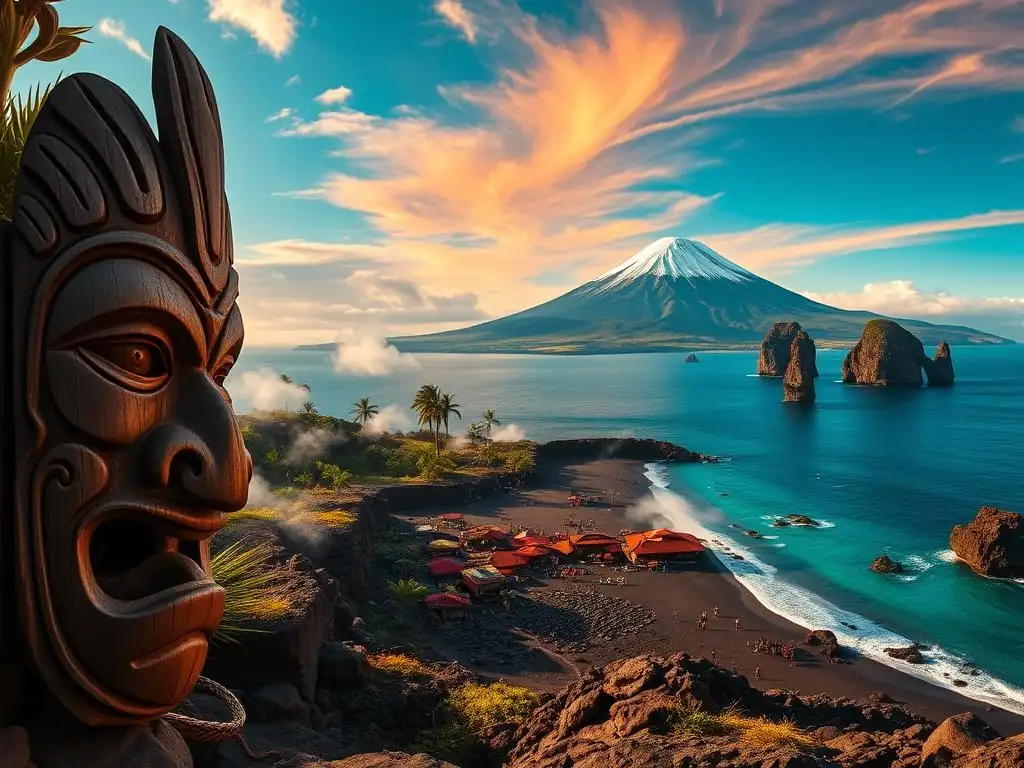
A recurring theme across Pacific volcano mythology is the dual nature of volcanoes as both sources of creation and destruction. Volcanoes are recognized for their capacity to reshape landscapes, create new landmasses, and provide fertile volcanic soils that support life. Simultaneously, they are acknowledged as forces of immense destructive power, capable of unleashing devastating eruptions that can obliterate settlements and alter entire ecosystems. This duality is reflected in the myths and legends, where volcanic deities and spirits often embody both creative and destructive aspects.
In creation myths, volcanic eruptions are frequently depicted as the birth pangs of islands or the primordial fires that shaped the world. The fertile volcanic soils are recognized as gifts from the volcanoes, supporting agriculture and sustaining life. However, the destructive potential of eruptions is equally emphasized in legends that recount the wrath of volcanic deities, the consequences of disrespect, and the devastation caused by major eruptions. This dualistic perception of volcanoes as both creators and destroyers is fundamental to understanding the complex relationship between Pacific cultures and their volcanic environments.
Volcanoes: Homes to Powerful Deities and Spirits
Another common thread in Pacific volcano mythology is the belief that volcanoes are dwelling places of powerful deities, spirits, or ancestral beings. This animistic worldview, prevalent throughout the Pacific, imbues natural features with spiritual significance, and volcanoes, with their dramatic and awe-inspiring nature, are particularly potent centers of spiritual power. These volcanic deities and spirits are often seen as controlling volcanic activity and other natural phenomena, demanding respect, offerings, and adherence to cultural protocols.
From Pele in Hawaii to Konohanasakuya-hime in Japan and the ancestral spirits of Maori volcanoes in New Zealand, the personification of volcanoes as spiritual entities is a consistent motif. These deities and spirits are not merely abstract concepts; they are active agents in the world, influencing events and interacting with humans. Myths and legends often detail how to appease these volcanic entities, how to seek their favor, and the consequences of disrespecting them. This belief system reinforces the sacred status of volcanoes and shapes cultural practices related to these powerful natural features.
Respecting Volcanoes in Pacific Cultures: An Importance
Given the perception of volcanoes as both powerful forces of nature and abodes of deities or spirits, respect for volcanoes is a paramount value in Pacific cultures. This respect manifests in various forms, including adherence to traditional protocols, offering of prayers and sacrifices, avoidance of taboo areas, and sustainable environmental practices. The myths and legends themselves often serve as moral lessons, emphasizing the importance of respecting volcanoes and the consequences of disrespect or arrogance.
Stories of misfortune befalling those who disrespect Pele by taking lava rocks from Kilauea, or legends of eruptions triggered by human wrongdoing in Indonesian folklore, all underscore the cultural imperative to treat volcanoes with reverence. Traditional practices, such as avoiding certain areas considered tapu in Maori culture or offering prayers to Konohanasakuya-hime at Mount Fuji, are concrete expressions of this respect. This cultural emphasis on respecting volcanoes is not merely a matter of superstition; it reflects a deep understanding of the power of nature and the need to live in harmony with the volcanic environment.
The Enduring Influence of Volcano Myths and Legends
Volcano Myths: Shaping Our Understanding of Volcanic Activity
While modern science provides a geological explanation for volcanic activity, Pacific volcano myths and legends continue to shape cultural understandings of these natural phenomena. These narratives, passed down through generations, offer a different kind of understanding, one that is rooted in cultural values, spiritual beliefs, and a deep connection to the land. Volcano myths are not simply replaced by scientific knowledge; they coexist and continue to influence how people perceive and respond to volcanic activity.
For communities living near active volcanoes, myths often provide a framework for coping with the uncertainty and potential dangers of eruptions. They offer explanations for why volcanoes erupt, what forces are at play, and how humans should interact with these powerful forces.
While scientific understanding can inform evacuation plans and hazard assessments, the cultural narratives provide a deeper sense of meaning and context, helping communities to make sense of their experiences and maintain cultural continuity in the face of natural events. The enduring relevance of volcano myths lies in their ability to integrate scientific understanding with cultural values and spiritual beliefs.
Myths and Volcanology: Bridging the Gap
Interestingly, there are instances where traditional volcano myths and legends contain elements that, when viewed through a modern lens, show a remarkable degree of observational accuracy about volcanic processes. While framed within a mythological context, some narratives seem to reflect an empirical understanding of volcanic phenomena, suggesting that generations of living in close proximity to volcanoes led to insightful observations that were then encoded into cultural stories. This intersection between myth and volcanology highlights the potential for bridging the gap between traditional knowledge and scientific understanding.
For example, some Polynesian myths describe volcanic eruptions in ways that, while metaphorical, seem to capture aspects of lava flows, pyroclastic flows, and volcanic gases. Indigenous knowledge systems often incorporate detailed observations of natural phenomena, and volcano myths may be a repository of such accumulated knowledge. Exploring the parallels between traditional narratives and scientific volcanology can not only enrich our understanding of cultural perspectives but also potentially offer valuable insights into long-term volcanic behavior and hazard assessment.
Preserving and Sharing Pacific Volcano Myths
Given the rich cultural heritage embedded in Pacific volcano myths and legends, preserving and sharing these narratives is of paramount importance. These stories are not just relics of the past; they are living cultural traditions that contribute to the identity and resilience of Pacific communities. Preservation efforts can take various forms, including documenting oral traditions, supporting cultural education programs, and promoting responsible tourism that respects cultural heritage. Sharing these myths with a wider audience can foster greater appreciation for the diverse ways in which humanity interacts with the natural world.
Museums, cultural centers, and educational institutions play a crucial role in preserving and sharing Pacific volcano myths. Digital platforms and online resources can also be used to disseminate these narratives to a global audience, ensuring that these valuable cultural traditions are not lost. By promoting awareness and appreciation of Pacific volcano myths and legends, we can contribute to the safeguarding of cultural heritage and foster a deeper understanding of the complex relationship between humans, volcanoes, and the environment.
Conclusion: The Rich Tapestry of Pacific Volcano Lore
The stories from the Ring of Fire, the Pacific volcano myths and legends, reveal a rich tapestry of cultural interpretations of volcanic activity. From the fiery goddess Pele to the sacred Mount Fuji and the Maori ancestral volcanoes, these narratives demonstrate the profound influence of volcanoes on Pacific cultures.
These myths are not merely fanciful tales; they are integral to cultural identity, spiritual beliefs, and the understanding of the relationship between humanity and the powerful forces of nature. The enduring power of these Pacific volcano myths and legends lies in their ability to connect us to the past, inform the present, and shape our understanding of the dynamic and awe-inspiring world of volcanoes.
Frequently Asked Questions
What are some common themes found in Pacific volcano myths and legends?
Many myths revolve around powerful deities inhabiting volcanoes, controlling their eruptions. They often link volcanic activity to human behavior or ancestral stories.
How do Pacific cultures typically view volcanoes?
Volcanoes are often seen as both sacred and destructive forces. They represent power, creation, and destruction, and are often tied to spiritual beliefs.
Can you give an example of a specific Pacific volcano myth?
In Hawaiian mythology, Pele is the goddess of fire and volcanoes, believed to reside in Kilauea. Her anger is said to cause eruptions and lava flows.
Do these myths and legends still hold relevance today?
Yes, they continue to influence cultural practices and local perspectives on volcanoes. They also contribute to risk perception and preparedness.
How can understanding these myths help us better understand volcanoes?
Studying these stories provides insight into how past generations interpreted volcanic activity, offering valuable historical and cultural context to scientific observations.
Final Reflection: Echoes of Fire and Legend
The stories we've explored, born from the fiery heart of the Ring of Fire, are not just ancient tales; they are living testaments to humanity's enduring relationship with the raw power of nature. These myths, passed down through generations, continue to shape our understanding of the world, reminding us of the forces that both create and destroy. They resonate even now, in a world grappling with climate change and geological uncertainty, offering a framework for understanding the unpredictable.
The influence of these volcanic myths extends far beyond the scientific realm, deeply embedding itself in the cultural fabric of Pacific communities. These stories, often dismissed as mere folklore, are actually profound expressions of resilience, adaptation, and spiritual connection to the land. They remind us that we are not separate from nature, but intrinsically linked to its rhythms and cycles. We do not inherit the earth from our ancestors; we borrow it from our children.
This ancient wisdom, echoed in many Pacific cultures, underscores the responsibility we have to protect the landscapes that have inspired these powerful narratives.
As we close this exploration of Pacific volcano myths and legends, I invite you to consider your own relationship with the natural world. How do the stories you tell, and the stories you hear, shape your perception of the planet? Let the echoes of fire and legend inspire you to cultivate a deeper respect for the earth, and to become a steward of its future. Let us remember that the power of storytelling can ignite understanding, foster empathy, and ultimately, help us navigate the challenges that lie ahead.
Okay, I'm ready to craft a compelling Call to Action (CTA) for the end of your article "Stories from the Ring of Fire: Volcano Myths Across the Pacific" on volcanoexplorers.org. Here it is:
Unearth Your Inner Explorer: Ignite Your Passion for Volcanic Tales!
Thank you for joining us on this journey through the captivating myths surrounding the Ring of Fire! We hope you've discovered new appreciation for the power and mystery of these volcanic landscapes and the stories they inspire. Now, it's time to bring these legends to life.
Here are a few ways you can continue your exploration:
- Become a storyteller! Share your favorite volcano myth or legend from your own culture with friends and family. Pass on the knowledge and keep these tales alive.
- Dive deeper: Research a volcano near you and uncover the myths associated with it. You might be surprised by what you find!
- Contribute to the community: Share your findings or favorite myths with us on the Volcano Explorers forum. Let's learn together!
Which volcano myth sparked your imagination the most, and how will you share it with the world?