
The Secret Lives of Medieval Volcanoes: Dormancy, Eruption, and Reawakening

Welcome!
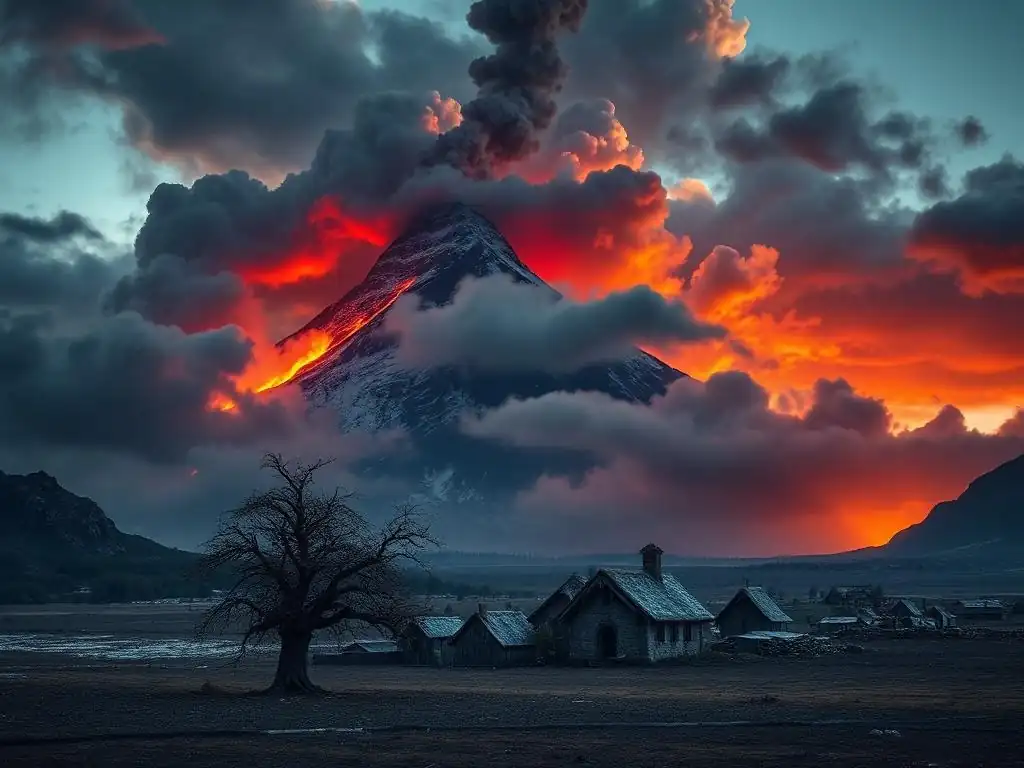
Prepare to journey into the Earth's fiery heart. At Volcano Explorers, we unveil the secrets of these geological titans, and today, we're turning back the clock. Ever wondered what medieval volcanoes were really doing? Forget dusty chronicles; we're digging into the dormancy, eruption, and reawakening of these slumbering giants, revealing a history more explosive than you imagined. What secrets lie buried beneath centuries of ash? Let's unearth them together...
- Introduction: Unveiling the Eruption History of Medieval Volcanoes
- Dormancy: The Sleeping Giants of the Middle Ages
- Eruption: When Medieval Volcanoes Awoke
- Reawakening: The Cycle of Volcanic Activity in the Middle Ages
- Medieval Volcanoes Eruption History: A Global Perspective
- Societal Impacts of Medieval Volcanic Eruptions
- Lessons Learned from Medieval Volcanoes for Modern Volcanology
- Conclusion: The Enduring Legacy of Medieval Volcanoes
-
Frequently Asked Questions
- What is meant by "medieval volcanoes eruption history"?
- Why is it important to study medieval volcanic eruptions?
- What types of information can be found regarding medieval volcanic eruptions?
- How did medieval societies cope with volcanic eruptions?
- Where can I find real-time updates on volcanic activity today?
- Final Reflection: Echoes of Fire and Time
- Ignite Your Inner Volcanologist: Unearthing the Secrets of Medieval Volcanoes!
Introduction: Unveiling the Eruption History of Medieval Volcanoes
Exploring the Forgotten Eruptions of the Medieval Period
The Medieval period, spanning roughly from the 5th to the 15th century, often evokes images of knights, castles, and burgeoning empires. However, beneath the surface of human history, the Earth itself was undergoing dramatic transformations, marked by the fiery breath of medieval volcanoes. While historical accounts often focus on wars and political intrigue, the eruption history of medieval volcanoes played a silent yet powerful role in shaping societies and environments.
Many of these eruptions, occurring in times before sophisticated scientific monitoring, have been overlooked or underestimated in their significance. Exploring these forgotten eruptions allows us to uncover a hidden dimension of the medieval world, where natural forces dramatically intersected with human lives.
Delving into the medieval period’s volcanic activity requires us to piece together fragmented evidence. Unlike modern volcanology, which benefits from real-time monitoring and advanced geological techniques, understanding medieval volcanic events relies heavily on historical chronicles, paleoclimatic data gleaned from ice cores and tree rings, and geological studies of volcanic deposits. This interdisciplinary approach is crucial for reconstructing the timeline of medieval volcanoes eruption history and understanding their true impact. By examining these diverse sources, we can begin to illuminate the significant, yet often unacknowledged, role these geological events played during the Middle Ages.
Why Study Medieval Volcanic Activity?
Studying medieval volcanic activity is not merely an academic exercise in historical geology; it holds profound relevance for our understanding of present-day volcanic hazards and climate dynamics. The medieval period witnessed several powerful eruptions that had global consequences, offering valuable insights into the long-term behavior of volcanoes and their potential for widespread impact. By analyzing the eruption history of medieval volcanoes, we can gain a better understanding of volcanic cycles, eruption triggers, and the complex interactions between volcanic activity and climate systems.
Furthermore, examining the societal responses to medieval volcanic eruptions provides crucial lessons for contemporary disaster preparedness. Medieval societies, lacking the technological advantages we have today, developed resilience strategies and coping mechanisms in the face of volcanic crises.
Understanding how they adapted to and were affected by these natural disasters can inform modern approaches to risk management and community resilience in volcanically active regions. The study of medieval volcanoes eruption history, therefore, offers a unique perspective that bridges the past and the present, enhancing our ability to mitigate volcanic risks and build more resilient societies in the face of future eruptions.
Dormancy: The Sleeping Giants of the Middle Ages
Recognizing Signs of Dormancy in Medieval Volcanoes
Dormancy in medieval volcanoes, much like today, represented a period of apparent inactivity, a deceptive calm before a potential reawakening. Recognizing signs of dormancy during the medieval era is challenging due to the limited scientific instrumentation of the time. People living near these volcanoes likely relied on observable phenomena, such as the absence of recent eruptions, decreased fumarolic activity (steam and gas vents), and the stability of the volcanic edifice itself.
The absence of strong earthquakes in the immediate vicinity of a volcano might also have been interpreted as a sign of dormancy. However, these were largely empirical observations, lacking the sophisticated measurements of ground deformation, gas emissions, and seismic activity that modern volcanologists employ.
Geologically, dormancy is characterized by the accumulation of magma beneath the Earth's surface, a process that can occur over decades, centuries, or even millennia. During periods of dormancy, the internal pressure within the magma chamber gradually builds. While outward signs might be minimal, subtle changes could be occurring beneath the surface.
For medieval populations, the long periods of quietude could have fostered a sense of security, perhaps leading to a diminished awareness of the latent volcanic threat. Understanding how medieval societies perceived and interpreted these periods of volcanic quiescence is crucial for grasping their vulnerability when these sleeping giants eventually reawakened.
Understanding the Geological Context of Dormant Volcanoes During the Medieval Era
The geological context of dormant volcanoes during the medieval era was shaped by long-term tectonic processes and the specific volcanic systems themselves. Many of the world's active volcanoes are located along plate boundaries, where the Earth's tectonic plates converge, diverge, or slide past each other.
During the medieval period, as today, these plate tectonic forces were the fundamental drivers of magma generation and volcanic activity. Subduction zones, where one plate slides beneath another, are particularly associated with explosive volcanism, and many medieval volcanoes were situated in such settings, including those in the Pacific Ring of Fire and the Mediterranean region.
Understanding the specific geological setting of a medieval volcano is crucial for interpreting its dormancy and eruption history. For instance, volcanoes in Iceland are associated with the Mid-Atlantic Ridge, a divergent plate boundary where new crust is constantly being formed. This context influences the type of eruptions and the overall volcanic behavior.
Similarly, volcanoes in Italy, like Mount Vesuvius and Mount Etna, are linked to the complex tectonic interactions in the Mediterranean, leading to different styles of volcanism. The underlying geological framework dictated the potential for magma supply, the pathways for magma ascent, and ultimately, the characteristics of both dormant periods and eruptive phases of medieval volcanoes.
Case Study: Hekla in Medieval Iceland
Hekla, one of Iceland's most active volcanoes, provides an intriguing case study of dormancy and eruption in the medieval period. Known in Icelandic sagas as the "Gateway to Hell," Hekla was undoubtedly a source of both fear and fascination for medieval Icelanders. While historical records of eruptions before the 12th century are scarce, geological evidence indicates that Hekla was active during the early medieval period.
After a period of presumed dormancy, Hekla dramatically reawakened in 1104 CE with a powerful explosive eruption, known as H1104. This eruption was one of the largest in Iceland’s history, producing a vast tephra fallout that significantly impacted agriculture and settlements across southern Iceland.
The dormancy preceding the 1104 eruption likely lasted for several decades, if not centuries. During this time, the volcano would have exhibited minimal signs of unrest, perhaps leading early Icelandic settlers to underestimate its potential for violent eruption. The sudden and devastating nature of the H1104 eruption underscores the challenge of recognizing and predicting volcanic reawakening, even for a volcano with a known history of activity. The impact of this medieval eruption on Icelandic society was profound, highlighting the vulnerability of medieval populations to volcanic hazards and the long-lasting consequences of even periods of apparent volcanic dormancy.
Eruption: When Medieval Volcanoes Awoke
Types of Volcanic Eruptions During the Medieval Period
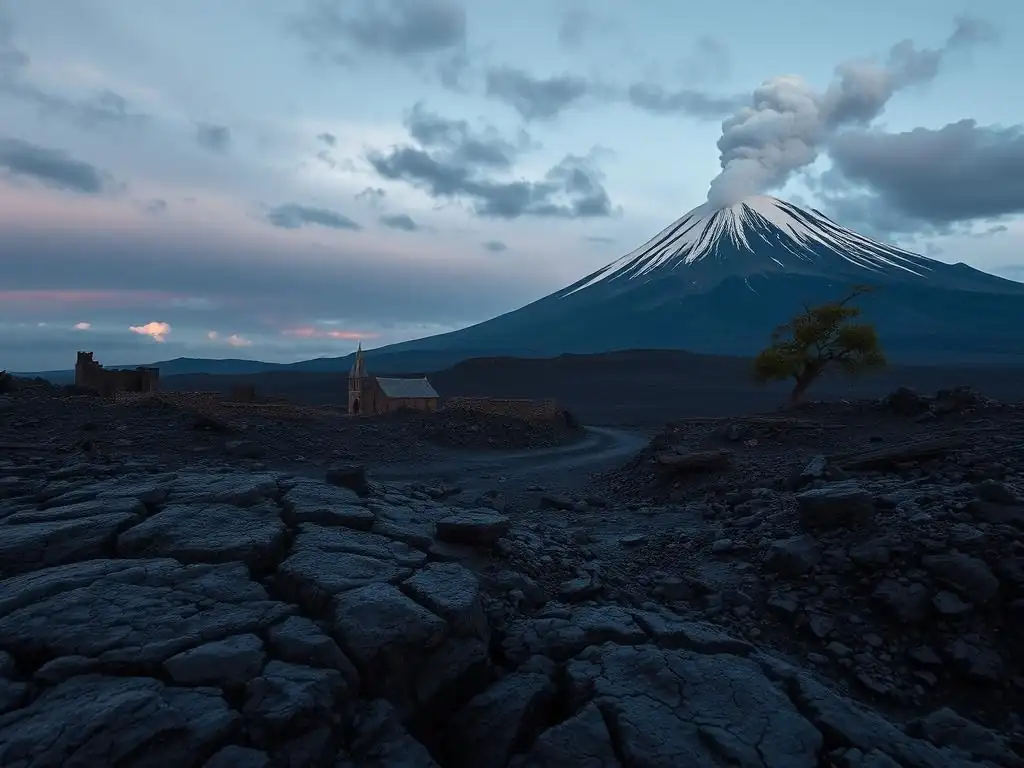
Medieval volcanoes, like their modern counterparts, exhibited a diverse range of eruption types, each with distinct characteristics and impacts. Effusive eruptions, characterized by the slow outpouring of lava flows, were common, particularly in regions like Iceland and Hawaii. These eruptions, while less immediately destructive than explosive events, could still reshape landscapes, bury settlements, and disrupt agriculture over time. Medieval accounts from Iceland, for example, describe lava flows engulfing farms and altering river courses.
Explosive eruptions, on the other hand, posed a more immediate and catastrophic threat. These eruptions, driven by the rapid release of gas-rich magma, could produce towering eruption columns, pyroclastic flows (hot, fast-moving currents of gas and volcanic debris), and widespread tephra (ash and volcanic rock fragments) fallout.
The eruption of Mount Vesuvius in 79 CE, although slightly predating the medieval period, serves as a stark reminder of the devastating potential of explosive eruptions, which undoubtedly occurred throughout the Middle Ages as well. Variations in magma composition, gas content, and the surrounding geological environment determined the specific type and intensity of medieval volcanic eruptions.
Documenting Medieval Volcanic Eruptions: Historical Records and Geological Evidence
Documenting medieval volcanic eruptions relies on a combination of historical records and geological evidence. Historical chronicles, annals, and sagas from the medieval period sometimes contain descriptions of volcanic events, although these accounts are often intertwined with religious interpretations and may lack precise scientific detail.
For example, medieval European chronicles occasionally mention "darkening skies" or "rains of ash," which can be indicative of volcanic eruptions, even if not explicitly identified as such. Icelandic sagas, with their rich tradition of oral and written history, provide more detailed accounts of eruptions, such as those of Hekla and Katla, including descriptions of tephra fallout and lava flows.
Geological evidence provides a more objective and quantifiable record of medieval volcanic eruptions. Volcanic deposits, such as lava flows, tephra layers, and pyroclastic flow deposits, can be analyzed to determine the age, magnitude, and characteristics of past eruptions. Tephrochronology, the dating of tephra layers, is a particularly powerful tool for reconstructing medieval volcanoes eruption history.
By correlating tephra layers found in ice cores, lake sediments, and soil profiles with historical records, scientists can create a more comprehensive picture of medieval volcanic activity and its environmental and societal impacts. The combination of historical and geological approaches is essential for piecing together the fragmented puzzle of medieval volcanic eruptions.
The Impact of Medieval Eruptions on Climate and Environment
Medieval volcanic eruptions, particularly large explosive events, had significant impacts on climate and environment. Volcanic eruptions inject vast quantities of sulfur dioxide gas into the stratosphere, where it reacts with water vapor to form sulfate aerosols. These aerosols reflect incoming solar radiation back into space, leading to a temporary cooling of the Earth's surface. Large medieval eruptions, such as the Samalas eruption of 1257, are believed to have caused periods of global cooling, impacting growing seasons, and potentially contributing to famines and social unrest.
The environmental consequences of medieval eruptions extended beyond climate cooling. Tephra fallout could blanket landscapes, damaging vegetation, contaminating water sources, and disrupting agriculture. Acid rain, formed from volcanic gases, could acidify lakes and soils, further harming ecosystems. In Iceland, for instance, tephra layers from medieval eruptions have been shown to have caused soil erosion and long-term ecological changes. Furthermore, large eruptions could trigger lahars (volcanic mudflows) and landslides, reshaping landscapes and posing immediate hazards to settlements. The environmental impact of medieval volcanoes was multifaceted and could have long-lasting consequences for both natural ecosystems and human societies.
Case Study: The Samalas Eruption (1257) and its Consequences
The Samalas eruption of 1257, originating from the Samalas volcano on Lombok Island in Indonesia, stands as one of the largest and most impactful volcanic events of the medieval period. While the volcano itself was unknown to the medieval European world, its eruption had global consequences, particularly evident in climate records. Ice core samples from both Greenland and Antarctica show a massive spike in sulfate aerosols dating to around 1257-1258, indicating a major volcanic injection into the stratosphere. The magnitude of this sulfate spike surpasses even that of the well-known Krakatoa eruption of 1883.
The Samalas eruption is estimated to have been a Volcanic Explosivity Index (VEI) 7 event, ranking among the largest eruptions of the Holocene epoch. Historical records from Lombok, rediscovered in the 20th century, detail the catastrophic destruction of the Pamatan kingdom by a massive eruption, now identified as Samalas. The eruption triggered a period of global cooling, with tree ring data indicating widespread temperature anomalies in the years following 1257.
This cooling is believed to have contributed to crop failures and famines in various parts of the world, potentially exacerbating social and economic stresses in medieval societies. The Samalas eruption serves as a powerful example of how a single medieval volcanic event, even from a remote location, could have far-reaching and devastating global impacts.
Reawakening: The Cycle of Volcanic Activity in the Middle Ages
Factors Contributing to Volcanic Reawakening in Medieval Times
Volcanic reawakening, the transition from a dormant state to a period of unrest and potential eruption, is driven by complex geological processes. In medieval times, as today, these processes were primarily related to the movement of magma within the Earth's crust. The accumulation of magma in a magma chamber beneath a volcano increases pressure, eventually overcoming the strength of the surrounding rocks. This pressure buildup can be triggered by various factors, including changes in tectonic stress, the influx of new magma from deeper sources, or the release of volatile gases within the magma chamber.
Tectonic activity played a crucial role in volcanic reawakening during the medieval period. Changes in plate motion, earthquakes along fault lines, and adjustments in crustal stress could all influence magma pathways and trigger eruptions. Furthermore, the internal dynamics of volcanic systems themselves contributed to reawakening. Crystallization within the magma chamber, for example, can increase gas pressure and promote magma ascent. The specific combination of geological factors leading to volcanic reawakening varied from volcano to volcano, making each reawakening event a unique and complex phenomenon.
Predicting and Interpreting Signs of Impending Eruptions in Medieval Volcanoes
Predicting and interpreting signs of impending eruptions in medieval volcanoes was a significant challenge for societies of the time. Lacking modern scientific instrumentation, medieval populations relied on observable precursory phenomena, often interpreted through a lens of folklore and religious belief. Increased fumarolic activity, changes in hot spring behavior, and unusual animal behavior might have been recognized as potential warning signs by astute observers. Strong earthquakes, particularly those occurring in volcanic regions, would have been a more direct and alarming indicator of potential volcanic unrest.
However, distinguishing between normal geological activity and true pre-eruptive signals was difficult. Minor earthquakes are common in volcanic areas, and not all lead to eruptions. Changes in fumarole activity can be subtle and easily overlooked. Medieval societies often lacked a clear understanding of the underlying causes of volcanic phenomena, making accurate prediction and interpretation of pre-eruptive signs a matter of chance and local knowledge. The limited capacity for prediction contributed to the vulnerability of medieval populations when volcanoes reawakened, often with little or no advance warning in a way we understand today.
The Role of Plate Tectonics in Medieval Volcanic Reawakening
Plate tectonics played a fundamental role in volcanic reawakening during the medieval period. The movement and interaction of tectonic plates are the ultimate driving force behind magma generation and volcanism. At subduction zones, the descent of one plate beneath another releases water and other volatiles into the mantle, lowering the melting point of mantle rocks and generating magma. At mid-ocean ridges, the separation of plates allows for the upwelling of mantle material and the formation of new crust, often accompanied by volcanic activity.
Changes in plate tectonic regimes over time could influence the frequency and intensity of volcanic reawakening. Increased rates of plate convergence or divergence, shifts in plate boundaries, or the initiation of new tectonic features could all alter magma supply and trigger volcanic cycles. The long-term tectonic context of a volcanic region determined the overall potential for volcanic activity and the patterns of dormancy and reawakening observed during the medieval period. Understanding the interplay between plate tectonics and volcanic systems is crucial for comprehending the long-term eruption history of medieval volcanoes.
Case Study: Mount Etna - A Cycle of Dormancy, Eruption, and Reawakening
Mount Etna, located in Sicily, Italy, provides a compelling example of a volcano exhibiting a cycle of dormancy, eruption, and reawakening throughout the medieval period. Etna is one of Europe's most active volcanoes, situated in a complex tectonic setting where the African plate subducts beneath the Eurasian plate. Throughout the Middle Ages, Etna experienced numerous eruptions, interspersed with periods of relative quiescence. Historical chronicles and geological evidence document a continuous history of activity.
During periods of dormancy, Etna might have exhibited reduced fumarolic activity and a lack of significant eruptive events. However, the volcano never truly "slept" for extended periods. Reawakening episodes were often marked by increased seismic activity, escalating gas emissions, and eventually, effusive or explosive eruptions.
The medieval period witnessed both types of eruptions at Etna, with lava flows impacting settlements on its flanks and explosive eruptions producing ash plumes that reached distant regions. Etna's continuous cycle of dormancy, eruption, and reawakening during the Middle Ages highlights the dynamic nature of volcanic systems and the ongoing volcanic hazard faced by populations living in its vicinity.
Medieval Volcanoes Eruption History: A Global Perspective
Volcanic Activity in Europe During the Medieval Period
Volcanic activity in Europe during the medieval period was concentrated in specific regions, primarily Iceland, Italy, and the Azores. Iceland, located on the Mid-Atlantic Ridge, was intensely volcanically active, with numerous eruptions from volcanoes like Hekla, Katla, and Grímsvötn. These eruptions significantly impacted early Icelandic settlements and are well-documented in sagas and geological records.
Italy, with volcanoes like Mount Etna, Vesuvius, and Stromboli, experienced ongoing volcanic activity throughout the Middle Ages. Etna, in particular, was frequently erupting, posing a persistent hazard to nearby populations. The Azores, an archipelago in the Atlantic, also experienced volcanic eruptions during the medieval period, although documentation is less comprehensive than for Iceland and Italy.
Other parts of Europe experienced less frequent but still notable volcanic activity. The Eifel region in Germany, although generally considered dormant in the medieval period, had experienced significant volcanism in earlier geological times and potentially minor activity that may have been perceived as supernatural phenomena. Overall, Europe's medieval volcanoes eruption history was characterized by concentrated activity in Iceland and the Mediterranean region, shaping landscapes, impacting societies, and contributing to the global volcanic record of the era.
Asia witnessed significant volcanic activity during the medieval period, particularly in regions like Indonesia, Japan, and Kamchatka. Indonesia, situated along the Pacific Ring of Fire, is home to numerous active volcanoes. The Samalas eruption of 1257, originating from Indonesia, is a prime example of a massive medieval Asian eruption with global climate consequences.
Other Indonesian volcanoes, such as Krakatoa and Tambora, likely also experienced eruptions during the Middle Ages, although precise dating for all events is still under investigation. Japan, also located along the Pacific Ring of Fire, has a long history of volcanism. Medieval Japanese records, while often focused on societal and political events, may contain references to volcanic eruptions, and geological studies are uncovering more details about medieval Japanese volcanoes eruption history.
Kamchatka, in far eastern Russia, is another highly volcanic region in Asia. While historical records from medieval Kamchatka are sparse, geological evidence indicates significant volcanic activity during this period. Tephra layers from Kamchatkan volcanoes have been found in ice cores and lake sediments, providing a record of eruptions that impacted the North Pacific region. Asian medieval volcanoes eruption history is crucial for understanding the global picture of volcanic activity during this era, particularly given the scale and impact of eruptions like Samalas.
Volcanic Activity in the Americas During the Medieval Period
Volcanic activity in the Americas during the medieval period was widespread, extending from North to South America. In North America, the Cascade Range volcanoes, including Mount Rainier, Mount Shasta, and Mount St. Helens, were active during the Middle Ages. Geological studies reveal evidence of eruptions from these volcanoes, with tephra layers and lava flows dating to this period. In Central America, volcanic activity was particularly intense, driven by the subduction of the Cocos plate beneath the Caribbean plate. Volcanoes in present-day Mexico, Guatemala, and Costa Rica experienced significant eruptions, impacting Mayan and other pre-Columbian civilizations.
South America, with the Andes Mountains volcanic arc, also saw substantial volcanic activity during the medieval period. Volcanoes in Chile, Peru, and Ecuador erupted, leaving geological records and potentially influencing pre-Incan and Incan societies. The eruption of El Chichón in Mexico around 1260 CE, though dating is still refined, is considered a significant medieval eruption in the Americas. The Americas' medieval volcanoes eruption history is increasingly being recognized as an important component of global volcanic activity during the Middle Ages, with ongoing research uncovering more details about these events and their impacts on both climate and indigenous populations.
Societal Impacts of Medieval Volcanic Eruptions
Impact on Agriculture and Food Supply
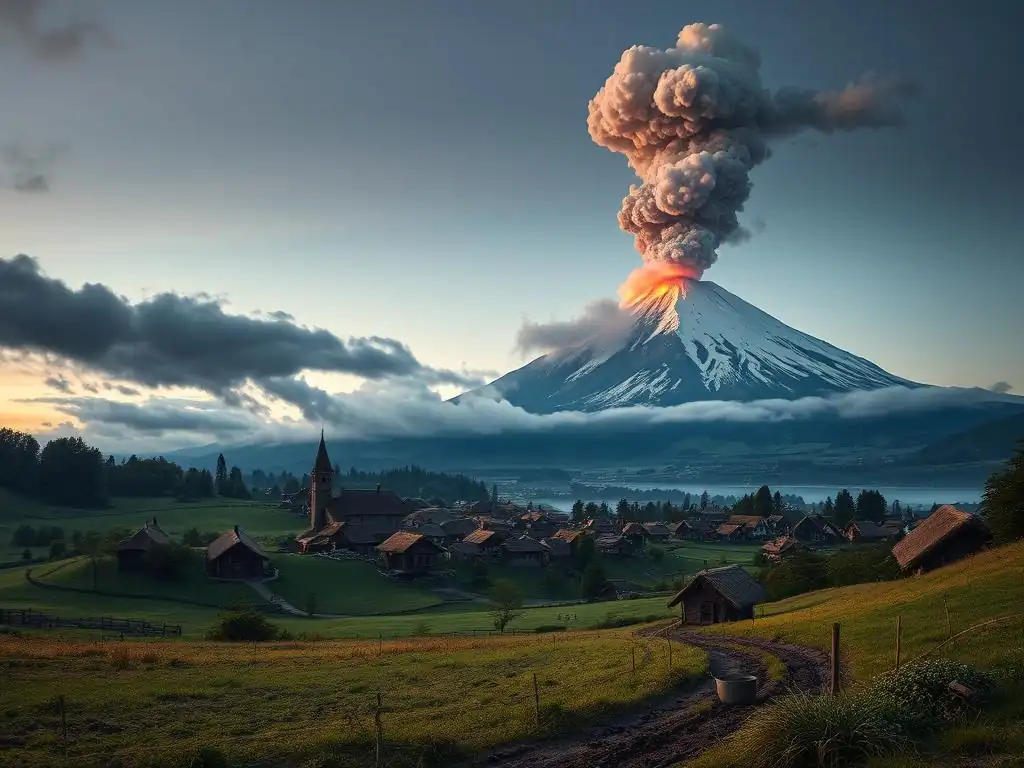
Medieval volcanic eruptions had profound impacts on agriculture and food supply, often leading to widespread famine and social disruption. Tephra fallout, even in relatively thin layers, could contaminate soil, damage crops, and reduce agricultural productivity for years. Volcanic ash can physically smother plants, block sunlight, and contaminate water sources essential for irrigation and livestock. Acid rain, associated with volcanic gases, could further damage vegetation and acidify soils, exacerbating agricultural losses.
Large eruptions, like the Samalas eruption of 1257, caused global cooling, shortening growing seasons and leading to crop failures across vast regions. Medieval societies, already vulnerable to food shortages due to limited storage capacity and transportation infrastructure, were particularly susceptible to the agricultural impacts of volcanic eruptions. Famines resulting from volcanic events could trigger social unrest, population displacement, and economic hardship, highlighting the critical link between medieval volcanoes eruption history and societal stability.
Impact on Population and Migration
Medieval volcanic eruptions directly and indirectly impacted population and migration patterns. Immediate hazards, such as pyroclastic flows, lahars, and lava flows, could cause direct fatalities and force the abandonment of settlements in the vicinity of erupting volcanoes. Tephra fallout, while less immediately lethal, could render land uninhabitable for extended periods, leading to displacement and migration. The long-term decline in agricultural productivity following major eruptions could also drive populations to migrate in search of more fertile lands and better living conditions.
Historical records from Iceland, for example, document instances of farm abandonment and population shifts following major medieval eruptions. In regions affected by global cooling after large eruptions, famines and disease outbreaks could further decimate populations and trigger migration. Volcanic eruptions acted as a significant environmental stressor that could reshape population distributions, influence migration flows, and contribute to societal changes in medieval times.
Impact on Medieval Culture and Beliefs
Medieval volcanic eruptions were often interpreted through the lens of medieval culture and beliefs, profoundly shaping religious, artistic, and literary expressions. Lacking scientific understanding of volcanic phenomena, medieval societies often attributed eruptions to divine wrath, supernatural forces, or demonic activity. Volcanoes themselves were sometimes viewed as gateways to the underworld or places inhabited by mythical beings. Eruptions were seen as omens, punishments for sins, or signs of apocalyptic events.
Medieval chronicles and religious texts frequently describe volcanic eruptions in dramatic and symbolic terms, emphasizing their destructive power and terrifying nature. Artistic representations of volcanoes, though less common than in later periods, sometimes reflect these cultural interpretations. Folk tales and legends often incorporated volcanic imagery, reflecting the deep-seated fear and awe that volcanoes inspired. Medieval volcanoes eruption history, therefore, not only had physical impacts but also significantly shaped cultural narratives and belief systems.
The Role of Volcanic Activity in Shaping Medieval History
Volcanic activity played a more significant role in shaping medieval history than is often acknowledged. Large eruptions, like the Samalas eruption, triggered global climate anomalies that likely contributed to famines, disease outbreaks, and social unrest in various parts of the world. These environmental stresses could have exacerbated existing societal vulnerabilities and potentially influenced political and economic developments. For example, some historians have linked the "Year Without a Summer" following the Tambora eruption of 1815 to social and political upheavals in Europe, suggesting that similar connections may have existed for medieval eruptions.
Regional volcanic activity, particularly in areas like Iceland and Italy, directly shaped local histories. Volcanic eruptions influenced settlement patterns, agricultural practices, and economic activities. The need to adapt to volcanic hazards and recover from eruptions fostered resilience and innovation in some medieval societies. While volcanic activity was not the sole determinant of medieval historical trajectories, it acted as a significant environmental factor that interacted with human societies in complex and often profound ways, contributing to the broader tapestry of medieval history.
Lessons Learned from Medieval Volcanoes for Modern Volcanology
Applying Historical Data to Modern Volcanic Hazard Assessment
Historical data from medieval volcanoes eruption history provides valuable insights for modern volcanic hazard assessment. Analyzing the frequency, magnitude, and types of eruptions that occurred during the medieval period helps to establish long-term volcanic behavior patterns. This historical perspective is crucial for understanding the potential range of future volcanic activity and for developing realistic hazard scenarios. For volcanoes with long repose periods, historical records may be the only source of information about their potential for large eruptions.
Medieval eruption records, combined with geological studies, can help refine volcanic hazard maps and inform land-use planning in volcanically active regions. Understanding the spatial distribution of tephra fallout from past medieval eruptions, for example, can help delineate areas at risk from future ashfall. Historical accounts of the societal impacts of medieval eruptions can also inform risk communication strategies and emergency preparedness plans, ensuring that communities are better prepared for future volcanic crises.
Improving Volcanic Monitoring Techniques Based on Medieval Eruption Patterns
Studying medieval volcanoes eruption history can contribute to the improvement of modern volcanic monitoring techniques. By analyzing the precursory phenomena associated with past medieval eruptions, as documented in historical records or inferred from geological evidence, volcanologists can refine their understanding of eruption triggers and precursors. This knowledge can be used to develop more effective monitoring strategies and improve early warning systems.
For example, if historical accounts indicate that certain types of seismic activity or gas emission changes preceded medieval eruptions at a particular volcano, modern monitoring efforts can be focused on detecting similar signals. Analyzing the long-term patterns of dormancy and reawakening observed in medieval volcanoes can also help volcanologists better assess the current state of volcanic systems and anticipate potential future activity. The insights gleaned from medieval volcanoes eruption history can complement modern monitoring data and enhance our ability to detect and forecast volcanic eruptions.
Understanding Long-Term Volcanic Cycles and Their Implications
Medieval volcanoes eruption history provides a long-term perspective on volcanic cycles and their implications for future activity. Volcanoes often exhibit cyclical behavior, with periods of frequent eruptions followed by longer periods of quiescence. Understanding these long-term cycles is crucial for assessing the overall volcanic hazard and for predicting the likelihood of future eruptions. Medieval eruption records, spanning centuries, offer a valuable dataset for studying long-term volcanic patterns that may not be apparent from shorter-term monitoring data.
Analyzing medieval volcanoes eruption history can help identify potential periodicities or trends in volcanic activity. This information can be used to develop probabilistic volcanic hazard assessments, estimating the likelihood of eruptions of different magnitudes over various time scales. Understanding long-term volcanic cycles is also important for assessing the potential for climate impacts from volcanic eruptions. By studying medieval volcanoes eruption history, we can gain a deeper appreciation of the long-term dynamics of volcanic systems and their potential influence on both geological and human timescales.
Conclusion: The Enduring Legacy of Medieval Volcanoes
The Importance of Continued Research on Medieval Volcanic Activity
Continued research on medieval volcanic activity is of paramount importance for both historical and scientific reasons. Further investigation into medieval volcanoes eruption history will refine our understanding of past volcanic events, their environmental impacts, and their societal consequences. Improved dating techniques, more detailed geological studies, and the discovery of new historical records will all contribute to a more complete and accurate picture of medieval volcanism.
Interdisciplinary research, combining volcanology, history, archaeology, and paleoclimatology, is essential for unlocking the full potential of medieval volcanoes as a window into Earth's past and present. Continued research will not only enhance our knowledge of medieval volcanoes eruption history but also provide valuable insights for improving volcanic hazard assessment, monitoring techniques, and our understanding of long-term volcanic cycles. The secrets still held within the layers of medieval volcanic deposits and historical archives offer a rich and largely untapped resource for advancing volcanology and related fields.
Connecting the Past to the Present: Understanding Volcanic Risks Today
Connecting the past to the present through the study of medieval volcanoes is crucial for understanding volcanic risks today. Medieval volcanoes eruption history provides a long-term perspective on volcanic hazards, demonstrating the potential for large and impactful eruptions that can have global consequences. By learning from the past, we can better prepare for future volcanic crises and mitigate the risks posed by active volcanoes around the world.
The lessons learned from medieval societal responses to volcanic eruptions can inform modern disaster preparedness strategies and community resilience building. Understanding how medieval societies adapted to and were affected by volcanic events can help us develop more effective risk communication, evacuation plans, and long-term recovery strategies. Medieval volcanoes eruption history is not just a story of the past; it is a valuable source of knowledge that can help us build safer and more resilient societies in the face of ongoing volcanic hazards in the 21st century and beyond.
Frequently Asked Questions
What is meant by "medieval volcanoes eruption history"?
This refers to the documented volcanic eruptions that occurred during the medieval period, roughly between the 5th and 15th centuries. It explores the history and impact of these eruptions.
Why is it important to study medieval volcanic eruptions?
Studying medieval eruptions helps us understand long-term volcanic behavior and improve our ability to predict future eruptions. It also shows how past societies were impacted by volcanic events.
What types of information can be found regarding medieval volcanic eruptions?
Historical records, such as written accounts and archaeological evidence, provide insights into the timing, intensity, and consequences of medieval eruptions. Ice core samples also offer valuable data.
How did medieval societies cope with volcanic eruptions?
Responses varied greatly depending on the eruption's severity and location. Some communities relocated entirely, while others developed strategies for coexisting with volcanic activity.
Where can I find real-time updates on volcanic activity today?
Websites like VolcanoExplorers.org offer real-time updates on volcanic activity worldwide. Many geological surveys also provide current monitoring data.
Okay, here's a final reflection tailored for your article "The Secret Lives of Medieval Volcanoes: Dormancy, Eruption, and Reawakening," optimized for the keyword "medieval volcanoes eruption history":
Final Reflection: Echoes of Fire and Time
The exploration of medieval volcanoes eruption history reveals more than just geological events; it unveils a tapestry woven with human resilience, adaptation, and a constant negotiation with the raw power of nature. Understanding these past eruptions provides crucial context for assessing present-day volcanic risks and underscores the enduring relationship between humanity and the volatile Earth beneath our feet.
The study of these ancient eruptions has profoundly shaped our understanding of long-term volcanic behavior, influencing modern hazard mitigation strategies. Personally, delving into the records of these events has instilled a deep respect for the forces that have shaped our planet and the ingenuity of past societies in coping with them. Those who cannot remember the past are condemned to repeat it.
- George Santayana. This quote resonates deeply when considering the lessons learned from medieval volcanic eruptions and their relevance to our preparedness today.
As we close this chapter on the secret lives of medieval volcanoes, let us carry forward a renewed appreciation for the Earth's dynamic nature and the importance of historical knowledge. Consider how the lessons gleaned from these past eruptions can inform your own understanding of risk, resilience, and the interconnectedness of human history and the natural world. Let the echoes of fire and time inspire you to advocate for informed decision-making and proactive measures in the face of future volcanic challenges.
Ignite Your Inner Volcanologist: Unearthing the Secrets of Medieval Volcanoes!
Thanks for joining us on this journey into the fiery heart of medieval volcanic activity! We hope you've gained a deeper appreciation for the profound impact these geological giants had on history and continue to have on our planet. Ready to delve even deeper?
Here's how you can continue your volcanic adventure:
- Share your family history connected to a historical volcanic event. We are building a global database to preserve these stories.
- Explore our interactive map of medieval volcanic eruptions and discover the hidden stories behind each event. What will you learn?
- Challenge a friend to our 'Medieval Volcano Trivia Challenge' quiz on our social channels and share your score – you might even spark their interest in these fiery mountains!
What untold story of medieval volcanic impact will you unearth and share with the world?