
The Minoan Eruption: A Volcanic Event of Epic Proportions

Welcome to Volcano Explorers!
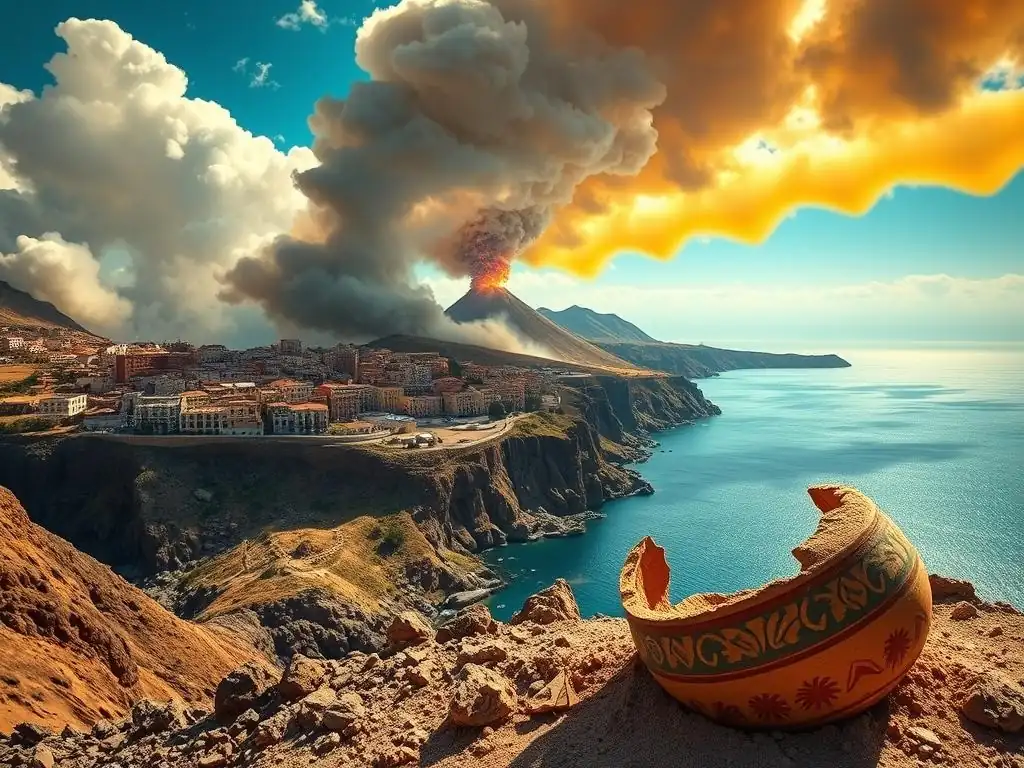
Prepare to be captivated by the raw power and untamed beauty of Earth's fiery giants. Have you ever wondered how a single volcanic event could ripple through history, shaping civilizations and leaving an indelible mark on the world? Today, we delve into one such event: the Minoan eruption, exploring its historical significance and the devastating impact it had on the ancient world. Uncover the secrets buried beneath the ash and discover the epic proportions of this cataclysmic event. Are you ready to journey back in time and witness the fury of Thera?
- Introduction to the Minoan Eruption and its Historical Significance
- Understanding the Minoan Eruption: A Deep Dive
- The Minoan Eruption Sequence: A Step-by-Step Breakdown
- The Historical Significance of the Minoan Eruption: Unveiling the Impact
- Estimating the Magnitude: The Volcanic Explosivity Index (VEI) of the Minoan Eruption
- The Minoan Eruption's Lasting Legacy: Lessons Learned and Future Research
- Exploring Santorini Today: A Volcanic Landscape Shaped by History
- Conclusion: The Enduring Legacy of the Minoan Eruption
-
Frequently Asked Questions
- What was the Minoan Eruption and why is it significant?
- How did the Minoan Eruption affect the Minoan civilization?
- What evidence supports the link between the Minoan Eruption and the legend of Atlantis?
- How do volcanologists study the Minoan Eruption today?
- What are the implications of understanding the Minoan Eruption for modern volcanic hazard assessment?
- Final Reflection: Echoes of Thera's Fury
- Ignite Your Curiosity: Unearth More Volcanic Secrets!
Introduction to the Minoan Eruption and its Historical Significance
Setting the Stage: Thera (Santorini) Before the Eruption
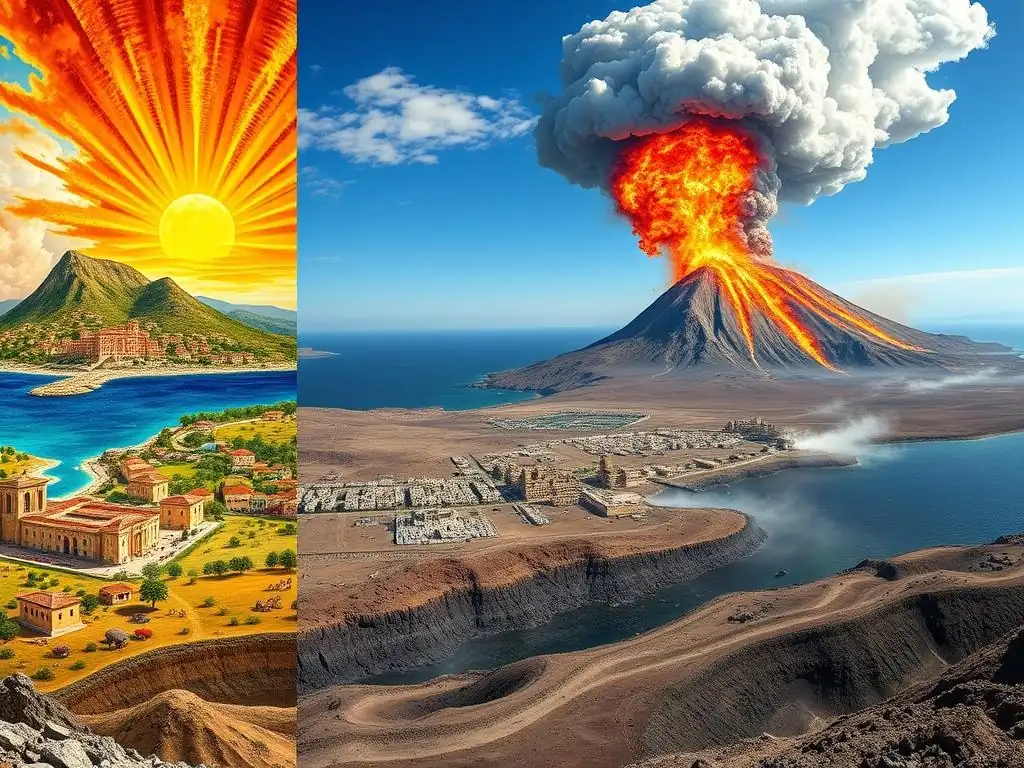
Imagine the Aegean Sea around 1600 BCE. The island of Thera, now known as Santorini, was a vibrant hub of Minoan civilization, a Bronze Age culture renowned for its advanced society, maritime prowess, and artistic achievements. Thera was not just any island; it was a volcanic island, part of a volcanic arc formed by the subduction of the African tectonic plate beneath the Aegean Sea Plate.
This geological setting gifted the island with fertile volcanic soil, which supported agriculture, and natural harbors that facilitated trade. The Minoans on Thera had built a prosperous community, evidenced by the sophisticated urban center of Akrotiri, with its multi-story buildings, elaborate frescoes, and advanced drainage systems. Life on Thera before the eruption was likely idyllic, a testament to Minoan ingenuity and their harmonious coexistence with the natural world, unaware of the cataclysmic forces brewing beneath their feet.
Why the Minoan Eruption Matters: An Overview of its Impact
The Minoan eruption, a colossal volcanic event that occurred in the mid-second millennium BCE, is not merely a geological event; it is a pivotal moment in human history. Its significance resonates across various disciplines, from volcanology and archaeology to history and mythology. This eruption, one of the largest volcanic events of the Holocene epoch, dramatically reshaped the Aegean landscape, triggering a devastating tsunami that impacted coastlines across the Eastern Mediterranean.
Beyond the immediate physical destruction, the Minoan eruption is hypothesized to have contributed to the decline of the Minoan civilization on Crete, although the exact nature and extent of this impact are still debated among scholars. Furthermore, the eruption is often linked to the myth of Atlantis, fueling centuries of speculation and captivating the popular imagination.
Understanding the Minoan eruption provides crucial insights into the power of nature, the vulnerability of civilizations to natural disasters, and the long-lasting environmental and cultural repercussions of such events. Its study continues to yield invaluable lessons for modern volcanic hazard assessment and disaster preparedness.
Understanding the Minoan Eruption: A Deep Dive
The Volcanic Setting of Thera: A Tectonic Overview
Thera's volcanic nature is intrinsically linked to the complex tectonic activity of the Aegean region. This area is characterized by the Hellenic Arc, where the African plate subducts beneath the Aegean Sea plate. This subduction process, where one plate slides beneath another, generates immense pressure and heat in the Earth's mantle. Magma, molten rock, rises to the surface through fissures and weaknesses in the crust, leading to volcanic activity.
The Thera volcano is part of the South Aegean Volcanic Arc, which includes other active volcanic centers like Methana, Milos, and Nisyros. The specific type of volcanism at Thera is explosive, driven by the high silica content of the magma, which makes it viscous and gas-rich. This tectonic setting makes Thera prone to powerful eruptions, as demonstrated by the Minoan eruption, and continues to pose volcanic hazards to the region today, although currently at a much lower level of activity.
The Precursors to the Eruption: Warning Signs from Thera
While we lack written records from the Minoan period detailing specific observations, geological evidence suggests that Thera likely exhibited warning signs before the cataclysmic eruption. Volcanoes rarely erupt without any prior activity. Precursory signs at Thera would have likely included increased seismic activity, such as more frequent and stronger earthquakes, which are common indicators of magma movement beneath the surface.
Changes in gas emissions, including increased sulfurous smells, could have also been noticeable. Furthermore, minor phreatic eruptions, characterized by steam explosions resulting from magma heating groundwater, might have occurred in the months or years leading up to the major eruption.
Analysis of volcanic deposits around Thera reveals layers of pre-Minoan eruption tephra, suggesting a history of smaller eruptions. Whether the Minoans recognized these signs as warnings of an impending major event is uncertain, but the geological record strongly suggests that Thera did not erupt without some form of preliminary volcanic unrest.
The Minoan Eruption Sequence: A Step-by-Step Breakdown
Phase 1: The Initial Phreatic Explosions
The Minoan eruption likely commenced with a series of phreatic explosions. These explosions are triggered when rising magma encounters groundwater or seawater. The intense heat of the magma rapidly vaporizes the water, causing it to expand violently and explosively fragment the surrounding rock.
This initial phase would have been characterized by relatively small but forceful explosions, ejecting steam, ash, and pre-existing volcanic rock fragments. These explosions would have been visually dramatic, sending plumes of steam and ash high into the atmosphere, and would have deposited a layer of ash around the island. While not as destructive as later phases, these phreatic explosions would have served as a clear warning sign of escalating volcanic activity at Thera, disrupting daily life and potentially causing localized damage.
Phase 2: The Plinian Phase - Ash and Pumice Fall
Following the phreatic phase, the eruption transitioned into a Plinian phase, named after Pliny the Younger, who described the eruption of Mount Vesuvius in 79 AD. This phase is characterized by a sustained, powerful eruption column that can reach tens of kilometers into the stratosphere. During the Plinian phase of the Minoan eruption, vast quantities of pumice and ash were ejected into the atmosphere.
The eruption column, driven by the expanding gases within the magma, would have carried ash and pumice high above Thera, distributing it over a wide area. Heavy pumice fall would have blanketed Thera and surrounding islands, causing roofs to collapse and devastating vegetation.
The ash cloud, carried by winds, would have extended for hundreds of kilometers, impacting air quality and potentially affecting agriculture and settlements far from Thera. Geological studies have identified Minoan eruption ash layers as far away as Greenland ice cores and lake sediments in Turkey, demonstrating the widespread reach of this Plinian phase.
Phase 3: The Pyroclastic Flows and Surges
The most lethal and destructive phase of the Minoan eruption involved pyroclastic flows and surges. As the eruption column became unstable, it would have partially collapsed, sending hot, turbulent mixtures of gas, ash, and volcanic rock fragments cascading down the flanks of the volcano at high speeds. Pyroclastic flows are dense, ground-hugging currents, while pyroclastic surges are more dilute and turbulent, capable of traveling over obstacles. These flows and surges are incredibly hot, often exceeding several hundred degrees Celsius, and move at speeds comparable to hurricane-force winds.
They are capable of incinerating everything in their path, destroying buildings, and causing widespread devastation. The Akrotiri archaeological site, buried under meters of pumice and ash, was likely engulfed by pyroclastic flows and surges, leading to its abandonment. The presence of pyroclastic flow deposits around Santorini testifies to the immense destructive power of this phase of the Minoan eruption.
Phase 4: The Caldera Collapse and Tsunami Generation
The final, and perhaps most dramatic, phase of the Minoan eruption was the caldera collapse. After the massive ejection of magma during the preceding phases, the magma chamber beneath Thera emptied, leading to a loss of support for the overlying volcanic edifice. The summit of the volcano then collapsed inwards, forming a large caldera, a basin-shaped depression. This caldera collapse was likely accompanied by further explosive eruptions as seawater rushed into the newly formed void, interacting with remaining magma.
The sudden caldera collapse also displaced a massive volume of seawater, generating a mega-tsunami that radiated outwards across the Aegean Sea and Eastern Mediterranean. Geological evidence, including tsunami deposits found in coastal areas of Crete, Egypt, and Turkey, confirms the occurrence of a significant tsunami associated with the Minoan eruption. This tsunami would have devastated coastal settlements, adding to the overall catastrophe caused by the eruption.
The Historical Significance of the Minoan Eruption: Unveiling the Impact
Impact on Minoan Civilization: Did the Eruption Cause its Demise?
The question of whether the Minoan eruption caused the demise of the Minoan civilization is a subject of ongoing debate among archaeologists and historians. While the eruption undoubtedly had a profound impact, the exact nature and extent of its role in the Minoan decline are complex. Crete, the heartland of Minoan civilization, is located approximately 120 kilometers south of Santorini and would have been significantly affected by the eruption's fallout, particularly the tsunami and ashfall.
While Akrotiri on Thera was destroyed and abandoned, Minoan civilization on Crete persisted for at least another century after the eruption. However, the eruption may have weakened Minoan society, making it more vulnerable to subsequent Mycenaean Greek incursions around 1450 BCE, which ultimately led to the Minoan civilization's demise. The eruption likely caused significant economic disruption, agricultural damage from ashfall, and social upheaval, potentially contributing to a long-term decline rather than an immediate collapse.
The Minoan Eruption and the Legend of Atlantis: Exploring the Connection
The Minoan eruption has been widely linked to the myth of Atlantis, the legendary lost city described by the ancient Greek philosopher Plato. Plato's account of Atlantis, presented in his dialogues Timaeus and Critias, describes a powerful maritime civilization that mysteriously vanished after incurring the wrath of the gods.
Similarities between Plato's description of Atlantis and the Minoan civilization, particularly the sudden and catastrophic disappearance of a technologically advanced island culture in the Aegean, have led many to speculate that the Atlantis myth may be rooted in the Minoan eruption. The volcanic destruction of Thera, the tsunami, and the potential impact on Minoan Crete provide a compelling narrative that aligns with key elements of the Atlantis myth.
While the Atlantis story is undoubtedly a myth, the Minoan eruption offers a plausible historical event that could have inspired or influenced Plato's account, transforming a real catastrophe into a timeless legend about human hubris and divine retribution.
The Eruption's Environmental Impact: Immediate and Long-Term Effects
The Minoan eruption had significant and far-reaching environmental consequences, both immediate and long-term. The immediate impacts included widespread destruction of vegetation on Thera and surrounding islands by pumice fall and pyroclastic flows. Ashfall, while less destructive than pyroclastic flows, would have blanketed agricultural lands, potentially causing crop failures for several years. The tsunami devastated coastal ecosystems and settlements.
Longer-term environmental effects included changes to the landscape of Thera itself, with the formation of the caldera. The massive injection of sulfur dioxide and other volcanic gases into the stratosphere during the Plinian phase could have had global climatic effects, potentially causing short-term cooling and altered weather patterns. While the exact global climatic impact of the Minoan eruption is still debated, it serves as a reminder of the capacity of large volcanic eruptions to influence environmental conditions on a regional and potentially global scale.
Estimating the Magnitude: The Volcanic Explosivity Index (VEI) of the Minoan Eruption
Comparing the Minoan Eruption to Other Major Volcanic Events
Volcanologists estimate the magnitude of volcanic eruptions using the Volcanic Explosivity Index (VEI), a scale ranging from 0 to 8, based on the volume of erupted material, eruption column height, and duration. The Minoan eruption is generally estimated to have been a VEI 6 or 7 event, placing it among the largest volcanic eruptions of the Holocene epoch.
For comparison, the 1883 eruption of Krakatoa in Indonesia, known for its devastating tsunami, is estimated to have been a VEI 6. The 1815 eruption of Tambora, also in Indonesia, which caused the "Year Without a Summer," is rated as a VEI 7.
A VEI 6 or 7 classification for the Minoan eruption indicates an eruption of "colossal" or "super-colossal" magnitude, capable of causing widespread regional devastation and potentially global environmental impacts. Compared to more recent eruptions like Mount St. Helens in 1980 (VEI 5) or Pinatubo in 1991 (VEI 6), the Minoan eruption was significantly larger, underscoring its immense power and historical significance.
Dating the Minoan Eruption: Scientific Methods and Debates
Accurately dating the Minoan eruption has been a long-standing challenge for scientists, with debates continuing to this day. Archaeological evidence, particularly pottery styles associated with the eruption deposits at Akrotiri, initially suggested a date around 1500 BCE.
However, radiocarbon dating of organic material found within the eruption deposits has yielded dates ranging from the late 17th to mid-16th centuries BCE, suggesting an earlier date. Dendrochronology, the study of tree rings, has also been used to refine the eruption date, with some tree ring records showing evidence of a major environmental event around 1627-1626 BCE, potentially linked to the Minoan eruption.
Ice core analysis from Greenland has revealed sulfate spikes in ice layers dated to the 1620s BCE, which could also be attributed to the Minoan eruption. While a precise date remains debated, the scientific consensus is leaning towards a date in the late 17th or early 16th century BCE, making it crucial to reconcile archaeological and scientific dating methods to fully understand the eruption's chronology.
The Minoan Eruption's Lasting Legacy: Lessons Learned and Future Research
What Can We Learn from the Minoan Eruption About Volcanic Hazards?
The Minoan eruption provides invaluable lessons for understanding and mitigating volcanic hazards in the modern world. It underscores the devastating potential of explosive volcanic eruptions, particularly in densely populated regions. The eruption sequence, from initial phreatic explosions to Plinian phase, pyroclastic flows, and caldera collapse, highlights the complex and evolving nature of volcanic events.
The Minoan eruption also demonstrates the far-reaching impacts of volcanic eruptions, including tsunamis, ashfall, and potential climatic effects. Studying the Minoan eruption helps volcanologists to improve volcanic hazard assessments, develop better monitoring techniques, and enhance preparedness strategies for communities living near active volcanoes. Understanding the precursors, eruption dynamics, and impacts of past eruptions like the Minoan event is crucial for reducing the risks posed by future volcanic activity worldwide.
Ongoing Research and the Future of Thera (Santorini)
Research on the Minoan eruption and the volcanic history of Santorini is ongoing, with scientists from various disciplines continuing to investigate different aspects of this cataclysmic event. Volcanologists are studying the magma composition, eruption dynamics, and caldera formation processes to better understand the mechanisms behind such large eruptions. Archaeologists are continuing excavations at Akrotiri and other sites on Santorini, seeking to uncover more details about Minoan life before the eruption and the immediate aftermath.
Paleoclimatologists are analyzing ice cores and sediment records to refine the eruption date and assess its potential climatic impact. Geophysicists are monitoring the Santorini volcano for signs of renewed activity, as it remains an active volcanic system. Future research will likely focus on integrating data from different disciplines to create a more comprehensive understanding of the Minoan eruption and its long-term consequences, contributing to both scientific knowledge and improved volcanic hazard management for the region.
Exploring Santorini Today: A Volcanic Landscape Shaped by History
Visiting the Caldera: Experiencing the Scale of the Minoan Eruption
Visiting Santorini today offers a unique opportunity to witness firsthand the dramatic landscape shaped by the Minoan eruption. The iconic caldera, a vast submerged basin surrounded by steep cliffs, is a direct result of the volcanic collapse during the Minoan eruption. Boat tours around the caldera provide breathtaking views of the volcanic cliffs, the islands of Nea Kameni and Palea Kameni within the caldera, which are younger volcanic islands formed in subsequent eruptions, and the whitewashed villages perched atop the caldera rim.
Observing the scale of the caldera from the sea or from vantage points on the caldera rim allows visitors to truly grasp the immense magnitude of the Minoan eruption and the profound geological forces that sculpted this stunning landscape. The caldera serves as a powerful reminder of the volcanic past and the ongoing volcanic activity in the region.
Akrotiri Archaeological Site and the Museum of Prehistoric Thera
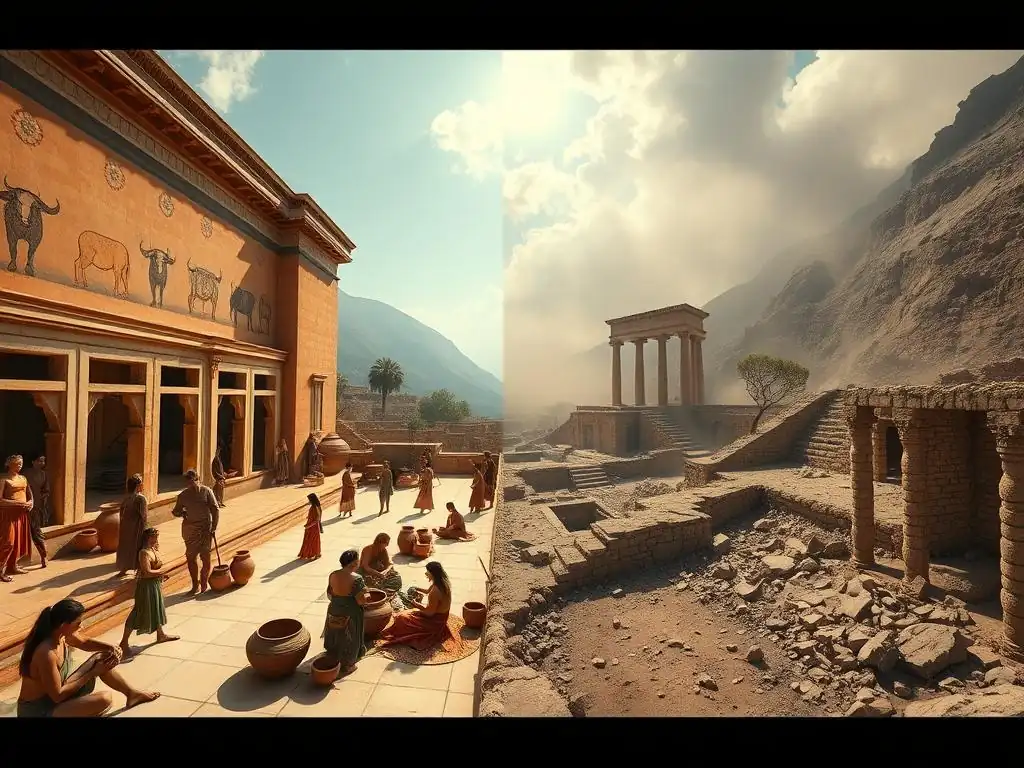
A visit to Santorini is incomplete without exploring the Akrotiri archaeological site and the Museum of Prehistoric Thera in Fira. Akrotiri, often referred to as the "Minoan Pompeii," is a remarkably well-preserved Bronze Age city buried by the Minoan eruption. Excavations at Akrotiri have revealed multi-story buildings, intricate frescoes, pottery, and other artifacts, providing invaluable insights into Minoan life on Thera before the catastrophe.
The site is now sheltered under a modern bioclimatic structure, allowing visitors to walk through the ancient streets and buildings. The Museum of Prehistoric Thera houses a stunning collection of artifacts from Akrotiri and other prehistoric sites on Santorini, including the famous frescoes, pottery, and tools. Together, Akrotiri and the museum offer a compelling journey back in time, allowing visitors to connect directly with the Minoan civilization and appreciate the sophistication of this Bronze Age culture tragically impacted by the Minoan eruption.
Conclusion: The Enduring Legacy of the Minoan Eruption
The Minoan Eruption: A Reminder of Earth's Power
The Minoan eruption stands as a potent reminder of the immense power of Earth's geological forces and the potential for natural disasters to profoundly impact human civilizations. This cataclysmic event reshaped landscapes, triggered tsunamis, and may have contributed to the decline of a major Bronze Age culture. The eruption's legacy extends beyond its immediate destructive effects, influencing mythology and capturing the human imagination for millennia.
In an era facing increasing environmental challenges, understanding past events like the Minoan eruption is more crucial than ever. It underscores the need for continued research into volcanic processes, improved volcanic hazard monitoring and preparedness, and a greater appreciation for the dynamic and sometimes volatile nature of our planet.
Continuing to Explore the Historical Significance of the Minoan Eruption
The historical significance of the Minoan eruption continues to be explored and debated across various fields of study. From archaeology and volcanology to history and mythology, the Minoan eruption remains a subject of intense interest and ongoing research. New scientific discoveries and archaeological findings continue to refine our understanding of the eruption's date, magnitude, impacts, and long-term consequences.
The eruption serves as a case study for examining the complex interactions between natural disasters and human societies, offering valuable lessons for disaster resilience and cultural adaptation. As we continue to investigate the Minoan eruption, we gain not only a deeper appreciation for the past but also crucial insights for navigating the challenges of a dynamic and ever-changing world, ensuring that the historical significance of the Minoan eruption remains relevant for generations to come.
Frequently Asked Questions
What was the Minoan Eruption and why is it significant?
The Minoan Eruption was a massive volcanic eruption of Thera (modern Santorini) in the Aegean Sea. Its historical significance stems from its potential impact on the Minoan civilization and possible influence on the legend of Atlantis.
How did the Minoan Eruption affect the Minoan civilization?
The eruption likely caused widespread destruction on Crete, the center of the Minoan civilization, through tsunamis, ashfall, and earthquakes. This devastation may have contributed to the decline of Minoan power and culture.
What evidence supports the link between the Minoan Eruption and the legend of Atlantis?
Some researchers suggest the destruction of a sophisticated island culture (Minoan Crete) by a natural disaster (the eruption) inspired Plato's Atlantis myth. However, this connection remains a subject of debate among historians and volcanologists.
How do volcanologists study the Minoan Eruption today?
Volcanologists use various methods, including analyzing ash deposits, core samples, and geological formations, to reconstruct the eruption's magnitude, timing, and environmental impacts. This helps understand the power of past volcanic events.
What are the implications of understanding the Minoan Eruption for modern volcanic hazard assessment?
Studying past mega-eruptions like the Minoan event helps us better understand the potential scale of future volcanic disasters. This knowledge is crucial for developing effective hazard mitigation strategies for communities living near active volcanoes.
Final Reflection: Echoes of Thera's Fury
The Minoan eruption, a cataclysm that reshaped the Aegean and potentially influenced the course of civilizations, remains a potent reminder of nature's raw power. Its historical significance transcends mere geological event; it's a pivotal moment that continues to resonate within our understanding of the ancient world. The eruption's impact on Minoan society, its potential connections to the legend of Atlantis, and its influence on subsequent cultures all underscore its enduring importance.
The eruption's legacy extends far beyond the immediate devastation. It serves as a stark reminder of the fragility of even the most advanced societies in the face of natural disasters, and its study offers invaluable insights into resilience and adaptation. The echoes of Thera's fury continue to shape our understanding of the Bronze Age collapse and the interconnectedness of ancient Mediterranean civilizations. The past is never dead. It's not even past.
- William Faulkner, a sentiment that perfectly captures the enduring relevance of the Minoan eruption.
As we contemplate the Minoan eruption and its profound historical significance, let us also consider our own relationship with the natural world. What lessons can we learn from the resilience of those who survived, and how can we better prepare for the inevitable challenges that lie ahead? Let us strive to understand the forces that shape our planet and to build a future where humanity and nature can coexist in harmony.
Ignite Your Curiosity: Unearth More Volcanic Secrets!
Thanks for exploring the cataclysmic Minoan eruption with us! We hope this article illuminated the power and lasting impact of this ancient volcanic event. Now, it's your turn to delve deeper into the world of volcanology.
Ready to take the next step?
- Dive deeper: Explore our interactive map of global volcanic activity – uncover real-time updates and fascinating details about active volcanoes worldwide.
- Share the knowledge: Spread the word by sharing this article with fellow history and geology enthusiasts! Let's keep the conversation going.
- Explore a lesser-known volcanic eruption and share your findings in the comments below!
Which volcano's story captivated you most, and what mysteries do you hope to unravel next? Share your thoughts below!